
Research article · 2025 · Full text
International Journal of Agriculture and Food ScienceInfluence of Satellite Derived Oceanographic Parameters on Indian Mackerel Rastrelliger kanagurta (Cuvier, 1817) Abundance at the Visakhapatnam Coast
Volume 7(8) · Pages 1010–1016 · DOI: 10.33545/2664844x.2025.v7.i8i.671 ↗
Research areasFish Biology and Ecology StudiesIdentification and Quantification in FoodMarine and fisheries research
Abstract
Author-writtenThis study investigates the influence of oceanographic parameters on Indian mackerel (Rastrelliger kanagurta) landings at Visakhapatnam Fishing Harbour, Bay of Bengal, from January 2024 to April 2025. Monthly landings data, varies from 37.81 t to 551.60 t, were analyzed alongside satellite-derived environmental variables: Sea Surface Temperature (SST), Chlorophyll-a (Chl-a), Photosynthetically Active Radiation (PAR), and Diffuse Attenuation Coefficient at 490 nm (Kd490), obtained from NASA’s MODIS-Aqua at 4 km resolution. Spearman’s rank correlation analysis revealed a strong negative correlation between mackerel abundance and SST, indicating higher catches during winter months. Weak and non-significant correlations were found with Chl-a and PAR, suggesting limited direct influence on monthly landings. A strong positive correlation between Chl-a and Kd490 confirmed elevated turbidity during monsoon-driven phytoplankton blooms. Seasonal landings peaked in December–February, aligning with optimal SST, and plummeted in April, potentially due to spawning or regulatory restrictions. These findings highlight SST as a primary driver of mackerel distribution, advocating for adaptive management strategies like seasonal fishing regulations to ensure fishery sustainability amidst climate variability, monsoon dynamics, and anthropogenic pressures, supporting resilient coastal ecosystems and local fishing communities.
Summary
Source-checkedPlain-language reading of the full paper, prepared with AI and checked against the text. Each point links to the authors' own words.
Why it matters
- Indian mackerel is an ecologically and economically important pelagic fish species for coastal fisheries in the Indian Ocean. View evidence ↗
- Mackerel productivity and distribution are driven by oceanographic factors including sea surface temperature, chlorophyll-a, light availability (PAR), and water turbidity (Kd490). View evidence ↗
The question
- The study aims to determine how specific oceanographic parameters influenced Indian mackerel landings at the Visakhapatnam Fishing Harbour between January 2024 and April 2025. View evidence ↗
What they did
- Researchers collected 15 months of direct monthly landing records for Indian mackerel from the Visakhapatnam Fishing Harbour through on-site visits and government collaboration. View evidence ↗
- Environmental data (SST, Chl-a, PAR, and Kd490) were retrieved from NASA's MODIS-Aqua satellite at a 4 km spatial resolution. View evidence ↗
- The study used Spearman's rank correlation analysis to evaluate the relationship between environmental variables and fish landings. View evidence ↗
What they found
- Mackerel landings varied significantly over the study period, peaking at 551.60 metric tons in December 2024 and hitting a low of 37.81 metric tons in April 2025. View evidence ↗
- There was a strong negative correlation (ρ = -0.814) between mackerel abundance and sea surface temperature, indicating that the fish prefer cooler waters (24–28 °C) typical of winter months. View evidence ↗
- Chlorophyll-a and Photosynthetically Active Radiation (PAR) showed weak, non-significant correlations with landings, suggesting they do not directly influence monthly abundance. View evidence ↗
- A very strong positive correlation (ρ = 0.985) was found between Chlorophyll-a and the diffuse attenuation coefficient (Kd490), confirming that phytoplankton blooms increase water turbidity. View evidence ↗
- The sharp decline in landings observed every April is attributed to both spawning behavior and a mandatory seasonal fishing ban from April 15 to June 14. View evidence ↗
What it means
- The authors conclude that sea surface temperature is the primary driver of Indian mackerel distribution and abundance along the Visakhapatnam coast. View evidence ↗
- The authors recommend implementing adaptive management strategies, including habitat restoration and seasonal fishing regulations, to ensure fishery sustainability. View evidence ↗
Visual summary
1 visualsIllustrations explain the paper; they do not show study data.
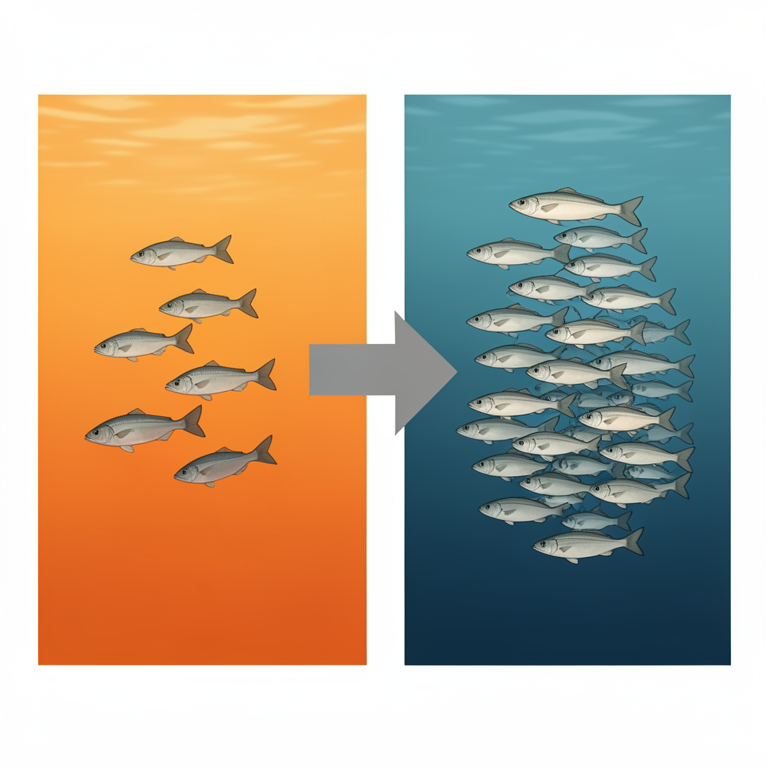
Temperature and Fish Abundance Relationship
AI-generated conceptual illustration (Indian Mackerel (Rastrelliger kanagurta) in the ocean). It explains the idea and does not show study data.
View source evidence ↗Figures & tables
From the original paper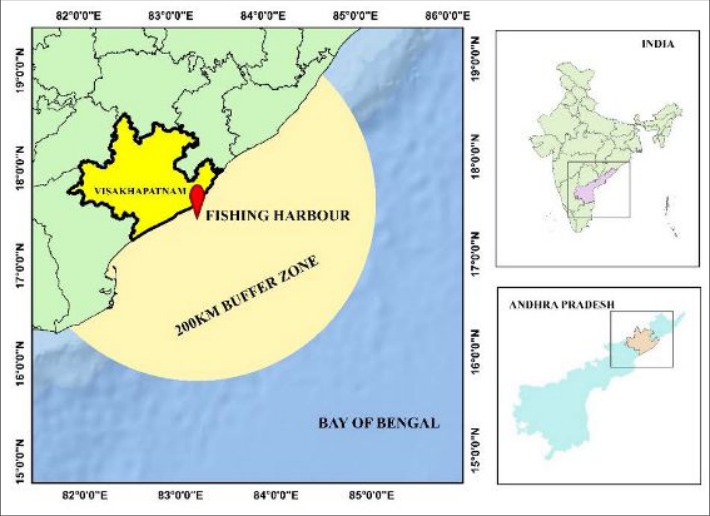 Figure 1
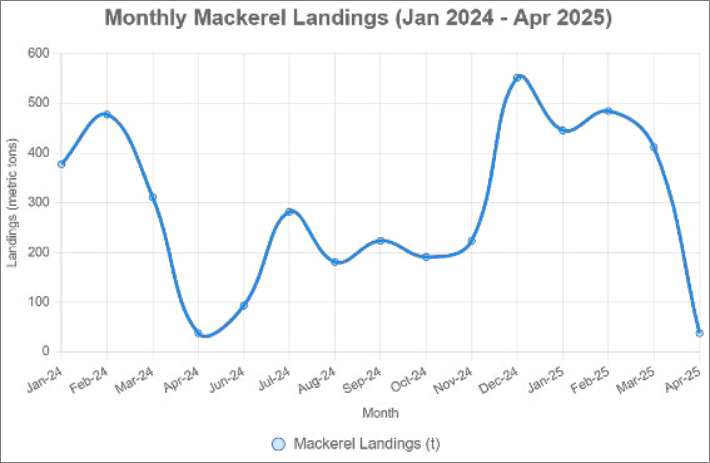 Figure 2
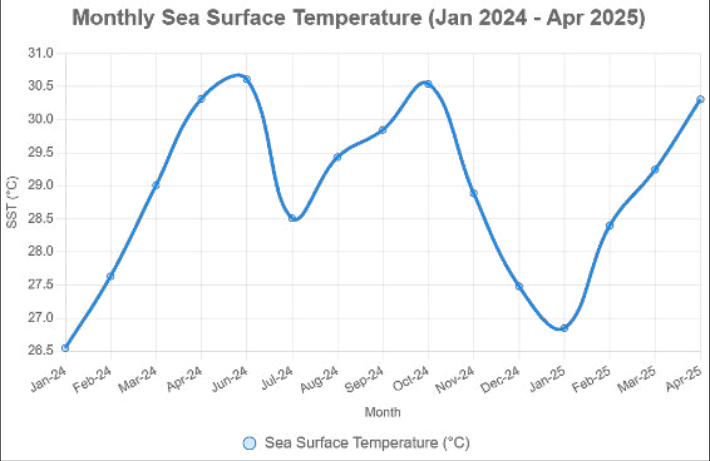 Figure 3
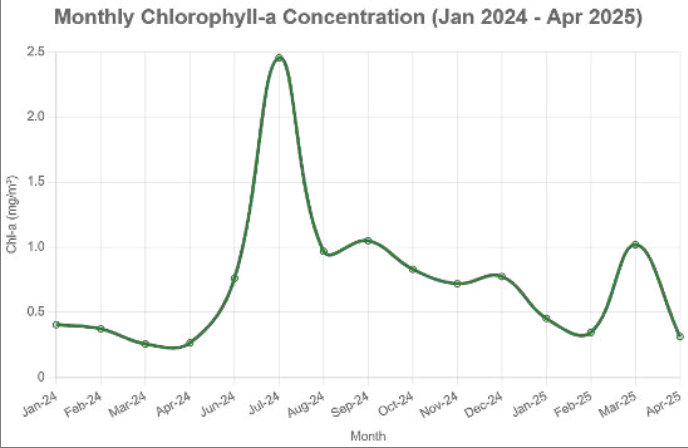 Figure 4
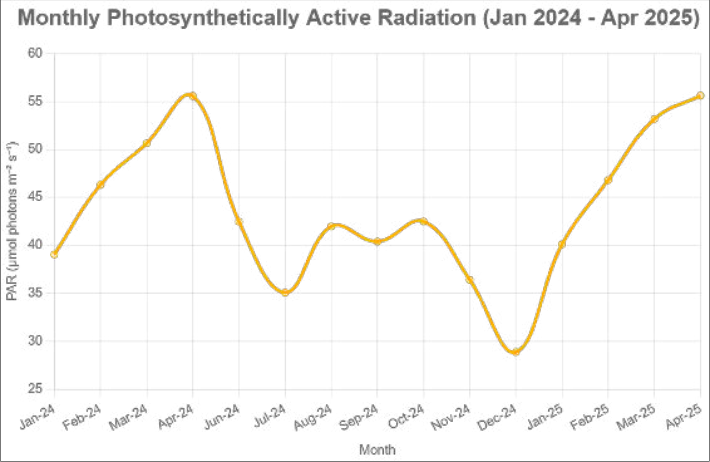 Figure 5
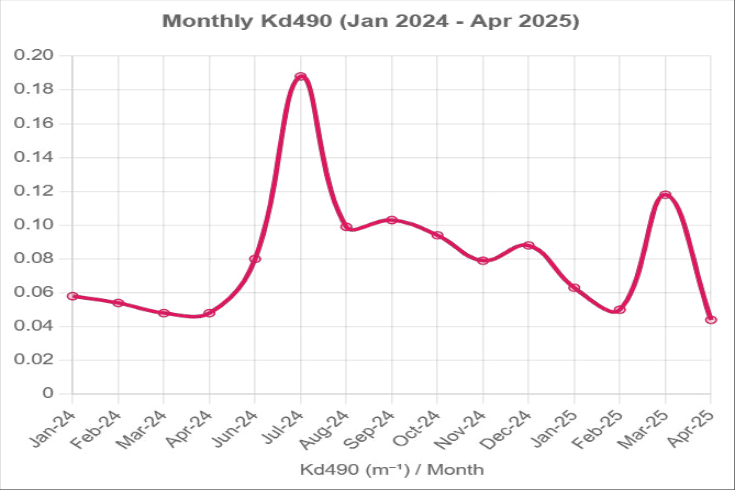 Figure 6
 Table 1
Introduction
India's marine fish landings experienced a marginal decline of 2%, decreasing from 3.53 million t in 2023 to 3.45 million t in 2024. Pelagic species remained dominant, comprising 54% of total landings. Indian mackerel had the highest share in total marine fish landings (9.71%), The Andhra Pradesh recorded marine fish landings of 1.75 lakh tonnes, reflecting an 8% decline from 2023 and a 19% drop from 2022, pelagic species contribute a 60% of total catch to it. Indian Mackerel was the most landed species 0.32 lakh tonnes, a 76% surge and the highest in the past decade (CMFRI, 2024). Indian mackerel (Rastrelliger kanagurta) is a critical pelagic fish species that sustains coastal fisheries and plays a significant ecological role in the Indian Ocean ecosystem. The abundance, distribution, and productivity of Indian mackerel are strongly influenced by key satellite derived oceanographic parameters such as, Sea Surface Temperature (SST), Chlorophyll-a concentration (Chl-a), Photosynthetically Active Radiation (PAR), and the Diffuse Attenuation Coefficient at 490 nm (Kd490). SST is a primary driver of metabolic activity, reproductive cycles, and migratory behavior in Indian mackerel. Fluctuations in SST, especially linked with seasonal monsoons and climate variability, have been shown to affect spawning success and commercial landings. For instance, Kizhakudan et al. (2014) [1] demonstrated a clear correlation between SST variations and mackerel fishery yields along the southwest coast of India. Chl-a is an established proxy for phytoplankton biomass and primary productivity, directly influencing food availability for mackerel, particularly during early life stages. Elevated Chla concentrations following upwelling events or nutrient influxes are associated with [3] found that higher Chl-a values aligned with favourable zones for mackerel aggregation, confirming the role of phytoplankton-rich waters in supporting fish populations. PAR regulates the rate of photosynthesis, determining phytoplankton growth and productivity. Variations in PAR, often in conjunction with SST, impact primary producer dynamics, ultimately cascading through the food web to affect mackerel productivity (Madhavan et al., 2015) [4] . Kd490 reflects water clarity and the penetration of light into the water column. Higher Kd490 values (lower clarity) may restrict photosynthesis depth and influence plankton distribution, indirectly affecting the vertical habitat use and feeding efficiency of mackerel. The interaction between light penetration (Kd490) and other oceanographic variables is important for modelling fish occurrence and distribution (Yang et al., 2024) [5] .
Various studies recognize that the combined effect of SST, Chl-a, PAR, and Kd490 determines the habitat suitability and spatial-temporal variability of Indian mackerel populations. Ongoing climate shifts, monsoonal patterns, and localized oceanographic processes underscore the need for integrated assessment using satellite remote sensing and advanced ecological modelling.
The coastal ecosystems of India, particularly along the Visakhapatnam coast, face mounting challenges from environmental variables such as fluctuating SST, salinity shifts, monsoon variability, and anthropogenic influences like pollution and overfishing, which have led to erratic pelagic fish landings, including significant declines in Indian mackerel populations. These factors disrupt migration patterns, spawning cycles, and overall biomass, exacerbating food security issues for local fishing communities and threatening the sustainability of marine resources in the Bay of Bengal. This research addresses these problems by employing a multidisciplinary approach, integrating time-series data analysis, remote sensing, and statistical modelling to quantify the impacts of key environmental parameters on mackerel landings, ultimately proposing adaptive management strategies such as seasonal fishing regulations and habitat restoration to mitigate adverse effects and promote resilient fisheries.
Materials and Methods
Materials and Methods
Study area
This research was carried out at Visakhapatnam Fishing Harbour, situated along India's eastern seaboard in the Bay of Bengal. The area undergoes periodic upwelling, especially amid the southwest monsoon, boosting primary productivity and facilitating notable catches of Indian mackerel (Abbott and Mahadevan, 2024; Das, 2024; Vijayakumaran, 2004) [6,14,7] . Such dynamic marine processes render Visakhapatnam a prime location for examining how environmental factors affect mackerel populations. The investigation targeted coastal zones extending up to 200 km from the harbor, including key fishing areas pinpointed via initial consultations with local fishermen. Attenuation Coefficient at 490 nm (Kd490) play crucial roles in influencing marine productivity and fish distribution in coastal ecosystems. In this study, these parameters were obtained through remote sensing data from the Moderate Resolution Imaging Spectroradiometer (MODIS) instrument aboard NASA's Aqua satellite, managed by the Ocean Biology Processing Group. Daily datasets were retrieved at a 4 km spatial resolution, specifically tailored to align with the designated fishing zones in the study area, enabling precise monitoring of oceanographic conditions relevant to pelagic fish landings. To ensure consistency and broad coverage, the analysis utilized MODIS Level 3 standard binned imagery, which aggregates and processes raw satellite observations into gridded, high-quality products suitable for time-series evaluations and environmental modelling. This approach facilitated the integration of multi-parameter data for assessing seasonal and spatial variations in water quality and biological productivity along the Visakhapatnam coast (Stephen et al., 2022) [8] .
DN Value Retrieval of Satellite Data
The NetCDF files obtained were imported into the SeaDAS software for processing, where the relevant parameter bands were chosen from the Bands directory and visualized. To enhance accuracy, a land mask was implemented through the software's toolbar features. Subsequently, a multi-buffer shapefile was integrated by navigating to Vector → Import → ESRI Shapefile, allowing for precise spatial overlay on [15] .
Statistical Analysis
To assess the relationships between environmental factors and fish landings, this study employed Spearman's rank correlation analysis, a non-parametric statistical method that evaluates the monotonic association between variables without assuming a normal distribution of data. This approach is particularly suitable for ecological datasets, which often exhibit non-linear patterns or outliers influenced by seasonal and spatial variability. The coefficients were calculated to identify significant positive or negative associations, with p-values assessed at a 0.05 significance level to determine statistical reliability (Jacob. 2014) [10] Results and Discussion Monthly Landings of Indian Mackerel Monthly mackerel landings from January 2024 to April 2025 showed pronounced variability, ranging from a minimum of 37.81 metric tons in April 2025 to a maximum of 551.60 metric tons in December 2024. As shown in Figure 2, a clear seasonal signal emerged, with April recording the lowest landings in both years (37.90 t in April 2024 and 37.81 t in April 2025), indicating a period of reduced availability or fishing activity, potentially linked to spawning behaviour or regulatory closures. Along the east coast of India, a uniform seasonal fishing ban is enforced from April 15 to June 14 to protect spawning stocks and support recruitment, during which mechanized fishing operations are suspended under national fisheries management regulations (Vivekanandan et al., 2010) [22] . This regulatory closure, coinciding with key reproductive periods, further contributes to the sharp decline in April landings and the absence or minimal reporting of catches during May and early June. [11,12,13] .
Sea Surface Temperature
Sea surface temperature (SST) was measured monthly from January 2024 to April 2025 to characterize temporal variability in the study region, yielding a 15-point dataset. As shown in Figure 3, SST ranged from a minimum of 26.55 °C in January 2024 to a maximum of 30.61 °C in June 2024. The time series exhibits a clear seasonal cycle, with temperatures peaking in late spring to early summer (April-June) and reaching minima in winter (December-January). The highest value of 30.61 °C in June 2024 marks the warmest period, while 26.55 °C in January 2024 indicates the coolest. This seasonal pattern aligns with previous reports for the Visakhapatnam coast (Das et al., 2024; Sai et al., 2025a) [14,9] , which also documented SST maxima during April-June and minima in December-January. A year-on-year comparison for corresponding months between 2024 and 2025 (January-April) shows modest increases in January (+0.30 °C), February (+0.77 °C), and March (+0.24 °C), and a negligible decrease in April (-0.01 °C). 0.313-1.020 mg/m³). This seasonal pattern is consistent with previous reports for the Visakhapatnam coast (Sai et al., 2025b) [16] , which documented elevated Chl-a in July and reduced concentrations during the spring intermonsoon. A comparison of corresponding months between 2024 and 2025 shows modest increases in January (+0.048 mg/m³) and March (+0.763 mg/m³) and decreases in February (-0.028 mg/m³) and April (-0.052 mg/m³). All values and trends are illustrated in Figure 4. ). This pattern is consistent with Gawad and Pokle (2008) [17] , who reported maximum PAR during March-April and the lowest values in December. A month-to-month comparison for the overlapping period (January-April) shows slight increases in 2025 relative to 2024: January (+1.055), February (+0.497), March (+2.537), and April (+0.033), indicating a modest enhancement of light availability in early 2025.
5: Monthly Photosynthetically Active Radiation from January 2024 to April 2025
Diffuse Attenuation Coefficient at 490 nm [18] , and minor discrepancies are most likely attributable to differences in study-area characteristics. A comparison of corresponding months between 2024 and 2025 (January-April) shows increases in January (+0.005m⁻¹) and March (+0.070m⁻¹) and decreases in February (-0.004m⁻¹) and April (-0.004m⁻¹). All values and trends are illustrated in Figure 6.
Spearman's rank correlation analysis: Spearman's rank correlation analysis was performed to investigate relationships between mackerel abundance and key environmental variables, SST, Chl-a, PAR, and Kd490 over the period from January 2024 to April 2025. This analysis elucidates potential environmental drivers of mackerel distribution in the study region. Table 1 presents the Spearman's correlation coefficients (ρ) and corresponding p-values, indicating the strength and statistical significance of these relationships. [19] . Conversely, the Chl-a association is weak and nonsignificant (ρ=0.036, p=0.899), aligning with findings that same-month chlorophyll often shows little predictive power for mackerel landings without accounting for temporal lags or spatial matching (Putri et al., 2025) [3] Similarly, the correlation with PAR is weak and non-significant (ρ=-0.336, p=0.221), reinforcing that light is primarily an indirect driver via primary production and trophic transfer rather than a direct determinant of pelagic fish abundance at operational monthly scales (Mini et al., 2017) [20] . Among environmental variables, Chl-a and Kd490 exhibit a strong positive correlation (ρ=0.985, p<0.0001), confirming that higher phytoplankton biomass elevates turbidity through increased absorption and scattering, clearly manifested during the July 2024 bloom (Chl-a 2.455 mg/m³; Kd490 0.188 m⁻¹). This coupling is well established in ocean-color bio-optics and applied retrievals for waters (Thayapurath et al., 2012). PAR shows moderate negative correlations with both Chl-a (ρ=-0.536, p=0.040) and Kd490 (ρ=-0.529, p=0.043), significant at the 5% level, consistent with the expectation that increased phytoplankton biomass and attendant turbidity reduce light penetration and shoal the euphotic zone.
| Correlation Coefficient (ρ) | Mackerel | SST | Chl-a | PAR | Kd490 |
|---|---|---|---|---|---|
| Mackerel | 1 | -0.814* | 0.036 | -0.336 | 0.095 |
| SST | -0.814* | 1 | 0.093 | 0.507 | 0.066 |
| Chl-a | 0.036 | 0.093 | 1 | -0.536* | 0.985* |
| PAR | -0.336 | 0.507 | -0.536* | 1 | -0.529* |
| Kd490 | 0.095 | 0.066 | 0.985* | -0.529* | 1 |
Table text extracted from the original PDF; superscript letters are shown inline. The original table image is below.
View original table image
Fishing Season
On the Visakhapatnam coast, the mackerel fishery intensifies with the onset of winter conditions, with landings increasing from November and peaking during December to February, before tapering off sharply in April. Throughout the study period (January 2024-April 2025), catches remained generally moderate from June to October, rose markedly in December and February, and reached their lowest levels in April for both years, indicating a consistent seasonal trough. This pattern suggests enhanced availability and aggregation during the cooler months, followed by reduced availability or constrained fishing activity in April, potentially linked to spawning behavior or regulatory restrictions.
Conclusion
The study conducted at Visakhapatnam Fishing Harbour from January 2024 to April 2025 highlights the significant influence of environmental parameters, particularly SST, on Indian mackerel (Rastrelliger kanagurta) landings along the Bay of Bengal coast. The strong negative correlation between mackerel abundance and SST (ρ = -0.814, p = 0.0002) underscores the preference of this pelagic species for cooler conditions, with peak landings observed during winter months (December-February) when SST ranged from 24-28 °C. Conversely, weak and non-significant correlations with Chl-a and PAR suggest that these variables have limited direct influence on monthly mackerel landings, likely due to temporal lags or indirect trophic interactions. The strong positive correlation between Chl-a and the diffuse attenuation coefficient (Kd490) (ρ = 0.985, p< 0.0001) confirms the linkage between phytoplankton blooms and water turbidity, particularly during the monsoon-driven peak in July 2024. These findings emphasize the critical role of SST in driving mackerel distribution and abundance, while highlighting the complex interplay of oceanographic factors in shaping coastal fishery dynamics.
The observed seasonal patterns, with landings peaking in winter and plummeting in April, suggest that adaptive management strategies, such as seasonal fishing regulations and habitat restoration, could enhance the sustainability of Indian mackerel fisheries in the face of environmental variability and anthropogenic pressures. By integrating satellite-derived data, time-series analysis, and Spearman's rank correlation, this study provides a robust framework for understanding the environmental drivers of mackerel landings, offering valuable insights for fishery management along the Visakhapatnam coast. These results advocate for continued monitoring and modelling efforts to address the challenges posed by climate-driven shifts, monsoon variability, and overfishing, ensuring the resilience of coastal ecosystems and the livelihoods of fishing communities dependent on this vital marine resource.
Acknowledgement
AcknowledgmentThe author would like to thank Andhra Pradesh Fisheries University, Vijayawada and for providing the essential facilities.
Figures and tables from the paper
References
22 in the original paper- CMFRI ANNUAL REPORT 2024
- Kizhakudan SJ, Raja S, Gupta KS, Vivekanandan E, Kizhakudan JK, Sethi SN, et al. Correlation between changes in sea surface temperature and fish catch along Tamil Nadu coast of India-an indication of impact of climate change on fisheries?. Indian J Fish. 2014;61(3):111-115.
- Putri D, Yulius Y, Rosalia AA, Arifin T, Putra A, Heriati A, et al. Influence of sea surface temperature and chlorophyll-a on mackerel productivity in Banten Bay, Indonesia: Analysis using Aqua MODIS data (2014-2023). Geographia Technica. 2025;20(1):1-9.
- Madhavan N, Thirumalai VD, Ajith JK, Sravani K. Prediction of mackerel landings using MODIS chlorophyll-A, pathfinder SST, and SeaWiFS PAR. Indian J Nat Sci. 2015;5(29):4858-4871.
- Yang Y, Wang Z, Chen P, Shen X, Kong W, Huang G, Shu R. High-resolution ocean color reconstruction and analysis focusing on Kd490 via machine learning model integration of MODIS and Sentinel-2 (MSI). Front Mar Sci. 2024;11:1464942.
- Abbott K, Mahadevan A. Why is the monsoon coastal upwelling signal subdued in the Bay of Bengal?. J Geophys Res Oceans. 2024;129(12):e2024JC022023.
- Vijayakumaran K. Simple model for predicting upwelling status along Visakhapatnam Coast. Fish Technol. 2004;41(1):9-16.
- Stephen SK, Yadav VK, Kumar RR. Comparative study of statistical and machine learning techniques for fish production forecasting in Andhra Pradesh under climate change scenario. Indian J Geo-Mar Sci. 2022;51(9):776-784.
- Sai JV, Vasanth K, Narayanan M, Praneeth A, Gnanendra V, Vishnu Priya MS, et al. Comparison of chlorophyll-a retrieval from Aqua MODIS using SeaDAS and ArcGIS of Visakhapatnam Coast at Bay of Bengal. Asian J Curr Res. 2025;10(2):166-176.
- Jacob S. Impact of environmental variables on pelagic fish landings: Special emphasis on Indian oil sardine off Tiruchendur coast, Gulf of Mannar. J Oceanogr Mar Sci. 2014;3(3):56-67.
- Chidambaram K. Studies on length frequency of the oil mackerel, Mackerellla longiceps and on certain factors influencing their appearance in the Calicut coast of Madras Presidency. Proc Indian Acad Sci. 1950;31:252-286.
- Supraba V, Dineshbabu AP, Thomas S, Rohit P, Rajesh KM. Climate influence on oil sardine and Indian mackerel in southeastern Arabian Sea. Int J Dev Res. 2016;6(8):9152-9159.
- Hussain SV, Ulahannan ZP, Joseph D, Somasekharan A, Girindran R, Benny S, et al. Impact of climate change on the fishery of Indian mackerel (Rastrelliger kanagurta) along the Kerala coast off the southeastern Arabian Sea. Reg Stud Mar Sci. 2021;44:101773.
- Das GK. Analysing sea surface temperature and chlorophyll-a along Visakhapatnam Coast using MODIS data. Knowl Based Eng Sci. 2024;5(2):19-30.
- Sai JV, Vasanth K, Narayanan M, Palanisamy T, Gnanendra V, Praneeth A. Comparing SeaDAS and ArcGIS extracted Aqua MODIS sea surface temperature DN values at Bay of Bengal. Arch Curr Res Int. 2025;25(5):53-62.
- Sai JV, Vasanth K, Narayanan M, Praneeth A, Gnanendra V, Vishnu Priya MS, et al. Comparison of chlorophyll-a retrieval from Aqua MODIS using SeaDAS and ArcGIS of Visakhapatnam Coast at Bay of Bengal. Asian J Curr Res. 2025;10(2):166-176.
- Gawad MM, Pokle AS. Seasonal and inter-annual variability of remotely-sensed sea surface height, visible light and chlorophyll in the Bay of Bengal [MSc thesis]. Goa: Goa University, National Institute of Oceanography; 2008. 41 p.
- Rani S, Al Nahian S, Chowdhury KA. Distribution of satellite-derived surface chlorophyll-a and associated physical parameters in the Northern Bay of Bengal. Dew Drop. 2019;6:37-45.
- Kizenga HJ, Jebri F, Shaghude Y, Raitsos DE, Srokosz M, Jacobs ZL, et al. Variability of mackerel fish catch and remotely-sensed biophysical controls in the eastern Pemba Channel. Ocean Coast Manag. 2021;207:105593.
- Mini KG, Kuriakose S, Sathianandan TV, Shafeeque M, Monolisha S, Minu P, et al. Course manual: Winter School on Structure and Functions of Marine Ecosystem -Fisheries. Kochi: ICAR-CMFRI; 2017.
- Thayapurath S, Talaulikar M, Desa E, Matondkar SGP, Mascarenhas A. Comparison of measured and satellitederived spectral diffuse attenuation coefficients for the Arabian Sea. Int J Remote Sens. 2012;33(2):570-585.
- Vivekanandan E, Narayanakumar R, Najmudeen TM, Jayasankar J, Ramachandran C. Marine fisheries policy brief-2: Seasonal fishing ban. CMFRI Spec Publ. 2010;103:1-44.
Cited by 1
From OpenAlex, OpenCitations and reference lists read by Scinovex
- Short-Term Catch Forecasting of Indian Mackerel, Rastrelliger kanagurta (Cuvier, 1817) in the Bay of Bengal using Artificial Neural Networks and Generalised Additive Models ↗
Jogiparthi Venkata Sai, M. S. Narayanan, Ogirala Sudhakar, Dhanapal Kandan, Kathavarayan Vasanth, Vishnupriya MS et al. · Thalassas An International Journal of Marine Sciences · 2026
❝ 0