
Research article · 2025 · Full text
International Journal of Agriculture and Food ScienceA study on the effect of using tamarind (Tamarindus indica L.) fruit extract in improving the quality of red meat
Volume 7(8) · Pages 910–914 · DOI: 10.33545/2664844x.2025.v7.i8h.657 ↗
Research areasMeat and Animal Product Quality
Abstract
Author-writtenThe objective of this study was to determine the efficacy of using tamarind fruit extract (Tamarindus indica L.) as a solution for increasing the quality of red meat at 20% and 30; these concentrations were then analyzed in terms of performance on sensory characteristics like tenderness, juiciness, flavor, and overall texture in comparison with untreated samples. To do so, they measured the meat's moisture content, pH value, cooking loss and water-wash-release capacity as well as the effect of extracts on bacterial growth. The meat samples were immersed in tamarind fruit extract at concentrations of 20 and 30%, held for 12 h, cooled at 4°C for the same period. Meat quality grading showed a significant different enhancement in the meat treated with 30% tamarind fruit extract to the control and 20% treatment. This slight decrease in pH to 4.4 helps inhibit bacterial growth, and it enhances flavor and tenderness. In parallel, the water content rose to 79.6%, the retention of which improved by 42.4%, and weight loss during cooking decreased by 22.8% As a consequence of the application, the number of bacteria in the colony was reduced by 88%, coliforms by 85% and Escherichia coli by up to 90%. The results suggest that tamarind fruit extract can be used to improve the sensory, physicochemical, and microbiological quality of red meat.
Summary
Source-checkedPlain-language reading of the full paper, prepared with AI and checked against the text. Each point links to the authors' own words.
Why it matters
- Meat is a critical dietary source of essential ingredients required by the human body for cell construction and various biological processes. View evidence ↗
- Tenderness is a key factor in consumer willingness to eat meat and is closely linked to the structure of muscle and connective tissues. View evidence ↗
- The growth of bacteria such as coliforms and E. coli leads to meat spoilage, which negatively impacts consumer behavior and demand. View evidence ↗
What they did
- The researchers used 2x2 cm pieces of meat from the thigh of calves aged 24-36 months. View evidence ↗
- Meat samples were treated with either 20% or 30% tamarind extract or left untreated as a control, and stored at 4°C for 10 hours. View evidence ↗
- The study measured physicochemical properties (pH, moisture, cooking loss, water-holding capacity) and microbiological growth. View evidence ↗
- Sensory evaluation was performed on 30g grilled meat samples (2 cm x 5 cm) cooked at 165°C. View evidence ↗
What they found
- Treatment with 30% tamarind extract increased moisture content to 79.6% and water-holding capacity to 42.4%, compared to 68.1% and 16.2% in untreated meat. View evidence ↗
- The 30% tamarind extract treatment significantly lowered the pH to 4.4 from the control value of 5.9. View evidence ↗
- Cooking weight loss was reduced to 22.8% in the 30% extract group compared to 28.1% in the untreated group. View evidence ↗
- Sensory scores for the 30% extract group were highest across all attributes: tenderness (8), juiciness (8.5), flavor (9), and overall texture (9), compared to the control (5, 6, 6.5, 6 respectively). View evidence ↗
What it means
- The authors conclude that tamarind fruit extract can enhance red meat quality and extend its storage period by improving sensory and physicochemical properties. View evidence ↗
- The authors suggest that tamarind extract is a potential natural antioxidant source for use in perishable food systems. View evidence ↗
Visual summary
3 visualsIllustrations explain the paper; charts are replotted from the paper's own table values.
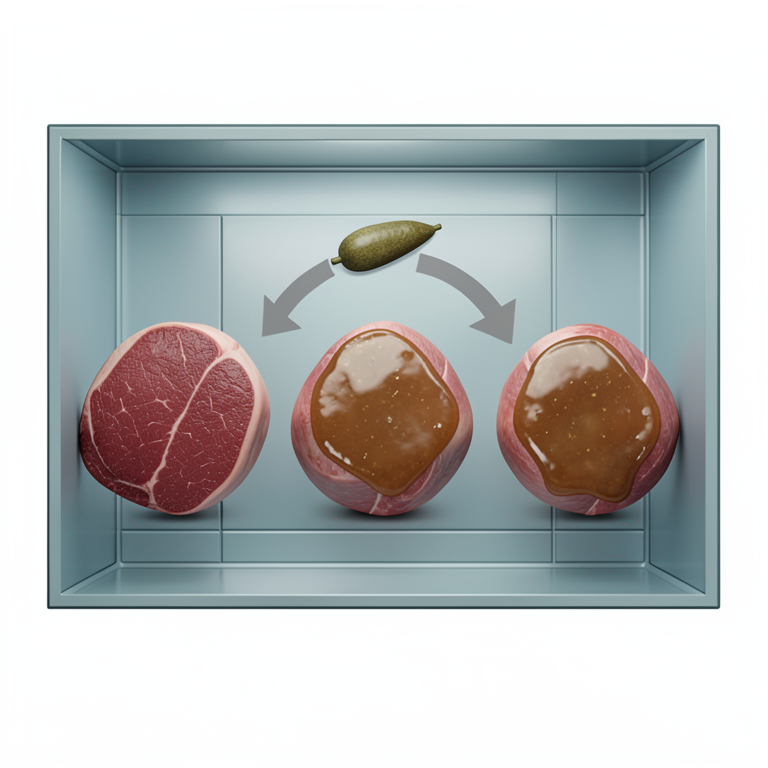
Experimental Setup
AI-generated conceptual illustration (raw beef muscle cuts). It explains the idea and does not show study data.
View source evidence ↗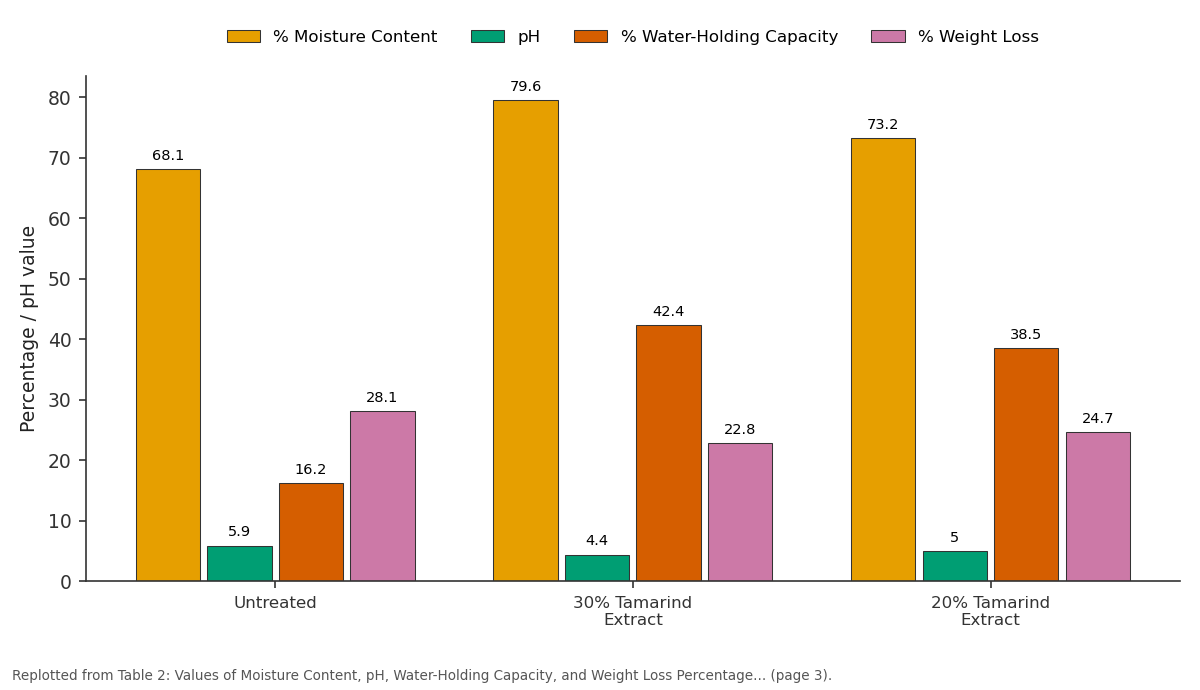
% Moisture Content and pH and more: Untreated vs 30% Tamarind Extract vs 20% Tamarind Extract
Replotted from Table 2 (page 3) of the original paper. Every bar is the paper's own table value.
View source evidence ↗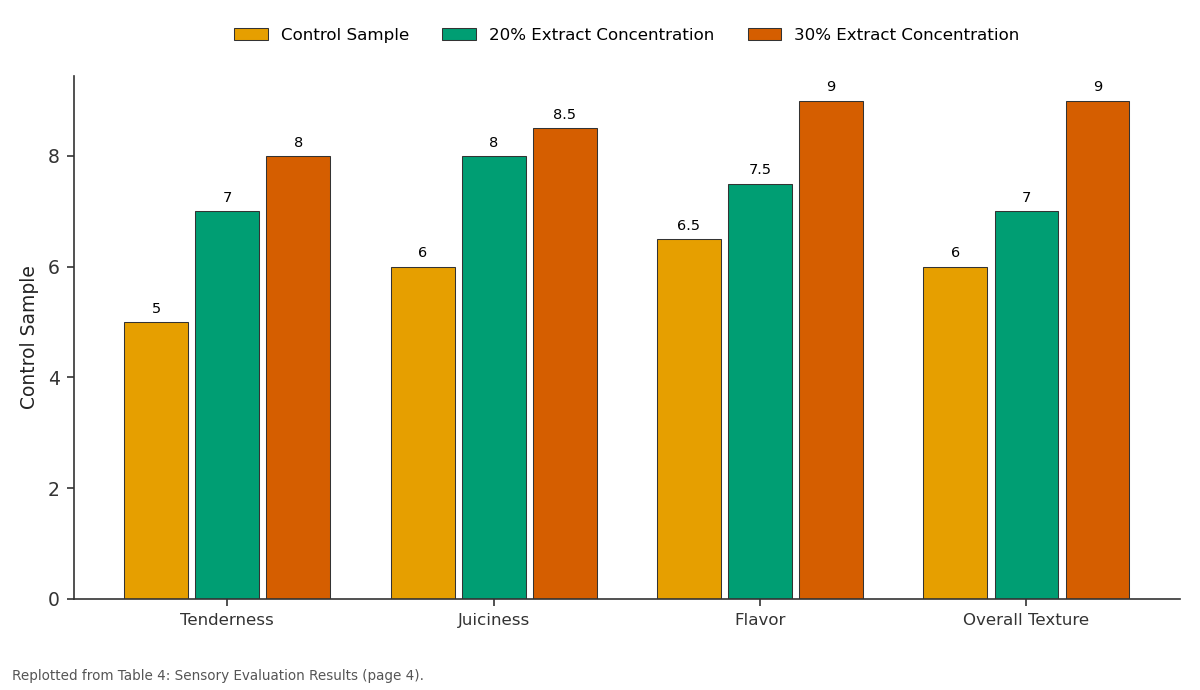
Control Sample and 20% Extract Concentration and more: Tenderness vs Juiciness vs Flavor vs Overall Texture
Replotted from Table 4 (page 4) of the original paper. Every bar is the paper's own table value.
View source evidence ↗Figures & tables
From the original paper Table 1
 Table 2
 Table 3
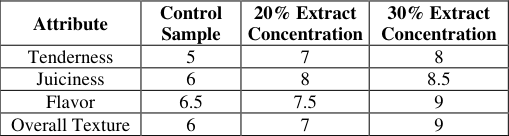 Table 4
Introduction
The human body demands for vital ingredients to build up cells as well as to support important physiological and biological processes. Thus, the body does require small quantities of these ingredients. These are meats of all kinds including beef, goat meat, fish or poultry because here contain the most important ingredients and in the required quantities needed by the human body. The components are variable and their physical and chemical properties and benefits vary according to the type, age of the animal, method of slaughter, storage and processing conditions (McAfee et al., 2010) [21] . As per Wu (2021) [34] : Meat has a wide range of amino acids, especially essential amino acids with 15-22%. Meat is a rich source of many proteins (Actin and myosin proteins) that the human body requires to build and maintain cells, especially muscle cells and body tissues for which there are no internal synthesis or plant sources unable to provide in sufficient amounts due to low levels of some essential amino acids (Barr & Gollahon, 2025) [7] . Furthermore, meat is rich in artificial and apparent fats that gives the taste of meat as well further they provide high source of energy. Protein is also a key source of many important vitamins, including the B-group vitamins such as B1, B2, B6 and particularly B12 which has a significant role in metabolism and nervous system function. Besides, meat contains zinc and iron indispensable for the maintenance of immunity and the blood. Several studies have also shown that meat promotes satiety and decreased appetite ergo is relevant for weight management (Wyness, 2016) [35] . With so many benefits of meat, therefore, make sure you are not consuming in high quantity or continuous. Meat is risky to human health: Excessive or unhealthy meat-eating can lead to a whole host of diseases such as heart disease, colorectal cancer and more. To this end, the World Health Organization encourages a judicious use of meat in the diet (Lescinsky et al., 2022) [19] .
International Journal of Agriculture and Food Science https://www.agriculturaljournals.com
One of the most important criteria addressed in this study and required for better quality meat products are tenderness, storage stability, microbiological parameters and flavor. One of the critical traits that promotes meat consumption in consumers is tenderness, and it associates with muscle structure which comprises several connective tissues. Finally, the quantity of these tissues, the muscle structure responsible for amino acid bonding in proteins and its water holding capacity will contribute to tenderness (Jayan et al., 2024) [17] . Additionally, Dave and Ghaly (2011) [10] of the studied processes reported changes in meat that result during these treatments modifying their chemical and physical composition resulting in lower nutrient value. Of all these changes, loss of tenderness is one of the leading factors responsible for reducing the willingness to consume meat among consumers. Common situations which deteriorate the tenderness are meat from old animals, exercising animals and methods that are not correct for storing meats. Moreover, degradation of muscle structural composition causes the decrease in vitamin concentration as well as water content in meat, via long-term storaging (De Corato, 2020) [11] On the other hand, the bacteria related with human diseases like coliforms and Escherichia coli increase their growth, which induce meat spoilage and deterioration that affects on consumer behavior when they buy it. This decreases the demand causing a negative effect on the economies for some Meat exporting countries who needs foreign currency, and also deprive consumers of their health benefits from consuming meat (Ferdouse, 2018) [28] . These factors have prompted many researchers and scientists to take necessary measures to prevent or reduce causes of meat deterioration. One such measure is the use of natural chemical components to eliminate many causes of spoilage and quality degradation related to tenderness, juiciness, flavor, muscle structure, and microbial spoilage (Kaya, 2024) [18] . Many researchers have pointed out the role of various natural components such as lemon juice, ginger extract, pineapple, and kiwi fruit in improving meat quality by increasing tenderness, enhancing flavor, reducing microbial content, and extending the shelf life of meat (Anaducts et al., 2023) [5] . Passos et al. (2025) [29] reported the significance of tamarind fruit (Tamarindus indica L.) in nutrition as well as in diverse medical applications. Tamarind is common in many tropical regions, growing wild and also is cultivated on a large scale in India, other South Asian countries as well as the Philippines, Venezuela, Myanmar, Bangladesh. For consumption as well as for industrial purposes, the pulp is most vital part that contains many acids such as tartaric, malic and citric acids through which a strong sour taste is provided owing to the enrichment of these acids (Limsangouan et al., 2019) [20] . Furthermore, the natural sugars and phenolic compounds as well as those dietary fibers present in its pulp have a substantial impact on water absorption while cooking. It also acts as an important antioxidant which helps in decreasing fat rancidity. It also has aroma compounds at 0.8%, giving it the taste only unmistakable by folks in Flint
Michigan. Tamarind pulp also serves as an antibacterial agent and is hyperconscious perfect diet minerals potassium calcium magnesium for enriching the various diets that humans consume. It also consists of approximately 14 percent natural fibers that can make one feel full. Leaves, seeds and bark of the plant are used in many fields like medicinal and therapeutic areas (Nagar et al., 2023) [22] . This study focuses on the use of tamarind fruit to improve the quality of red meat by employing tamarind fruit extract and investigating its effect on the physicochemical and sensory properties of red meat.
Materials and Methods Preparation of Meat Sample
The thigh area of a calf aged 24-36 months was selected as the sample for testing. The meat was cut into small pieces approximately (2 × 2) cm, then washed with distilled water and stored in a refrigerator at 4°C until use.
Preparation of Tamarind Extract
Less acidic extract was made from whole dried tamarind pods, Cleaned fruits: they were stripped of impurities, seeds and bristles. Tamarind in powder (100.00 g) was subjected to maceration in 500 ml of hot distilled water with manual stirring each 6 h until complete mixing and all tamarind juice extraction. The solution was subsequently extracted by sterile, clean muslin cloth. Extracts were prepared at concentrations of 20% and 30% for use in the meat samples which was compared to no extract (control) treatments. These 3 samples were kept in a refrigerator (4 °C) for 10 hours (Farooq et al., 2022) [13] .
Qualitative Tests 1. Moisture Content Measurement
A sample from each treatment was weighed using a sensitive balance before drying. Samples were placed in a drying oven at 105 °C for 6 hours. Each sample was then weighed separately, and the percentage of moisture content was calculated according to A.O.A.C. (1984) [2] using the following formula:
Measurement of pH
Weighed 10 grams from each sample and minced thoroughly. Then, approximately 100 ml of distilled water was added separately to each sample and mixed using a magnetic stirrer. The mixture was left to settle, and the pH was measured using a pH meter (A.O.A.C., 2019).
Measurement of Water Holding Capacity (WHC)
Water loss was calculated as percentage for each meat sample (control, 20% extract-treated and30% of extract treated) by mixing 100g of each treated sample with 100ml distilled water. Both the mixtures were then centrifuged at 1000 rpm for five minute. Using the difference in water weight before and after centrifugation, it was possible to calculate the Water Holding Capacity (WHC) of each meat sample according to Honikel (2004) [16] :
Measurement of Cooking Loss Percentage
The percentage of weight loss was calculated following the method of Ortuño et al. (2021) [26] . Ten grams from each sample were weighed and placed in polyethylene bags, ensuring they were tightly sealed. All bags were then immersed in a water bath at 70 °C for 1.5 hours. After cooking, the bags were drained of liquid and stored in a refrigerator at 4 °C. The samples were then removed, weighed, and the percentage of weight loss was calculated using the following formula:
Measurement of Bacterial Contamination by Counting Bacterial Colonies
Culture media were prepared for each type of bacteria. Plate Count Agar (PCA) was used Bacterial counts were determined in (TF) media, with the total bacterial count using standard plate count agar (SPOG), coliform bacteria counts on Violet Red Bile Agar and Escherichia coli on MacConkey Agar. Peptone water at 0.1% concentration was used to make the necessary dilutions for other media and to inoculate with various concentrations of sample (20%, 30%, control sample). Incubation followed at 36 °C for 24 h, after which colony forming units (CFU/g) were enumerated on respective plates (APHA, 2001) [6] .
Sensory Evaluation
Table 1: Sensory evaluation (tenderness, juiciness, flavor) of the meat samples which treated with tamarind extract in different concentrations by a group of specialized nutrition professors and some students from Al muthanna university /College of Agriculture/Department of Food Sciences Weights of 30 g per sample were used, cubed to 2 cm thickness × 5 cm width then grilled at 165°C as per AMSA (1995) [23] .
Results and Discussion 1. Qualitative Tests
The values of moisture content of meat samples increased in both treated samples compared to the control sample as shown in Table (2) with amount 73.2% for sample which treated by tamarind extract 20%, and increase to amount 79.6% for sample which treated by tamarind extract at a level of 30%. This increase may be due to the extract role in destruction of protein structure, releasing pores and it helps to fibrils wetting by bonding fibers with water and moisture retention (Cheok and Chin, 2012) [9] . Also a decrease in the PH value can be noted from results presented in Table 2 where the mean of pH for meat sample treated with tamarind extract 30% became significantly lower due to malic, tartaric and citric acid contained within tamarind extract. Cathepsin, which is the enzyme in charge of a form of meat softening, are activated by acids (Serdaroglu and Karaman, 2024) [32] . Data from Table (2) further highlights a substantial increase in the water-holding ability of meat. The water-holding capacity was 38.5% in the sample treated with 20% tamarind extract and 42.4% in a 30% treated sample. The decrease in pH contributes to the stabilization of the protein matrix at a 30% concentration and depending on the organoleptic properties, which have acidic polysaccharides in tamarind seeds and pulp. The two diglucoses in wheat, amylose and amylopectin, bind with water and proteins to hold on more water and less cooking losses. Furthermore, the sugars present in tamarind (galactose, glucose) also aids in creating a viscous material which holds water along with protein fibers (Cheok and Chin, 2012) [9] . Table (2) also showed a significant reduction in cooking water loss as cooked samples contained 28.1% water; however, these losses were reduced to 24.7% in the flesh of treated fish at contrasting depot levels and to 22.8% with an intermediate level of depots. This decrease is a result of the reduced pH from tartaric, malic, and citric acids which increase water-protein binding strength also by affecting the muscle protein structure in cytoplasm, decreasing protein breakdown during heating (9). Also, this effect leads to the rebuilding of muscle fibers and reduced water exit pores that contribute directly towards moisture hold-up or otherwise release from meat while cooked and stored (Naveena et al., 2004) [24] .
| Sample | % Moisture Content | pH | % Water-Holding Capacity | % Weight Loss |
|---|---|---|---|---|
| Untreated | 68.1 | 5.9 | 16.2 | 28.1 |
| 30% Tamarind Extract | 79.6 | 4.4 | 42.4 | 22.8 |
| 20% Tamarind Extract | 73.2 | 5 | 38.5 | 24.7 |
Table text extracted from the original PDF; superscript letters are shown inline. The original table image is below.
View original table image
Bacterial Count Estimation
The results shown in Table (3) showed a significant decrease in the number of bacterial colonies recorded with 30% Tamarind fleshes extract by 85% Coliform count, 88% total bacteria count and 89.9% E. coli. The elevated acidity of the citric (pyruvic and malic acids) as well as palmitic acids are believed to contribute to growth inhibition of bacteria, leading to a lower colony count (Over et al. in 2009) [27] . It also has polyphenolic compounds such as tannins, l-ferulic acid, and gallic acid. This mainly help in harming the cell structure of bacteria by and hence modifying the permeability of bacterial cell walls and disrupting their membrane structure, leading to release bacterial cell contents followed by aultimately death of [3] .
Sensory Evaluation
The results of the sensory evaluation, as shown in Table ( 4), indicated a noticeable improvement in the quality of meat treated with a 30% extract concentration. The results showed enhancement in tenderness, juiciness, flavor, and overall acceptability. This is attributed to the acids contained in tamarind extract, which play a role in increasing meat juiciness and breaking protein bonds, thereby enhancing meat tenderness and making it easier to chew and cut. Additionally, these acids provide a sour flavor and reduce the rancid taste resulting from fat oxidation (Hassan et al., 2022) [15] . Moreover, phenolic compounds contribute a mildly bitter taste that is desirable when balanced with the sour flavor. The presence of polysaccharides in tamarind fruit extract also forms a gel network that enhances meat tenderness and increases moisture content (Elsayed et al., 2016) [12] .
Conclusion
Tamarind fruit can be used as an important source of essential minerals, nutritionally and health-beneficial nutrients, and phenolic compounds that contribute to enhancing the quality of red meat and extending its storage period by improving sensory properties and desirable characteristics. It also improves product quality and prolongs shelf life. Moreover, it is a potential natural source of antioxidants and can be applied in perishable food systems.
Acknowledgement
AcknowledgmentThe authors would like to express their gratitude to the Food Science Department, College of Agriculture, University of Misan, for supporting this research work.
Figures and tables from the paper
| Type of Bacteria | Control Sample | 20% Extract | 30% Extract |
|---|---|---|---|
| Total Bacterial Count | 6.5 ×10⁵ | 1.4 × 10⁵ | 0.8 × 10⁵ |
| Coliform Bacteria | 3.1 × 10³ | 9.1× 10² | 4.6× 10² |
| E.coli | 8.9 × 10² | 1.5× 10² | 0.9 × 10² |
Table text extracted from the original PDF; superscript letters are shown inline. The original table image is below.
View original table image
| Attribute | Control Sample | 20% Extract Concentration | 30% Extract Concentration |
|---|---|---|---|
| Tenderness | 5 | 7 | 8 |
| Juiciness | 6 | 8 | 8.5 |
| Flavor | 6.5 | 7.5 | 9 |
| Overall Texture | 6 | 7 | 9 |
Table text extracted from the original PDF; superscript letters are shown inline. The original table image is below.
View original table image
References
35 in the original paper- Association of Official Analytical Chemists. Official methods of analysis. 21st ed. Method 981.12: Measurement of pH in meat products. Gaithersburg (MD): AOAC International; 2019.
- Association of Official Analytical Chemists. Official methods of analysis. 13th ed. Washington (DC): AOAC; 1984.
- Aengwanich W, Suttajit M, Srikhun T, Boonsorn T. Antibiotic effect of polyphenolic compound extracted from tamarind (Tamarindus indica L.) seed coat on productive performance of broilers. International Journal of Poultry Science. 2009;8(8):749-751.
- Alvarez C, Morán L, Keenan DF, Mullen AM, Delgado-Pando G. Mechanical and biochemical methods for rigor measurement: Relationship with eating quality. Journal of Food Quality. 2019;2019(1):1894543.
- Anaduaka EG, Chibuogwu CC, Ezugwu AL, Ezeorba TPC. Nature-derived ingredients as sustainable alternatives for tenderizing meat and meat products: An updated review. Food Biotechnology. 2023;37(2):136165.
- American Public Health Association. Compendium of methods for the microbiological examination of food. 4th ed. Washington (DC): APHA; 2001. Available from: http://aquafind.com/articles/ValueAddedfishprocess.php
- Barr B, Levitt DE, Gollahon L. Red meat amino acids for beginners: A narrative review. Nutrients. 2025;17(6):939.
- Biesalski HK. Meat as a component of a healthy dietAre there any risks or benefits if meat is avoided in the diet? Meat Science. 2005;70(3):509-524.
- Cheok CY, Chin NL. Effect of tamarind juice and salt on physical and textural changes of traditionally marinated beef satay. Journal of Food, Agriculture and Environment. 2012;10(1):43-48.
- Dave D, Ghaly AE. Meat spoilage mechanisms and preservation techniques: A critical review. American Journal of Agricultural and Biological Sciences. 2011;6(4):486-510.
- De Corato U. Improving the shelf-life and quality of fresh and minimally processed fruits and vegetables for a modern food industry: A comprehensive critical review from the traditional technologies into the most promising advancements. Critical Reviews in Food Science and Nutrition. 2020;60(6):940-975.
- Elsayed HM, Hassanien FR, Ibrahim SM, Sulieman AM. Impact of edible coatings on chemical composition, quality criteria and sensory properties of some common carp fish products. Zagazig Journal of Agricultural Research. 2016;43(2):519-531.
- Farooq S, Munir R, Imtiaz K, Sehar S, Khurshid A, Yunus N, et al. Phytochemical investigation and antioxidant activities of tamarind (Tamarindus indica L.). Notulae Botanicae Horti Agrobotanici ClujNapoca. 2022;50(4):12892-12892.
- Gray-Stuart EM. Modelling food breakdown and bolus formation during mastication [dissertation]. Palmerston North (NZ): Massey University; 2016.
- Hassan KHA, Eskander MZ, Al-Rubai'y HH. Effect of adding different concentrations of cowpea (Vigna unguiculata L.) on physicochemical and sensory properties of chicken mortadella. Basrah Journal of Agricultural Sciences. 2022;35(2):223-231.
- Honikel KO. Water-holding capacity of meat. In: te Pas MFW, Everts ME, Haagsman HP, editors. Muscle International Journal of Agriculture and Food Science https://www.agriculturaljournals.com development of livestock animals: Physiology, genetics and meat quality. Wallingford (UK): CABI Publishing; 2004. p. 389-400.
- Jayan N, Sultan N, Ullas SP. Development of nutritionally improved dates-nutmeg tart fortified with tamarind seed powder [dissertation]. Ernakulam (IN): St. Teresa's College (Autonomous); 2024.
- Kaya C. Ekonomik yumurta verimini tamamlamış broiler tavuk etlerinin atıştırmalık kurutulmuş et üretiminde kullanım olanaklarının belirlenmesi [dissertation]. 2024.
- Lescinsky H, Afshin A, Ashbaugh C, Bisignano C, Brauer M, Ferrara G, et al. Health effects associated with consumption of unprocessed red meat: A burden of proof study. Nature Medicine. 2022;28(10):20752082.
- Limsangouan N, Milasing N, Thongngam M, Khuwijitjaru P, Jittanit W. Physical and chemical properties, antioxidant capacity, and total phenolic content of xyloglucan component in tamarind (Tamarindus indica) seed extracted using subcritical water. Journal of Food Processing and Preservation. 2019;43(10):e14146.
- McAfee AJ, McSorley EM, Cuskelly GJ, Moss BW, Wallace JM, Bonham MP, et al. Red meat consumption: An overview of the risks and benefits. Meat Science. 2010;84(1):1-13.
- Nagar CK, Dash SK, Rayaguru K. Tamarind seed: Composition, applications, and value addition: A comprehensive review. Journal of Food Processing and Preservation. 2022;46(10):e16872.
- National Livestock and Meat Board. Research guidelines for cookery, sensory evaluation, and instrumental tenderness measurements of fresh meat. Champaign (IL): American Meat Science Association; 1995.
- Naveena BM, Mendiratta SK, Anjaneyulu ASR. Tenderization of buffalo meat using plant proteases from Cucumis trigonus Roxb (Kachri) and Zingiber officinale Roscoe (Ginger rhizome). Meat Science. 2004;68(3):363-369.
- Omaye AT, Omaye ST. Caveats for the good and bad of dietary red meat. Antioxidants. 2019;8(11):544.
- Ortuño J, Mateo L, Rodríguez-Estrada MT, Bañón S. Effects of sous vide vs grilling methods on lamb meat colour and lipid stability during cooking and heated display. Meat Science. 2021;171:108287.
- Over KF, Hettiarachchy N, Johnson MG, Davis B. Effect of organic acids and plant extracts on Escherichia coli O157:H7, Listeria monocytogenes, and Salmonella Typhimurium in broth culture model and chicken meat systems. Journal of Food Science. 2009;74(9):M515-M521.
- Chattogram (BD): Chattogram Veterinary and Animal Sciences University; 2018.
- Passos RSFT, de Sousa CCA, da Silva MC, Herrero AM, Ruiz-Capillas C, Cavalheiro CP. Tamarind (Tamarindus indica L.) components as a sustainable replacement for pork meat in frankfurter sausages. Foods. 2025;14(2):197.
- Patriani P, Sitepu SY, Sari TV, Hasanah U. Effect of velvet tamarind (Dialium indium) marination on the physicochemical quality of culled chicken meat. In: IOP Conference Series: Earth and Environmental Science. 2024 May;1341(1):012030. Bristol (UK): IOP Publishing.
- Pereira PMDCC, Vicente AFDRB. Meat nutritional composition and nutritive role in the human diet. Meat Science. 2013;93(3):586-592.
- Serdaroglu M, Yüncü-Boyacı Ö, Karaman M. Enhancing meat quality through marination: Principle, ingredients and effects. Food Science and Applied Biotechnology. 2024;7(2):162-181.
- Verma AK, Umaram P, Singh VP, Mehta N. Tender meat attracts consumers: Beneath other mechanical processes in the meat industry. 2019.
- Wu G. Amino acids: Biochemistry and nutrition. 2nd ed. Boca Raton (FL): CRC Press; 2021.
- Wyness L. The role of red meat in the diet: Nutrition and health benefits. Proceedings of the Nutrition Society. 2016;75(3):227-232.