
Research article · 2025 · Full text
International Journal of Agriculture and Food ScienceCompositional studies on oils and fats
Volume 7(8) · Pages 927–932 · DOI: 10.33545/2664844x.2025.v7.i8h.660 ↗
Research areasAnalytical Chemistry and ChromatographyAdvanced Chemical Sensor TechnologiesFood Chemistry and Fat Analysis
Abstract
Author-writtenIndia is one of the largest producers of oil seeds in the world. Comparative study of composition and physio-chemical properties of Soya bean oil, Rice Bran oil, Karanj seed oil, Mahua seed oil, Orange seed oil was carried out. Results showed that Mahua seed oil has highest Acid value of 3.1 (mg/KOH) and rice bran oil has lowest that is 1.3 (mg/KOH). In GLC Palmatic acid content of Karanj seed oil is highest. Stearic acid content of Mahua seed oil is high. Linoleic acid content of Rice bran oil is high and Linolenic acid content of Orange seed oil is highest.
Summary
Source-checkedPlain-language reading of the full paper, prepared with AI and checked against the text. Each point links to the authors' own words.
Why it matters
- India is a major global producer of oilseeds, with annual production and consumption of oils and fats reaching approximately 119 million tonnes and growing by 2-6 million tonnes annually. View evidence ↗
- Soyabean is the world's dominant oilseed because of its high-quality protein, valuable edible oil, and favorable agro-economic traits. View evidence ↗
- Important non-conventional oils include rice bran, Mahua seed, Karanj seed, and orange seed oils. View evidence ↗
The question
- The study aimed to perform a comparative analysis of the composition and physicochemical properties of five oils: Soya bean, Rice Bran, Karanj seed, Mahua seed, and Orange seed oil. View evidence ↗
What they did
- All conventional and non-conventional oilseed oils used in the study were extracted using the Soxhlet extraction method. View evidence ↗
- Acid value was determined by titrating 5 to 10 g of oil sample mixed with 50 to 100 ml of neutralized hot ethyl alcohol and phenolphthalein indicator. View evidence ↗
- The fatty acid composition of the oils was determined using Gas Liquid Chromatography (GLC). View evidence ↗
- For GLC analysis, methyl esters were prepared by reacting 350 mg of oil with methanolic sodium hydroxide and boron trifluoride. View evidence ↗
What they found
- Mahua seed oil exhibited the highest acid value at 3.1 mg/KOH, while rice bran oil had the lowest at 1.3 mg/KOH. View evidence ↗
- Karanj seed oil had the highest palmitic acid content (32.2%), followed by rice bran oil (28.8%). View evidence ↗
- Orange seed oil contained the highest amount of oleic acid (49.24%), followed by Karanj seed oil (47.02%). View evidence ↗
- Rice bran oil had the highest linoleic acid content (47.90%), while Karanj seed oil had the lowest (6.83%). View evidence ↗
- Soyabean oil had the highest linolenic acid content (28.74%), while rice bran oil had the lowest (3.3%). View evidence ↗
What it means
- The authors conclude that their work successfully characterized the chemical composition and physicochemical properties of various conventional and non-conventional oils extracted from Indian oilseeds. View evidence ↗
Visual summary
3 visualsIllustrations explain the paper; charts are replotted from the paper's own table values.
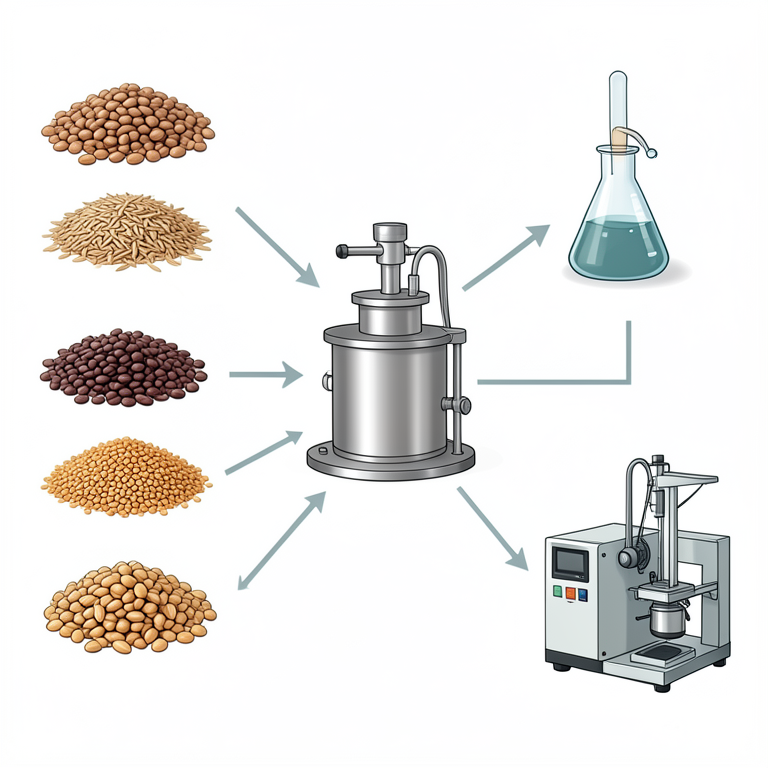
Comparative Oil Analysis Workflow
AI-generated conceptual illustration (Soya bean, rice bran, Karanj seed, Mahua seed, and orange seed). It explains the idea and does not show study data.
View source evidence ↗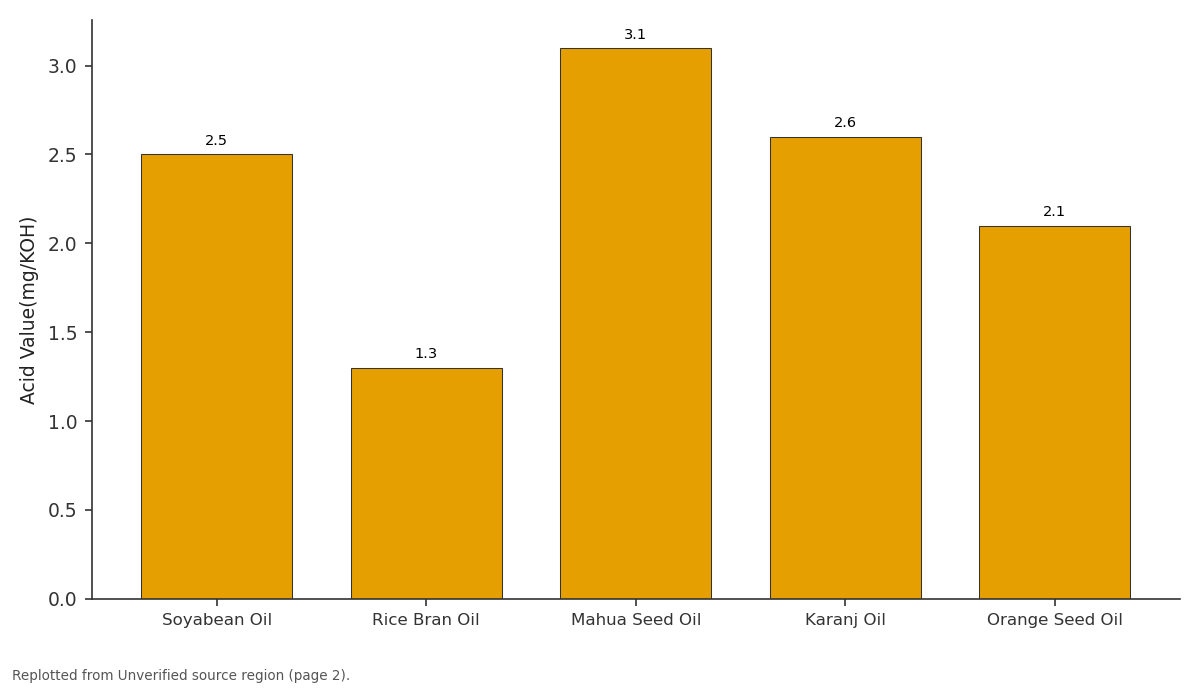
Acid Value(mg/KOH): Soyabean Oil vs Rice Bran Oil vs Mahua Seed Oil vs Karanj Oil vs Orange Seed Oil
Replotted from a table (page 2) of the original paper. Every bar is the paper's own table value.
View source evidence ↗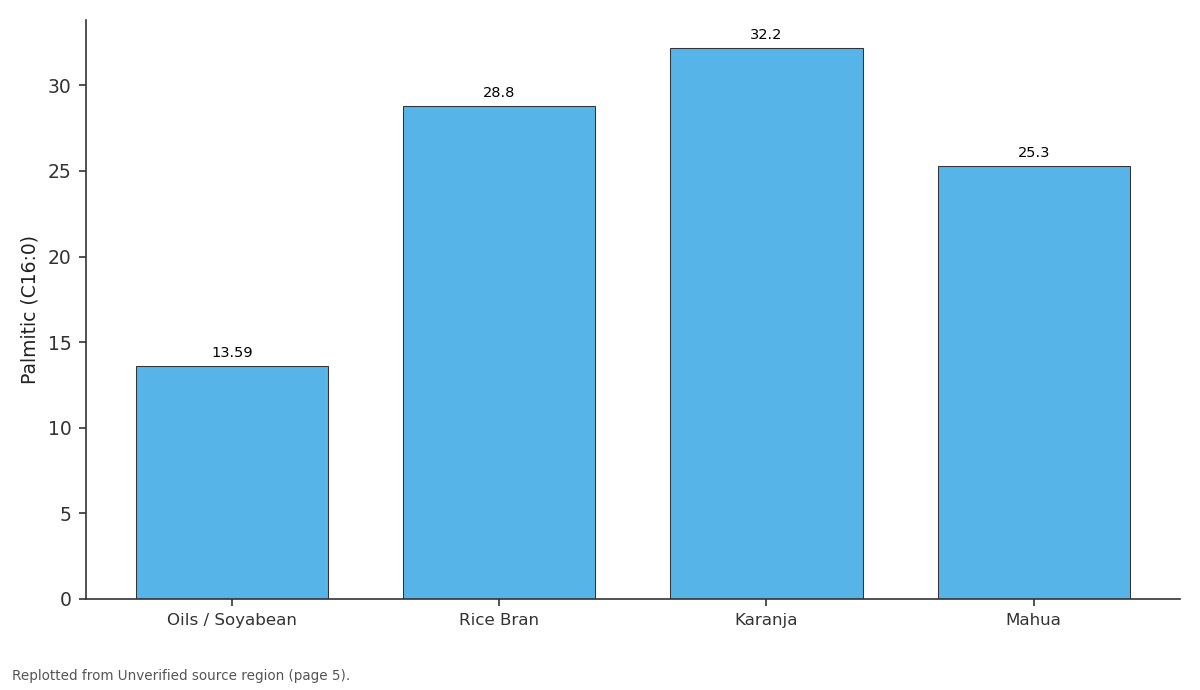
Palmitic (C16:0): Oils / Soyabean vs Rice Bran vs Karanja vs Mahua
Replotted from a table (page 5) of the original paper. Every bar is the paper's own table value.
View source evidence ↗Figures & tables
From the original paper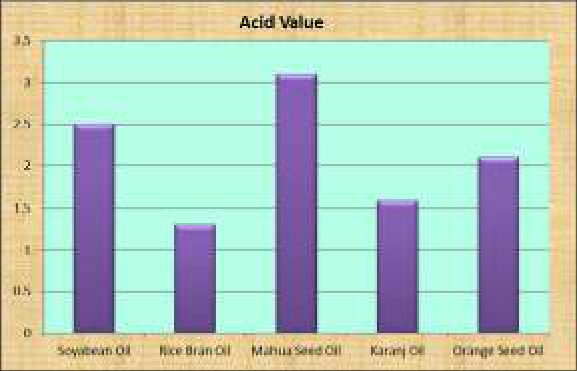 Figure 1
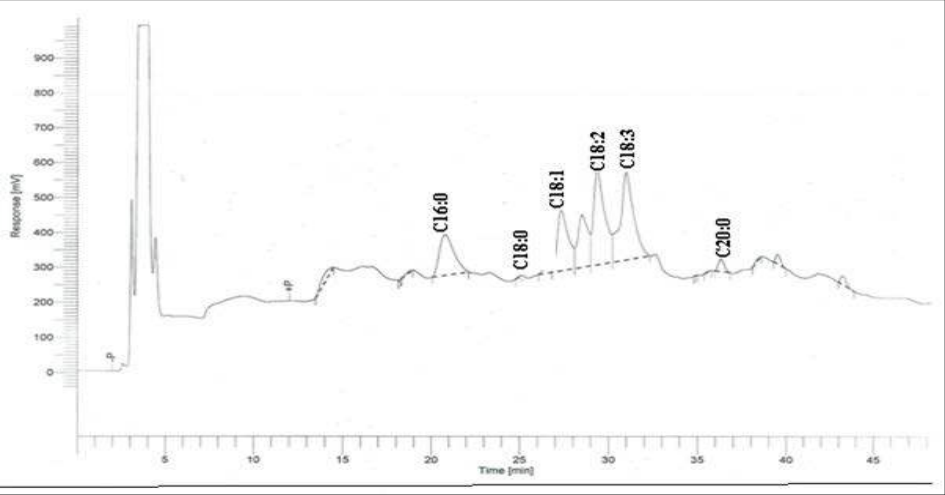 Figure 2
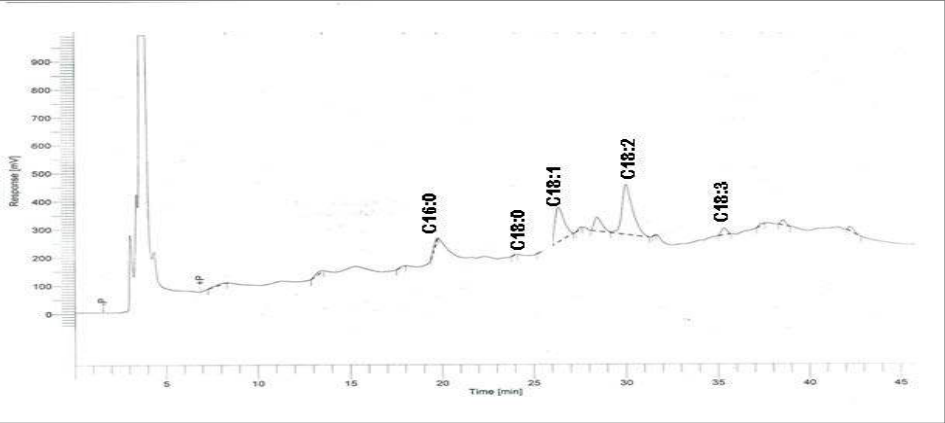 Figure 3
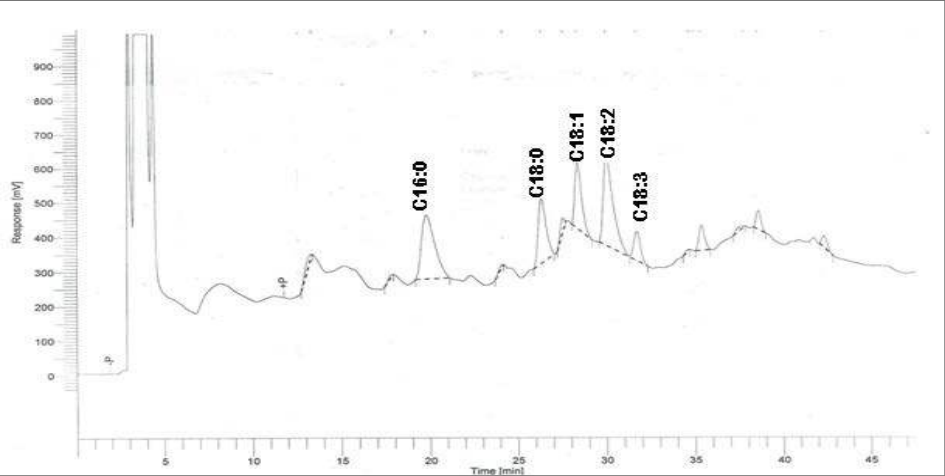 Figure 4
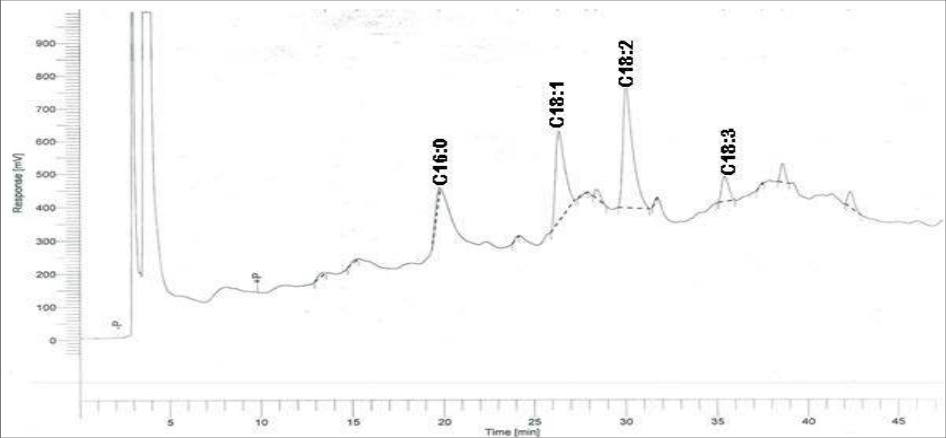 Figure 5
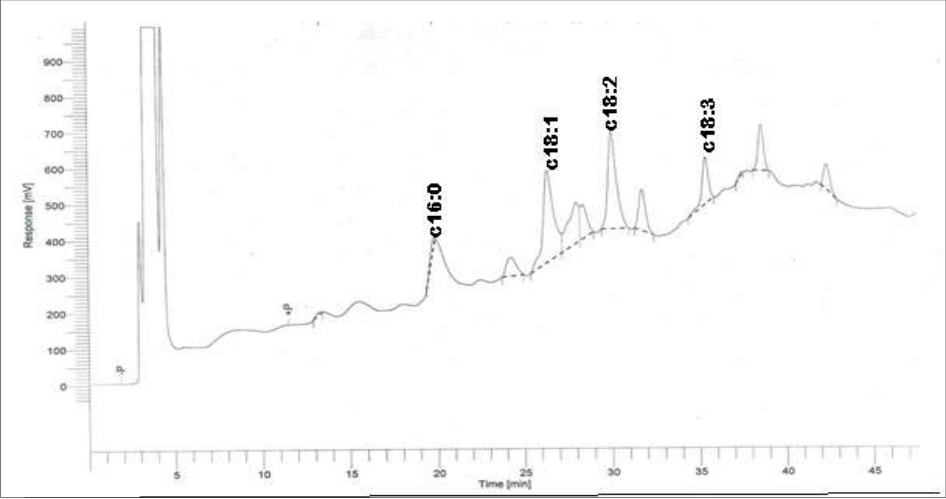 Figure 6
Introduction
India is one of the largest producers of oilseeds in world. Annual production and consumption of oils and fats is about 119 million tonnes and rising steadily at a rate of 2-6 million tones per year. In India 70 percent area of total oilseed crops is covered by soya bean. Among non conventional oils rice bran oil, Mahua seed oil, Karanj seed oil and orange seed oil are the most important. The environmental conditions are good for growth of oilseeds so in India large no of oilseed processing plants are present. Soyabean is dominant oilseed produced in the world, due to its favorable agro economic characteristics, its high quality protein and its valuable edible oil. The rice bran is the byproduct of rice milling and bran layer contains 18-22 percent oil. The rice bran oil is having high medicinal value and therapeutical applications. The oryzanol present in rice bran oil is effective for lowering blood cholesterol. Rice bran oil also acts as anticancer and antiinfection agent in humans. Karanj seed oil is used for healing, antiseptic and homeostatic effect by ayurvedic practitioners. It also used for skin diseases and rheumatic part. The Mahua seed oil is edible and also used as a laxative for treating habitual constipation, piles and haemorrhoids and also as emetic. The orange seed has therapeutic properties are antiseptic, anti depressant, antispasmodic, anti-inflammatory, carminative and tonic. This section includes the fallowing activities • Study of different oils produced in India like conventional as well as non conventional oils. The study is focused on the total area of cultivation, annual production, oil extraction plants, per capita consumption and environmental conditions. • Soyabean oil: The area of cultivation is determined and total annual production with per capita consumption was studied with respect to its description of tree, habitat and occurrence. Comparative study of soya oil is carried with composition and physicchemical properties. The fatty acid composition was determined by GLC. • Rice bran oil: It is non conventional oil produced from rice bran. Utilization of rice bran by-product is carried for production of oil. Evolution of compositional and physicchemical properties, health benefits with medicinal uses were determined. • Orange seed oil: Evolution of importance of environmental conditions with tree description, habitat and occurrence was identified. The composition and properties were determined and comparative study was carried with its properties. Use of orange seed oil in pharmaceuticals was determined. • Mahua seed oil: The standard method of oil extraction, its utilization, nutritional properties and health benefits were determined. • Karanj seed oil: Karanj seed oil is commonly used for meditational purpose. It is having health benefits. Chemical composition and all properties were determined.
Materials and Method Determination of Acid Value Procedure
Mix the oil or melted fat thoroughly before weighing.
Weigh accurately about 5 to 10 g of cooled oil sample in a 250 ml conical flask and add 50 ml to 100 ml of freshly neutralized hot ethyl alcohol and about one ml of phenolphthalein indicator solution. Boil the mixture for about five minutes and titrate while hot against standard alkali solution shaking vigorously during the titration. The weight of the oil/fat taken for the estimation and the strength of the alkali used for titration shall be such that the volume of alkali required for the titration does not exceed 10 ml.
Calculation
Calculation
Determination of Fatty acid composition of Oils and Fats by Gas Liquid Chromatography
Prepare the methyl esters of the fatty acids. The method using boron trifloride gives good results and is preferable to alternative methods which may be used when boron trifloride is not available. Because of the toxic character of boron trifloride various operations must be performed under a ventilated hood. All glass ware must be washed with water immediately after use. If the oil or fatty acids include fatty acids containing more than 2 double bonds it is advisable to purge the air from the methanol and the flask by passing a stream of nitrogen into the methanol for a few minutes. Transfer about 350 mg of clear oil to a 50 ml conical flask, add 6 ml of 0.5 N methanolic sod. hydroxide solution, 7 ml of boron trifloride solution and a boiling chip. Fit the condenser to the flask. Boil under reflux until the droplets of oil disappear (5-10 minutes). Add the appropriate amount of boron trifloride solution with a bulb or automatic pipette through the top of the condenser. Continue boiling for 2 minutes. Add 2-5 ml of heptane to the boiling mixture through the top of the condenser. Continue boiling for 1 minute. Withdraw the source of heat and then remove the condenser. Add a small amount of saturated Sod. Chloride solution to the flask in order to bring the level of liquid into the neck of the flask. Transfer about 1 ml of the upper layer (Heptane solution) into a test tube with a ground glass neck and add a little anhydrous Sod. Sulphate to remove any trace of water. This solution will contain about 5 -10% of methyl esters and may be injected directly into the column of gas liquid chromatograph.
Results and Discussions Acid value of oils
The acid values of different vegetable oils under study are shown below:
Acid value of oils
Acid value of oils
Figures and tables from the paper
References
7 in the original paper- AOAC International. Official methods of analysis. 17th ed. Vol. I. Horwitz W, editor. Maryland (US): Association of Official Analytical Chemists, Inc.; 2000.
- Babu AK, Devaradjane G. Vegetable oils and their derivatives as fuels for CI: an overview. SAE Technical Paper. 2003;2003-01-0767.
- Bureau of Indian Standards (BIS). IS: 548, Part I - Method of sampling and tests for oils and fats. New Delhi: BIS; 1964.
- Handbook of food analysis. Part XIII. 1984. p. 88.
- Rashid U, Ibrahim M, Yasin S, Yunus R, Taufiq-Yap YH, Knothe G. Production of biodiesel from waste cooking oil using bifunctional heterogeneous solid catalysts. Ind Crops Prod. 2013;45:355-359.
- Singh A, Singh IS. Studies on the oxidation of oils and fats. Food Chem. 1991;40(2):221-228.
- Ali Y, Hanna MA. Alternative diesel fuels from vegetable oils. Bioresour Technol. 1994;50(2):153-163.