
Research article · 2025 · Full text
International Journal of Geography Geology and EnvironmentUrban drinking water security: A comprehensive review of challenges, frameworks, and strategies
Volume 7(8) · Pages 23–34 · DOI: 10.22271/27067483.2025.v7.i8a.391 ↗
Research areasChild Nutrition and Water AccessWater resources management and optimization
Abstract
Author-writtenUrban drinking water security is a critical pillar of sustainable urban development, directly influencing public health, economic productivity, and social equity. As cities worldwide contend with rapid population growth, climate change, and increasing resource competition, ensuring reliable, safe, and affordable water access for all urban residents has become an urgent and complex challenge. This review systematically examines the state of urban drinking water security, focusing on how the concept is defined and assessed, the frameworks and indicators employed, the principal drivers and challenges, and the governance and policy interventions that have proven effective. The study aims to identify knowledge gaps and propose actionable recommendations for advancing urban water security. A systematic literature review was conducted following the PRISMA guidelines, encompassing peer-reviewed articles, institutional reports, and global case studies published in recent years. The review synthesizes evidence on assessment frameworks particularly indicator-based tools such as the Water Security Assessment Tool (WATSAT) and evaluates their application across diverse urban contexts. The findings reveal that urban water security is inherently multi-dimensional, requiring integrated and adaptive assessment frameworks that address water supply, sanitation, productivity, disaster risk, environmental quality, and governance. Ultimately, strengthening urban water security is fundamental to achieving inclusive, healthy, and sustainable urban futures.
Summary
Source-checkedPlain-language reading of the full paper, prepared with AI and checked against the text. Each point links to the authors' own words.
Why it matters
- Urban drinking water security is essential for sustainable city development because it directly impacts social equity, economic productivity, and public health. View evidence ↗
- Providing safe, affordable, and reliable water access has become an urgent challenge due to resource competition, climate change, and rapid global population growth. View evidence ↗
- Urban expansion strains governance frameworks, infrastructure, and water resources, leading to ongoing issues with service reliability, equitable distribution, and water quality. View evidence ↗
What they did
- The authors performed a systematic literature review using PRISMA guidelines, analyzing global case studies, institutional reports, and peer-reviewed articles. View evidence ↗
- The review's scope was limited to English-language, peer-reviewed publications from 2000 to 2025 that focused on urban environments. View evidence ↗
- High-quality scholarly literature was sourced from databases including Google Scholar, Web of Science, and Scopus. View evidence ↗
What they found
- Urban water security is multi-dimensional and requires adaptive frameworks that integrate governance, environmental quality, disaster risk, productivity, sanitation, and water supply. View evidence ↗
- The Water Security Assessment Tool (WATSAT) uses normalized variables like water quality parameters and per capita supply to create a Water Security Index (WSI) scored from 1 to 5. View evidence ↗
- Climate change acts as a risk multiplier, potentially leaving up to half of the global urban population in water-scarce regions by 2050. View evidence ↗
- Case studies from around the world show that stakeholder engagement, adaptive management, and integrated planning are key to creating resilient urban water systems. View evidence ↗
- The use of digital twins, IoT sensors, and AI has improved operational efficiency and service reliability while reducing non-revenue water through predictive maintenance. View evidence ↗
- Nature-based solutions, including permeable pavements, green roofs, and wetlands, help mitigate flood risks and urban heat while recharging groundwater and managing stormwater. View evidence ↗
What it means
- The authors conclude that cities can create sustainable and inclusive futures by prioritizing resilience, equity, and integrated approaches to water security. View evidence ↗
- Building adaptive and resilient water systems requires the adoption of community-driven interventions, nature-based solutions, and technological advancements. View evidence ↗
- A significant limitation of current indicator-based frameworks is the lack of high-quality, granular data at the neighborhood or intra-city level. View evidence ↗
- The absence of standardized indicators and universal definitions makes it difficult to generalize findings or compare results across different studies. View evidence ↗
Visual summary
2 visualsIllustrations explain the paper; they do not show study data.

Dimensions of Urban Water Security
AI-generated conceptual illustration (Urban city infrastructure and water cycle). It explains the idea and does not show study data.
View source evidence ↗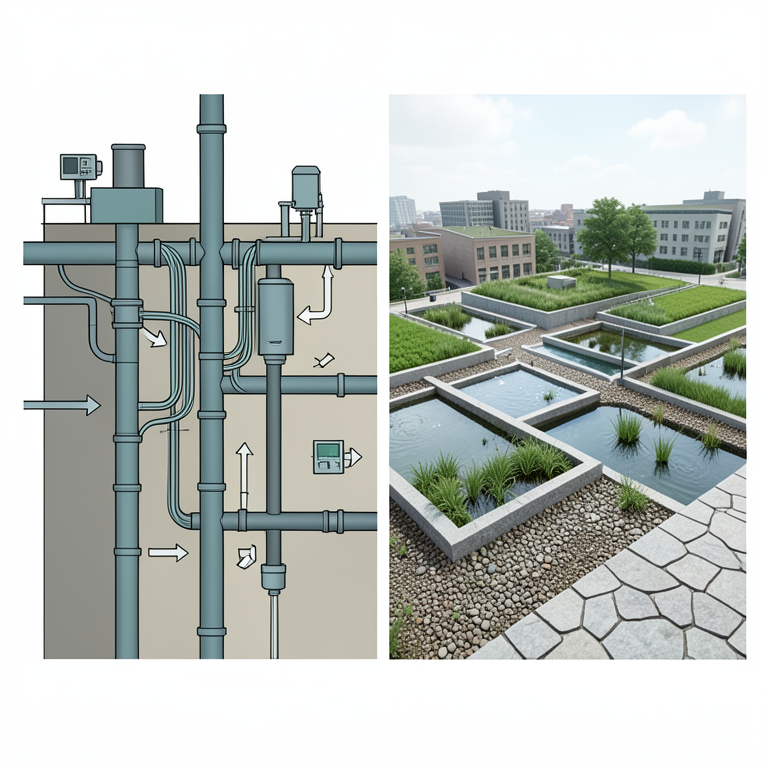
Integrated Water Security Solutions
AI-generated conceptual illustration (Urban city infrastructure with water management systems). It explains the idea and does not show study data.
View source evidence ↗Figures & tables
From the original paper Table 1
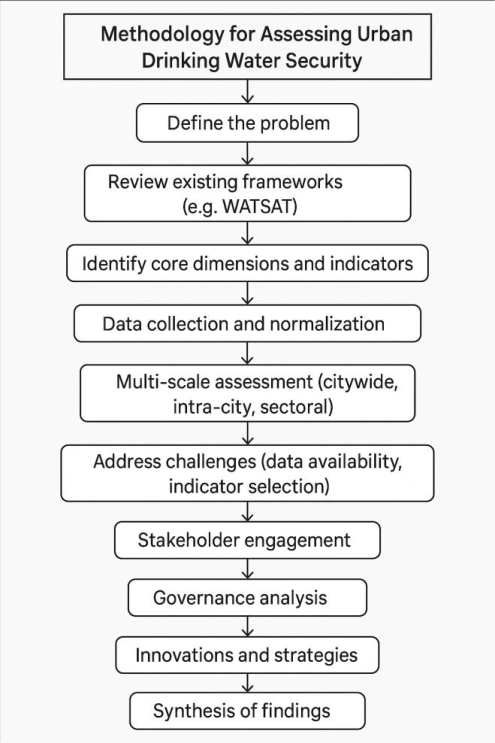 Figure 1
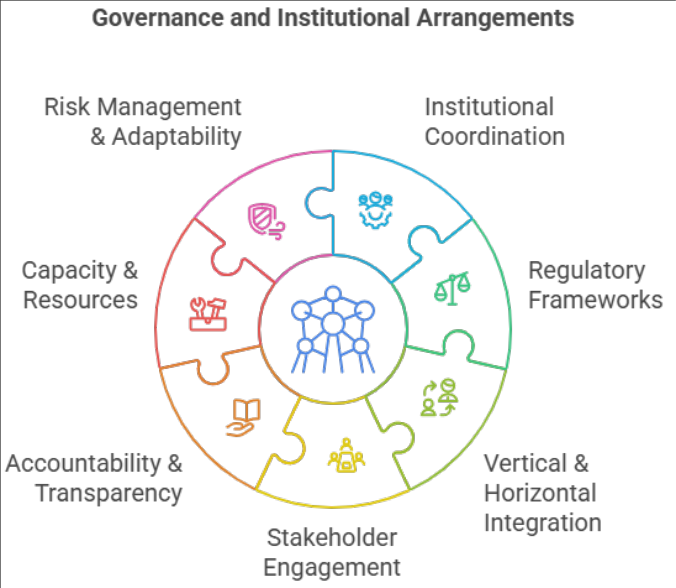 Figure 2
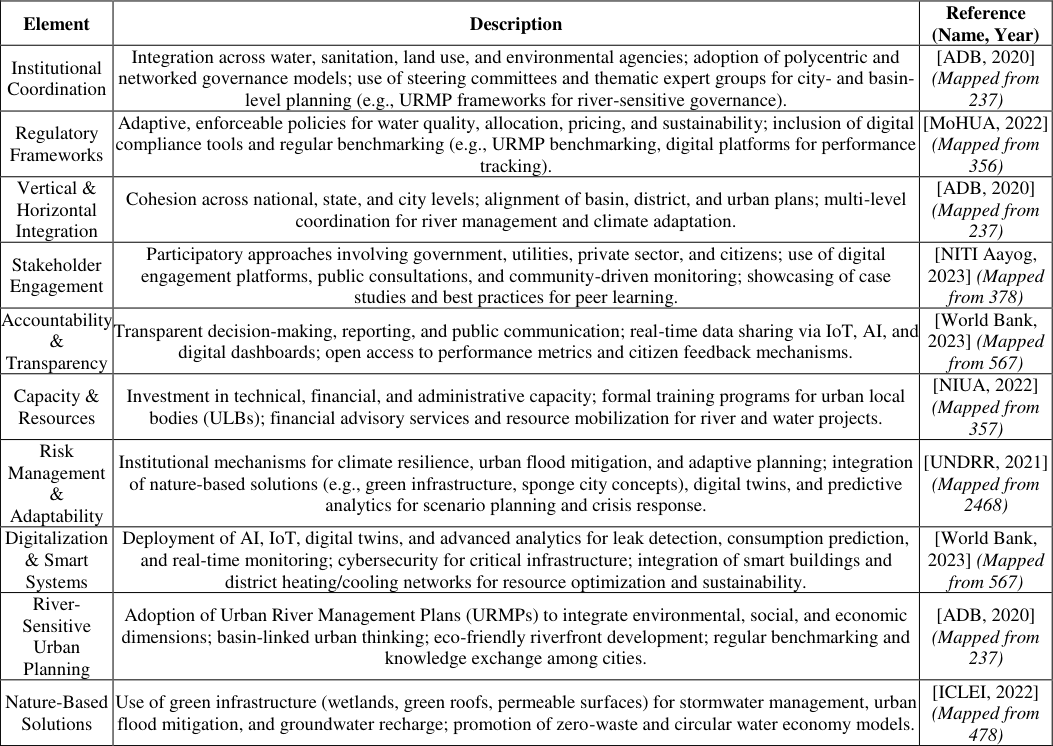 Table 2
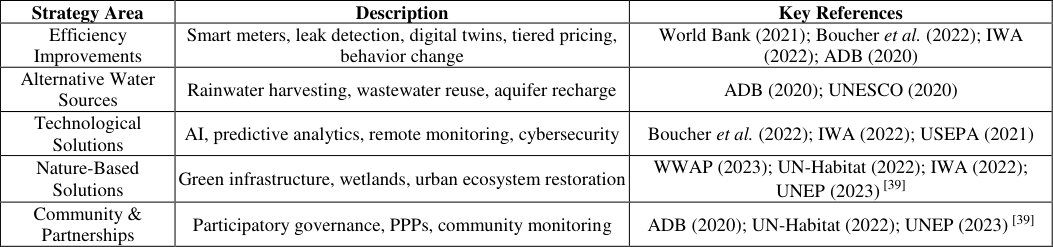 Table 3
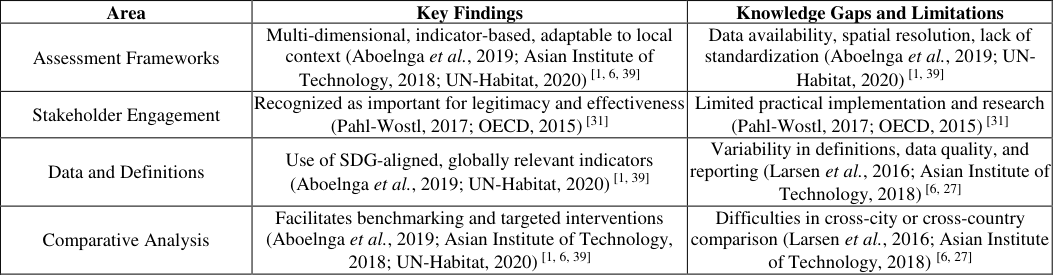 Table 4
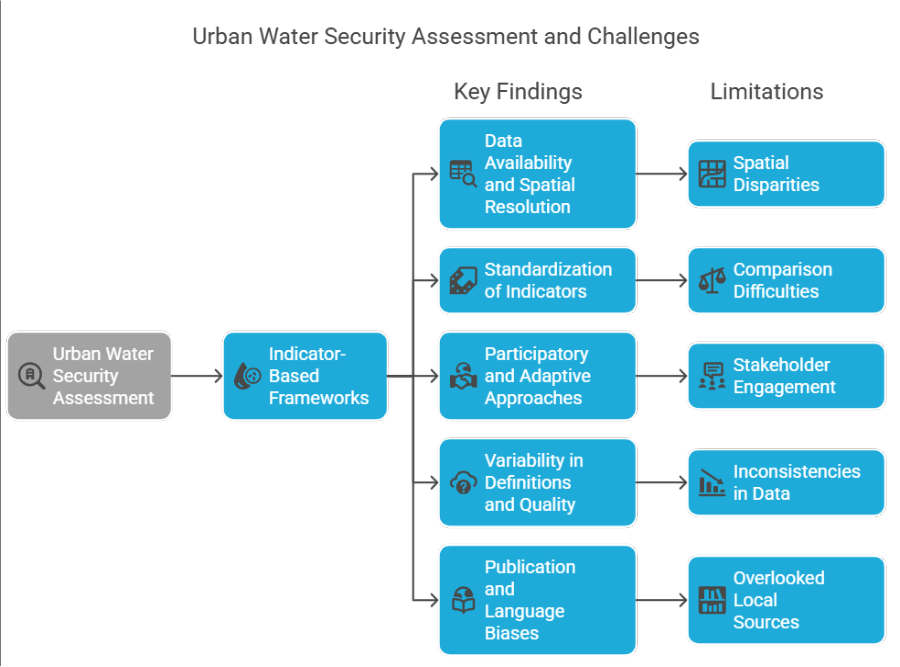 Figure 3
Introduction
Urban drinking water security forms the backbone of sustainable urban development, ensuring that city populations have reliable access to safe and affordable drinking water (Aboelnga et al., 2019) [1] . The importance of this issue has intensified in recent years, driven by the rapid pace of global urbanization. As cities grow, the demand for water rises and the complexity of managing urban water systems increases (Liu et al., 2017; UN-Habitat, 2020) [28, 39] . This expansion places significant strain on existing water resources, infrastructure, and governance frameworks, resulting in persistent challenges related to water quality, equitable distribution, and service reliability (Aboelnga et al., 2019) [1] . The shift in urban demographics has also heightened concerns about water scarcity, pollution, and disparities in service provision (Liu et al., 2017; UN-Habitat, 2020) [28,39] . Addressing these challenges requires robust conceptual frameworks and assessment tools that can inform both policy and practice. Recent advances, such as the Water Security Assessment Tool (WATSAT), provide indicator-based methodologies for evaluating multiple dimensions of urban water securityincluding supply, sanitation, governance, and environmental sustainability (Aboelnga et al., 2019; Larsen et al., 2016; UN-Habitat, 2020) [1, 39, 27] . Tools like WATSAT utilize a multi-layered structure of dimensions, indicators, and variables to generate a comprehensive Water Security Index (WSI), offering a holistic view of a city's water security status (Aboelnga et al., 2019; Larsen et al., 2016) [1,27] . This review systematically examines the literature on urban drinking water security, focusing on definitions, assessment methods, key indicators and frameworks, principal drivers and challenges, and effective governance and policy interventions (Aboelnga et al., 2019; Larsen et al., 2016) [1,27] . The central research questions addressed are: How is urban water security conceptualized and measured? Which frameworks and indicators are most effective for assessment?
What are the main challenges and drivers influencing urban water security? Which governance and policy strategies have been successful in addressing these challenges?
By exploring these questions, this review aims to provide a comprehensive understanding of the current state of urban drinking water security and to identify pathways for enhancing resilience and equity in rapidly urbanizing environments (Aboelnga et al., 2019; Larsen et al., 2016; UN-Habitat, 2020) [1,39,27] .
Conceptualizing Urban Drinking Water Security
Urban water security is broadly defined as the ability of cities to provide sufficient, safe, and affordable water for all residents, while effectively managing risks such as scarcity, pollution, disasters, and the impacts of climate change (Aboelnga et al., 2019; Larsen et al., 2016; Liu et al., 2017) [1, 8, 28] . This concept aligns with the principles of the United Nations' Sustainable Development Goals (SDGs), particularly SDG 6, which emphasizes universal access to safe and affordable drinking water (United Nations, 2015; UN-Habitat, 2020) [39,41] .
Key Dimensions of Urban Water Security
Frameworks for assessing urban water security typically include multiple interrelated dimensions (Aboelnga et al., 2019; Larsen et al., 2016; UN-Habitat, 2020) [1,39,27] : Quantity (Supply Adequacy): Ensuring that the water supply meets the needs of the population without overexploiting resources (Aboelnga et al., 2019; UN-Habitat, 2020) [1,39] . Quality (Safety Standards): Guaranteeing that water meets health and safety standards, free from contaminants (WHO, 2017; Aboelnga et al., 2019) [1,44] . Accessibility (Equitable Distribution): Making water available to all segments of the urban population, including marginalized groups (Aboelnga et al., 2019; UN-Habitat, 2020) [1,39] . Reliability (Consistency of Service): Providing a continuous and dependable supply, minimizing interruptions (Aboelnga et al., 2019; Larsen et al., 2016) [1,27] . Affordability (Cost Relative to Income): Ensuring water is affordable and does not impose a financial burden on households (Aboelnga et al., 2019; UN-Habitat, 2020) [1, 39] . Governance (Policy and Institutional Effectiveness): Implementing effective policies, regulations, and institutional arrangements to manage water resources and services (Larsen et al., 2016; UN-Habitat, 2020) [27,39] .
Multidisciplinary and Integrated Approaches
Modern frameworks recognize that urban water security is inherently multidisciplinary, requiring the integration of technical, social, economic, and environmental perspectives (Aboelnga et al., 2019; Larsen et al., 2016; UN-Habitat, 2020) [1,27,39] . For example, the Water Security Assessment Tool (WATSAT) and other indicator-based frameworks employ hierarchical structuredimensions, indicators, and variablesto assess water security at various spatial and administrative scales (Aboelnga et al., 2019; UN-Habitat, 2020) [1,39] . This approach enables both broad citywide assessments and detailed analyses of neighborhood or sectoral disparities (Larsen et al., 2016; UN-Habitat, 2020) [27, 39] . Integrated Urban Water Management (IUWM) is a leading approach that aligns water supply, sanitation, stormwater, and wastewater management with land use, economic development, and environmental protection. IUWM emphasizes cross-sectoral coordination, stakeholder participation, and the use of both supply-side and demandside strategies to achieve sustainable, resilient, and equitable urban water systems (Larsen et al., 2016) [27] . [1,39,27] . [1,27,37,30,32] . PRISMA provides a 27item checklist and a four-phase flow diagram that guide researchers through the identification, screening, eligibility, and inclusion of studies for review ( [37,30,32] . This structure helps authors clearly report the rationale for the review, the methods employed, and the findings in a standardized and replicable manner ( [37,30,32] . [30,32] . This involved: Identifying relevant databases: Peer-reviewed databases such as Scopus, Web of Science, and Google Scholar were used to access high-quality scholarly literature (Tranfield et al., 2003). Defining keywords and search strings: Core keywords and Boolean operators were employed to capture a wide scope of literature, including terms such as "urban water security", "assessment frameworks", "urban resilience", and "drinking water access" (Cook & Bakker, 2012; Romero-Lankao & Gnatz, 2016) [8,19] . Setting inclusion and exclusion criteria: The review was limited to peer-reviewed English-language publications focused on urban contexts and published between 2000 and 2025, aligning with established best practices for systematic review filtering (Page et al., 2021) [32] .
Methodology
Methodology
Screening and Selection
The PRISMA 2020 framework (Preferred Reporting Items for Systematic Reviews and Meta-Analyses) was used to enhance transparency and replicability during the article selection process (Page et al., 2021) [32] . This four-stage process included: Identification: Retrieving studies from selected databases and grey literature sources. A PRISMA flow diagram was developed to visually summarize the number of studies identified, screened, excluded, and included, along with reasons for exclusion at the full-text stage (Moher et al., 2009; Page et al., 2021) [30,32] .
Data Extraction and Synthesis
Data Extraction and Synthesis
Innovations and Best Practices
Synthesis methods in systematic reviews may be narrative providing a qualitative integration of findings or quantitative, such as meta-analysis, depending on the nature and comparability of the data extracted (Moher et al., 2009; Page et al., 2021; Shamseer et al., 2015) [37,30,32] . The PRISMA checklist ensures that all essential components including search strategy, study selection, data extraction, synthesis methods, and limitations are transparently reported (Moher et al., 2009; Page et al., 2021; Shamseer et al., 2015) [37,30,32] . In summary, the PRISMA framework provides a robust methodological foundation for conducting systematic reviews in this field, enhancing the clarity, reliability, and reproducibility of the evidence base on urban drinking water security (Moher et [1,27,37,30,32] .
Assessment of Frameworks and Indicators 4.1 Overview of Existing Frameworks
One of the most prominent tools for assessing urban water security is the Water Security Assessment Tool (WATSAT), developed by the Asian Institute of Technology. WATSAT employs a multi-layered, indicator-based methodology to provide city authorities with an objective evaluation of their water security status. The tool is designed to be userfriendly and flexible, enabling its application across diverse urban contexts (Aboelnga et al., 2019; Asian Institute of Technology, 2018; Larsen et al., 2016) [1, 6. 27] .
Core Dimensions and Structure
WATSAT's framework is structured into three layers: Dimensions: Five broad aspects of water security. Indicators: Twelve measurable indicators distributed across the dimensions.
Variables: Specific, context-relevant variables chosen by users to reflect local realities (Aboelnga et al., 2019; Asian Institute of Technology, 2018; UN-Habitat, 2020) [1,6,39] .
The five core dimensions measured are 1. Water Supply and Sanitation: Evaluates access to and reliability of water supply and sanitation services.
Water Productivity:
Assesses the efficiency of water use in economic and social activities. [1,6,39,27] .
Each indicator within these dimensions is quantified using specific variables (e.g., per capita water supply, frequency of service interruptions, water quality parameters), which are normalized and scored to contribute to an overall Water Security Index (WSI), ranging from 1 to 5 (Aboelnga et al., 2019; Asian Institute of Technology, 2018; UN-Habitat, 2020) [1,6,39] .
Alignment with Global Standards
Indicators are selected based on their relevance, data availability, and alignment with international benchmarks such as the UN Sustainable Development Goals (SDG 6), ensuring that assessments are both locally meaningful and globally comparable (UN-Habitat, 2020) [39] .
Levels of Assessment
WATSAT and similar frameworks allow for assessments at multiple spatial scales: Citywide: Provides an overall picture of urban water security. Intra-city (e.g., wards, neighborhoods): Reveals spatial disparities and highlights areas requiring targeted interventions. Sectoral: Focuses on specific sectors like residential, industrial, or institutional water use (Asian Institute of Technology, 2018; UN-Habitat, 2020) [6,39] .
Challenges in Implementation
Despite their robustness, these frameworks face several challenges: Indicator Selection: Choosing indicators that are both meaningful and feasible for data collection in diverse urban contexts. Data Availability: Ensuring access to reliable and upto-date data, especially at fine spatial scales.
Spatial
Granularity: Capturing intra-urban inequalities and site-specific issues, which require disaggregated data and context-specific variables (Aboelnga et al., 2019; UN-Habitat, 2020) [1,39] .
Indicator-based frameworks like WATSAT provide a comprehensive, adaptable approach to assessing urban water security. By measuring multiple dimensions and allowing for flexible, site-specific variable selection, these tools help city authorities identify vulnerabilities, prioritize interventions, and track progress towards water security goals (Aboelnga et al., 2019; Asian Institute of Technology, 2018; UN-Habitat, 2020) [1,6,39] . However, ongoing challenges related to data and indicator selection highlight the need for continuous refinement and capacity building in urban water management.
Drivers and Challenges of Urban Drinking Water
Security: Urban drinking water security is shaped by a complex interplay of demographic, environmental, infrastructural, and socio-economic factors (Aboelnga et al., 2019; Liu et al., 2017; UN-Habitat, 2020) [1,28,39] . The main drivers and challenges include: Rapid Urbanization and Population Growth: Urban areas are expanding rapidly, leading to increased demand for water and heightened pressure on existing infrastructure. Many cities, particularly in developing countries, experience population growth that outpaces the capacity of water supply systems, resulting in inadequate coverage, sporadic supplies, and low service reliability (UN-Habitat, 2020) [39] . The expansion of urban settlements, including peri-urban and foothill areas, complicates water management and often leads to encroachment on vulnerable water sources (Larsen et al., 2016) [27] . Water Resource Availability and Competition: Urban water supply depends on a mix of surface water, groundwater, and alternative sources such as rainwater harvesting or desalination, each with unique vulnerabilities. Overextraction of groundwater, pollution of surface water, and competition with agriculture and industry for limited resources further stress urban supply systems (Liu et al., 2017) [28] . Inadequate infrastructure for storage and distribution means cities often cannot capture or store enough water during periods of abundance to buffer against scarcity (Aboelnga et al., 2019) [1] . Climate Change and Water-Related Hazards: Climate change is intensifying risks such as droughts, floods, and water quality degradation, directly impacting urban water security (IPCC, 2022; UN-Habitat, 2020) [39,26] . Extreme weather events, including prolonged droughts and intense rainfall, can disrupt supply, damage infrastructure, and contaminate water sources. By 2050, up to half of the global urban population may live in water-scarce regions, with climate change acting as a significant multiplier of risk (UN-Habitat, 2020; IPCC, 2022) [26,39] . Infrastructure and Governance Challenges: Outdated, poorly maintained, or inadequate infrastructure leads to water losses, contamination, and unreliable service (Larsen et al., 2016) [27] . Fragmented governance, lack of coordination among agencies, and institutional silos hinder integrated water management and effective crisis response. Financial, political, and administrative constraints often delay necessary investments in upgrading or expanding water infrastructure (Aboelnga et al., 2019; UN-Habitat, 2020) [1,39] . Socio-Economic Inequalities and Spatial Disparities: Socioeconomic inequalities create spatial disparities in water access, with marginalized or low-income communities often facing the greatest challenges in obtaining safe and affordable water (UN-Habitat, 2020) [39] . Urban-rural and intra-city divides complicate the equitable distribution of water, as expanding peri-urban areas blur management boundaries and increasing competition for resources (Larsen et al., 2016) [27] . Additional Challenges: Poor management of sewage and lack of wastewater treatment not only pollute water sources but also impede groundwater recharge and increase flood risks (UN-Habitat, 2020) [39] . Many cities focus excessively on supply-side solutions, undervalue water, and rely on ad hoc measures rather than long-term, integrated planning (Aboelnga et al., 2019) [1] . Governance, Policy, and Institutional Arrangements: Effective urban water security depends on robust governance structures, clear regulatory frameworks, and strong institutional coordination. Local governments are central actors in urban water management, but the complexity of water systems and the diversity of stakeholders require collaboration across multiple agencies and levels of government, including regional authorities, utilities, and the private sector (Larsen et al., 2016; UN-Habitat, 2020) [39,27] . Urban drinking water security is threatened by rapid population growth, strained and aging infrastructure, limited and competing water resources, and the escalating impacts of climate change. These challenges are compounded by governance gaps and socio-economic inequalities, making it essential for cities to adopt integrated, adaptive, and equitable approaches to water management (Aboelnga et al., 2019; UN-Habitat, 2020) [1,39] .
Key Elements of Governance for Urban Water
Security: Urban water security is fundamentally shaped by governance structures that determine how resources are managed, services are delivered, and stakeholders are engaged. Effective governance frameworks integrate institutional coordination, robust regulatory mechanisms, collaborative approaches, citizen participation, and adaptive policy interventions (Aboelnga et al., 2019; OECD, 2015; UN-Habitat, 2020) [1,39,31] .
Institutional Coordination
Effective urban water governance requires alignment and cooperation among the various institutions responsible for water supply, sanitation, land use, and environmental protection. Fragmented, sector-specific management often leads to inefficiencies, service gaps, and conflicting priorities (OECD, 2015; UN-Habitat, 2020) [39,31] . Integrated approaches such as managing the entire urban water cycle as a unified system enable cities to optimize resource use, reduce duplication of effort, and respond more effectively to emerging challenges. For example, coordination between municipal water utilities, environmental agencies, and urban planning departments ensures that water resource management is aligned with city growth, environmental protection, and public health goals.
Key features
Joint planning and information sharing across agencies Integration of water, sanitation, land use, and environmental policies Mechanisms for cross-sectoral crisis response and adaptation
Regulatory Frameworks
Clear, enforceable policies and regulations are essential for setting standards on water quality, allocation, pricing, and environmental protection. Regulatory frameworks must be adaptable to changing urban dynamics and climate risks and should facilitate both compliance and innovation (OECD, 2015; UN-Habitat, 2020) [39,31] . For instance, regulations may set minimum service standards, define pollution limits, and establish water rights or allocation priorities. Adaptive frameworks are especially important as cities face new threats from climate change, population growth, and technological shifts.
Key features
Legally binding standards for water quality and service delivery Adaptive mechanisms for periodic review and revision Incentives for compliance, innovation, and sustainable practices
Co-Governance and Collaboration
Co-governance models involve shared responsibility among public authorities, private actors, and civil society organizations. These arrangements leverage the diverse expertise, resources, and perspectives of multiple stakeholders, enhancing the adaptability and resilience of urban water systems (Aboelnga et al., 2019; OECD, 2015) [1, 31] . Effective co-governance requires:
Clearly defined roles and responsibilities for each stakeholder group Mechanisms for conflict resolution and consensusbuilding Platforms for ongoing dialogue, joint learning, and adaptive management Transparent accountability, legal support, and monitoring systems Benefits Greater equity in decision-making Increased legitimacy and public trust Enhanced capacity to address multifaceted challenges
Citizen Involvement and Participatory Approaches
Citizen engagement is a cornerstone of modern urban water governance. Involving residents in water management processesthrough public hearings, consultations, participatory planning, and citizen scienceimproves legitimacy, transparency, and the effectiveness of policies and interventions (UN-Habitat, 2020; OECD, 2015) [39,31] . Participation can range from information sharing to active roles in monitoring, planning, and decision-making. Community-driven initiatives have been shown to improve water quality outcomes, increase public trust, and foster more sustainable solutions.
Key features Mechanisms for public feedback, complaints, and suggestions Community-based monitoring of water quality and service delivery
Participatory budgeting and planning for water infrastructure Empowerment of marginalized groups in water governance
Policy Interventions and Best Practices
Global case studies consistently demonstrate the importance of integrated planning, adaptive management, and stakeholder engagement for building resilient urban water systems (Aboelnga et al., 2019; OECD, 2015; UN-Habitat, 2020) [1,39,31] . Participatory watershed management, for example, combines scenario analysis, impact assessment, and stakeholder-driven adaptation measures to address pollution and resource challenges. Public participation in tariff-setting and service regulation can improve affordability, cost recovery, and willingness to pay, while fostering trust and transparency. Best practices also include the use of digital platforms for citizen engagement, transparent reporting of performance metrics, and continuous capacity building for both officials and community members.
Nature-Based Solutions
Use of green infrastructure (wetlands, green roofs, permeable surfaces) for stormwater management, urban flood mitigation, and groundwater recharge; promotion of zero-waste and circular water economy models.
[ICLEI, 2022] (Mapped from 478)
Innovations and Strategies for Enhancing Urban
Water Security: Urban water security is being enhanced through a diverse set of technological, nature-based, and community-driven innovations that address both supply and demand challenges. These solutions are increasingly datadriven, decentralized, and participatory, in line with global best practices and emerging scientific insights.
Efficiency Improvements in Supply and
Efficiency Improvements in Supply and
Demand-Side Management
Efforts such as water-saving campaigns, deployment of efficient appliances, and tiered pricing models encourage conservation behavior. Tools like water audits and behavioral nudges are being used to promote sustainable consumption (ADB, 2020).
Alternative Water Sources Rainwater Harvesting:
The collection and use of rainwater for both potable and non-potable needs improves resilience, especially during water stress periods, and reduces dependence on centralized sources (ADB, 2020).
Wastewater Reuse and Recycling
Treated wastewater is increasingly reused for irrigation, industrial use, and in some contexts, potable purposes, thus conserving freshwater resources and reducing pollution (UNESCO, 2020).
Managed Aquifer Recharge
Intentional infiltration of surface or treated water into aquifers is being implemented to restore groundwater levels and enhance drought resilience (ADB, 2020).
Technological Solutions AI and Operational Intelligence
The integration of AI-driven analytics, real-time monitoring, and automation enables smarter water utility operations and faster responses to emerging issues (Boucher et al., 2022).
Digitalization and Cybersecurity
Digital water management systems and cybersecurity protocols safeguard critical infrastructure and facilitate remote operations and system monitoring (IWA, 2022).
Decentralized Infrastructure
Distributed treatment systems and modular water solutions provide adaptability for expanding urban areas, especially in underserved or peri-urban regions (USEPA, 2021).
4. Nature-Based Solutions (NBS): Constructed Wetlands and Green Infrastructure: Nature-based designs like wetlands, green roofs, and permeable pavements manage stormwater, recharge groundwater, and mitigate urban heat and flood risks (WWAP, 2023; UN-Habitat, 2022; IWA, 2022; UNEP, 2023) [39] .
Urban Ecosystem Restoration: Efforts to restore urban rivers, wetlands, and ecological corridors contribute to biodiversity enhancement, flood control, and overall urban sustainability (WWAP, 2023; UN-Habitat, 2022; IWA, 2022; UNEP, 2023) [39] .
Community-Based and Partnership-Driven Interventions Participatory Water Management
Engaging communities in decision-making, monitoring, and planning increases acceptance and long-term success of water initiatives (ADB, 2020).
Public-Private Partnerships
Strategic collaboration between governments, businesses, and civil society brings in new technologies, financing mechanisms, and scalable innovations (UN-Habitat, 2022; UNEP, 2023) [39] . [39] Community & Partnerships Participatory governance, PPPs, community monitoring ADB (2020); UN-Habitat (2022); UNEP (2023) [39] The future of urban water security lies in integrating advanced technologies, nature-based solutions, alternative water sources, and strong community partnerships. These innovations collectively enhance the resilience, sustainability, and equity of urban water systems in the face of mounting environmental and demographic pressures.
Synthesis of Findings and Knowledge Gaps 8.1 Key Findings:
The literature consistently demonstrates that urban water security is a multi-dimensional and context-specific challenge, necessitating integrated and adaptive management approaches (Aboelnga et al., 2019; Larsen et al., 2016; UN-Habitat, 2020) [1,39,27] . Indicatorbased frameworks, such as the Water Security Assessment Tool (WATSAT), have been developed to systematically assess water security across cities (Aboelnga et al., 2019 [1] ; Asian Institute of Technology, 2018) [6] . These frameworks typically evaluate multiple dimensionsincluding water supply and sanitation, water productivity, water-related disasters, water environment, and water governanceusing a structured set of indicators and variables (Aboelnga et al., 2019; Asian Institute of Technology, 2018; UN-Habitat, 2020) [1,6,39] . The flexibility of these frameworks allows for adaptation to local contexts, making them broadly applicable and useful for city authorities and decision-makers (Aboelnga et al., 2019; Asian Institute of Technology, 2018) [1,6] . Such indicator-based tools provide a holistic view of urban water security and help identify specific areas of concern, supporting targeted interventions and policy development (Aboelnga et al., 2019; Asian Institute of Technology, 2018; UN-Habitat, 2020) [1,6,39] . The use of standardized dimensions and indicatorsoften aligned with global benchmarks like the Sustainable Development Goals (SDGs)facilitates comparison across cities and regions (Aboelnga et al., 2019; UN-Habitat, 2020) [1,39] .
Knowledge Gaps
Despite recent advances in frameworks and methodologies for assessing urban water security, several important gaps and limitations remain: Data Availability and Spatial Resolution: Many indicatorbased frameworks are constrained by the availability, quality, and granularity of data, especially at the intra-city or neighborhood level. This limitation can obscure spatial disparities and hinder efforts to address inequalities in water access and quality (Aboelnga et al., 2019; UN-Habitat, 2020) [1,39] . Standardization of Indicators: There is a lack of universally accepted and standardized indicators for urban water security. Differences in definitions, methodologies, and data sources across studies make it difficult to compare results and generalize findings (Larsen et al., 2016; Asian Institute of Technology, 2018) [6,27] . Participatory and Adaptive Approaches: While participatory methodologies are recognized as valuable for incorporating diverse perspectives and local knowledge, their implementation in urban water security assessments remains limited. More research and practical tools are needed to enable meaningful stakeholder engagement and adaptive management (Pahl-Wostl, 2017; OECD, 2015) [31] . Variability in Definitions and Quality: The literature reveals significant variability in how urban water security is defined and operationalized, as well as inconsistencies in data quality and reporting standards (Larsen et al., 2016; Asian Institute of Technology, 2018) [6,27] . Publication and Language Biases: Current studies may be affected by publication and language biases, as much of the research is published in English and in peer-reviewed journals, potentially overlooking relevant local or non-English sources (Larsen et al., 2016) [27] . [1,6,39] Data availability, spatial resolution, lack of standardization (Aboelnga et al., 2019; UN-Habitat, 2020) [1,39] Stakeholder Engagement Recognized as important for legitimacy and effectiveness (Pahl-Wostl, 2017; OECD, 2015) [31] Limited practical implementation and research (Pahl-Wostl, 2017; OECD, 2015) [31] Data and Definitions Use of SDG-aligned, globally relevant indicators (Aboelnga et al., 2019; UN-Habitat, 2020) [1,39] Variability in definitions, data quality, and reporting (Larsen et al., 2016; Asian Institute of Technology, 2018) [6,27] Comparative Analysis
Facilitates benchmarking and targeted interventions (Aboelnga et al., 2019; Asian Institute of Technology, 2018; UN-Habitat, 2020) [1,6,39] Difficulties in cross-city or cross-country comparison (Larsen et al., 2016; Asian Institute of Technology, 2018) [6,27] Synthesis While significant progress has been made in developing frameworks and tools for assessing urban water security, persistent gaps in data, standardization, and participatory engagement limit their effectiveness. Future research should focus on improving data collection and spatial granularity, developing universally accepted indicators, and advancing participatory methodologies to ensure that diverse stakeholder perspectives are integrated into urban water security planning and assessment (Pahl-Wostl, 2017; OECD, 2015) [31] .
9. Recommendations and Future Directions 9.1 Integrated, Multi-Dimensional Assessment Frameworks: Policy and practice should prioritize the adoption and refinement of integrated, multi-dimensional frameworks for assessing urban water security. Tools like the Water Security Assessment Tool (WATSAT) exemplify how combining dimensionssuch as water supply and sanitation, water productivity, water-related disasters, water environment, and water governancecan provide city authorities with a comprehensive and objective evaluation of their water security status (Aboelnga et al., 2019; UN-Habitat, 2020) [1,39] . Such frameworks enable decisionmakers to identify specific areas of concern and prioritize interventions, supporting more resilient and equitable urban water systems (Aboelnga et al., 2019) [1] .
Focus on Equity and Resilience
Ensuring that assessments and interventions explicitly address equity and resilience is critical. Multi-level, indicator-based approaches that capture intra-city disparities are essential for identifying and addressing inequalities in water access and quality (Larsen et al., 2016) [27] . Resilience should be built into planning by considering future risks such as climate change, rapid urbanization, and socioeconomic shifts (Aboelnga et al., 2019) [1] .
Standardized Indicators and Enhanced Data
Collection: A major research priority is the development of standardized indicators that are universally applicable but adaptable to local contexts (UN-Habitat, 2020) [39] . This will facilitate benchmarking and comparison across cities and regions. Enhanced data collectionespecially at finer spatial scales,will improve the granularity and accuracy of assessments, making it possible to identify vulnerable populations and areas more precisely (Larsen et al., 2016; UN-Habitat, 2020) [27,39] .
Advancing Participatory Approaches
Engaging a wide spectrum of stakeholdersincluding local communities, civil society, the private sector, and government agenciesin water security planning and assessment is essential for legitimacy, effectiveness, and long-term sustainability (Pahl-Wostl, 2017; OECD, 2015) [31] . Participatory approaches, such as watershed management and participatory modeling, bring local knowledge into decision-making, foster trust, and help cocreate solutions that are contextually appropriate and widely supported. These methods also promote shared responsibility and long-term public commitment to water management goals.
Integrated, Multi-Scale, and Partnership-Driven
Strategies: Urban water security challenges are complex and require integrated solutions that operate across scalesfrom neighborhood to city to region (Larsen et al., 2016) [27] . Partnership-driven strategies, involving collaboration between public authorities, private actors, and communities, are essential for pooling resources, knowledge, and capacities to address water security holistically (OECD, 2015) [31] . Multi-scale frameworks also allow for the downscaling of assessments to reveal intraurban inequalities and to tailor interventions to local needs (Larsen et al., 2016) [27] .
Summary of Key Recommendations
Adopt and refine integrated, indicator-based assessment frameworks (e.g., WATSAT) for comprehensive, objective, and multi-dimensional evaluation (UN-Habitat, 2020) [39] . Prioritize equity and resilience in both assessment and intervention, using multi-level approaches to uncover and address intra-city disparities (Aboelnga et al., 2019; OECD, 2015) [1,31] . Develop standardized, adaptable indicators and invest in robust, spatially detailed data collection systems (Larsen et al., 2016; UN-Habitat, 2020) [27,39] . Institutionalize participatory approaches to ensure inclusive, transparent, and context-sensitive planning and management (Pahl-Wostl, 2017). Foster partnerships across sectors and scales to leverage diverse expertise and resources for sustainable urban water security (OECD, 2015) [31] .
Future Directions
Expand digital and web-based tools for real-time, dynamic assessment and monitoring of urban water security (UN-Habitat, 2020) [39] . Promote transdisciplinary research that bridges technical, social, and policy domains for holistic understanding and action (Larsen et al., 2016) [27] . Strengthen the science-policy interface by integrating participatory research outcomes into local and national water policies (Pahl-Wostl, 2017). Encourage global and regional benchmarking to facilitate knowledge exchange and the scaling of best practices (Larsen et al., 2016; UN-Habitat, 2020) [27,39] . By focusing on these recommendations, cities can move toward more sustainable, resilient, and equitable urban water futures.
Conclusion
Urban drinking water security is fundamental to achieving sustainable and equitable urban development. It underpins public health, economic vitality, and social stability, especially as cities face intensifying pressures from rapid population growth, climate change, and increasing competition for resources. Ensuring that all urban residents have reliable, safe, and affordable access to water is a complex, multi-dimensional challenge. This challenge encompasses not only the quantity and quality of water but also its accessibility, reliability, affordability, and the strength of governance systems. Addressing these complexities requires cities to adopt robust, integrated assessment frameworks that systematically evaluate water security across multiple dimensions and spatial scales. The adoption of innovative strategiesincluding technological advancements, naturebased solutions, and community-driven interventionsis essential for building resilient and adaptive urban water systems. Equally important is the establishment of effective governance, characterized by clear policies, strong institutional coordination, and meaningful stakeholder engagement, to ensure the sustainable management of urban water resources. Continued research and targeted efforts to close existing knowledge gaps are necessary to refine assessment indicators, enhance data collection, and develop participatory methodologies that are responsive to the diverse realities of urban contexts. The importance of urban drinking water security extends far beyond the provision of basic services; it is integral to the well-being of urban populations, the functioning of local economies, and the advancement of social equity and environmental sustainability. By prioritizing integrated approaches, equity, and resilience, cities can transform urban water security into a cornerstone for inclusive, healthy, and sustainable urban futures.
Acknowledgement
Acknowledgments The authors gratefully acknowledge the Department of Geography, School of Science, and Tamil Nadu Open University for outcome of this research work.
Figures and tables from the paper
| Dimension | Description | Example Frameworks |
|---|---|---|
| Quantity | Adequacy of supply | WATSAT, DECS |
| Quality | Compliance with safety standards | WATSAT, DECS |
| Accessibility | Equitable access for all residents | WATSAT, DECS |
| Reliability | Consistency and dependability | WATSAT, DECS |
| Affordability | Cost relative to household income | WATSAT, DECS |
| Governance | Policy, regulation, and institutions | WATSAT, IUWM |
Table text extracted from the original PDF; superscript letters are shown inline. The original table image is below.
View original table image
References
44 in the original paper- Aboelnga HT, Ribbe L, Frechen FB, Saghir J, Ghaffour N. Urban water security: Definition and assessment framework. Resources. 2019;8(4):178. doi:10.3390/resources8040178.
- Agarwal A, Narain S. Dying wisdom: Rise, fall and potential of India's traditional water harvesting systems. New Delhi: Centre for Science and Environment; 2012.
- Ahmed S, Araral E. Water governance in India: Evidence on water law, policy, and administration. Water Policy. 2019;21(3):562-77.
- Alcamo J, Flörke M, Märker M. Future long-term changes in global water resources driven by socioeconomic and climatic changes. Hydrol Sci J. 2007;52(2):247-75.
- AJE. How to create an effective PRISMA flow diagram [Internet]. 2023 Jul 26 [cited 2025 Aug 9]. Available from: https://www.aje.com/arc/how-to-create-prismaflow-diagram/
- Babel MS, Shinde VR, Sharma D, Dang NM. Urban water security assessment: Investigating inequalities using a multi-level approach. AQUA-Water Infrastruct Ecosyst Soc. 2020;69(4):396-409.
- Bakker K. Water security: Research challenges and opportunities. Science. 2012;337(6097):914-915.
- Basu S. Urban water security challenges in Indian megacities. Curr Sci. 2016;110(5):859-60.
- Bichai F, Smeets PWMH, van der Hoek JP. Water reuse for urban agriculture: A review. Water Res. 2015;68:196-211.
- Biswas AK. Urban water security: Emerging challenges and solutions. Water Resour Dev. 2022;38(4):567-579.
- Blomquist W, Ingram H. Boundaries seen and unseen: Resolving transboundary groundwater problems. Water Int. 2003;28(2):162-179.
- Cairncross S, Valdmanis V. Water supply, sanitation, and hygiene promotion. In: Jamison DT, et al., editors. Disease control priorities in developing countries. 2nd ed. Washington (DC): World Bank; 2006. p. 771-792.
- Carter RC, Tyrrel SF, Howsam P. Impact and sustainability of community water supply and sanitation programmes in developing countries. J Chartered Inst Water Environ Manage. 1999;13(4):292-296.
- Chakraborti D, Rahman MM, Das B, Murrill M, Dey S, Mukherjee SC, et al. Status of groundwater arsenic contamination in the state of West Bengal, India: A 20year study report. Mol Nutr Food Res. 2010;54(11):1741-1751.
- Chatterjee R. Water quality and water security in India. Curr Sci. 2011;100(12):1858-1861.
- Chaudhuri S, Roy M. Urban water security in India: A review. Environ Dev Sustain. 2017;19(3):833-852.
- Climate-KIC. Urban water management and climate resilience: Innovative ideas and sponge city concepts. 2025.
- Cook C, Bakker K. Water security: Debating an emerging paradigm. Glob Environ Change. 2012;22(1):94-102.
- CWAS (Center for Water and Sanitation). Urban water security planning toolkit. Ahmedabad: CEPT University; 2023.
- Department of Regional Development, Manufacturing and Water. Urban water security assessments: Information for water service providers. Brisbane: Government of Queensland; 2023.
- Dillon P. Future management of aquifer recharge. Hydrogeol J. 2005;13(1):313-316.
- DistillerSR. What is a PRISMA flow diagram [Internet]. [cited 2025 Aug 9]. Available from: https://www.distillersr.com/resources/systematicliterature-reviews/what-is-a-prisma-flow-diagram
- HECS. Zero waste cities and smart water tech: Urban future 2025. 2025.
- Idrica. Top eight technological trends set to shape water management in 2025. 2025.
- Intergovernmental Panel on Climate Change (IPCC). Climate change 2022: Impacts, adaptation, and vulnerability. Contribution of Working Group II to the Sixth Assessment Report. Cambridge: Cambridge University Press; 2022 [cited 2025 Aug 9]. Available from: https://www.ipcc.ch/report/ar6/wg2/
- Larsen TA, Hoffmann S, Lüthi C, Truffer B, Maurer M. Emerging solutions to the water challenges of an urbanizing world. Science. 2016;352(6288):928-933. doi:10.1126/science.aad8641.
- Liu J, Yang H, Gosling SN, Kummu M, Flörke M, Pfister S, et al. Water scarcity assessments in the past, present, and future. Earths Future. 2017;5(6):545-559. doi:10.1002/2016EF000518.
- Macquarie University Library. Step 6: PRISMA flow diagram & screen -systematic reviews [Internet]. [cited 2025 Aug 9]. Available from: https://libguides.mq.edu.au/systematic_reviews/prisma_ screen
- Moher D, Liberati A, Tetzlaff J, Altman DG, The PRISMA Group. Preferred reporting items for systematic reviews and meta-analyses: The PRISMA statement. PLoS Med. 2009;6(7):e1000097. doi:10.1371/journal.pmed.1000097.
- Organisation for Economic Co-operation and Development (OECD). Water governance in cities. Paris: OECD Publishing; 2015. doi:10.1787/9789264230149-en.
- Page MJ, McKenzie JE, Bossuyt PM, Boutron I, Hoffmann TC, Mulrow CD, et al. The PRISMA 2020 statement: An updated guideline for reporting systematic reviews. BMJ. 2021;372:n71. doi:10.1136/bmj.n71.
- Pahl-Wostl C. Governance of the water-energy-food security nexus: A multi-level coordination challenge. Environ Sci Policy. 2017;61:7-17. doi:10.1016/j.envsci.2016.12.014.
- Press Information Bureau (PIB). NMCG approves action plan 2025 to strengthen urban river management using the URMP framework. 2025.
- PRISMA Statement. PRISMA statement website [Internet]. [cited 2025 Aug 9]. Available from: https://www.prisma-statement.org
- PRISMA Statement. PRISMA 2020 flow diagram [Internet]. 2020 [cited 2025 Aug 9]. Available from: https://www.prisma-statement.org/prisma-2020-flowdiagram
- Shamseer L, Moher D, Clarke M, Ghersi D, Liberati A, Petticrew M, et al. Preferred reporting items for systematic review and meta-analysis protocols (PRISMA-P) 2015: Elaboration and explanation. BMJ. 2015;349:g7647. doi:10.1136/bmj.g7647.
- University of North Carolina Libraries. Creating a PRISMA flow diagram: PRISMA 2020 [Internet]. 2015 Feb 4 [cited 2025 Aug 9]. Available from: https://guides.lib.unc.edu/prisma
- United Nations Human Settlements Programme (UNHabitat). World cities report 2020: The value of sustainable urbanization [Internet]. 2020 [cited 2025 Aug 9]. Available from: https://unhabitat.org/sites/default/files/2020/10/wcr_20 20_report.pdf
- UNESCO, UN-Habitat, CORE. Integrated urban water management: Climate action & circular economy. 2024.
- United Nations. Transforming our world: The 2030 agenda for sustainable development [Internet]. 2015 [cited 2025 Aug 9]. Available from: https://sdgs.un.org/2030agenda
- University of Derby. PRISMA flow diagram -literature reviews: Working systematically [Internet]. [cited 2025 Aug 9]. Available from: https://libguides.derby.ac.uk/literature-reviews/prismalr
- VASS. Trends in water utility management for 2025: Digitalization, AI, and cybersecurity. 2025.
- World Health Organization (WHO). Guidelines for drinking-water quality. 4th ed. Geneva: WHO; 2017 [cited 2025 Aug 9]. Available from: https://www.who.int/publications/i/item/978924154995 0
- WRI India. Integrated urban water management in India: From data-driven decision-making to naturebased solutions. 2025.
Cited by 1
From OpenAlex, OpenCitations and reference lists read by Scinovex
- Urban water security assessment: A review of indicators and frameworks
E Geethanjali, P Supriya · International Journal of Geography Geology and Environment · 2026
Urban water security is important for urban development. In urban areas water related issues are rising due to climate change, landuse changes, and environmental degradation. As increase in population growth and competition increase in resources ensuring safe and affordable water access to all urban areas as become a complex challenge. This review systematically examine the state of water security, focusing on how the concept is defined and assessed, the frameworks and indicators employed. These research aims to identify the knowledge gap for urban water security. A literature review was condu