
Research article · 2025 · Full text
International Journal of Horticulture and Food ScienceIntegrated application of organic manures and rhizosphere bioinoculants enhances yield in white-fleshed dragon fruit (Selenicereus undatus)
Volume 7(8) · Pages 35–39 · DOI: 10.33545/26631067.2025.v7.i8a.364 ↗
Research areasBotanical Research and Applications
Abstract
Author-writtenThe study of standardization of organic amendments for dragon fruit (Selenicereus undatus) cultivation under Chengalpattu conditions this research was conducted at the farmer field at Vadamanipakkam Village on Chengalpattu district, Tamil Nadu during 2024-2025, the experiment trail have been conducted in RBD with 3 replication using 9 different treatments viz., T1 = Control, T2 = 100 per cent N through poultry manure, T3 = 100 per cent N through poultry manure + AM fungi @ 25 g/pillar, T4 = 100 per cent N through poultry manure + PSB @ 10 ml/pillar, T5 = 100 per cent N through poultry manure + AM fungi @ 25 g/pillar + PSB @ 10 ml/pillar, T6 = 100 per cent N through vermicompost, T7 = 100 per cent N through vermicompost + AM fungi @ 25 g/pillar, T8 = 100 per cent N through vermicompost + PSB @ 10 ml/pillar, T9 = 100 per cent N through vermicompost + AM fungi @ 25 g/pillar + PSB @ 10 ml/pillar. Among all treatments, the combination of 100 per cent N through poultry manure + AM fungi @ 25 g/pillar + PSB @ 10 ml/pillar (T5) consistently recorded superior results in new shoot length, areole distance, new branches per pillar, flower length, and yield per pillar.
Summary
Source-checkedPlain-language reading of the full paper, prepared with AI and checked against the text. Each point links to the authors' own words.
Why it matters
- Dragon fruit (Selenicereus undatus) is a fast-growing perennial climbing cactus from Mexico and South America that has recently been introduced as a superfruit in India. View evidence ↗
- The crop is highly compatible with organic farming because it can be grown without synthetic fertilizers or chemical pesticides. View evidence ↗
- Because dragon fruit is relatively new to commercial cultivation, there is a lack of scientific literature regarding its nutritional management using organic inputs. View evidence ↗
The question
- The study aimed to evaluate how different organic manures and biofertilizers affect the growth, flowering, and yield of white-fleshed dragon fruit. View evidence ↗
What they did
- The research was conducted from February to July in a farmer's field in Vadamanipakkam Village, Tamil Nadu. View evidence ↗
- The study used seven-year-old dragon fruit plants spaced at 3 × 3 m, with four plants per concrete pillar. View evidence ↗
- The experiment utilized a Randomized Block Design (RBD) with nine different treatments and three replications. View evidence ↗
- Treatments included a control (T1), 100% Nitrogen via poultry manure (T2-T5) or vermicompost (T6-T9), with various combinations of AM fungi (25 g/pillar) and PSB (10 ml/pillar). View evidence ↗
What they found
- Treatment T5 (poultry manure + AM fungi + PSB) produced the highest new shoot length (63.00 cm), areole distance (4.50 cm), and new branches per pillar (22.00), compared to the control (T1) which had 51.00 cm length, 4.10 cm distance, and 15.60 branches. View evidence ↗
- The highest new shoot circumference was observed in T9 (vermicompost + AM fungi + PSB) at 11.90 cm, while the control (T1) was the lowest at 10.80 cm. View evidence ↗
- T5 recorded the maximum number of flowers per pillar (31.30), the greatest flower length (26.50 cm), and the highest yield per pillar (8.25 kg), whereas the control (T1) recorded 22.60 flowers, 23.90 cm length, and 4.28 kg yield. View evidence ↗
- T9 (vermicompost + AM fungi + PSB) resulted in the highest flower breadth (12.60 cm) and a high yield per pillar (7.83 kg) compared to the control (T1) at 10.70 cm and 4.28 kg. View evidence ↗
What it means
- The authors conclude that the combination of poultry manure, AM fungi, and PSB (T5) is the most effective treatment for enhancing shoot growth, flowering, and yield. View evidence ↗
- The study recommends integrating organic manures with beneficial soil microbes to sustainably improve the productivity and health of dragon fruit plants. View evidence ↗
Visual summary
3 visualsIllustrations explain the paper; charts are replotted from the paper's own table values.
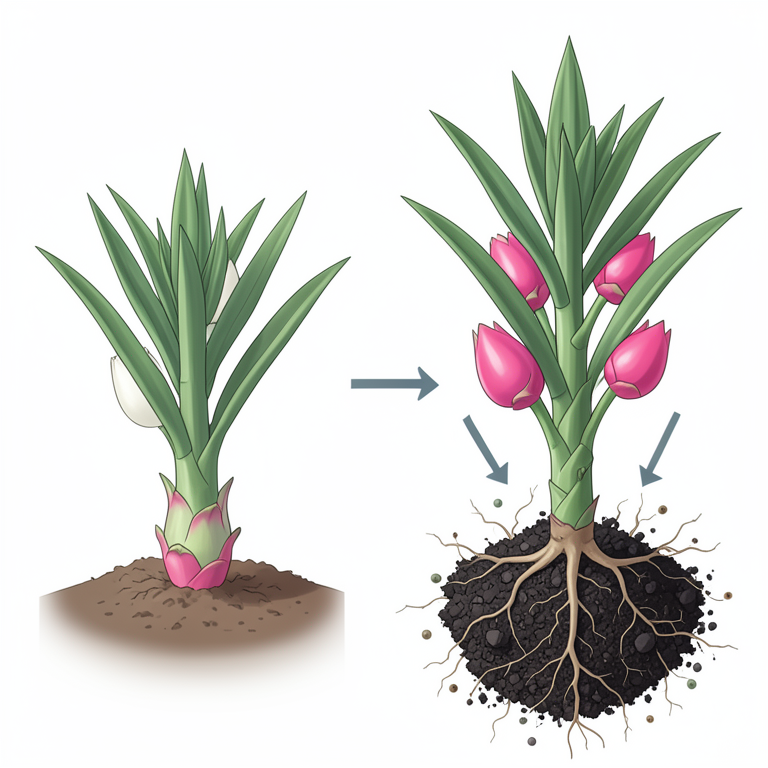
Synergistic Organic Treatment Model
AI-generated conceptual illustration (white-fleshed dragon fruit plants (Selenicereus undatus)). It explains the idea and does not show study data.
View source evidence ↗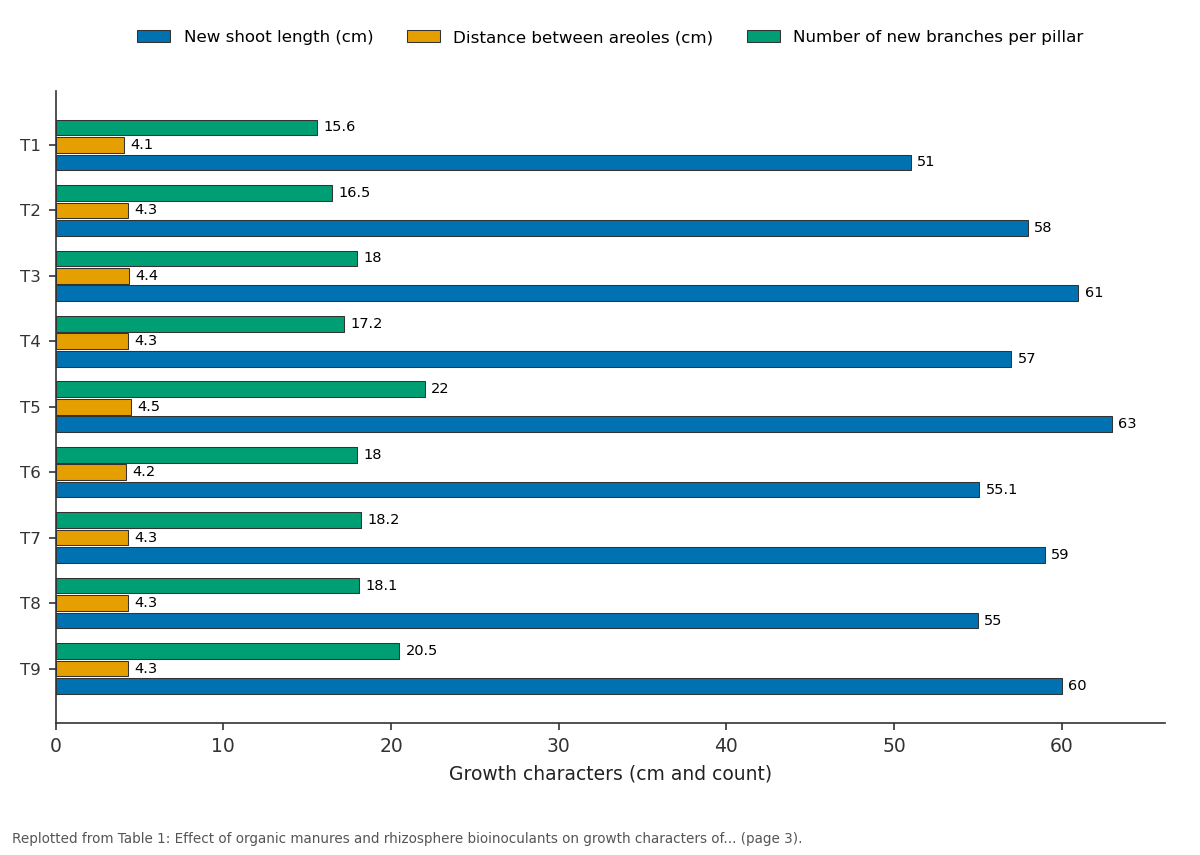
New shoot length (cm) and Distance between areoles (cm) and more: T1 vs T2 vs T3 vs T4 vs T5
Replotted from Table 1 (page 3) of the original paper. Every bar is the paper's own table value.
View source evidence ↗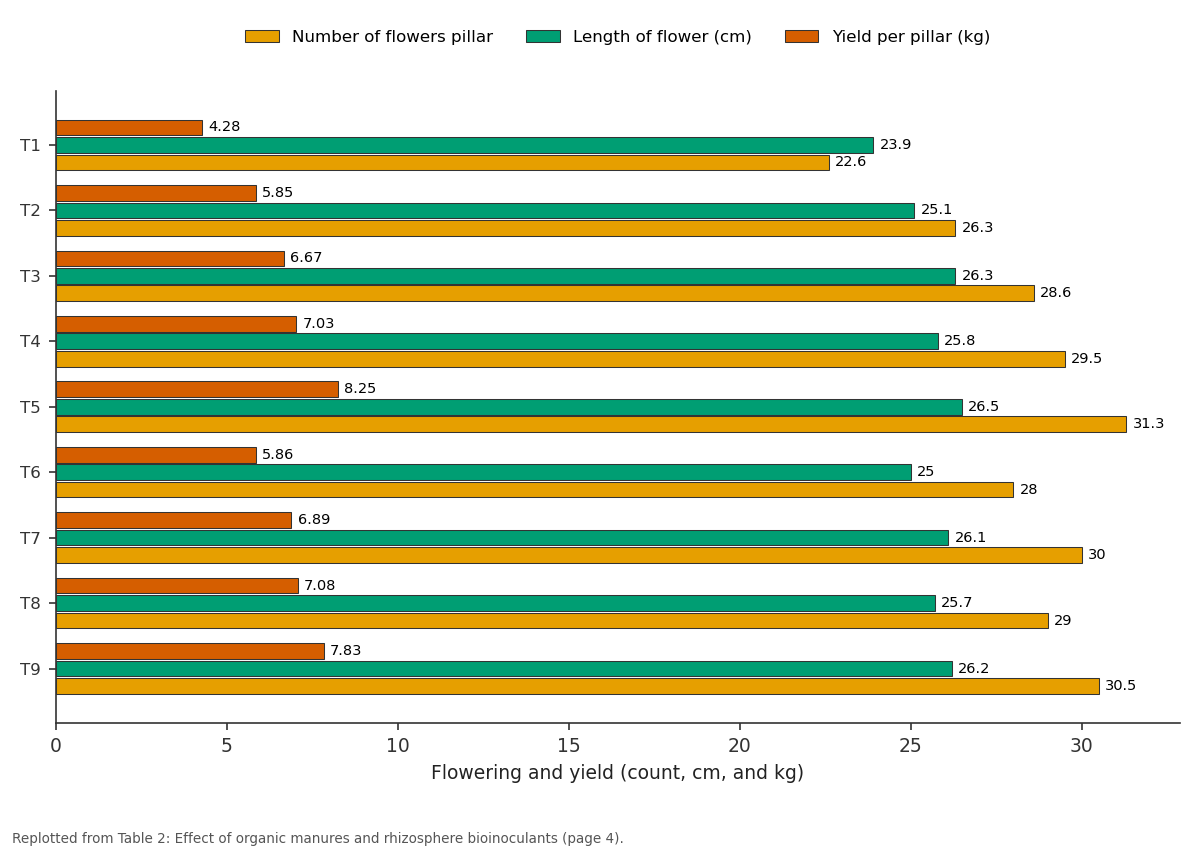
Number of flowers pillar and Length of flower (cm) and more: T1 vs T2 vs T3 vs T4 vs T5
Replotted from Table 2 (page 4) of the original paper. Every bar is the paper's own table value.
View source evidence ↗Figures & tables
From the original paper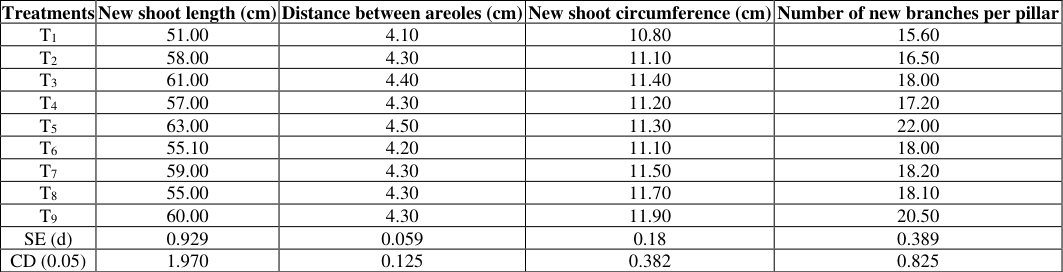 Table 1
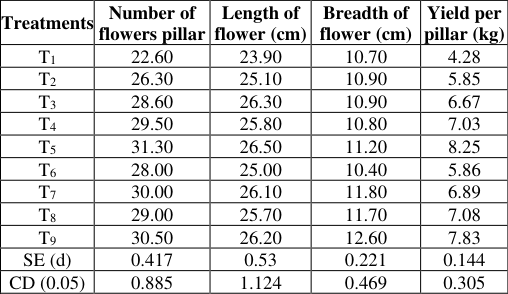 Table 2
Introduction
Dragon fruit (Selenicereus undatus), commonly known as pitaya or pitahaya and also referred to as strawberry pear, queen of the night, belongs to the Cactaceae family. It is a recently introduced superfruit in India, where it is popularly known as Kamalam. It is a fastgrowing perennial climbing cactus that originates from Mexico and parts of South America. It thrives in warm climates and performs well in semi-arid tropical environments, making it suitable for cultivation in both tropical and subtropical regions. Dragon fruit is classified as a non-climacteric fruit, which does not undergo significant ripening after harvest. This fruit has quickly gained popularity among farmers due to its vibrant appearance, soft white pulp filled with edible black seeds, and various nutritional values and health benefits. Dragon fruit cultivation has been expanding in several countries, including Nicaragua, Colombia, Vietnam, Australia, the United States, Thailand, Taiwan and Malaysia (Merten, 2003; Jamilah et al., 2011) [20,14] . Dragon fruit is a long-day plant that produces large fragrant flowers, which bloom at night. One of the unique advantages of dragon fruit is its compatibility with organic farming, as it can be grown without relying on chemical pesticides or synthetic fertilizers. This makes it a promising fruit crop for organic cultivation and an attractive option in health-conscious and export-oriented markets. In fact, due to increasing international demand for organically grown fruits, many countries have shifted towards using organic inputs for dragon fruit production, creating export opportunities for India. Organic farming, also known as eco-farming or biological farming, offers an environmentally sustainable alternative to conventional agriculture. It emphasizes the use of organic inputs such as farmyard manure (FYM), vermicompost, poultry manure, sheep and goat manure, and compost, along with liquid organic manures like cow urine, panchagavya, vermiwash, bio-digested liquids, jeevamruta, and biofertilizers including PSB, VAM, Azotobacter and Rhizobium. These inputs play a vital role in promoting long-term productivity and efficient utilization of on-farm resources (Singh et al., 2004 [29,27,28,26] . Organic manures such as poultry manure or well-decomposed compost are being used for improving the growth and quality of fruits by producing phytohormones and enhancing the uptake of plant nutrients, thus helping in sustainable crop production through the maintenance of soil fertility and productivity (Singh et al., 2011) [28] . The combined application of organic manures and biofertilizers has been reported to result in better crop yields compared to individual treatments (Verma et al., 2019) [31] . Vermicompost provides essential macronutrients, beneficial microorganisms and growth-promoting hormones that collectively enhance plant growth, development and overall productivity (Gopu et al., 2022 and Hariwinsrimedha et al., 2025) [7,10] . Similarly, both vermicompost and poultry manure are excellent sources of macro-and micronutrients that can improve soil productivity when used in conjunction with biofertilizers and crop (Singh et al., 2011) [28] . Vermicompost serve as a chelating agents and regulate the availability of micronutrient to plants, thereby increases the growth and yields by provide nutrient in a available form (Suresh et al., 2022) [30] . Despite its growing importance, scientific literature on the nutritional management of dragon fruit using organic inputs remains scarce, as it is a relatively new crop under commercial cultivation. Therefore, it is essential to explore the potential of organic manures and biofertilizers in enhancing the growth, flowering, and yield performance of dragon fruit. Hence, the present investigation was undertaken to assess the effect of organic manures and biofertilizers on the growth, flowering and yield of white-fleshed dragon fruit.
Materials and Methods
The experiment was conducted in the farmer's field at Vadamanipakkam Village, Madhurantagam Taluk, located 15 kms away from SRM College of Agricultural Sciences, Chengalpattu, Tamil Nadu. The area is between 12°21'52"N latitude and 79°39'58"E longitude. Annual rainfall in the area is about 91.7 mm. The soil in the experimental area was sandy loam. The research experiment was carried out from February to July. The dragon fruit plants, aged seven years, were established at a spacing of 3 × 3 m, with each concrete pillar supporting four individual plants. The experimental setup followed a Randomized Block Design (RBD), consisting of nine treatments and three replications. These poultry manure, vermicompost, AM fungi, and PSB were applied as per treatments. The treatments are T 1 : Control, T 2 : 100 per cent N through poultry manure, T 3 : 100 per cent N through poultry manure + AM fungi @ 25 g/pillar, T 4 : 100 per cent N through poultry manure + PSB @ 10 ml/pillar, T 5 : 100 per cent N through poultry manure + AM fungi @ 25 g/pillar + PSB @ 10 ml/pillar, T 6 : 100 per cent N through vermicompost, T 7 : 100 per cent N through vermicompost + AM fungi @ 25 g/pillar, T 8 : 100 per cent N through vermicompost + PSB @ 10 ml/pillar and T 9 : 100 per cent N through vermicompost + AM fungi @ 25 g/pillar + PSB @ 10 ml/pillar. The observations were recorded for new shoot length (cm), distance between areoles (cm), new shoot circumference (cm), number of new branches per pillar, number of flowers per pillar, flower length (cm), flower breadth (cm) and yield per pillar (kg). The experimental data were statistically analyzed using the General R-Based Analysis Platform Empowered by Statistics (GRAPES), which was developed by the Department of Agricultural Statistics at Kerala Agricultural University, Kerala (www.kaugrapes.com). The analysis of variance (ANOVA) was carried out to compare treatment means at a significance level of P ≤ 0.05.
Results and Discussion
Results and Discussion
The new shoot length is found to be maximum in T 5 (100 per cent N through poultry manure + AM fungi @ 25 g/pillar + PSB @ 10 ml/pillar) followed by T 3 (100 per cent N through poultry manure + AM fungi @ 25 g/pillar) while, the treatment T 1 (control) registered the lowest new shoot length (Table 1.). The increase in length of the new shoot with the application of poultry manure, which supplies nitrogen to the soil and bio-fertilizers, may be due to the stimulatory activity of microflora in the rhizosphere, which has led to the availability of nutrients and vigorous growth of the plant. The increase in plant growth parameters might have also been due to the build-up of colonies with the applied bio-fertilizer (PSB and AM fungi) inoculates and their growth-promoting substances, as reported by Kumar et al. (2019) [17] in dragon fruit, Binepal et al. (2013) [3] in guava and Ghosh et al. (2014) [6] in orange.
| Treatments | New shoot length (cm) | Distance between areoles (cm) | New shoot circumference (cm) | Number of new branches per pillar |
|---|---|---|---|---|
| T1 | 51.00 | 4.10 | 10.80 | 15.60 |
| T2 | 58.00 | 4.30 | 11.10 | 16.50 |
| T3 | 61.00 | 4.40 | 11.40 | 18.00 |
| T4 | 57.00 | 4.30 | 11.20 | 17.20 |
| T5 | 63.00 | 4.50 | 11.30 | 22.00 |
| T6 | 55.10 | 4.20 | 11.10 | 18.00 |
| T7 | 59.00 | 4.30 | 11.50 | 18.20 |
| T8 | 55.00 | 4.30 | 11.70 | 18.10 |
| T9 | 60.00 | 4.30 | 11.90 | 20.50 |
| SE (d) | 0.929 | 0.059 | 0.18 | 0.389 |
| CD (0.05) | 1.970 | 0.125 | 0.382 | 0.825 |
Table text extracted from the original PDF; superscript letters are shown inline. The original table image is below.
View original table image
Effect of organic manures and rhizosphere bioinoculants on the distance between areoles in dragon fruit
The treatment T 5 (100 per cent N through poultry manure + AM fungi @ 25 g/pillar + PSB @ 10 ml/pillar) recorded the highest areoles distance, followed by T 3 (100 per cent N through poultry manure + AM fungi @ 25 g/pillar) while, the treatment T 1 (control) registered the lowest areoles distance (Table 1.). It was due to the poultry manure supported higher nutrient availability, in turn supporting higher accumulation of photosynthates in the plant enriched by AM fungi and PSB, solubilizing and mobilizing the organic form of nutrients from the fixed form of soil, which ultimately contributed to increased shoot length, which in turn gives better distance between areoles. This result might be due to an increase in the length of the cladode may influence the improvement of the distance between areoles. This outcome was closer confirmatory with the findings of Sandoval et al. (2009) [24] and Flavio (2010) [4] in their investigation on vegetative traits of dragon fruit.
Effect of organic manures and rhizosphere bioinoculants on the new shoot circumference in dragon fruit
The circumference of the new shoot increased across the various treatments, with the highest circumference (11.90 cm) observed in treatment T 9 (100% nitrogen supplied through vermicompost, combined with AM fungi at 25 g/pillar and PSB at 10 ml/pillar), followed by T 8 . The lowest new shoot circumference was recorded in the control (T 1 ) (Table 1). This increase in circumference under T 9 and T 8 could be attributed to the synergistic effect of vermicompost and bio-fertilizers, which likely improved soil fertility. The bio-fertilizers also aided in nutrient solubilization and mobilization, contributing to enhanced new shoot circumference. Additionally, the shorter shoot length in T 9 and T 8 may have further facilitated the increase in circumference. The results conform with the studies of Kumar et al. (2019) [17] and Siddiqua et al. (2024) [26] in dragon fruit, Kumar and Kumar (2013) [16] in mango and Hebbera et al. (2006) [11] in sapota.
Effect of organic manures and rhizosphere bioinoculants on the new branches per pillar in dragon fruit
In the present study the maximum new branches per pillar was observed in treatment T 5 (100 per cent N through poultry manure + AM fungi @ 25 g/pillar + PSB @ 10 ml/pillar) followed by T 9 (100 per cent N through vermicompost + AM fungi @ 25 g/pillar + PSB @ 10 ml/pillar) and minimum new branches per pillar was recorded in control (T 1 ) (Table 1). This might be due to the fact that the presence of vermicompost around the plants throughout the period of growth, which is a source of humus, N-N-fixers and nutrients, might have resulted in the higher values of vegetative parameters. This increase in the branches and canopy spread may be due to the direct role in plant nutrition as poultry has high nitrogen that improves vegetative growth and makes nutrients available to the plant. These results are in accordance with Kakehzadeh et al. (2014) [15] in apple, Ibe et al. (2011) [12] in citrus and Marathe et al. (2017) [19] in pomegranate.
Effect of organic manures and rhizosphere bioinoculants on the number of flowers per pillar in dragon fruit
The number of flowers per pillar differed significantly by the application of farm yard manure. Plants supplied with 100% nitrogen through vermicompost along with biofertilizer (PSB and VAM) application per pillar recorded the maximum number of flowers (30.52), and the minimum number of flowers was recorded in the control (T 11 ) (Table . 2). This might be due to an increase in photosynthate production due to phosphorus contents in vermicompost, which helped to break bud dormancy and increased flowering sites. These results are identical to the results obtained by Ali et al. (2003) [1] Strawberry, Sharma and Pruthi (2007) [25] in strawberry. Additionally, the use of biofertilizers aids plants in producing more dehydrogenase, alkaline phosphatase, nitrogenase, and hydrolysis enzymes. This encourages more flowering and fruit retention because photosynthates are produced and supplied at critical levels, which results in more flowering and fruit retention. The outcomes are also in close conformity with the findings of Goswami et al. (2012) [8] in guava and Hari et al. (2010) [9] in ber.
Effect of organic manures and rhizosphere bioinoculants on the length and breadth of flowers in dragon fruit
In the present study, the highest length of flower was recorded in the treatment T 5, followed by T 3 and was on par with T 9 . However, the least was recorded by T 1 (Table 2). Moreover, the breadth of the flower was highest recorded by 100% nitrogen supplied through vermicompost, combined with AM fungi at 25 g/pillar and PSB at 10 ml/pillar (T 9 ), followed by T 7 . However, the treatment control (T 1 ) recorded the lowest breadth of flower (Table 2). However, the increased nutrient availability from the organic manures and bio-fertilizers has increased various endogenous hormonal levels in the plant tissues, which were present in worm castings (vermicompost/poultry manure), which might be responsible for enhanced tube growth, which ultimately little difference in the length and breadth of the flower. The above results conform with the findings of Perween and Hasan (2018) [21] in Dragon fruit and Yadav et al. (2011) [32] in Mango.
| Treatments | Number of flowers pillar | Length of flower (cm) | Breadth of flower (cm) | Yield per pillar (kg) |
|---|---|---|---|---|
| T1 | 22.60 | 23.90 | 10.70 | 4.28 |
| T2 | 26.30 | 25.10 | 10.90 | 5.85 |
| T3 | 28.60 | 26.30 | 10.90 | 6.67 |
| T4 | 29.50 | 25.80 | 10.80 | 7.03 |
| T5 | 31.30 | 26.50 | 11.20 | 8.25 |
| T6 | 28.00 | 25.00 | 10.40 | 5.86 |
| T7 | 30.00 | 26.10 | 11.80 | 6.89 |
| T8 | 29.00 | 25.70 | 11.70 | 7.08 |
| T9 | 30.50 | 26.20 | 12.60 | 7.83 |
| SE (d) | 0.417 | 0.53 | 0.221 | 0.144 |
| CD (0.05) | 0.885 | 1.124 | 0.469 | 0.305 |
Table text extracted from the original PDF; superscript letters are shown inline. The original table image is below.
View original table image
Effect of organic manures and rhizosphere bioinoculants on the yield per pillar in dragon fruit
The application of different organic amendments significantly influenced the yield per pillar. The maximum yield per pillar was recorded in T 5 (100 per cent N through poultry manure + AM fungi @ 25 g/pillar + PSB @ 10 ml/pillar) followed by T 9 (100 per cent N through vermicompost + AM fungi @ 25 g/pillar + PSB @ 10 ml/pillar) and minimum yield per pillar was recorded in control (T 1 ) (Table . 2). Organic amendments like poultry manure and vermicompost are rich sources of essential nutrients, particularly nitrogen, and also improve soil physical, chemical, and biological properties. Poultry manure generally releases nutrients faster than vermicompost, making them more readily available to plants. The addition of AM fungi enhances the root system's ability to uptake water and nutrients, especially phosphorus, thus promoting better plant growth and yield. The PSB further assists by converting insoluble forms of phosphorus in the soil into forms that plants can absorb. Therefore, the combination of these organic amendments with beneficial microbes leads to improved nutrient availability and uptake, resulting in significantly higher yields. Among the treatments, T 5 showed the maximum yield, likely because poultry manure provides more readily available nutrients compared to vermicompost, and the synergistic effect of AM fungi and PSB further boosted nutrient uptake and plant productivity. However, these organic inputs facilitated the mobilization of essential micronutrients and phosphate in the soil towards the plants, leading to improved flowering. The obtained results are consistent with the findings of Perween and Hasan (2018) [21] in dragon fruit. These results are in conformity with the observations made by Ram and Pathak (2007) [23] in sweet orange, Ram et al. (2007) [22] and Manojkumar et al. (2025) [18] in in guava and Garhwal et al.
(2014) [5] in kinnow mandarin, Sharma and Pruthi (2007) [25] and Iqbal (2009) [13] in Strawberry and Babu and Sharma (2005) [2] in banana.
Conclusion
The application of organic manures and rhizosphere bioinoculants significantly enhanced the vegetative growth, flowering characteristics, and yield of dragon fruit compared to the control. Among all treatments, the combination of 100 per cent N through poultry manure + AM fungi @ 25 g/pillar + PSB @ 10 ml/pillar (T 5 ) consistently recorded superior results in new shoot length, areole distance, new branches per pillar, flower length, and yield per pillar. Vermicompost-based treatments, especially when combined with the same bio-inoculants (T 9 ), most effectively improved new shoot circumference, flower breadth, and also contributed to increased yields. The observed benefits are attributed to improved nutrient availability, promoted by the rapid nutrient release from poultry manure and the sustained release from vermicompost. The synergistic action of AM fungi and PSB further enhanced nutrient uptake, especially phosphorus, resulting in vigorous plant growth, better flowering, and higher yields. These results highlight the importance of integrating organic manure with beneficial soil microbes to sustainably boost dragon fruit productivity and overall plant health.
References
31 in the original paper- Ali Y, Iqbal M, Shah SZA, Ahmad MJ. Effect of different combinations of nitrogen, phosphorous and farm yard manure on yield and quality of strawberry. Sarhad Journal of Agriculture. 2003;19(2):185-188.
- Babu N, Sharma A. Effect of integrated nutrient management on productivity of 'Jahajee' banana and soil properties under Nagaland foot hills condition. Orissa Journal of Horticulture. 2005;33(2):31-35.
- Binepal MK, Tiwari R, Kumawat BR. Effect of integrated nutrient management on physico-chemical parameters of guava under Malwa plateau conditions of Madhya Pradesh. Annals of Plant and Soil Research. 2013;15(1):47-49.
- Flávio JJP. Divergência genética entre árvores matrizes de Guazuma ulmifolia Lam [Dissertação (Mestrado em Agronomia -Genética e Melhoramento de Plantas)]. Jaboticabal: Faculdade de Ciências Agrárias e Veterinárias, Universidade Estadual Paulista; 2010. 87 p. 5. Garhwal PC, Yadav PK, Sharma BD, Singh RS, Ramniw AS. Effect of organic manure and nitrogen on growth, yield and quality of kinnow mandarin in sandy soils of hot arid region. African Journal of Agricultural Research. 2014;9(34):2638-2647.
- Ghosh B, Irenaeus TKS, Kundu S, Datta P. Effect of organic manuring on growth, yield and quality of sweet orange. Acta Horticulturae. 2014;104:121-126.
- Gopu B, Mathankumar R, Kumaresh R, Kanimozhi C. Standardization of Growing Media for Palak (Beta vulgaris var. bengalensis) var. Arka Anupama under Shade Net Conditions. Ecology, Environment & Conservation. 2022;28(4 Suppl):315-319.
- Goswami AK, Lal S, Misra KK. Integrated nutrient management improves growth and leaf nutrient status of guava cv. Pant Prabhat. Indian Journal of Horticulture. 2012;69(2):168-172.
- Hari D, Singh D, Lal G, Singh SK. Effect of nitrogen, phosphorus and zinc fertilization on soil nutrients status and yield of ber (Zizyphus mauritiana Lamk) cv. Gola in arid and semi-arid regions. Environment and Ecology. 2010;28(1A):328-331.
- Hariwinsrimedha RS, Gopu B, Akino A, Rageshwari S, Shanmugam S. Exploring the impact of different rooting media on the growth and development of protray grown papaya (Carica papaya L.) var. Red Lady. International Journal of Agricultural and Food Science. 2025;7(7):319-322.
- Hebbara M, Ganiger VM, Reddy BGM, Joshi VR. Integrated nutrient management in sapota (Manilkara zapota) using vermicompost to increase yield and quality. Indian Journal of Agricultural Sciences. 2006;76:587-590.
- Ibe RB, Lawal IO, Olaniyan AA. Economic analysis of yields of Citrus as influenced by organo-mineral fertilizer treatments in Ibadan, Southwest Nigeria. World Journal of Agricultural Science. 2011;7(4):425429.
- Iqbal U, Wali VK, Kher R, Jamwal M. Effect of FYM, Urea and Azotobacter on growth, yield and quality of strawberry cv. Chandler. Notulae Botanicae Horti Agrobotanici Cluj-Napoca. 2009;37(1):139-143.
- Jamilah B, Shu CE, Kharidah M, Dzulkifly MA, Noranizan A. Physico-chemical characteristics of red pitaya (Hylocereus polyrhizus) peel. International Food Research Journal. 2011;18(1):279-286.
- Kakehzadeh S, Sharafzadeh S, Amiri B. Vegetative growth of apple tree as affected by irrigation frequency and chicken manure rate. International Journal of Biosciences. 2014;4(2):120-124.
- Kumar M, Kumar R. Response of organic manures on growth and yield of mango (Mangifera indica L.) cv. Dashehari. Horticulture Flora Research Spectrum. 2013;2(1):64-67.
- Kumar S, Saravanan SS, Mishra S. Effect of micro nutrients and organic manures on establishment and plant growth of dragon fruit (Hylocereus polyrhizus) under Prayagraj agro climatic condition, cv. Red Jaina. International Journal of Chemical Studies. 2019;7:161164.
- Manojkumar K, Akino A, Gopu B, Angelin Silviya R. Optimization of phenological stages and growth of guava cv. Taiwan Pink through organic amendments and bioinoculants. Biological Forum. 2025;17(7):142147.
- Marathe RA, Sharma J, Murkute AA, Babu KD. Response of nutrient supplementation through organics on growth, yield and quality of pomegranate. Scientia Horticulturae. 2017;214:114-121.
- Merten S. A review of Hylocereus production in the United States. Journal of the Professional Association for Cactus Development. 2003;5:98-105.
- Perween T, Hasan MA. Effect of different dose of NPK on flower phenology of dragon fruit. International Journal of Current Microbiology and Applied Sciences. 2018;7(5):2189-2194.
- Ram RA, Bhriguvanshi SR, Garg N, Pathak RK. Studies on organic production of guava cv. Allahabad Safeda. Acta Horticulturae. 2007;735:373-379.
- Ram RA, Pathak RK. Integration of organic farming practices for sustainable production of sweet orange: a case study. Acta Horticulturae. 2007;735:357-363.
- Sandoval IJ, Ramírez Mireles FJ, Cruz Hernández T. Caracterización de dos clones de pitahaya roja (Hylocereus purpusii) de Jalisco, Mexico. Revista Chapingo Serie Zonas Áridas. 2009;8:115-122.
- Sharma A, Pruthi NK. Agronomic effectiveness of bagasse incorporated with FYM based enriched compost for the yield of strawberry. Plant Archives. 2007;7(2):865-867.
- Siddiqua A, Srinivasappa KN, Khayum A, Murthy PV, Mohan Kumar TL. Studies Influenced by BioFertilizers and Organic Manures on Flowering Behaviour and Yield Attributes of Dragon Fruit. International Journal of Plant & Soil Science. 2024;36(3):243-257.
- Singh AK, Singh SP. Bio fertilizers in fruit crops. Indian Journal of Horticulture. 2004;61:109-113.
- Singh TK, Vandana D, Singh DB. Integrated nutrient management in guava. Mysore Journal of Agricultural Sciences. 2011;45(4):923-925.
- Singh VK, Garg N, Ram RA, Pathak RK. Synergistic interplay of organic formulation and bio-regulants on quality mango production. In: Proc. of Organic Farming in Horticulture. Lucknow: CISH; 2004. p 298-301.
- Suresh V, Kousalya R, Gopu B, Kabariel J, Rajkumar A. Standardization of organic manures on growth of winter cherry (Withania somnifera). Research Journal of Pharmacy and Technology. 2023;16(12):5593-5596.
- Verma RS, Lata R, Ram RB, Verma SS, Prakash S. Effect of organic, inorganic and bio-fertilizers on vegetative characters of dragon fruit (Hylocereus undatus L.) plant. Pharma Innovation. 2019;8(6):726728.
- Yadav PK, Yadav AL, Yadav AS, Yadav HC. Effect of integrated nutrient nourishment on vegetative growth and physico-chemical attributes of Papaya (Carica papaya L) fruit. cv. Pusa Dwarf. Plant Archives. 2011;11(1):327-329.