
Research article · 2025 · Full text
International Journal of Horticulture and Food ScienceConsumer behaviour towards frozen foods in Nagpur city
Volume 7(7) · Pages 105–107 · DOI: 10.33545/26631067.2025.v7.i7b.343 ↗
Research areasDiverse Scientific Research StudiesFood Waste Reduction and SustainabilityAgricultural Economics and Practices
Abstract
Author-writtenThis research investigates the purchasing behaviour of consumers regarding frozen foods in Nagpur City, Maharashtra. Amidst rapid urbanization and evolving lifestyles, consumer preferences are shifting towards convenience-based food products. A sample of 100 respondents was surveyed using stratified random sampling across various socio-economic categories. The study highlights that younger age groups, nuclear families, and middle-income consumers are more inclined to purchase frozen food, primarily for its convenience and time-saving attributes. Regression analysis reveals that occupation and family type significantly influence consumption patterns. Findings suggest actionable insights for marketers and policymakers aiming to enhance distribution and tailor marketing strategies in emerging frozen food markets.
Summary
Source-checkedPlain-language reading of the full paper, prepared with AI and checked against the text. Each point links to the authors' own words.
Why it matters
- India's frozen food sector is growing quickly due to urbanization and a higher demand for convenient food options. View evidence ↗
- Frozen foods are becoming more popular among students, working professionals, and busy families who need time-saving meal solutions. View evidence ↗
- The market faces obstacles including price sensitivity, cultural preferences for fresh food, and limited cold storage infrastructure. View evidence ↗
The question
- The study aims to investigate consumer behavior toward frozen foods in Nagpur by analyzing purchasing motivations, preferences, satisfaction, and demographics. View evidence ↗
What they did
- The researchers surveyed 100 respondents using stratified random sampling across different socio-economic categories. View evidence ↗
- The study was conducted over six months, from December 2024 to June 2025, to account for behavioral and seasonal changes. View evidence ↗
- A Multiple Linear Regression Model was used to evaluate how socio-economic factors impact monthly spending on frozen foods. View evidence ↗
What they found
- The majority of consumers (55%) are young adults aged 30 or younger. View evidence ↗
- A large majority of the consumers (79%) belong to nuclear families. View evidence ↗
- The most common monthly expenditure for frozen foods is between ₹501 and ₹1000, reported by 32% of consumers. View evidence ↗
- Television is the most influential source of information for consumers, cited by 47% of respondents. View evidence ↗
- The primary motivations for purchasing frozen foods are product availability (37%) and time-saving benefits (36%). View evidence ↗
- Ready-to-eat meals (40%) and frozen vegetables (36%) are the most preferred frozen products. View evidence ↗
- Regression analysis showed that family type and occupation are statistically significant factors that influence how much is spent monthly on frozen foods. View evidence ↗
What it means
- The authors recommend that marketers increase awareness, ensure consistent availability, and enhance product variety to attract more consumers. View evidence ↗
- The authors conclude that digital platforms and television are the most effective channels for targeted promotions to influence this consumer demographic. View evidence ↗
Visual summary
2 visualsIllustrations explain the paper; charts are replotted from the paper's own table values.
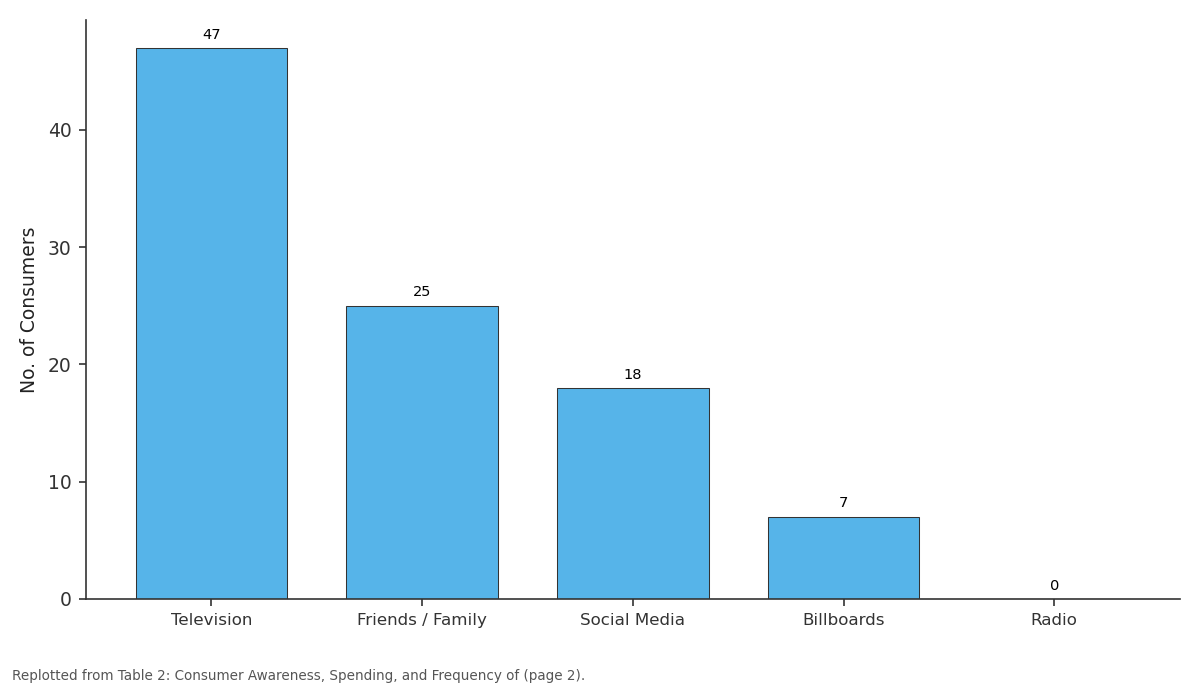
No. of Consumers: Television vs Friends / Family vs Social Media vs Billboards vs Radio
Replotted from Table 2 (page 2) of the original paper. Every bar is the paper's own table value.
View source evidence ↗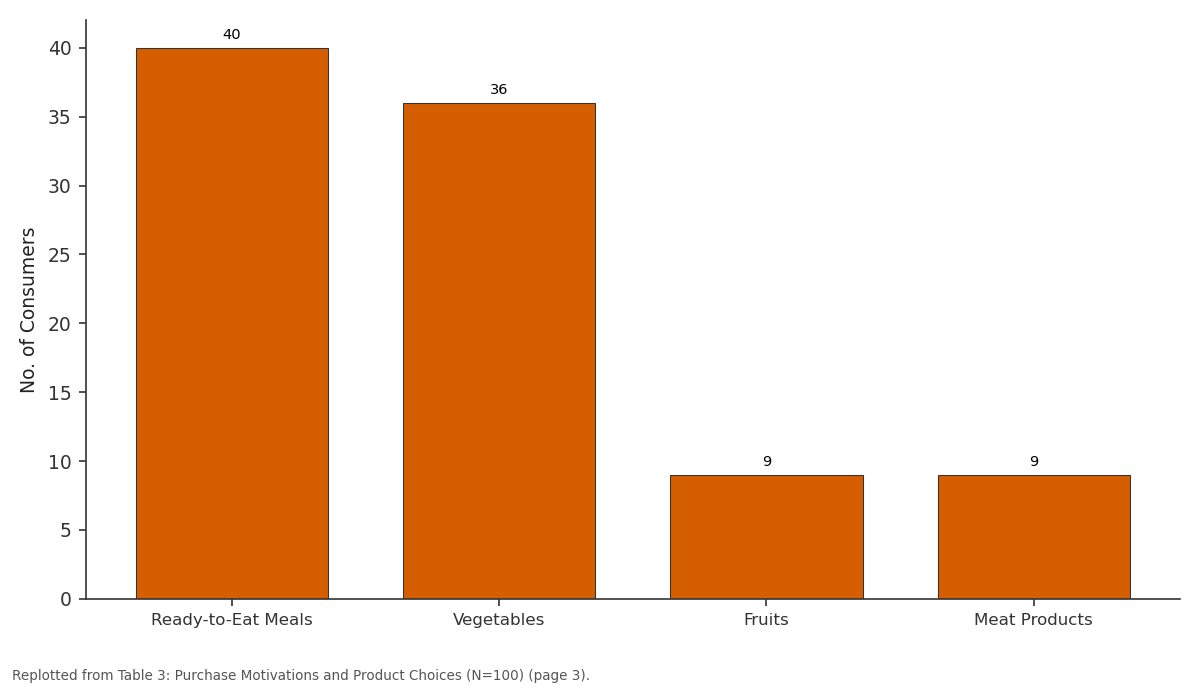
No. of Consumers: Ready-to-Eat Meals vs Vegetables vs Fruits vs Meat Products
Replotted from Table 3 (page 3) of the original paper. Every bar is the paper's own table value.
View source evidence ↗Figures & tables
From the original paper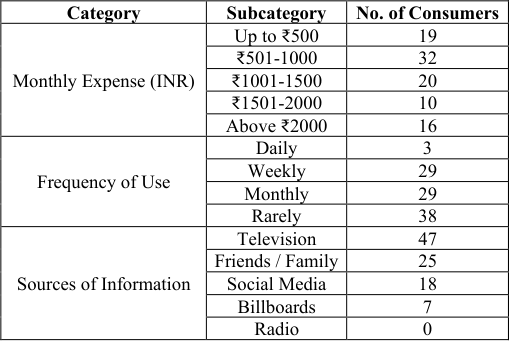 Table 2
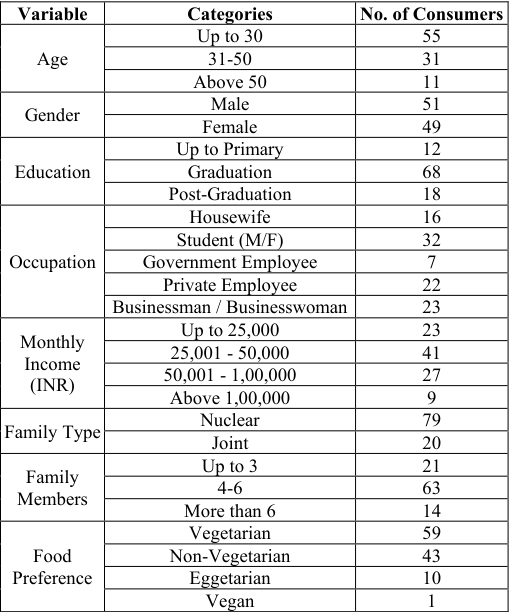 Table 1
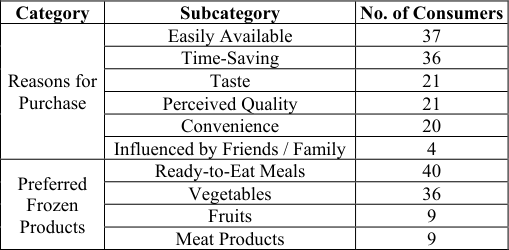 Table 3
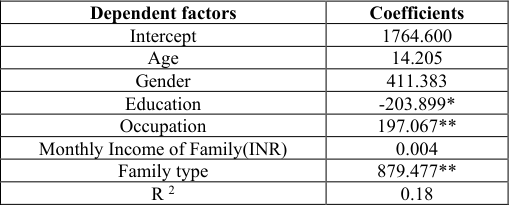 Table 4
Introduction
The frozen food sector in India has seen rapid growth in recent years, driven by shifting consumer lifestyles, urbanization, and increasing demand for convenient food options. While metro cities like Mumbai and Pune have long embraced frozen foods, emerging urban centres such as Nagpur are now becoming significant markets. Changing dietary habits, a rise in dual-income households, and improvements in cold-chain infrastructure have further accelerated this trend. Nagpur, a major district in Maharashtra, offers a unique landscape for studying consumer behaviour due to its mix of urban and semi-urban populations, growing literacy, and evolving economic activities. As consumers seek time-saving yet nutritious meal solutions, frozen foods are gaining popularity among working professionals, students, and busy families. However, despite increasing acceptance, the market still faces challenges such as limited cold storage infrastructure, price sensitivity, and cultural preferences for fresh food. This study investigates consumer behaviour towards frozen foods in Nagpur by analysing demographic factors, preferences, satisfaction levels, and purchasing motivations. It also explores the economic implications, market trends, and logistical requirements that influence the local frozen food sector. The research aims to provide insights that can help businesses tailor their offerings and improve service delivery, while also contributing to broader economic development in the region. The main objectives are to examine the consumption and their views regarding various products, Also the analyzed the factor affecting consumption of frozen food.
Methodology
This study focuses on analyzing frozen food consumption patterns in Nagpur District, Maharashtra, a rapidly urbanizing area with diverse socio-economic demographics. The research will be conducted over a six-month period (December 2024 to June 2025) to capture seasonal and behavioural variations. A sample of 100 consumers will be selected using stratified random sampling, based on factors such as age, gender, income, occupation, and education. Data will be collected using structured surveys (both online and offline), covering purchasing behaviour, influencing factors (price, convenience, quality, packaging), and demographic details.
For analysis, tabular and percentage methods along with graphs will be used to identify trends. Additionally, a Multiple Linear Regression Model will be applied to assess the impact of socio-economic factors on monthly frozen food expenditure. The model includes variables such as age, gender, income, occupation, family type, and education, helping to determine their influence on consumer behaviour. To examine the effect of socio-economic factors on frozen food consumption, a Multiple Linear Regression Model is used: Y=a+b1X1+b2X2+b3X3+b4X4+b5X5+b6X6Y Y = Monthly frozen food consumption (in Rs.), a= Intercept, b₁-b₆=Coefficients of independent variables, X₁=Age, X2=Gender (Male = 1, Female=2), X₃=Monthly Income, X₄=Occupation (1=Student, 2= Housewife, 3=Govt.Employee, 4=Private Employee, 5=Businessman, 6= Businesswoman), X₅=Family Type (1=Nuclear, 2=Joint), X₆=Educational Qualification
Result and Discussion
The results of the present paper are presented as below. The results area arranged as per the objectives taken. The socio-economic and demographic profile of frozen food consumers indicates that the majority are young adults up to 30 years of age (55%), followed by those aged 31-50, highlighting a strong preference among the younger population who often seek convenience due to busy lifestyles. The gender distribution is nearly equal, with 51% male and 49% female, suggesting that frozen food consumption is widely accepted across genders. In terms of education, a significant 68% of consumers are graduates, and another 18% are postgraduates, indicating that higher education correlates with greater awareness and acceptance of frozen food. Occupation-wise, students (32 consumers), business professionals (23), and private employees (22) dominate, reflecting time constraints and lifestyle factors influencing their choices. Most consumers fall within the middle-income bracket (₹25,001-₹50,000), pointing to affordability as a key factor. Furthermore, a large number of consumers belong to nuclear families (79%) with 4-6 members (63%), which aligns with the typical urban household structure where frozen food serves as a convenient option. Regarding food preference, vegetarians form the majority (59%), though non-vegetarians (43%) and eggetarians (10%) also show notable engagement, suggesting that frozen food caters to diverse dietary habits.
The data collectively reveals that frozen food is predominantly consumed by young, educated, middleincome individuals living in nuclear families, driven by the need for quick, easy-to-prepare meals suited to modern urban living. The analysis of consumer awareness, spending, and usage frequency of frozen food products (N=100) highlights key patterns in consumer behavior. In terms of monthly expenditure, the majority of consumers spend between ₹501 and ₹1000 (32%), followed by ₹1001-₹1500 (20%) and up to ₹500 (19%), indicating that frozen food is a moderately priced item for most users. A smaller segment spends more than ₹2000 (16%), which may represent larger households or consumers with higher purchasing capacity. Regarding frequency, a significant portion of respondents use frozen food either on a weekly (29%) or monthly basis (29%), while 38% reported using it rarely, and only 3% use it daily, suggesting that while frozen food is accepted as a convenient option, it is not yet a daily staple for most households. When it comes to awareness sources, television emerges as the most influential medium (47%), followed by friends and family (25%), and social media (18%), showing that both traditional media and interpersonal communication play a key role in shaping consumer knowledge. Billboards (7%) have limited influence, and radio has no impact (0%), indicating a shift away from older media platforms in driving consumer awareness. These findings suggest that frozen food consumption is primarily influenced by affordability, convenience, and exposure through mass media, particularly television. The table presents data from a survey of 100 consumers, highlighting their reasons for purchasing frozen products and their preferred types. The most common motivations are product availability (37%) and time-saving benefits (36%), followed by taste and perceived quality (21% each), convenience (20%), and influence from friends or family (4%). When it comes to product preferences, ready-to-eat meals are the top choice (40%), closely followed by frozen vegetables (36%), while frozen fruits and meat products are less favored (9% each). Overall, the data suggests that consumers primarily value convenience, accessibility, and time efficiency when choosing frozen foods The regression analysis revealed that occupation and family type are statistically significant factors influencing monthly expenditure on frozen food. Consumers engaged in business or private employment and those from nuclear families were more likely to spend on frozen food regularly. Additionally, age and income exhibited moderate influence, indicating that younger individuals and those with higher income levels tend to spend more on frozen food products. In contrast, gender and education were found to have a weaker impact, suggesting that these variables do not play a substantial role in determining frozen food consumption behaviour among the respondents.
Conclusion
This study highlights the evolving consumer behaviour in Nagpur's frozen food market, driven primarily by urban lifestyles that emphasize convenience and time-saving. The highest preference for frozen foods is observed among young, educated, middle-income individuals from nuclear families. Female students under the age of 30 represent a significant portion of this segment, accounting for 21% of consumption based on occupation. Typically, these consumers live in nuclear families with 4 to 5 members, have a monthly household income between ₹25,000 and ₹50,001, and follow a vegetarian diet. They spend between ₹501 to ₹1,000 per month on frozen, ready-to-eat meals, which are primarily purchased from supermarkets. Convenience is the main factor influencing their purchasing decisions, though product quality remains a top priority. Consumers prefer frozen food for its accessibility and timesaving benefits compared to freshly made or dry food. Retailers and marketers aiming to tap into this growing segment should focus on enhancing product variety, ensuring consistent availability, and increasing awareness. Targeted promotions via television and digital platforms can effectively reach this demographic and influence their purchasing behaviour.
Figures and tables from the paper
| Category | Subcategory | No. of Consumers |
|---|---|---|
| Monthly Expense (INR) | Up to ₹500 | 19 |
| ₹501-1000 | 32 | |
| ₹1001-1500 | 20 | |
| ₹1501-2000 | 10 | |
| Above ₹2000 | 16 | |
| Frequency of Use | Daily | 3 |
| Weekly | 29 | |
| Monthly | 29 | |
| Rarely | 38 | |
| Sources of Information | Television | 47 |
| Friends / Family | 25 | |
| Social Media | 18 | |
| Billboards | 7 | |
| Radio | 0 |
Table text extracted from the original PDF; superscript letters are shown inline. The original table image is below.
View original table image
| Variable | Categories | No. of Consumers |
|---|---|---|
| Age | Up to 30 | 55 |
| 31-50 | 31 | |
| Above 50 | 11 | |
| Gender | Male | 51 |
| Female | 49 | |
| Education | Up to Primary | 12 |
| Graduation | 68 | |
| Post-Graduation | 18 | |
| Occupation | Housewife | 16 |
| Student (M/F) | 32 | |
| Government Employee | 7 | |
| Private Employee | 22 | |
| Businessman / Businesswoman | 23 | |
| Monthly Income (INR) | Up to 25,000 | 23 |
| 25,001 - 50,000 | 41 | |
| 50,001 - 1,00,000 | 27 | |
| Above 1,00,000 | 9 | |
| Family Type | Nuclear | 79 |
| Joint | 20 | |
| Family Members | Up to 3 | 21 |
| 4-6 | 63 | |
| More than 6 | 14 | |
| Food Preference | Vegetarian | 59 |
| Non-Vegetarian | 43 | |
| Eggetarian | 10 | |
| Vegan | 1 |
Table text extracted from the original PDF; superscript letters are shown inline. The original table image is below.
View original table image
| Category | Subcategory | No. of Consumers |
|---|---|---|
| Reasons for Purchase | Easily Available | 37 |
| Time-Saving | 36 | |
| Taste | 21 | |
| Perceived Quality | 21 | |
| Convenience | 20 | |
| Influenced by Friends / Family | 4 | |
| Preferred Frozen Products | Ready-to-Eat Meals | 40 |
| Vegetables | 36 | |
| Fruits | 9 | |
| Meat Products | 9 |
Table text extracted from the original PDF; superscript letters are shown inline. The original table image is below.
View original table image
| Dependent factors | Coefficients |
|---|---|
| Intercept | 1764.600 |
| Age | 14.205 |
| Gender | 411.383 |
| Education | -203.899* |
| Occupation | 197.067** |
| Monthly Income of Family(INR) | 0.004 |
| Family type | 879.477** |
| R 2 | 0.18 |
Table text extracted from the original PDF; superscript letters are shown inline. The original table image is below.
View original table image
References
9 in the original paper- Abirami K, Gayathri R. A study on consumer awareness and purchasing behaviour towards ready-toeat foods. Departmental Store Consumer Study Report. 2016.
- Ahmed M, Saleem A, Rehman K. Effects of demographic variables on consumer buying behaviour toward frozen foods. J Consum Res Appl. 2020;15(2):45-56.
- Alam S. Demographic characteristics and consumer perception influencing ready-to-cook food purchases in Kolkata. Retail Consum Stud J. 2016;11(4):32-41.
- Amir M, Aslam F, Khan R. Exploring frozen food buying behaviour in Karachi supermarkets. Marketing Dyn. 2014;9(3):28-34.
- Ceanu A. Consumer perception of frozen food quality: Evolving trends and insights. Frozen Net Market Rev [Internet]. 2024 [cited 2025 Jul 27]. Available from: https://frozenet.com/market-dynamics
- Deshmukh R, Shinde A, Gaikwad P. A study of frozen food popularity among the people of Pune city. Int J Adv Appl Res. 2023;11(2):67-72.
- Islam M, Rahman F, Chowdhury H. Factors influencing consumers' perceptions toward frozen and ready-tocook food products in Bangladesh. Paper presented at the 1st Global International Conference; 2019; Kathmandu, Nepal.
- Fahreza H, Syafrizal S. Determinants of online frozen food buying interest during COVID-19. Enrich J Bus Econ. 2021;9(3):55-63.
- Garg S, Kapoor A, Mehta P. Impact of branding, packaging, and convenience on ready-to-cook product selection. Uttarakhand Consumer Behaviour Survey. 2016;6(2):50-58.
Cited by 1
From OpenAlex, OpenCitations and reference lists read by Scinovex
- Consumer’s perception towards “Ready to Eat” food products in Nagpur city
Sakshi Ramdas Misal, SC Nagpure, NV Shende, SV Warade · International Journal of Agriculture and Food Science · 2026
The present study entitled “Consumer’s Perception towards Ready-to-Eat Food Products in Nagpur City” was undertaken to study the socio-economic characteristics of consumers, assess their awareness regarding various categories of Ready-to-Eat (RTE) food products and analyse their preference for major brands. The study was based on primary data collected during 2025-2026 from 90 consumers, comprising 30respondents each from below 25 years, 25-50 years and above 50 years age groups. The data were analysed using simple tabular and percentage analysis. The findings revealed considerable variation i