
Research article · 2025 · Full text
International Journal of Agriculture and NutritionDevelopment and studies on shelf life of Amla candy using different packaging material
Volume 7(7) · Pages 55–61 · DOI: 10.33545/26646064.2025.v7.i7a.241 ↗
Research areasFood Science and Nutritional StudiesAgricultural Economics and PracticesPhytochemicals and Antioxidant Activities
Abstract
Author-writtenAonla Indian gooseberry (Phyllanthus emblica) is a fruit renowned for its high nutritional value, particularly its rich content of vitamin C, antioxidants, and phenolic compounds. Despite its numerous health benefits, the fruit’s astringent and sour taste often limits its direct consumption, making it difficult to incorporate into regular diets. This study focuses on the development of aonla candy, aiming to create a nutritious, shelf-stable product that is both consumer-acceptable and retains the beneficial properties of the fruit. The research involved selecting four aonla varieties Chakaiya, NA-7, Banarasi, and Krishna and processing them into candy through a combination of blanching, osmotic dehydration in sugar syrup at varying concentrations (45°Bx, 50°Bx, and 70°Bx), followed by drying in a tray dryer at 60°C. The prepared candies were evaluated for a range of physicochemical properties, including moisture content xiv (20.16%), Protein (0.43%), vitamin C (240mg/100g), Fiber Content (4.97%), Ash Content (0.23%) and Titrable Acidity (1.46%). Sensory evaluation was also conducted. Among the varieties, NA-7 was selected for further analysis based on its superior sensory qualities and higher retention of key nutrients, particularly vitamin C. The shelf-life study conducted over a period of 9 months, highlighted the effectiveness of packaging materials in maintaining nutritional stability of the candies. Glass jars and cast polypropylene (CPP) packaging provided the best retention of the product's nutritional content, particularly vitamin C, compared to other materials like LDPE and aluminum foil. These results demonstrate the potential of aonla candy as a commercially viable functional food, offering a valuable alternative for incorporating the health benefits of aonla into daily diets. The study not only showcases the nutritional stability and acceptability of aonla candy but also offers insights into the optimization of processing techniques and packaging materials for the development of shelf-stable aonla-based products in the food and nutraceutical industries.
Summary
Source-checkedPlain-language reading of the full paper, prepared with AI and checked against the text. Each point links to the authors' own words.
Why it matters
- Aonla (Indian gooseberry) is highly valued for its nutritional content, specifically its antioxidants, phenolic compounds, and vitamin C. View evidence ↗
- The direct consumption of Aonla is often limited because of its sour and astringent taste. View evidence ↗
- Aonla candy serves as a value-added product that combines the health benefits of the fruit with a more acceptable taste. View evidence ↗
The question
- The study aims to develop a nutritious and shelf-stable Aonla candy that is acceptable to consumers while retaining the fruit's beneficial properties. View evidence ↗
- The research specifically seeks to examine how different packaging materials affect the quality of Aonla candy. View evidence ↗
What they did
- Four Aonla varieties (Chakaiya, NA-7, Banarasi, and Krishna) were processed into candy using blanching, osmotic dehydration in sugar syrups (45°Bx, 50°Bx, and 70°Bx), and tray drying at 60°C. View evidence ↗
- The storage study utilized five packaging materials: glass jars, 50-micron LDPE, 50-micron cast polypropylene (CPP), aluminum foil, and plastic containers. View evidence ↗
- The nutritional quality of the candies was evaluated monthly over a total storage period of 9 months. View evidence ↗
- A 20-member panel used a 9-point Hedonic scale to evaluate sensory attributes including taste, flavor, texture, color, appearance, and overall acceptability. View evidence ↗
What they found
- The NA-7 variety was chosen for the shelf-life study because it had superior sensory qualities and better retention of nutrients, especially vitamin C. View evidence ↗
- Cast polypropylene (CPP) packaging showed the best moisture resistance, with the lowest mean moisture content of 20.73%. View evidence ↗
- CPP packaging provided the greatest stability for vitamin C with a coefficient of variation of 9.8%, whereas PP was the least stable at 22.798%. View evidence ↗
- Titratable acidity decreased over the storage period, with CPP maintaining the highest final level (1.40%) and plastic containers the lowest (1.26%). View evidence ↗
- Ash content declined over time, with CPP showing the highest retention at 0.18% and PP the lowest at 0.14% by the ninth month. View evidence ↗
What it means
- The authors conclude that Cast Polypropylene (CPP) is the most effective packaging material for preserving the quality and sensory attributes of Aonla candy over 9 months. View evidence ↗
Visual summary
3 visualsIllustrations explain the paper; charts are replotted from the paper's own table values.
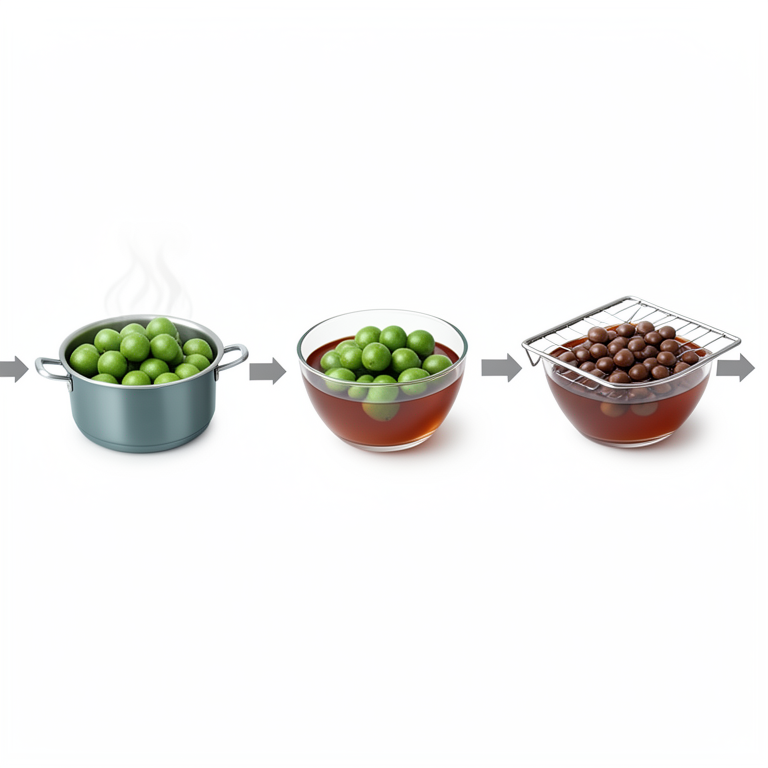
Aonla Candy Production Process
AI-generated conceptual illustration (Amla (Indian gooseberry) fruit). It explains the idea and does not show study data.
View source evidence ↗
Packaging Stability Comparison
AI-generated conceptual illustration (Amla candy in plastic packaging). It explains the idea and does not show study data.
View source evidence ↗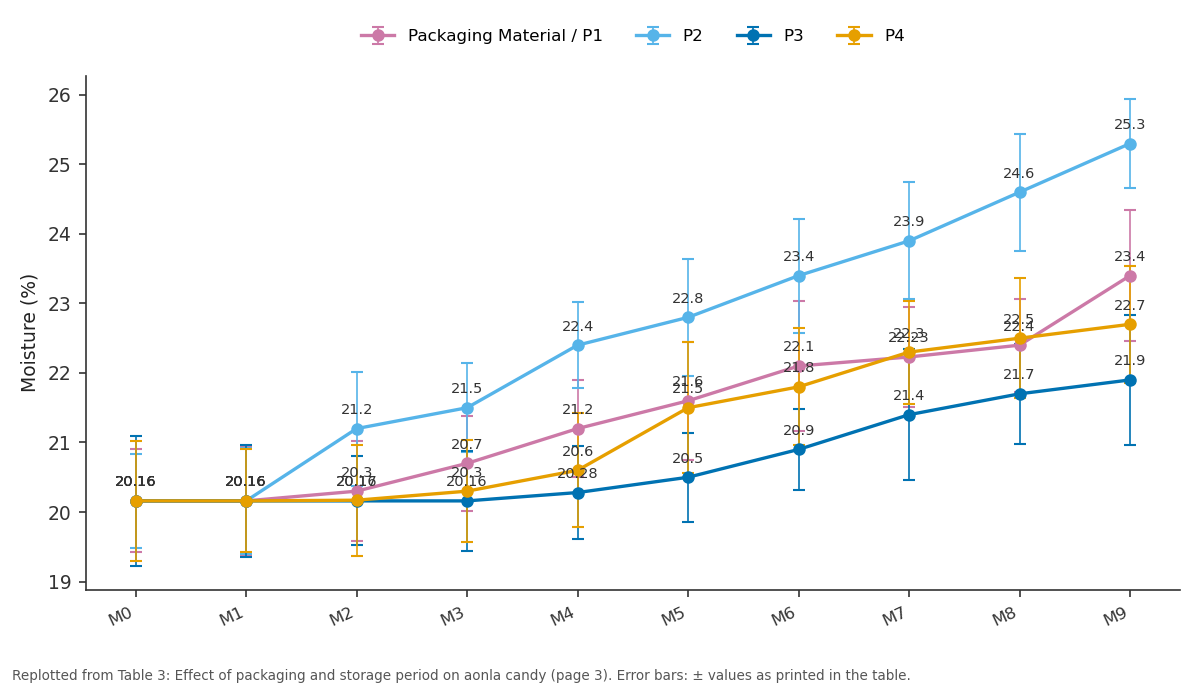
Packaging Material / P1 and P2 and more: M0 vs M1 vs M2 vs M3 vs M4
Replotted from Table 3 (page 3) of the original paper. Every bar is the paper's own table value.
View source evidence ↗Figures & tables
From the original paper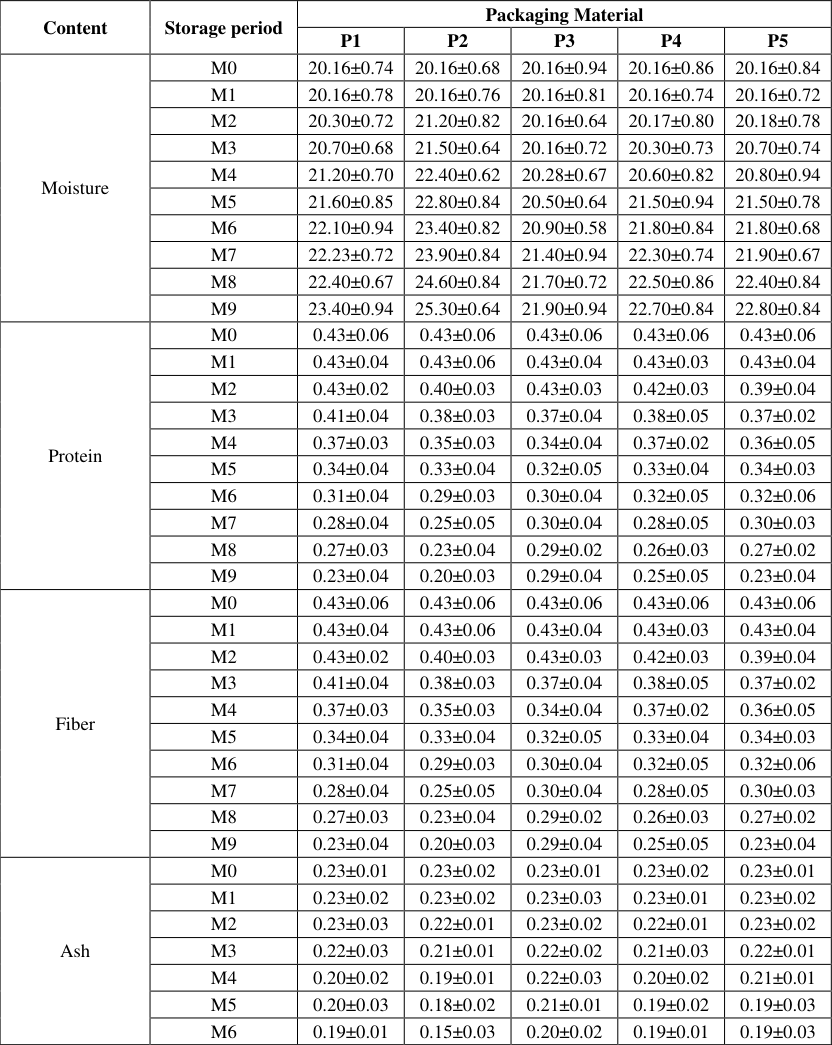 Table 3
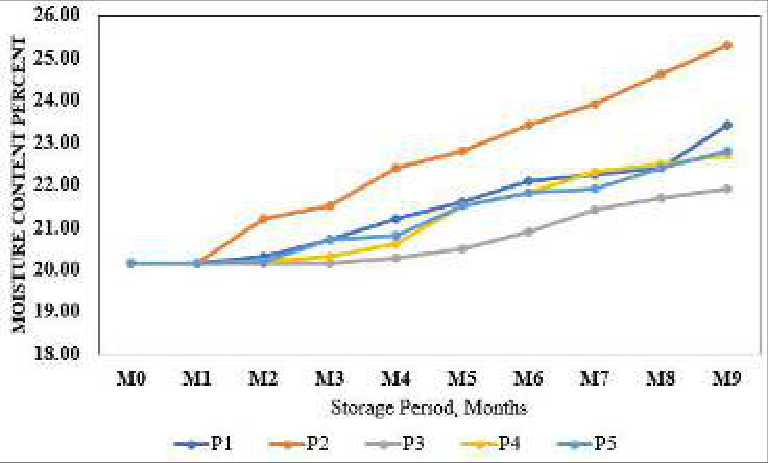 Figure 1
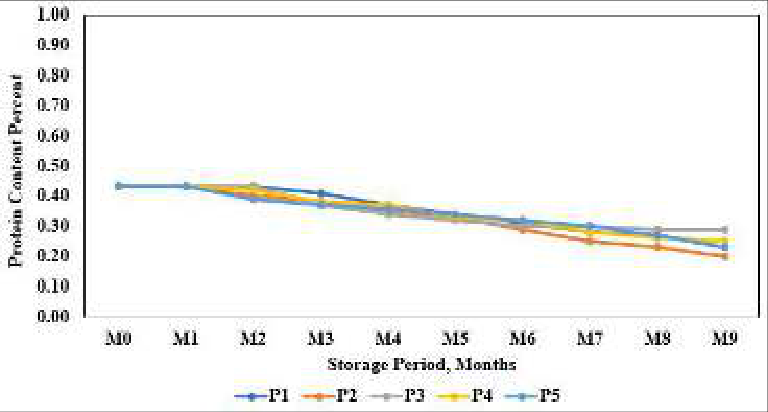 Figure 2
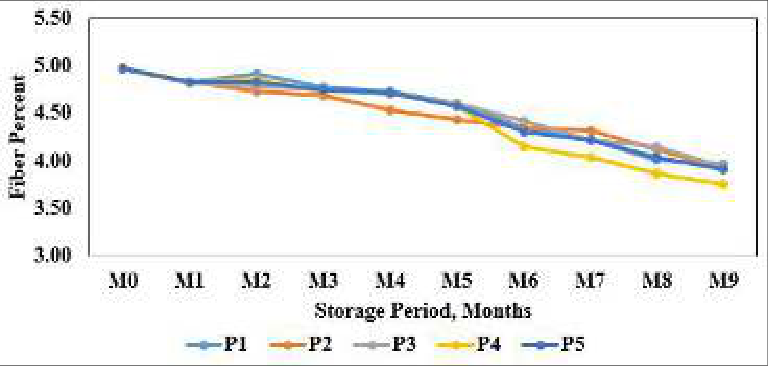 Figure 3
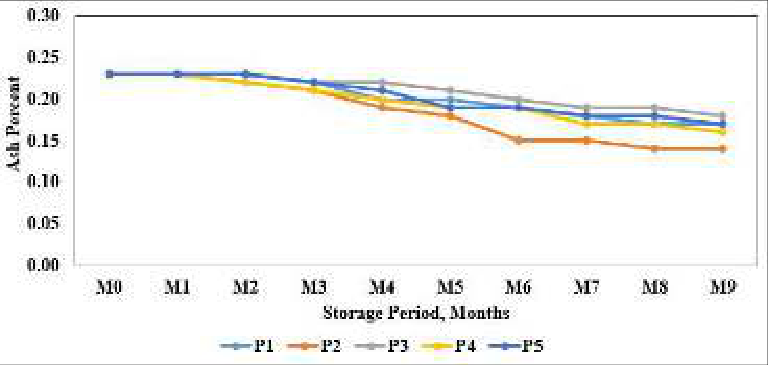 Figure 4
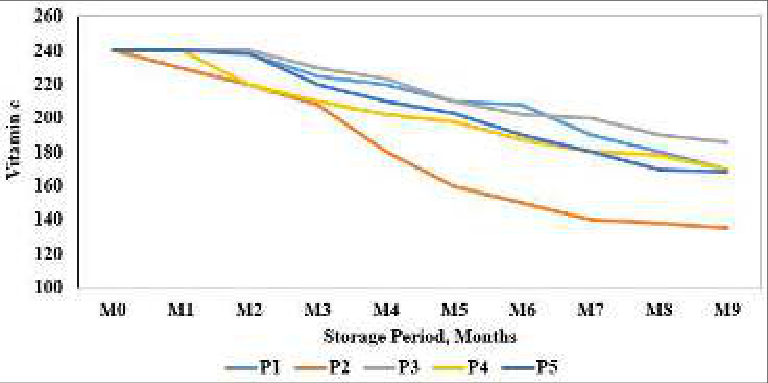 Figure 5
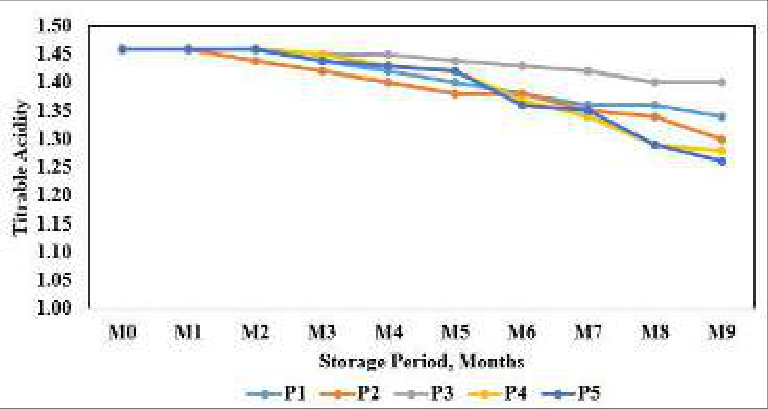 Figure 6
Introduction
Indian goose berry (Phyllanthus emblica) popularly known as Aonla is one of the precious gift of nature to the man and considered as "wonder fruit for health", because of its inherent qualities The main varieties of aonla are Chakaiya, NA-7, Banarasi, Hathijhool, Bansi red, Pink-tinged, Krishna etc. In India, Aonla is grown in an extent of about 50,000 ha with a total production of around 2 lakh metric tonnes. The yield per tree range from 100 to 300 kg/year (Goyal et al., 2008) [3] Aonla fruit is highly nutritive with a great medicinal use and the richest source of vitamin C. Aonla (Indian gooseberry) is a versatile fruit widely recognized for its, making it an excellent ingredient for various value-added products. In the beverage category, aonla juice, squash and sherbet are popular for their refreshing taste and health benefits. Preserved products like aonla murabba, pickle, candy and powder are commonly used for their long shelf life and ease of consumption. Aonla is also utilized in health and dietary supplements, including capsules, tablets, tea and chyawanprash, which are consumed for immunity and overall wellness. Aonla Candy is a popular value-added product offering a perfect blend of health and taste. A fruit impregnated with sugar, removed, drained and dried is called as candied fruit or fruit candy. Aonla Candy Fruit candies are becoming more and more popular because of high acceptability, minimum volume, higher nutritive value and longer storage life. These have additional advantage of being least thrust provoking and ready to eat snacks.
Aonla candy For the preparation of aonla candy, mature fruit are washed, pricked and dipped in 2 percent salt solution for 24 hours. Then fruits are washed and dipped in 2% alum solution for 24 hours. The fruit are thoroughly washed and blanched in boiling water for 5 minutes and steeped in 50° Brix syrup solution for 24 hours. The next day steeping is done in 60° Brix for 24 hours. Again steeping is done in 70° Brix for 72 hours. Excess syrup is drained. The fruit are dried to 15% moisture content. Packaging is done in polythene pouches
Materials and Methods
Materials and Methods
Materials
The material required was selected carefully and with reference to previous researches. Different varieties of amla fruits required for preparation of candy such as Chakaiya, NA-7, Banarasi, Krishna. Sugar, alum solution available in the local market, Kolhapur, Maharashtra, India. Packaging material i.e. Glass jar, LDPE(50 micron), Cast polypropelene (50 micron), Aluminium Foil, Plastic Container were used for storage study.
Methods
Methods
Physical properties of raw material (different varieties of amla fruits)
Physical properties of different varities of amla fruits include size and fruits weights were evaluated using a digital guage meter of about 0.01mm precision. The average fruits size was then calculated. The weight of 10 fruits randomly selected was determined by weighing (AOAC, 2000) [1] . The average fruits weight was then calculated.
Proximate analysis of raw materials (different varieties of amla fruits)
The nutritional parameters of different varieties of amla fruits such as moisture, protein, fat, fibre, ash, carbohydrate, titrable Acidity, Vitamin C(mg/100gm) and Total Sugar were determined by using standard methods (AOAC, 2000) [1] . Carbohydrates for different varieties of amla fruits was calculated by difference method equation as follows, Carbohydrates (%) =100 -% (Moisture + Fat + Protein + Ash + fibre) … (2) The energy value of food is typically calculated based on the macronutrient content: carbohydrates, proteins and fats. The formula for calculating the energy value is:
Preparation of aonla candy
For the production of Aonla Candy, healthy, disease-, pestand bruise-free Aonla fruits were chosen. Fruits were then properly cleaned by being washed under tab water. Fruits were blanched for 10 minutes in boiling water. Following that, the segments were divided and the seeds were taken out, as suggested by Kumar et al., (2001). The segments were blanched and soaked in 02% alum solution for a day. The following day, proper washing was done to get rid of any alum remains. According to the procedure outlined by, the product was made by dipping the segments in progressively higher concentrations of sugar syrup at room temperature until equilibrium at 70°B was established. Initially, 45°Bx sugar syrup was made and pre-treated segments were added to it. The segments were removed from the syrup after 24 hours of soaking and the same syrup was heated to a concentration of 70°Bx before being chilled and added to the fruit. The item was retained for the following three days. On the fourth day, the osmosed segment was taken out of the syrup and properly washed to eliminate any remaining surface syrup and prevent sticking. The portions were evenly spaced out across the aluminium trays. Additionally, drying was done in a cross-flow cabinet tray dryer at 60°C with an air. The product was taken out of the dryer and allowed to cool to room temperature once it had reached a sufficiently dry and leathery texture. It was kept, sealed and packaged right away. The goal of the research project is to examine the effects of packaging material on aonla candy.
Quality Evaluation of Prepared Aonla candy
The proximate analysis of the developed candies was evaluated as per the A.O.A.C. (2000) [1] methods.The nutritional parameters of different varieties of amla Candies such as moisture, protein, fibre, ash, titrable Acidity and Vitamin C(mg/100gm) were determined by using standard methods (AOAC, 2000) [1] . Sensory evaluation developed of candy The candy sample have been evaluated for different sensory attributes such as appearance, colour, texture, flavour, taste and overall acceptability by using 9-point Hedonic scale with the help of 20 member panel. The mean of observations has been considered for evaluating the quality of prepared candy.
Shelf life studies of developed candy using different packaging material
One sample out of four was selected on the basis of proximate and sensory analysis. The selected candy were packed using different packaging material and stored at room temperature. The nutritional evaluation of candy was evaluated at an interval of 1 month for a period of 9 months.
Results and Discussion
Results and Discussion
Physical Characteristics of Fresh Aonla Fruits
The parameters measured include length, diameter and weight. Among the varieties, Chakaiya exhibits the highest length (3.54 cm), followed by Banarasi (3.41 cm), Krishna (3.30 cm) and NA-7 (3.21 cm), indicating slight variations in size. In terms of diameter, Chakaiya again shows the highest value (4.38 cm), whereas NA-7 has the lowest (4.24±0.04 cm), with Banarasi (4.32 cm) and Krishna (4.34 cm) falling in between. The weight of the varieties is fairly consistent, with NA-7 having the highest weight (43.90 g) and Banarasi the lowest (43.20 g), while Chakaiya (43.67 g) and Krishna (43.32 g) exhibit intermediate values. Overall, these observations highlight minor variations in the physical attributes of the different varieties, which may influence their suitability for specific applications.
Chemical Characteristics of Fresh Fruits of Aonla
The proximate composition and biochemical properties of four different varieties: Chakaiya, NA-7, Banarasi, and Krishna. Krishna has the highest moisture content (85.64%), while NA-7 has the lowest (81.22%). Protein content is highest in NA-7 (2.14%) and lowest in Krishna (1.74%). Fat content varies among the varieties, with Krishna containing the highest amount (1.2%) and both Chakaiya and Banarasi having the lowest (0.8%). Fiber content is highest in Krishna (2.71%) and lowest in NA-7 (1.8%). The ash content remains relatively similar across all varieties, ranging from 0.30% in Banarasi to 0.33% in NA-7. Carbohydrate content is highest in Banarasi (15.78%) and lowest in Krishna (11.12%). Regarding biochemical properties, titrable acidity is highest in Chakaiya (1.46%) and lowest in Banarasi (1.24%). Vitamin C content is highest in NA-7 (670.82 mg/100g) and lowest in Krishna (655.78 mg/100g), showing only slight variations across varieties. Total sugar content remains consistent at 10.74% across all varieties. These observations highlight differences in nutritional and biochemical attributes, which can influence their suitability for various processing and consumption purposes.
Chemical Characteristics of Prepared aonla candy
The key parameters evaluated include moisture content, protein, fiber, ash, titratable acidity, and vitamin C content. Moisture content varies slightly among the cultivars, ranging from 19.10% (Chakaiya) to 21.24% (Banarasi).
Protein content is relatively low across all varieties, with NA-7 (0.43%) having the highest and Banarasi (0.36%) the lowest. Fiber content is highest in NA-7 (4.97%) and lowest in Krishna (3.85%), indicating differences in dietary fiber levels. Ash content, which represents mineral composition, is highest in Krishna (0.31%) and lowest in Chakaiya (0.20%). Titratable acidity, a measure of sourness, is highest in Krishna (1.52%) and lowest in Chakaiya (1.38%). Vitamin C content, a key nutritional component, is highest in NA-7 (240 mg/100g) and lowest in Banarasi (229.5 mg/100g). Similar results for aonla varities were reported by Pawar et al., (2024).
Storage Analysis of Aonla Candy
The effect of packaging materials and storage period on the quality of aonla candy discussed in this section. The changes in moisture content, vitamin C, ash content, protein content, crude fiber content and Titrable acidity.
Effect of packaging and storage period on protein content of aonla candy
The initial value of the protein was recorded as 0.43 across all packaging types. Over time, a gradual decline was observed, with final values at M9 ranging from 0.20 in PP to 0.29 in CPP. The mean values across the storage period ranged between 0.33 and 0.35, with CPP showing the highest retention.
Effect of packaging and storage period on fiber content of aonla candy
The initial fiber content was consistent across all packaging types at 4.97%. Over time, a gradual decline was observed, with the final fiber content at M9 ranging from 3.75% in aluminium foil to 3.96% in glass jars. The mean fiber content throughout the storage period ranged between 4.45% and 4.53%, with glass jars and CPP showing the highest retention.
Effect of packaging and storage period on Ash content of aonla candy:
The initial ash content was consistent across all packaging types at 0.23%. Over time, a gradual decline was observed, with the final ash content at M9 ranging from 0.14% in PP to 0.18% in CPP. The mean ash content throughout the storage period ranged between 0.18% and 0.21%, with CPP showing the highest retention. The coefficient of variation (CV %) was lowest for CPP at 8.979%, indicating greater stability, while PP had the highest variation at 20.206%, suggesting more fluctuation in ash content.
Effect of packaging and storage period on vitamin C content of aonla candy
The initial vitamin C content was consistent across all packaging types at 240 mg. Over time, a gradual decline was observed, with the final vitamin C content at M9 ranging from 135 mg in PP to 186 mg in CPP. The mean vitamin C content throughout the storage period varied between 180.1 mg and 216.1 mg, with CPP showing the highest retention. The coefficient of variation (CV %) was lowest for CPP at 9.8%, indicating greater stability, while PP had the highest variation at 22.798%, reflecting significant fluctuations in vitamin C levels.
Effect of packaging and storage period on Titrable acidity content of aonla candy
The initial titratable acidity was consistent across all packaging types at 1.46%. Over time, a gradual decline was observed, with the final acidity levels at M9 ranging from 1.26% in plastic containers to 1.40% in CPP. The mean titratable acidity throughout the storage period varied between 1.39% and 1.44%, with CPP showing the highest retention. The coefficient of variation (CV %) was lowest for CPP at 1.642%, indicating greater stability, while PP had the highest variation at 6.184%, reflecting more fluctuations.
Graphical Representation of Aonla candy During Storage
Graphical Representation of Aonla candy During Storage
Conclusion
The study on amla candy formulation and storage revealed that among the four varieties tested, the NA-7 variety was the most suitable based on chemical and sensory analysis. The 9-month storage study using five different packaging materials demonstrated that Cast Polypropylene (CPP) provided the best protection, preserving the quality and sensory attributes of the candy effectively. This suggests that selecting the right variety and packaging material significantly impacts the overall quality and shelf life of amla candy, making CPP a recommended choice for commercial packaging.
Figures and tables from the paper
| Content | Storage period | Packaging Material | — | — | — | — |
|---|---|---|---|---|---|---|
| P1 | P2 | P3 | P4 | P5 | ||
| Moisture | M0 | 20.16±0.74 | 20.16±0.68 | 20.16±0.94 | 20.16±0.86 | 20.16±0.84 |
| M1 | 20.16±0.78 | 20.16±0.76 | 20.16±0.81 | 20.16±0.74 | 20.16±0.72 | |
| M2 | 20.30±0.72 | 21.20±0.82 | 20.16±0.64 | 20.17±0.80 | 20.18±0.78 | |
| M3 | 20.70±0.68 | 21.50±0.64 | 20.16±0.72 | 20.30±0.73 | 20.70±0.74 | |
| M4 | 21.20±0.70 | 22.40±0.62 | 20.28±0.67 | 20.60±0.82 | 20.80±0.94 | |
| M5 | 21.60±0.85 | 22.80±0.84 | 20.50±0.64 | 21.50±0.94 | 21.50±0.78 | |
| M6 | 22.10±0.94 | 23.40±0.82 | 20.90±0.58 | 21.80±0.84 | 21.80±0.68 | |
| M7 | 22.23±0.72 | 23.90±0.84 | 21.40±0.94 | 22.30±0.74 | 21.90±0.67 | |
| M8 | 22.40±0.67 | 24.60±0.84 | 21.70±0.72 | 22.50±0.86 | 22.40±0.84 | |
| M9 | 23.40±0.94 | 25.30±0.64 | 21.90±0.94 | 22.70±0.84 | 22.80±0.84 | |
| Protein | M0 | 0.43±0.06 | 0.43±0.06 | 0.43±0.06 | 0.43±0.06 | 0.43±0.06 |
| M1 | 0.43±0.04 | 0.43±0.06 | 0.43±0.04 | 0.43±0.03 | 0.43±0.04 | |
| M2 | 0.43±0.02 | 0.40±0.03 | 0.43±0.03 | 0.42±0.03 | 0.39±0.04 | |
| M3 | 0.41±0.04 | 0.38±0.03 | 0.37±0.04 | 0.38±0.05 | 0.37±0.02 | |
| M4 | 0.37±0.03 | 0.35±0.03 | 0.34±0.04 | 0.37±0.02 | 0.36±0.05 | |
| M5 | 0.34±0.04 | 0.33±0.04 | 0.32±0.05 | 0.33±0.04 | 0.34±0.03 | |
| M6 | 0.31±0.04 | 0.29±0.03 | 0.30±0.04 | 0.32±0.05 | 0.32±0.06 | |
| M7 | 0.28±0.04 | 0.25±0.05 | 0.30±0.04 | 0.28±0.05 | 0.30±0.03 | |
| M8 | 0.27±0.03 | 0.23±0.04 | 0.29±0.02 | 0.26±0.03 | 0.27±0.02 | |
| M9 | 0.23±0.04 | 0.20±0.03 | 0.29±0.04 | 0.25±0.05 | 0.23±0.04 | |
| Fiber | M0 | 0.43±0.06 | 0.43±0.06 | 0.43±0.06 | 0.43±0.06 | 0.43±0.06 |
| M1 | 0.43±0.04 | 0.43±0.06 | 0.43±0.04 | 0.43±0.03 | 0.43±0.04 | |
| M2 | 0.43±0.02 | 0.40±0.03 | 0.43±0.03 | 0.42±0.03 | 0.39±0.04 | |
| M3 | 0.41±0.04 | 0.38±0.03 | 0.37±0.04 | 0.38±0.05 | 0.37±0.02 | |
| M4 | 0.37±0.03 | 0.35±0.03 | 0.34±0.04 | 0.37±0.02 | 0.36±0.05 | |
| M5 | 0.34±0.04 | 0.33±0.04 | 0.32±0.05 | 0.33±0.04 | 0.34±0.03 | |
| M6 | 0.31±0.04 | 0.29±0.03 | 0.30±0.04 | 0.32±0.05 | 0.32±0.06 | |
| M7 | 0.28±0.04 | 0.25±0.05 | 0.30±0.04 | 0.28±0.05 | 0.30±0.03 | |
| M8 | 0.27±0.03 | 0.23±0.04 | 0.29±0.02 | 0.26±0.03 | 0.27±0.02 | |
| M9 | 0.23±0.04 | 0.20±0.03 | 0.29±0.04 | 0.25±0.05 | 0.23±0.04 | |
| Ash | M0 | 0.23±0.01 | 0.23±0.02 | 0.23±0.01 | 0.23±0.02 | 0.23±0.01 |
| M1 | 0.23±0.02 | 0.23±0.02 | 0.23±0.03 | 0.23±0.01 | 0.23±0.02 | |
| M2 | 0.23±0.03 | 0.22±0.01 | 0.23±0.02 | 0.22±0.01 | 0.23±0.02 | |
| M3 | 0.22±0.03 | 0.21±0.01 | 0.22±0.02 | 0.21±0.03 | 0.22±0.01 | |
| M4 | 0.20±0.02 | 0.19±0.01 | 0.22±0.03 | 0.20±0.02 | 0.21±0.01 | |
| M5 | 0.20±0.03 | 0.18±0.02 | 0.21±0.01 | 0.19±0.02 | 0.19±0.03 | |
| M6 | 0.19±0.01 | 0.15±0.03 | 0.20±0.02 | 0.19±0.01 | 0.19±0.03 |
Table text extracted from the original PDF; superscript letters are shown inline. The original table image is below.
View original table image
References
9 in the original paper- Barthakur NN, Arnold NP. Chemical analysis of emblica (Phylanthus emblica L.) and its potential as a food source. Sci Hortic. 1991;47:99-105.
- Goyal RK, Patil RT, Kingsly ARP, Waila H, Kumar P. Status of Post-harvest Technology of Aonla in India-A Review. Am J Food Technol. 2008;3(1):13.
- Katke SD, Pandhare GR, Patil PS. Studies on process standardization of sugarless aonla (Phyllanthus emblica) candy. J Pharmacogn Phytochem. 2018;7(6):396-400.
- Mishra P, Srivastava V, Verma D, Chauhan OP, Rai GK. Physico chemical properties of chakiya variety of aonla (Emblica officinalis) and effect of different dehydration methods on quality of powder. Afr J Food Sci. 2009;3(10):303-306.
- Mondal SC, Kamal MM, Mumin MA, Hosain MM, Ali MR. Effect of sucrose on the physicochemical properties, organoleptic qualities and shelf-life stability of aonla (Emblica officinalis) candy. IOSR J Environ Sci Toxicol Food Technol. 2017;11:85-94.
- Naik AG, Chundawat BS. Storage behavior of various Aonla products made from 'Gujarat Amla'-1 variety. J Appl Hortic. 1996;2(1&2):40-3.
- S., Kaushik RA. Effect of drying methods on quality of Indian gooseberry (Emblica officinalis Gaertn.) powder during storage. J Sci Ind Res. 2012;71(11):727-732.
- Sivakumar KP. Standardization and storage stability of aonla sweet candy. Madras Agric J. 2013;100(JanMar):1.
- Tandon DK, Yadav RC, Sood S, Kumar S, Dikshit A. Effect of Blanching and lye-peeling on the quality of aonla candy. Indian Food Packer. 2003;57(6):147-52.