
Research article · 2025 · Full text
International Journal of Biology SciencesNymphoides peltata as a potential protein source to replace fish meal in the diet of Common Carp, Cyprinus carpio var. communis
Volume 7(6) · Pages 387–390 · DOI: 10.33545/26649926.2025.v7.i6f.404 ↗
Research areasAquaculture Nutrition and GrowthFish Biology and Ecology StudiesIdentification and Quantification in Food
Abstract
Author-writtenThe present study assessed the proximate composition of three aquatic weeds—Nymphoides peltata, Ceratophyllum demersum, and Potamogeton nodosus—to explore their potential as alternative feed ingredients for aquaculture. Among the species analyzed, Nymphoides peltata exhibited the highest crude protein (25%), dry matter (93.60%), and crude fat (5.64%) contents. Based on these results, N. peltata was selected for dietary inclusion in the feed of Common carp (Cyprinus carpio). Four isonitrogenous (35% CP) and isocaloric (3500 kcal/kg) diets were formulated with N. peltata incorporated at 0% (control), 15% (T1), 30% (T2), and 45% (T3). Juvenile carp (average weight 8.95±1.1 g) were fed the experimental diets at 5% of their body weight daily for eight weeks. Growth performance and feed utilization metrics indicated that fish fed the 45% inclusion diet (T3) had significantly higher (P < 0.05) weight gain (17.09±0.55 g) and specific growth rate (1.106 ± 0.01) compared to the control. Feed conversion ratio (2.81±0.19) was lowest, and protein efficiency ratio (1.78±0.07) highest in T3. Mortality was lowest in the control and T3 groups. The findings demonstrate that Nymphoides peltata can be effectively used as a partial fishmeal replacer, enhancing growth and feed efficiency in C. carpio without adverse effects on survival. This highlights its potential as a sustainable and cost-effective ingredient for aqua feeds.
Summary
Source-checkedPlain-language reading of the full paper, prepared with AI and checked against the text. Each point links to the authors' own words.
Why it matters
- Fishmeal is a primary but expensive ingredient in aquaculture feeds, making it a significant cost driver for fish farming. View evidence ↗
- The high cost and limited availability of fishmeal have created a need for sustainable, locally sourced protein alternatives. View evidence ↗
- Aquatic macrophytes are considered viable feed supplements because they are inexpensive, widely available, and nutritionally rich. View evidence ↗
The question
- The study aimed to evaluate the nutritional composition of three aquatic weeds to determine if they could serve as alternative aquaculture feed ingredients. View evidence ↗
What they did
- Four diets with 35% crude protein and 3500 kcal/kg were created, with N. peltata replacing fishmeal at levels of 0% (control), 15%, 30%, and 45%. View evidence ↗
- The experiment used 160 Common carp fingerlings (average weight 8.95 ± 1.1 g), divided into four groups with four replicates of 10 fish each. View evidence ↗
- The trial lasted 60 days, during which the fish were fed 5% of their body weight daily. View evidence ↗
What they found
- Fish fed the 45% N. peltata diet (T3) achieved the highest weight gain (17.09 ± 0.55 g), which was significantly higher than the control group (11.46 ± 0.34 g). View evidence ↗
- The fish showed no palatability issues with the N. peltata diets, suggesting the plant is well-accepted by Common carp fingerlings. View evidence ↗
What it means
- The authors conclude that Nymphoides peltata is a viable, eco-friendly, and cost-effective protein alternative for Common carp feed. View evidence ↗
- The authors recommend incorporating locally available aquatic macrophytes like N. peltata into sustainable feed strategies to ensure the viability of freshwater aquaculture. View evidence ↗
Visual summary
2 visualsIllustrations explain the paper; charts are replotted from the paper's own table values.
Effect of N. peltata Inclusion on Carp Growth
AI-generated conceptual illustration (Common Carp (Cyprinus carpio var. communis) and Nymphoides peltata aquatic plants). It explains the idea and does not show study data.
View source evidence ↗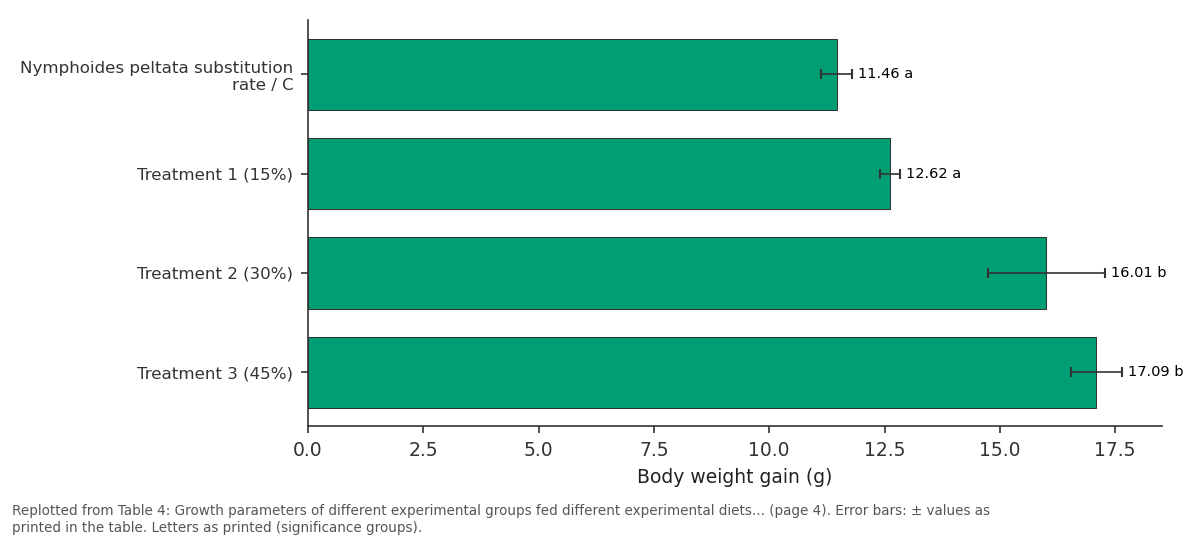
Body weight gain (g): Nymphoides peltata... vs Treatment 1 (15%) vs Treatment 2 (30%) vs Treatment 3 (45%)
Replotted from Table 4 (page 4) of the original paper. Every bar is the paper's own table value.
View source evidence ↗Figures & tables
From the original paper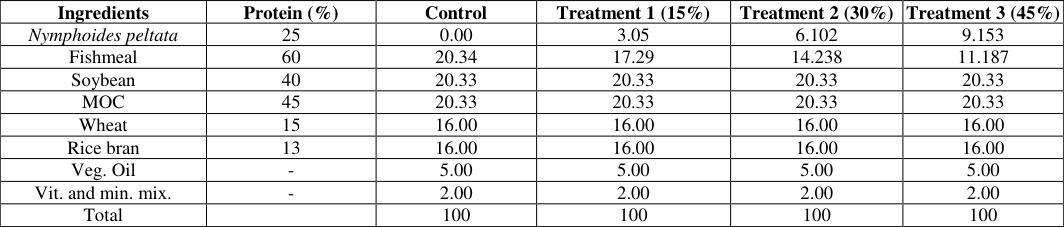 Table 1
 Table 2
 Table 3
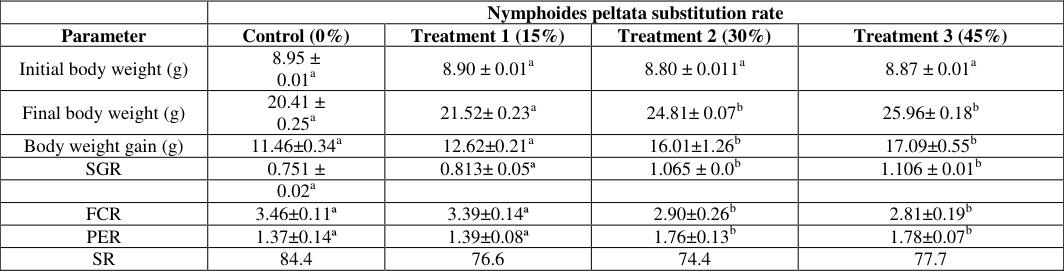 Table 4
Introduction
Farmed fish are typically raised on formulated feeds rather than consuming natural prey or forage. These feeds are manufactured using a variety of raw materials and are designed to meet both essential and non-essential nutritional needs. However, fish feed is one of the most expensive components in aquaculture operations, with fishmeal being a primary and costly ingredient. Due to the limited availability and high cost of fishmeal, there is increasing interest in identifying alternative, locally sourced protein ingredients that can match its nutritional value. Developing feeds from readily available and nutritionally rich local resources is essential. Such innovation would not only reduce feed costs but also enhance the sustainability of aquaculture practices. Additionally, future progress in fish nutrition will depend on addressing critical gaps, including species-specific dietary needs, the role of digestive enzyme supplementation, and the formulation of cost-effective, scalable diets based on renewable resources. The rising cost of conventional feed ingredients has driven significant research into substitutes for fishmeal, which is commonly used in high proportions in many aquafeeds. Sustainable feed development must prioritize reducing dependence on fishmeal and other expensive inputs. When evaluating potential feed ingredients, factors such as availability, digestibility, palatability, and cost must be considered. Analyzing the proximate composition of novel feed sources helps determine their viability in aquafeed. The use of aquatic macrophytes in fish diets has been widely documented for their nutritional benefits. These plants offer advantages such as low cost, high availability, and favorable nutrient profiles. Both terrestrial and aquatic plants have long been used as supplemental feeds in freshwater aquaculture and remain valuable in extensive culture systems. These macrophytes are rich in protein and minerals and are suitable not only as feed for herbivorous fish but also as fertilizers and livestock feed.
Since protein is a critical and costly component of fish diets, exploring plant-based alternatives is crucial for reducing feed expenses and enhancing growth performance.
Materials and Methods
Materials and Methods
Biochemical analysis of different aquatic weeds
Three aquatic weed species-Ceratophyllum demersum (hornwort), Potamogeton nodosus (longleaf pondweed), and Nymphoides peltata (fringed water lily)-were collected from Dal Lake, Srinagar, for analysis. Following identification, the samples were thoroughly rinsed to eliminate any adhering dirt or debris. The cleaned plant materials were then air-dried at room temperature for approximately one week. Once dried, the samples were finely ground using a laboratory grinder, sieved to obtain a uniform powder, and stored in sealed plastic containers at room temperature until further use. The powdered samples were subjected to proximate analysis to determine their nutritional composition, following standard procedures outlined by the Association of Official Analytical Chemists (AOAC). All analyses were performed in triplicate to ensure accuracy and consistency of the results. Based on its superior crude protein content, Nymphoides peltata was selected for inclusion in experimental diets as a partial replacement for fishmeal.
Diet formation and preparation
Four experimental diets, including a control and three treatment groups, were formulated to contain 35% crude protein, each incorporating varying levels of the aquatic weed Nymphoides peltata. The diet formulation and proximate analysis were conducted at the Fish Nutrition and Biochemistry Laboratory, Faculty of Fisheries, Rangil. All dry ingredients were thoroughly mixed, and distilled water (100 ml per kg of feed) was added to each mixture. The ingredients were then blended using a kitchen blender to form a uniform paste. In the treatment diets, Nymphoides peltata was included at 15% (Treatment 1), 30% (Treatment 2), and 45% (Treatment 3), while the control diet contained no Nymphoides supplementation. The prepared pastes were processed into pellets using a manual pelletizer equipped with a 1-mm die. The resulting wet pellets were oven-dried at 60°C until moisture was removed. Once dried, the diets were packed in plastic bags and stored in a refrigerator at 4°C until use in the feeding trial.
Experimental site
The feeding trial was conducted over a continuous period of 60 days, beginning on April 1st, 2019, and concluding on June 1st, 2019. The study was carried out under controlled conditions in the Wet Laboratory of the Faculty of Fisheries, Rangil, Sher-e-Kashmir University of Agricultural Sciences and Technology of Kashmir. This facility provided an appropriate environment for the effective monitoring and management of experimental fish and water quality parameters throughout the duration of the study. Prior to the commencement of the feeding trial, the experimental fish were subjected to a 10-day acclimatization period. During this phase, the fish were maintained in circular plastic tubs filled with dechlorinated freshwater and equipped with continuous aeration. The purpose of acclimatization was to allow the fish to adjust to the laboratory environment, minimize handling stress, and stabilize their physiological condition before being exposed to the experimental diets. Throughout this period, fish were fed a standard basal diet once daily at 3% of their body weight to ensure nutritional maintenance without influencing subsequent growth performance. Water temperature, pH, dissolved oxygen, and other essential physicochemical parameters were routinely monitored and maintained within optimal ranges suitable for the rearing of Common carp (Cyprinus carpio). Any fluctuations in water quality were promptly corrected to maintain a stable and healthy environment. Uneaten feed and waste materials were siphoned out regularly to prevent water fouling and to minimize the risk of disease outbreaks.
After the acclimatization period, the fish were randomly distributed into experimental groups based on the designated diet treatments. Each group was housed in separate tubs, and all treatment conditions, including feeding frequency, water exchange, and aeration, were kept consistent to ensure uniformity and minimize experimental bias.
Experimental set-up and experimental fish
International Journal of Biology Sciences https://www.biologyjournal.net A 60-day controlled feeding experiment was conducted in the Wet Laboratory of the Faculty of Fisheries, Rangil, to evaluate the effects of dietary treatments on the growth performance of Common carp (Cyprinus carpio). The experimental setup comprised 16 circular plastic tubs, each with a holding capacity of 75 liters. All tubs were covered with fine mesh netting to prevent fish from jumping out and to minimize external contamination. Prior to stocking, all tubs were thoroughly cleaned and disinfected. Initially, they were filled with a potassium permanganate solution (4 mg/L) and left overnight to eliminate potential pathogens.
The following day, the solution was discarded, and the tubs were rinsed thoroughly with clean, dechlorinated water to ensure a safe environment for the fish. The experimental fish used in this study were advanced fingerlings of Cyprinus carpio, with an initial mean weight of 8.95 ± 1.1 grams. These fingerlings were sourced from the National Fish Seed Farm, Manasbal, Jammu and Kashmir. A total of 160 fish were randomly assigned to four dietary treatments, including one control and three treatment groups, using a completely randomized design. Each treatment group included four replicates, with 10 fish stocked per replicate tub. All tubs were filled with chlorine-free canal water, and water levels were maintained throughout the trial. To maintain optimal water quality and dissolved oxygen levels, continuous aeration was provided using air pumps connected to air stones in each tub. Plastic regulators were installed to ensure uniform air distribution and pressure across all experimental units. Fish were monitored regularly, and body weight measurements were recorded every 15 days to evaluate growth performance. Prior to each weighing session, the fish were fasted overnight to minimize variability due to gut fill.
Feeding
Throughout the 60-day feeding trial, fish were fed at a rate of 5% of their total body weight per day. The daily feed allotment was evenly split into two portions to ensure better digestion and nutrient absorption. The first feeding was administered at 10:00 AM and the second at 6:00 PM each day. This feeding schedule was maintained consistently across all treatment groups. Regular observations were made to monitor feed intake and minimize waste. The feeding rate was adjusted periodically based on biweekly weight measurements to match the growth of the fish and ensure accurate rationing.Measurement of growth parameters.
Weight gain, specific growth rate, feed conversion ratio, protein efficiency ratio and survival rate were determined at an interval of 15 days as follows :
Weight gain (WG %): 100 x (final weight -initial body weight)/ initial body weight Specific growth rate (SGR) = 100 x ln (final weight -initial body weight)/duration of experiment Feed conversion ratio (FCR): Feed consumed (g, dry weight)/weight gain (g) Protein efficiency ratio (PER): Weight gain (g)/protein intake (g) Survival rate: Total number of fish harvested/Total number of fish stocked x 100
Statistical Analysis collected data were analyzed using SPSS software (version 20). One-way Analysis of Variance (ANOVA) was employed to evaluate the differences among treatment groups. To identify specific differences between group means, Duncan's Multiple Range Test (DMRT) was applied as a post-hoc analysis. Additionally, the Least Significant Difference (LSD) method was used to determine the precise levels at which significant differences occurred among the treatments. Statistical significance was accepted at a probability level of p < 0.05.
Result and Discussion
One of the challenges commonly faced when incorporating alternative protein sources into aquafeeds is the issue of palatability, which can influence feed intake and overall performance. However, in the present investigation, no palatability issues were observed across any of the dietary treatments. This suggests that Nymphoides peltata was well accepted by Cyprinus carpio fingerlings when incorporated into their feed. Among the three aquatic macrophytes evaluated for proximate composition, Nymphoides peltata exhibited the highest crude protein content at 25%, making it a promising candidate for fish feed formulation. The results of this study confirmed the nutritional adequacy of N. peltata as a partial fishmeal substitute in the diet of C. carpio fingerlings. The inclusion of N. peltata up to 45% in practical diets demonstrated no negative impacts on growth, feed utilization, or survival, thereby validating its potential as a sustainable and cost-effective alternative to fishmeal. Throughout the 60-day trial, water quality parameters such as temperature, pH, dissolved oxygen, total hardness, and ammonia concentrations remained within optimal ranges as defined by Boyd and Tucker (1998). These parameters did not significantly fluctuate among treatments, indicating that the incorporation of N. peltata had no detrimental effect on the rearing environment. The inclusion of N. peltata significantly enhanced growth performance metrics such as weight gain, percent weight gain, specific growth rate (SGR), and protein efficiency ratio (PER). Fish fed diets containing N. peltata at a 45% inclusion level (T3) exhibited the highest average weight gain (17.09 g), significantly greater than that of the control group (11.46 g). Weight gains recorded in treatments T1 and T2 were 12.62 g and 16.01 g, respectively. These results align with findings by Nisha and Geetha (2017), who reported improved growth in Labeo rohita fed with 30% Pistia stratiotes meal. The specific growth rate of C. carpio was also significantly improved with increasing levels of N. peltata in the diet. The highest SGR (1.106) was recorded in T3, compared to the control group which had the lowest SGR (0.751). Similar patterns have been observed who noted that duckweed at certain inclusion levels resulted in superior growth rates in fish. Feed conversion ratio (FCR) improved significantly in fish receiving N. peltata-supplemented diets, with the most efficient conversion (lowest FCR) seen in T3. These results are consistent with Srirangam (2016), who highlighted improvements in FCR and related growth metrics in Ctenopharyngodon idella fed diets containing Lemna minor and soybean meal. Protein efficiency ratio (PER) also followed a similar trend, with the highest value recorded in the group receiving 45% N. peltata, indicating efficient utilization of dietary protein. These findings support earlier studies, who found that a 15% inclusion of duckweed in the diet of Common carp enhanced growth and feed efficiency without compromising survival. Additionally, this study corresponds with the observations of Ebrahim (2007), who demonstrated that Azolla meal could successfully replace a significant proportion of soybean meal in tilapia diets without negatively affecting performance parameters. Overall, the present study confirms the suitability of Nymphoides peltata as a viable and sustainable alternative protein source in aquafeeds for Cyprinus carpio, offering both economic and environmental advantages. The crude fat in Nymphoides peltata (5.64%) was significantly higher than Potamogeton nodosus (4.75%) and Ceratophyllum demersum (3.60%) respectively.
Conclusion
The outcomes of this investigation underscore the potential utility of Nymphoides peltata as a viable, eco-friendly, and cost-effective alternative protein source in aquafeed formulations for Cyprinus carpio. Dietary inclusion of N. peltata at 45% demonstrated statistically significant improvements (p<0.05) in key growth performance metrics, including final body weight, specific growth rate (SGR), feed conversion ratio (FCR), and protein efficiency ratio (PER), without eliciting any detrimental effects on fish health or survival. The enhanced nutrient assimilation and feed utilization efficiency observed in the treatment groups indicate that N. peltata possesses adequate palatability and digestibility characteristics, supporting its application as a partial fishmeal substitute. Moreover, the economic implications of reduced dependency on conventional, highcost protein ingredients-such as fishmeal-are substantial, aligning with sustainable aquaculture practices and promoting feed cost minimization. These findings advocate for the incorporation of locally available aquatic macrophytes like N. peltata into nutritionally balanced, environmentally sustainable feed strategies to ensure the long-term viability of freshwater aquaculture systems.
Figures and tables from the paper
| Ingredients | Protein (%) | Control | Treatment 1 (15%) | Treatment 2 (30%) | Treatment 3 (45%) |
|---|---|---|---|---|---|
| Nymphoides peltata | 25 | 0.00 | 3.05 | 6.102 | 9.153 |
| Fishmeal | 60 | 20.34 | 17.29 | 14.238 | 11.187 |
| Soybean | 40 | 20.33 | 20.33 | 20.33 | 20.33 |
| MOC | 45 | 20.33 | 20.33 | 20.33 | 20.33 |
| Wheat | 15 | 16.00 | 16.00 | 16.00 | 16.00 |
| Rice bran | 13 | 16.00 | 16.00 | 16.00 | 16.00 |
| Veg. Oil | - | 5.00 | 5.00 | 5.00 | 5.00 |
| Vit. and min. mix. | - | 2.00 | 2.00 | 2.00 | 2.00 |
| Total | 100 | 100 | 100 | 100 |
Table text extracted from the original PDF; superscript letters are shown inline. The original table image is below.
View original table image
| Chemical Composition | Control (0%) | Treatment 1 (15%) | Treatment 2 (30%) | Treatment 3 (45%) |
|---|---|---|---|---|
| Dry matter (%) | 87.0 | 87.7 | 88.2 | 88.5 |
| Crude protein (%) | 20.00 | 20.00 | 21.42 | 21.82 |
| Crude fibre (%) | 6.82 | 7.03 | 7.07 | 7.21 |
| Ash (%) | 16.65 | 16.21 | 15.79 | 15.79 |
| Lipid (%) | 10.23 | 10.82 | 11.43 | 12.64 |
| Gross energy (Kcal/g) | 406.20 | 409.53 | 412.57 | 425.95 |
Table text extracted from the original PDF; superscript letters are shown inline. The original table image is below.
View original table image
| Aquatic weed | Moisture (%) | Dry matter (%) | Protein (%) | Fat (%) | Fiber (%) | Silica (%) |
|---|---|---|---|---|---|---|
| Ceratophyllum demersum | 9.54% | 90.46% | 24.15% | 3.60% | 41.50% | 6.95% |
| Potamogeton nodosus | 8.50% | 91.50% | 22.57% | 4.75% | 46.68% | 4.56% |
| Nymphoides peltata | 6.33% | 93.60% | 25.00% | 5.64% | 57.54% | 3.24% |
Table text extracted from the original PDF; superscript letters are shown inline. The original table image is below.
View original table image
| — | Nymphoides peltata substitution rate | — | — | — |
|---|---|---|---|---|
| Parameter | Control (0%) | Treatment 1 (15%) | Treatment 2 (30%) | Treatment 3 (45%) |
| Initial body weight (g) | 8.95 ± 0.01a | 8.90 ± 0.01a | 8.80 ± 0.011a | 8.87 ± 0.01a |
| Final body weight (g) | 20.41 ± 0.25a | 21.52± 0.23a | 24.81± 0.07b | 25.96± 0.18b |
| Body weight gain (g) | 11.46±0.34a | 12.62±0.21a | 16.01±1.26b | 17.09±0.55b |
| SGR | 0.751 ± | 0.813± 0.05ª | 1.065 ± 0.0b | 1.106 ± 0.01b |
| 0.02a | ||||
| FCR | 3.46±0.11ª | 3.39±0.14ª | 2.90±0.26b | 2.81±0.19b |
| PER | 1.37±0.14ª | 1.39±0.08ª | 1.76±0.13b | 1.78±0.07b |
| SR | 84.4 | 76.6 | 74.4 | 77.7 |
Table text extracted from the original PDF; superscript letters are shown inline. The original table image is below.
View original table image
References
10 in the original paper- AOAC. Official methods of analysis of the Association of Official Analytical Chemists. 15th ed. Arlington (VA): AOAC; 1990. p. 2220.
- Asimi OA, Khan IA, Bhat TA, Hussain N. Duckweed (Lemna minor) as a plant protein source in the diet of Common carp (Cyprinus carpio) fingerlings. J Pharmacogn Phytochem. 2018;7(3):42-45.
- Bardach JE, Ryther JH, McLarney WO. Aquaculture: the farming and husbandry of freshwater and marine organisms. New York: Wiley Interscience; 1972.
- Boyd CE, Tucker CS. Pond aquaculture water quality management. Boston: Kluwer Academic Publishers; 1998. p. 87-152.
- Chiayvareesajja S, Wongwit C, Tansakul R. Cage culture of Tilapia (Oreochromis niloticus) using aquatic weed based pellet. In: Hirano R, Hanyu I, editors. Second Asian Fisheries Forum; Tokyo, Japan; 1989. p. 17-22.
- De Silva SS, Anderson TA. Fish nutrition in aquaculture. Vol. 1. Dordrecht: Springer Science & Business Media; 1994.
- Deng F, Koshio S, Yokoyama S, Bai SC, Shao Q, Cui Y. Effect of feeding rate on growth performance of white sturgeon (Acipenser transmontanus) larvae. Aquaculture. 2006;217:589-98.
- Edwards P. Use of terrestrial and aquatic macrophytes in aquaculture. Detritus Microb Ecol Aquacult. 1987;14:311-85.
- Edwards P, Kamal M, Wee KL. Incorporation of composted and dried water hyacinth in pelleted feed for the tilapia (Oreochromis niloticus). Aquacult Res. 1985;16(3):233-48.
- Effiong BN, Sanni A, Fagbenle JO. Effect of partial replacement of fishmeal with duckweed (Lemna paucicostata) meal on the growth performance of Heterobranchus longifilis fingerlings. Rep Opin. 2009;1(3):76-81.
Cited by 1
From OpenAlex, OpenCitations and reference lists read by Scinovex
- Optimization of rice byproducts based feed formulation for Indian major carps using linear programming modelling ↗
Supriya Priyadarsani, Asit Kumar Pradhan, Manish Debnath, Prakash Chandra Jena · ORYZA- An International Journal on Rice · 2025
The escalating cost of conventional feed ingredients has intensified the demand for alternative, cost-effective, and sustainable inputs in aquaculture nutrition. Rice byproducts, including rice bran, rice polish, broken rice, and de-oiled rice bran, offer considerable potential owing to their abundance, nutrient density, and low market price. This study investigates the optimization of rice-byproduct-based feed formulations for Indian major carps using…
❝ 0PDF