
Research article · 2025 · Full text
International Journal of Biology SciencesAntioxidant potential of Meyna laxiflora Robyns collected from the Western Ghat of Maharashtra
Volume 7(6) · Pages 179–182 · DOI: 10.33545/26649926.2025.v7.i6c.374 ↗
Research areasNatural Antidiabetic Agents StudiesPhytochemicals and Antioxidant Activities
Abstract
Author-writtenThe Meyna laxiflora Robyns distributed in wild all over the Western Ghat and the Fruits are as raw by the tribes as it rich source of Nutrition. The plants have potential benefits from immune to many diseases. This richest source of secondary metabolites with highest antioxidant properties have collected from the parts of Western Ghat of Akole Tehsil of Ahilyanagar Distrcict (MH) and evaluated the Phytochemical and Antioxidant properties in the Methanol extract.
Summary
Source-checkedPlain-language reading of the full paper, prepared with AI and checked against the text. Each point links to the authors' own words.
Why it matters
- Meyna laxiflora is a wild edible fruit found in the Western Ghats and is consumed by local tribes. View evidence ↗
- Utilizing knowledge of wild edible fruit plants may help address issues of malnutrition and food insecurity. View evidence ↗
- Wild edible fruits are considered rich sources of secondary metabolites and possess high antioxidant properties. View evidence ↗
The question
- The study aimed to analyze the phytochemical constituents and antioxidant potential of Meyna laxiflora fruits. View evidence ↗
What they did
- Fruits were randomly collected from five different locations within the Akole Tehsil of Ahilyanagar District. View evidence ↗
- A methanol extract was prepared by subjecting 300g of fruit powder to reflux for one hour, repeated three times. View evidence ↗
- The Folin-Ciocalteau reagent was used to determine the total phenolic content of the methanolic extract. View evidence ↗
- Total antioxidant activity was measured using the phosphomolybdenum method. View evidence ↗
What they found
- The total ash content of the dried Meyna laxiflora fruit was estimated to be (0.49±0.02)%. View evidence ↗
- The moisture content of the dried fruit powder was found to be (3.07±0.094)%. View evidence ↗
- The methanolic fruit extract showed a mean phenolic content of 140.53±0.40 mg/g. View evidence ↗
- Alkaloids were found to be absent in the fruit pulp of M. laxiflora. View evidence ↗
- The fruit pulp tested positive for the presence of flavonoids. View evidence ↗
- At a concentration of 150 μg/ml, the fruit pulp methanol extract showed a total antioxidant activity of 79.10 μg/ml (in AAE). View evidence ↗
- At a concentration of 30 μg/ml, the fruit pulp methanol extract showed a total antioxidant activity of 18.9 μg/ml (in AAE). View evidence ↗
What it means
- The authors conclude that Meyna laxiflora fruits and pulp are important dietary sources of antioxidant potential. View evidence ↗
- The authors recommend implementing horticulture practices for this fruit to ensure availability across all seasons. View evidence ↗
Visual summary
2 visualsIllustrations explain the paper; charts are replotted from the paper's own table values.
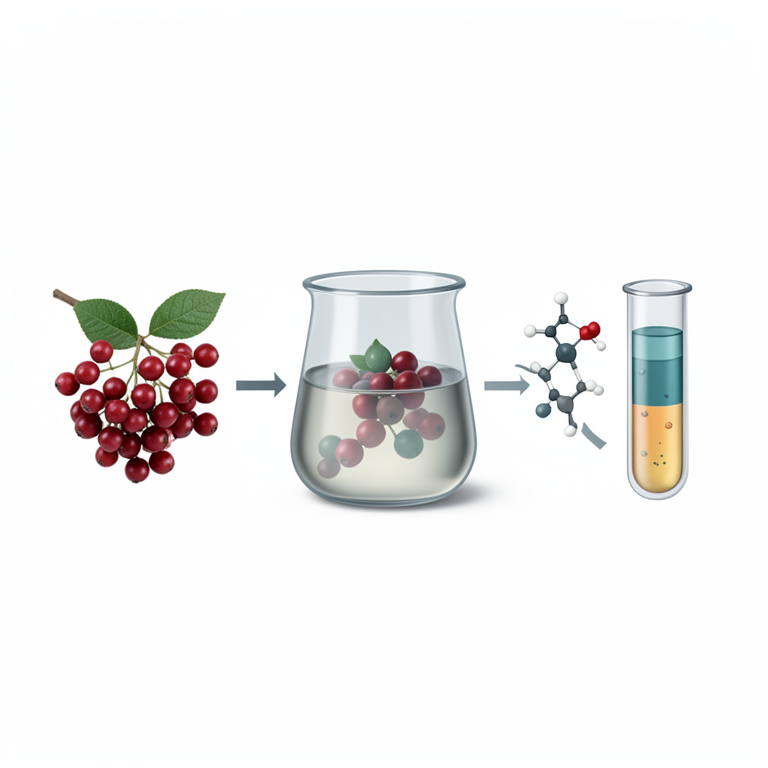
Analysis Workflow of Meyna laxiflora
AI-generated conceptual illustration (Meyna laxiflora fruits). It explains the idea and does not show study data.
View source evidence ↗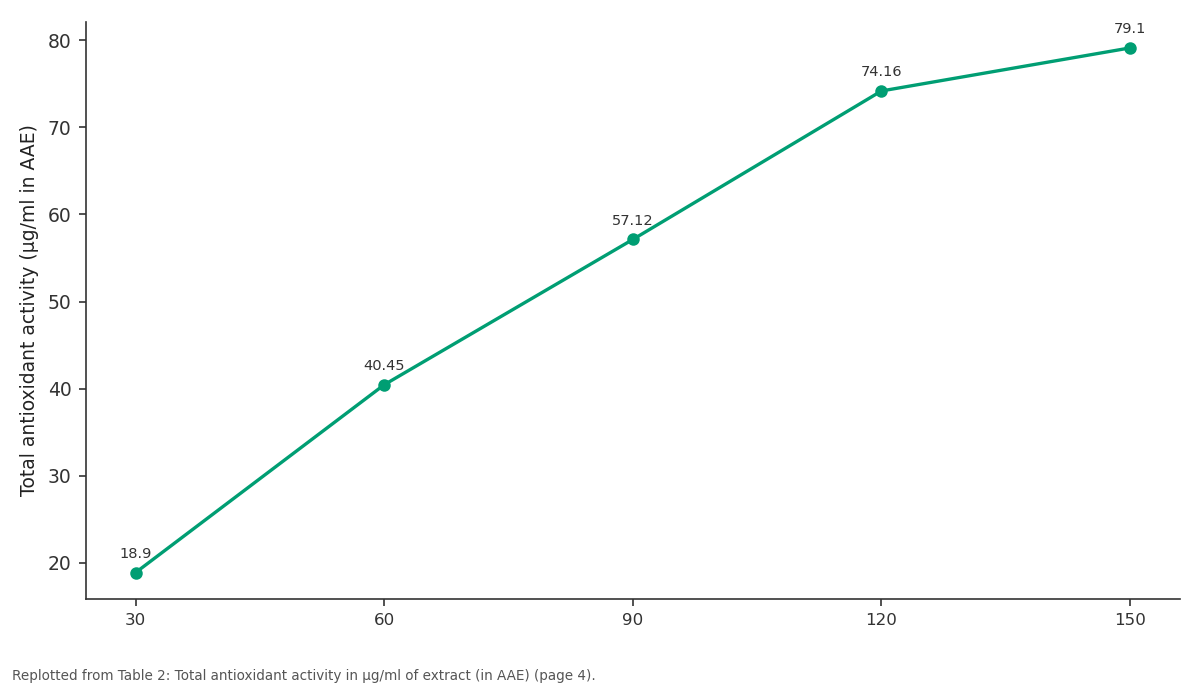
Fruit Pulp Methanol Extract: 30 vs 60 vs 90 vs 120 vs 150
Replotted from Table 2 (page 4) of the original paper. Every bar is the paper's own table value.
View source evidence ↗Figures & tables
From the original paper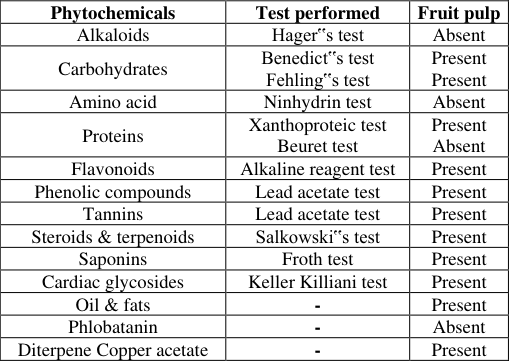 Table 1
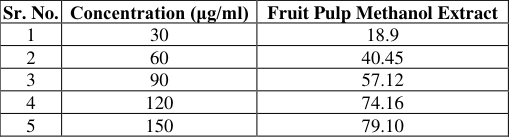 Table 2
Introduction
Meyna, a genus distributed in all over the tropical and subtropical region. Meyna Earlier it was Vangueria spinosa. Recently the plants has been separated and classified into eleven different species of Meyna with the help of molecular phylogenetic. The species are Meyna grisea Robyns, Meyna hainanensis Merr., Meyna laxiflora Robyns, Meyna parviflora Robyns, Meyna peltata Robyns, Meyna pierrei Robyns, Meyna pubescens (Kurz) Robyns, Meyna spinosa Roxb. ex Link, 0Meyna tetraphylla (Schweinf. Ex Hiern) Robyns, Meyna tetraphylla subsp. Comorensis (Robyns) Verdc, Meyna velutina Robyns. The Meyna laxiflora Robyns and Meyna spinosa Roxb.ex Link are the only \ twospecies distributed in India which is considered as inseparable having difference only in flowers. The Meyna spinosa Roxb.ex Link have flowers crowded into fascicles with shorter pedicels and petioles as compared to Meyna laxiflora Robyns. However the Meyna laxiflora (Rubiaceae) is a wild edible fruit found in many parts of the Western Ghats and the local tribe consume these wild edible fruits of the plant available in the season (Patil et al, 2012) [18] . Western Ghats zone is varied in climatic and edaphic factors which affects fruit plants distribution at the fluctuated altitude elevation. The tribal peoples acquired the knowledge of wild edible plant species based on trials in the fields and knowledge of wild edible fruit plants can be used to solve food insecurity and malnutrition problems. (Kumbhojkar et. al, 1988) The dependence on these fruits has steadily declining as more exotic fruits have been introduced. But many people in tribal areas still use them as a supplement of their basic need of food. Some of them are preserved for use in dry period or sold in local market. Apart from their traditional use of food, potentially they have many advantages they are immune to many diseases and often used in different formulation of "Ayurveda" in Indian Folk medicine and traditional medicines. They are edible and having fortified nutritional food value, which provides the minerals like sodium, potassium, magnesium, iron, calcium, phosphorus as well as vitamins, proteins and carbohydrates and microelements. These are richest source of secondary metabolites with highest antioxidant properties. Wild edible fruits today are needs to be recommended for cultivation due to this, they can serve as food material for ever increasing population (Valvi et. al, 2011) [14] . These fruits are reached source of antioxidant because of they contain compounds which Inhibit oxidation a chemical reaction that can produce free radicals. (Dhenge et. al. 2024) [1] They are natural molecules that help neutralize harmful Free radicals in our bodies. Antioxidants are compound that inhibits oxidation a chemical reaction that can produce free radicals. As the body requires the compound to inhibit the Free radical many industrial products, such polymers, fuels and lubricants added Antioxidant very frequently to extend their usable lime times. Phytochemicals are bioactive compounds found in plants that work with nutrients and dietary fiber to protect against diseases. They are non-nutritive compounds. These phytochemicals are the secondary metabolites present in smaller quantities in higher plants and they include the alkaloids, Steroids, flavonoids, Tannin, Carbohydrate, proteins, glycosides and Gums, tannins and many others. Phytochemicals are naturally occurring biochemical in plant that give plants their colour, flavour, smell and texture. They are bioactive non-nutritive plant compounds in fruits, vegetables, grains and other plant foods that have health related effects. Free radicals are compound with one or more unpaired electrons in its outer most orbital. They are extremely and are known to be the underlying cause of several degenerative diseases (Bag et. al, 2016) [9] . Free radicals of different forms are constantly generated for specific metabolic \requirement and quenched by an efficient antioxidant in the body. Antioxidants are agents which scavenge free radicals. Many synthetic antioxidants are available but caused toxicity to human. Many studies have found that plants are potential source of immense chemicals for the treatment of various ailments and known to be rich source of natural antioxidant. The present investigation is carried out to study the Antioxidant potential and constituents of the Fruits of plants Meyna laxiflora Robyns by phytochemical analysis process. The Fruits were collected by random method from the different 05 locations of the Akole Tehsil of Ahilyanagar District. This area is compress as a part of Western ghat and fall inside the Kalsubai-Harishchandra gad Sanctuary area.
Materials and Methods
Materials and Methods
Study area
Ahilyanagar district is located between 18°02" and 19°09"north latitude and 73°09" and 75°05" east longitude.
Geographically Ahilyanagar is the largest district in the state of Maharashtra. It is dividing into 14 talukas in Ahilyanagar district. The district is bounded on the north by Nasik district, on the north-east by Aurangabad district, on the east by Beed and Osmanabad districts, on the south by Solapur district and on the west by Pune district, on the north-west it is surrounded by Thane district. Akole taluka is on western hilly region western part of the Ahilyanagar district. Akole taluka is located in 190 15" 14" N to 190 44" 59" N latitude and 730 37" 00" E to 740 07" 24" E longitudes. The study conducted in well surrounded with the mountains of Sahyadri under ranges of Kalsubai -Harishchandragad Sanctuary 1. Bhandardara 2. Ghatghar 3. Pachanai, 4. Vihir, and 5. Kumshet Villages of Akole taluka of Ahemednagar district, Maharashtra. The collection of Fresh Fruits of plant material from the selected 5 villages was done in the Month of June and July, 2024 (Souce: Google Census 2011)
Plant Material Collection
The collected specimen of plant and fruits was identified using Flora of Maharashtra (Singh, N.P., Lakshiminarasimhan, P., Karthikeyan, S. and Prasanna, P.V. 2001.) [20] Flora of Bombay Presidency (T. Cook, 1903) and further authenticated by using the available literature on Google Scholar and Available online resources.
Description of plant: Small or medium size tree, Bark light black, smooth. Leaves opposite or whorled, 3.5-15 X1.2-10 cm, elliptic obolong, shining, glabarous. Flower greenish yellow, in axillary cymes on leafless wood. Fruits nearly globose, fleshy, smooth, purpulish when rip.
Chemicals
All the required chemicals used in this study were procured from Department of Botany and Chemistry Laboratory of Adv. M. N. Deshmukh College, Rajur, Tal Akole, Dist. Ahilyanagar.
Analysis of samples
All samples were cleaned thoroughly to remove any attached soil and other impurities and were blotted dry. For analyzing the nutrient parameters various standard methods as mentioned below were followed.
Estimation of Ash
Sample, each of 5 gm, was weighed in a silica crucible and heated in muffle furnace for about 5-6 h at 500 °C. Further, it was cooled in desiccators and weighted. Again it was heated in the furnace for half an hour. Cooled and weighed. Constantly, this was repeated till the weight became (Ash became white or grayish white) Weight of Ash gave the ash content (Vanessa et al., 2016)
Estimation of Moisture:
Sample each of 2 gm was taken in flat bottom dish and kept overnight in an air oven at 100-110 °C and weighed. The weight loss was regarded as a measure of moisture content (Vanessa et al., 2016; Ping et al., 2016) [, 11] Preparation of plant extract: Fresh Fruits were washed repeatedly to remove adhered dust particles, blotted, shade dried, powdered using an electric blender and stored in air tight container. About 300g of the Fruit powder was subjected to methanol extraction under reflux for 1 hour. The procedure was repeated thrice until complete extraction was achieved.
Estimation of total phenolic content:
The total phenolic content of the methanolic Fruit extract was determined by Folin-Ciocalteau reagent (Singelton and Rossi, 1965). Briefly, 40 μl of the methanol solution of the extract (1 mg/ml), 200 μl of Folin-Ciocalteau reagent was mixed with 2.4 ml of distilled water and the contents were mixed thoroughly. After 1 min, 600 μl of sodium carbonate (20% Na2CO3) was added and the volume was made up to 4.0 ml with distilled water. After 2 h of incubation at room temperature, the reduction of the Folin-Ciocalteau reagent by phenolic compounds under alkaline conditions resulted in the development of a Brown colour, the absorbance was measured at 765 nm and compared to a gallic acid calibration curve. Results were expressed as mg of gallic acid equivalents (GAE) /g of extract.
Ferric reducing antioxidant power (FRAP) assay
The FRAP assay was performed according to Benzie et al., (1996) with slight modifications suggested by Firuzi and Lancana 2005). FRAP reagent was prepared and kept at 37 °C for 5-10 minutes prior to use. In a 96 well plate, 175μL of FRAP reagent was added and the plate was pre read at 593 nm. To each well, 25 μL of sample solution was added and contents were mixed well using a pipette. Absorbance was measured at 593 nm at 4, 15, 30 and 60 minutes, using methanol as blank. Change in absorbance at different time intervals was then translated into a FRAP value using a standard trolox curve.
Total antioxidant activity
The total antioxidant activity of methanolic Fruit powder extract was determined by using phosphomolybdenum (Prieto et al., 1999). An aliquot of 0.4 mL of methanolic Fruit (1 mg/mL) was mixed with 4 mL of the phosphomolybdenum reagent (0.6 M acid, 28 mM sodium phosphate and 4 mM ammonium molybdate). The tubes were capped and incubated in water bath at 95º C for 90 minutes, cooled and the absorbance was read at 695 nm. The antioxidant activity of the sample was determined using a standard curve of ascorbic acid. The reducing capacity of the extract was expressed as mg of ascorbic acid equivalents (AAE)/g of extract.
Nitric oxide scavenging assay About 1 mg of the methanolic Fruit powder extract was dissolved in 20μL of methanol and the volume was made up to 1 mL with distilled water. Further dilutions were done to final concentrations of 25, 50, 100, 250, and 500μg/mL using vehicle buffer. Nitric oxide was generated from sodium nitroprusside and was measured by the Griess reagent. The reaction mixture contained 50 μL of 10 mM sodium nitroprusside, 50 μL of distilled water and test solution of various concentrations. The reaction mixture was preincubated at room temperature for 15 minutes in the presence of light, followed by the addition of 125 μL Griess reagent and incubated for 10 minutes at room temperature. The absorbance was measured at 546nm.
Results and Discussion
The mineral and nutrient present μg/ml in the Fruit powder of Meyna laxiflora is as flows:
Estimation of Ash
The 5 gm of Sample of Meyna laxiflora weight in silica crucible and heated in muffle futnace for about 5 hr.then after cool the sample material weight has been taken. Repeated the till weight of ash equal to the weight of sample content taken then, The total Ash content of dried fruit of Meyna laxiflora is estimated as (0.49±0.02)%.
Estimation of Moisture
The 2 gm fruit powder were kept in oven overnight at 1050C then the weight losscounted according to the method of Vanessa The moisture of dried Fruit powder isestimated to be (3.07±0.094)%
Estimation of total phenolic content
The mean phenolic content of the methanolic Fuit extract was 140.53±0.40 mg/g of extract. This indicates that Meyna laxiflora significantly rich in phenolic contents. Presence of flavonoid as a major phytoconstituent has been reported in Meyna laxiflora. It is well established that flavonoids containing hydroxyl functional groups contribute to the antioxidant potential of the plant extracts Result indicates that methanol extract of fruit pulp of M. laxiflora showed higher total phenolic content than other extract while for seed, leaf, and other parts of plant extract. Total phenolic content than methanol extract is 140.53±0.40 mg/g.
Ferric reducing antioxidant power (FRAP) assay
The reagents were mixed and absorbance was immediately read at 734 nm using blank run without test sample
Conclusion
The present study highlights that the wild edible ripe and unripe fruit of Meyna laxiflora collected from the Akole Tehsil of Ahilyanagar District, Maharashtra, were rich source of various diet supplementary factors like protein, reducing sugars, phenol, ascorbic acid, antioxidants and minerals analysis. These supplementary factors and minerals are required for normal body metabolism which helps in normal growth and development o human being. The extensive consumption of unripe and ripe fruit of Meyna laxiflora which in turn can lead to reduced health costs, prevention and cure of a number of prevalent diseases, and an improved diet. Simultaneously, the population can be made aware of the consumption values of these plants as a staple food owing to their good nutritional qualities and adequate protection can be obtained against disease arising from malnutrition. The present investigation point out the importance of fruits and fruit pulp of Meyna laxiflora in the diet as rich source of Antioxidant potential. The fruits are available for very short time period during the season of Monsoon. The fruit are required to come under Horticulture practices so that this fruit can available in all season and longer duration.
Figures and tables from the paper
| Phytochemicals | Test performed | Fruit pulp |
|---|---|---|
| Alkaloids | Hager‟s test | Absent |
| Carbohydrates | Benedict‟s test Fehling‟s test | Present Present |
| Amino acid | Ninhydrin test | Absent |
| Proteins | Xanthoproteic test Beuret test | Present Absent |
| Flavonoids | Alkaline reagent test | Present |
| Phenolic compounds | Lead acetate test | Present |
| Tannins | Lead acetate test | Present |
| Steroids & terpenoids | Salkowski‟s test | Present |
| Saponins | Froth test | Present |
| Cardiac glycosides | Keller Killiani test | Present |
| Oil & fats | - | Present |
| Phlobatanin | - | Absent |
| Diterpene Copper acetate | - | Present |
Table text extracted from the original PDF; superscript letters are shown inline. The original table image is below.
View original table image
| Sr. No. | Concentration (μg/ml) | Fruit Pulp Methanol Extract |
|---|---|---|
| 1 | 30 | 18.9 |
| 2 | 60 | 40.45 |
| 3 | 90 | 57.12 |
| 4 | 120 | 74.16 |
| 5 | 150 | 79.10 |
Table text extracted from the original PDF; superscript letters are shown inline. The original table image is below.
View original table image
References
26 in the original paper- Dhenge RV, Mohanakumara A, Bhendawade S, Chavhan P, Deshpande S, Lade P, et al. Physicochemical properties of wild edible fruit Meyna laxiflora Robyns (Alu): production of Alu fruit powder by using drying aid. J Future Food. 2024;4(4):353-60.
- Dhenge R, Rinaldi M, Ganino T. Potential Pharmacological Activity of an Indian Wild Edible Plant (Meyna laxiflora Robyns): A Review. Asian J Res Bot. 2023;6(2):122-33.
- Heiplanmi R, Joiedevivreson M, Deimonmitre RV. Meyna laxiflora Robyns a potential multipurpose tree: an underutilized fruit and medicinal tree in Meghalaya. Agri J World. 2022;5:1-7.
- Bhandole AB, Kakrani HN. Traditional Herbal plant useful for Treatment of Inflammatory Bowel Disease. World J Biol Health Sci. 2022;12(03):281-90.
- Bhambare M, Shinde V, Khalkar K, Khandbahale D, Gaikwad K. Nutritional Profiling of Wild edible Fruits of Meyna laxiflora Robyns. Int J Bot Stud. 2022;7(2):368-73.
- Chavan S, Jondhale A. Exploration and documentation of some more wild edible food plants from tribal region of Peth tehsil, Nashik District (Maharashtra) India. Int J Bot Stud. 2021;6:360-6.
- Karande R, Kshirsagar SR, Shenpadu SB. Medicinal plant diversity in Nashik District -Polypetalae and Gamopetalae. J Sci Res. 2021;65(7):94-8.
- Dhodade PN, Dhaygude YP, Tiwari A, Birwatkar VR. Development of Jam from Under Exploited Fruit Aliv (Meyna laxiflora Robyns). Int J Curr Microbiol Appl Sci. 2019;8(3):1143-52.
- Bag GC, Grihanjali Devi P, Bhaigyabati T. Phytochemical Screening and Antioxidant Activity of Meyna laxiflora Species Found in Imphal West District of Manipur. Int J Pharm Sci Rev Res. 2016;36(1):13743.
- Bhagat RB, Chambahare M, Mate S, Dhudhale A, Zaware BN. Prospective Wild edible fruit plants from part of Northern western ghat, Mulshi, India. J Med Plant Stud. 2016;4(1):15-9.
- Ping Q. Advancing Microbial Desalination cell towards Practical Applications. J Sustain Bioenergy Syst. 2016;11(3):23-9.
- Qazi M, Khurshid M. A Comprehensive Review on Meyna laxiflora Robyns (Rubiaceae). Int J Pharm Sci Rev Res. 2015;35(2):22-5.
- Gayake DN, Awasarkar UD, Sharma PP. Indigenous Traditional Medicinal Plant Resources from Ahilyanagar District, Maharashtra, India. Asian J Biomed Pharm Sci. 2013;3(22):1-5.
- Valvi S, Yesane DP, Rathod VS. Isolation of antioxidant enzymes from some wild edible fruits at mature and ripened stage rhizome. Curr Bot. 2011;2(1):53-5.
- Ganesh T, Sen S, Chakraborty R, Suresh Kumar S, Raghavendra HG, Sevukarajan M, et al. In vitro antioxidant activity of Meyna laxiflora seeds. Int J Chem Pharm Sci. 2010;1(1):5-8.
- Gratao PL, Moneiro CC, Peres LE. The isolation of antioxidant enzymes from mature tomato (CV. Micro Tom) plants. HortScience. 2008;43(5):1608-10.
- Kadam US, Ghosh SB, Strayo D, Suprasanna P, Devasagayam A, Bapat VA. Antioxidant activity in sugarcane juice and its protective role against radiation induced DNA damage. Food Chem. 2008;106:1154-60.
- Patil MV, Patil DA. Some herbal remedies used by the tribals of Nashik District Maharashtra. Nat Prod Reliance. 2007;6(2):152-7.
- Huang R, Xia R, Hu L, Lu Y, Wang M. Antioxidant activity and oxygen-scavenging system in orange pulp during fruit ripening and maturation. Sci Hortic. 2007;113:166-72.
- Singh NP, Lakshiminarasimhan P, Karthikeyan S, Prasanna PV. The Flora of Maharashtra State (Dicotyledons). Vol. 2. Botanical Survey of India; 2001.
- Singh NP, Karthikeyan S. The Flora of Maharashtra State (Dicotyledons). Vol. 1. Botanical Survey of India; 2000.
- Sharma BD, Karthikeyan S, Singh NP. The Flora of Maharashtra State (Monocotyledons). Botanical Survey of India; 1996.
- Robinson DS. Oxidative enzymes in foods, Peroxidases and catalases in foods. Elsevier Science Publishers LTD; 1991. p. 1-9.
- Jacob RA. The integrated antioxidants system. Nutr Res. 1995;15(5):755-66.
- Muftugil N. The peroxidase enzyme activity of some vegetables and its resistance to heat. J Sci Food Agric. 1985;36:877-80.
- Cooke T. The Flora of Presidency of Bombay. Vol. 1-3. Botanical Survey of India, Calcutta; 1967.