
Research article · 2025 · Full text
International Journal of Biology SciencesEffect of fresh water algal extracts on carbohydrate content of cabbage Brassica oleracea L. var. Kranti- 18
Volume 7(6) · Pages 313–317 · DOI: 10.33545/26649926.2025.v7.i6e.392 ↗
Research areasMicrobial Metabolites in Food BiotechnologyAdvances in Cucurbitaceae Research
Abstract
Author-writtenA field experiments pertaining to the effect of foliar spray of algal extracts on carbohydrate content of cabbage vegetable crop (Brassica oleracea L.) var. Kranti- 18 were conducted during the period of March to June 2022- 2023 at agro-practices areas of Puntamba. The experiment was laid out in Randomized Block Design consisting of eight different treatments. Each experimental unit was repeated three times. The treatments were T0, T1, T2, T3, T4, T5, T6 and T7. The pragmatic results revealed that the impact of algal extracts on carbohydrate content of cabbage was found significant over the other treatments. Among various treatments, the lowest carbohydrate content of 100 mg/ gm was occurred in the treatment T0 (Control). The foliar application of algal extracts treatments, Lyngbya martensiana (T2) shows (179 mg/gm), Hydrodictyon reticulatum (T4) shows (164 mg/gm), Chara zeylanica (T1) recorded (184 mg/gm) and Rhizoclonium crassipellitum extract (T3) recorded (172 mg/gm) most augmentation in carbohydrate content. While the Powar Plant dose (T6) treatment recorded (142 mg/gm) Carbohydrate content in the test plants resulting into encouraging increase and stands next to the algal extracts. While the Plantsol (T5) and NPK (T7) recorded less carbohydrate content as compare to algal extract i.e. (112 mg/gm) and (110 mg/gm) respectively.
Summary
Source-checkedPlain-language reading of the full paper, prepared with AI and checked against the text. Each point links to the authors' own words.
Why it matters
- Bio-fertilization is used as a sustainable way to increase soil nutrients and improve overall agricultural productivity. View evidence ↗
- Algae are versatile organisms that can serve as bio-fertilizers and soil conditioners to enhance plant productivity and soil fertility. View evidence ↗
- Algal microorganisms benefit plants by producing growth regulators similar to gibberellins and auxins, as well as antimicrobial substances and polysaccharides. View evidence ↗
The question
- The study aimed to investigate how four specific algal extracts (Chara zeylanica, Lyngbya martensiana, Rhizoclonium crassipellitum, and Hydrodictyon reticulatum) affect the carbohydrate content of cabbage grown in black soil. View evidence ↗
What they did
- Field experiments were conducted from March to June 2022-2023 in Puntamba using cabbage variety Kranti-18. View evidence ↗
- The study used a randomized block design with eight treatments: four algal extracts at specific concentrations (15-20%), Plantsol, Power plant, NPK, and an untreated control, each replicated three times. View evidence ↗
- Treatments were applied as foliar sprays starting 15 days after sowing, followed by two additional sprays at 15-day intervals. View evidence ↗
- Total carbohydrate content was measured by hydrolyzing cabbage head samples in dilute hydrochloric acid and using anthrone reagent to measure absorbance at 630 nm. View evidence ↗
What they found
- Chara zeylanica extract (T1) produced the highest total carbohydrate content at 184 mg/gm, performing similarly to T2. View evidence ↗
- Other algal extracts also increased carbohydrate content: Lyngbya martensiana (179 mg/gm), Rhizoclonium crassipellitum (172 mg/gm), and Hydrodictyon reticulatum (164 mg/gm). View evidence ↗
- The Power plant treatment (T6) showed an encouraging result with 142 mg/gm of carbohydrate content, ranking just below the algal extracts. View evidence ↗
- Plantsol (T5) and NPK (T7) resulted in moderate carbohydrate levels of 112 mg/gm and 110 mg/gm, respectively. View evidence ↗
- The lowest carbohydrate content (100 mg/gm) was found in the untreated control group (T0). View evidence ↗
What it means
- The authors conclude that algal extracts are more effective at increasing cabbage carbohydrate content than chemical fertilizers or NPK alone. View evidence ↗
- The authors suggest that fresh water filamentous algae liquid fertilizers could be a beneficial tool for the green revolution and addressing global food shortages. View evidence ↗
- The authors identify a future direction to incorporate nanomaterials into bio-fertilizers to further improve plant resistance, growth, and yield. View evidence ↗
Visual summary
2 visualsIllustrations explain the paper; charts are replotted from the paper's own table values.
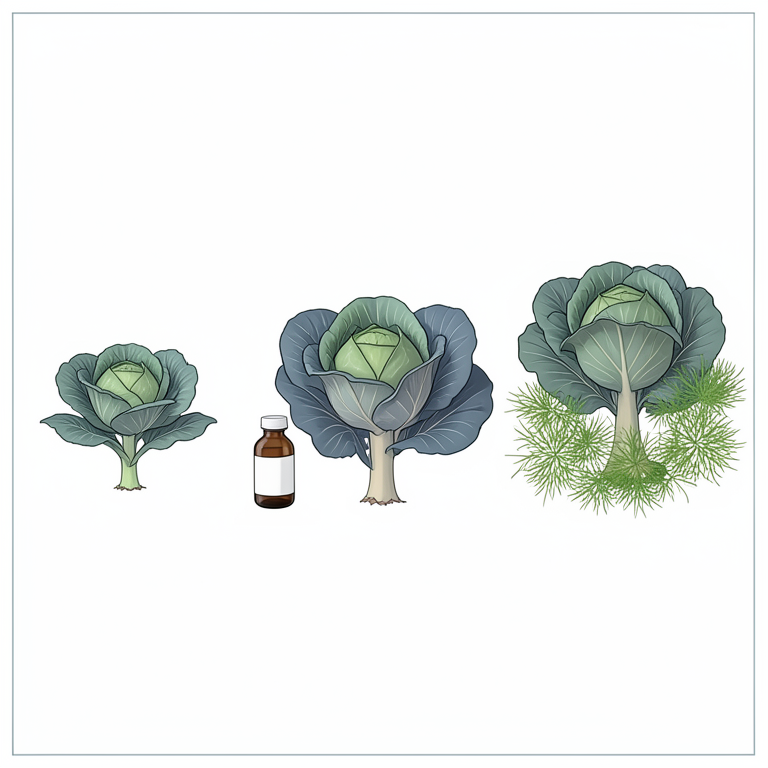
Comparison of Carbohydrate Content
AI-generated conceptual illustration (cabbage plants (Brassica oleracea var. Kranti-18) and freshwater algae). It explains the idea and does not show study data.
View source evidence ↗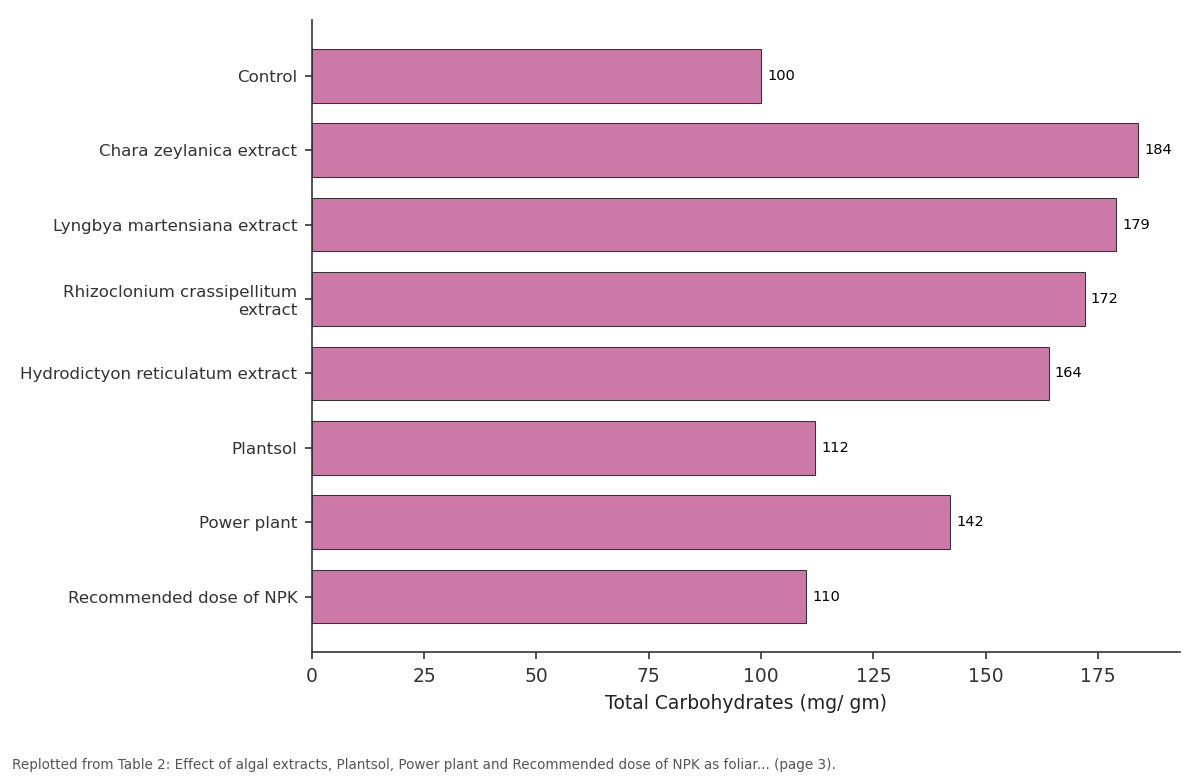
Total Carbohydrates (mg/ gm): Control vs Chara zeylanica extract vs Lyngbya martensiana... vs Rhizoclonium... vs Hydrodictyon...
Replotted from Table 2 (page 3) of the original paper. Every bar is the paper's own table value.
View source evidence ↗Figures & tables
From the original paper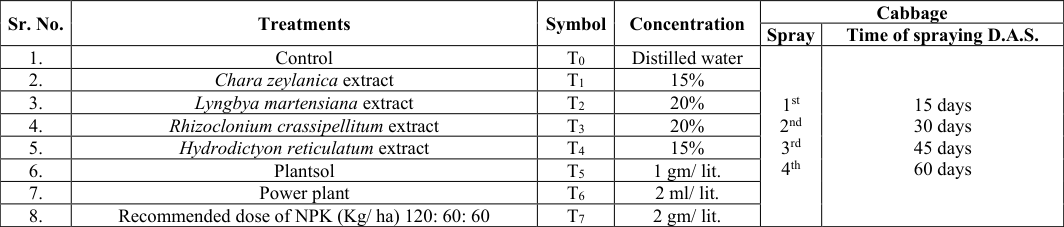 Table 1
 Table 2
 Table 2
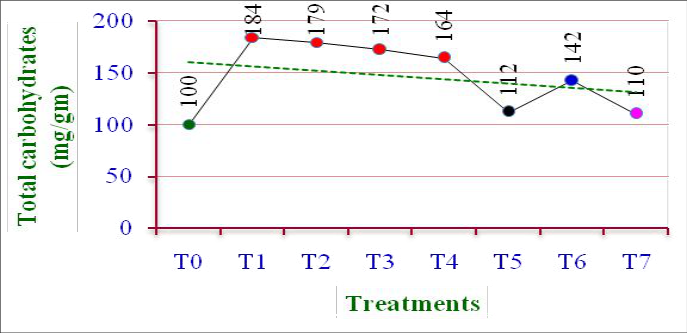 Figure 1
Introduction
Bio fertilization is a sustainable agricultural practice that includes using bio fertilizer to upsurge the nutrient content of the soil, resulting in higher productivity (Suleiman et al., 2020) [14] . Algae, which are found in almost all terrestrial's environments are the most distinctive organisms on the planet with potential applications such as agricultural applications as bio fertilizers and soil conditioning agents for the improvement of soil fertility and plant productivity (Chapman, 2013, Duarte et al., 2018) [6,8] . Blue-green algal extract excretes a great number of substances that influence plant growth and development (Ordog 1999) [13] . These microorganisms have been reported to benefit plants by producing growth promoting regulators (the nature of which is said to resemble gibberellins and auxin polypeptides, antibacterial and antifungal substances that exert phytopathogen biocontrol and polymers, especially polysaccharides, that improve plant growth and productivity (Zaccaro et al., 1999) [20] . Moreover, Zaccaro et al. (2001) [21] reported that, foliar application of biochemical organic substances is in demand which supply macro and micronutrients. Fresh water algae distributed worldwide and improve the growth and development of the plants, with which they share the habitat, because they: 1-contribute to soil fertility in many ecosystems, 2-produce various biologically active substances and 3-have higher efficiency in bio absorption of heavy metals i.e. bioremediation (Zaccaro et al., 2001) [21] . Moreover, hedge et al. (1999) documented that, application of algal bio fertilizers is useful for the reclamation of marginal soils such as saline-alkali and calcareous soils. Velasco-Ramirez et al. (2020) [17] studied by the extract of the seaweed M. pyrifera showed no significant effect on the stem length of E. grandiflorum var. Florida relative to the control plants. The average maximum stem lengths were respectively, 23.80 cm in the plants that received the foliar application, 20.8cm in those that received the extract directly to the substrate and just 18.4cm in the control plants.
Fresh water algae contain high percentage of macro and micronutrients bounded in their major biochemical constituents and metabolites such as carbohydrates and proteins (Wake et. al., 1992) [19] . In this respect, Adam (1999) found that algal filtrate of the Cyanobacteria Nostoc muscorum significantly increased germination of wheat seeds as well as their growth parameters and nitrogen compounds, as compared to untreated control. Also, Lozano et. al. (1999) [12] stated that, the application of an extract from algae to soil or foliage increased ash, protein and carbohydrate contents of potatoes (Solanum tuberosum). In the light of the above-mentioned reviews, it was of particular interest to investigate the effect of the four algal extracts; Chara zeylanica extract, Lyngbya martensiana extract, Rhizoclonium crassipellitum extract, Hydrodictyon reticulatum extract as T1, T2, T3 and T4 respectively on Carbohydrate content of Cabbage vegetable crop grown in black soil.
Materials and Methods Preparation of Algal liquid extract
The algal extract was prepared by using the method of Bhosale et al. (1975) [5] . 10 grams of fine powder of selected fresh water algae, Chara zeylanica, Lyngbya martensiana, Rhizoclonium crassipellitum and Hydrodictyon reticulatum were mixed separately in 100 ml of sterile distilled water, boiled it up to final volume of about 10 ml. Extract was allowed to cool at room temperature. Then extract was filtered through double-layered muslin cloth. The extract was used as stock solution of concentration 100%. Then the extracts were diluted with sterile distilled water separately for the preparation of 1%, 5%, 10%, 15%, 20% and 25% concentrations and were stored in airtight stopper bottles separately. Thus, these prepared algal extracts of aforesaid concentrations were applied as liquid fertilizer for testing the seed germination and assessing the seedling growth of cabbage vegetable crops.
Results and Discussion
Results and Discussion
Selection of algae and determination of algal extract concentration
The potential of algal species as liquid fertilizer was considered on the basis of pragmatic results obtained. The extracts of collected algal species with different graded concentrations were tested on the seeds of Cabbage. During the investigation, algal extracts of 15% Chara zeylanica and Hydrodictyon reticulatum; 20% Lyngbya martensiana and Rhizoclonium crassipellitum were showed observant and noteworthy increase in percent seed germination, root length, shoot length and total height of seedling over the control. Moreover, the higher algal extract concentrations above 25% where there was decreased seed germination and seedling growth over the control. Therefore, only using extracts of Chara zeylanica and Hydrodictyon reticulatum at 15% and Lyngbya martensiana and Rhizoclonium crassipellitum at 20% concentration level used on the test vegetables Cabbage owing to assess their effect on growth and carbohydrate content. The Cabbage seeds were soaked in 15% concentration of Chara zeylanica, Hydrodictyon reticulatum and 20% concentration of Lyngbya martensiana, Rhizoclonium crassipellitum extracts and other different constraints for about 14 hours. There after the presoaked seeds were placed in the raised bed at 10-12 cm distance and 1-1.5 cm deep. After completion of the sowing, light irrigation was given. After four weeks, seedlings were ready for transplantation.
Foliar application of selected fresh water algal extracts
An experiment was planned in order to study the effect of fresh water algal extract namely, Chara zeylanica, Lyngbya martensiana, Rhizoclonium crassipellitum and Hydrodictyon reticulatum on growth and Carbohydrate of Cabbage (Brassica oleracea L.) var. Kranti-18. Field experiments for these test crops were conducted for test vegetable crops during the year 2022 -2023. The treatments consist of 15% Chara zeylanica extract (T1), 20% Lyngbya martensiana extract (T2), 20% Rhizoclonium crassipellitum extract (T3) and 15% Hydrodictyon reticulatum extract (T4), Plantsol (T5), Power plant (T6) and Recommended dose of NPK (T7) with untreated control (T0) in randomized block design with three replications. After transplanting the Cabbage seedlings at the 2 -4 leaf stage, the first spray of respective concentrations of aforesaid treatments was given to the seedlings 15 days after sowing in the form of foliar spray. Then subsequent two more sprays were given to the test vegetable crops after fifteen days' interval.
The experimental plot was laid out in a Randomized Block Design (RBD) with seven treatments and one absolute (water sprayed) control, which were replicated in thrice.
In this context, pretreatment of Cabbage vegetable crop in the four algal filtrates, led to increase the Carbohydrate content (T1, T2, T3 and T4 respectively) as compare to the control, Plantsol, Power plant, and recommended dose (T0, T5, T6 and T7 respectively). From the pragmatic results it was evident that, the total carbohydrate content in Cabbage head occurred in the range of minimum 100 mg/ gm to maximum 184 mg/ gm. The treatment T1 (Chara zeylanica extract) recorded significantly highest amount of total carbohydrate content i.e. 184 mg/ gm and was on par with the treatment T2. This was followed by the treatments of Lyngbya martensiana extract (T2), Rhizoclonium crassipellitum extract (T3) and Hydrodictyon reticulatum extract (T4) where correspondingly readings obtained were 179 mg/ gm, 172 mg/ gm and 164 mg/ gm total carbohydrate content. The treatment T2 of Lyngbya martensiana extract was appeared to be on par with the treatment T3. However, the treatment T6 (Power plant) was found to be encouraging and positioned next to the algal extracts wherein total carbohydrate content noted was 142 mg/ gm. While, the T5 (Plantsol) and T7 (Recommended dose of NPK) treatments recorded moderate amount of 112 mg/ gm and 110 mg/ gm total carbohydrate content respectively and were on par to each other. Contrary to this, the minimum and lowest amount of total carbohydrate content i.e. 100 mg/ gm was observed in the treatment T0 (Control).
The consequences the pragmatic result obtains in terms of increasing total carbohydrate content in cabbage are in accordance with the reports of Abhang (2009) who found the beneficial effects of blue green algal extracts sprayed foliarly. Di Filippo-Herrera et al., (2019) [7] affirmed that extracts based on M. pyrifera were effective as a growth bio stimulant in mung beans. Sunarpi et al., (2019) [15] noticed that the liquid fertilizer of the algae Sargassum crassifolium and Sargassum aquifolium significantly induced the height of the Oryza sativa plant. The microalgae are frozen before freeze-drying to solidify the material at low temperatures. As the moisture content of the microalgae declines, the product's solid structure and quality are preserved (Balasubramaniam et al. 2021) [4] . The consequences of the result regarding the increasing total carbohydrate content with the imperative influence of studied algal extracts coincides with the reports of earlier workers the foliar application of seaweed extract to Ambrosia melons increased the sugar content by 2.3% more than untreated plants (Atkin et.al. 1964). Hernandez -Herrera et al., (2014) [10] observed that the application of the seaweed extracts of Ulva lactuca and Padina gymnoespora via substrate in S. lycopersicum plants responded to a high germination percentage effect and consequently, increased vigor of the stem length. Zaccaro et al. (2001) [21] who documented that, the bio fertilizers are likely to assume greater significance as complement and/or supplement to chemical fertilizers in improving the nutrient supplies to cereal crops because of high nutrient turn-over in the cereal production system, exorbitant cost of fertilizers and greater consciousness on environmental protection. Likewise, 1% seaweed liquid fertilizer obtained from Padina pavonica and Sargassum plagiophyllum showed accumulation of soluble sugar in ragi treated plants (Venkatramankumar and Mohan, 2000) [18] . The sea weed extract treatments exhibited their most beneficial influence in terms of increasing total sugar content in Fenugreek (Khemnar, 2001) [11] . LSF application increased the carbohydrate content in Cyamposis (Thirumal and Thangam, 2003) [16] .
Conclusion
Without a doubt, the use of bio-fertilizer is the future of agriculture in the world, where it is expected to replace chemical fertilizer. because it is safer on the soil and also facilitates the process of biodegradation carried out by microorganisms, thus leads to an increase in soil fertility in a safe way without leaving chemical residues. We also expect to add nanomaterial to bio-fertilizer, as nanotechnology would provide green and efficient alternatives for the management of plant diseases and improve of plant resistance to environment stress and increase plant growth, yield productivity, and could increase the quality and quantity of plant. The use of bio-organic fertilizers in agriculture has been recognized of late, as a better substitute to chemical fertilizer, in regard to the environment friendly attribute of the former and the harmful effect of the latter on human health. While, being environment friendly, bio-organic fertilizers, also improve the physical properties of the soil, water retention capacity, prevent nutrient depletion and add value to the crop grown.
To conclude, the fresh water filamentous algae as liquid fertilizer may prove efficient tool for boosting green revolution, to overcome food shortage all over the world and will be appeared highly beneficial to mankind. In regard, to this, as revealed in the present study, the effect of algal extract has showed best results in terms carbohydrate content of the crop, as against the use of chemical fertilizer and recommended use of NPK alone.
Figures and tables from the paper
| Sr. No. | Treatments | Symbol | Concentration | Cabbage | — |
|---|---|---|---|---|---|
| Spray | Time of spraying D.A.S. | ||||
| 1. | Control | T0 | Distilled water | 1st 2nd 3rd 4th | 15 days 30 days 45 days 60 days |
| 2. | Chara zeylanica extract | T1 | 15% | ||
| 3. | Lyngbya martensiana extract | T2 | 20% | ||
| 4. | Rhizoclonium crassipellitum extract | T3 | 20% | ||
| 5. | Hydrodictyon reticulatum extract | T4 | 15% | ||
| 6. | Plantsol | T5 | 1 gm/ lit. | ||
| 7. | Power plant | T6 | 2 ml/ lit. | ||
| 8. | Recommended dose of NPK (Kg/ ha) 120: 60: 60 | T7 | 2 gm/ lit. |
Table text extracted from the original PDF; superscript letters are shown inline. The original table image is below.
View original table image
| Spacing | 40X40cm |
|---|---|
| Treatments used | 8 |
| Replications | 3 |
| No. of plants | 24 |
| Source of irrigation | Well of farm |
Table text extracted from the original PDF; superscript letters are shown inline. The original table image is below.
View original table image
| Sr. No. | Treatments | Symbol | Total Carbohydrates (mg/ gm) |
|---|---|---|---|
| 1. | Control | T0 | 100 |
| 2. | Chara zeylanica extract | T1 | 184 |
| 3. | Lyngbya martensiana extract | T2 | 179 |
| 4. | Rhizoclonium crassipellitum extract | T3 | 172 |
| 5. | Hydrodictyon reticulatum extract | T4 | 164 |
| 6. | Plantsol | T5 | 112 |
| 7. | Power plant | T6 | 142 |
| 8. | Recommended dose of NPK | T7 | 110 |
Table text extracted from the original PDF; superscript letters are shown inline. The original table image is below.
View original table image
References
21 in the original paper- Adam MS. Promotive effect of the cyanobacterium Nostoc muscorum on the growth of some crop plants. Acta Microbiol Pol. 1999;48(2):163-171.
- Aitken JB, Senn TL. Seaweed products as a fertilizer and soil conditioner for horticultural crops. Bot Mar. 1964;8(1):144-148.
- Anantharaj M, Venkatesalu V. Effect of crude and commercial seaweed extracts on seed. Res Util. 2001;23(1-2):33-39.
- Balasubramaniam V, Gunasegavan RDN, Mustar S, et al. Isolation of industrial important bioactive compounds from microalgae. Molecules. 2021;26.
- Bhosale NB, Untawale AG, Dhargalkar VK. Effect of seaweed extract on the growth of Phaseolus vulgaris. Indian J Mar Sci. 1975;4:209-210.
- Chapman RL. Algae: the world's most important "plants"-an introduction. Mitig Adapt Strateg Glob Chang. 2013;18:5-12.
- Di Filippo-Herrera DA, Munoz-Ochoa M, HernandezHerrera RM, Hernandez-Carmona G. Biostimulant activity of individual and blended seaweed extracts on the germination and growth of the mung bean. J Appl Phycol. 2019;31:2025-2037.
- Duarteet, Duarte I, Hernandez S, Ibanez A, Canto A. Microalgae as a soil conditioner or growth promoters of Pisum sativum (L). Annu Res Rev Biol. 2018;27:1-8.
- Hegde DM, Dwivedi BS, Babu SNS. Bio-fertilizers for cereal production in India-a review. Indian J Agric Sci. 1999;69:73-83.
- Hernandez-Herrera M, Santacruz-Ruvalcaba F, RuizLopez M, Norrie J, Hernandez-Carmona G. Effect of liquid seaweed extracts on growth of tomato seedlings (Solanum lycopersicum L.). J Appl Phycol. 2014;26:619-629.
- Khemnar AA. Screening of seaweeds from the coast of Maharashtra for their potential as liquid fertilizer [PhD thesis]. Pune: University of Pune; 2001.
- Lozano MS, Star Verde J, Maiti RK, Oranday CA, Gaona RH, Aranda HE, Rojas GM. Effect of an algal extract and several plant growth regulators on the nutritive value of potatoes (Solanum tuberosum L.) var. Gigant. Arch Latinoam Nutr. 1999;49:166-170.
- Ordog V. Beneficial effects of microalgae and cyanobacteria in plant soil systems, with special regards to their auxin and cytokinin-like activity. Presented at: Int Workshop and Training Course on Microalgal Biology and Biotechnology; 1999 Jun 13-26;
- Suleiman AKA, Lourenco KS, Clark I, et al. From toilet to agriculture: fertilization with microalgal biomass from wastewater impacts the soil and rhizosphere active microbiomes, greenhouse gas emission and plant growth. Resour Conserv Recycl. 2020;161.
- Sunarpi H, Faisal A, Fadhillah E, Putri S, Azmiati N, Hidayatun N, Suparman SW, Eka SP. Effect of Indonesian macroalgae-based solid and liquid fertilizers on the growth and yield of rice (Oryza sativa). Asian J Plant Sci. 2019;18(1):15-20.
- Thangam RT, Victoria Rani SM, Marian PM. Effect of seaweed liquid fertilizers on the growth and biochemical constituents of Cyamopsis tetragonoloba (L.) Taub. Seaweed Res Utiln. 2003;25:99-103.
- Velasco Ramirez A, Velasco-Ramirez AP, HernandezHerrera RM, Garcia-Contreras FM, MaldonadoVillegas MM. Tropical and Subtropical Agroecosystems. 2020;23.
- Kumar V, Mohan VR. Seaweed liquid fertilizer application on recovery of drought-stressed black gram. Seaweed Res Utiln. 2000;22(1-2):89-91.
- Wake H, Akasata A, Umetsu H, Ozeki Y, Shimomura K, Matsunaga T. Promotion of plantlet formation from osmotic embryos of carrot treated with a high molecular weight extract from a marine cyanobacterium. Plant Cell Rep. 1992;11:62-65.
- Zaccaro MC, de Mule MC, Caire G, Cano M, Palma M, Colombo K. Effect of cyanobacterial inoculation and fertilizers on rice seedlings and post-harvest soil structure. Commun Soil Sci Plant Anal. 1999;30:97107.
- Zaccaro MC, Salazar C, Zulpa de GC, Storni MM, Cans A, Stella AM. Lead toxicity in cyanobacterial porphyrin metabolism. Environ Toxicol Water Qual. 2001;16:6167.