
Research article · 2025 · Full text
International Journal of Biology SciencesA General review on Antifungal Activity of Benincasa hispida
Volume 7(6) · Pages 356–358 · DOI: 10.33545/26649926.2025.v7.i6f.397 ↗
Research areasAdvances in Cucurbitaceae ResearchPotato Plant ResearchNatural Products and Biological Research
Abstract
Author-writtenThis review paper aims to compile and evaluate the antifungal potential of Benincasa hispida, a widely cultivated fruit in Asia, known for its medicinal properties. Several bioactive compounds found in the plant, particularly its extracts, have been identified to revelation fungicidal activity in contradiction of various pathogenic fungi. This review summarizes the results of studies that have investigated the antifungal effects of Benincasa hispida through both in vitro and in vivo experiments, as well as highlighting its pharmacological potential for therapeutic use. Benincasa hispida (Family: Cucurbitaceae), generally recognized as wax gourd or winter melon, has been utilized in traditional treatment for various ailments. The findings suggest that Benincasa hispida could serve as a natural and cost-effective alternative to conventional antifungal agents, warranting further research into its clinical and commercial potential.
Summary
Source-checkedPlain-language reading of the full paper, prepared with AI and checked against the text. Each point links to the authors' own words.
Why it matters
- Global concerns over the increasing resistance of pathogenic fungi to synthetic drugs are driving the search for new antifungal agents from natural sources. View evidence ↗
- Benincasa hispida, grown in tropical and subtropical regions, is traditionally used to treat gastrointestinal, respiratory, and skin conditions. View evidence ↗
- Also known as winter melon or wax gourd, Benincasa hispida belongs to the Cucurbitaceae family and is used in traditional medicine. View evidence ↗
The question
- The objective of this review is to compile and evaluate the antifungal potential of Benincasa hispida. View evidence ↗
- The study specifically focuses on the bioactive compounds of the plant, how they work (mechanisms of action), and their therapeutic implications. View evidence ↗
What they did
- The review synthesizes data from previous studies that utilized both in vitro and in vivo experimental designs. View evidence ↗
- The review examines the efficacy of extracts derived from the seeds and fruits of the plant. View evidence ↗
What they found
- Phytochemical analysis of Benincasa hispida reveals bioactive compounds including saponins, terpenoids, phenolic acids, flavonoids, and alkaloids. View evidence ↗
- A methanolic extract of B. hispida showed moderate antifungal activity, with Candida albicans identified as the most sensitive strain among those tested. View evidence ↗
- Both methanolic and ethanolic extracts demonstrated significant antifungal effects against Fusarium oxysporum and Aspergillus niger. View evidence ↗
- When testing fruit extracts against Candida albicans, the ethanolic extract showed higher antifungal activity than the methanolic extract. View evidence ↗
- Extracts from the seeds of B. hispida were found to effectively inhibit the growth of Aspergillus niger. View evidence ↗
- The bioactive peptide Hispidalin, found in the seeds, inhibits various fungal and bacterial human pathogens. View evidence ↗
- One proposed mechanism of action is the disruption of fungal cell membranes by saponins and flavonoids, causing cell death via leakage of contents. View evidence ↗
- Some compounds in the plant may prevent fungal proliferation by inhibiting the germination of spores. View evidence ↗
- The plant's antifungal properties may also result from the inhibition of enzymes responsible for fungal cell wall biosynthesis. View evidence ↗
What it means
- The authors conclude that B. hispida is a promising, cost-effective natural alternative to synthetic antifungals, justifying further commercial and clinical study. View evidence ↗
- The authors state that more in vivo investigations and clinical trials are needed to fully understand the efficacy and mechanisms of the plant in treating infections. View evidence ↗
Visual summary
1 visualsIllustrations explain the paper; they do not show study data.
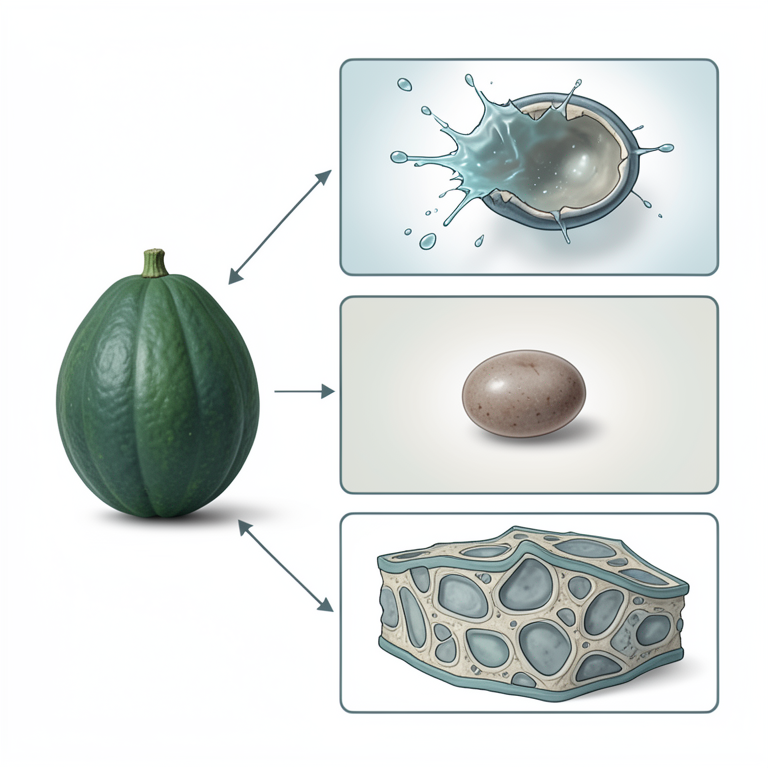
Proposed Antifungal Mechanisms of B. hispida
AI-generated conceptual illustration (Benincasa hispida (wax gourd) extracts and fungal cells). It explains the idea and does not show study data.
View source evidence ↗Introduction
The increasing resistance of pathogenic fungi to synthetic antifungal drugs has become a global concern, prompting researchers to explore natural sources for new antifungal agents. Benincasa hispida is a commonly cultivated plant in tropical and subtropical regions, known for its medicinal properties, particularly in treating skin diseases, respiratory issues, and gastrointestinal disorders. Recent scientific investigations suggest that B. hispida might also possess significant antifungal properties, which could make it a promising candidate for novel antifungal therapies. Benincasa hispida is a large, green fruit belonging to the Cucurbitaceae family. It is widely consumed across Asia for its nutritional and medicinal benefits. While it is traditionally known for its hydrating and antioxidant properties, recent studies suggest its potential in combating fungal infections. This review investigates the antifungal properties of Benincasa hispida, focusing on the bioactive compounds responsible for its therapeutic effects. This paper aims to explore the antifungal potential of Benincasa hispida, focusing on its bioactive compounds, their mechanisms of action, and the plant's broader therapeutic implications.
Botanical Information of Benincasa hispida
Benincasa hispida is a member of the Cucurbitaceae family. It is widely cultivated for its fruit, which is used in culinary dishes and traditional medicine. The plant's leaves, seeds, and fruit have been studied for their therapeutic properties, including anti-inflammatory, antioxidant, and antimicrobial effects (Ali et al., 2017) [1] .
Scientific Classification
Kingdom: Plantae Order: Cucurbitales Family: Cucurbitaceae Genus: Benincasa Species: B. hispida
The plant is known for its high-water content and is often consumed to help with hydration and digestion. Additionally, B. hispida has been traditionally used in folk medicine across different cultures, particularly in Asian countries, for treating fever, urinary tract infections, and other conditions (Anumihe OC et al 2023) [9] . Benincasa hispida is characterized by its large, cylindrical shape with a thick, green skin that turns pale yellow or white when ripe. The fruit has a mild flavor and is primarily used in soups, salads, and beverages. Beyond its culinary uses, the plant is also recognized in traditional medicine systems, particularly in Asia, for its purported health benefits, including antimicrobial, anti-inflammatory, and antifungal effects (Ali et al., 2017) [1] .
Fungal Pathogens Targeted by Benincasa hispida
Several pathogenic fungi, including Candida spp., Aspergillus spp., Trichophyton spp., and Fusarium spp., are responsible for a range of diseases in humans, plants, and animals. The antifungal potential of Benincasa hispida has been explored in relation to these pathogens. The fruits and seeds of the plant have shown notable efficacy in inhibiting fungal growth (Odekunle MP et al, 2023) [10] .
Phytochemical Composition of Benincasa hispida
Several studies have analyzed the phytochemical profile of Benincasa hispida, which has revealed a wide array of bioactive compounds. These include alkaloids, flavonoids, phenolic acids, terpenoids, and saponins, which are known for their antimicrobial properties (Ali et al., 2017) [1] . The plant's antifungal activity is believed to be primarily attributed to these compounds, which may exert synergistic effects in combating fungal pathogens. Key phytochemicals in Benincasa hispida include: Flavonoids: These polyphenolic compounds have demonstrated strong antimicrobial properties, particularly against fungal strains (Zhang et al., 2020) [12] . Triterpenoids: Known for their potential to inhibit fungal cell wall synthesis, triterpenoids are believed to play a role in the antifungal activity of B. hispida (Elzayat et al., 2019) [2] . Saponins: Saponins have been shown to possess antifungal effects by disrupting fungal cell membranes (Janssen et al., 2014) [3] .
Antifungal Activity of Benincasa hispida
Several in vitro studies have evaluated the antifungal efficacy of Benincasa hispida extracts against a variety of fungal species. For instance, a study by Khusro et al. (2013) [4] tested the methanolic extract of B. hispida against common pathogenic fungi, including Candida albicans, Aspergillus niger, and Trichophyton mentagrophytes. The results showed that the extract exhibited moderate antifungal activity, with C. albicans being the most sensitive strain.
Another study by Satyavathi et al. (2018) [6] found that ethanolic and methanolic extracts of B. hispida exhibited significant antifungal effects against A. niger and Fusarium oxysporum, both of which are notorious for causing agricultural and industrial problems.
A study by Sharma et al. (2018) [7] evaluated the antifungal effects of methanolic and ethanolic extracts of Benincasa hispida fruit against Candida albicans and found that the ethanolic extract exhibited the highest antifungal activity. A research article by Singh et al. (2019) [11] investigated the antifungal potential of Benincasa hispida seed extract and found that it effectively inhibited the growth of Aspergillus niger. The seeds of B. hispida, which contain the bioactive peptide Hispidalin, demonstrated inhibitory effects in contradiction of various human bacterial and fungal pathogens (Salas et al., 2015; Sharma et al., 2014) [5,8] . The antifungal mechanisms of action proposed for Benincasa hispida include: Cell Membrane Disruption: Bioactive compounds, such as flavonoids and saponins, are believed to disrupt the integrity of fungal cell membranes, leading to leakage of cellular contents and cell death (Janssen et al., 2014) [3] . Inhibition of Spore Germination: Certain compounds from B. hispida may inhibit the germination of fungal spores, thereby preventing fungal proliferation (Satyavathi et al., 2018) [6] . Modulation of Enzyme Activity: Enzyme inhibition, particularly of fungal cell wall biosynthesis enzymes, could also contribute to the antifungal properties (Zhang et al., 2020) [2] .
Conclusion
The antifungal properties of Benincasa hispida could have significant implications in both medical and agricultural fields. In medicine, its bioactive compounds may provide an alternative treatment for fungal infections, especially those resistant to conventional antifungal drugs. Additionally, the plant's antifungal activity can be explored for the development of topical creams, ointments, or oral formulations.
In agriculture, Benincasa hispida extracts could be utilized as natural fungicides to control crop diseases, reducing the dependency on synthetic chemicals and their environmental impact. The use of plant-based antifungals in agriculture is gaining momentum, as it aligns with the growing claim for organic and sustainable farming practices. Benincasa hispida presents a promising source of natural antifungal agents. Its diverse array of bioactive compounds, particularly flavonoids, terpenoids, and saponins, contribute to its potent antifungal activity against various pathogenic fungi. The plant's antifungal properties could be harnessed for the development of new therapeutic agents and agricultural fungicides, offering a sustainable alternative to synthetic chemicals. Further studies, particularly clinical trials and in vivo investigations, are necessary to fully understand the mechanisms of action and efficacy of Benincasa hispida in treating fungal infections. Additionally, research into the formulation of plant-based antifungal products could accelerate the plant's integration into the pharmaceutical and agricultural industries.
References
12 in the original paper- Ali MM, et al. Phytochemical and pharmacological properties of Benincasa hispida. J Med Plants Res. 2017;11(13):251-258.
- Elzayat SM, et al. Triterpenoids and their antifungal activity: The case of Benincasa hispida. Nat Prod Res. 2019;33(3):415-420.
- Janssen M, et al. The antifungal potential of plant saponins: Mechanism and applications. Front Microbiol. 2014;5:119.
- Khusro A, et al. Antifungal activity of Benincasa hispida extracts against Candida albicans, Aspergillus niger, and Trichophyton mentagrophytes. J Pharm Res. 2013;6(9):53-57.
- Salas CE, Badillo-Corona JA, Ramírez-Sotelo G, Oliver-Salvador C. Biologically active and antimicrobial peptides from plants. Biomed Res Int. 2015;2015:102-129.
- Satyavathi M, et al. Antifungal efficacy of Benincasa hispida extracts against Aspergillus niger and Fusarium oxysporum. Int J Pharm Tech Res. 2018;11(1):101-107.
- Sharma P, Kumar P. Antifungal activity of Benincasa hispida against Candida albicans. J Ethnopharmacol. 2018;232:115-121.
- Sharma S, Verma HN, Sharma NK. Cationic bioactive peptide from the seeds of Benincasa hispida. Int J Pept. 2014;2014:156060.
- Anumihe OC, Etim GR, Ihejieto NT, Azubuike C, Chibu-Ikwuagwu GO, Ahamefula CO. Antimicrobial properties and medicinal effects of Andrographis paniculata. Int J Agric Extension Social Dev 2023;6(1):107-109. DOI: 10.33545/26180723.2023.v6.i1b.183
- Odekunle MP, Adams D, Adeniran O. The effectiveness and oversight of quality in the harvesting and processing of honey. International Journal of Agriculture Extension and Social Development. 2023;6(2):31-34. DOI: 10.33545/26180723.2023.v6.i2a.448
- Singh S, Sharma N. Evaluation of antifungal activity of Benincasa hispida seed extracts. Phytochem Rev. 2019;18(2):285-292.
- Zhang X, et al. Flavonoids as potential antifungal agents: Mechanism of action and therapeutic efficacy. Phytochem Rev. 2020;19(1):85-97.