
Research article · 2025 · Full text
International Journal of Agriculture and Food ScienceQuinoa and amaranth as functional foods: A review of their nutritional composition and applications in health-promoting diets
Volume 7(6) · Pages 240–248 · DOI: 10.33545/2664844x.2025.v7.i6d.460 ↗
Research areasSeed and Plant Biochemistry
Abstract
Author-writtenAmaranth and quinoa, two highly nutritious pseudocereal seeds, have garnered attention for their versatile applications in food products, particularly for individuals with gluten sensitivity, such as those with celiac disease. Both grains are rich in essential nutrients like proteins, dietary fibers, vitamins, and minerals, making them ideal candidates for enhancing the nutritional value of various foods. Their gluten-free nature allows them to be used as alternatives to wheat and other grains in a range of products, including bread, cookies, and breakfast cereals. Amaranth and quinoa are also incorporated into traditional dishes, particularly in Indian cuisine, and are increasingly being explored in plant-based meat substitutes. Additionally, quinoa can be used to create milk and tempeh, further expanding its utility in the food industry. The incorporation of quinoa and amaranth into food formulations not only improves the nutritional profile of the products but also offers potential health benefits, such as anti-inflammatory, anti-obesity, and antioxidant activities. This review highlights the growing potential of quinoa and amaranth as functional foods and their promising applications in the food industry.
Summary
Source-checkedPlain-language reading of the full paper, prepared with AI and checked against the text. Each point links to the authors' own words.
Why it matters
- Global food security is heavily reliant on a few staple crops, maize, rice, and wheat, which provide over half of the world's calories. View evidence ↗
- The excessive reliance on these few staple grains has contributed to critical micronutrient deficiencies in over 2 billion people worldwide. View evidence ↗
- Underutilized crops are considered essential for the 21st century because their high nutritional value can improve public health and food security. View evidence ↗
The question
- The review aims to highlight the potential of quinoa and amaranth as functional foods and explore their applications within the food industry. View evidence ↗
What they did
- The authors conducted a review of the nutritional composition and the use of quinoa and amaranth in health-promoting diets. View evidence ↗
What they found
- Quinoa seeds have a higher protein content (8% to 22%) compared to conventional cereals such as barley, wheat, and rice. View evidence ↗
- Proteins constitute between 14.0% and 16.5% of the nutritional value of amaranth. View evidence ↗
- Quinoa and amaranth seeds provide significantly higher lipid yields than common cereals like rice (1.9%), wheat (2.0%), millet (2.9%), sorghum (3.3%), and corn (3.9%). View evidence ↗
- In overweight postmenopausal women, consuming quinoa flakes for four weeks reversed elevated levels of the pro-inflammatory cytokine IL-6, an effect not seen with corn flakes. View evidence ↗
- Quinoa is considered safe for most people with celiac disease as it meets gluten-free standards with less than 20 mg/kg of gluten. View evidence ↗
- Substituting wheat flour with up to 40% whole amaranth flour increases proteins, lipids, minerals, and fibers, though 20 g/100 g is the ideal level for sensory acceptance. View evidence ↗
- Quinoa seeds have a much higher saponin concentration (6.27 to 692.49 mg/kg) compared to amaranth seeds (0.9 to 4.91 mg/kg). View evidence ↗
What it means
- The authors conclude that quinoa and amaranth are promising functional foods that can improve health outcomes and meet the demand for plant-based, gluten-free alternatives. View evidence ↗
Visual summary
1 visualsIllustrations explain the paper; they do not show study data.
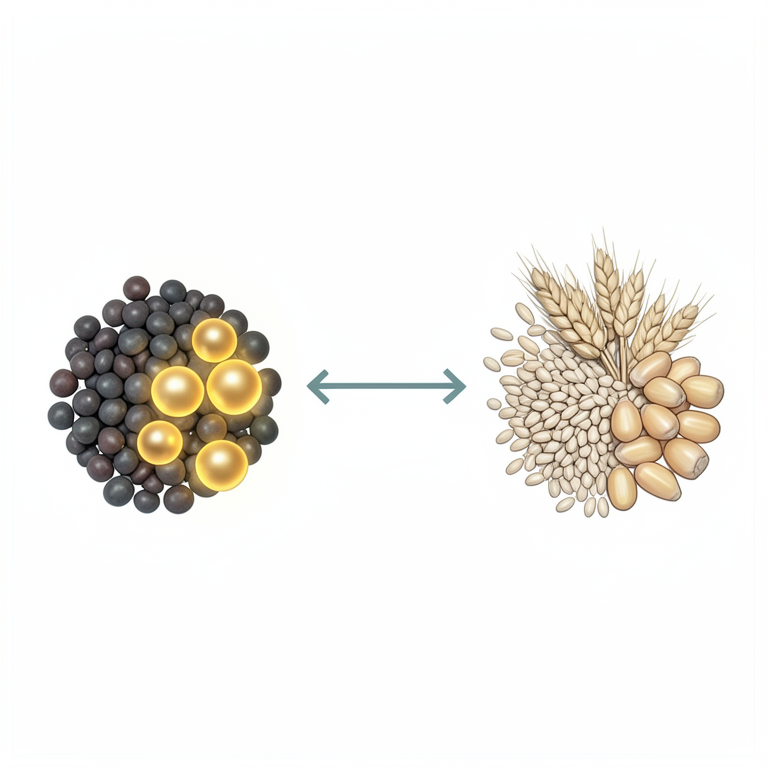
Nutritional Comparison
AI-generated conceptual illustration (quinoa seeds, amaranth seeds, wheat grains, rice grains, and maize kernels). It explains the idea and does not show study data.
View source evidence ↗Figures & tables
From the original paper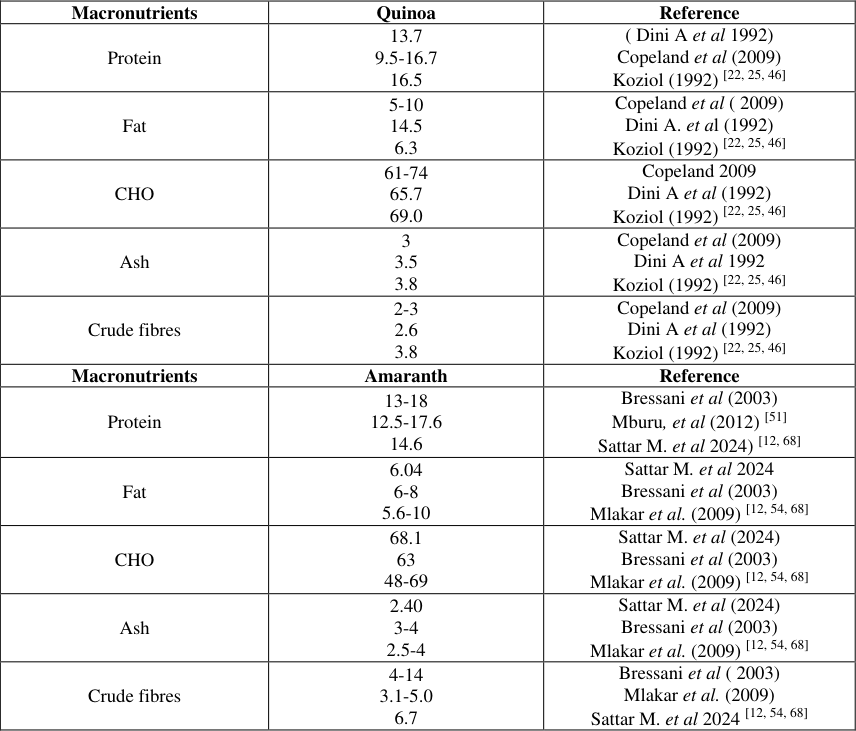 Table 1
Introduction
Agriculture's modernization and the ensuing globalization appear to be unabated, with negative consequences (such as the loss of biodiversity and health risks) being felt everywhere. These effects include monoculture practices that reduce genetic variety in the agriculture sector and biased technical improvements that only use a few energy-demanding plant species (Srujana et al., 2019) [74] . As a result, achieving global food security is now extremely difficult due to factors including climate change, population growth, and the increased demand for agricultural products. As a result, global food security largely depends on a small number of staple crops, particularly maize, rice, and wheat. These three cereals supply more than half of the world's total caloric intake. Historically, cereal grains have been a fundamental component of the human diet, with maize, wheat, and rice ranking as the most widely grown and consumed cereals worldwide (Zamaratskaia et al., 2021) [94] . Despite being an essential part of many diets, these crops are deficient in critical micronutrients. Over 2 billion people are expected to be vitamin deficient globally as a result (FAOSTAT, 2020) [31] , underscoring the concerning effects of their excessive reliance on grain crops. In light of these challenges, government agencies, institutions, and researchers around the world are conducting research and disseminating information on the cultivation and use of underutilized, unexplored, and novel plant species, or "alternative crops" (Pirzadah & Malik, 2020) [60] . These efforts aim to address issues such as negative environmental effects (such as biodiversity loss, soil degradation, and erosion), as well as concerns about crop variety extinction. Therefore, it is important to focus on the cultivation and use of underutilized crops, often regarded as crops of the 21st century, due to their impressive nutritional value. These crops offer promising benefits in terms of enhancing food security, improving public health and nutrition, generating income, and supporting sustainable environmental practices. However, their potential remains largely untapped.
Quinoa and amaranth are key examples of such crops. Commonly referred to as "ancient grains," they are rich in high-quality protein, essential vitamins and minerals, and various bioactive compounds. In addition to their nutritional qualities, they are resilient to extreme environmental conditions such as drought, poor soil fertility, salinity, and frost, making them suitable for cultivation in arid and semiarid regions. While the label "ancient grains" lacks a strict scientific definition, it generally applies to cereal-like plants that have remained relatively unchanged through centuries of traditional farming. Crops like amaranth, quinoa, and millets have recently gained increased attention from both researchers and health-conscious consumers (Taylor et al., 2017) [82] .
Overview of Amaranth and Quinoa
Quinoa and amaranth, both are an indigenous to the Andes and belong to the Amaranthaceae family. The botanical identity and historical background of these crops are closely related. For more than 5,000 years, people in Central and South America have consumed amaranth and quinoa seeds, which were vital to the diets of ancient societies, including the Aztec, Mayan, and Incan civilizations (Kojiol, 1992; Maurya et al., 2018) [50] . Due to its remarkable nutritional richness, quinoa was dubbed the "mother grain" (Taylor et al., 2002) [81] , and the Inca people considered it a gift from their gods. Despite being a staple food along with potatoes and maize, the cultivation of quinoa and amaranth was restricted to a much smaller scale during the Spanish invasion, which also led to a decrease in their production and consumption (Berghofer et al., 2002) [9] . Although quinoa and amaranth are often referred to as pseudo-cereals in botany-since they are dicotyledonous rather than monocots like true cereals-these seeds share many qualities with cereal grains. According to Mlakar et al. (2009) [54] , amaranth seeds are lenticular, small (0.9-1.7 mm in diameter), and weigh between 0.6 and 1 g per 1,000 seeds. The seed coat can be pink, black, brown, gold, or white. While several species of amaranth are cultivated for their seeds and leaves, three species-A. caudatus, A. cruentus, and A. hypochondriacus-are most commonly grown for their seeds. Quinoa (Chenopodium quinoa) is a yearly herbaceous plant that typically reaches a height of 1 to 2 meters and features a robust root system that extends deep into the soil. It produces small, round, and slightly compressed seeds, each about 1.5 mm in diameter, with approximately 350 seeds weighing around 1 gram (Varriano-Marston et al., 1984) [86] . These seeds vary in both size and color, with black, red, and light yellow being the most widely recognized and cultivated types.
Ancient Grain Quinoa and Amaranth's Nutritional Value and Health Benefits
Ancient grain-rich crops, high in micronutrients and/or phytonutrients, are currently being neglected despite their nutritional value and historical significance as staple foods in many communities. These crops are primarily grown in a few niches within the global food chain. Millions of people worldwide depend on thousands of different plant species for food, medicine, fibre, fuel, and other essential resources needed for survival, health, and cultural traditions. Herbs have played a significant role in human history and continue to do so, from medicinal herbs like quinine and artemisinin to staple crops like rice, wheat, and maize. Many of these plant species or crops are referred to as small, neglected, underutilized, or underexploited crops because they are primarily important on a local or regional scale (Meena, Gora, Singh, Ram, Meena, & Pratibha, 2022) [52] . Furthermore, due to their superior nutritional profiles compared to traditional cereals, quinoa and amaranth have gained global relevance in the nutraceutical industry, sparking increased interest in research on their potential applications in functional foods and nutraceuticals (Bhargava, Shukla, & Ohri, 2019) [10] . Celiac disease, which has an estimated mean prevalence of 1% of the general population, is one of the most common lifelong illnesses worldwide. The only recognized treatment for celiac disease is strict lifetime avoidance of gluten in the diet (Catassi & Fasano, 2008) [17] . According to Zevallos et al. (2014) [96] , quinoa was well-tolerated and did not worsen celiac disease when incorporated into a gluten-free diet. As gluten-free pseudocereal grains, quinoa and amaranth seeds have attracted significant attention due to their remarkable nutritional content and potential health benefits. Both quinoa and amaranth exhibit a high degree of genetic polymorphism, enabling them to adapt to a variety of environmental conditions in most of the world's arable regions, from tropical to temperate climates (Ruiz, et al., 2014) [66] .
Quinoa
The nutritional value of quinoa seeds is higher than that of most cereals (Matiacevich et al., 2006). Quinoa seeds typically contain a greater protein content than conventional cereals like rice, wheat, and barley, ranging from 8% to 22%. Albumins and globulins make up the majority of the protein in pseudocereals like quinoa (44-77% of total protein), which is higher than that of prolamins (0.5-7.0%). Since quinoa has little to no prolamin, it is regarded as a gluten-free grain. Quinoa's proximate composition varies, with crude fat ranging from 4.5% to 8.75%, ash content from 2.4% to 3.65%, carbohydrates from 54.1% to 64.2%, crude fibre from 2.1% to 4.9%, and protein from 10% to 18%. Due to the relatively higher levels of lysine, the first limiting amino acid, quinoa seeds have a superior amino acid balance compared to wheat or maize (Vilche et al., 2003) [87] . The tiny granule-sized starch (< 1 micron) is the primary component of amaranth and quinoa (Caussette et al., 1997) [18] . According to Comai et al. (2007) [21] , 52-60% of the grain weight is made up of starch, and quinoa starch contains 7.1% amylose. Quinoa starch granules have 35.0% relative crystallinity (Tari & Singhal, 2002) [83] . Between 67% and 74% of the dry matter in quinoa is composed of carbohydrates, with starch making up 52% to 60%. Quinoa contains between 2% and 10% fat. Because the fatty acid contents of quinoa and soy oils are similar, quinoa provides a rich source of essential fatty acids, including linoleic acid (18:2n-6: 52%) and linolenic acid (18:3n-6: 40%) (Valencia-Chamorro, 2003) [85] . The whole quinoa seed and hulls contain relatively high concentrations of free fatty acids, which make up 18.9% and 15.4% of total lipids, respectively. The predominant portion, making up more than half of the neutral lipids, is triglycerides. Diglycerides account for 20% of the neutral lipid fraction and are found in the entire seed. Lys phosphatidylethanolamine is the most prevalent phospholipid among those analyzed, accounting for 45% of all polar lipids. Quinoa is also rich in minerals. Compared to other cereals, it has higher levels of calcium, magnesium, iron, and zinc, with iron content being especially high. Polishing and washing quinoa seeds result in a 12-15% decrease in the concentration of iron, zinc, and potassium, as well as a 27% loss of copper and a 3% loss of magnesium. Quinoa also has higher levels of α-tocopherol and riboflavin (B2) than wheat, barley, or rice (Michala et al., 2009).
Amaranth
Proteins, which make up 14.0-16.5% of amaranth's nutritional value, are a significant class of biomacromolecules involved in physiological processes (Gorinstein et al., 2002) [37] . About 40% of amaranth's proteins are albumins, 20% are globulins, 25% to 30% are glutelins, and 2-3% are prolamins (Schoenlechner et al., 2008) [70] . Although amaranth protein is an excellent source of amino acids, leucine is present in slightly lower amounts compared to other cereals. This suggests that amaranth may need to be combined with other cereals to meet the recommended amino acid requirements (Becker et al., 1981; Grobelnik et al., 2009) [6,39] . Amaranth starch is found in the perisperm, where amyloplasts produce characteristic compounded starch particles that can reach up to 90 μm in diameter. Carbohydrates contribute 50-70% of dietary energy. According to Schoenlechner et al. (2010) [69] , amaranth starch has a lower amylose percentage than other grain starches, ranging from 0.1% to 11.1%. Dodok et al. (1997) [28] and Grobelnik et al. (2009) [39] report that between 75% and 77.1% of the fatty acids in amaranth oil are unsaturated. The most prevalent fatty acid in amaranth oil is linoleic acid (47.5-47.8%), followed by oleic acid ( [1,2,13] . Furthermore, amaranth is a good source of riboflavin (0.19-0.23%) and ascorbic acid (4.50%). According to Becker's (1981) [6] analysis, the ascorbic acid levels in amaranth samples ranged from 3.36 to 7.24 mg/100 g. The levels of polyphenols in amaranth range from 14.72 to 14.91 mg/100 g. The hulls of grains and legumes contain high levels of tannins, which are polyphenolic secondary metabolites found in higher plants (Schoenlechner et al., 2008) [70] . The Table No.1 represents the macronutrient composition of Quinoa and Amaranth, two pseudo-cereals known for their high nutritional value. The data includes the content of protein, fat, carbohydrates (CHO), ash, and crude fibre, expressed per 100 grams of dry weight. For each nutrient, a typical value, the reported range, and reference sources are provided. The values vary across different studies due to factors such as cultivar differences, environmental conditions, and analytical methods used. Overall, both grains demonstrate considerable nutritional potential, with amaranth showing relatively higher crude fibre content, while quinoa offers a balanced profile with a slightly higher carbohydrate content. The references cited include studies by Dini et al. (1992) [25] , Copeland et al. (2009) [22] , Koziol (1992) [46] , Bressani et al. (2003) [12] , and recent findings by Sattar et al. (2024) [68] , among others. [22,25,46] Fat 5-10 14.5 6.3
Copeland et al ( 2009) Dini A. et al (1992) Koziol (1992) [22,25,46] CHO 61-74 65.7 69.0
Copeland 2009 Dini A et al (1992) Koziol (1992) [22,25,46] Ash 3 3.5 3.8
Copeland et al (2009)
Dini A et al 1992 Koziol (1992) [22,25,46] Crude fibres 2-3 2.6 3.8
Copeland et al (2009)
Dini A et al (1992) Koziol (1992) [22,25,46] Macronutrients Amaranth Reference Protein 13-18 12.5-17.6
Bressani et al (2003) Mburu, et al (2012) [51] Sattar M. et al 2024) [12,68] [12,54,68] [12,54,68] [12,54,68] Crude fibres 4-14 3.1-5.0 6.7
3 Principal Bioactive Ingredients in Amaranth and Quinoa Seeds
The outer layers of quinoa and amaranth seeds contain the majority of the bioactive phytochemicals, which act as a chemical barrier against insects and microbes. The seed coats of quinoa and amaranth are rich in phenolic compounds, particularly phenolic acids. Phenolics are secondary metabolites in plants that contribute to various physiological effects. They are highly hydrophilic and include phenolic acids, flavonoids, and tannins. The extractables from these seeds have been the primary focus of phenolic characterization.
Research has reported two kaempferol glycosides and other free phenolics in the polar extract of quinoa (De Simone et al., 1990). Recent studies have identified twenty-three phenolic compounds in quinoa seeds, both in free and conjugated forms. These include flavonoids such as quercetin and kaempferol, along with their glycosides, as well as phenolic acids like vanillic acid, ferulic acid, and their derivatives. Among these, ferulic acid- [44,92] . The three main free phenolics found in amaranth seeds are gallic acid, protocatechuic acid, and phydroxybenzoic acid, with concentrations ranging from 11.0 to 440, 4.7 to 136, and 8.5 to 20.9 mg/kg dry seed, respectively. Following alkaline and enzyme hydrolysis, amaranth seeds were found to contain bound ferulic acids, primarily trans-ferulic acid (620 mg/kg) and cis-ferulic acid (203 mg/kg) (Bunzel et al., 2005) [14] .
Betalains
Betalains are nitrogen-containing pigments derived from tyrosine and L-3,4-dihydroxyphenylalanine (L-DOPA), and they are classified into two subgroups: red-violet betacyanins and yellow-orange betaxanthins. As a natural food coloring, betanin serves not only as a pigment but also as an effective scavenger of reactive oxygen species (ROS). This helps inhibit DNA damage and low-density lipoprotein (LDL) oxidation. Additionally, betanin stimulates phase II enzymes and enhances antioxidant defense mechanisms (Esatbeyoglu et al., 2015) [30] . Among the primary betacyanins found in amaranth are isoamaranthine and amaranthine. Due to the lack of standard references for individual betanin and isobetanin, the total amounts of betanins in amaranth seeds (19 mg/kg) and quinoa seeds (1.5-61 mg/kg) have been determined using UV/Vis absorbance data (Repo-Carrasco et al., 2010; Cai et al., 2003) [15,63] .
Fatty Acids and Lipids
The primary lipophilic bioactives in amaranth and quinoa seeds were first studied by Wood et al. (1993) [91] , who analyzed the compositional aspects of lipophilic phytochemicals in quinoa. Unsaturated fatty acids (UFAs) make up the majority of the [19] . Since the human body cannot synthesize linoleic, oleic, or linolenic acids, they are classified as essential fatty acids.
Tocopherols
Tocopherols and tocotrienols are homologs of vitamin E. All four forms of tocopherol have been identified in quinoa and amaranth seeds, with α-tocopherol (47-53 mg/kg DW) being the most prevalent, followed by β-tocopherol (17-26 mg/kg DW), and trace amounts of γ-and δ-tocopherols (<5 mg/kg DW) (Ruales et al., 1993 [65] ; Alvarez, 2009) [1. 2] . In amaranth seeds, the predominant tocols were α-tocopherol [76] ; Lehmann et al., 1994; Bruni et al., 2002) [13,48] . Quinoa seeds also contain trace amounts of tocotrienols and other vitamin E isomers (Tang et al., 2015) [77] . [11,26] . The primary carotenoids identified in quinoa seeds include lutein (3.96-12.01 mg/kg), carotene (0.26-1.07 mg/kg), and zeaxanthin (0.31-5.37 mg/kg). Amaranth seeds, on the other hand, contain lower amounts of lutein (3.55-4.44 mg/kg) and zeaxanthin (0.14-0.30 mg/kg) (Tang et al., 2016) [76] .
4 Anti-nutritional Factors in Quinoa and Amaranth
Saponins and Phytates
The seeds of both amaranth and quinoa are rich in saponins, which are triterpenoids and glycosides of aglycones, or sapogenins. The total saponin concentration in quinoa seeds ranges from 6.27 to 692.49 mg/kg, whereas amaranth seeds have a much lower saponin content, ranging from 0.9 to 4.91 mg/kg (Yao et al., 2014 [93] ; Gomez et al., 2012; Olezek et al., 1999). According to studies (Mizui et al., 1990;Ridout et al., 1991 [64] ; Dini et al., 2001 [26,53] ; Woldemichael et al., 2002; Villa et al., 2014) [88,90] , quinoa and amaranth seeds contain at least 16 and 6 saponins, respectively. These saponins can be categorized into three distinct subgroups, with aglycones such as oleanolic acid, hederagenin, or phytolaccagenic acid. While certain saponins can form insoluble complexes with minerals like iron and zinc, impairing their intestinal absorption and bioavailability (Jancurov et al., 2009), dietary saponins in typical consumption amounts are generally considered harmless and pose no significant health risks to humans (Oleszek et al., 1999) [56] .
Phytic Acid
Quinoa and amaranth also contain varying amounts of myoinositol hexaphosphoric acid (phytic acid), with quinoa having 10.5-13.5 g/kg and amaranth containing 2.9-7.9 g/kg (DeRuiz et al., 1990; Koziot et al., 1992) [23] . While these amounts are lower compared to other foods such as peanuts, rice (uncooked and unpolished), soy protein concentrate, sesame seeds (toasted), and unleavened maize bread (Kumar et al., 2010) [47] , phytic acid still has the potential to form strong chelates with cations like calcium, magnesium, zinc, copper, iron, and potassium, resulting in insoluble salts known as phytates. These phytates can reduce the bioavailability and absorption of these essential minerals, thus negatively impacting the nutritional value of the seeds (Kumar et al., 2010) [47] .
5 Health Benefits of Amaranth and Quinoa
Anti-inflammatory Activities
Quinoa has demonstrated significant anti-inflammatory effects in overweight postmenopausal women. After consuming quinoa flakes for four weeks, there was a reversal of elevated IL-6 levels, a pro-inflammatory cytokine, whereas those consuming corn flakes did not show this effect. This suggests that quinoa may help modulate inflammatory processes by lowering IL-6 levels in postmenopausal women (Carvalho et al., 2015) [16] .
Similarly, amaranth has shown anti-inflammatory properties. A study with amaranth extract administered to mice showed increased levels of NO3 and NO2, while also inhibiting the formation of nitric oxide (NO) in macrophagelike cells (Liberal et al., 2016) [49] . Additionally, amaranth seed sprouts, rich in betacyanins and selenium, significantly reduced IL-6 levels and inhibited NF-kB translocation in RAW 264.7 macrophages, indicating anti-inflammatory effects (Tyszka-Czochara et al., 2016) [84] . These findings highlight the potential anti-inflammatory and nitric oxideregulating properties of both quinoa and amaranth grains.
Anti-obesity and Anti-diabetic Activities
The prevalence of obesity and diabetes is rising globally. The Centers for Disease Control and Prevention report that 8.3% of Americans have diabetes, and over 600 million adults worldwide are obese (Association et al., 2016; WHO, 2015). Amaranth and quinoa have been assessed for their potential in reducing the risk of type 2 diabetes and obesity.
In vitro enzyme assays and a hyperglycemic mouse model have shown that quinoa and amaranth seeds exhibit antihyperglycemic, antihypertensive, and anti-obesity properties (Pasko et al., 2011; Tang et al., 2016) [76] . Specifically, amaranth seeds have demonstrated the potential to prevent obesity and diabetes caused by fructose consumption. The amaranth grain and its oil component significantly lowered serum glucose levels and increased insulin levels in diabetic rats (Tang et al., 2017) [75] , suggesting that amaranth could be useful in managing hyperglycemia and preventing diabetic complications.
Antioxidant Activities
Amaranth and quinoa are excellent sources of antioxidants, including carotenoids and phenolics, which contribute to their anti-inflammatory, antiviral, and antioxidant properties (Dziki et al., 2014) [29] . Oxidative stress, caused by an imbalance between reactive oxygen species (ROS) and antioxidant defenses, is linked to various health conditions. Studies have shown that quinoa, particularly its free phenolic and polyunsaturated fatty acid (PUFA) fractions, exhibits potent antioxidant capacity. These fractions protected Caco-2 cells from oxidative damage induced by hydrogen peroxide (H2O 2 ) and demonstrated a dosedependent effect (Tang et al., 2015) [77] . [5,8,95] .
Gluten
An in vivo study on celiac patients also confirmed that quinoa can be safely incorporated into a gluten-free diet (GFD), as it did not exacerbate the condition (Zevallos et al., 2014) [97] . Therefore, quinoa and amaranth can be valuable dietary options for individuals with celiac disease, offering both nutritional benefits and gluten-free alternatives.
Utilization of Quinoa and Amaranth in Food
Due to their rich nutritional profiles, quinoa and amaranth seeds have attracted significant attention for use in various food products. These seeds can also serve as valuable supplements to other cereals, enhancing the overall nutritional value of food. In particular, quinoa and amaranth are gluten-free, making them ideal for individuals with celiac disease, wheat allergies, or gluten intolerance (Taylor et al., 2002) [81] .
Gluten-Free and Bakery Products
Currently, gluten-free products are often considered low quality with limited nutritional benefits (Alvarez et al., 2009; Alvarez et al., 2010) [1,2,3] . However, quinoa and amaranth offer a potential solution. Studies have explored replacing wheat flour with amaranth flour in baking. Sanz-Penella et al. (2013) [67] evaluated the effects of substituting up to 40% of wheat flour with whole amaranth flour. The results showed a significant increase in proteins, dietary fibers, lipids, minerals, and phytates, though the ideal supplementation level for sensory acceptability was found to be 20 g/100 g flour. Despite challenges with gluten-free bakery products' technological quality, a study found that bread made entirely from amaranth, incorporating 60-70%
International Journal of Agriculture and Food Science https://www.agriculturaljournals.com popped amaranth flour and 30-40% raw amaranth flour, was rated highly in terms of technological quality.
Indian Savory Dishes
Puffed amaranth grains and flour are integral components of various traditional Indian savory dishes. According to Spurthi et al. (2021) [73] , amaranth flour was used in the preparation of murukulu, namkpara, khakra, and chuduwa, four classic Indian snacks. Among these, namkpara received the highest acceptance score, followed by chuduwa, murukulu, and khakra. These dishes highlight the versatility of amaranth in savory applications.
Quinoa in Various Food Forms
Quinoa can be used in numerous ways in the kitchen. It can be boiled in water to make infant cereals or used as a hot breakfast cereal or rice substitute. Additionally, quinoa seeds can be popped like popcorn or sprouted for use in salads after turning green (Valencia-Chamorro, [85] . Quinoa flour can be mixed with wheat or maize flour for a variety of baked goods. For instance, quinoa flour has been substituted in bread (10-13%), pasta (30-40%), and sweet biscuits (60%) with successful outcomes, producing highquality products. Quinoa flour can also be extruded and drum-dried, which results in products with favorable sensory, nutritional, and physical qualities.
Tempeh Production from Quinoa
Quinoa can even be fermented into high-quality tempeh using Rhizopus oligosporus Saito in solid-state fermentation (Valencia-Chamorro, 2003) [85] . This opens the door for quinoa to be used as a plant-based protein source in fermented food products.
Plant-Based Meat Alternatives
Quinoa and amaranth are also being explored as sources of plant-based protein for vegan meat substitutes. Many current plant-based meat alternatives rely on wheat and soybean gluten, which may cause allergies in certain individuals. Felix et al. (2015) [33] demonstrated the creation of quinoa flour gels, which possess a texture similar to that of sausage, offering an innovative way to use quinoa in meat alternatives. The strength of the quinoa gel was influenced by both the concentration of quinoa flour and the gelation temperature.
Quinoa Milk
In addition to its use in food products, quinoa is also being developed as an alternative to dairy milk. Pineli et al. (2015) [59] investigated quinoa milk, finding that it contained half the protein of cow's milk and 5.66 times more protein than rice milk. Specifically, quinoa milk had a protein content of 1.7%, compared to 3.2% in cow's milk and 0.3% in rice milk. This positions quinoa as a potential source of plantbased milk for individuals seeking dairy alternatives.
Conclusion
Amaranth and quinoa are not only highly nutritious but also versatile ingredients with significant potential for use in various food products. Their gluten-free nature makes them particularly beneficial for individuals with celiac disease or gluten intolerance. Both seeds can be incorporated into bakery products, snacks, breakfast cereals, and even plantbased meat alternatives, offering a wide range of culinary possibilities. Furthermore, the addition of quinoa and amaranth to food formulations enhances their nutritional value, providing a rich source of proteins, dietary fibers, essential fatty acids, vitamins, and minerals. Beyond their nutritional advantages, quinoa and amaranth also possess health-promoting properties, including anti-inflammatory, antioxidant, and anti-obesity activities. As research continues, these grains hold promise as functional foods that can contribute to better health outcomes while meeting the growing demand for gluten-free and plant-based alternatives in the food industry.
Figures and tables from the paper
References
98 in the original paper- Alvarez-Jubete L, Arendt EK, Gallagher E. Nutritive value and chemical composition of pseudocereals as gluten-free ingredients. International Journal of Food Sciences and Nutrition. 2009;60:240-257.
- Alvarez-Jubete L, Arendt EK, Gallagher E. Impact of baking on vitamin E content of pseudocereals amaranth, quinoa, and buckwheat. Cereal Chemistry. 2009;86(5):511-515.
- Alvarez-Jubete L, Wijngaard H, Arendt EK, Gallagher E. Polyphenol composition and in vitro antioxidant activity of amaranth, quinoa, buckwheat, and wheat as affected by sprouting and baking. Food Chemistry. 2010;119(2):770-778.
- American Diabetes Association. Standards of Medical Care in Diabetes-2016 Abridged for Primary Care Providers. Clinical Diabetes. 2016;34:3-21.
- Ballabio C, Uberti F, Di Lorenzo C, Brandolini A, et al. Biochemical and immunochemical characterization of different varieties of amaranth (Amaranthus L. ssp.) as a safe ingredient for gluten-free products. Journal of Agricultural and Food Chemistry. 2011;59:1296912974.
- Becker R, Wheeler EL, Lorenz K, Stafford AE, Grosjean OK, Betschart AA, et al. A compositional study of amaranth grain. Journal of Food Science. 1981;46:1175-1180.
- Bekkering CS, Tian L. Thinking outside of the cereal box: Breeding underutilized (pseudo)cereals for improved human nutrition. Frontiers in Genetics. 2019;10:1289.
- Bergamo P, Maurano F, Mazzarella G, Iaquinto G, et al. Immunological evaluation of the alcohol-soluble protein fraction from gluten-free grains in relation to celiac disease. Molecular Nutrition & Food Research. 2011;55:1266-1270.
- Berghofer E, Schoenlechner R. Grain amaranth. In: Belton PS, Taylor JRN, editors. Pseudocereals and Less Common Cereals. Berlin/Heidelberg: Springer; 2002. p. 219-260.
- Bhargava A, Shukla S, Ohri D. Amaranth and quinoa: Potential nutritious grains of future. In: Advances in Grain Crops: A Research Anthology. Singapore: Springer; 2019. p. 117-134.
- Bhargava A, Shukla S, Ohri D. Genetic variability and interrelationship among various morphological and quality traits in quinoa (Chenopodium quinoa Willd.). Field Crops Research. 2007;101:104-116.
- Bressani R. Amaranth. In: Caballero B, editor. Encyclopedia of Food Sciences and Nutrition. Oxford: Academic Press; 2003. p. 166-173.
- Bruni R, Guerrini A, Scalia S, Romagnoli C, Sacchetti G. Rapid techniques for the extraction of vitamin E isomers from Amaranthus caudatus seeds: Ultrasonic and supercritical fluid extraction. Phytochemical Analysis. 2002;13:257-261.
- Bunzel M, Ralph J, Steinhart H. Association of nonstarch polysaccharides and ferulic acid in grain amaranth (Amaranthus caudatus L.) dietary fiber. Molecular Nutrition & Food Research. 2005;49:551559.
- Cai Y, Sun M, Corke H. Antioxidant activity of betalains from plants of the Amaranthaceae. Journal of Agricultural and Food Chemistry. 2003;51:2288-2294.
- Carvalho A, Marchini J, Navarro A. Quinoa or cornflakes to prevent peripheral inflammation after menopause? Journal of Obesity & Eating Disorders. 2015;1:4.
- Catassi C, Fasano A. Nutritive value of pseudocereals and their increasing use as functional gluten-free ingredients. Journal of Food Science and Technology. 2008;21:106-113.
- Caussette M, Kershaw JL, Sheltod DR. Survey of enzyme activities in desaponified quinoa (Chenopodium quinoa Willd.). Journal of Food Chemistry. 1997;60:587-592.
- Charalampopoulos D, Wang R, Pandiella SS, Webb C. Application of cereals and cereal components in functional foods: A review. International Journal of Food Microbiology. 2002;79:131-141.
- Chauhan A, Saxena DC, Singh S. Physical, textural, and sensory characteristics of wheat and amaranth flour blend cookies. Cogent Food & Agriculture. 2016;2(1):1125773.
- tryptophan in quinoa and cereal flours. Food Chemistry. 2007;100:1350-1355.
- Copeland L. Structural characterization of wheat starch granules differing in amylase content and functional characteristics. Carbohydrate Polymers. 2009;75(3):705-711.
- DeRuiz C, Bressani R. Effect of germination on the chemical composition and nutritive value of amaranth grain. Cereal Chemistry. 1990;67:519-522.
- DeSimone F, Dini A, Pizza C, Saturnino P, Schettino O. Two flavonol glycosides from Chenopodium quinoa. Phytochemistry. 1990;29:3690-3692.
- Dini A, Rastrelli L, Saturnino P, Schettino O. A compositional study of Chenopodium quinoa seeds. Nahrung. 1992;36:400-404.
- Dini I, Schettino O, Simioli T, Dini A. Studies on the constituents of Chenopodium quinoa seeds: Isolation and characterization of new triterpene saponins. Journal of Agricultural and Food Chemistry. 2001;49:741-746.
- Dini I, Tenore GC, Dini A. Antioxidant compound contents and antioxidant activity before and after cooking in sweet and bitter Chenopodium quinoa seeds. LWT -Food Science and Technology. 2010;43:447451.
- Dodok L, et al. Importance and utilization of amaranth in the food industry. Part 2. Composition of amino acids and fatty acids. Nahrung. 1997;41(2):108-110.
- Dziki D, Różyło R, Gawlik-Dziki U, Świeca M. Current trends in the enhancement of antioxidant activity of wheat bread by the addition of plant materials rich in phenolic compounds. Trends in Food Science & Technology. 2014;40:48-61.
- Esatbeyoglu T, Wagner AE, Schini-Kerth VB, Rimbach G. Betanin-A food colorant with biological activity. Molecular Nutrition & Food Research. 2015;59:36-47.
- FAOSTAT. Statistical Database. Rome: Food and Agriculture Organization of the United Nations; 2018. Available from: http://faostat.fao.org
- FAOSTAT. Statistical Database. Rome: Food and Agriculture Organization of the United Nations; 2020. Available from: http://faostat.fao.org
- Felix M, Camacho-Ocaña Z, López-Castejón ML, RuizDomínguez M. Rheological properties of quinoa-based gels: An alternative for vegan diets. Food Hydrocolloids. 2021;120:106827.
- Foucault AS, Mathé V, Lafont R, Even P, et al. Quinoa extract enriched in 20-hydroxyecdysone protects mice from diet-induced obesity and modulates adipokines expression. Obesity. 2012;20:270-277.
- Gil-Chávez J, Villa JA, Ayala-Zavala F, Heredia JB, et al. Technologies for extraction and production of bioactive compounds to be used as nutraceuticals and food ingredients: An overview. Comprehensive Reviews in Food Science and Food Safety. 2013;12:523.
- Gómez-Caravaca AM, Iafelice G, Lavini A, Pulvento C, et al. Phenolic compounds and saponins in quinoa samples (Chenopodium quinoa Willd.) grown under different saline and nonsaline irrigation regimens. Journal of Agricultural and Food Chemistry. 2012;60:4620-4627.
- Gorinstein S, Pawelzik E, Delgado-Licon E, Haruenkit R, Weisz M, Trakhtenberg S. Characterization of pseudocereal and cereal proteins by protein and amino acid analyses. Journal of the Science of Food and Agriculture. 2002;82:886-891.
- Graf BL, Poulev A, Kuhn P, Grace MH, et al. Quinoa seeds leach phytoecdysteroids and other compounds with anti-diabetic properties. Food Chemistry. 2014;163:178-185.
- Grobelnik MS, Turinek M, Jakop M, Bavec M, Bavec F. Nutrition value and use of grain amaranth: Potential future application in bread making. Agricultura. 2009;6:43-53.
- Islas-Rubio AR, Calderón de la Barca AM, CabreraChávez F, Cota-Gastélum AG, Beta T. [Article title not provided]. 2014;217-222. [Incomplete reference - journal name needed]
- Jahaniaval F, Kakuda Y, Marcone MF. Fatty acid and triacylglycerol compositions of seed oils of five Amaranthus accessions and their comparison to other International Journal of Agriculture and Food Science https://www.agriculturaljournals.com oils. Journal of the American Oil Chemists' Society. 2000;77:847-852.
- Jancurová M, Minarovičová L, Dandar A. Quinoa-A review. Czech Journal of Food Sciences. 2009;27:7179.
- Ju J, Picinich SC, Yang Z, Zhao Y, et al. Cancer preventive activities of tocopherols and tocotrienols. Carcinogenesis. 2009;30:533-542.
- Klimczak I, Malecka M, Pacholek B. Antioxidant activity of ethanolic extracts of amaranth seeds. Nahrung/Food. 2002;46:184-186.
- Kozioł MJ. Chemical composition and nutritional evaluation of quinoa (Chenopodium quinoa Willd.). Journal of Food Composition and Analysis. 1992;5:3568.
- Koziol MJ. Chemical composition and nutritional evaluation of quinoa (Chenopodium quinoa Willd.). Journal of Food Composition and Analysis. 1992;5:3568.
- Kumar V, Sinha AK, Makkar HPS, Becker K. Dietary roles of phytate and phytase in human nutrition: A review. Food Chemistry. 2010;120:945-959.
- Lehmann JW, Putnam DH, Qureshi AA. Vitamin E isomers in grain amaranths (Amaranthus spp.). Lipids. 1994;29:177-181.
- Liberal R, Vergani A, Mieli-Vergani G, et al. Cutting edge issues in autoimmune hepatitis. Journal of Autoimmunity. 2016;75:6-19.
- Maurya NK, Arya P. Amaranthus grain nutritional benefits: A review. Journal of Pharmacognosy and Phytochemistry. 2018;7:2258-2262.
- Mburu M, Gikonyo N, Kenji G, Mwasaru A. Nutritional and functional properties of a complementary food based on Kenyan amaranth grain (Amaranthus cruentus). African Journal of Food, Agriculture, Nutrition and Development. 2012;12(2):5959-5977.
- Meena VS, Gora JS, Singh A, Ram C, Meena NK, Pratibha, Rouphael Y, Basile B, Kumar P. Underutilized fruit crops of Indian arid and semi-arid regions: Importance, conservation and utilization strategies. Horticulturae. 2022;8(2):171.
- Mizui F, Kasai R, Ohtani K, Tanaka O. Saponins from bran of quinoa, Chenopodium quinoa Willd. II. Chemical and Pharmaceutical Bulletin (Tokyo). 1990;38:375-377.
- Mlakar SG, Turinek M, Jakop M, Bavec M, Bavec F. Nutrition value and use of grain amaranth: Potential future application in bread making. Agricultura. 2009;6(4):43-53.
- Mlakar SG, Turinek M, Jakop M, Bavec M, Bavec F. Nutrition value and use of grain amaranth: Potential future application in bread making. Agricultura. 2009;6:43-53.
- Oleszek W, Junkuszew M, Stochmal A. Determination and toxicity of saponins from Amaranthus cruentus seeds. Journal of Agricultural and Food Chemistry. 1999;47:3685-3687.
- Pásko P, Bartón H, Zagrodzki P, Chłopicka J, et al. Effect of amaranth seeds in diet on oxidative status in plasma and selected tissues of high fructose-fed rats. Food Chemistry. 2011;126:85-90.
- Pásko P, Sajewicz M, Gorinstein S, Zachwieja Z. Analysis of selected phenolic acids and flavonoids in Amaranthus cruentus and Chenopodium quinoa seeds and sprouts by HPLC. Acta Chromatographica. 2008;20:661-672.
- Pineli LdLdO, Botelho RB, Zandonadi RP, Solorzano JL, de Oliveira GT, Reis CEG, Teixeira DdS. Low glycemic index and increased protein content in a novel quinoa milk. LWT -Food Science and Technology. 2015;63:1261-1267.
- Pirzadah TB, Malik B. Pseudocereals as superfoods of the 21st century: Recent technological interventions. Journal of Agriculture and Food Research. 2020;2:100052.
- Prakash D, Nath P, Pal M. Composition, variation of nutritional contents in leaves, seed protein, fat and fatty acid profile of Chenopodium species. Journal of the Science of Food and Agriculture. 1993;62:203-205.
- Ranilla LG, Apostolidis E, Genovese MI, Lajolo FM, et al. Evaluation of indigenous grains from the Peruvian Andean region for antidiabetic and antihypertension potential using in vitro methods. Journal of Medicinal Food. 2009;12:704-713.
- Repo-Carrasco-Valencia R, Hellström JK, Pihlava JM, Mattila PH. Flavonoids and other phenolic compounds in Andean indigenous grains: Quinoa, kañiwa and kiwicha. Food Chemistry. 2010;120:128-133.
- Ridout CL, Price KR, Dupont MS, Parker ML, et al. Quinoa saponins-Analysis and preliminary investigations into the effects of reduction by processing. Journal of the Science of Food and Agriculture. 1991;54:165-176.
- Ruales J, Nair BM. Content of fat, vitamins and minerals in quinoa (Chenopodium quinoa Willd.) seeds. Food Chemistry. 1993;48:131-136.
- Ruiz KB, Biondi S, Oses R, Acuña-Rodríguez IS, et al. Quinoa biodiversity and sustainability for food security under climate change: A review. Agronomy for Sustainable Development. 2013;34:349-359.
- Sanz-Penella JM, et al. Effect of whole amaranth flour on bread properties and nutritive value. LWT -Food Science and Technology. 2013;50(2):679-685.
- Sattar M, Saeed F, Afzaal M, Rasheed A, et al. An overview of the nutritional and therapeutic properties of amaranth. International Journal of Food Properties. 2024;27(1):263-272. https://doi.org/10.1080/10942912.2024.2304266
- Schoenlechner R, Siebenhandl S, Berghofer E. Functional properties of gluten-free pasta produced from amaranth, quinoa, and buckwheat. Plant Foods for Human Nutrition. 2010;65:339-349.
- Schoenlechner R, Siebenhandl S, Berghofer E. Pseudocereals. In: Arendt EK, Dal Bello F, editors. Gluten-Free Cereal Products and Beverages. San Diego: Academic Press; 2008. p. 149-190.
- Silva LR, Valentão P, Faria J, Ferreres F, et al. Phytochemical investigations and biological potential screening with cellular and non-cellular models of globe amaranth (Gomphrena globosa L.) inflorescences. Food Chemistry. 2012;135:756-763.
- Sindhuja A, Sudha ML, Rahim A. Effect of incorporation of amaranth flour on the quality of cookies. European Food Research and Technology. 2005;221:597-601.
- Spurthi N, et al. Acceptability of traditional savouries made using puffed amaranth seeds. The Pharma Innovation Journal. 2021;8:101-104.
- Srujana MN, et al. Processing technologies and health benefits of quinoa. The Pharma Innovation Journal. 2019;8(5):155-160.
- Tang Y, Tsao R. Phytochemicals in quinoa and amaranth grains and their antioxidant, antiinflammatory, and potential health beneficial effects: A review. Molecular Nutrition & Food Research. 2017;61(7):1600767.
- Tang Y, Li X, Chen PX, Zhang B, et al. Assessing the fatty acid, carotenoid, and tocopherol compositions of amaranth and quinoa seeds grown in Ontario and their overall contribution to nutritional quality. Journal of Agricultural and Food Chemistry. 2016;64:1103-1110.
- Tang Y, Li X, Chen PX, Zhang B, et al. Characterization of fatty acid, carotenoid, tocopherol/tocotrienol compositions and antioxidant activities in seeds of three Chenopodium quinoa genotypes. Food Chemistry. 2015;174:502-508.
- Tang Y. [Dissertation]. Tianjin: Tianjin University of Science and Technology; 2015.
- Tang Y, Zhang B, Li X, Chen PX, et al. Bound phenolics of quinoa seeds released by acid, alkaline, and enzymatic treatments and their antioxidant, αglucosidase and pancreatic lipase inhibitory effects. Journal of Agricultural and Food Chemistry. 2016;64:1712-1719.
- Taylor JRN, Emmambux MN. Products containing other specialty grains: Sorghum, the millets and pseudocereals. In: Hamaker BR, editor. Technology of Functional Cereal Products. Woodhead Publishing; 2008. p. 281-335.
- Taylor JR, Parker ML. Quinoa. In: Belton PS, Taylor JRN, editors. Pseudocereals and Less Common Cereals. Berlin: Springer; 2002. p. 93-122.
- Taylor J, Awika J. Gluten-Free Ancient Grains: Cereals, Pseudocereals, and Legumes. Sawston, UK: Woodhead Publishing; 2017.
- Tari TA, Singhal RS. Starch-based spherical aggregates: Reconfirmation of the role of amylose on the stability of a model flavouring compound, vanillin. Carbohydrate Polymers. 2002;50(3):279-282.
- Tyszka-Czochara M, et al. Selenium supplementation of amaranth sprouts influences betacyanin content and improves anti-inflammatory properties via NFκB in murine RAW 264.7 macrophages. Biological Trace Element Research. 2016;169:320-330.
- Valencia-Chamorro SA. Quinoa. In: Caballero B, editor. Encyclopedia of Food Science and Nutrition. Vol. 8. Amsterdam: Academic Press; 2003. p. 48954902.
- Varriano-Marston E, DeFrancisco A. Ultrastructure of quinoa fruit (Chenopodium quinoa Willd.). Food Structure. 1984;3:9.
- Vilche C, Gely M, Santalla E. Physical properties of quinoa seeds. Biosystems Engineering. 2003;86:59-65.
- Villa DYG, Russo L, Kerbab K, Rastrelli L. Chemical and nutritional characterization of Chenopodium pallidicaule (cañihua) and Chenopodium quinoa (quinoa) seeds. Emirates Journal of Food and Agriculture. 2014;26:609-615.
- World Health Organization. Obesity and overweight factsheet. WHO; 2015. Available from: http://www.who.int/mediacentre/factsheets/fs311/en/
- Woldemichael GM, Wink M. Identification and biological activities of triterpenoid saponins from Chenopodium quinoa. Journal of Agricultural and Food Chemistry. 2001;49:2327-2332.
- Wood SG, Lawson LD, Fairbanks DJ, Robison LR, et al. Seed lipid content and fatty acid composition of three quinoa cultivars. Journal of Food Composition and Analysis. 1993;6:41-44.
- Woodhead S, Swain T. Effect of light on betalain and cinnamic acid biosynthesis in Amaranthus caudatus. Phytochemistry. 1974;13:953-956.
- Yao Y, Yang X, Shi Z, Ren G. Anti-inflammatory activity of saponins from quinoa seeds in lipopolysaccharide-stimulated RAW 264.7 macrophage cells. Journal of Food Science. 2014;79:H1018-H1023.
- Zamaratskaia G, Gerhardt K, Wendin K. Biochemical characteristics and potential applications of ancient cereals-An underexploited opportunity for sustainable production and consumption. Trends in Food Science & Technology. 2021;107:114-123.
- Zevallos VF, Ellis HJ, Suligoj T, Herencia LI, et al. Variable activation of immune response by quinoa prolamins in celiac disease. American Journal of Clinical Nutrition. 2012;96:337-344.
- Zevallos VF, Herencia LI, Chang F, Donnelly S, Ellis HJ, Ciclitira PJ. Gastrointestinal effects of eating quinoa in celiac patients. American Journal of Gastroenterology. 2014;109:270-278.
- Zevallos VF, Herencia LI, Chang F, Donnelly S, et al. Gastrointestinal effects of eating quinoa in celiac patients. American Journal of Gastroenterology. 2014;109:270-278.
- Zhu N, Sheng S, Sang S, Jhoo JW, et al. Triterpene saponins from debittered quinoa seeds. Journal of Agricultural and Food Chemistry. 2002;50:865-867.
Cited by 1
From OpenAlex, OpenCitations and reference lists read by Scinovex
- Healing Without Wheat: Navigating the Nutritional Landscape of Gluten-Free Flours in Celiac Disease ↗
Venus Mahant, Rajat Singh, Ajay Singh, Pradeepto Pal · Nutrition Reviews · 2026
Celiac disease (CD) is a persistent autoimmune condition triggered by gluten, which comprises a set of storage proteins found in wheat, barley, and rye. A complete solution, supported by medical science, is for patients to avoid gluten for the rest of their lives. For patients with CD, foods obtained from gluten-containing grains, such as wheat, are replaced by gluten-free options,…
❝ 0