
Research article · 2025 · Full text
International Journal of Agriculture and Food ScienceEffect of harvesting stage on nutritional quality of barley green powder
Volume 7(6) · Pages 89–93 · DOI: 10.33545/2664844x.2025.v7.i6b.443 ↗
Research areasPhytase and its Applications
Abstract
Author-writtenThis study aimed to evaluate the impact of harvesting stage on the nutritional composition, antioxidant profile, and shelf life of barley green powder (BGP). Barley greens were harvested at two stages-Day 7 (BGP7) and Day 14 (BGP14)-and processed into powder for analysis. Results revealed significant differences in nutrient content between the two samples. BGP7 had higher levels of protein, vitamin C, chlorophyll, and antioxidant compounds (total phenols and flavonoids), indicating superior antioxidant potential at the earlier harvest stage. In contrast, BGP14 exhibited greater concentrations of calcium, iron, fat, and crude fiber, suggesting improved mineral density with extended growth. The antioxidant activity, chlorophyll content, and vitamin C levels significantly declined with delayed harvesting. Shelf-life assessments using total aerobic mesophilic counts showed both powders remained microbiologically stable for up to 30 days. These findings highlight the influence of harvest timing on the functional quality of barley green powders, providing guidance for optimizing nutritional benefits based on the intended application.
Summary
Source-checkedPlain-language reading of the full paper, prepared with AI and checked against the text. Each point links to the authors' own words.
Why it matters
- Barley greens are linked to health benefits, including the prevention of chronic conditions like diabetes, cancer, and circulatory disorders. View evidence ↗
- The timing of the harvest is critical for ensuring the barley grass has the best possible nutritional and functional properties. View evidence ↗
- Processing barley greens into a dried powder allows for convenient storage and use. View evidence ↗
The question
- The study aimed to determine how the harvesting stage affects the shelf life, antioxidant profile, and nutritional composition of barley green powder. View evidence ↗
What they did
- Barley greens were cultivated and processed at two distinct harvesting stages: Day 7 and Day 14. View evidence ↗
- The greens were washed and dried in a hot air oven at 60°C for 5 to 7 hours before being ground into powder. View evidence ↗
- To ensure reliability, all samples were tested in triplicates using analytical grade reagents. View evidence ↗
- Shelf life was analyzed over one month at 15-day intervals using the total aerobic mesophilic plate count (TAMC) method. View evidence ↗
What they found
- Vitamin C levels dropped significantly from 328.25±33.9mg/100g in BGP7 to 169.55±2.8mg/100g in BGP14. View evidence ↗
- Calcium content increased significantly with age, rising from 261.67±6.1mg/100g in BGP7 to 338.93±4.1mg/100g in BGP14. View evidence ↗
- Iron content was significantly higher in BGP14 (29.64±0.4mg/100g) compared to BGP7 (28.37±0.5mg/100g). View evidence ↗
- Chlorophyll content decreased sharply as the plant aged, with BGP7 containing 518.83±16.9mg/100g and BGP14 containing only 89.78±9.3mg/100g. View evidence ↗
- Both powders remained microbiologically safe and stable over a 30-day storage period. View evidence ↗
What it means
- The authors recommend harvesting at Day 7 for maximum vitamins and antioxidants, and Day 14 for higher mineral content. View evidence ↗
Visual summary
3 visualsIllustrations explain the paper; charts are replotted from the paper's own table values.
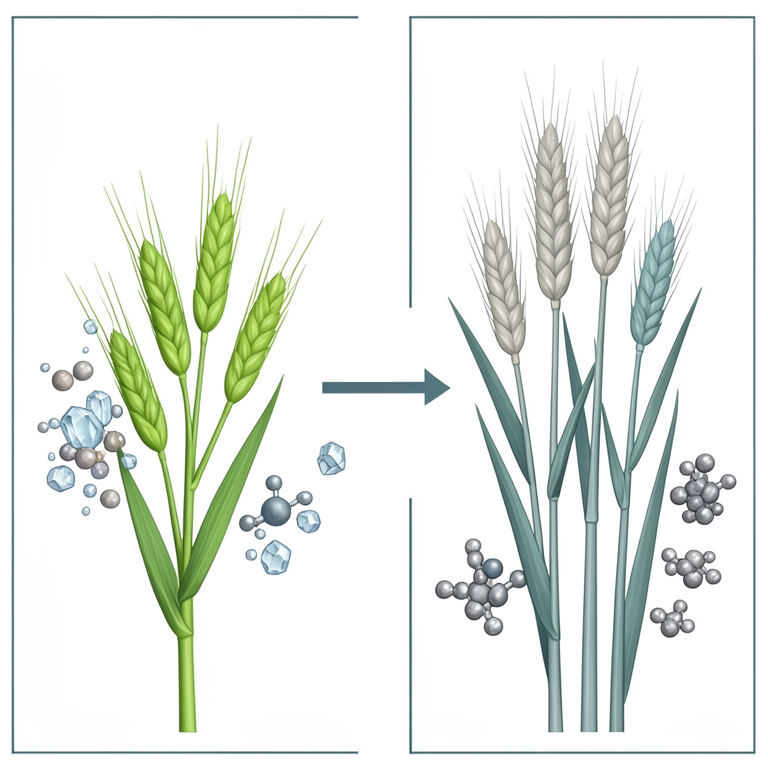
Harvest Timing Trade-off
AI-generated conceptual illustration (barley plants). It explains the idea and does not show study data.
View source evidence ↗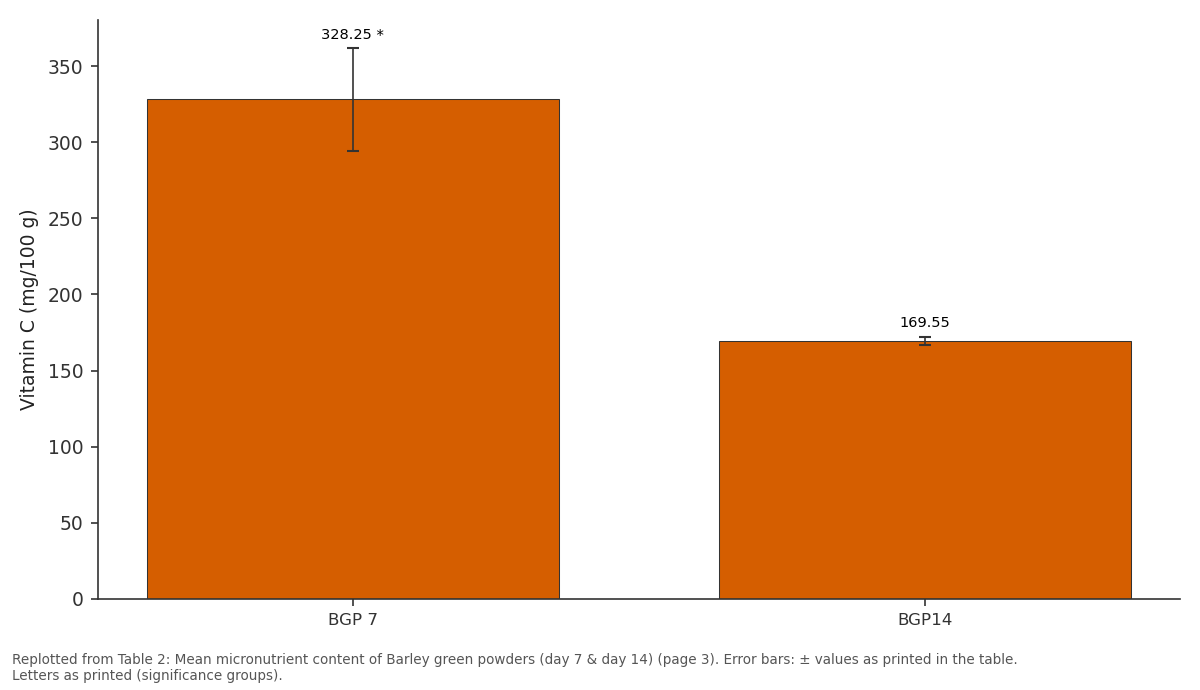
Vitamin C (mg/100 g): BGP 7 vs BGP14
Replotted from Table 2 (page 3) of the original paper. Every bar is the paper's own table value.
View source evidence ↗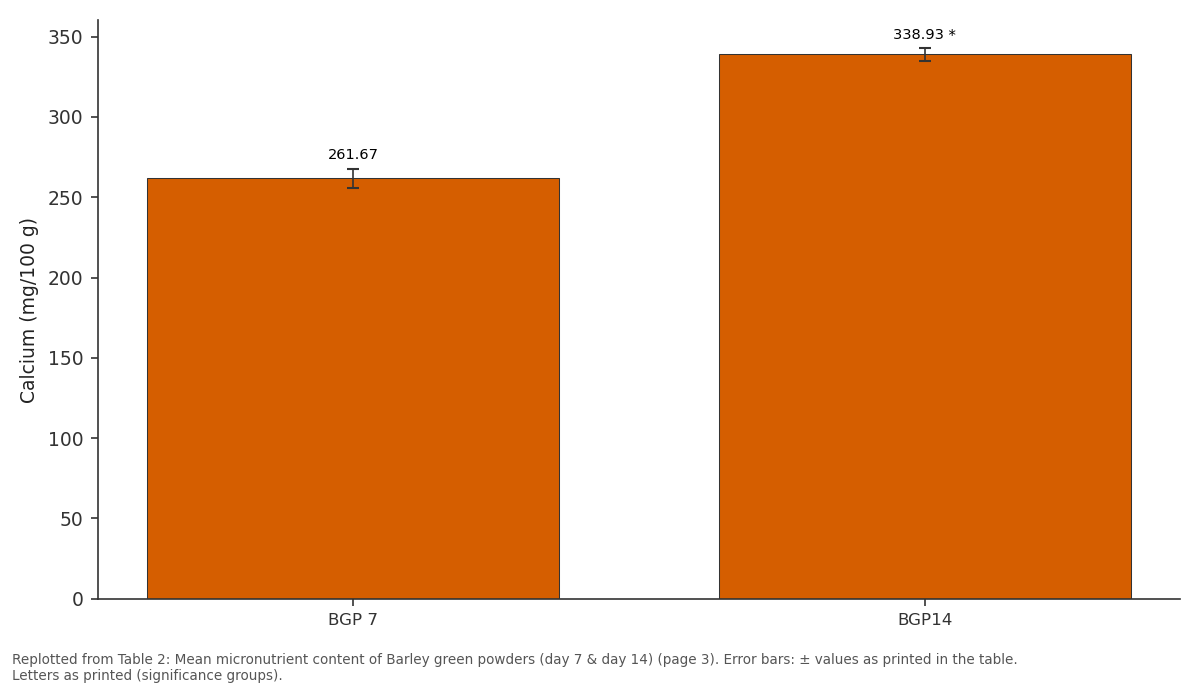
Calcium (mg/100 g): BGP 7 vs BGP14
Replotted from Table 2 (page 3) of the original paper. Every bar is the paper's own table value.
View source evidence ↗Figures & tables
From the original paper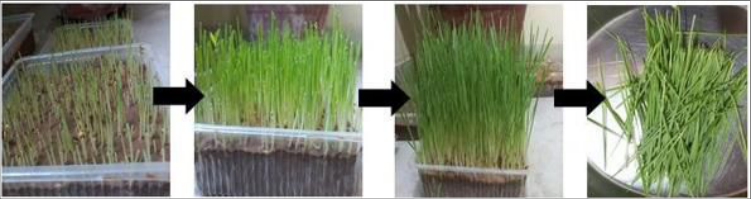 Plate 1
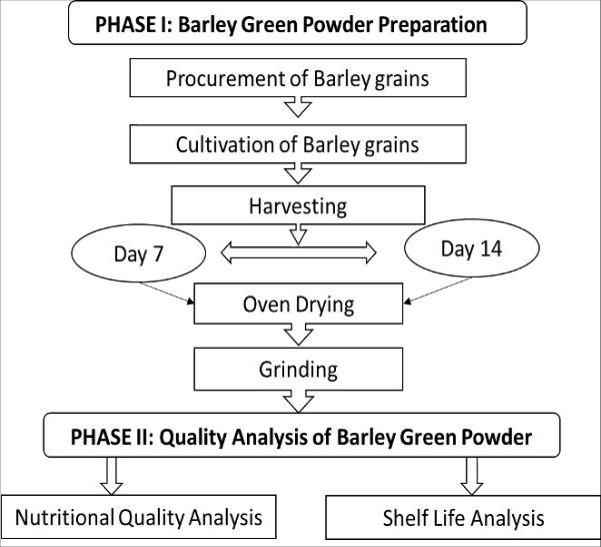 Figure 1
 Table 1
 Table 2
 Table 3
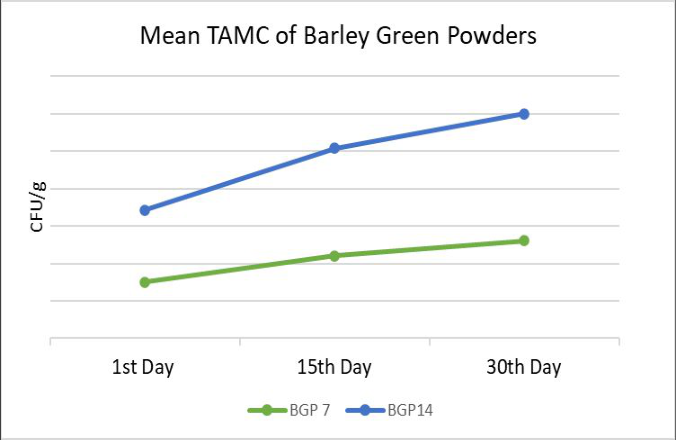 Figure 2
Introduction
The phytochemical and biochemical profiles of barley grass vary significantly, depending on the cultivar, season, location, and environmental conditions including, pH, light intensity and spectral quality, and temperatures [1] . Barley Green (BG) refers to the young leaves and stems of the barley plant, specifically during its vegetative growth stage. This stage begins from the seedling stage, which occurs around 10 days after sprouting (known as barley sprout), and continues until the elongation stage (known as barley green). It is during this period that barley green reaches its nutritional peak before entering the reproductive cycle of the plant [2] . Barley greens have been associated with various health benefits, including the prevention of chronic diseases such as circulatory disorders, cancer, obesity, diabetes, arthritis, and high cholesterol. They are known for their potential antioxidant properties, which can help reduce oxidative stress and inflammation in the body. Additionally, barley greens have been recognized for their potential in supporting overall health and well-being [3,4] . Choosing the right time for harvesting is crucial to obtain barley grass with favorable nutritional and functional qualities. The effect of harvest time impacts proximate composition, surface color, and amino acid profile of barley [5] . Some studies found that the developmental stages of barley grass were the primary factor influencing the variations in phytochemical constituents and antioxidant enzyme activities. While the cultivar also played a role, the developmental stage emerged as the main factor driving the changes in phytochemical composition and antioxidant potential of barley grass. These findings highlight the significance of considering the developmental stage in understanding the nutritional and antioxidant characteristics of barley grass [1] . In India, Barley grain is easily available in the market in all seasons, and can be sown and grown in our available spaces only in a short period. To be used as a functional ingredient, it is necessary to have access to fresh barley leaves or packaged barley green powder. Dried powder of barley greens can be stored and used as per convenience. The main purpose of this study is to get in-depth knowledge about barley greens, which are easily available and cost-effective without any complications. Therefore, the present study has been carried out keeping the following objectives in mind-
Methodology Phase 1-Preparation of barley green powder
Barley grains were procured in bulk from local market in Vaishali Nagar, Jaipur, with the intention of minimizing potential variations. To cultivate barley greens, the grains were thoroughly washed and soaked for 24 hours, followed by sprouting for an additional 48 hours. The sprouted barley grains were then carefully placed in soil-filled trays, covered with a layer of the same soil, and placed in an area with indirect sunlight. Daily watering was carried out at 12-hour intervals. The grasses were harvested on both the 7th and 14th days after sowing. Freshly harvested barley greens from the Day 7 harvest were washed and dried before being placed in a hot air oven at 60℃for 5-7 hours until a consistent weight was reached. Once dried, the barley greens were ground into a fine powder using a grinder and passed through a sieve to remove any larger particles. The resulting powder thus obtained was coded as BGP7 and was stored in an appropriately labeled and airtight container. The same procedure was followed for the Day 14 harvest, where the freshly harvested barley greens underwent washing, drying, grinding, sieving, and storage to obtain the barley green powder (BGP14). The quality was analysed on the basis of nutritional profile and shelf life. Nutritional parameters included testing for three parameters: macronutrients, micronutrients and antioxidant profile. All the samples were tested in triplicates using analytical grade reagents, ensuring accurate and reliable results. The macronutrient analysis of the barley green powder included the determination of moisture content, crude protein, crude fiber, total fat, and ash using standard methods outlined in AOAC, 2016 [6] and carbohydrate and energy were analyzed using composite method. Micronutrient analysis of the barley green powder included assessments of iron, calcium, and vitamin C levels. The estimations followed the recommended guidelines of NIN (2003) [7] for iron and calcium, and Sharma (2007) [8] for vitamin C.
Plate 1: Growth of Barley grains
The antioxidant profile of the barley green powder was assessed through various tests including total antioxidant activity (% inhibition) using the DPPH assay [9] , total phenols content (mg GAE/100g) using the Folin-Ciocaltue method, which causes a reaction resulting in the formation of a blue chromophore composed of a phosphotungsticphosphomolybdenum complex. By measuring the intensity of the blue color at a wavelength of 750nm, the concentration of polyphenols in the extract can be quantitatively assessed [10] , total flavonoids content (mg RE/100g) using colorimetric method [11] , and chlorophyll content (mg/100g) using spectrophotometry [12] . This method involves measuring the absorbance of the powder at specific wavelengths to determine the concentration of chlorophyll pigments. Shelf-life analysis of the prepared powders was done using the total aerobic mesophilic plate count (TAMC) method [13] , over a period of one month at an interval of 15 days. The results obtained for all the parameters were analysed by calculating the mean ±standard deviation, and the significance of differences was determined using t-test with level of significance taken as 5 per cent. This analysis was performed using Microsoft Excel version 2010 with the Megastat add-ins.
Results and discussion
The nutrient content of prepared barley green powder was analyzed in the research lab of the University, and the results of essential nutrients and antioxidant profile have been presented in the Table1, 2 and 3, respectively.
| Macronutrient | BGP 7 | BGP14 |
|---|---|---|
| Moisture (%) | 2.35±0.1* | 1.83±0.1 |
| Ash (g/100g) | 9.83±1.4 | 12.15±0.01* |
| Protein (g/100 g) | 18.36±0.8* | 15.61±0.3 |
| Fat (g/100 g) | 3.92±0.1 | 4.89±0.03* |
| Crude Fiber (g/100 g) | 14.88±0.8 | 16.13±1.7 |
| Carbohydrate (g/100 g) | 50.66±2.9 | 49.39±2.1 |
| Energy (Kcal/100g) | 311.36±8.3 | 304.01±7.1 |
Table text extracted from the original PDF; superscript letters are shown inline. The original table image is below.
View original table image
Macronutrient Content
The two samples of prepared barley green powder, BGP7 and BGP14, showed variations in their nutrient composition. In terms of moisture content, BGP7 had a slightly higher value (2.35±0.1%) compared to BGP14 (1.83±0.1%). A significant difference was observed (p≤0.05) between the two samples, indicating the effect of harvesting age on the barley greens. Omondi (2014) [14] found a similar decrease in moisture content with age in two Napier grass varieties (Bana grass and sudan hairless) under natural conditions. On the contrary, a significantly higher (p≤0.05) ash and fat content was observed in BGP14 compared to BGP7. The results of the present study are in line with the results obtained in other studies [4,15,16,17] . BGP7 exhibited a higher protein content of 18.36±0.8g/100g compared to BGP14, which had a slightly lower protein content of 15.61±0.3g/100g. This finding aligns with previous studies [15,18] where similar trends were reported in protein content with advancing harvest dates. Both BGP7 and BGP14 had no significant difference in terms of crude fiber content, with BGP14 showing a slightly higher value as compared to BGP7. Overall, both the samples had high amounts of dietary fiber ranging between 14.88 and 16.13g/100g, which is important for digestive health. Also, BGP7 had a higher carbohydrate and energy content compared to BGP14.
Micronutrient content:
The mean value of calcium for BGP7 was 261.67±6.1mg/100g and for BGP14 was 338.93±4.1mg/100g as shown in Table 2. These values of calcium are significantly different (p≤0.05). It was reported that calcium content in dried barley grass was 330-819mg/100g, which justifies the estimated content of calcium in present study [17] . The mean iron content of BGP7 was measured to be 28.37±0.5mg/100g, while BGP14 had an iron content of 29.64±0.4mg/100g (Table 2) and the difference between the samples was statistically significant (p≤0.05). This finding is supported by previous studies, where the iron content range in dried barley grass was reported to be 10-41.2 mg/100g [17] . Therefore, the iron content of the barley green powders in the present study falls within the expected range based on the literature. A rise in the mean content of both calcium and iron as the harvest age increased is also supported by increase in the ash content in BGP14 sample (Table 1). A significant fall (p≤0.05) in the vitamin C content from 328.25±33.9mg/100g to 169.55±2.8mg/100g in BGP14 was observed which could be due to the effect of harvesting age of barley greens. In another study, the vitamin C content of dried barley grass ranged from 19.4 -548 mg/100g [17] .
| Micronutrient | BGP 7 | BGP14 |
|---|---|---|
| Calcium (mg/100 g) | 261.67±6.1 | 338.93±4.1* |
| Iron (mg/100 g) | 28.37±0.5 | 29.64±0.4* |
| Vitamin C (mg/100 g) | 328.25±33.9* | 169.55±2.8 |
Table text extracted from the original PDF; superscript letters are shown inline. The original table image is below.
View original table image
Antioxidant Profile
The effect of harvesting age on the total antioxidant capacity (per cent inhibition), Chlorophyll (mg/100 g), Total phenols (mgGAE/100 g), Flavonoids (mgRE/100 g) was also investigated and the values of the same are presented in Table 3. The study found that the total antioxidant activity (per cent inhibition) of BGP7 was 48.62±2.4, while BGP14 had a lower activity of 40.97±0.6 percent inhibition. There was a significant decrease (p≤0.05) in the total antioxidant activity as the harvesting time increased. Also, day 7 barley green powder had significantly higher chlorophyll content (518.83±16.9mg/100g) compared to BGP14 (89.78±9.3mg/100g), indicating a decrease in chlorophyll content with advancing harvesting dates. Similar ranges of chlorophyll content have been reported in previous studies [17,19,20] . The total phenolic content of BGP7 (1.90±0.32mgGAE/100g) was also higher compared to BGP14 (1.21±0.13mgGAE/100g), although no significant difference was observed. This suggests a decrease in total phenolic content with increasing harvesting age, which aligns with findings by Park et al. (2015) [2] . The flavonoid content of both BGP7 (538.18±45.6mgRE/100g) and BGP14 (580.03±61.9mgRE/100g) powders showed no significant difference. Previous studies have reported similar ranges of flavonoid content in barley greens (487.5-593.4mg/100g) [2,19] . Shelf-life Analysis: Assessment of shelf-life on the basis of total aerobic mesophilic count was done for both the prepared barley green powders (Day 7 & Day 14). Total microbial count for BGP 7 gradually increased from 1.5x10 3 CFU/g on the first day to 2.2x10 3 CFU/g on the 15 th day to 2.6x10 3 CFU/g on day 30 th . Similarly, the corresponding values were 1.93x10 3 CFU/g, 2.88x10 3 CFU/g and 3.40x10 3 ± 0.6 CFU/g respectively for BGP14 (Figure 2).
| Parameters | BGP 7 | BGP14 |
|---|---|---|
| Total Antioxidant Activity (% inhibition) | 48.62±2.4* | 40.97±0.6 |
| Chlorophyll (mg/100 g) | 518.83±16.9* | 89.78±9.3 |
| Total phenols (mg GAE/100 g) | 1.91±0.32 | 1.22±0.13 |
| Flavonoids (mg RE/100 g) | 538.18±45.6 | 580.03±61.9 |
Table text extracted from the original PDF; superscript letters are shown inline. The original table image is below.
View original table image
Conclusion
The present study clearly demonstrates that the stage of harvesting significantly influences the nutritional composition and antioxidant profile of barley green powder. Barley green harvested on Day 7 (BGP7) was found to be richer in protein, vitamin C, chlorophyll, and antioxidant compounds, including phenols and flavonoids, compared to the Day 14 harvest (BGP14). These components are critical in supporting health through their roles in immune function, oxidative stress reduction, and overall cellular protection. In contrast, BGP14 showed higher levels of minerals such as calcium and iron, as well as greater fat and fiber content, making it valuable from a mineral density and digestive health perspective. Despite minor microbial growth over time, both powders remained within acceptable safety limits over the 30-day storage period, indicating good shelf stability when stored appropriately.
These findings reinforce the importance of selecting an optimal harvesting stage based on the intended functional and nutritional applications of barley green powder. For higher antioxidant activity and vitamin content, earlier harvesting (Day 7) is preferable, whereas later harvesting (Day 14) may be beneficial when targeting mineral enrichment. The study underlines the potential of barley greens as an affordable and accessible functional food ingredient, especially in health-conscious and nutraceutical applications.
Figures and tables from the paper
References
20 in the original paper- Deng LN, Feng GN, Gao Y, Shen YX, Li HS, Gu Y, Luan HY. Phytochemical constituents and antioxidant enzyme activity profiles of different barley (Hordeum vulgare L.) cultivars at different developmental stages. Agronomy. 2019;10(1):37. https://doi.org/10.3390/agronomy10010037
- Park MJ, Seo WD, Kang YH. The antioxidant properties of four Korean barley cultivars at different harvest times and profiling of major metabolites. Journal of Agricultural Science. 2015;7(10):94. https://doi.org/10.5539/jas.v7n10p94
- Gromkowska-Kępka KJ, Markiewicz-Żukowska R, Nowakowski P, Naliwajko SK, Moskwa J, PuścionJakubik A, et al. Chemical composition and protective effect of young barley (Hordeum vulgare L.) dietary supplements extracts on UV-treated human skin fibroblasts in in vitro studies. Antioxidants. 2021;10(9):1402. https://doi.org/10.3390/antiox10091402
- Lahouar L, El-Bok S, Achour L. Therapeutic potential of young green barley leaves in prevention and treatment of chronic diseases: an overview. American Journal of Chinese Medicine. 2015;43(7):1311-1329. https://doi.org/10.1142/s0192415x15500743
- Yan JK, Chen TT, Chen X, Liu Y, Liu C, Li L. Assessing the product quality and biological activities of barley (Hordeum vulgare L.) grasses at different harvest times. Food Bioscience. 2022;46:101549. https://doi.org/10.1016/j.fbio.2022.101549
- AOAC International. Official Methods of Analysis of AOAC International. 20th ed. Vol. I. Gaithersburg (MD): AOAC International; 2016.
- National Institute of Nutrition (India). Laboratory Manual for the Analysis of Foods. Hyderabad: National Institute of Nutrition, Indian Council of Medical Research; 2003. p. 29-35.
- Sharma BK. Instrumental Methods of Chemical Analysis. 24th ed. Meerut (India): Goel Publishing House; 2007. p. 286-288.
- Brand-Williams W, Cuvelier ME, Berset CL. Use of a free radical method to evaluate antioxidant activity. LWT -Food Science and Technology. 1995;28(1):2530.
- Singleton VL. Analysis of total phenols and other oxidation substrates and antioxidants by means of Folin-Ciocalteu reagent. Methods in Enzymology. 1999;299:152-178.
- Boham AB, Kocipai DC. Flavonoid and condensed tannins from leaves of Hawaiian Vaccinium vaticulatum and Vaccinium calycinum. Pacific Science. 1994;48:458-463.
- Sadasivam S, Manickam A. Biochemical Methods. 4th ed. New Delhi: New Age International (P) Ltd. Publishers; 2011.
- Food Safety and Standards Authority of India (FSSAI). Manual on method of microbiological testing. New Delhi: FSSAI; 2016 [cited 2025 Jun 5]. Available from: https://fssai.gov.in/upload/uploadfiles/files/Microbiolog ical_Testing_Foods_Draft_Manual_06_09_2016.pdf
- Omondi PO. Effect of age on nutrient content of Bana grass and Uganda hairless Napier varieties [dissertation]. Nairobi: University of Nairobi; 2014.
- Qamar A, Saeed F, Tahir-Nadeem M, Hussain AI, Niaz B, Khan AU, et al. Exploring the phytochemical profile of green grasses with special reference to antioxidant properties. International Journal of Food Properties. 2018;21(1):2566-2577. https://doi.org/10.1080/10942912.2018.1540990
- Duan QH, Li Y, Ge ZX, Yu SL, Huan C, Zhang J, Zhou F. Analysis and evaluation of nutritional components of barley leaves powder. Chinese Medicine Journal of Research and Practice. 2014;28(3):55-57.
- Yang J, Zeng Y, Yang X, Pu X, Du J. Utilization of barley functional foods for preventing chronic diseases in China. Agricultural Science & Technology. 2016;17(9):2195.
- Tilahun G, Asmare B, Mekuriaw Y. Effects of harvesting age and spacing on plant characteristics, chemical composition and yield of desho grass (Pennisetum pedicellatum Trin.) in the highlands of Ethiopia. Tropical Grasslands -Forrajes Tropicales. 2017;5(2):77-84. https://doi.org/10.17138/tgft(5)77-84
- Meng FL, Xv YY, Hu JD, He D, Jiang JH. Optimization of combined drying process by hot-air and microwave for barley seedling powder. Journal of Food Safety and Quality. 2017;8(5):1651-1658.
- Chen JF, Zhang Y, Zhang QY. Effect of sowing amount on yield and quality of barley seedling. Fujian Journal of Agricultural Sciences. 2014;29(2):136-138.