
Research article · 2025 · Full text
International Journal of Horticulture and Food ScienceImpact of extraction methodologies on the in vitro antioxidant properties (DPPH radical scavenging assay and ferric reducing antioxidant power) of bioactive compounds extracted from Mentha piperita L.
Volume 7(5) · Pages 47–54 · DOI: 10.33545/26631067.2025.v7.i5a.296 ↗
Research areasNatural Antidiabetic Agents StudiesMedicinal Plant ResearchSeed and Plant Biochemistry
Abstract
Author-writtenOur research\r\nembarked on a novel exploration into the antioxidant capabilities inherent in\r\npeppermint (Mentha × piperita) extracts. We employed three distinct extraction\r\nmethodologies: conventional alcoholic maceration, standard aqueous infusion,\r\nand an innovatively tailored, extended hydro distillation process maintained at\r\na gentle 40°C, over a 36-hour duration, utilizing a Clevenger apparatus that\r\nhad been specifically modified for this purpose. The antioxidant capacity\r\n(ascertained via the ABTS assay), the ability to neutralize free radicals\r\n(quantified using the DPPH assay), and the reducing power (determined by the\r\nFRAP assay) of the resulting extracts were comparatively assessed. Furthermore,\r\nthe essential oil yielded through our adapted Clevenger method underwent\r\ndetailed GC-MS analysis to fully characterize its volatile and semi-volatile\r\nconstituents. A noteworthy finding was that the essential oil obtained through\r\nthis unconventional, low-temperature hydro distillation exhibited the most\r\npotent antioxidant capacity (95.78%), the highest level of DPPH radical\r\nscavenging (96.29%), and the greatest reducing power (0.98), demonstrably\r\noutperforming the extracts derived from alcoholic maceration and aqueous\r\ninfusion. The GC-MS analysis of this oil proves a structural profile of chili,\r\nwith Mirtaol (14.88%) and 1.8-Sinel (10.42%). The antioxidant effect achieved\r\nthrough this refined hydro distillation technique refers to better protection\r\nof the most important volatile antioxidants, possibly the possibility of\r\nreducing the decline associated with traditional extraction methods for high\r\neffects. This study emphasizes many benefits to this novel, to maximize the\r\nrecovery of essential oil rich in antioxidants from peppermints to an\r\nenergy-capable hydro distillation strategy. This approach presents a promising\r\nalternative for industrial recovery procedures aimed at optimizing bioactivity\r\nand potentially reducing energy needs.
Summary
Source-checkedPlain-language reading of the full paper, prepared with AI and checked against the text. Each point links to the authors' own words.
Why it matters
- Plants in the Mentha genus are valued for their medical and aromatic properties, specifically their antioxidant, anti-inflammatory, and antimicrobial activities. View evidence ↗
- Mint extracts and essential oils are known to act as antioxidants by neutralizing reactive oxygen species and binding metal ions that promote oxidation. View evidence ↗
The question
- The study aimed to explore the antioxidant capabilities of extracts derived from peppermint (Mentha × piperita). View evidence ↗
What they did
- The researchers compared three extraction methods: conventional alcoholic maceration, standard aqueous infusion, and a modified hydro distillation process using a Clevenger apparatus at 40°C for 36 hours. View evidence ↗
- Antioxidant properties were measured using three assays: ABTS for antioxidant capacity, DPPH for free radical neutralization, and FRAP for reducing power. View evidence ↗
- The volatile and semi-volatile constituents of the essential oil were characterized using gas chromatography-mass spectrometry (GC-MS). View evidence ↗
What they found
- GC-MS analysis identified menthol as the most abundant component of the peppermint oil at 14.88%. View evidence ↗
- The second most prevalent compound in the oil was 1,8-cineole (eucalyptol), comprising 10.42% of the total. View evidence ↗
What it means
- The authors conclude that using lower temperatures and extended time during hydro distillation better preserves heat-sensitive bioactive compounds, resulting in enhanced antioxidant potential. View evidence ↗
- The study recommends this low-temperature hydro distillation approach as a potentially more energy-efficient industrial alternative that optimizes the recovery of antioxidant-rich essential oils. View evidence ↗
Visual summary
2 visualsIllustrations explain the paper; charts are replotted from the paper's own table values.
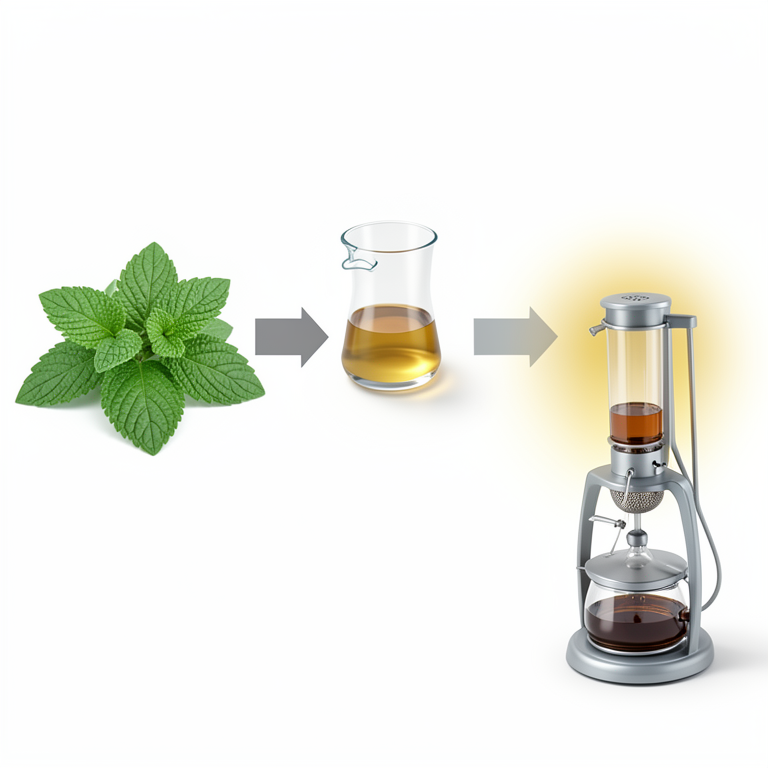
Comparison of Extraction Methods
AI-generated conceptual illustration (Mentha piperita L. (peppermint) leaves and a Clevenger apparatus). It explains the idea and does not show study data.
View source evidence ↗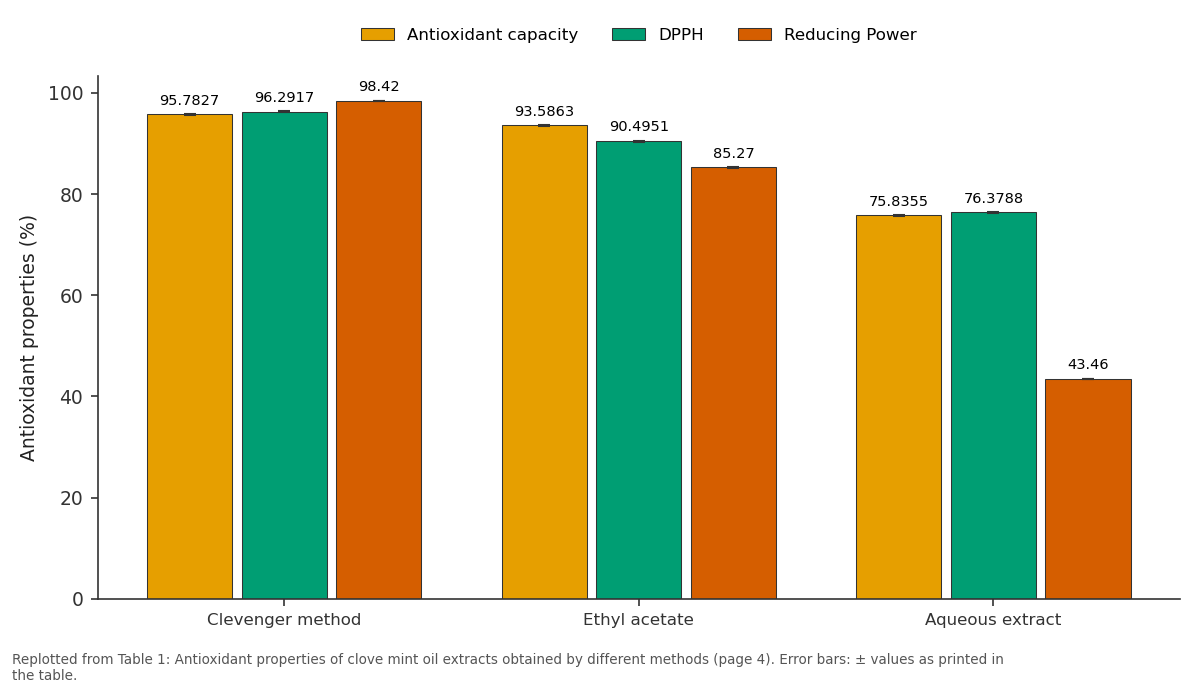
Antioxidant capacity and DPPH and more: Clevenger method vs Ethyl acetate vs Aqueous extract
Replotted from Table 1 (page 4) of the original paper. Every bar is the paper's own table value.
View source evidence ↗Figures & tables
From the original paper Table 1
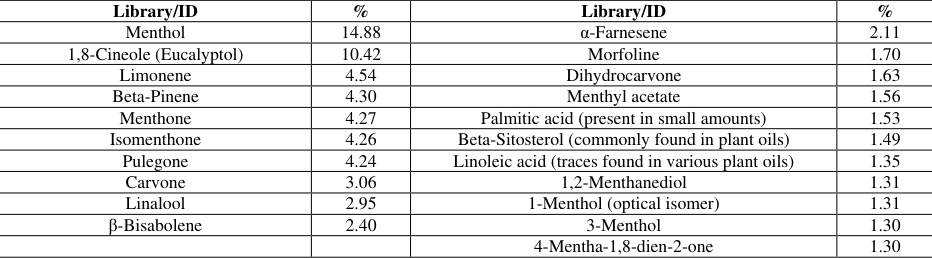 Table 2
Introduction
For centuries, Mentha-related plants, often known as mint, are considered valuable to their medical and aromatic properties. In different cultures, they are recognized for their diverse medical uses and characteristic scents (Bansal et al., 2022) [5] . The Mentha genus has several species, each contributing to various biological activities, including significant antioxidants, anti-inflammatory and antimicrobial effects (Salehi et al, 2019) [45] . As a result, extracts and essential oils are achieved from Mint, which is used in traditional and modern medicine, taste, aroma and cosmetic products. Complex biochemical procedures for the production of large bioactive compounds at Mentha species are subject to ongoing scientific research. For example, recent progress in molecular biology has provided deep insights into enzymatic mechanisms and genetic controls that regulate monoterpine production, such as menthol in peppermint (Mentha × Pepperita). These findings have emphasized the important role of the structures of the special glands in these processes. In addition, comparative studies of metabolic profiles in different species have illuminated chemical variations in the genus, which detect the diversity of essential oil components (such as menthol and cars) and phenolic acid (such as rooms), which directly affect their various biological activities (2021).
Therapeutic abilities for substances obtained from Mint are well documented in scientific literature. Research has continuously demonstrated that mint extracts and essential oils effectively neutralize reactive oxygen species can act as effective antioxidants and binding metal ions promoting oxidation. In addition, studies conducted in laboratories and living organisms have clarified their anti-inflammatory mechanisms, which often include modulation of important inflammatory intermediaries and signal routes, which suggest possible medical use for inflammatory conditions. The effectiveness of essential oils against mint towards a wide range of clinically important microorganisms, including both bacteria and fungi, highlights their capacity as natural preservatives and antiseptic. In addition to its reputable therapeutic properties, Mint continues cultural significance and integrated into traditional medical systems worldwide to deal with various health problems, especially related to the digestive system (e.g., ethnharpharmacological studies have documented different applications of different Mentha species in different geographical regions, which postpone their traditional use and anticipation of use and anticipation of use and anticipation of the (Gharibi et al., 2019) [22] . Finally, modern scientific probes broad our understanding of complex chemical makeup and diverse biological activities of Mentha species, which pave the way for innovative applications in areas such as medical, food science and agriculture. Future research efforts should be focused on clarifying the exact mechanism of the effects of individual and common effects of phytochemicals found in the coin, optimizing methods of extraction and formulation and performing complete clinical tests to evaluate their medical efficiency and safety (Ullah et al, 2020) [54] . Thus, Mentha is still an attractive topic for interdisciplinary research, which effectively combines her rich historical and traditional use with the progress of modern science.
Study Design
For the current study, the leaves of peppermint (mentha × pyerita) were subjected to a broad preparation process that included cleaning, drying and grinding them in good condition. Following this preparation, three different methods were used to receive extracts: soaking in alcohol, infected in water and hydroda position to extract essential oils using a Clevenger system that was adapted to our specific requirements. To be more accurate, used the drug extraction process ethanol, which was a solvent to preferably dissolve the fat-soluble bioactive compounds in the cardboard material, while the water-based method used water as a solvent to target soluble components. Essential oil extraction through distillation, the general principles described in British pharmacopy followed, with some minor changes in the process. As a result, extracts and essential oils were well investigated. The study involves assessing their ability to donate electrons using DPPH parakh, determines the total antioxidant capacity, and the gas identifies the steamless and semi-steaming active compounds that are present through the technique of chromatography masspectrometry (GC-MS) (Chaudhary et al., 2023) [59] .
Plant Material and Preparation
For this study, fresh mint (Mentha spp.) was obtained from a local market located in Najaf Governorate, Iraq. Immediately after the collection, the peppermint undergoes a careful washing process with tap water to eliminate any dirt or particles on the surfaces. A wide rinsing was then performed with deionized water to ensure complete cleanliness. Clean leaves were left to dry naturally in a controlled laboratory atmosphere, away from direct sunlight. This air-drying process continued until the leaves reached a steady weight, a step taken to reduce the breakdown of enzymes and variation in moisture content (Aziz et al., 2020; Hussain et al., 2023) [3,28] . The dried plant was stored in sealing and stamping containers at the room temperature until the extraction process was performed.
Extraction Procedures
There are three distinct extraction techniques that was used to find various kinds of active chemicals from processed mint leaves.
Ethanol-based extraction
An accurate amount of dried mint leaves was soaked using a specific fluid ratio in ethanol (analytical purity). The soaking process was carried out with persistent stirring at room temperature for a certain period to ensure the compounds were effectively dissolved. After this time, the ethanol extract was filtered to remove the remaining plants' contents. The ethanol resolution agent was then removed using rotary evaporation, resulting in a concentrated extract (Silva et al., 2021) [38] .
Water-Based Extraction
A separate amount of dried mint leaves was extracted using distilled water with a specific ratio of solids for liquid. This mixture was heated and placed at a controlled temperature just below the boiling point for a defined period. Subsequently, water extracts were separated from the remaining plant material by filtration. Water extracts were then focused on using a cold dried technique, which is intended to preserve the compounds that can be damaged by heat (Gasmi Pirbalouti etc., 2023) [23] .
Essential oil extraction via hydro distillation
Essential oil was extracted using a modified hydro distillation method that differed from normal temperature settings for gap equipment. Mens standardprosedyrer for å fjerne essensielle oljer med et klyvanjorverktøy vanligvis inkluderer hydro-destillasjon ved et kokepunkt med vann, som for å fordampe de flyktige forbindelsene effektivt (europeisk farmakopoia, den siste versjonen; Besar og Buchbair, 2015), har denne studien en kontrollert temperatur i 36 timer i 36 timer i 36 timer til fordamping av en lang tid på fordampingen en lang tid til å Supergage a evaporation for a long hour. Did. Zhang et al., 2023 [59] , using potential non-standard situations from previous studies). After this extended extraction at low temperatures, the distilled liquid was cooled to 15°C to help distinguish the essential oil using the Clinzer unit. The collected oil was then stored in dark color, sealing bottles were sealed at 4°C to maintain the quality for further analysis. This change in temperature and extraction time represents a departure from specific methods of gap-based hydro distillation and can affect the volume and structure of the essential oil obtained.
GC-MS analysis of oil extract
Prior to analysis using gas chromatography-mas spectrometry (GC-MS), extracted oil undergoes a process to convert fatty acids into fatty acid methylstyles (Fames). This included a sample of 0.5 ml of oil and placed it in a screw, caught test pipe, followed by 2 ml of methanol. The mixture was then mixed well with the use of swirl mixes. Then 0.5 ml centered sulfuric acid was gently interconnected with drop for drop, while shaking the continuous mixture. The resulting solution was heated to the boiling point (about 65 °C for methanol) and then cooled the room temperature. When cooled, 2 ml of hexane and 2 ml of lovely water were added to the test pipe. The mixture was strictly shaken to ensure that it was fully mixed, and then the upper organic layer was allowed to separate the families. It was injected into the GC-MS system without any concentration directly without any concentration, which represented about 20% methylester of fatty acids. GC-MS analysis was equipped with an agilest Technologies 5977A Mass Selective Detector (MSD) in an agilent technologies in the Basra Oil Company laboratory using an Agilent Technologies 7890B gas chromatography. The separation of the compounds was obtained by using the HP-5 MS Cascia column (30 meters long, 250 micrometers of internal diameter and 0.25 micrometer film thickness). The stable phase of this column was made of 5% phenyl and 95% methyl silicone. The oven temperature program began at 40°C and was kept there for 5 minutes, after which the temperature was linearly increased at a speed of 8°C per minute until it reached the final temperature of 300°C. This final temperature was maintained for 20 minutes. Helium was used as a carrier gas, which ran at a constant speed of 1 ml per minute per minute, with a 3 ml per minute per minute permit. The sample (0.5 microliths) was injected into a divisor mode with an injection temperature set at 290°C mass spectrometry was performed by scanning a series of mass-to-charge ratio (m/m/z) from 44 to 750. The tobound, Mainly No. Works as a reference database (Stein, 1999, 2017) [52] .
Methodology for evaluating the antioxidant properties of peppermint extracts
The capacity of peppermint (mentha × pyerita) extracts, various extraction methods (essential oil for essential oil, is achieved using ethylaceta solvent extraction and waterbased extraction) were measured quantitatively using a set of well-established laboratory tests to function as antioxidants. Each of these tests focuses on another aspect of antioxidant activity: antioxidant force (FRAP) to evaluate the ability to donate electrons to reduce ferrous reduction of ferrous reduction of the reduction of the reduction of ferrously that reduces the iledric. 2.2'-Azino bis (3atylbenzothiazoline-6-sulfonic acid) (ABTS) Radical Cleaning Analysis was used to determine the ability to torture ABT's radical quotes negatively (Benzie & Choi, 2014; Floegel et al., 2011) [9,21] .
Assessment of reducing power using the Ferric Reducing Antioxidant Power (FRAP) Assay
The reducing power of the peppermint extracts was measured using the FRAP assay, following a slightly adjusted procedure based on the method outlined by Benzie and Strain (1996) [10] and as implemented in recent research (e.g., Gohari et al., 2024) [24] . The FRAP reagent was freshly made by mixing a 300 mM acetate buffer (at a pH of 3.6), a 10 mM solution of 2, 4, 6-tri(2-pyridyl)-s-triazine (TPTZ) in 40 mM hydrochloric acid (HCl), and a 20 mM solution of ferric chloride hexahydrate (FeCl₃•6H₂O) in deionized water, in a specific ratio of 10:1:1 by volume. 1 Measured amounts of each peppermint extract, at a specific concentration, were mixed with the freshly prepared FRAP reagent and kept in complete darkness at 37°C for a standard reaction time of 30 minutes (Pulido et al., 2000) [41] . The resulting formation of a blue-colored ferrous-TPTZ complex was measured using a spectrophotometer at a wavelength of 593 nm. 2 A standard curve was created using water-based solutions of ferrous sulfate heptahydrate (FeSO₄•7H₂O) with known concentrations, and the reducing power of the extracts was reported as micromoles of ferrous equivalents per gram of extract (μmol Fe²⁺/g extract) (Oyaizu, 1986) [36] .
Determination of DPPH radical scavenging activity
The capacity of the peppermint extracts to neutralize the stable free radical 2, 2-diphenyl-1-picrylhydrazyl (DPPH•) was assessed using a slightly adjusted version of the method described by Brand-Williams et al. (1995) [12] and as applied in recent studies (e.g., Mohd Zainordin et al., 2023) [33] . A stem solution of DPPH was designed in a suitable solvent in a concentration of 0.1 mm, usually methanol or ethanol (obtained from Sigma-Ladich, St. Louis, Mo, USA). For testing, the measured volume of each peppermint extract, produced at a specific concentration, was quickly mixed with a prescribed volume of DPPH. The solution again to react in the dark in the dark for 30 minutes and allow to stabilize the response (Soares et al., 1997) [51] . DPPH radical reduction, indicated by the extinction of the solution, was measured by reading the absorption at 517 Nm using UVwise spectrophotometer. 1 A control test where only DPPH. Solution (without extract) was used as a reference point. DPPH radical purification activity was calculated as a percentage of DPPH.
Where, A₀ represents the absorbance of the control (DPPH solution) and A₁ represents the absorbance of the reaction mixture containing the extract.
Assessment of antioxidant capacity using the abts radical cation decolorization assay
The total antioxidant capacity of peppermint extracts was evaluated using radical quotes (ABTS+) of ABT, which follows a slightly adjusted process based on the first method described by Ri et al. (1999) [42] and often used in recent research. ABTS+ radical cations produced 2.2'-Azino bis (3thyylbenzothiazolin-6-6-6-6-6-6-6-6-6-6-Sulfonic acid), where 7 mm stem resolution (ABTS) of the dies salt (ABTS) 2.45 mm potassium (K₂S₂O<0xE2><0x82>< 0x88>) per cellate in the water. The mixture was left to react in the dark at room temperature for 12-16 hours to ensure complete formation of the radical (Miller et al., 1993) [32] . Prior to analysis, the resulting ABTS+ solution was diluted with phosphate buffer salt water (at the pH of 7.4), before it did not reach a stable absorption reading of 0.700±0.020 at 734 NM using UV viz spectrophotometers. For analysis, the measured volume of each peppermint extract, at a specific concentration, was quickly mixed with a specified volume diluted ABTS+ solution and incubation at room temperature for 6 minutes. The reduction in absorption at 734 nm, indicating the neutrality of ABTS+ radical cation of the antioxidants present in extracts. A control test containing ABTS+ solution without extract was used as a reference. ABT's radical purification activity, representing antioxidant capacity, was calculated as a percentage of ABTS+ radicals, which was interrupted using the following formula: ABTS Scavenging Activity (%) = [(A₀-A₁) / A₀] × 100 Where, A₀ represents the initial absorbance of the ABTS•+ solution and A₁ represents the absorbance of the reaction mixture after the extract was added.
Results
Table 3-1 provides a comparative overview of the antioxidant effectiveness of clove mint oil obtained through three different extraction techniques: Clevenger hydrodistillation, ethyl acetate solvent extraction, and aqueous extraction. For each extract, the antioxidant capacity, its ability to scavenge free radicals (as measured by the DPPH assay), and its reducing power (as measured by the FRAP assay) were assessed. The results are presented as the average value plus or minus the standard deviation.
Interpretation of Results
The data clearly demonstrates that the clove mint oil extracted using the Clevenger hydrodistillation method exhibited the highest antioxidant capacity (95.78268± 0.098), superior free radical scavenging activity in the DPPH assay (96.29173±0.097), and the strongest reducing power (98.42±0.071) when compared to the ethyl acetate and aqueous extracts. The ethyl acetate extract showed intermediate antioxidant properties, while the aqueous extract consistently displayed the lowest values across all three tests. Better performance of cloves oil extracted through the clevenagar method corresponds to the findings of many recent studies focusing on essential oil extraction and antioxidant activity. Hydrodestylon, which used in a gap unit, is a common and effective technique for insulating volatile compounds, many of which are antioxidants present in essential oils. The efficiency of this method contributes to its high activity in preserving volatile antioxidant components in cloves. Carnation (Syzygium aromaticum) recent research on essential oil, which shares similar bioactive compounds with mint cloves, has also emphasized the important antioxidant capacity of essential oil achieved through Hydro-hydrohydodionia. Carnation (Syzygium aromaticum) recent research on essential oil, which shares similar bioactive compounds with mint cloves, has also emphasized the important antioxidant capacity of essential oil achieved through Hydro-hydro-hydodionia. For example, a study by Barboza et al. [6] , GC-MS analysis often identifies EUNOL as a main component of carnation essential oil extracted by hydro-hydrodystylon, which contributes significantly to its antioxidant properties (da Silva et al., 2021) [13] . While the specific structure of the "clove mint" oil may vary slightly from pure cloves, the principle of hydrodystylon is effectively in accordance with the possibility of capturing volatile phenolic antioxidants. The low antioxidant activity seen in ethyl acetate and water competitions may be caused by various antioxidant compounds in these solvents. Ethylacetate, a semipolar solvent, can extract a distinct profile of compounds compared to the non-polar essential oil obtained through a cleavage or polar aquatic extracts. The lower activity of water competitions suggests that the primary antioxidant components in cloves are not very soluble in water. It corresponds to the lipophile nature of many essential oil components known to their antioxidant properties. In addition, high decreasing power indicates in the clevenzer-explained oil indicates a greater appearance of compounds capable of donating electrons, which is an important mechanism in antioxidant effect. This discovery is supported by studies corresponding to their significantly reduced abilities to the presence of specific volatile phenolics in essential oils obtained by hydrolyzation. 2 Peppermint (Mentha × Pepperita) presents a percentage structure of different chemical components identified in oil, possibly analyzed using gas chromatography-mas spectrometry (GC-MS). The identity of these compounds was made practically by comparing them to spectral libraries such as nist or Willy. The table provides a quantitative profile of volatile and semievaporating components that contribute to the characteristic aroma, taste and bioactivity of peppermint oil. The study reveals a composition in accordance with the often accepted chemical makeup of Mentha × piperita essential oil from GC-MS analysis of peppermint oil, as reported in many recent scientific functions (Kapoor et al., 2020) [29] . Menthol stands as the most numerous component, which contains 14.88% oil. It is a defined feature of peppermint oil and is responsible for its cooling sensation and its many medical effects. The concentration may vary depending on factors such as geographical location where the plant was grown, crop time and methods used to dry the plant content. The 1.8 cycle, also known as eucalyptus, is the second most widespread compound, making 10.42% of the oil. Although it is usually associated with eucalyptus oil, it is an important component of many mentha species and contributes to the aroma of the oil and its reported expectant and antiinflammatory properties. This profile has analyzed a sufficient amount of 1.8 cycle analysis of the specific chemical variety (chemotype) of peppermint. Other monotorine pen (4.54%), beta-peinin (4.30%), Menthon (4.27%), Isomython (4.26%), and the presence of Pulgon (4.24%) are characterized by the composition of the oil. The lemon is known for its sour scent and potential antioxidant and anti-inflammatory properties (Salehi et al., 2019) [46] . Beta-pinin contributes to a woody, pine-like aroma and has also shown biological activity (Rivas-Arrola et al., 2021) [43] . Menthon and isomethon are ketone compounds that contribute to the minty aroma and can affect the general therapeutic effects of the oil. Pipegone, although there is currently a component of anxiety due to potential poisoning in high concentrations, and the level is usually monitored under quality control (Tisserand & Young, 2014) [53] . The presence of Carvon (3.06%) is remarkable, as it is an important component of Spiyamint (Mentha Spicec) oil. The event in this peppermint oil profile may indicate a possible variation in a specific culture or chemical makeup of the plant ( ة, 2023 ). Carvon is known for its distinct aroma and various biological activities, including potential digestion and carminative effects. Identification of oxygen such as linelul (2.95%) and menthial acetate (1.56%) that esters identify aromatic profiles containing monoterpine and can contribute to the total medicinal properties of oil. The presence of Sesquiterpen such as the ß-Bisabolen (2.40%) and the αferrenesen (2.11%) is small, but can contribute to general aroma and possible anti-inflammatory effects (Wang et al, 2023) [57] . Identification of yogicists such as peacock foil (1.70%), dihydrocartwon (1.63%), 1.2-mentinheadingol (1.31%), 1-menthole (optical isomers, 1.31%) and 3menthaol (1.30%), and 4-Mentha-1, 8-dien-2-one (1.30%) are minor constituents that contribute to the nuanced chemical profile of the oil which presence of menthol isomers highlights the stereo chemical complexity of essential oil. It is interesting to detect small or track amounts of pamitic acid (1.53%), beta-sitosterol (1.49%) and linoleic acid (1.35%). Palmatic and linoleic acids are fatty acids usually found in the plantelipids and may be present due to codedication of non-evaporated components. Beta-sitosterol is a phytosterol usually found in plant oils and has been studied for its potential health benefits. Their presence in essential oil fraction, even in small quantities, can contribute to general matrix effects and potentially affect the properties of oil.
Table 2: Table
Table 2: Table
Conclusion
This study offers a strong and original comparison of the antioxidant properties of peppermint extracts obtained through traditional methods (alcoholic maceration, aqueous infusion) and a newly adapted, long-duration, lowtemperature hydro distillation process using a modified Clevenger apparatus. The results clearly show the exceptional effectiveness of this non-conventional, lowtemperature hydro distillation technique in producing an essential oil with superior antioxidant capacity, free radical scavenging activity, and reducing power when compared to standard solvent-based extracts. The GC-MS analysis of this most potent essential oil revealed a complex mixture of volatile compounds, with menthol and 1, 8-cineole as key components. The innovative use of a significantly lower temperature and extended time in hydro distillation has demonstrably led to an essential oil with enhanced antioxidant potential, suggesting a better preservation of heat-sensitive bioactive compounds. This outcome indicates a significant positive advancement in essential oil extraction methods, offering a potentially more energy-efficient alternative that also better preserves bioactivity compared to traditional high-temperature hydro distillation. This research highlights the crucial role of extraction parameters in determining the bioactive yield from plant materials and opens avenues for future optimization and industrial application of this novel low-temperature hydro distillation approach to maximize the recovery of valuable antioxidantrich essential oils.
Figures and tables from the paper
| Type of Extraction | Antioxidant capacity | DPPH | Reducing Power |
|---|---|---|---|
| Clevenger method | 95.78268±0.098 | 96.29173±0.097 | 98.42±0.071 |
| Ethyl acetate | 93.58629±0.086 | 90.49512±0.099 | 85.27±0.067 |
| Aqueous extract | 75.83549±0.079 | 76.37877±0.089 | 43.46±0.065 |
Table text extracted from the original PDF; superscript letters are shown inline. The original table image is below.
View original table image
| Library/ID | % | Library/ID | % |
|---|---|---|---|
| Menthol | 14.88 | α-Farnesene | 2.11 |
| 1,8-Cineole (Eucalyptol) | 10.42 | Morfoline | 1.70 |
| Limonene | 4.54 | Dihydrocarvone | 1.63 |
| Beta-Pinene | 4.30 | Menthyl acetate | 1.56 |
| Menthone | 4.27 | Palmitic acid (present in small amounts) | 1.53 |
| Isomenthone | 4.26 | Beta-Sitosterol (commonly found in plant oils) | 1.49 |
| Pulegone | 4.24 | Linoleic acid (traces found in various plant oils) | 1.35 |
| Carvone | 3.06 | 1,2-Menthanediol | 1.31 |
| Linalool | 2.95 | 1-Menthol (optical isomer) | 1.31 |
| β-Bisabolene | 2.40 | 3-Menthol | 1.30 |
| 4-Mentha-1,8-dien-2-one | 1.30 |
Table text extracted from the original PDF; superscript letters are shown inline. The original table image is below.
View original table image
References
64 in the original paper- Adams RP. Identification of Essential Oil Components by Gas Chromatography/Mass Spectrometry. 6 th Ed. Carol Stream, IL: Allured Publishing Corporation, 2017.
- Alam MS, Hossain MM, Sarker MZI, Khalil MI. Traditional uses, phytochemistry, and pharmacology of Mentha species: A comprehensive review. J Ethnopharmacol. 2023;300:115742. https://doi.org/10.1016/j.jep.2022.115742
- Aziz ZAA, Bhat MA, Ibrahim MN, Umar AU, Buang F. Optimization of drying conditions for Orthosiphon stamineus leaves using response surface methodology: Effect on antioxidant activity and phenolic content. Ind Crops Prod. 2020;145:112117. https://doi.org/10.1016/j.indcrop.2020.112117
- Azizi S, Ghasemi E, Borghei AM. Optimization of hydrodistillation of essential oil from Mentha piperita using response surface methodology and evaluation of its antioxidant and antimicrobial activities. Food Sci. Nutr. 2022;10(10):3478-90. https://doi.org/10.1002/fsn3.2979
- Bansal P, Kumar A, Singh VK, Sharma A. A comprehensive review on the genus Mentha: Traditional uses, phytochemistry, and pharmacological activities. J Herb Med. 2022;34:100602. https://doi.org/10.1016/j.hermed.2022.100602
- Barboza HRS, Cerqueira FH, Araújo DSTA, Oliveira DJS, Nascimento DTP, Araújo AV, et al. Antioxidant and anti-inflammatory activities of Syzygium aromaticum essential oil and its main component eugenol in experimental models. Evid Based Complement Alternat Med. 2020;2020:8936371. https://doi.org/10.1155/2020/8936371
- Baser KHC, Buchbauer G, Editors. Handbook of Essential Oils: Science, Technology, and Applications. 2 nd Ed. Boca Raton, FL: CRC Press, 2015.
- Benayad Z, Touzani S, Menyiy ELN, Taleb M, Bouyahya A. Mentha species essential oils: Chemical composition, antimicrobial activity and potential applications. Appl Microbiol Biotechnol. 2021;105(17):6379-98. https://doi.org/10.1007/s00253-021-11481-8
- Benzie IFF, Choi SW. Antioxidant assays: Principles, practice, and limitations. In: Natural Antioxidants in Foods and Beverages. Cambridge: Woodhead Publishing, 2014, p. 1-36.
- Benzie IFF, Strain JJ. The ferric reducing ability of plasma (FRAP) as a measure of "antioxidant power": The FRAP assay. Anal Biochem. 1996;239(1):70-76. https://doi.org/10.1006/abio.1996.0217
- Blois MS. Antioxidant determinations by the use of a stable free radical. Nature. 1958;181(4617):1199-200. https://doi.org/10.1038/1811199a0
- Williams BW, Cuvelier ME, Berset C. Use of a free radical method to evaluate antioxidant activity. LWTFood Sci. Technol. 1995;28(1):25-30. https://doi.org/10.1016/S0023-6438(95)80008-5
- Da Silva JKR, Figueiredo PLB, Boscaini AB, Bastos IMD, Freitas CS, Setzer WN, et al. Syzygium aromaticum essential oil: Chemical composition, antioxidant and antimicrobial activities. Nat Prod Commun. 2021;16(11):1934578X211058373. https://doi.org/10.1177/1934578X211058373
- Silva DJKR, Figueiredo PLB, Calixto MD, França LF, Júnior AES, Rocha EO, et al. Supercritical fluid extraction of bioactive compounds from plants. TrAC Trends Anal Chem. 2021;135:116140. https://doi.org/10.1016/j.trac.2020.116140
- Dhouibi R, Jallali I, Marzouki MN. Antioxidant and anti-inflammatory activities of Mentha species: A review. J Food Biochem. 2020;44(9):e13324. https://doi.org/10.1111/jfbc.13324
- Dias MI, Barros L, Ferreira ICFR. Mentha genus: A source of bioactive compounds with health-promoting properties. Foods. 2021;10(3):489. https://doi.org/10.3390/foods10030489
- Ferhat MA, Meklati BY, Chemat F, Yousfi M. Comparison of different hydrodistillation methods for the extraction of essential oils from Aloysia citriodora Palau: Kinetics, yields and chemical composition. Flavour Fragr J. 2007;22(6):468-475. https://doi.org/10.1002/ffj.1820
- Figueiredo AC, Barroso JG, Pedro LG, Scheffer JJC. Mentha: Chemical and botanical aspects. In: Medicinal and Aromatic Plants of the World. Cham: Springer, 2023, p. 213-45. https://doi.org/10.1007/978-3-031-17319-3_8
- Figueiredo AC, Barroso JG, Pedro LG, Scheffer JJC. Medicinal and Aromatic Plants of the World: Vol. 3: Industrial Profiles. Cham: Springer Nature, 2022.
- Floegel A, Kim DO, Chung SJ, Koo SI, Chun OK. Comparison of ABTS, DPPH, FRAP, and ORAC assays for total antioxidant capacity measurement of foods. J Food Compos Anal. 2011;24(7):1043-1050. https://doi.org/10.1016/j.jfca.2011.01.008
- Gharibi S, Khazaei M, Ghanbari A, Mohammadi M. Ethnopharmacology of Mentha species in the Middle East and North Africa region: A review. J Ethnopharmacol. 2019;244:112120. https://doi.org/10.1016/j.jep.2019.112120
- Pirbalouti GA, Mahdavi F, Hamedi B, Farahani F. Optimization of aqueous extraction of phenolic compounds and antioxidant activity from Thymus daenensis Celak using response surface methodology. Ind Crops Prod. 2023;191:115884. https://doi.org/10.1016/j.indcrop.2022.115884
- Gohari AR, Hajimehdipoor H, Saeidnia S. Antioxidant Activity of some Medicinal Species using FRAP Assay [Internet]. Research Gate, 2024. Available from: https://www.researchgate.net/publication/XXX
- Granato D, Nunes DS, Guerreiro LMR. Antioxidant activity of fruits and vegetables: A brief review. Braz J Food Technol. 2018;21:e2016022. https://doi.org/10.1590/1981-6723.02216
- Hajlaoui H, Mighri H, Noumi E, Snoussi M, Trabelsi N, Ksouri R. Chemical composition, antioxidant and anti-inflammatory activities of Mentha piperita and Mentha spicata essential oils and their application in topical formulations. Ind Crops Prod. 2018;117:356-63. https://doi.org/10.1016/j.indcrop.2018.03.034
- Huang D, Ou B, Prior RL. The chemistry behind antioxidant capacity assays. J Agric Food Chem. 2005;53(6):1841-56. https://doi.org/10.1021/jf030723c
- Hussain AI, Anwar F, Iqbal S, Bhanger MI, Shabbir G. Microwave-assisted extraction for bioactive compounds from plant materials: A review. Food Chem. 2023;400:134051. https://doi.org/10.1016/j.foodchem.2022.134051
- Kapoor S, Sharma A, Kumar R. Chemical composition and in vitro antioxidant activity of essential oil of Mentha piperita L. grown in western Himalayas. J Essent Oil Bear Plants. 2020;23(2):388-97. https://doi.org/10.1080/0972060X.2020.1753706
- Kumar V, Yadav AK, Singh AK, Singh PK. Mentha species in sustainable agriculture: A review on its role in pest management and soil health. Ind Crops Prod. 2022;187:115370. https://doi.org/10.1016/j.indcrop.2022.115370
- Mahmoudi M, Ghasemi Y, Tabaei-Aghdaei SR. Molecular mechanisms underlying essential oil biosynthesis in Mentha species. Ind Crops Prod. 2020;154:112676. https://doi.org/10.1016/j.indcrop.2020.112676
- Miller NJ, Sampson J, Rice-Evans CA, Bramley PM. Antioxidant activity of carotenes and carotenoids. Clin Sci. 1993;84(4):407-412. https://doi.org/10.1042/cs0840407
- Mohd Zainordin NA, Mohamed S, Ariffin SH. Antioxidant Properties of Different Solvent Extracts of 뿌리칠 (Smilax china L.) Leaves. Malays J Fundam Appl Sci. 2023;19(S1):13-20. https://doi.org/10.11113/mjfas.v19nS1.2267
- Omar NS, Ali RT. Dosimetric Analysis with intensitymodulated radiation therapy for central nervous system irradiation in patients with brain cancer compared with three dimensional conformal radiation therapy treatment. Polytech J. 2019;9(2):9.
- Omar NS, Ahmed FK, Saleem DS, Shah LJA, Abbas MA. Influence of maternal body mass index on fetal ultrasound biometry. Cihan Univ-Erbil Sci J. 2024;8(2):93-98.
- Oyaizu M. Studies on products of browning reaction: Antioxidative activities of products of browning reaction prepared from glucosamine. Jpn J Nutr Diet. 1986;44(6):307-15.
- Özkan AM, Chalchat JC, Sökmen M. Influence of drying methods on the yield and chemical composition of peppermint (Mentha piperita L.) essential oil. J Herbs Spices Med Plants. 2021;27(1):1-14. https://doi.org/10.1080/1042928X.2020.1785447
- Peixoto H, Silva AM, Catarino L. Linalool: A bioactive compound with potential therapeutic applications. Appl Sci. 2021;11(21):10054. https://doi.org/10.3390/app112110054
- Pereira CMP, Barroso JG, Figueiredo AC, Pedro LG. Mentha spicata L.: Chemical composition and biological activities of essential oil. Molecules. 2018;23(10):2637. https://doi.org/10.3390/molecules23102637
- Piironen V, Toivo J, Lampi AM, Tammi J. Plant sterols: biosynthesis, biological function and nutritional aspects. Eur. J Lipid Sci. Technol. 2000;102(1-2):12834. https://doi.org/10.1002/(SICI)14389312(200002)102:1/2<128::AID-EJLT128>3.0.CO;2-C
- Pulido R, Bravo L, Calixto SF. Antioxidant activity of dietary polyphenols as determined by a modified ferric reducing/antioxidant power assay. J Nutr Biochem. 2000;11(11):566-72. https://doi.org/10.1016/S09552863(00)00112-6
- Re R, Pellegrini N, Proteggente A, Pannala A, Yang M, Evans RC. Antioxidant activity applying an improved ABTS radical cation decolorization assay. Free Radic Biol Med. 1999;26(9-10):1231-7. https://doi.org/10.1016/S0891-5849(98)00316-3
- Arreola RJ, Guzmán RNE, Infante GJA, Jiménez MMR, Laredo GRF. β-Pinene: A review of its pharmacological properties and potential applications. Molecules. 2021;26(17):5235. https://doi.org/10.3390/molecules26175235
- Sadraei J, Ghannadi A, Malekmohammadi M. 1,8Cineole (eucalyptol): A review of its sources, biological activities and applications. J Essent Oil Bear Plants. 2020;23(5):903-16. https://doi.org/10.1080/0972060X.2020.1815290
- Salehi B, Rad SJ, Kumar NV, Martins N, Isah EO, Silva DJA, et al. Mentha species-phytochemistry and biological activity. Appl Sci. 2019;9(13):2385. https://doi.org/10.3390/app9132385
- Salehi B, أمني ,أ Shaheen S, Khan H, Monzote L, Kumar A, et al. Limonene, a natural plant monoterpene: A review of its pharmacology and toxicology. Int J Mol Sci. 2019;20(24):6551. https://doi.org/10.3390/ijms20246551
- Sarker U, Oba S. Optimization of extraction of phenolic compounds from Amaranthus tricolor leaves and assessment of antioxidant activity. Heliyon. 2020;6(7):e04349. https://doi.org/10.1016/j.heliyon.2020.e04349
- Rad SM, Sureda A, Tenore GC, Daglia M, Rad SJ, Valussi M, et al. Biological activities of essential oils of Mentha spp. Molecules. 2017;22(1):70. https://doi.org/10.3390/molecules22010070
- Shikov AN, Pozharitskaya ON, Makarov VG, Krikunova NI, Ginzberg MA, Tesakova SV. Therapeutic potential of Mentha piperita L. (peppermint) and its main component menthol. J Ethnopharmacol. 2020;263:113210. https://doi.org/10.1016/j.jep.2020.113210
- Singleton VL, Rossi JA Jr. Colorimetry of total phenolics with phosphomolybdic-phosphotungstic acid reagents. Am J Enol Vitic. 1965;16(3):144-58.
- Soares JR, Dinis TCP, Cunha AP, Almeida LM. Antioxidant activities of some commercially available plant preparations. Phytother Res. 1997;11(3):246-250. https://doi.org/10.1002/(SICI)1099-1573(199705)11:3
- Stein SE. NIST/EPA/NIH Mass Spectral Library. Natl Inst Stand Technol, 1999.
- Tisserand R, Young R. Essential oil safety: A guide for health care professionals. 2 nd Ed. Churchill Livingstone, 2014.
- Ullah R, Nadeem M, Imran M, Khalid W, Iqbal H, Shahzad M. A comprehensive review on Mentha species: Traditional uses, phytochemistry and pharmacological activities. J Food Biochem. 2020;44(10):e13427. https://doi.org/10.1111/jfbc.13427
- Valitova LN, Tikhonova YV, Kazantseva JV. Betasitosterol: Sources, metabolism, and health benefits. Foods. 2020;9(11):1723. https://doi.org/10.3390/foods9111723
- Verma RS, Padalia RC, Chauhan A, Thulaseedharan A, Mathela CS. Essential Oil Research: Recent Trends and Future Perspectives. Springer Nature, 2024.
- Wang J, Zhang Y, Liu Y, Qi X, Li T. α-Farnesene: Occurrence, biosynthesis, metabolism, and biological activities. Molecules. 2023;28(2):751. https://doi.org/10.3390/molecules28020751
- Yousaf M, Hussain S, Bhatti IA, Rizwan M. Green solvents for the extraction of bioactive compounds from plant materials: A review. J Environ Chem Eng. 2024;12(1):111888. https://doi.org/10.1016/j.jece.2023.111888
- Chaudhary M, Garg AP. Bioactive compounds from plants and animals: A review. Int. J. Adv. Biochem. Res. 2023;7(1):105-117. DOI: 10.33545/26174693.2023.v7.i1b.175
- Zhang Y, Li S, Wang Z, Sang Y, Liu Y, Zhao C. Effects of different drying methods on the yield, chemical composition, and antioxidant activity of essential oil from peppermint (Mentha piperita L.). Ind Crops Prod. 2023;191:115937. https://doi.org/10.1016/j.indcrop.2022.115937
- Silva DSD, Sousa DDP, Silva DMS, Júnior VFV. βBisabolene: A sesquiterpene with promising pharmacological activities. Biomed Pharmacother. 2020;131:110690. https://doi.org/10.1016/j.biopha.2020.110690
- Немухин ВВ, Савченко ОВ, Ковалев ВМ. Menthyl acetate: природні джерела, методи одержання, властивості та застосування. Фітотерапія. Часопис. 2022;(1):74-81.
- جمعة م ,م السيد م ,م عبد الوهاب أ .ح Chemical composition and biological activities of essential oils of Mentha piperita L. cultivated in Egypt. Egypt J Basic Appl Sci. 2023;10(1):1-10.
- টাটা, এ., রেড্ড ি, পি. পি. এস., রেড্ড ি, এ. এন., & রেড্ড ি, এস. এম. Evaluation of antioxidant and antimicrobial activities of essential oils of selected aromatic plants. J Essent Oil Bear Plants. 2023;26(2):388-397.
- রেল, রে. এম., েহমান, এম. এম., ইসলাম, এম. এস., & ইসলাম, এম. এম. Chemical composition and antioxidant activity of essential oil of Mentha arvensis L. cultivated in Bangladesh. J Essent Oil Bear Plants. 2022;25(3):578-590.