
Research article · 2025 · Full text
International Journal of Agriculture and Food ScienceProcess standardization for preparation of paneer whey based iced tea
Volume 7(5) · Pages 27–33 · DOI: 10.33545/2664844x.2025.v7.i5a.376 ↗
Research areasFood Quality and Safety StudiesFood Science and Nutritional StudiesFood Safety and Hygiene
Abstract
Author-writtenWhey, a valuable by-product obtained during the manufacturing of dairy products is highly nutritious and whole-some food as it contains milk protein, fat, minerals, and other minor bioactive components. By realizing the functional properties of whey proteins, numerous products are available in market globally. On the other hand, tea is a popular refreshing beverage proven to have antioxidant properties due to the presence of polyphenols. Therefore, current research project was designed and planned to develop ‘paneer whey based iced tea’ in which water would be replaced with whey. In the first phase, the concentration of whey, tea, citric acid, flavour & intensity of heat treatment were optimized and evaluated for the physicochemical, microbiological and sensory parameters as well as antioxidant activity. Based on the statistical analysis of the sensory evaluation of the drinks, final product contained 100% whey, 1% tea, 8% sugar, 120 mg citric acid and 100 µL lemon juice, respectively. Moreover, the final product contains 0.6% protein and observed 25% antioxidant activity. The newly developed paneer whey based iced-tea is a healthy beverage enriched with polyphenols and further, it may offer consumers to drink whey without changing its original attributes.
Summary
Source-checkedPlain-language reading of the full paper, prepared with AI and checked against the text. Each point links to the authors' own words.
Why it matters
- Whey is a nutritious by-product of dairy manufacturing containing proteins, fats, and minerals. View evidence ↗
- The high organic content of whey leads to high biological and chemical oxygen demand, making its disposal difficult due to corrosiveness and short shelf life. View evidence ↗
- Black tea contains polyphenols, such as catechins and theaflavins, which act as antioxidants and may promote health. View evidence ↗
The question
- The study aimed to develop a paneer whey-based iced tea by replacing water with whey. View evidence ↗
What they did
- Paneer whey was prepared by acidifying milk pre-heated to 90°C at 70°C using 2% citric acid until the casein protein coagulated. View evidence ↗
- The researchers tested three different concentrations of paneer whey: 50%, 80%, and 100%. View evidence ↗
- Three heat treatment protocols were evaluated: 85°C for 1 minute, 90°C for 30 seconds, and 95°C with no hold. View evidence ↗
- The study optimized tea concentrations (0.3%, 0.5%, and 1%) and citric acid levels (80 mg, 100 mg, and 120 mg). View evidence ↗
- Expert judges used a nine-point hedonic scale to evaluate the product's flavor, body/texture, color/appearance, and overall acceptability. View evidence ↗
What they found
- The highest overall acceptability score (8.06) was achieved with 120 mg of citric acid, which provided optimum tanginess and astringency. View evidence ↗
- A lemon flavor concentration of 100 µL was optimal, yielding the highest overall acceptability score of 8.39. View evidence ↗
- The final optimized product exhibited an antioxidant activity of 25.45±0.80%. View evidence ↗
- Microbiological analysis showed an absence of total bacterial, coliform, and yeast/mold counts, indicating the product was safe and hygienic. View evidence ↗
What it means
- The authors noted that the color of the finished beverage requires further improvement. View evidence ↗
- The current study was Phase-I; future work will focus on studying the product's shelf life under refrigeration. View evidence ↗
Visual summary
1 visualsIllustrations explain the paper; they do not show study data.
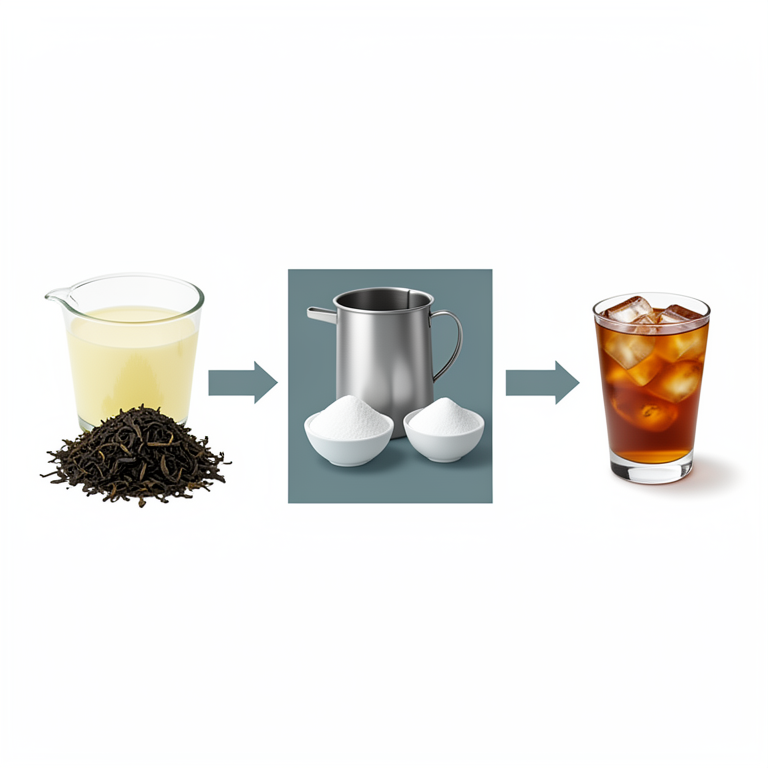
Optimization Process Flow
AI-generated conceptual illustration (paneer whey and tea leaves). It explains the idea and does not show study data.
View source evidence ↗Figures & tables
From the original paper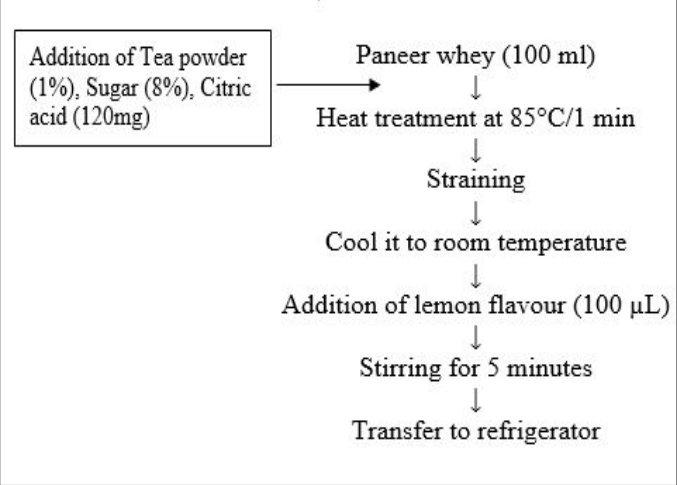 Figure 1
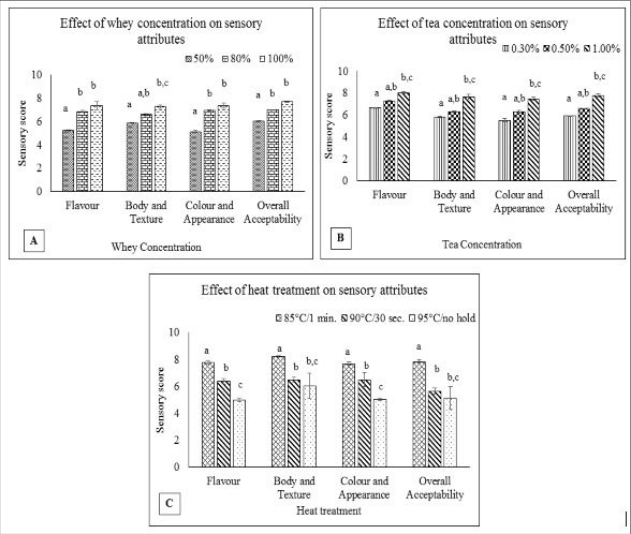 Figure 2
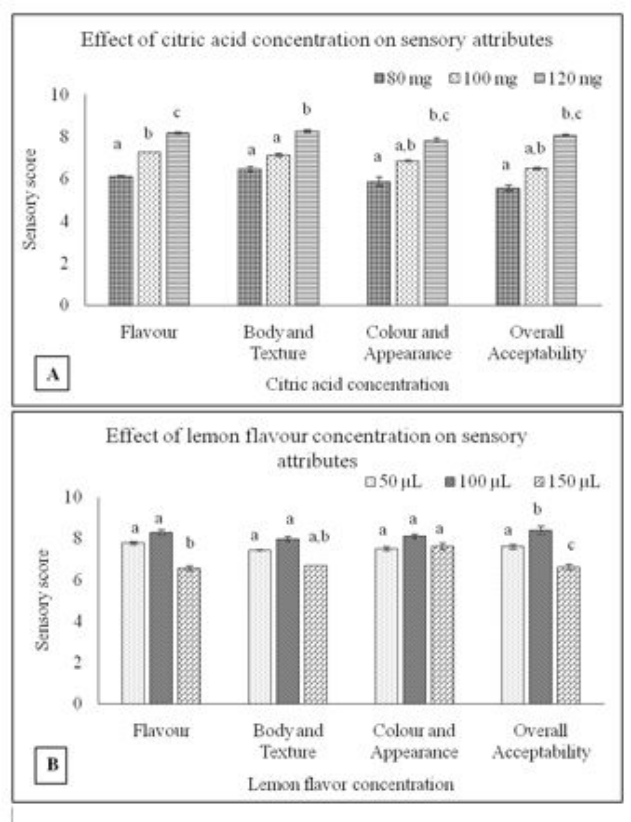 Figure 3
 Table 1
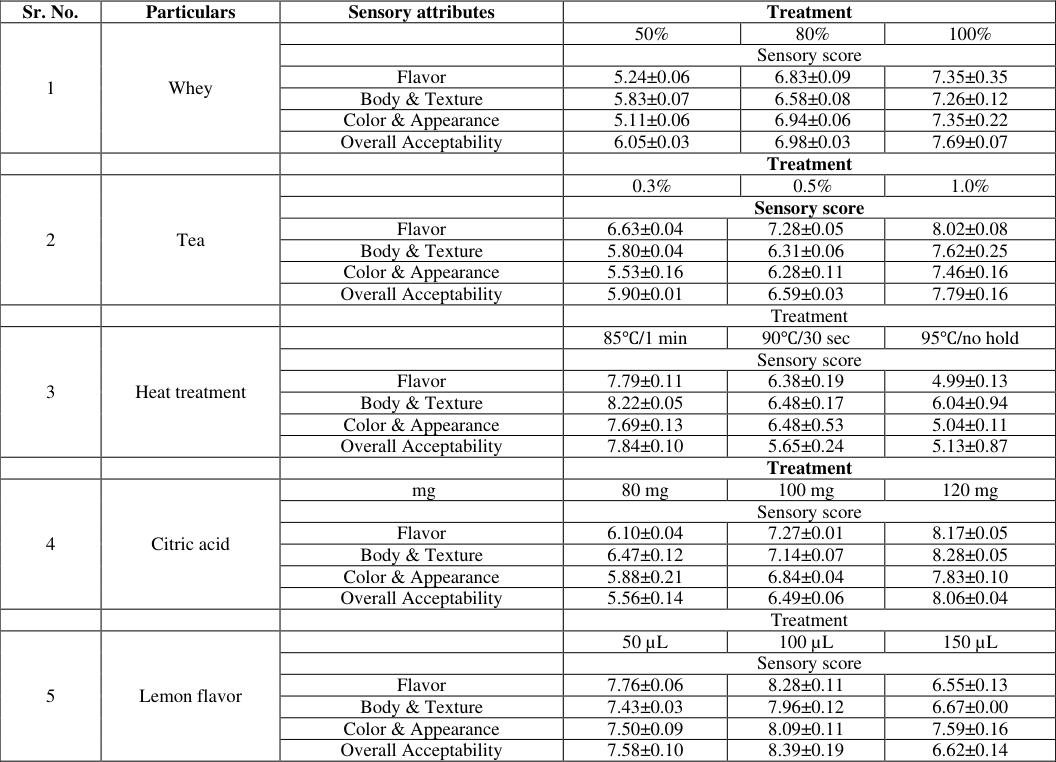 Table 2
Introduction
There has been a great interest in creating new horizons for utilization of dairy and food industry by-products throughout the world. Whey is one the most interesting nutritional byproduct obtained during the production of milk based products like cheese, paneer, chhanna, chakka and casein (Shah and Patel, 2019) [29] . It contains 45-50% of total milk solids, 70% of milk sugars, 20% of milk proteins, 70-90% of milk minerals and almost all water soluble vitamins present in milk. Whey is rich in organic matter; hence it has a very high biological oxygen demand (BOD) and chemical oxygen demand (COD). Whey is also having other issues like as it can lead to corrosiveness and had short shelf life which creates serious difficulty for its disposal (Verma et al., 2024) [36] . By realizing the functional properties of whey, food industries target upon utilizing whey as the functional food ingredient. The annual production of whey is more than 160 million tones, with an estimated growth rate of 1-2% yearly (Das et al., 2016, Verma et al., 2024) [8,36] . Whey protein concentrates, whey protein isolates and whey (Raghavendra et al., 2017; Olivera et al., 2019; Chavan et al., 2020) [22,17,6] . With modern developments and technologies, nowadays whey is becoming a part of the human diet. Tea is well known due to its refreshing taste and antioxidant properties over the globe. Polyphenols are a type of antioxidant found in black tea (Camellia sinensis L.) in form of catechins, theaflavins and thearubigins, and may promote overall health. In addition to their antioxidant activities in tea, catechins and theaflavins could have also pharmacological activities, such as the ability to lower glucose, lipid and uric acid (UA) levels (Peluso and Serafini, 2017) [19] . However, the amount of these antioxidants in tea depends upon origin of tea and its processing technology (Akram et al., 2012; Yi et al., 2015) [1,40] . Black tea is consumed throughout different countries as a second popular beverage after water and ensures that an antioxidant agent available on each day. Hence, our current research project was designed and planned to develop 'whey based iced tea' in which water is replaced with whey.
Materials and Methods
Materials and Methods
Procurement of Raw materials
All the required ingredients including high quality sugar and flavour were purchased from the local market, while raw milk was procured from Dudhsagar Dairy, Mehsana, Gujarat. All the microbiological media were purchased from Hi-Media (Mumbai, India) whereas all the analytical grade chemicals were purchased from Merck (Mumbai, India).
Preparation of Paneer whey, its compositional analysis and paneer whey based iced tea
Paneer whey was prepared as mentioned by Rathi et al., (2015) [25] with few modifications. The pre-heat treated milk (90 ℃) was acidified at 70 ℃ by adding citric acid (2%) and continuously stirred till coagulation of milk casein protein as mentioned. Paneer whey was subjected for analysis of the following compositional parameters such; pH, total solids & moisture, ash content, fat, crude protein and carbohydrate. Total solids (TS) were determined gravimetrically according to the procedure described in IS: 1479 (II) (1961) [13] . Fat content and crude protein were determined as per the procedure given by Yasmin et al., (2015) [39] , whereas ash content of acid whey was estimated by AOAC International (2019) 2 , Official method 940.26. Total carbohydrates were determined by difference (IS (SP: 18 (part XI), 1981b) [13] . The liquid whey was filtered using a muslin cloth. The detailed process is diagrammatically represented in Figure 1.
Optimization of the level of paneer whey
Three different levels of paneer whey i.e. W1 (50%), W2 (80%), and W3 (100%) were taken into remaining part water. The sugar was added @ 8% (Singh et al., 2011) 34 . The most acceptable level as determined by sensory evaluation of the product was selected and further experiments were carried out with the optimized concentration of the paneer whey.
Optimization of the heat treatment
Paneer whey was undergone for different heat treatment e.g. 85 ℃/1 min, 90 ℃/30 sec & 95 ℃/no hold. The most acceptable heat treatment as determined based on sensory evaluation of the product was selected to prepare the optimized product.
Optimization of tea and citric acid concentration
Whey based ice tea was prepared by incorporating tea at 0.3%, 0.5%, & 1% levels and citric acid at 80 mg, 100 mg, and 120 mg levels, respectively. The optimum level of both the ingredients was assessed based on sensory evaluation of the product.
Sensory evaluation
All the samples were evaluated for sensory attributes such as color and appearance, body and texture, flavor, and overall acceptability on a nine-point hedonic scale (9 for liking extremely and 1 for disliking extremely) by the panel of discriminative and experienced expert judges. The products were marked randomly and served in 50ml of sample during each trial.
Microbiological analysis
During microbiological analysis, the suitable dilutions were poured with respective agar media in sterile petridishes in duplicates. Product was analyzed for total plate count on standard plate count agar-SPCA (incubated at 30 C/24-48h in aerobic condition), coliform count on Violet red bile agar-VRBA (incubated at 37 C/24h in aerobic condition), and yeast & mold count on Potato dextrose agar-PDA (incubated at 28 C/5day in aerobic condition) in order to judge the hygienic conditions during the product manufacturing process. The colony forming units (cfu) were counted from the respective plates following incubation under specific time-temperature combinations.
Determination of pH
The pH of paneer whey was determined electrometrically with pH meter by the method as described in IS: SP:18, part XI (1981) [12] . The pH meter was first calibrated using standard buffers of pH 4.0 and 9.2 and standardized using buffer of 7.0 pH at 20.0±0.1ºC. The pH was determined by electronic pH meter, Welltronix, Model PC 100.
Antioxidant activity of product
The antioxidant activity from newly developed product was measured by DPPH [2, 2 diphenyl-1-picrylhydrazyl] assay as described by Shimada et al., (1992) [31] with some modifications. Briefly, 2 mL of the product supernatant from an appropriate dilution, collected after centrifugation at 10,000 g for 30 min, was taken in a test tube and, mixed with 2mL of freshly prepared 0.008% DPPH in 50% ethanol and incubated in dark for 120 min at 37ºC after covering the tube with aluminum foil. The absorbance of the solution was measured at 517 nm against methanol using UV-Visible Spectrophotometer (Shimadzu UV-1800, Japan). The experiment was performed in triplicates and the results were expressed as below; where 'blank' means DPPH solution and PBS without sample. % Scavenging activity = {(A517 nm blank -A517 nm sample) / (A517 nm blank)} × 100
Statistical analysis
All the experiments were carried out in three trials (n=3). All experiments were carried out in triplicate (n=3). The significance was tested at five percent level using ANOVA by SYSTAT (Version 6.0).
Results and Discussion
In a view of healthy & functional beverage, whey based lemon flavor iced tea was formulated. Despite of great nutritional profile of acid whey that lacks in polyphenols content, its incorporation with polyphenols reach black tea would definitely fulfill the aim of current research work by yielding innovative healthy product. Furthermore, the finished product was having 0.6% protein as determined from Kjeldahl method.
Compositional analysis of paneer whey
Freshly prepared whey was determined for chemical composition. The mean value of fat, protein, ash, moisture and lactose demonstrated in Table 1 shows very minute variations between various lots. These values are in line with analysis carried out by Singh et al., (2011) [34] , Perisiriyan et al., (2016) [20] , Raghavendra et al., (2017) [22] and Shende et al., (2022) [30] .
| Sr. No. | Composition | Value (%) |
|---|---|---|
| 1 | Fat | 0.35±0.02 |
| 2 | Protein | 0.78±0.03 |
| 3 | Ash | 0.59±0.02 |
| 4 | Moisture | 93.25±0.03 |
| 5 | Lactose | 5.03±0.03 |
Table text extracted from the original PDF; superscript letters are shown inline. The original table image is below.
View original table image
Optimization of the level of paneer whey
Three different levels of paneer whey i.e. W1 (50%), W2 (80%), and W3 (100%) were taken into remaining part water. As it is evident from Figure 2A and Table 2, the score of all the sensory attributes i.e. flavor, body & texture, color & appearance, overall acceptability increase with increase in percentage of whey. Score for body & texture was found nonsignificant (p>0.05) between 50% and 80% paneer whey concentrate. The low score for treatment W1 followed by W2 indicates weak structural stability of whey when mixed with water. Iced tea prepared with 100% whey shows significantly (p<0.05) higher score of 7.25. This could be correlated with no phase separation which had resulted into smooth consistency of tea at the time of sensory. The observance of rapid phase separation (sedimentation) can be directly correlated with decrease amount of whey proteins; possess water binding properties, in treatment W1 & W2. Flavor score for iced tea prepared using 80% & 100% showed nonsignificant (p>0.05) difference whereas it was differ significantly (p<0.05) when compared to the lowest whey concentrate (50%). However, the highest flavor score (7.35) was achieved for W3 treatment. The least score of 5.24 obtained for treatment W1 could be attributed to the lower intensity of flavor marked by judges due to less interaction between whey solids and synthetic flavor. Furthermore, phase separation of whey and water had probably masked the flavor. Likewise, the color & appearance and overall acceptability score of treatment W2 and W3 was also did not differ significantly, on the other hand, score differs significantly (p<0.05) for both the parameters for treatment W1. Product made with only whey received maximum score of 7.35 and 7.69 for both color & appearance and overall acceptability, respectively. Certainly, product with only whey found significantly (p<0.05) superior for all sensory aspect. Earlier, many research workers, Singh et al., (2011) [34] , Baba et al., (2016) [3] , Satpute et al., (2018) 28 have developed beverages with maximum proportion of paneer whey. Baba and co-workers (2016) [3] have prepared both cheese and paneer whey pineapple beverages and reported significantly overall higher score for all sensory attributes as compared to control. They also marked more suitability of paneer whey than cheese whey for beverage formulations.
| Sr. No. | Particulars | Sensory attributes | Treatment | — | — | — |
|---|---|---|---|---|---|---|
| 1 | Whey | 50% | 80% | 100% | ||
| Sensory score | ||||||
| Flavor | 5.24±0.06 | 6.83±0.09 | 7.35±0.35 | |||
| Body & Texture | 5.83±0.07 | 6.58±0.08 | 7.26±0.12 | |||
| Color & Appearance | 5.11±0.06 | 6.94±0.06 | 7.35±0.22 | |||
| Overall Acceptability | 6.05±0.03 | 6.98±0.03 | 7.69±0.07 | |||
| Treatment | ||||||
| 2 | Tea | 0.3% | 0.5% | 1.0% | ||
| Sensory score | ||||||
| Flavor | 6.63±0.04 | 7.28±0.05 | 8.02±0.08 | |||
| Body & Texture | 5.80±0.04 | 6.31±0.06 | 7.62±0.25 | |||
| Color & Appearance | 5.53±0.16 | 6.28±0.11 | 7.46±0.16 | |||
| Overall Acceptability | 5.90±0.01 | 6.59±0.03 | 7.79±0.16 | |||
| Treatment | ||||||
| 3 | Heat treatment | 85℃/1 min | 90℃/30 sec | 95℃/no hold | ||
| Sensory score | ||||||
| Flavor | 7.79±0.11 | 6.38±0.19 | 4.99±0.13 | |||
| Body & Texture | 8.22±0.05 | 6.48±0.17 | 6.04±0.94 | |||
| Color & Appearance | 7.69±0.13 | 6.48±0.53 | 5.04±0.11 | |||
| Overall Acceptability | 7.84±0.10 | 5.65±0.24 | 5.13±0.87 | |||
| Treatment | ||||||
| 4 | Citric acid | mg | 80 mg | 100 mg | 120 mg | |
| Sensory score | ||||||
| Flavor | 6.10±0.04 | 7.27±0.01 | 8.17±0.05 | |||
| Body & Texture | 6.47±0.12 | 7.14±0.07 | 8.28±0.05 | |||
| Color & Appearance | 5.88±0.21 | 6.84±0.04 | 7.83±0.10 | |||
| Overall Acceptability | 5.56±0.14 | 6.49±0.06 | 8.06±0.04 | |||
| Treatment | ||||||
| 5 | Lemon flavor | 50 µL | 100 µL | 150 µL | ||
| Sensory score | ||||||
| Flavor | 7.76±0.06 | 8.28±0.11 | 6.55±0.13 | |||
| Body & Texture | 7.43±0.03 | 7.96±0.12 | 6.67±0.00 | |||
| Color & Appearance | 7.50±0.09 | 8.09±0.11 | 7.59±0.16 | |||
| Overall Acceptability | 7.58±0.10 | 8.39±0.19 | 6.62±0.14 |
Table text extracted from the original PDF; superscript letters are shown inline. The original table image is below.
View original table image
Optimization of Tea concentration for product
The result of incorporation of tea on sensory attributes is shown in Table 2. Tea prepared with 1% black tea was liked the most by judges as it has received significantly (p<0.05) higher score of 8.01 due to its balanced aroma. Similarly, Perasiriyan et al., (2013) [20] also noticed that overall acceptability score of whey based herbal drink with 1% black tea was > 8.0. Non-significant difference (p>0.05) for treatment T 1 & T 2 revealed that judges did not perceive any remarkable effect of black tea addition rate on sensory parameters of product. It is very well co-inside with the finding of Perasiriyan and co-workers (2013) [20] . The possible explanation belongs to complexes formed due to interaction of whey protein with available low amount of polyphenols in black tea might be responsible for masking the typical flavor of tea. Incorporation of Tea @ 1% (T 3 ) had obtained significantly (p<0.05) higher scores for overall acceptability followed by 0.5% (T 1 ) and 0.3% (T 1 ). As it is seen from Figure 2B, non-significant difference was observed between treatment T 1 & T 2 as well as treatment T 2 & T 3 for each sensory parameter.
Optimization of heat treatment
The heat treatment results into deproteinization whey or denaturation of whey protein (Keheller et al., 2018; Baba et al., 2016) [16,3] . It involves physico-chemical reactions between different molecules e.g. lysine and lactose which contributes typical flavor in whey. Heating of whey produces several reversible and irreversible reactions. Heat treatment was found to have a direct impact on acceptability of product (Table 2). Therefore, significant (p<0.05) difference was found between H1 (85℃/1 min) and H3 (95℃/no hold) for all the parameters as illustrated in Figure 2C. The maximum body & texture score (8.22) was obtained with minimally heat treated whey. The results are in line with Singh and coworkers (2011) [34] who reported the highest overall acceptability score for lemon based whey beverage heat treated at 90℃/2 min than heat treated at 5 psi/5 min. The probable reasons are; product encountered with higher percentage of aggregated particles, production of cooked flavor (Kelleher et al., 2018; Singh et al., 2011) [16,34] , visually identified color changes associated with particle size (Kelleher et al., 2018) [16] and slightly bitter taste. Development of cooked flavor is attributed to increase level of various sulphur compounds in whey when heated indirectly (Kelleher et al., 2018) [16] . In case of flavor and color & appearance, score of each product varied significantly (p<0.05). The results are in accordance with Singh et al., (2011) [34] . They also reported the highest sensory scores for lemon based whey beverage heat treated at 90℃/2 min compared to 5 psi/5 min.
Optimization of citric acid
Citric acid is generally used as preservative in variety of food products. It gives the mild sourness upon addition in whey by slightly lowering the pH. Such phenomenon helps in boosting the acceptance of product. The most significant (p<0.05) effect of citric acid incorporation was seen on flavor score of product (Figure 3A). An average overall acceptability score (8.05) for treatment C3 (120 mg) differ significantly (p<0.05) compared to other treatments. The preference for C3 by judges was due to its optimum astringency and tanginess. Singh et al., (2011) [34] have used citric acid solution for adjusting final pH (3.8) of lemon based hydrolyzed whey beverage probably to enhance the sensory characteristics as well as shelf life of the product.
Optimization of lemon flavor
To make the product more appealing, synthetic lemon flavor were added to the mixture of whey and black tea after cooling it to room temperature (Rivero et al., 2020) [26] . The overall acceptability score was ranging from 6.62 to 8.38 (Table 2). Judges commented that the higher addition rate of lemon flavor was striking sharply with little bitter after taste whereas; flavor with low addition rate was not easily detectable in the product. The synthetic lemon flavor @ 100 µL was found to give optimum aroma in the product. In another study conducted by Singh et al., (2011) [34] , the addition rate (0.1-0.2%) of synthetic lemon flavor was optimized through central composite rotatable design matrix. They have also found the optimum level @ 0.1%. An average overall acceptability score (8.05) for treatment C3 (120 mg) differ significantly (p<0.05) compared to other treatments (Figure 3B). The preference for C3 by judges was due to optimum astringency and tanginess.
Changes in pH
The initial pH of whey, i.e. 5.33±0.04 was found in close proximity of earlier research work performed by Raghavendra et al., (2017) [22] . This value remained almost unchanged in all treatment except citric acid. Incorporation of citric acid at 80, 100 & 120 mg in whey further lowers the pH of product to 5.02±0.02, 4.97±0.01 & 4.91±0.02, respectively.
Microbiological analysis
Usually heat treatment is designed to kill all pathogenic microbes including few spoilage causing bacterial groups in order to provide safe and stable product. The microbiological assessment of product revealed absence of total bacterial count, coliform count and Yeast & Mold count indicating the acceptable quality and the good hygienic condition during preparation of product. Rather et al., (2024) [24] also reported no development of colonies for total plate count and yeast & mold count in freshly prepared soy whey fortified pineapple juice beverage. Conversely, Singh and co-workers (2011) [34] found presence of total plate count in freshly prepared beverage which was increased significantly (p<0.05) during 40 days' storage at refrigeration temperature. Moreover, the percentage of whey also greatly affected the count of bacteria. However, product was safe for consumption as the microbial load did not cross the safety level.
Antioxidant activity
The antioxidant activity of fresh product was measured using the most frequent DPPH method. The product showed the antioxidant activity of 25.45±0.80. The antioxidant value achieved in present study is still considered to be potent while comparing percentage of whey used by Sady et al., (2013) [27] and Baba et al., (2016) [3] . Experiment conducted by earlier group showed antioxidant activity of 10.9 (µmol of TE/mL) for 50% whey based orange beverage whereas latter group obtained a 44% scavenging activity for beverage prepared with 30% paneer whey based pineapple beverage. However, due to poor candidature of whey as an antioxidant and interaction between protein and polyphenolic compounds found responsible for decreased antioxidant activity compared to control (Baba et al., 2016) [3] . Maillard reaction products of whey protein and lactose show less antioxidant activity than products of whey protein and xylose (Wang et al., 2013) [37] .
Figures and tables from the paper
References
40 in the original paper- Akram S, Amir RM, Nadeem M, Sattar MU, Faiz F. Antioxidant potential of black tea (Camellia sinensis L.)- A review. Pak J Food Sci. 2012;22(3):128-132.
- AOAC International. Official Methods of Analysis. 21st ed. Gaithersburg: AOAC; 2019. Method 940.926.
- Baba WN, Din S, Punoo HA, Wani TA, Ahmad M, Masoodi FA. Comparison of cheese and paneer whey for production of a functional pineapple beverage: Nutraceutical properties and shelf life. J Food Sci Technol. 2016;53:2558-2568.
- Babar RB, Salunkhe DD, Chavan KD, Thakare VM. Utilization of pomegranate juice for the preparation of chakka whey beverage. J Dairying Foods Homesci. 2008;27(2):87-93.
- Chavan R, Nalawade T, Kumar A. Studies on the development of whey based mango beverage. Food Dairy Technol. 2015;3:1-6.
- Chavan DS, Lokhande SM, Patange DD, Ranveer RC, Sahoo AK. Utilization of dairy by-product for the development of whey ice candy. Eur J Nutr Food Saf. 2020;12(5):48-59. DOI:10.9734/ejnfs/2020/v12i530227 International Journal of Agriculture and Food Science https://www.agriculturaljournals.com
- David J, Kumar P. Utilization of chhana whey for preparation of vegetable soup. Trends Biosci. 2014;7(5):341-342.
- Das B, Sarkar S, Sarkar A, Bhattacharjee S, Bhattacharjee C. Recovery of whey proteins and lactose from dairy waste: a step towards green waste management. Process Saf Environ Prot. 2016;101:27-33.
- Gandhi K, Gautam PB, Sharma R, Mann B, Kumar K. Effect of incorporation of iron-whey protein concentrate (Fe-WPC) conjugate on physicochemical characteristics of dahi (curd). J Food Sci Technol. 2022;1-10.
- Goyal N, Gandhi DN. Comparative analysis of Indian paneer and cheese whey for electrolyte whey drink. World J Dairy Food Sci. 2009;4(1):70-72.
- Gupta M, Yadav MPS, Chauhan AS, Verma R. Physicochemical qualities of papaya pulp based whey beverage. Int J Pure Appl Biosci. 2017;5(4):341-345.
- Indian Standards Institution. IS: SP:18 (Part XI). Handbook of food analysis. New Delhi: Indian Standards Institution; 1981.
- Indian Standards Institution. IS:1479 (Part-II). Methods of testing for dairy industry: Rapid examination of milk. New Delhi: Indian Standards Institution; 1961.
- Kakan AV, Changade SP, Shaikh A, Suvartan R. Effect of different levels of paneer whey on physico-chemical and microbial characteristics of milk bread. Int J Chem Stud. 2018;6(1):545-555.
- Kamble N, Puranik DB, Salooja MK. Preparation of probiotic guduchi whey beverage. Int J Sci Environ Technol. 2017;6:2258-70.
- Kelleher MC, O'Mahony AJ, Kelly LA, O'Callaghan JD, Kilcawley NK, McCarthy AN. The effect of direct and indirect heat treatment on the attributes of whey protein beverages. Int Dairy J. 2018;85:144-152.
- Oliveira DR, Lopes ACA, Pereira RA, Cardoso PG, Duarte WF. Selection of potentially probiotic *Kluyveromyces lactis* for the fermentation of cheese whey-based beverage. Ann Microbiol. 2019;69(13):1361-1372.
- Patel R. Technology for carbonated lemon whey beverage. Res Rev J Food Dairy Technol. 2017;5:30-7.
- Peluso I, Serafini M. Antioxidants from black and green tea: From dietary modulation of oxidative stress to pharmacological mechanisms. Br J Pharmacol. 2017;174(11):1195-208.
- Perasiriyan V, Chandrakala S, Sivakumar T. Whey based herbal drink evaluation as health supplement. Int J Food Agri Vet Sci. 2013;3(2):58-62.
- Rai DC, Kumar M, Patel PR, Upadhyay A. Development of value added vegetable soup by adding paneer whey. Veg Sci. 2014;41(1):16-18.
- Raghavendra S, Nagarj V, Nath BS, Puspadass HA. Utilization of concentrated paneer whey in the preparation of dahi. Indian J Dairy Sci. 2017;70(6):720725.
- Raj PAA, Radha K, Vijayalakshmi M, Pavulraj S, Anuradha P. Study on the utilization of paneer whey as functional ingredient for papaya jam. Ital J Food Sci. 2017;29:171-185.
- Rather JA, Punoo HA, Akhter A, Muzzaffa A, Khanday FA, Goksen G. Effect of storage on the physicochemical, rheological, antioxidant activity, and sensory properties of soy whey-fortified pineapple juice beverages. Food Sci Nutr. 2024;12:5858-5874.
- Rathi M, Upadhyay N, Dabur RS, Goyal A. Formulation and physicochemical analysis of whey-soymilk dahi. J Food Sci Technol. 2015;52:968-975.
- Rivero RC, Morel C, Sosa N. Development of a beverage based on citric juice with the addition of whey. Braz J Food Technol. 2020;23:e2018191. DOI:10.1590/19816723.19118
- Sady M, Jaworska G, Grega T, Bernas E, Domagal J. Application of acid whey in orange drink production. Food Technol Biotechnol. 2013;51:266-277.
- Satpute D, Padghan P, Gore S, Patil Y. Studies on preparation of herbal whey based beverage by using menthol. Int J Chem Stud. 2018;6(2):188-195.
- Shah NP, Patel AR. Prospective utilization of valuable dairy by-product: whey. Ann Food Sci Technol. 2019;20(2):260-267.
- Shende V, Khamrui K, Prasad W, Wani AD, Hussain SA. Preparation of whey based savory beverage with enhanced bio-accessible zinc. J Food Sci Technol. 2022;59(11):4288-96. doi:10.1007/s13197-022-05497-y
- Shimada K, Fujikawa K, Yahara K, Nakamura T. Antioxidative properties of xanthan on the autoxidation of soybean oil in cyclodextrin emulsion. J Agric Food Chem. 1992;40:945-948.
- Siddique F, Hussain A, Noreen S, Arif MR, Yaqub S, Batool SA, et al. Impact of different processing techniques (chemical, heating and sonication) on physicochemical and microbial characterization of kinnow-whey based beverage. Discov Food. 2023;3(1):18. doi:10.1007/s44187-023-00060-w
- Silva e Alves AT, Spadoti LM, Zacarchenco PB, Trento FKHS. Probiotic functional carbonated whey beverages: development and quality evaluation. Beverages. 2018;4(3):49. doi:10.3390/beverages4030049
- Singh S, Khemariya P, Rai A. Process optimization for the manufacture of lemon based beverage from hydrolyzed whey. J Food Sci Technol. 2011;51(4):691699. doi:10.1007/s13197-011-0563-1
- Thakkar P, Vaghela B, Patel A, Modi HA, Prajapati JB. Formulation and shelf life study of a whey-based functional beverage containing orange juice and probiotic organisms. Int Food Res J. 2017;25(4):16861692.
- Verma DK, Patel AR, Tripathy S, Gupta AK, Singh S, Shah N, et al. Processing and formulation technology of nutritional and functional food products by utilizing cheese and/or paneer whey: A critical review. J King Saud Univ Sci. 2024;36:103508.
- Wang WQ, Bao YH, Chen Y. Characteristics and antioxidant activity of water-soluble Maillard reaction products from interactions in a whey protein isolate and sugars system. Food Chem. 2013;139(1-4):355-361. DOI:10.1016/j.foodchem.2013.01.072
- Wasnik PK. A study on physico-chemical and microbial quality of pectin-paneer whey jelly. Int J Trop Agric. 2016;34(2):283-287.
- Yasmin A, Butt MS, Yasin M, Qaisrani TB. Compositional analysis of developed whey based fructooligosaccharides supplemented low-calorie drink. J Food Sci Technol. 2015;52(3):1849-1856. doi:10.1007/s13197-014-1535-z
- Yi T, Zhu L, Peng WL, He XC, Chen HL, Li J, et al. Comparison of ten major constituents in seven types of processed tea using HPLC-DAD-MS followed by principal component and hierarchical cluster analysis. LWT-Food Sci Technol. 2015;62:194-201.
Cited by 1
From OpenAlex, OpenCitations and reference lists read by Scinovex
- Process standardization for development of herbal buttermilk supplemented with Aloe vera juice
Ami R. Patel, Nihir Shah, Himanshu J. Patel, Anil R. Chaudhari, Vivek Koshta · International Journal of Agriculture and Food Science · 2025
Cultured buttermilk is a highly refreshing fermented dairy product consumed in regular diet and is claimed to be aid in to digestion, reduces acidity and constipation while Aloe vera is known for several herbal benefits. In our current project, buttermilk was fortified with Aloe vera juice in the range 10-20% in order to enhance the nutritional and therapeutic value of original product. The product was optimized based on sensory evaluation by expert panel of judges. The overall acceptability score of optimized product (15% Aloe vera) was 7.85. It also differs non-significantly with control sam