
Research article · 2025 · Full text
International Journal of Agriculture and Food ScienceComprehensive study of nutritional, antinutritional, and value-addition aspects of Flacourtia indica (Burm.f.) Merr.
Volume 7(4) · Pages 20–25 · DOI: 10.33545/2664844x.2025.v7.i4a.329 ↗
Research areasPlant-Derived Bioactive CompoundsBotanical Research and ApplicationsBotany, Ecology, and Taxonomy Studies
Abstract
Author-writtenThe study explores the nutritional and antinutritional properties of Flacourtia indica (Burm.f.) Merr., emphasizing its potential as a functional food source and its applicability in value-added products. Nutritional analysis revealed that raw fruit possesses a calorific value of 224.28 Kcal per 100 g, primarily derived from carbohydrates (49.77 g/100 g) and moderate protein content (3.69 g/100 g). The fruit is rich in essential minerals, including calcium (3715 mg/kg), sodium (32180 mg/kg), potassium (182.19 mg/kg), and iron (68.2 mg/kg), along with notable levels of Vitamin C (3.21 g/100 g). Its low-fat content (1.16 g/100 g) and high moisture content (43.17 g/100 g) enhance its dietary appeal but pose challenges to shelf life. Antinutritional analysis identified compounds such as tannins (163.23 mg/100 g), oxalates (21.82 mg/100 g), and phytates (4.49 mg/100 g), which may reduce nutrient bioavailability but can be mitigated through appropriate processing methods. Value-added products, including jam and jelly, demonstrated improved shelf life and convenience. The jam exhibited a calorific value of 322.29 Kcal per 100 g, with high carbohydrate (78.61 g/100 g) and sugar content (11.66 g/100 g), while the jelly provided 336.87 Kcal per 100 g, with carbohydrates at 82.26 g/100 g and sugars at 12.11 g/100 g. Both products serve as energy-dense options but lack crude fiber, necessitating moderate consumption. This study highlights the nutritional potential of Flacourtia indica and its processed derivatives, suggesting its role in addressing food security in rural and tribal communities while emphasizing the need for further research to optimize its nutritional benefits and mitigate antinutritional factors.
Summary
Source-checkedPlain-language reading of the full paper, prepared with AI and checked against the text. Each point links to the authors' own words.
Why it matters
- Wild edible fruits from biodiverse forest ecosystems are important for the nutritional and economic health of rural and indigenous populations. View evidence ↗
- Flacourtia indica is an underutilized fruit because it browns quickly and has a short shelf life in humid and hot conditions. View evidence ↗
- Post-harvest losses in India affect approximately 30-40% of fruits, resulting in substantial nutritional and economic deficits. View evidence ↗
The question
- The study aims to investigate the nutritional, medicinal, and ecological importance of Flacourtia indica, as well as its potential for value addition and the challenges to its commercialization. View evidence ↗
What they did
- The nutritional analysis of the raw fruit followed standard protocols from the Food Safety and Standards Authority of India (FSSAI). View evidence ↗
- Antinutritional factors in the raw fruit were also assessed using FSSAI standard protocols. View evidence ↗
- The researchers explored value addition by processing the fruit into jam and jelly. View evidence ↗
What they found
- Raw Flacourtia indica fruit has a calorific value of 224.28 Kcal per 100 g. View evidence ↗
- The raw fruit contains 49.77 g of total carbohydrates per 100 g, with 6.28 g of that being total sugars. View evidence ↗
- The protein content of the raw fruit is 3.69 g per 100 g. View evidence ↗
- The raw fruit contains 3.21 g of Vitamin C per 100 g. View evidence ↗
- Antinutritional analysis found tannins (163.23 mg/100 g) and saponins (5.842 mg/100 g), which may interfere with protein digestion. View evidence ↗
- Both jam and jelly lack crude fiber and have high sugar content, meaning they should be consumed in moderation. View evidence ↗
What it means
- The authors conclude that Flacourtia indica is a nutritious and versatile fruit that can support economic development and food security in rural and tribal regions. View evidence ↗
- Future work is needed to improve storage techniques for longer shelf life, reduce antinutritional compounds, and develop more value-added products. View evidence ↗
Visual summary
1 visualsIllustrations explain the paper; they do not show study data.
Value Addition Workflow
AI-generated conceptual illustration (Flacourtia indica fruits). It explains the idea and does not show study data.
View source evidence ↗Figures & tables
From the original paper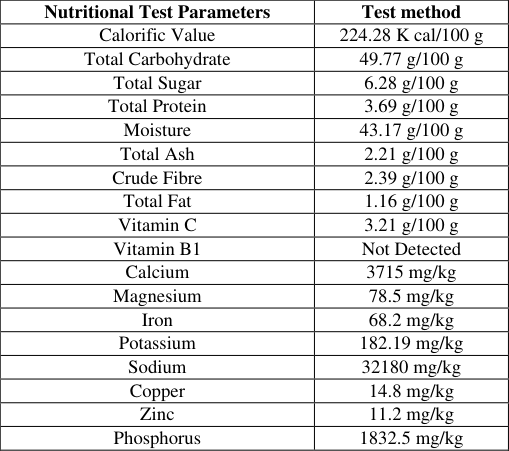 Table 1
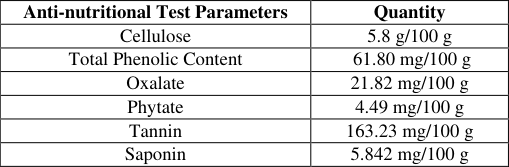 Table 2
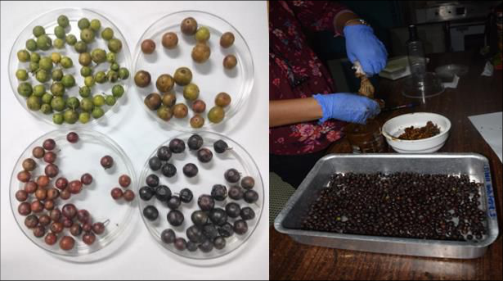 Figure 1
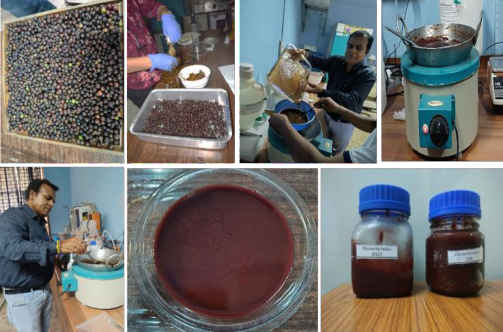 Figure 2
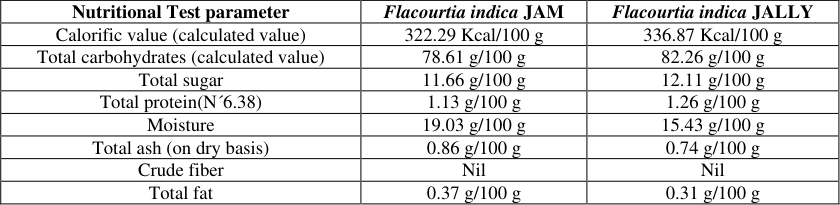 Table 3
Introduction
Plants have been central to human survival for millennia, providing sustenance, medicine, and economic security. Forest ecosystems, which are rich in biodiversity, are particularly crucial in this regard, offering resources like wild edible fruits that contribute to the nutritional and economic well-being of indigenous and rural communities (Rabiei et al., 2022) [19] . These fruits are often nutrient-dense, containing bioactive compounds that help combat malnutrition and prevent chronic diseases, such as cardiovascular disorders (Howes & Simmonds, 2014; Arruda et al., 2017) [11,2] . For instance, fruits like Capparis mitchelii and Flacourtia jangomas are renowned for their high vitamin C content, which supports immune health (Biswas et al., 2022) [6] . The utilization of wild edible fruits not only plays a critical role in enhancing nutrition but also in combating food insecurity and improving public health. As global concerns over food insecurity and lifestyle diseases intensify, integrating wild plant-based foods into diets has emerged as a promising strategy, particularly in resource-constrained regions (Koffi et al., 2020; FAO, 2019) [13,10] . Wild edible fruits often surpass their cultivated counterparts in nutritional value, being rich in proteins, vitamins, minerals, and phenolic compounds (Bhutia et al., 2018) [5] . Their consumption has been linked to a reduced risk of non-communicable diseases, further emphasizing their importance in addressing public health challenges (Koffi et al., 2020) [13] . In rural and tribal communities, these fruits provide essential nutrition and present significant incomegeneration opportunities, which can contribute to local economic development. This directly contributes to achieving SDG 2 (Zero Hunger) and SDG 3 (Good Health and Well-being). Despite their potential, the broader utilization of wild edible fruits faces several barriers. These include limited consumer awareness, weak market demand, post-harvest losses, and insufficient research on their properties and applications. In India, nearly 30-40% of fruits are lost post-harvest, leading to significant economic and nutritional losses (Patil et al., 2013) [8] . Although India is the world's second-largest fruit producer, less than 2% of its fruit yield is processed, highlighting untapped potential for value addition through products like jams, jellies, and fruit bars (Patil et al., 2013) [8] . These value-added products could enhance food security while providing sustainable livelihoods for marginalized communities, supporting SDG 1 (No Poverty) and SDG 12 (Responsible Consumption and Production). Among the many underutilized wild edible fruits, Flacourtia indica (Burm.f.) Merr., commonly known as Indian plum or Kakai, holds significant promise. Native to the tropical and subtropical regions of India, this medium-sized tree from the Flacourtiaceae family is characterized by sharp spines, a spreading canopy, and dark green leaves. Its fruits, which range from red to dark purple, are nutrient-rich, containing ascorbic acid, β-carotene, calcium, magnesium, and iron.
Additionally, the fruits are a potent source of anthocyanins, bioactive compounds known for their strong antioxidant properties (Dubey & Pandey, 2013) [9] . Despite its nutritional benefits, Flacourtia indica remains underutilized due to challenges such as its short shelf life and susceptibility to browning during storage under high humidity and temperature conditions (Kota et al., 2012) [14] .
Material and Methodology
Fruit Collection and Preparation: The seasonal growth cycle of Flacourtia indica is marked by leaf shedding in early winter (December or January) and the emergence of new foliage in March, characterized by vibrant pink to red hues. Flowering occurs between January and March, preceding leaf development, while fruit ripening takes place from March to June over 60-80 days. Fruits pass through three distinct stages: immature (green), mature (purplegreen), and ripe (dark purple). The ripe fruits, which are a vital food source for birds aiding seed dispersal, are harvested carefully due to the sharp spines on branches. After collection, mature fruits are immediately sorted for seed extraction, while immature fruits are ripened in a shaded area with proper air circulation for 1-2 weeks. Any underdeveloped or infected fruits or seeds are discarded.
The seeds are extracted by cutting the fruit in half or at the outer end, followed by sieving the seed-pulp mixture (Fig. 1). The separated pulp is then utilized for preparing valueadded products.
Nutritional Value Analysis:
The nutritional composition of Flacourtia indica raw fruit was evaluated using standard protocols prescribed by the Food Safety and Standards Authority of India (FSSAI). The calorific value and total carbohydrate content were determined using the EBRS/CHEM/NV/01:2023 method. The total sugar content was analyzed following IS 2650:1975 (RA 2020), and total protein content was measured using IS 7219:1973 (RA 2020). Moisture content was assessed based on IS 1011:2002 (RA 2019), while total ash, crude fiber, and total fat were analyzed using IS 12711:1989 (RA 2020). Vitamin C content was quantified using IS 838:1970 (RA 2005), and Vitamin B1 content was determined using IS 5398:1969 (RA 2020). Additionally, essential minerals, including calcium, magnesium, iron, potassium, sodium, copper, zinc, and phosphorus, were analyzed using methods described in the FSSAI Manual of Methods of Analysis of Foods for metals. These analyses provide a comprehensive understanding of the fruit's rich nutritional profile.
Antinutritional Analysis:
The antinutritional factors present in Flacourtia indica raw fruit were evaluated using standard protocols prescribed by the Food Safety and Standards Authority of India (FSSAI) to understand their impact on nutritional bioavailability. Cellulose content was analyzed using the EBRS/SOP/CHEM/27 protocol, while the levels of total phenolic content, oxalate, phytate, tannins, and saponins were determined following the EBRS/SOP/CHEM/30 protocol. These analyses are essential for assessing the potential effects of antinutritional components on the consumption and utilization of the fruit's nutrients, helping to gauge its suitability for dietary applications.
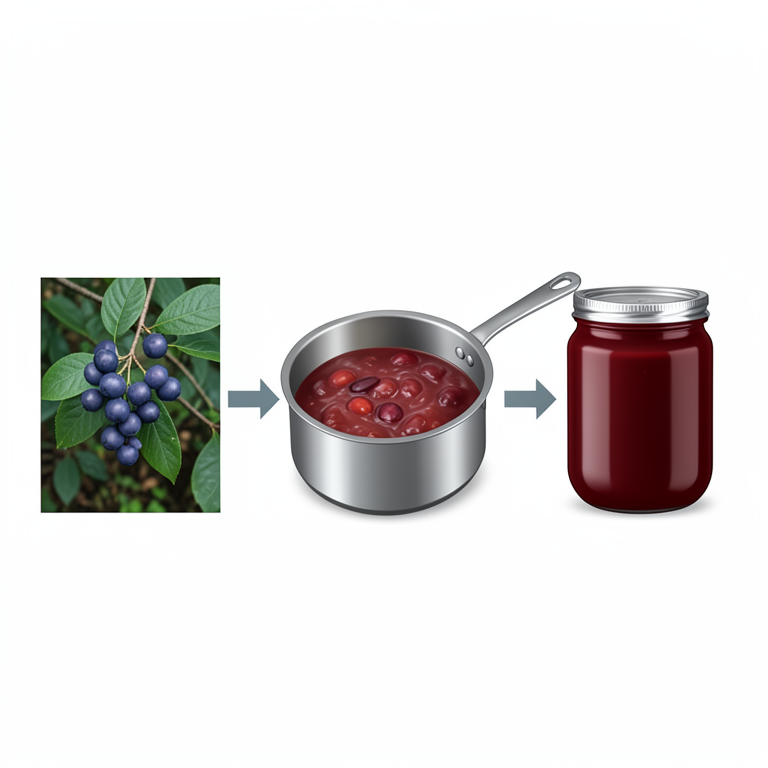
Value Addition: Value addition was explored by converting Flacourtia indica fruits into jam and jelly, demonstrating their versatility and economic potential. For jam preparation, the fruits were washed thoroughly, and the pulp was separated from the seeds. The pulp was cooked with sugar over low heat until dissolved and boiled, after which lemon syrup and food color were added. The mixture was further cooked until it thickened, and powdered green cardamom was incorporated for flavor. Once cooled, the jam was stored in airtight jars, making it suitable as a spread or dessert accompaniment. Similarly, for jelly preparation, the pulp was cooked with sugar until dissolved and boiled, followed by the addition of lemon syrup, food color, and corn starch dissolved in water. The mixture was stirred until it thickened, and powdered green cardamom was added for fragrance. The mixture was poured into a mold and cooled for 6-8 hours before being cut into small pieces, coated in powdered sugar, and stored in airtight jars. These valueadded products enhance the usability and marketability of the fruit.
Nutritional Analysis of Value-Added Products:
The nutritional composition of Flacourtia indica jam and jelly was analysed using standard protocols prescribed by the Food Safety and Standards Authority of India (FSSAI) to determine their quality and health benefits. The calorific value and total carbohydrate content were measured using the EBRS/CHEM/NV/01:2023 method, while total sugar content was evaluated using IS 2650:1975 (RA 2020). The total protein content (N×6.38) was determined based on IS 7219:1973 (RA 2020), and moisture content was assessed using IS 4624:1978 (RA 2018). Total ash and crude fiber were analyzed as per IS 10226 (Part-I):1982 (RA 2020), and total fat content was determined using IS 4684:1975 (RA 2020). These analyses provide valuable insights into the nutritional value of processed Flacourtia indica products, highlighting their potential as healthy and flavorful food options.
Results
Results
Nutritional Composition:
The nutritional analysis of Flacourtia indica raw fruit highlights its potential as a nutrient-rich food source. The calorific value of the fruit was found to be 224.28 Kcal per 100 g, making it a moderate energy-dense food. This energy value is primarily derived from its carbohydrate content, which was measured at 49.77 g per 100 g, including 6.28 g of total sugars. This carbohydrate profile suggests that the fruit could serve as a valuable energy source, particularly in rural and tribal communities where food security is a concern. The protein content of Flacourtia indica was found to be 3.69 g per 100 g, offering a moderate protein source that can contribute to the dietary needs of individuals in these communities. Additionally, the fruit has a relatively low fat content (1.16 g per 100 g), which is beneficial for maintaining a balanced diet. The moisture content of 43.17 g per 100 g indicates that the fruit has a high water content, contributing to hydration but also impacting its shelf life, which is a known challenge for Flacourtia indica. The presence of essential vitamins and minerals further adds to the nutritional value of the fruit. Vitamin C was found to be 3.21 g per 100 g, offering antioxidant properties that support immune function. The fruit is particularly rich in calcium (3715 mg/kg), sodium (32180 mg/kg), and potassium (182.19 mg/kg), making it a valuable source of minerals critical for bone health, electrolyte balance, and overall metabolic functions. Additionally, significant amounts of magnesium (78.5 mg/kg), iron (68.2 mg/kg), and phosphorus (1832.5 mg/kg) further enhance its potential as a functional food with health benefits (Table 1).
| Nutritional Test Parameters | Test method |
|---|---|
| Calorific Value | 224.28 K cal/100 g |
| Total Carbohydrate | 49.77 g/100 g |
| Total Sugar | 6.28 g/100 g |
| Total Protein | 3.69 g/100 g |
| Moisture | 43.17 g/100 g |
| Total Ash | 2.21 g/100 g |
| Crude Fibre | 2.39 g/100 g |
| Total Fat | 1.16 g/100 g |
| Vitamin C | 3.21 g/100 g |
| Vitamin B1 | Not Detected |
| Calcium | 3715 mg/kg |
| Magnesium | 78.5 mg/kg |
| Iron | 68.2 mg/kg |
| Potassium | 182.19 mg/kg |
| Sodium | 32180 mg/kg |
| Copper | 14.8 mg/kg |
| Zinc | 11.2 mg/kg |
| Phosphorus | 1832.5 mg/kg |
Table text extracted from the original PDF; superscript letters are shown inline. The original table image is below.
View original table image
Antinutritional Profile:
The antinutritional analysis revealed the presence of compounds that could influence the bioavailability of nutrients. The fruit contains cellulose (5.8 g per 100 g), which contributes to dietary fiber but may also affect the digestibility of other nutrients. The phenolic content (61.80 mg per 100 g) is beneficial for its antioxidant properties but can also inhibit the absorption of proteins and minerals. Similarly, oxalate (21.82 mg per 100 g) and phytate (4.49 mg per 100 g) may reduce the bioavailability of essential minerals such as calcium and iron, potentially limiting their nutritional benefits when consumed in large quantities. Tannins (163.23 mg per 100 g) and saponins (5.842 mg per 100 g) present in the fruit can also interfere with protein digestion and enzyme activity, although they may also possess therapeutic properties depending on their concentration (Table 2). While the presence of these antinutritional factors is a concern, their levels are not excessively high, and they may be mitigated through proper processing methods. This highlights the need for further research on the impact of these factors on human health and the development of effective techniques to reduce their negative effects during fruit processing.
| Anti-nutritional Test Parameters | Quantity |
|---|---|
| Cellulose | 5.8 g/100 g |
| Total Phenolic Content | 61.80 mg/100 g |
| Oxalate | 21.82 mg/100 g |
| Phytate | 4.49 mg/100 g |
| Tannin | 163.23 mg/100 g |
| Saponin | 5.842 mg/100 g |
Table text extracted from the original PDF; superscript letters are shown inline. The original table image is below.
View original table image
Nutritional Composition of Value-Added Products
The value-added products-jam and jelly-derived from Flacourtia indica raw fruit exhibited distinct nutritional profiles (Figure 2 & Table 3). The jam, with a calorific value of 322.29 Kcal per 100 g, was found to have a high carbohydrate content (78.61 g per 100 g), of which 11.66 g is sugar. While this makes the jam a calorie-dense product, its nutritional benefits are concentrated in its energy provision, albeit with minimal protein (1.13 g per 100 g) and fat (0.37 g per 100 g). The jelly, similarly calorie-dense at 336.87 Kcal per 100 g, has an even higher carbohydrate content (82.26 g per 100 g) and sugar content (12.11 g per 100 g), making it a highly concentrated energy source. Both products, while providing an easy-to-consume form of the fruit, should be consumed in moderation due to their high sugar content and lack of crude fiber. The nutritional profiles of these value-added products show the fruit's potential for creating products with extended shelf life, which is essential for overcoming the storage limitations of fresh Flacourtia indica fruit. By transforming the fruit into jam and jelly, its shelf life is significantly improved, making it accessible for consumption over extended periods and beyond the traditional production season.
| Nutritional Test parameter | Flacourtia indica JAM | Flacourtia indica JALLY |
|---|---|---|
| Calorific value (calculated value) | 322.29 Kcal/100 g | 336.87 Kcal/100 g |
| Total carbohydrates (calculated value) | 78.61 g/100 g | 82.26 g/100 g |
| Total sugar | 11.66 g/100 g | 12.11 g/100 g |
| Total protein(N´6.38) | 1.13 g/100 g | 1.26 g/100 g |
| Moisture | 19.03 g/100 g | 15.43 g/100 g |
| Total ash (on dry basis) | 0.86 g/100 g | 0.74 g/100 g |
| Crude fiber | Nil | Nil |
| Total fat | 0.37 g/100 g | 0.31 g/100 g |
Table text extracted from the original PDF; superscript letters are shown inline. The original table image is below.
View original table image
Discussion
The findings from this study highlight the nutritional richness of Flacourtia indica and its potential for addressing food insecurity, particularly in rural and tribal communities. The fruit's high content of carbohydrates, proteins, vitamins, and minerals makes it a valuable dietary addition. However, its limited shelf life and susceptibility to rapid browning, especially in tropical climates, present significant challenges for its widespread utilization (Kota et al., 2012) [14] . The fruit's high levels of antioxidants, such as vitamin C and anthocyanins, along with essential minerals, suggest that Flacourtia indica could be a potent source of health benefits, particularly in combating nutritional deficiencies among underserved populations (Dubey & Pandey, 2013) [9] . The potential for processing Flacourtia indica into products like jam and jelly enables preservation, thereby extending its availability and ensuring year-round consumption. Bayang et al. (2021) [3] studied the nutritional properties of 23 wild edible fruits from Cameroon, demonstrating significant variations in dry matter, protein, carbohydrate, and bioactive nutrient content. Similarly, Khomdram et al. (2014) [12] reported high antioxidant activity and substantial nutritional content in underutilized fruits such as Elaeagnus pyriformis and Spondias pinnata, reinforcing the potential of such fruits as natural food supplements. These findings underscore the potential of Flacourtia indica and similar fruits to serve as alternative nutritional sources in efforts to combat malnutrition. However, the presence of antinutritional factors in Flacourtia indica raises concerns about its bioavailability and digestibility, which could impact its nutritional value. Components like cellulose, phenolics, oxalates, phytates, tannins, and saponins may interfere with nutrient absorption (Ngurthankhumi et al., 2024) [15] . To address these issues, it is crucial to develop post-harvest processing techniques that can mitigate the negative effects of these antinutrients. Ngurthankhumi et al. (2024) [15] analyzed the nutritional and antinutritional properties of seven wild edible fruits from Northeast India, highlighting the role of bioactive compounds in nutrition while acknowledging the need to address antinutritional components. Their study revealed significant levels of sugars, antioxidants, and minerals in fruits such as Garcinia xanthocymus, Prunus jenkinsii, and Rubus treutleri, reinforcing the importance of wild fruits in combating malnutrition and their potential applications in the nutraceutical industry. The development of standard processing methods for products like jam and jelly offers a promising pathway for increasing the fruit's acceptance and use beyond its native regions. Literature on jam processing has demonstrated success in utilizing forest-based fruits like Carissa carandas (Wani et al., 2013) [24] , Ziziphus jujuba (Uddin & Hussain, 2012; Anonymous, 2004) [23,1] , Syzygium cumini (Chaudhary & Mukhopadhyay, 2012) [7] , and Phoenix dactylifera (Benali et al., 2014) [4] . Similarly, jelly processing has been effectively applied to fruits like Emblica officinalis (Shekhawat et al., 2014; Ravani & Joshi, 2014) [22,20] , wood apple (Limonia acidissima) (Chavan & Patil, 2013) [8] , and wild apricots (Prunus armeniaca) (Sharma et al., 2014) [21] . These studies highlight the potential for value addition and economic viability in processing fruits into preserved forms, which could ensure broader market reach and year-round availability. Sharma et al. (2014) [21] reviewed the potential for value addition in wild apricots, noting their transformation into products such as jams, chutneys, and protein-enriched fruit bars. The study also emphasized the economic potential of processing apricot kernels into cosmetics and medicinal products, further boosting rural livelihoods. Similarly, Pai and Akhilraj (2022) [16] explored the utilization of Artocarpus lakoocha in Karnataka, demonstrating its economic viability through a cost-benefit ratio of 1:1.6 to 1:2, showcasing the potential for value addition to semi-domesticated fruit trees as a means of enhancing rural incomes. In conclusion, Flacourtia indica holds great promise as a functional food that can contribute to dietary diversification and improved food security. However, to fully harness its potential, challenges related to storage, rapid perishability, and antinutritional components must be addressed through targeted research and innovative processing techniques. By promoting value-added products like jam and jelly, this fruit can empower rural and tribal communities, providing them with sustainable nutrition and economic opportunities.
Acknowledgement
Acknowledgment:The present work is the outcome of an ongoing project focused on the conservation and sustainable management of wild edible fruiting species, generously sponsored by the CAMPA, Ministry of Environment, Forests & Climate Change, Government of India, New Delhi. We extend our sincere gratitude to this funding agency for their invaluable support.
References
21 in the original paper- Arruda HS, Pereira GA, Pastore GM. Optimization of extraction parameters of total phenolics from Annona crassiflora Mart. (araticum) fruits using response surface methodology. Food Anal Methods. 2017;10(1):100-110. https://doi.org/10.1007/s12161-016-0554-y
- Bayang JP, Laya A, Kolla MC, Koubala BB. Variation of physical properties, nutritional value, and bioactive nutrients in dry and fresh wild edible fruits of twentythree species from the Far North region of Cameroon. J Agric Food Res. 2021;4:100146. https://doi.org/10.1016/j.jafr.2021.100146
- Benali S, Benamara S, Bigan M, Madani K. Feasibility study of date (Phoenix dactylifera L.) fruit syrup-based natural jelly using central composite design. J Food Sci Technol. 2014. https://doi.org/10.1007/s13197-0141529-x
- Bhutia KD, et al. Nutraceutical potential of some wild edible fruits of Sikkim, Himalaya, India. Ethnobotany. 2018;12(2):106-112.
- Biswas SC, Bora A, Mudoi P, Misra TK, Das S. Evaluation of nutritional value, antioxidant activity and phenolic content of Protium serratum Engl. and Artocarpus chama Buch.-Ham, wild edible fruits available in Tripura, a North-Eastern state of India. Curr Nutr Food Sci. 2022;18:589-96. https://doi.org/10.2174/1573401318666211221155620
- Chaudhary B, Mukhopadhyay K. Syzygium cumini L. Skeels: A potential source of nutraceuticals. Int J Pharm Bio Sci. 2012;2(1):46-53.
- FAO. The State of Food and Agriculture 2019: Moving forward on food loss and waste reduction. Rome: FAO; c2019.
- Howes M-J, Simmonds M. The role of phytochemicals as micronutrients in health and disease. Curr Opin Clin Nutr Metab Care. 2014;17. https://doi.org/10.1097/MCO.0000000000000115
- Khomdram S, Arambam S, Devi GS. Nutritional profiling of two underutilized wild edible fruits Elaeagnus pyriformis and Spondias pinnata. Ann Agric Res. 2014;35(2). https://epubs.icar.org.in/index.php/AAR/article/view/42 162
- Koffi CK, Lourme-Ruiz A, Djoudi H, Bouquet E, Dury S, Gautier D. The contributions of wild tree resources to food and nutrition security in sub-Saharan African drylands: A review of the pathways and beneficiaries. Int For Rev. 2020;22(1):1-19. https://doi.org/10.1505/146554820828671490
- Kota CG, Karthikeyan M, Kannan M, Rajasekar. Flacourtia indica (Burm. f.) Merr.: A phytopharmacological review. Int J Res Pharm Biomed Sci. 2012;3(1):78-81.
- Ngurthankhumi R, Hazarika TK, Zothansiama, Lalruatsangi E. Nutritional composition and antinutritional properties of wild edible fruits of northeast India. J Agric Food Res. 2024;16:101221. https://doi.org/10.1016/j.jafr.2024.101221
- Pai V, Akhilraj TM. Domestication and value addition of Artocarpus lakoocha. Eco Env Cons. 2022;28(May Suppl. Issue):S179-82.
- Patil MM, Kalse SB, Sawant AA. Preparation of guava jam blended with sapota. Agric Eng Int CIGR J. 2013;15(1):167-72.
- Pereira AG, Fraga-Corral M, García-Oliveira P, Jimenez-Lopez C, Lourenço-Lopes C, Carpena M, et al. Culinary and nutritional value of edible wild plants from northern Spain rich in phenolic compounds with potential health benefits. Food Funct. 2020;11(10):8493-515. https://doi.org/10.1039/D0FO02147D
- Rabiei J, Khademi MS, Bagherpour S, et al. Investigation of fire risk zones using heat-humidity time series data and vegetation. Appl Water Sci. 2022;12:216. https://doi.org/10.1007/s13201-022-01742-z
- Ravani A, Joshi DC. Processing for value addition of underutilized food crops. Trends Post-Harvest Technol. 2014;5:263-7.
- Sharma R, Gupta A, Abrol GS, Joshi VK. Value addition of wild apricot fruits grown in North-West Himalayan regions-A review. J Food Sci Technol. 2014;51(11):2917-24. https://doi.org/10.1007/s13197012-0766-0
- Shekhawat S, Rathore NS, Kaushik RA. Advances in processing and product development of aonla (Emblica officinalis) in Indian context-A review. Int J Food Nutr Sci. 2014;3(6):242-7.
- Uddin MB, Hussain I. Development of diversified technology for jujube (Ziziphus jujuba L) processing and preservation. World J Dairy Food Sci. 2012;7(2):74-78. https://api.semanticscholar.org/CorpusID:55240895
- Wani RA, Prasad VM, Hakeem SA, Sheema S, Angchuk S, Dixit A. Shelf life of Karonda jams (Carissa carandas L.) under ambient temperature. Afr J Agric Res. 2013;8(21):2447-2449.