
Research article · 2025 · Full text
International Journal of Agriculture and Food SciencePerformance analysis of a heat pump dryer for drying of guava
Volume 7(3) · Pages 120–125 · DOI: 10.33545/2664844x.2025.v7.i3b.321 ↗
Research areasFood Drying and ModelingPlant Physiology and Cultivation StudiesGreenhouse Technology and Climate Control
Abstract
Author-writtenHeat pump dryers and traditional tray dryers were used in experiments to dry guava slices from an initial moisture content of 84.73% (w.b.) to 18-25% (w.b.) at temperatures of 40 °C, 45 °C, and 50 °C, with an airflow rate of 0.46 m/s. The guava's moisture content decreased exponentially with drying time, and higher temperatures led to faster drying rates. Guava slices are mainly dried during the falling-rate period. Energy consumption was 16%, 21%, and 14% lower in heat pump dryers compared to tray dryers at 40 °C, 45 °C, and 50 °C, respectively. Drying behaviour was best described by the Page model, with a higher R2 value at 50 °C for the heat pump dryer. Heat pump dryers were more effective at lower drying temperatures and humidity levels, offering a faster drying rate and better-quality retention than tray dryers while using less energy. In summary, heat pump dryers are a more efficient option for guava drying because they preserve quality and conserve energy compared to conventional tray dryers.
Summary
Source-checkedPlain-language reading of the full paper, prepared with AI and checked against the text. Each point links to the authors' own words.
Why it matters
- India is the world's leading producer of guava, accounting for 45% of global production. View evidence ↗
- Drying is commonly used to preserve agricultural products and increase their shelf life. View evidence ↗
- Heat pump dryers are energy-efficient tools that allow for independent control of temperature and humidity, making them suitable for various products. View evidence ↗
The question
- The study aims to compare the drying kinetics of guava using a heat pump dryer versus a conventional tray dryer. View evidence ↗
What they did
- Guava slices with an initial moisture content of 84.73% (w.b.) were dried to 18-25% (w.b.) at 40 °C, 45 °C, and 50 °C with an airflow rate of 0.46 m/s. View evidence ↗
- The experiment used guava slices with an average thickness of 3.5 mm and a diameter of 3 cm. View evidence ↗
- Samples weighing approximately 56±5 g were placed in petri dishes in the center of the drying trays. View evidence ↗
- The researchers used Newton's, Henderson-Pabis, and Page mathematical models to describe the drying process. View evidence ↗
What they found
- Heat pump dryers reduced energy consumption by 16% at 40 °C, 21% at 45 °C, and 14% at 50 °C compared to tray dryers. View evidence ↗
- The heat pump dryer achieved faster drying than the tray dryer because it maintained lower relative humidity in the drying air. View evidence ↗
- The Page model best described the drying behavior, showing the highest R² value of 0.9738 for the heat pump dryer at 50 °C. View evidence ↗
- The drying of guava slices occurs primarily during the falling-rate period. View evidence ↗
What it means
- The authors conclude that heat pump drying is an energy-efficient method that preserves guava quality, recommending a temperature range of 40 °C to 50 °C. View evidence ↗
- Despite higher initial costs, the authors state that heat pump dryers are more cost-effective over the long term. View evidence ↗
Visual summary
1 visualsIllustrations explain the paper; they do not show study data.
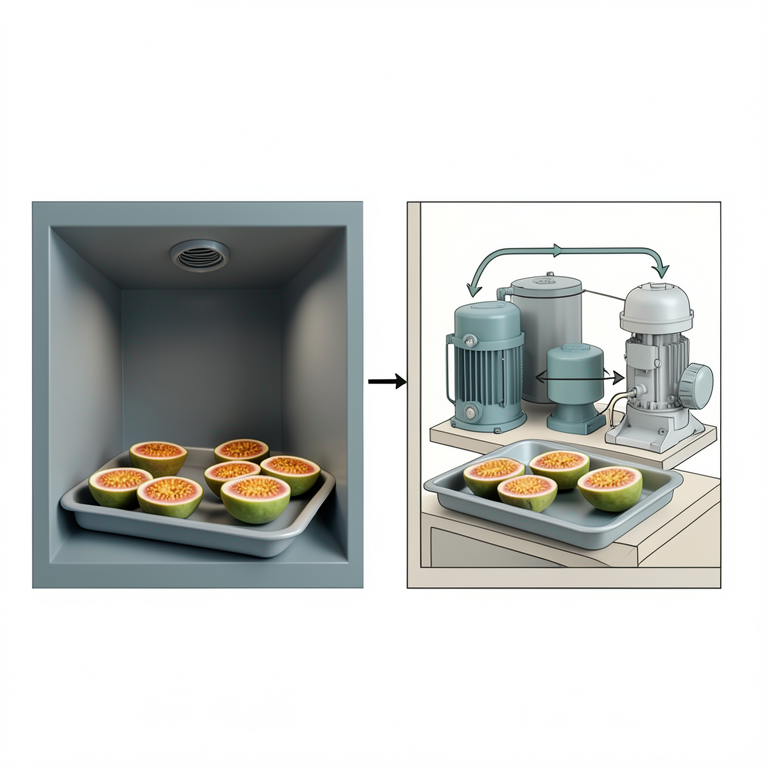
Comparison of Drying Efficiency
AI-generated conceptual illustration (guava slices in a heat pump dryer and a conventional tray dryer). It explains the idea and does not show study data.
View source evidence ↗Figures & tables
From the original paper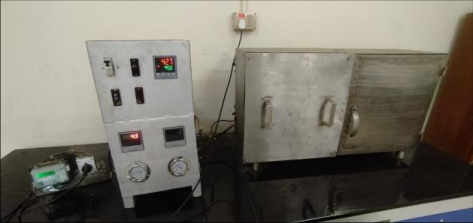 Figure 1
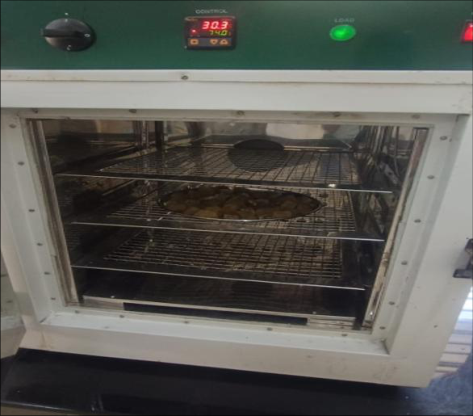 Figure 2
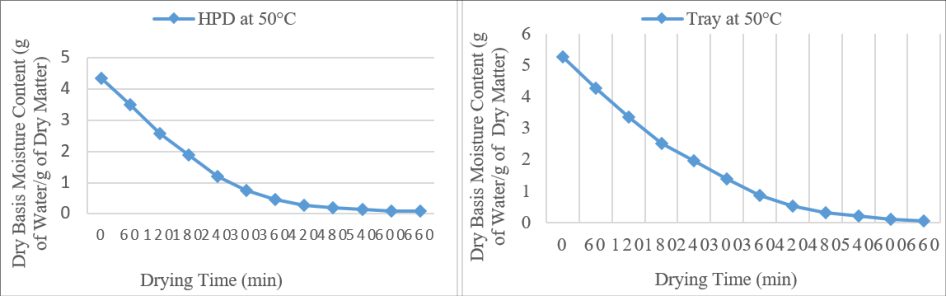 Figure 3
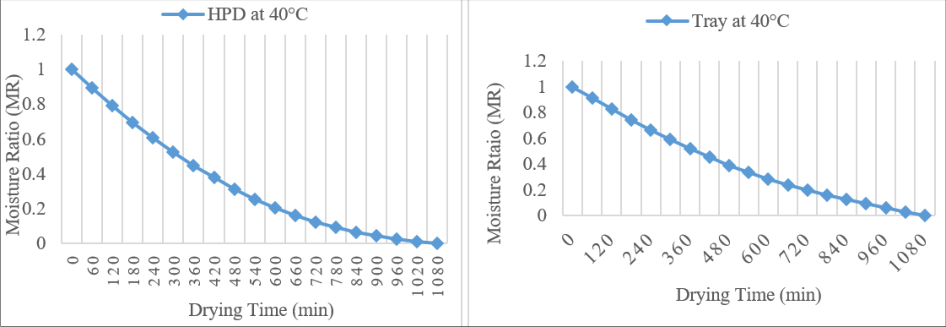 Figure 3
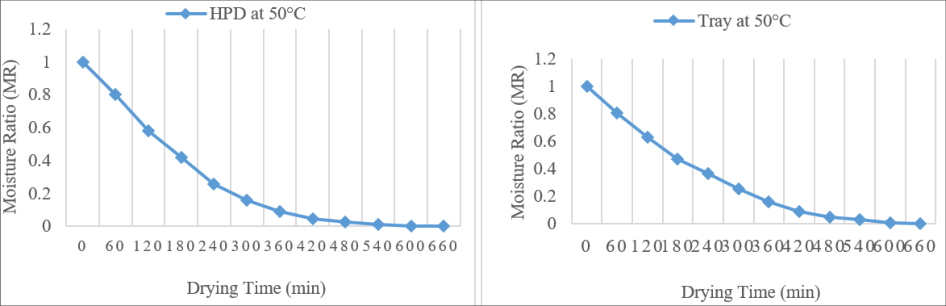 Figure 4
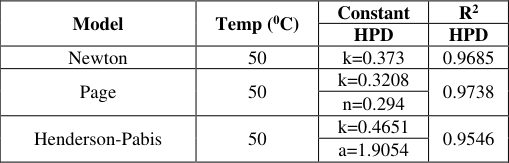 Table 1
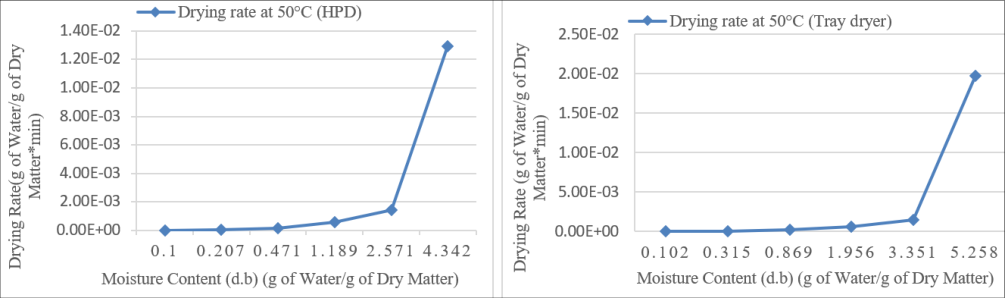 Figure 5
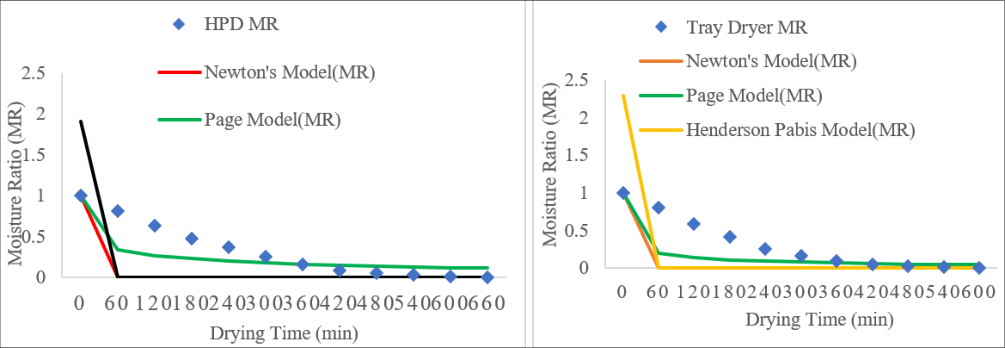 Figure 6
Introduction
Guava (Psidium guajava) is a perennial shrub or small tree found in tropical and subtropical regions worldwide [11] . Guava fruit is categorised as a true berry in botany, characterised by its fleshy, indehiscent fruit with seeds embedded in the ovary's flesh. These trees can reach heights of up to 10 metres and have a lifespan of about 40 years. India stands as the largest producer of guava globally, contributing 45% to the global production, with varieties like Allahabad Safeda and Sardar dominating due to their high yield and quality. Guava is often hailed as a "super fruit" for its ease of cultivation, availability, and numerous health benefits, particularly its high vitamin C content, which supports immune function and acts as an antioxidant. In addition to its nutritional value, guava is recognised for its medicinal properties in traditional medicine systems. Drying is a popular preservation technique for agricultural and bio-origin products to extend their shelf life. Heat pump dryers (HPD) are efficient, cost-effective devices known for their energy efficiency [4,1] . They can recover energy from exhaust, control drying air temperature and humidity independently, and offer precise drying conditions for various products [11,12,1,10] . These dryers are particularly useful for heat-sensitive foods that require low-temperature drying [10] . HPDs can also prevent product deterioration during the rainy season by maintaining low relative humidity in the drying air. In the food industry, the integration of conventional and non-conventional drying technologies is a growing trend [7] . This approach aims to create a drying strategy that considers product changes as moisture content decreases and the product becomes more heatsensitive. Heat pump dryers offer an effective and eco-friendly drying method, especially for specialty crops with sensitive attributes like aroma, texture, and colour. The primary goal of this study is to compare a heat pump dryer with a conventional tray dryer to analyse the drying kinetics of guava, considering its specific qualities and characteristics.
Materials and Methods
Fresh guavas were purchased daily from the local market in Mohanpur, Nadia, West Bengal, for this experiment. The study compared heat pump drying with conventional tray drying methods, focusing on energy consumption and drying kinetics. The experiments were conducted in the laboratory of the Department of Food Engineering, Faculty of Agricultural Engineering, B.C.K.V., Mohanpur, Nadia. Guava slices with an average diameter of 3 cm and a thickness of 3.5 mm were selected, with damaged or discoloured ones being excluded. The samples underwent thorough washing to remove impurities, followed by slicing with a stainless-steel knife. The initial moisture content of the guava samples, both before and after drying, was assessed using a moisture metre located in the food engineering lab. The initial moisture content for guava was 84.73% (w.b.). Temperature and relative humidity measurements were recorded for both ambient air and drying chamber air. Relative humidity was measured with a hygrometer, and temperature was monitored using a digital temperature recorder attached to the dryer. Air velocity was measured using a digital anemometer. The mass of the dried samples was determined using an electronic weighing balance, and power consumption was measured with a wattmeter.
Determination of moisture content
The moisture Content of sample was calculated as follows.
Drying experiments
The drying experiments were conducted in controlled conditions using a heat pump dryer (HPD) and a tray dryer, with experiments conducted at 40°C, 45°C, and 50°C drying modes. Prior to each experimental run, the instrumentation system was rigorously inspected, and the dryers were initiated one hour in advance to attain a stable state. Once the entire system had reached stability, the samples were loaded onto the drying trays. Each sample, weighing approximately 56±5 g, was positioned in the centre of the tray within the dryer chamber using a petri dish. The initial weight of the samples was recorded. At 15, 30, and 60minute intervals, the petri dish was removed from the dryer chamber and weighed. Since the weighing process was brief, it did not disrupt the steady-state drying operation significantly. The experiments were concluded when the sample's weight became constant. The final moisture content of the dried samples was determined at the conclusion of each experiment. All experiments were conducted at an air velocity of 0.46 m/s.
Heat pump dryer unit
A heat pump dryer was established with the aim of reducing the humidity in the drying air, particularly for lowtemperature drying of temperature-sensitive agricultural products, while enhancing energy efficiency. The experimental setup and schematic diagram of the heat pump dryer are depicted in Fig. 1. The heat pump dryer unit comprised components such as a blower fan, capillary tube, compressor, evaporator, and condenser. A 0.5 HP rotary compressor was utilised for the drying process. The condenser and evaporator coils played vital roles in heating, cooling, and dehumidifying the process air, which was then directed into the drying chamber to maintain low relative humidity levels and minimise air exchange. For the evaporator and condenser, external copper pipes with a 9.5 mm outer diameter were employed. The drying chamber dimensions were 97 cm × 97 cm × 50 cm. Two trays, each measuring 43 cm × 25 cm, were used for product drying within the dryer. An airflow rate of 0.0965 kg/s was achieved with the assistance of a fan, responsible for propelling air through the coils. The unit utilised refrigerant R-134a, and the chamber's walls were insulated with a thick layer of thermos-cool material.
Conventional tray dryer
The study made use of the conventional tray dryer, as shown in Fig. 2. The device was made up of an insulated drying chamber having two trays, one 0.5 HP blower, a 1.5 kW electrical heater, and a digital temperature indicator and controller to maintain the optimum drying air temperature.
Drying rate (DR) Drying rate was calculated by using following simple formula:
M t+dt and M t are moisture contents (g water/g dry matter) at time (t + dt) and time t, respectively. Drying rate was also calculated based on weight loss (g of water/min) during heat pump drying process of pre-treated guava.
Drying time
In both drying methods, the time required to reach the equilibrium moisture content of guava decreased as the drying air temperature increased. In the heat pump drying mode, it took 1080, 960, and 660 minutes to reduce the moisture content of guava from the initial 84.73% (w.b.) to the corresponding constant moisture content values. However, drying occurred more quickly in the heat pump dryer (HPD) compared to tray dryers, primarily due to the lower relative humidity of the drying air in the HPD. The difference in drying time between the tray dryer and HPD was more pronounced at lower drying air temperatures of 40°C, indicating that HPD was particularly efficient at removing moisture under these conditions.
Moisture content
The moisture metre was used to calculate the wet-basis moisture content. The initial moisture content of fresh guava was found to be 84.73 (%w.b.). The moisture content of dehydrated guava was found to be lower in HPD as compared with tray dryers.
Results and Discussion Drying characteristics of guava
The goal of this study was to assess how drying methods and varying drying air temperatures impact total drying time, dry basis moisture content, moisture ratio, and drying rate. We carried out drying experiments using guava under various drying air conditions, and the resulting data were used to determine drying constants by fitting them to a drying equation.
Summary and Conclusions
Drying is a common food preservation method that reduces moisture content for safe storage. Tray drying is widely used but has drawbacks like prolonged drying times and high temperatures that affect product quality. Emerging technologies, such as heat pump drying, offer energyefficient alternatives. Heat pump dryers consume less energy, maintain lower humidity, preserve product quality, and use lower temperatures. While initial costs are higher, heat pump dryers are more cost-effective in the long run.
Comparing heat pump dryers to conventional tray dryers, the former is preferred in the drying industry. In the case of guava, heat pump drying consumes 16%, 21%, and 14% less energy than tray drying at 40°C, 45°C, and 50°C. Heat pump drying is most effective at lower temperatures and humidity levels. Drying rates vary with moisture content, and a higher initial moisture content favours heat pump drying. Drying time decreases as temperature increases due to its strong influence on drying rate. Newton, Henderson-Pabis, and Page models fit drying behaviour well, with the Page model excelling, especially at 50°C for heat pump drying. In summary, heat pump drying is an energy-efficient method for drying guava while preserving quality. The recommended temperature range is 40°C to 50°C.
Acknowledgement
International Journal of Agriculture and Food Science https://www.agriculturaljournals.com
Figures and tables from the paper
| Model | Temp (0C) | Constant | R2 |
|---|---|---|---|
| HPD | HPD | ||
| Newton | 50 | k=0.373 | 0.9685 |
| Page | 50 | k=0.3208 | 0.9738 |
| n=0.294 | |||
| Henderson-Pabis | 50 | k=0.4651 | 0.9546 |
| a=1.9054 |
Table text extracted from the original PDF; superscript letters are shown inline. The original table image is below.
View original table image
References
12 in the original paper- Alves F, Strommen. Dehydration of green peas under atmospheric freeze-drying condition. Proceedings of the 14th International drying Symposium (IDS 2004). VolC. 1996:1521-1528.
- Hawlader MNA, Perera CO, Tian M, Yeo KL. Drying of guava and papaya: Impact of different drying methods. Drying Technology. 2006;24(1):77-87.
- Hawlader MNA, Perera CO, Tian M. Properties of modified atmosphere heat pump dried foods. Food Engineering. 2006;74:392-401.
- Hii CL, Law CL, Suzannah S. Drying kinetics of the individual layer of cocoa beans during heat pump drying. Journal of Food Engineering. 2012;108(2):276282.
- Karim MA, Hawlader MNA. Drying characteristics of banana: theoretical modelling and experimental validation. Journal of food engineering. 2005;70(1):3545.
- Mayor L, Sereno AM. Modelling Shrinkage during Convective Drying of Food Materials: A Review. J of Food Engineering. 2004;61:373-386.
- Pal US, Khan MK. Calculation steps for the design of different components of heat pump dryer under constant drying rate condition. Drying Technology. 2008;26(7):864-872.
- Pal US, Khan MK, Mohanty SN. Heat pump drying of green sweet paper. Drying Technology. 2008;26:15841590.
- Prasertsan S, Saen-saby P. Heat pump drying of agricultural materials. Drying Technology an International Journal. 1998;16(1-2):235-250.
- Qadri OS, Srivastava AK. Microwave-assisted foam mat drying of guava pulp: Drying kinetics and effect on quality attributes. Journal of food process engineering. 2017;40(1):e12295.
- Rossi SJ, Neues LC, Kicokbusch TG. Thermodynamic and energetic evaluation of a heat pump applied to the drying of vegetables. Drying. 1992;92:1475-1483.
- Saensabai P, Prasertsan S. Effects of component arrangement and ambient and drying conditions on the performance of heat pump dryers. Drying technology. 2003;21(1):103-127.