
Research article · 2025 · Full text
International Journal of Veterinary Sciences and Animal HusbandryNear infrared reflectance spectroscopy of buffalo faeces to determine the nutritional characteristics of diets and digestibility: Preliminary study
Volume 10(2) · Pages 316–320 · DOI: 10.22271/veterinary.2025.v10.i2e.2093 ↗
Research areasAnimal Nutrition and HealthMeat and Animal Product QualityEffects of Environmental Stressors on Livestock
Abstract
Author-writtenThe use of NIR technology in evaluating the nutritional qualities of buffalo diets is a promising and cost-effective method. The study conducted on 100 stool samples demonstrated that NIR could accurately predict the nutritional characteristics of diets and the digestibility of buffalo feed. The study was conducted on a buffalo farm located in southern Italy. The animals from which the individual stool samples were collected were all in their third lactation and homogeneous in terms of milk production from the previous lactation. The variability in stool samples obtained could be attributed to individual differences in animal nutrition and metabolism. However, despite this variability, the results obtained from the NIR analysis were promising and provided valuable insights into the nutritional quality of the diets fed to buffaloes. The use of NIR technology can bring great benefits to buffalo farming by providing a quick and efficient way to evaluate the nutritional quality of diets. This information is essential to optimize feed composition and ensure animal health and productivity. Overall, the study demonstrates the potential of NIR technology in evaluating the nutritional qualities of feces and predicting the nutritional characteristics of buffalo diets. Further research and validation of this method could significantly contribute to improving buffalo husbandry practices.
Summary
Source-checkedPlain-language reading of the full paper, prepared with AI and checked against the text. Each point links to the authors' own words.
Why it matters
- The nutritional value of feed is a critical factor in the overall productivity of buffaloes. View evidence ↗
- Traditional chemical methods used to quantify nutritional quality parameters are often expensive and take a long time to complete. View evidence ↗
- Analyzing feces is a non-invasive way to gain information about the feed consumed, as fecal characteristics are linked to digestibility and intake. View evidence ↗
The question
- The study aimed to determine if Near Infrared (NIR) spectroscopy could accurately predict the digestibility of buffalo feed and the nutritional characteristics of their diets using stool samples. View evidence ↗
What they did
- The research was performed on a buffalo farm in southern Italy using animals in their third lactation with consistent previous milk production. View evidence ↗
- The Mediterranean buffaloes were fed a total mixed ration (TMR) consisting of 60% maize silage, 17% hay, and 24% concentrate. View evidence ↗
- The study analyzed 100 stool samples, dividing them into a calibration set of 70 samples and a validation set of 30 samples. View evidence ↗
- Spectral data were collected using a Büchi Instruments Inc model NIRFlex N-500 with NIRWare Software Suite. View evidence ↗
What they found
- The dry matter (DM) content was measured at 53.74 ± 1.38% for the unifeed and 13.95 ± 0.71% for the feces. View evidence ↗
- Crude protein (CP) levels were 19.84 ± 0.14% in the unifeed and 15.38 ± 0.21% in the feces. View evidence ↗
- Dry matter digestibility (DMD) ranged from 6% to 7% in the TMR and approximately 40% to 75% in the feces. View evidence ↗
- Ether extract (EE) was found to have the greatest influence on the determination of dry matter digestibility (DMD), while dry matter (DM) had the least. View evidence ↗
What it means
- The authors conclude that NIR technology has the potential to serve as a tool for predicting dry matter digestibility in buffaloes. View evidence ↗
- The method is recommended for screening and quick monitoring of nutritional and digestibility characteristics via feces without requiring sample preparation. View evidence ↗
- The authors note that the relationships between fecal parameters and the prediction of diet digestibility may be limited and require further investigation. View evidence ↗
Visual summary
3 visualsIllustrations explain the paper; charts are replotted from the paper's own table values.
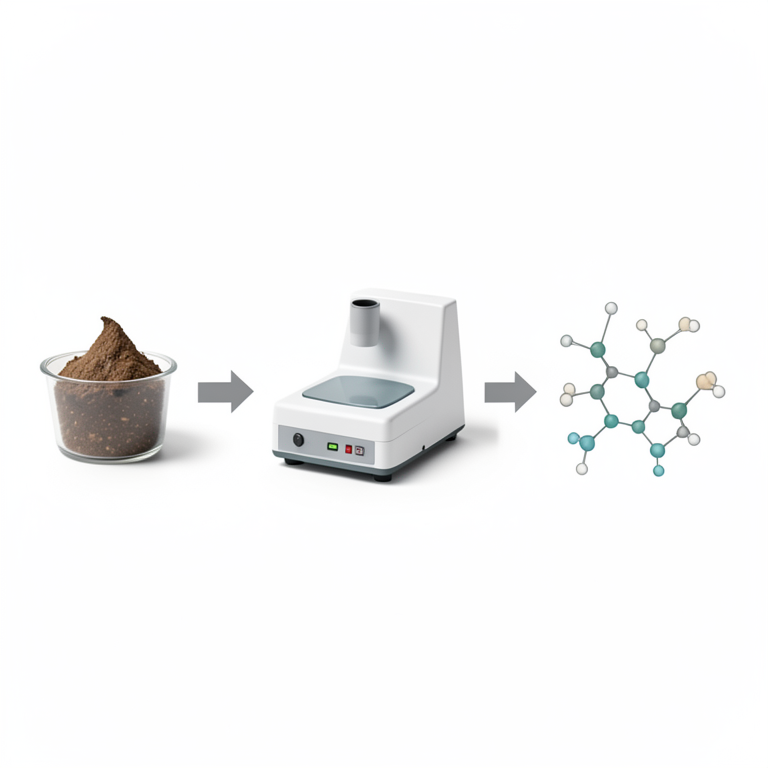
NIR Analysis Workflow
AI-generated conceptual illustration (water buffalo feces and a benchtop NIR spectrometer). It explains the idea and does not show study data.
View source evidence ↗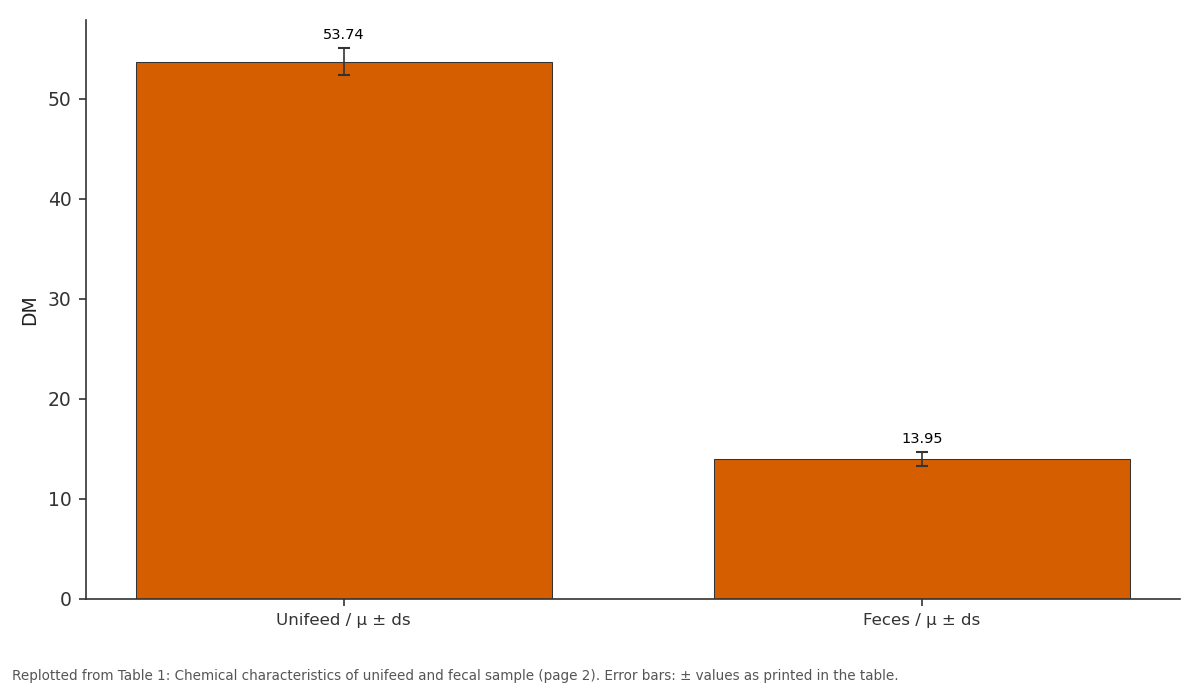
DM: Unifeed / µ ± ds vs Feces / µ ± ds
Replotted from Table 1 (page 2) of the original paper. Every bar is the paper's own table value.
View source evidence ↗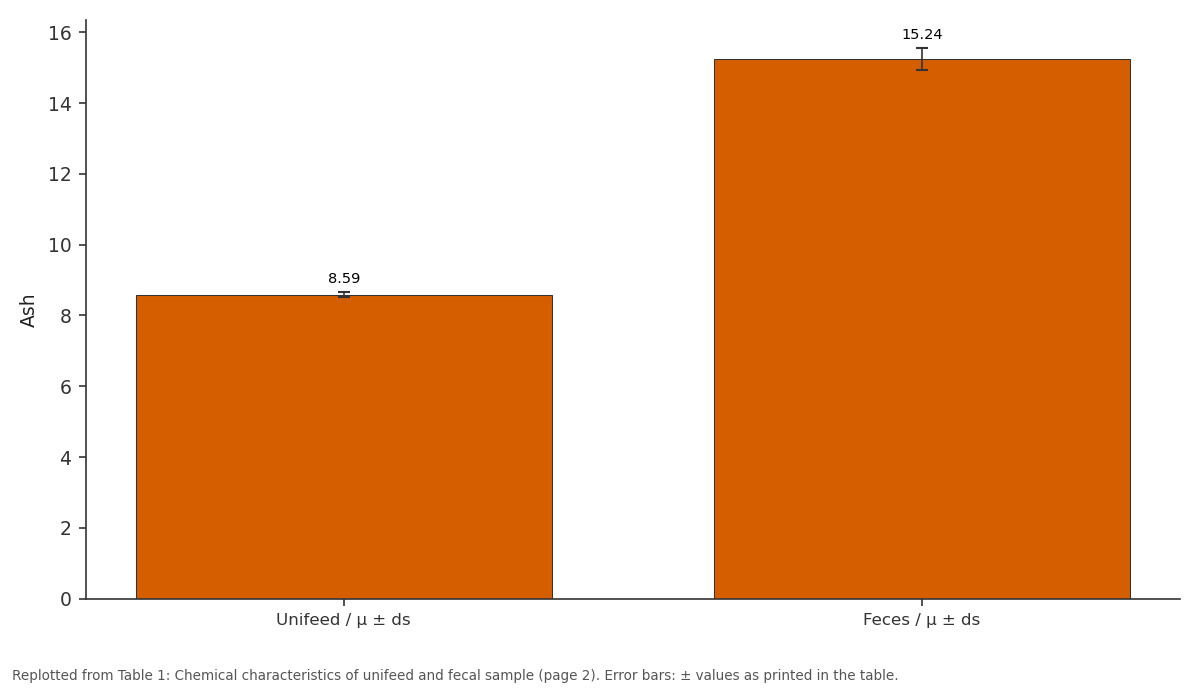
Ash: Unifeed / µ ± ds vs Feces / µ ± ds
Replotted from Table 1 (page 2) of the original paper. Every bar is the paper's own table value.
View source evidence ↗Figures & tables
From the original paper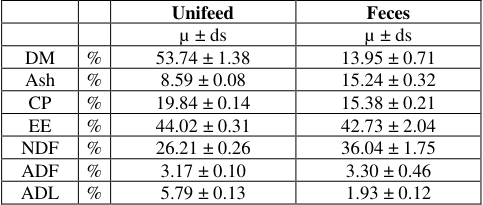 Table 1
 Table 2
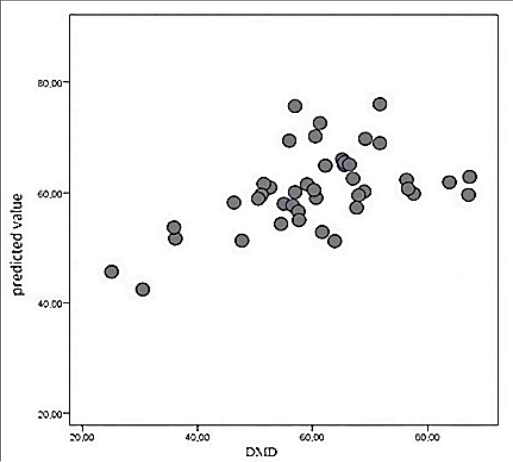 Figure 1
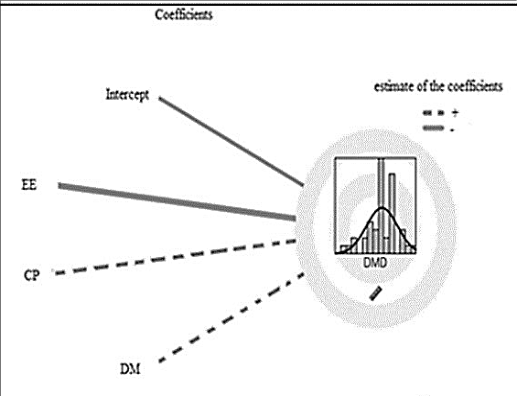 Figure 2
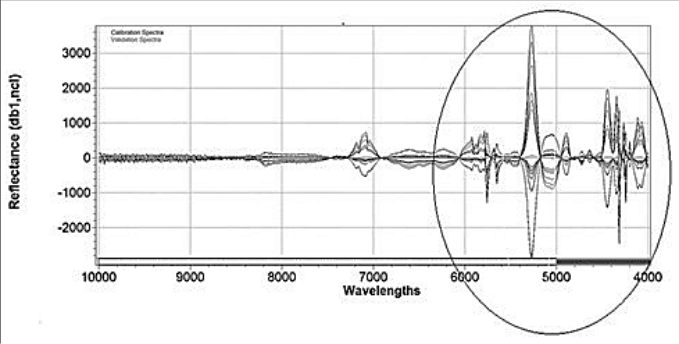 Figure 3
Introduction
Nutritional value plays a significant role in buffalo productivity. Food specialists have always emphasized the importance of valuating the nutritional value in Total Mixed Ration (TMR) provided to livestock. Meeting the recommended nutritional requirements described by nutritional systems helps ruminants produce as expected. The efficiency of metabolizable proteins (MP) is not only linked to milk or milk proteins production, but also affects overall animal production performance health status, reproduction, and profitability. Chemical techniques to quantify quality parameters are costly and time-consuming. Fortunately, traditional methods of determining nutritional value have been replaced by Nearinfrared spectroscopy (NIRs) due to the increased use of personal computers and advancements in mathematical procedures in chemometric studies (Pinotti et al., 2014) [16] . Collecting feaces is easy and does not harm or interfere with animals. Feaces contain chemical characteristics representative of the feed consumed and are linked to intake and digestibility. Fecal indicators have long been used to clarify dietary attributes (Ruiz-Saavedra et al., 2020) [17] are still use. Increasing crude dietary protein as a strategy to meet the needs of essential amino acids has been used for a long time. However, this strategy leads to low efficiency of use, and unused nitrogen is excreted in urine, feaces, and milk (Al Rifai et al., 2020) [1] . The application of techniques to study the chemical and nutritional characteristics of faeces has been used to estimate the quality of the feed ration administered to cattle (Dixon et al., 2005; Jancewicz et al., 2017a and b; Johnson et al., 2017) [6,8,10] . The nitrogen content in feces, determined using NIRs, provides the ability to observe and monitor health, welfare, and productive performance of the animals reared (Lyons et al., 2007) [13] . NIRS profiling can be used to predict diet composition and digestibility (Tolleson et al. 2015) [21] . Estimating the nutritional content of a sample can be done using NIRs, a nondestructive, rapid, accurate, and economical technique. A spectrum signature can be recorded by a spectrometer when electromagnetic radiations of given wavelengths are absorbed, reflected, or transmitted. Spectral signatures can be utilized to identify and predict certain features of the analysis by combining reference samples of known content and variable statistics (Naes et al., 2001) [14] . This method is known as NIRs (Cen et al., 2007) [4] when applied to the 700 to 2.500 nm region of the electromagnetic spectrum. NIRS has advantages over other laboratory analytical methods including the absence of reagents and the ability to determine multiple values in one analytical process (Stuth et al., 2003) [19] . The method of constructing a spectrochemical prediction model is called calibration (Shenk et al., 1996) [18] . Both physical and electronic steps are involved in calibration. To begin the process, you must acquire a sample set of the desired material. This is well distributed and represents the expected range of variation in the constituent of interest. Routine analysis strategies should be consistent with processing the NIR setting (Gamon et al., 2019) [7] . Drying and grinding procedures are crucial for NIRs analysis, as water is a strong NIR light absorber and particle size impact the spectrum (Pasikatan et al., 2001) [15] . The official AOAC recommends grinding the sample with a 1.1 mm grid for transmission penetration, to laboratory official techniques for determining the nutrient profile of feedstuffs.
Assessing the nutritive quality of the administered TMR is crucial for buffalo farming; success, as it affects animal performance and production efficiency. NIR profiling can predict diet composition and digestibility, making it a valuable tool for assessing the nutritional characteristics of stool samples and predicting the nutritional characteristics and digestibility of buffalo diets.
Materials and Methods
The study was conducted on a buffalo farm located in southern Italy. The animals from which individual feaces samples were collected were all in their third lactation and homogeneous in milk production from the previous lactation. The animals were raised according to standard farm procedures. The animals (Mediterranean buffalo) had ad libitum access to a total mixed ration (60% maize silage, 17% hay, 24% concentrate). The feaces were collected directly from the rectal ampoule and placed on steel trays. After mixing, a sample was taken and stored at -20 ºC, for future chemical analysis. Total mixed ration (TMR) samples were dried at 65 °C in a controlled ventilation, while fecal samples were dried at 105 °C in an oven until the moisture content reached 5%. They were then stored dry in a closed container at room temperature until further processing. Prior to analysis, the samples were ground to a particle size of 1.1 mm to ensure sample homogeneity. Digestibility (DMD %) was calculated using the following formula: DMD = (1-(Cd/Cf)) *100, where Cd is the concentration of acid insoluble ash in the TMR and CF in feaces.
The chemical characteristics of TMR and faecal samples were dry matter (DM), ash content, crude protein (CP), NDF and ether extract content, analyzed with NIRs. The data are reported in table 1. The repeatability of the reference method was measured for three NIRs calibration data sets. Calibration is defined as the process of generating a spectrochemical prediction model (Williams, 1987). The performance of calibration was evaluated using the coefficient of determination (R 2 ) and standard error of calibration (SEC). The selected standardization equation's analytical performance was evaluated through equation validation. The predictive ability of a calibration equation can be assessed by using the standard error of prediction (SEP): Terramoccia et al. (2005) [20] recommended that an equation is acceptable if SEC values are below 2 times SEP and R2 values are above 0.8%. It is crucial to understand that NIR predictive equations are continually improved over time, and the reported results represent the best available now. Evaluating the slope and bias is also crucial in assessing equation performance (Li et al., 2007) [12] , and it is important to minimize systematic overestimation or underestimation of values obtained from reference methods. Monitoring and quality control are essential to ensure both the instrument's accuracy and calibration. [3] . DMD in TMR ranged from 6% to 7; in feaces, it ranged approximately from 40% to 75. This variability in feaces is linked to individual animal effects. Table 2 presents the calibration and validation statistics for the PLS (Coleman et al., 1989) model used to in predict protein content via NIRs. [3] and Keli et al. (2005) [12] in their work on cattle and sheep. R 2 values are significant for all parameters considered. Figure 1 shows the observed values vs faecal DMD NIRs predicted values. The greater impact of the ethereal extract on DMD can be justified by the fact that fatty acids in the intestine can combined with Ca salts to form soaps. Furthermore, in the faeces, there are bile pigments and ethereal extractable products of microbial origin. Between 4000 and 6000 nm, there is a significant variation in the PLS model (Figure 3), with minor variations also present in the 6000 nm region. Future research is necessary to determine if these recommendations are suitable for assessing faecal NIRs equations in predicting DMD. Figure 3 shows that the residues are randomly scattered around the zero line, suggesting no clear pattern or tendency in the residues. The reported results suggest that this technology has the potential to be used as a tool for predicting DMD in buffaloes fed diets.
| Calibration | — | — | — | — | Validation | — | — | — | — | — |
|---|---|---|---|---|---|---|---|---|---|---|
| n | RMSEC | R2 | RMSECV | n | RMSEP | R2 | Bias | Slope | RPD | |
| 70 | 0.04 | 0.92 | 0.14 | 30 | 0.14 | 0.83 | -0.04 | 2.39 | 10.50 |
Table text extracted from the original PDF; superscript letters are shown inline. The original table image is below.
View original table image
| — | — | Unifeed | Feces |
|---|---|---|---|
| µ ± ds | µ ± ds | ||
| DM | % | 53.74 ± 1.38 | 13.95 ± 0.71 |
| Ash | % | 8.59 ± 0.08 | 15.24 ± 0.32 |
| CP | % | 19.84 ± 0.14 | 15.38 ± 0.21 |
| EE | % | 44.02 ± 0.31 | 42.73 ± 2.04 |
| NDF | % | 26.21 ± 0.26 | 36.04 ± 1.75 |
| ADF | % | 3.17 ± 0.10 | 3.30 ± 0.46 |
| ADL | % | 5.79 ± 0.13 | 1.93 ± 0.12 |
Table text extracted from the original PDF; superscript letters are shown inline. The original table image is below.
View original table image
Results and Discussion
Results and Discussion
Conclusion
Since these statistics, the method has been found to be suitable for screening purposes and useful for quickly monitoring the nutritional and digestibility characteristics using faeces without the need for sample preparation. Recent advances in NIRS technology have reduced the required amount of faeces for analysis, making it applicable in various animal management conditions. Traditional protein measurements using AOAC methods are time-consuming and involve the use of solvents that must be disposed of as special waste.
In contrast, NIR chemical analysis is fast and does not produce special toxic industrial waste, making it a potential screening system for studying protein content.
Other results provide further evidence that faecal NIR profiling is a tool that may be used for predestining of digestibility of diets.
To simplify this, a rapid-scan series diode spectrometer was used to enable quick sample delivery for scanning.
Figures and tables from the paper
References
21 in the original paper- Al Rifai M, Khan W, Mattuzzi S. La nutrizione amminoacidica nei sistemi NRC e CNCPS. Ruminantia.it. 2020. Available from: https://www.ruminantia.it/la-nutrizione-amminoacidicanei-sistemi-nrc-e-cncps/
- Boval M, Coates DB, Lecomte P, Decruyenaere V, Archimède H. Faecal near infrared reflectance spectroscopy (NIRS) to assess chemical composition, in vivo digestibility, and intake of tropical grass by Creole cattle. Anim Feed Sci Technol. 2004;114(1):19-29. DOI: 10.1016/j.anifeedsci.2003.12.009
- Cen H, He Y. Theory and application of near infrared reflectance spectroscopy in determination of food quality. Trends Food Sci Technol. 2007;18:72-83. DOI: 10.1016/j.tifs.2006.09.00
- Coleman SW, Windham WR. Measurements of forage quality. Near infrared reflectance spectroscopy (NIRS): analysis of forage quality. 1989;643:83.
- Dixon RM, Coates DB. The use of faecal NIRS to improve nutritional management of cattle in northern Australia. In: Recent Advances in Animal Nutrition in Australia. 2005;15:65-75.
- Gamon JA, Somers B, Malenovský Z, Middleton EM, Rascher U, Schaepman ME. Assessing Vegetation Function with Imaging Spectroscopy. Surv Geophys. 2019;40:489-513. DOI: 10.1007/S10712-019-09511-5
- Jancewicz LJ, Penner GB, Swift ML, Waldner CL, Gibb DJ, McAllister TA. Predictability of growth performance in feedlot cattle using fecal near-infrared spectroscopy. Can J Anim Sci. 2017a;97(4):701-720. DOI: 10.1139/cjas-2016-0243
- Jancewicz LJ, Swift ML, Penner GB, Beauchemin KA, Koenig KM, Chibisa GE, et al. Development of nearinfrared spectroscopy calibrations to estimate fecal composition and nutrient digestibility in beef cattle. Can J Anim Sci. 2017b;97:51-64. DOI: 10.1139/CJAS-2016-0107
- Johnson JR, Carstens GE, Prince SD, Ominski KH, Wittenberg KM, Undi M, et al. Application of fecal nearinfrared reflectance spectroscopy profiling for the prediction of diet nutritional characteristics and voluntary intake in beef cattle. J Anim Sci. 2017;95:447-454. DOI: 10.2527/jas.2016.0845
- Keli A, Andueza D, Baumont R, Béchet G, De Vega A. The use of NIRS for prediction of intake, digestibility, diet composition and faecal concentration of n-alkanes in sheep fed different proportions of lucerne and rye grass (Lolium rigidum). In: Priolo A, Biondi L, Ben Salem H, Morand-Fehr P, editors. Advanced nutrition and feeding strategies to improve sheep and goat. Zaragoza: CIHEAM; 2007. p. 237-241. (Options Méditerranéennes: Série A. Séminaires Méditerranéens; n. 74). Available from: http://om.ciheam.org/om/pdf/a74/00800385.pdf
- Li H, Tolleson D, Stuth J, Bai K, Mo F, Kronberg S. Faecal near infrared reflectance spectroscopy to predict diet quality for sheep. Small Rumin Res. 2005;68(3):263-
- Lyons RK, Machen RV. What's limiting: Quality or quantity? Rangelands. 2007;29:4-7. DOI: 10.2111/1551-501X
- Naes T, Isaksson T, Fearn T, Davies TA. User friendly guide to multivariate calibration and classification. Chichester, UK: NIRS Publications; 2001. 344 p.
- Pasikatan MC, Steele JL, Spillman CK, Haque E. Near infrared reflectance spectroscopy for online particle size analysis of powders and ground materials. J Near Infrared Spectrosc. 2001;9(3):153-164. DOI: 10.1255/jnirs.303
- Pinotti L, Krogdahl A, Givens I, Knight C, Baldi A, Baeten V, et al. The role of animal nutrition in designing optimal foods of animal origin as reviewed by the COST Action Feed for Health (FA0802). Biotechnol Agron Soc Environ. 2014;8(4):471-479.
- Ruiz-Saavedra S, Salazar N, Suárez A, de Los ReyesGavilán CG, Gueimonde M, González S. Comparison of different dietary indices as predictors of inflammation, oxidative stress and intestinal microbiota in middle-aged and elderly subjects. Nutrients. 2020;12(12):3828-3845. DOI: 10.3390/nu12123828
- Shenk JS, Westerhaus MO. Calibration the ISI way. In: Davies AMC, Williams P, editors. Near Infrared Spectroscopy: the future waves. Chichester, UK: NIRS Publications; 1996. p. 198-202.
- Stuth J, Jama A, Tolleson D. Direct and indirect means of predicting forage quality through near infrared reflectance spectroscopy. Field Crops Res. 2003;84:4556. DOI: 10.1016/S0378-4290(03)00140-0
- Terramoccia S, Bartocci S, Borghese A. Nutritional requirements in buffalo cows and heifers. Buffalo Production and Research, FAO Inter-Regional Cooperative Research Network on Buffalo, REU Technical Series. 2005;67:145-160.
- Tolleson DR, Schafer DW. Application of fecal nearinfrared spectroscopy and nutritional balance software to monitor diet quality and body condition in beef cows grazing Arizona rangeland. J Anim Sci. 2015;92(1):349358. DOI: 10.2527/jas.2013-6631
- Williams PC. Variables affecting near-infrared reflectance spectroscopic analysis. In: Williams P, Norris K, editors. Near-Infrared Technology in the Agricultural and Food Industries. St. Paul, MN: American Association of Cereal Chemists Inc.; 1987. p. 143-167.