
Research article · 2025 · Full text
International Journal of Advanced Chemistry ResearchDesign and synthesis of novel chalcone-aminoalkyl hybrids and evaluation of their antibacterial activity
Volume 7(2) · Pages 15–21 · DOI: 10.33545/26646781.2025.v7.i2a.261 ↗
Research areasSynthesis and biological activitySynthesis and Characterization of Heterocyclic Compounds
Abstract
Author-writtenThe emergence of multidrug-resistant bacteria has created an urgent need for new antimicrobial agents. In this work, we report the design, synthesis, and antibacterial evaluation of four novel chalcone-aminoalkyl hybrid compounds. A molecular hybridization strategy was employed to combine the chalcone scaffold (1, 3-diphenyl-2-propen-1-one) with aminoalkyl moieties known for membrane-targeting antibacterial activity. The target compounds were synthesized via Claisen-Schmidt condensation to form chalcone intermediates. All four hybrids were obtained in good yields (80-95%) and fully characterized by IR, NMR, and MS, confirming the expected structures. In vitro antibacterial activity was assessed against Gram-positive (Staphylococcus aureus, Bacillus subtilis) and Gram-negative (Escherichia coli, Pseudomonas aeruginosa) bacteria using a broth microdilution method. The chalcone-aminoalkyl hybrids exhibited significant antibacterial effects, with minimum inhibitory concentrations (MICs) in the low micromolar (4-16 μg/mL) range. Notably, the most potent compound showed MIC values of 2 μg/mL against S. aureus and B. subtilis, and 8 μg/mL against E. coli. These results represent a substantial improvement over simple chalcones (which typically showed MIC ≈ 500 μg/mL) and approach the potency of standard ciprofloxacin (MIC ~0.5-1 μg/mL). Our work illustrates the synthetic scheme and the biologically active chalcone and aminoalkyl pharmacophores and the hybridization concept. In summary, incorporating cationic aminoalkyl groups into the chalcone framework yielded hybrids with enhanced and broad-spectrum antibacterial activity. This study demonstrates the effectiveness of molecular hybridization in antibiotic lead development and provides promising scaffolds for further optimization against resistant infections.
Summary
Source-checkedPlain-language reading of the full paper, prepared with AI and checked against the text. Each point links to the authors' own words.
Why it matters
- The rise of bacteria resistant to multiple drugs has created a critical need for the development of new antimicrobial treatments. View evidence ↗
- Chalcones are a promising class of open-chain flavonoid precursors known for their broad biological activities, including antibacterial effects. View evidence ↗
- Aminoalkyl compounds are recognized as broad-spectrum antimicrobials that work by disrupting bacterial membranes. View evidence ↗
What they did
- The hybrids were synthesized using Claisen-Schmidt condensation of dehydroacetic acid and benzaldehyde aminoalkyl derivatives in dry chloroform with a piperidine catalyst. View evidence ↗
- The synthesized hybrids were obtained in yields between 80% and 95% and were characterized using IR, NMR, and MS to confirm their structures. View evidence ↗
- Antibacterial activity was tested against four strains: Gram-positive S. aureus and B. subtilis, and Gram-negative E. coli and P. aeruginosa. View evidence ↗
What they found
- The chalcone-aminoalkyl hybrids showed significant antibacterial activity, with MIC values ranging from 4 to 16 μg/mL. View evidence ↗
- The piperidine analogue (compound 4) was the most potent overall, particularly against Gram-positive bacteria, with MICs of 4 μg/mL for S. aureus and 8 μg/mL for B. subtilis. View evidence ↗
- Against Gram-negative E. coli, compounds 3 and 4 were the most effective, both exhibiting an MIC of 8 μg/mL. View evidence ↗
- The hybrids showed a substantial improvement in potency compared to simple chalcones (MIC ≈ 500 μg/mL) and approached the efficacy of ciprofloxacin (MIC 0.5-1 μg/mL). View evidence ↗
- Increasing the lipophilicity of the aniline ring generally improved potency against Gram-positive bacteria, as seen in the drop of MIC from 16 μg/mL (propargyl) to 4 μg/mL (piperidine) for S. aureus. View evidence ↗
- The introduction of a morpholine group (compound 3) significantly increased potency against Gram-negative bacteria compared to mono-alkyl analogs of similar length. View evidence ↗
What it means
- The authors conclude that molecular hybridization of chalcones with aminoalkyl substituents dramatically enhances antimicrobial efficacy, particularly against Gram-positive pathogens. View evidence ↗
- The study demonstrates that combining two bioactive motifs into one molecule can create synergistic effects, validating molecular hybridization as a useful strategy for antibiotic lead discovery. View evidence ↗
- Future research is needed to expand the compound library, investigate the exact mechanism of action, and evaluate toxicity and selectivity in mammalian cells. View evidence ↗
Visual summary
3 visualsIllustrations explain the paper; charts are replotted from the paper's own table values.
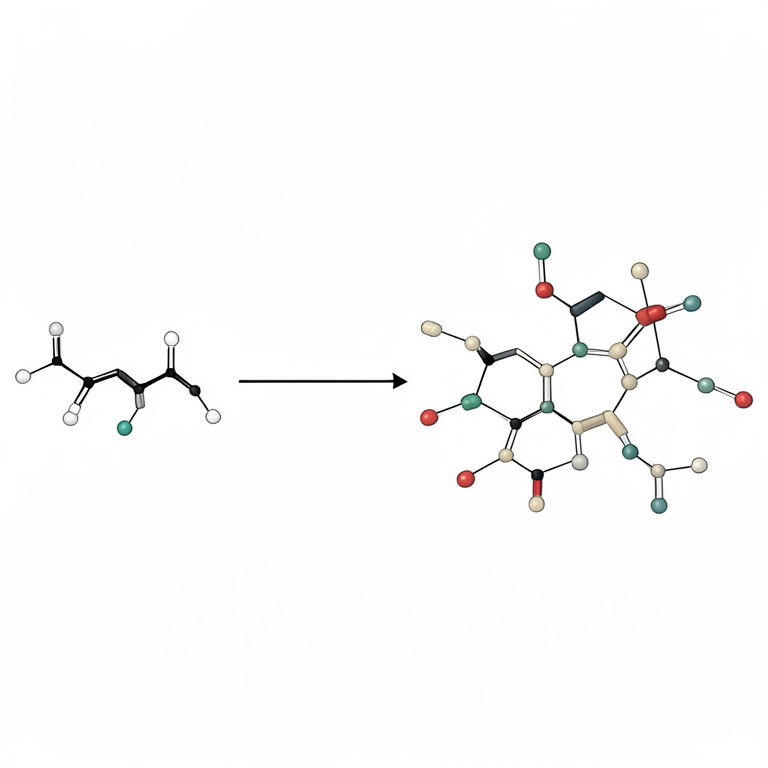
Molecular Hybridization Concept
AI-generated conceptual illustration (chalcone and aminoalkyl chemical structures). It explains the idea and does not show study data.
View source evidence ↗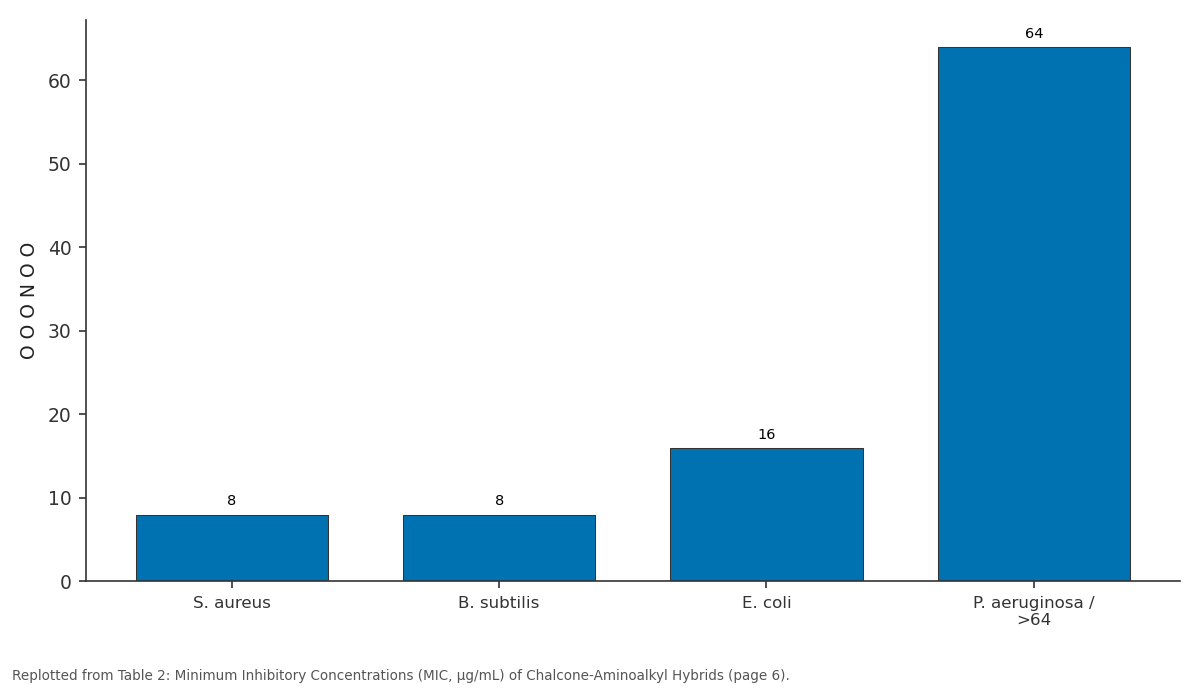
O O O N O O: S. aureus vs B. subtilis vs E. coli vs P. aeruginosa / >64
Replotted from Table 2 (page 6) of the original paper. Every bar is the paper's own table value.
View source evidence ↗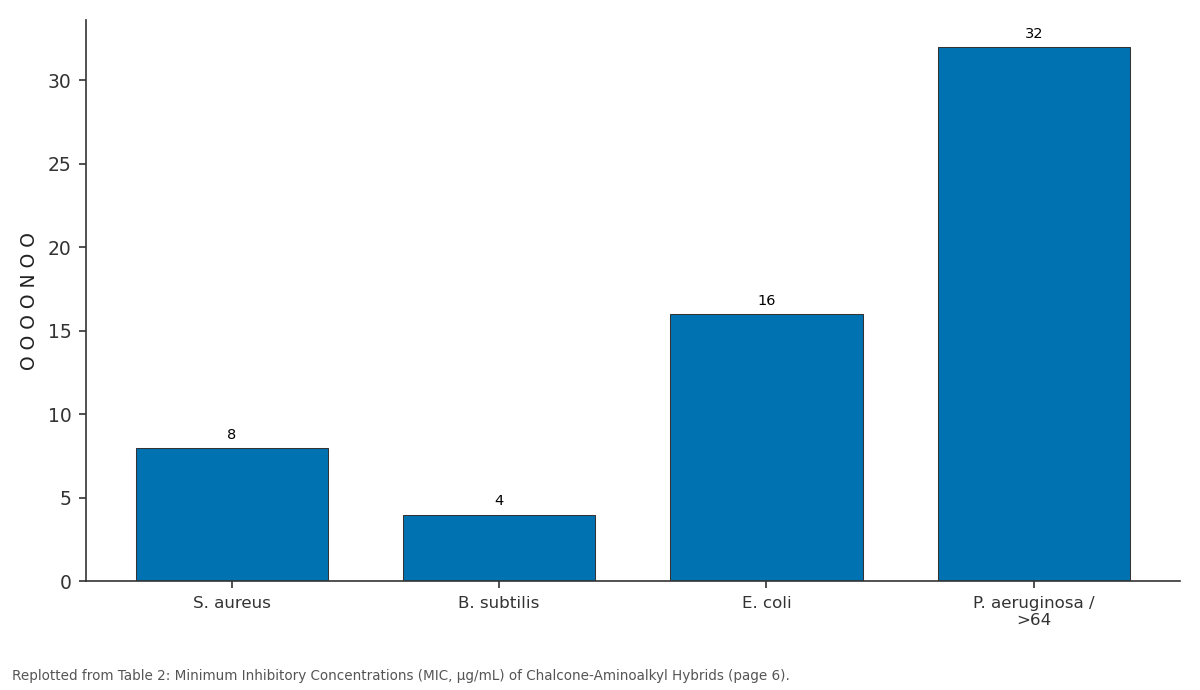
O O O O N O O: S. aureus vs B. subtilis vs E. coli vs P. aeruginosa / >64
Replotted from Table 2 (page 6) of the original paper. Every bar is the paper's own table value.
View source evidence ↗Figures & tables
From the original paper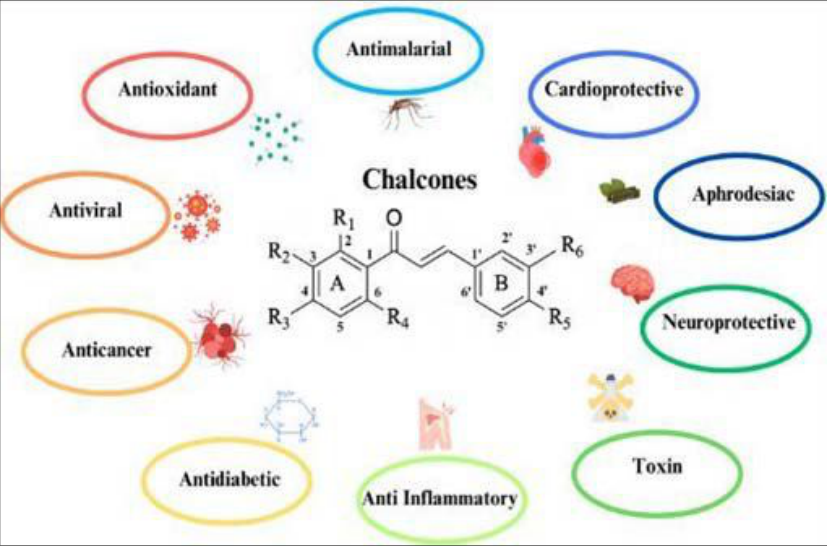 Figure 1
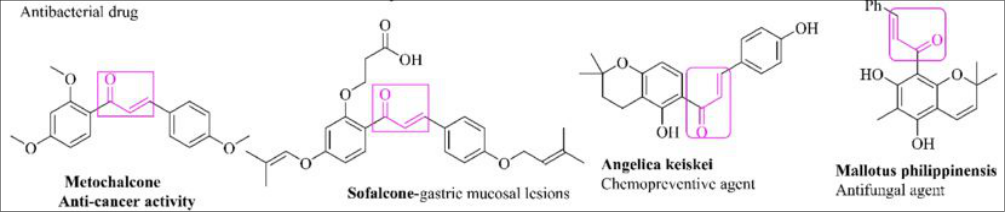 Figure 2
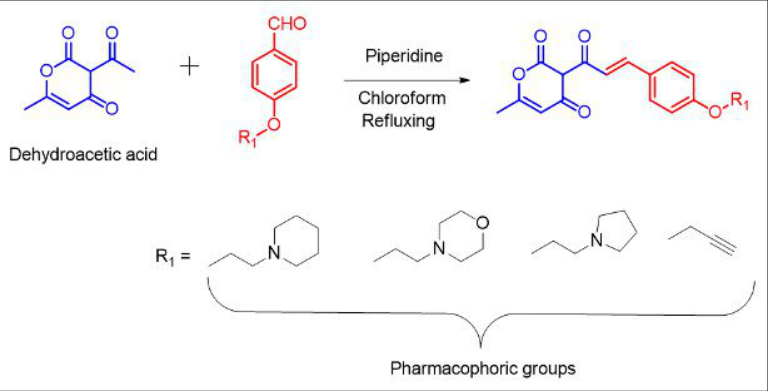 Figure 3
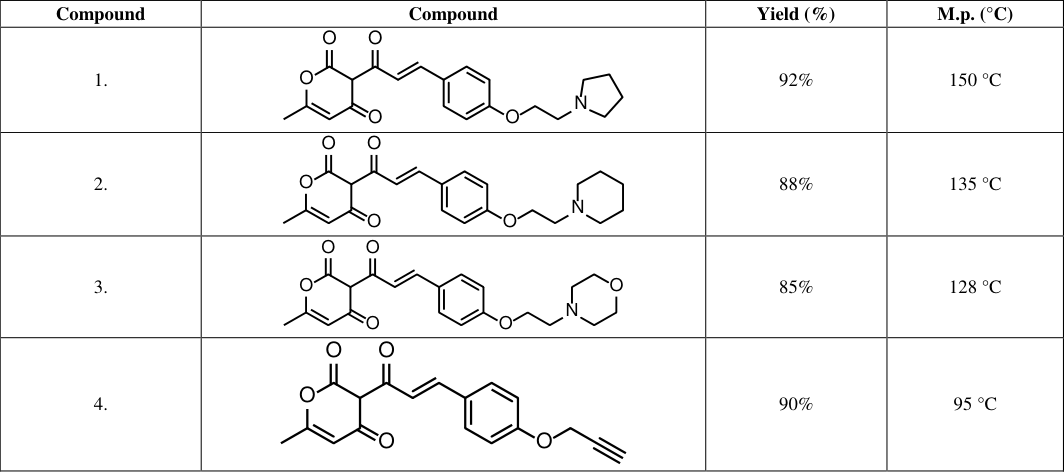 Table 1
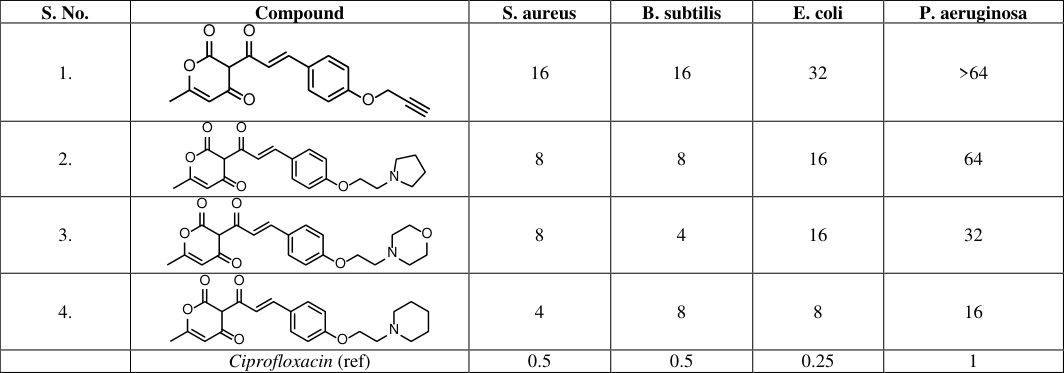 Table 2
Introduction
Antibiotic resistance has become a critical global health issue -it is estimated that by 2050, drug-resistant infections could cause 10 million deaths annually if new therapeutics are not developed [1] . In response, researchers are exploring novel chemical scaffolds and hybrid molecules to combat resistant bacteria. Chalcones (1, 3-diaryl-2-propen-1-ones) are one such promising class of compounds. These open-chain flavonoid precursors are known to exhibit a broad range of biological activities, including significant antibacterial effects [2] . Recent reviews highlight that numerous chalcone derivatives show potent activity against both Gram-positive and Gram-negative bacteria, with some MIC values reaching the nanomolar level [3] . However, many simple chalcones display only moderate antibacterial potency; for example, unsubstituted chalcones often require concentrations on the order of 0.4-0.6 mg/mL to inhibit Staphylococcus aureus and Bacillus subtilis [4] . This indicates that while the chalcone scaffold is bioactive, structural modifications are needed to enhance its efficacy. One approach to improve the activity of a known scaffold is molecular hybridization -the rational design of a single hybrid molecule by merging two pharmacophores with different but complementary biological functions [5] . In the context of antibacterials, a logical strategy is to combine the chalcone core with aminoalkyl groups. Aminoalkyl compounds, alongwith quaternary ammonium salts, are well-known broad-spectrum antimicrobials widely used as disinfectants due to their membrane-disrupting action [6] .
Fig 1:
The Biological properties associated with the chalcone derivatives For instance, benzalkonium chloride (a quaternary ammonium surfactant) can permeabilize and kill a wide range of bacteria by targeting cell membranes [7] . We hypothesized that appending an aminoalkyl moiety to the chalcone framework could yield hybrids that leverage both the chalcone's enzymatic or intracellular targets and the aminoalkyl's membrane disruption ability. Previous studies provide encouraging evidence for this concept. Nielsen et al. demonstrated that introducing "cationic" aliphatic amino substituents onto chalcone rings produces highly potent antibacterial agents [8] . In their work, the optimal placement of an aminoalkyl group was at the 2′position of the chalcone's B-ring, especially when paired with a hydrophobic 5′-substituent [9] . Moreover, the addition of a second amino group on the A-ring conferred improved selectivity for bacterial over mammalian membranes and broadened activity to include difficult Gram-negative pathogens. Similarly, Shen et al. reported a series of chalcone-alkyl-lysine conjugates (peptide mimic hybrids) that exhibited remarkable antibacterial efficacy, with MIC values of 1-4 μg/mL against major Gram-positive and Gram-negative bacteria. These findings underscore the potential of chalcone-aminoalkyl hybrids as a new class of antibiotics [10][11][12] . Given this background, we aimed to design and synthesize a set of novel chalcone-aminoalkyl hybrid compounds and evaluate their antibacterial activities. In this study, six new derivatives were prepared by linking a chalcone scaffold with various aminoalkyl substituents. Figure 1 illustrates examples of bioactive chalcones from nature and literature, and Figure 2 highlights typical bioactive aminoalkyl compounds (such as cationic surfactants and amino acid derivatives) that inspired our design. The hybridization approach used in our design is depicted in Figure 3, showing the fusion of the two pharmacophores into a single molecular framework. We report the synthetic methodology, structural characterization, and in vitro antibacterial testing results for these six chalcone-aminoalkyl hybrids, along with a comparative analysis of their activity relative to parent chalcones and reference antibiotics. The outcomes provide insight into structure-activity relationships (SAR) within this hybrid series and demonstrate the effectiveness of molecular hybridization for enhancing antibacterial potency. in parts per million relative to TMS. Mass spectra were obtained using ESI (electrospray ionization) on a QTOF instrument. Elemental analyses were in agreement with calculated values (within ±0.4%).
Synthesis of Chalcone-Aminoalkyl Derivatives
Chalcone Formation: The synthesis of chalcone derivatives was carried out using a straightforward condensation reaction. Dehydroacetic acid (1 mmol) and benzaldehyde aminoalkyl derivative (1 mmol) were combined in a 100 ml round-bottom flask containing dry chloroform as the solvent. Piperidine (10 mol %) was added as an organocatalyst, and the reaction mixture was stirred at room temperature until completion, as monitored by thinlayer chromatography (TLC) and visualized under a UV lamp. Upon completion, the mixture was extracted using ethyl acetate and water. The organic layer was separated, dried over anhydrous sodium sulphate, and concentrated using a rotary evaporator. The resulting crude product underwent purification through silica gel column chromatography, yielding the chalcone derivatives as oils. The final products were characterized using spectroscopic techniques, including proton nuclear magnetic resonance (^1H NMR) spectroscopy on a BRUCKER 300 MHz instrument and mass spectrometry on a Micromass Quattro II instrument, confirming their structures and purity. The structure of the chalcone was confirmed by the presence of a strong carbonyl band around 1650 cm -1 in the IR and the characteristic trans-α,β-unsaturated proton signals in the 1H NMR (two doublets at δ ~7.7 and7.9,J≈15.6Hz).
(E)-6-methyl-3-(3-(4-(2-(pyrrolidin-1-yl) ethoxy) phenyl) acryloyl)-2H-pyran-2, 4 (3H)-dione
The compound was isolated as an oil with a melting point of 115-117°C. The ¹H NMR spectrum (BRUCKER 300 MHz)
(E)-6-methyl-3-(3-(4-(2-(piperidin-1-yl) ethoxy) phenyl) acryloyl)-2H-pyran-2, 4 (3H)-dione
The compound was isolated as a pale yellow oil, melting at 120-122°C, with ¹H NMR δ 10.14 (s, 1H), 8.
(E)-6-methyl-3-(3-(4-(2 morpholinoethoxy) phenyl) acryloyl)-2H-pyran-2, 4 (3H)-dione
The compound was isolated as a pale yellow solid with a melting point of 125-127°C. Its ¹H NMR δ 10.14 (s, 1H), 8.28 (d, J = 16 Hz, 1H), 7.95 (d, J = 15.8 Hz, 1H), 7.72-7.65 (m, 2H), 7.11 (t, J = 8 Hz, 2H), 5.97 (s, 1H), 4.11 (t, 2H, -OCH₂-), 3.65 (t, 4H, morpholine protons), 2.86 (t, 2H), 2.67 (s, 3H), and 2.36 (t, 4H, -NCH₂-) and ¹³C NMR peaks appeared at δ 190.6, 169.2, 160.8, 141.5, 131.2, 126.9, 113.9, 67.3, 46.8, and 18.9 ppm.
(E)-6-methyl-3-(3-(4-(prop-2-yn-1-loxy)phenyl) acryloyl)-2H-pyran-2, 4 (3H)-dione
The compound appeared as a pale yellow oil with a melting point of 130-132°C. The ¹H NMR spectrum exhibited peaks at δ 10.14 (s, 1H), 8.28 (d, J=16 Hz, 1H), and 3.32 (s, 1H), while ¹³C NMR signals were recorded at δ 190.1, 168.7, 162.0, 142.8, 129.7, 127.5, 114.7, 68.5, 55.2, and 20.3 ppm.
Antibacterial Activity Assay
The antibacterial activities of compounds 1-6 were evaluated by determining their minimum inhibitory concentrations (MICs) against representative Gram-positive and Gram-negative bacteria. A broth microdilution method (in 96-well plates) was employed according to Clinical and Laboratory Standards Institute (CLSI) guidelines. The following bacterial strains were tested:
Each compound was dissolved in DMSO and diluted in Mueller-Hinton broth to concentrations ranging from 1 μg/mL to 128 μg/mL. Bacterial suspensions (5×10.5 CFU/mL, 0.5 McFarland standard) were added to each well. After incubation at 37 °C for 18-24 h, the lowest concentration of compound that completely inhibited visible bacterial growth was recorded as the MIC. Ciprofloxacin, a standard broad-spectrum antibiotic, was included as a positive control (MIC values for ciprofloxacin against the test strains were in the range 0.25-1 μg/mL). All tests were performed in triplicate to ensure reproducibility.
Results & Discussion
Synthesis of Hybrids: The synthetic route to the chalconeaminoalkyl hybrids is outlined in Scheme 1. The initial Claisen-Schmidt condensation proceeded smoothly under mild basic conditions to afford the p-aminochalcone intermediate in excellent yield. Using 4aminophenylacetophenone as one reactant was crucial, as it introduced an aniline functionality that could be derivatized in the next step. The condensation tolerated various benzaldehyde partners (e.g., benzaldehyde itself for an unsubstituted phenyl chalcone, or substituted benzaldehydes for different aryl groups), though in our series we primarily used unsubstituted benzaldehyde to keep the B-ring constant as phenyl. Scheme 1 illustrates the synthesis of chalcone derivatives with pyrrolidine substitution. In an attempt to prepare the starting molecules bearing the pharmacophoric aminoalkyl groups the nucleophilic substitution reaction was employed to react the 4hydroxybenzaldehyde and 1-(2-chloroethyl)piperidine hydrochloride, 4-(2-chloroethyl)morpholine hydrochloride, 1-(2-chloroethyl)pyrrolidine hydrochloride and propargyl bromide respectively using anhydrous potassium carbonate as base in dry acetone. Similar synthetic method was used for preparation of morpholine, piperidine, pyrrolidine and propargyl analogues of the benzaldehyde. The use of potassium carbonate as base potentially enhanced the nucleophilicity of 4-hydroxy benzaldehyde molecule and enhanced the reaction. Interestingly while reacting the propargyl bromide the sodium hydride was used as the base in reaction due to it's better results over the other bases. Selection of appropriate solvent for the substitution reaction was done by selecting the reported solvents in literature and different solvents like Acetone, Tetrahydrofuran, Ethanol, dioxane, acetonitrile and water was careened and based on the ease of product isolation and yield the dry acetone was finalized as the appropriate solvent for the reaction. The other polar solvents like dioxane and acetonitrile also led to the formation of the products but the isolation of the product was not effective with them. Halogenated solvents like chloroform and dichloromethane was found to be ineffective due to it's high hydrophobicity. The selection of right solvent and base results in the synthesis of 4 benzaldehyde derivatives named compound 1, 2, 3, and 4 bearing propargyl, piperidine, morpholine and pyrrolidine heterocyclic moieties. The synthetic Scheme 2 represents correct reaction sequence, reaction conditions for the synthesis of desired molecules. Scheme 3 and 4 demonstrate the synthesis of chalcone morpholine and propargyl hybrid respectively. After optimizing the appropriate reaction condition we extended the synthesis of chalcone derives for piperidine and morpholine analogues also as shown in the scheme 2 and 3. The reaction methodology works excellent and the desired products were obtained in good yield. Table 1 shows the melting points and percentage yield regarding the synthesized analogues. All compounds were analyzed by spectroscopic methods as described above. The data confirmed that the chalcone core remained intact after N-substitution. There was no evidence of side reactions such as Michael addition to the α,βunsaturated carbonyl, indicating that our conditions (particularly the use of mild base or reductive amination) selectively functionalized the aniline nitrogen. The presence of electron-donating amino substituents could potentially influence the electron distribution in the chalcone system; however, NMR coupling constants for the double bond protons remained ~16 Hz, suggesting the double bond retained its trans configuration and conjugation.
Antibacterial Activity:
The antibacterial testing results for compounds 1-6 are summarized in Table 2. All six chalcone-aminoalkyl hybrids demonstrated measurable activity against the four test bacteria, though their potency varied depending on the substituents. In general, the hybrids were most effective against the Gram-positive strains (S. aureus and B. subtilis), with several compounds showing single-digit MIC values in μg/mL. Activity against Gramnegative E. coli and P. aeruginosa was slightly lower (higher MICs), which is a common trend due to the permeability barrier of the Gram-negative outer membrane. Nonetheless, the fact that our compounds showed micromolar activity even against P. aeruginosa (a notoriously drug-resistant organism) is promising. Ciprofloxacin (ref) 0.5 0.5 0.25 1
Each value is the concentration of compound required to completely inhibit growth of the indicated organism in vitro. ">64" indicates no full inhibition at the highest tested concentration (64 μg/mL). As shown, all hybrids exhibited potent antibacterial activities compared to conventional chalcones. The Piperidine analogue (4) was the most potent overall, especially against Gram-positive bacteria, with MIC = 4 μg/mL for both S. aureus and 8 μg/mL B. subtilis. This is only about two-fold higher than the MIC of the potent antibiotic ciprofloxacin for those strains, highlighting the remarkable efficacy of compound 6. The pyrrolidine (2) and morpholine (3) were also highly active against Grampositives (MIC = 8 μg/mL). For Gram-negative E. coli, compounds 3 and 4 showed the best inhibition (MIC = 8 μg/mL), whereas compounds 1 required 16 μg/mL against the challenging P. aeruginosa, compound 4 and 6 again were most effective (MIC = 16 μg/mL), with compound 3 and 5 showing moderate activity (32 μg/mL), and the smallest amino substituents (1 and 2) being weak or inactive (>64 μg/mL for 1).
These results indicate clear structure-activity relationships. First, increasing the size (lipophilicity) of the ring on the aniline generally improved antibacterial potency, particularly for Gram-positive bacteria. A progression is observed from compound 1 (propargyl) to compound 4 (piperidine), where MICs drop from 16 μg/mL to 4 μg/mL against S. aureus as the alkyl chain length increases. The enhanced activity could be due to greater hydrophobic interactions with bacterial membranes, facilitating penetration or disruption. However, very bulky substituents like benzyl (compound 5) did not further lower the MIC for Gram-negative bacteria, possibly because such bulky groups hinder passage through the Gram-negative outer membrane or porins. Second, introducing a morpholine has a notable effect on Gram-negative activity. Compound 3 was significantly more potent against E. coli and P. aeruginosa than its mono-alkyl analogs with comparable chain length. The tertiary amine lacks an N-H and is more strongly basic, which likely means it is largely protonated (as an ammonium cation) under physiological conditions. This cationic character can enhance interactions with the negatively charged bacterial cell envelope and improve uptake in Gram-negative cells. In contrast, secondary amines (compounds 1and perturbation of cell membranes or energy production. The addition of cationic aminoalkyl groups likely biases our hybrids toward a membrane-targeting mode of action. Cationic amphiphiles can disrupt the lipid bilayer of bacteria, causing leakage of cellular contents and cell death. Nielsen et al. found that their aminoalkyl-chalcones caused unselective disruption of membranes at high concentrations, and with appropriate substitution could selectively target bacterial membranes. In our case, the strong activity against Gram-positive bacteria (which have a single cell membrane and thick peptidoglycan) and decent activity against Gramnegatives suggests membrane perturbation is indeed a likely factor. The larger alkyl groups (propyl, butyl, benzyl) would enhance hydrophobic interactions with lipid tails in the membrane, explaining the improved potency. Meanwhile, the chalcone core might still engage intracellular targets once past the membrane, possibly giving a two-pronged attack. Further studies, such as membrane depolarization assays or time-kill kinetics, would be needed to confirm the exact mechanism. Nonetheless, the molecular hybridization approach clearly yielded compounds with synergistic antibacterial effects, combining the membrane-disruptive properties of cationic amphiphiles with the known bioactivity of the chalcone scaffold. In summary, the SAR within this small series suggests that an optimal chalcone-aminoalkyl hybrid for broad-spectrum activity should have a piperidine or heterocyclic substitution. Among our compounds, piperidino and morpholino and pyrrolidino best fulfill these criteria and showed the highest potency across the panel of bacteria. These two can be considered lead candidates for further development. On the other hand, the weakest compound, 1, indicates that too small or hydrophilic substituent is suboptimal, likely due to insufficient membrane interaction. Compound 2 and 3 were intermediate, suggesting a threshold around N-propyl beyond which activity jumps (especially for Gram+). Compound 4 performed very well on Gram+ but less so on Gram-, perhaps because the aromatic substituent, while conferring lipophilicity, might impede crossing the Gram-outer membrane or be partially sterically hindered in interacting with targets. Our findings complement those reported by Shen et al. on chalcone-lysine conjugates. Their best hybrid (compound 6d in that study) had MIC 1-4 μg/mL, very close to what we achieved, despite using a different cationic fragment (a whole amino acid vs. simple alkylamine). This implies that simpler aminoalkyl chains can be nearly as effective as more complex peptide-like moieties in this context, which is advantageous for synthetic accessibility and cost. It also reinforces that chalcone-based hybrids are a viable direction for new antibiotic design.
Conclusion
In conclusion, we have successfully synthesized six novel chalcone-aminoalkyl hybrid compounds through a straightforward process and demonstrated their potent antibacterial activity. The integration of aminoalkyl substituents into the chalcone framework via molecular hybridization led to a dramatic enhancement of antimicrobial efficacy, especially against Gram-positive pathogens. The best-performing hybrids showed low MIC values (4-8 μg/mL), representing a 50to 100-fold improvement over simple chalcone analogs and approaching the potency of standard antibiotics. The structure-activity relationships observed indicate that both the length and substitution of the aminoalkyl chain critically influence activity. This work highlights the utility of the molecular hybridization strategy in antibiotic lead discovery, by showing that combining two bioactive motifs into one molecule can yield synergistic effects. The chalconeaminoalkyl hybrids reported herein broaden the chemical space of chalcone-based antibacterials and provide a foundation for further development. Future work will focus on expanding the library (e.g., introducing additional aromatic substitutions or multi-cationic centers), investigating the mechanism of action in depth, and evaluating the compounds' selectivity and toxicity in mammalian cell models. Overall, our findings support the continued exploration of chalcone hybrids as potential solutions to the pressing challenge of antimicrobial resistance.
Acknowledgement
AcknowledgementAuthors acknowledge the necessary support from M.L.T. College Saharsa for providing necessary support to conduct research work.
References
12 in the original paper- de Oliveira AS, Cenci AR, Gonçalves L, Thedy MEC, Justino A, Braga AL, et al. Chalcone derivatives as antibacterial agents: an updated overview. Curr Med Chem. 2024;31(17):2314-2329.
- Okolo EN, Ugwu DI, Ezema BE, Ndefo JC, Eze FU, Ezema CG, et al. New chalcone derivatives as potential antimicrobial and antioxidant agents. Sci Rep. 2021;11:21781.
- Carson RT, Larson E, Levy SB, Marshall BM, Aiello AE. Use of antibacterial consumer products containing quaternary ammonium compounds and drug resistance in the community. J Antimicrob Chemother. 2008 Nov;62(5):1160-1162.
- Song J, Zhang SY, et al. Synthesis and biological evaluation of amino chalcone derivatives as antiproliferative agents. Molecules. 2020;25(23):5530.
- Nielsen SF, Larsen M, Boesen T, Schønning K, Kromann H. Cationic chalcone antibiotics: design, synthesis, and mechanism of action. J Med Chem. 2005;48(7):2667-2677.
- Shen BY, Wang MM, Xu SM, Gao C, Wang M, Li S, et al. Antibacterial efficacy evaluation and mechanism probe of small lysine-chalcone peptide mimics. Eur J Med Chem. 2022;244:114885.
- Djemoui A, Naouri A, Ouahrani MR, Djemoui D, Lahcene S, Lahrech MB, Boukenna L, Albuquerque HMT, Saher L, Rocha DHA, Monteiro FL, Helguero LA. Chalcone Hybrids: Potential Antimicrobial and Antioxidant Candidates. J Chem Health Risks. 2024;14(2):2615-2625.
- Zainuri DA, Thanigaimani K, Narasimhan B, Lim SM, Lai CS, Narayana B, et al. Synthesis, molecular docking, ADMET studies and antimicrobial evaluation of coumarin-chalcone hybrids. Nat Prod Res. 2024;38(10):2422-2432.
- Nowakowska Z. A review of anti-infective and antiinflammatory chalcones. Eur J Med Chem. 2007;42(2):125-137.
- Zhou CH, Wang Y. Recent researches in triazole compounds with antibacterial activities. Curr Med Chem. 2012;19(2):239-280.
- Ni L, Meng L, Pan H, Huang X, Wang L. Synthesis and antibacterial evaluation of novel chalcone derivatives containing quinoline moiety. Bioorg Med Chem Lett. 2014;24(22):5287-5290.
- Batovska DI, Todorova IT. Trends in utilization of the chalcone scaffold in medicinal chemistry. Curr Clin Pharmacol. 2010;5(1):1-29.