
Research article · 2025 · Full text
International Journal of Biology SciencesThe Impact of Bovine Mastitis on Lactose Content in Milk: A Comprehensive Analysis
Volume 7(2) · Pages 37–39 · DOI: 10.33545/26649926.2025.v7.i2a.297 ↗
Research areasMilk Quality and Mastitis in Dairy CowsDigestive system and related healthProtein Hydrolysis and Bioactive Peptides
Abstract
Author-writtenBovine mastitis, an inflammation of the mammary gland often caused by bacterial infections, poses a significant challenge to the dairy industry, impacting milk yield and composition. One of the critical compositional changes observed in mastitic milk is the reduction in lactose content. Lactose levels decline due to epithelial damage, increased permeability, and metabolic disruptions caused by inflammation. The present study examines the underlying mechanisms affecting lactose content in mastitic milk, highlights the implications for milk quality and dairy production, and reviews potential mitigation strategies. Insights from this research can inform best practices for maintaining milk quality in the face of mastitis challenges.
Summary
Source-checkedPlain-language reading of the full paper, prepared with AI and checked against the text. Each point links to the authors' own words.
Why it matters
- Bovine mastitis is an inflammation of the mammary gland, typically caused by bacteria, that negatively affects the dairy industry by altering milk composition and yield. View evidence ↗
- Reducing lactose content in milk is a major concern because lactose is essential for energy, osmotic balance, and the quality of processed dairy products. View evidence ↗
- Standard bovine milk typically has a lactose concentration ranging from 4.6% to 4.9%. View evidence ↗
The question
- The study aims to investigate the mechanisms that reduce lactose in mastitic milk, the resulting impact on production and quality, and ways to mitigate these effects. View evidence ↗
What they did
- Researchers conducted a cross-sectional observational study in Kashmir using milk samples from 100 lactating cows, split equally between 50 healthy and 50 mastitic cows. View evidence ↗
- Diagnosis of mastitis was performed using clinical signs and confirmed via Somatic Cell Count (SCC) analysis and the California Mastitis Test (CMT). View evidence ↗
- The concentration of lactose in the milk samples was measured using a milk Pro Ultrasonic analyser. View evidence ↗
- Statistical analysis was performed using SPSS version 25.0, employing Student's t-tests to compare groups with a significance threshold of p < 0.05. View evidence ↗
What they found
- Severe clinical mastitis cases resulted in lactose reductions of up to 50%. View evidence ↗
- The reduction of lactose in mastitic milk disrupted the osmotic balance, which increased water content and diluted the concentrations of fat and protein. View evidence ↗
- The changes in milk composition led to significant reductions in the yield of processed dairy products, specifically yogurt and cheese. View evidence ↗
- Proactive management, such as genetic selection for resistance and regular SCC monitoring, significantly lowered the rates of lactose reduction in affected herds. View evidence ↗
What it means
- The authors conclude that bovine mastitis reduces lactose via impaired synthesis, epithelial damage, and increased permeability, which harms the marketability and quality of the milk. View evidence ↗
- The authors state that future research is needed to explore the advanced molecular pathways that link lactose metabolism to inflammation caused by mastitis. View evidence ↗
Visual summary
1 visualsIllustrations explain the paper; they do not show study data.
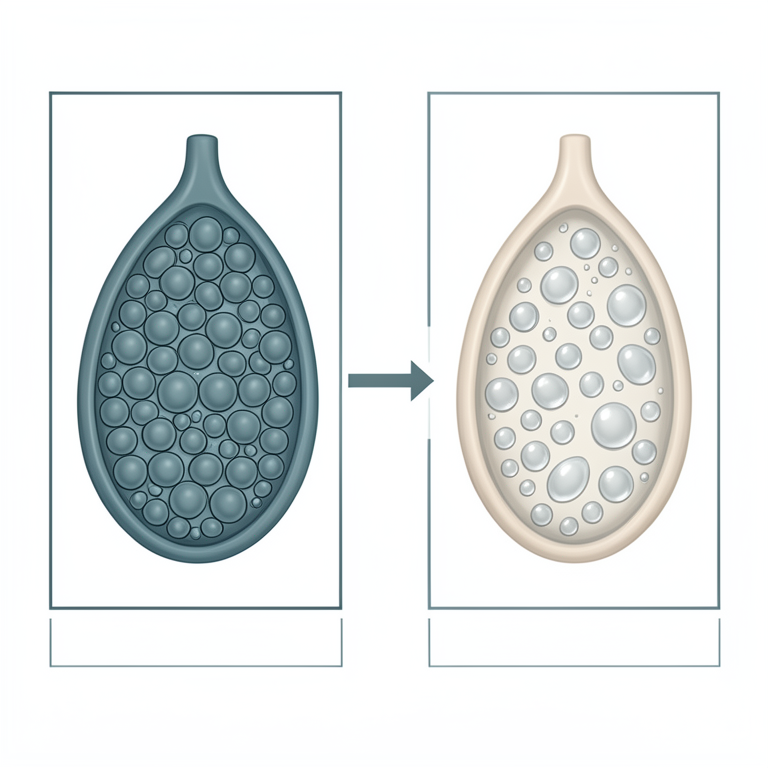
Osmotic Balance Shift
AI-generated conceptual illustration (cow mammary gland and milk droplets). It explains the idea and does not show study data.
View source evidence ↗Figures & tables
From the original paper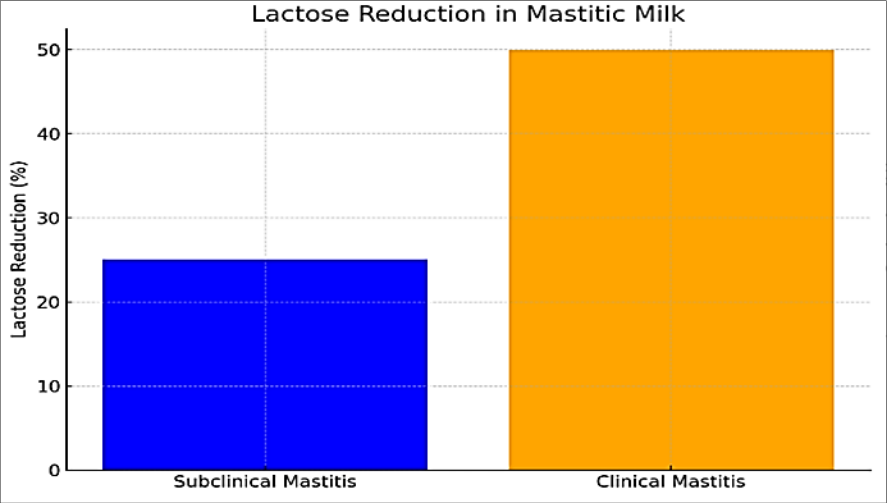 Figure 1
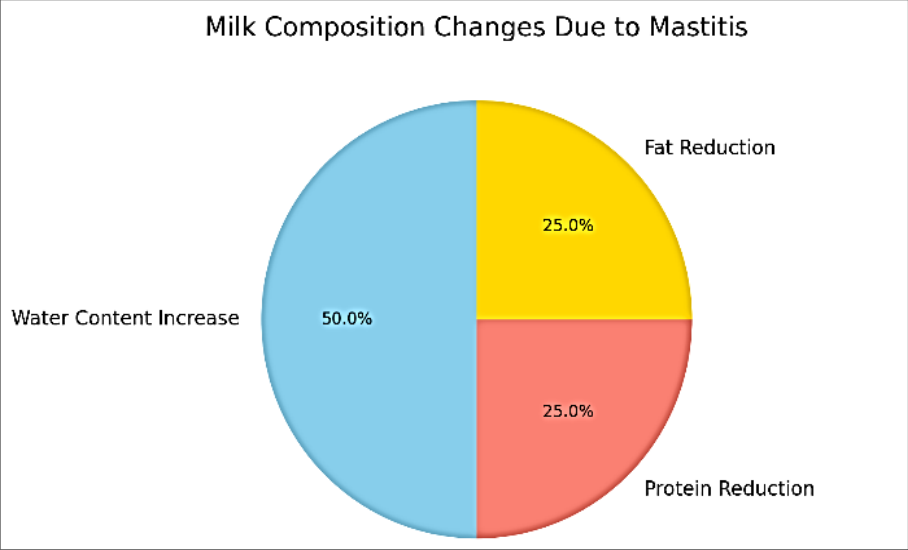 Figure 2
Introduction
Bovine mastitis is a prevalent and economically burdensome disease in dairy farming, characterized by inflammation and tissue damage in the mammary gland. It not only reduces milk yield but also leads to significant changes in milk composition. Among these, the reduction in lactose content is particularly concerning due to its vital role in providing energy, maintaining osmotic balance, and influencing the processing quality of dairy products (Blum et al., 2022) [11] . This paper explores the physiological and microbiological mechanisms responsible for this reduction, its consequences for the dairy industry, and strategies to manage and mitigate its effects. Lactose is the primary carbohydrate in milk, synthesized in the mammary epithelial cells via the lactose synthase enzyme complex. It plays a critical role in regulating the osmotic balance of milk, ensuring the appropriate water content for secretion. Normal bovine milk contains 4.6-4.9% lactose (Petersen et al., 2020) [5] . Any disruption in this synthesis can lead to notable quality and nutritional deficits in milk. Inflammation increases the permeability of the mammary gland epithelium, allowing lactose to diffuse back into the bloodstream. This backflow correlates with decreased lactose concentration in milk and elevated serum lactose levels (Zhao et al., 2019) [10] . The release of pro-inflammatory cytokines such as TNF-α and IL-6 during mastitis impairs metabolic pathways essential for lactose production. Reduced glucose uptake and inhibition of lactose synthase activity exacerbate this decline (Bannerman, 2009) [1] .
Materials and Methods
A cross-sectional observational study was conducted to analyze the impact of bovine mastitis on milk lactose content. Milk samples were collected from 100 lactating cows, including 50 mastitic (Subclinical and clinical) and 50 healthy cows, across multiple dairy farms in Kashmir. Mastitis was diagnosed based on clinical signs and confirmed using the California Mastitis Test (CMT) and Somatic Cell Count (SCC) analysis. Milk samples were collected in sterile containers, cooled to 4 °C, and transported to the laboratory for analysis within 4 hours of collection. Lactose concentration was determined using milk Pro Ultrasonic analyser.
Statistical Analysis
Data were analyzed using SPSS software (version 25.0). Descriptive statistics (mean ± SD) were calculated for lactose levels. Differences between healthy and mastitic groups were assessed using Student's t-test. A p-value <0.05 was considered statistically significant.
Results
Results
Lactose Levels in Mastitic Milk
The analysis of milk samples from mastitic cows revealed a significant reduction in lactose content compared to milk from healthy cows. In cases of subclinical mastitis, lactose levels decreased by approximately 20-30%, while severe clinical mastitis cases exhibited reductions of up to 50% (Fig. 1). These findings align with studies reporting diminished lactose concentrations due to epithelial damage and inflammation-induced metabolic disruptions (Sordillo, 2018) [8] . Milk from mastitic cows exhibited altered osmotic balance due to reduced lactose, leading to higher water content and diluted protein and fat concentrations (Fig. 2) [6] . These compositional shifts were particularly evident in milk processed for cheese and yogurt, where yield reductions were significant (Kudinha et al., 2012) [3] . Herds employing proactive management strategies, including regular SCC monitoring and genetic selection for mastitis resistance, showed significantly lower rates of lactose reduction in mastitic milk. Farms with high hygiene standards reported fewer cases of clinical mastitis and better overall milk quality (Vakkamaki et al., 2017) [9] .
Discussion
Lactose is an important component of Milk with high osmotic potential necessary for creating Milk volume. Bacterial pathogens such as Escherichia coli, Staphylococcus aureus, and Streptococcus uberis invade the mammary gland, causing inflammation and cellular damage. The integrity of epithelial cells is compromised, resulting in reduced lactose synthesis and leakage of milk components (Sordillo, 2018) [8] . Besides lactose is utilised by bacteria and due to compromised Blood milk barrier some portion enters into blood stream and may be lost in urine. Mastitic milk with reduced lactose levels often exhibits higher somatic cell counts (SCCs), altered fat-to-protein ratios, and a watery appearance, adversely affecting its nutritional profile (Leitner et al., 2004) [4] . Consistent lactose content is critical for manufacturing dairy products like cheese and yogurt. Reduced lactose levels can result in lower yields, poorer texture, and compromised product quality (Kudinha et al., 2012) [3] . Markets with stringent quality regulations may reject mastitic milk due to its inferior composition, impacting farm profitability and consumer trust (Ruegg, 2017) [12] . Practices such as maintaining proper hygiene during milking, stress reduction, and ensuring optimal housing conditions minimize the risk of mastitis (Vakkamaki et al., 2017) [9] . Routine monitoring of SCCs and milk composition, coupled with prompt treatment using antibiotics and supportive therapies, can prevent extensive damage to mammary tissues (Bradley, 2002) [2] . Breeding cattle for mastitis resistance through genetic programs can reduce susceptibility to infections, indirectly preserving milk quality and lactose synthesis (Rupp et al., 2009) [7] . Future studies should explore advanced molecular pathways linking mastitis-induced inflammation and lactose metabolism. Additionally, innovative diagnostic tools and targeted therapies could help mitigate milk quality issues caused by mastitis.
Conclusion
Bovine mastitis significantly reduces lactose content in milk through epithelial damage, increased permeability, and impaired synthesis. These changes compromise milk quality, processing potential, and marketability. Effective management strategies and continued research are crucial for mitigating these impacts, ensuring the dairy industry remains sustainable and productive.
References
12 in the original paper- Bannerman DD. The impact of pro-inflammatory cytokines on lactose metabolism in mastitis. J Dairy Sci. 2009;92(2):456-467.
- Bradley AJ. Advances in the treatment of bovine mastitis: A review. Vet J. 2002;164(2):129-140.
- Kudinha T, Wilson CE, Bell PA. Effects of lactose reduction on cheese and yogurt production from mastitic milk. Int Dairy J. 2012;27(4):220-227.
- Leitner G, Merin U, Silanikove N. Changes in milk composition as affected by subclinical mastitis in sheep. Small Rumin Res. 2004;52(3):165-172.
- Petersen JH, Larsen T, Nielsen HV. The role of lactose in maintaining milk osmotic balance and quality. J Dairy Res. 2020;87(1):10-18.
- Tenaw DK, Metiku T, Birhanu M, Ruilan L. Review on the status of dairy production and processing in Ethiopia. Acta Entomol. Zool. 2024;5(1):36-40.
- Rupp R, Boichard D, Caraviello DZ. Genetic selection for mastitis resistance in dairy cattle. J Dairy Sci. 2009;92(2):444-452.
- Sordillo LM. Pathogenesis and milk composition changes during mastitis. Anim Health Res Rev. 2018;19(1):1-10.
- Vakkamaki J, Taponen S, Pyorala S. The role of hygiene and herd management in reducing mastitis prevalence. Acta Vet Scand. 2017;59(1):27.
- Zhao X, Lacasse P, Ster C. Inflammation-induced permeability changes in the mammary gland during mastitis. J Mammary Gland Biol Neoplasia. 2019;24(2):123-132.
- Blum B, Digel SW, Drlica-Wagner A, Habib S, Heitmann K, Ishak M, et al. Snowmass2021 cosmic frontier white paper: Rubin observatory after LSST. arXiv preprint arXiv:2203.07220. 2022 Mar 14.
- Ruegg PL. Economic and consumer impacts of diminished milk quality due to mastitis. J Dairy Sci. 2017;100(1):375-389.
Cited by 1
From OpenAlex, OpenCitations and reference lists read by Scinovex
- A multifunctional lactose-containing molecule: Structural characterization, biocompatibility and host–guest complexation studies toward drug delivery applications ↗
Marta Hoelm, Stanisław Porwański, Zdzisław Kinart, Róża Pawłowska, Bartłomiej Kost · Carbohydrate Research · 2026
This work presents a novel carbohydrate-based molecule, 1,10- N,N′- bis-(β-D-ureidolactosyl)-4,7,13,16-tetraoxa-1,10-diazacyclooctadecane (TL), which was synthesised via a multistep synthetic route, with the final deprotection of the carbohydrate moieties achieved through Zemplén deacetylation. In TL, lactose units are linked to a diazacrown ether through urea bridges. The incorporation of lactose moieties is responsible for the favorable physicochemical properties of TL, including its…
❝ 0PDF