
Research article · 2025 · Full text
International Journal of Biology SciencesImpact of resistant starch on human health: A review
Volume 7(2) · Pages 18–21 · DOI: 10.33545/26649926.2025.v7.i2a.293 ↗
Research areasFood composition and properties
Abstract
Author-writtenA kind of carbohydrate known as resistant starch ferments in the large intestine rather than being digested in the small intestine, which enhances its health advantages. Numerous studies have demonstrated that Resistant Starch (RS) can be very helpful in both enhancing the digestive system and controlling blood sugar levels. It also aids in the control of the body's weight imbalance. The RS can provide help in cases of cardio-vascular disease. It occasionally functions as a prebiotic and healthy gut flora. This promotes the synthesis of short-chain fatty acids. It also plays a major part in preserving the dietary control of both type 1 and type 2 diabetes. All things considered, the RS is an important tool for managing and preventing a variety of chronic diseases in the human body.
Summary
Source-checkedPlain-language reading of the full paper, prepared with AI and checked against the text. Each point links to the authors' own words.
Why it matters
- Starch is a primary storage polysaccharide in plants and a major component of the human diet, found commonly in foods such as rice, wheat, and potatoes. View evidence ↗
- Unlike traditional starches that are digested in the small intestine, resistant starch (RS) reaches the colon undigested. View evidence ↗
- Once in the colon, resistant starch is fermented by local microbes to produce beneficial short-chain fatty acids (SCFAs). View evidence ↗
The question
- The review aims to examine the unique properties and potential health benefits of resistant starch regarding human nutrition and digestive health. View evidence ↗
What they did
- Resistant starch is classified into types (RS1 through RS5) based on physical and chemical characteristics, ranging from physically inaccessible starch to chemically modified versions. View evidence ↗
- The primary short-chain fatty acids produced during the fermentation of RS by gut microbiota are acetate, propionate, and butyrate. View evidence ↗
What they found
- RS ingestion specifically elevates butyrate levels, which helps reduce inflammation, lower the incidence of colon cancer, and improve gut barrier function. View evidence ↗
- Fermentation of RS in the large intestine increases beneficial bacteria, which is associated with reduced constipation, lower cholesterol, and a lower risk of colon cancer. View evidence ↗
- Resistant carbohydrates can enhance the body's reaction to insulin, improving the management of elevated blood sugar levels. View evidence ↗
- Because RS is harder to digest, the body expends more energy breaking it down, which may reduce hunger and aid in weight loss. View evidence ↗
- Consuming RS has been shown to lower post-prandial glucose and leptin responses, thereby reducing the risk of leptin and insulin resistance. View evidence ↗
- RS consumption increases the gut hormone peptide YY (PYY), which may lead to decreased food intake and hunger. View evidence ↗
- A meta-analysis indicates that resistant starch can reduce both total blood cholesterol and low-density cholesterol. View evidence ↗
- In studies examining cholesterol, longer durations of RS supplementation were associated with greater improvements. View evidence ↗
What it means
- The authors conclude that RS is a promising functional additive for convenience foods to improve insulin sensitivity, glucose tolerance, and post-meal satiety. View evidence ↗
- The benefits of RS are not universal, as individual variations in the gut microbiome can impact how a person responds to supplementation. View evidence ↗
- There is currently insufficient evidence to support the effects of RS on appetite or weight reduction across diverse populations. View evidence ↗
Visual summary
1 visualsIllustrations explain the paper; they do not show study data.
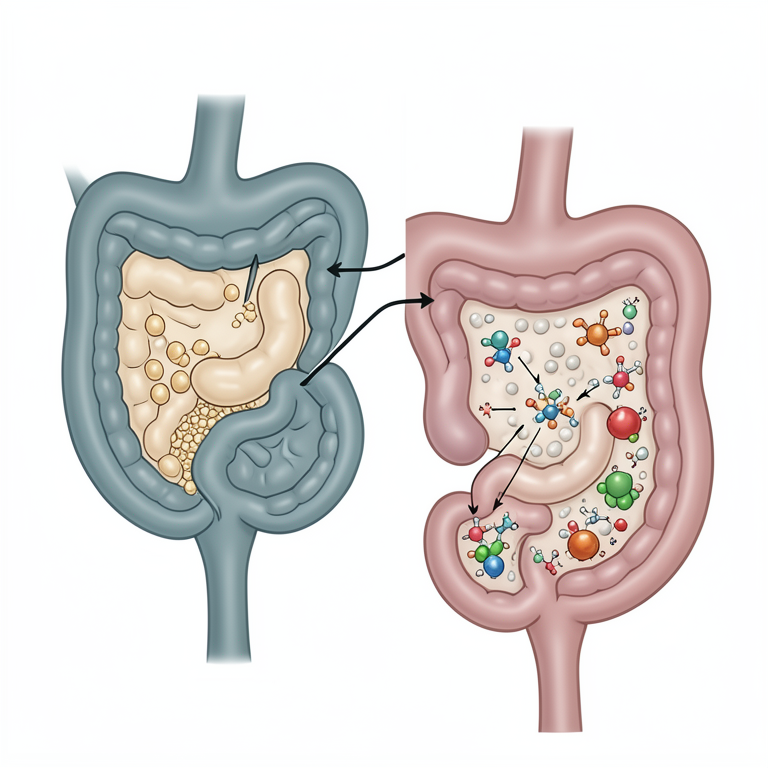
Pathway of Resistant Starch
AI-generated conceptual illustration (human digestive system). It explains the idea and does not show study data.
View source evidence ↗Figures & tables
From the original paper Table 1
Introduction
Importantly stored in a variety of forms, including grains, tubers, and seeds, starch is the main storage polysaccharide in plants. It is widely distributed in basic foods like wheat, rice, and potatoes and makes up a significant portion of the human diet. However, there is a specific subset of starch called Resistant Starch (RS) (Bojarczuk et al., 2022; Bello-Perez and Paredes-Lopez, 2008) [3,26] . RS is resistant to digestion and makes it to the colon undigested, in contrast to traditional starches that are broken down in the small intestine. Beneficial short-chain fatty acids (SCFAs) are produced here as a result of fermentation by local microbes. In the context of human nutrition and digestive health, this lecture examines the special qualities and possible health advantages of resistant starch. Starch and its breakdown products that are difficult for healthy people's small intestines to digest are referred to as resistant starch. It can be purposefully added as an addition to raw or prepared foods, as well as occurring naturally in foods. Acetate, propionate and butyrate are the main short-chain fatty acids (SCFAs) produced when RS enters the colon and is fermented by gut microbiota members (Bach Knudsen et al., 2018) [5] . Although both propionate and acetate can have an effect on health, butyrate is the SCFA that is most elevated by RS ingestion and has been specifically identified for improving health. Butyrate is important for human gut health because it improves gut barrier function, lowers the incidence of colon cancer, and reduces inflammation. Although it has been demonstrated that RS is one of the best fibres for raising butyrate levels in the general population, it is also evident that not everyone benefits equally, with some people not responding to RS supplementation (Venkataraman et al., 2016) [23] . This implies that variations in individual microbiomes have a significant impact on how RS consumption turns out and calls for further research into the processes of RS digestion and how they result in the generation of butyrate. Furthermore, further research is required to comprehend the consequences of RS consumption on health that go beyond butyrate levels. This review reviews recent breakthroughs in these essential questions for understanding the health advantages of RS (Venkataraman et al., 2016) [23] .
Classification
Resistant starch is divided into four categories based on its chemical and physical characteristics. RS1, RS2, RS3, and RS4 in that order. [13,27] [3] .
Classification
Classification
Impact of Resistant Starch Disease
Apart from the elevated butyrate generation, RS has further noteworthy health advantages. RS has a lesser release of glucose due to its reduced digestibility (Shaikh et al., 2019) [19] . It has been demonstrated that eating RS lowers postprandial glucose and leptin responses in people, which lowers the risk of insulin and leptin resistance ( [25,20,18,21] . Following RS consumption, there was also an increase in peptide YY (PYY), a crucial gut hormone that may contribute to decreased hunger and food intake ( [18,15,2] . These findings suggest that people who are obese or at risk for type 2 diabetes may benefit. However, in a prediabetic population, the STARCH experiment (Peterson et al., 2018) [17] , which sought to examine the effectiveness of RS supplementation in a long-term double blind, placebo controlled clinical trial, revealed no discernible benefit of RS supplementation. The majority of the studies discussed above have examined healthy people and extrapolated their findings to people with diabetes or prediabetes. The results of the STARCH trial's microbiome research have not yet been released, but it's possible that modifications in the microbiome that occur with the onset of diabetes hinder the body's capacity to respond favourably to resistant starch. According to a recent meta-analysis, resistant starch can reduce low-density cholesterol and total blood cholesterol (Yuan et al., 2018) [24] . This relationship is interesting because, among the short-chain fatty acids, propionaterather than butyrate-has been linked to preventing the synthesis of cholesterol, and increases in propionate are not typically observed when using RS supplements. The majority of the trials in the meta-analysis involved high amylose corn starch (RS2), but there were also two trials involving pinto beans (An additional source of RS2) and two with retrograded corn starch (RS3). The length of the studies also varied greatly, ranging from as short as two weeks to as long as fifty-two weeks. The longer studies showed greater improvements in cholesterol. The authors hypothesise that the mechanism of action may involve bile salt binding and/or viscosity increases that hinder the binding of cholesterol and triglycerides.
Application & Uses of Resistant Starch
The indigestible part of starch, known as resistant starch (RS), can pass through the small intestine and ferment un the colon. Over the last three decades, our understanding of the origins, applications, and physiological impacts of resistant starch has steadily expanded. However, using components with a high resistant starch concentration in food has just been done in the last ten years, first in Australia and now globally. In addition to staple foods like bread and breakfast cereals, foods made for people with specific physiological or medical requirements, like coeliac sensitivity and ulcerative colitis, or for people trying to control their energy intake, also contain these resistant starch-rich ingredients. Resistant starch has other benefits when compared with traditional sources of dietary fiber in that the preparation and design of foods with additional health benefits have the appearance, taste, and texture characteristics that encourage people to consume these "better for you" foods. As our knowledge of the range of physiological effects that occur through the consumption of resistant starch increases, more applications will be found for their inclusion in an expanding range of foods around the world.
Novel Aapproaches of Resistant Starch
Studying systems at several levels, such as the genome (Metagenomics), transcript (Metatranscriptomics), protein (Metaproteomics), and metabolome (Metabolomics), is becoming more and more popular in microbiome research. This has also been used in RS research and enables the study of not only the organisms but also the dynamics of the systems involved. Thus, for example, butyrate and butyrate After RS supplementation, forming genes can be quantified. On the other hand, RS supplementation may have hitherto unidentified effects, like connections to lipid metabolism (Maier et al., 2017; Kim et al., 2018) [14,10] . Using isotopically labelled resistant starch to track the metabolic fate in vivo is another intriguing strategy. In a mouse model, this has been done with potato starch (Herrmann et al., 2018; Herrmann et al., 2017) [7,8] , and the results indicate that butyrate is the most common short chain fatty acid with the label. The network of bacteria involved in this processing may be more complex than previously believed, as the bacteria that were most involved in assimilation of the labelled starch were, interestingly, various unclassified members of the Clostridiales and Dorea, rather than the typical bacteria discussed throughout this review that increase in abundance upon RS supplementation. Other technologies that have been used in microbiome research, such as germ-free animal models, gut-on-a-chip systems, and organoids, may also be applied to studies involving RS in the future (Pearce et al., 2018) [16] . These technologies could all offer crucial information about how RS affects the gut microbiome and human health.
Conclusion
Resistant starch is increasingly recognized for its potential as a functional additive in convenience foods, offering health benefits such as improved glucose tolerance, insulin sensitivity, and enhanced post-meal satiety. Despite its promise, resistant starch remains underappreciated and poorly understood in dietary contexts, with insufficient evidence to support its effects on weight or appetite reduction in various populations. Further research focusing on larger cohorts and investigating the impact of food processing methods is essential to fully elucidate its benefits and optimize its utilization in diverse diets and food products for effective disease prevention.
Figures and tables from the paper
| Classification | Description | Example of Food |
|---|---|---|
| RS1 | Physically inaccessible starch | Whole or partly milled grains and seeds |
| RS2 | Raw granular starch | Uncooked potato starch, green banana starch, gingko starch, high-amylose maize starch |
| RS3 | Retrograded starch | Cooked and cooled potatoes and cornflakes |
| RS4 | Chemically modified starch | Cross-linked starch and octenyl succinate starch |
| RS5 | Amylose–lipid complexes | Stearic acid-complexed high amylose starch |
Table text extracted from the original PDF; superscript letters are shown inline. The original table image is below.
View original table image
References
27 in the original paper- Baghurst PA, Baghurst KT, Record SJ. Dietary fiber, nonstarch polysaccharides and resistant starch -a review. Suppl Food Aust. 1996;48:3.
- Ble-Castillo JL, Juárez-Rojop IE, Tovilla-Zárate CA, García-Vázquez C, Servin-Cruz MZ, RodríguezHernández A, et al. Acute consumption of resistant starch reduces food intake but has no effect on appetite ratings in healthy subjects. Nutrients. 2017;9(7):696.
- Bojarczuk A, Skąpska S, Khaneghah AM, Marszałek K. Health benefits of resistant starch: A review of the literature. J Funct Foods. 2022;93:105094.
- Buttriss JL, Stokes CS. Dietary fiber and health: an overview. Nutr Bull. 2008;33:186-200.
- Bach Knudsen KE, Laerke HN, Hedemann MS, Nielsen TS, Ingerslev AK, Gundelund Nielsen DS, et al. Impact of diet-modulated butyrate production on intestinal barrier function and inflammation. Nutrients. 2018;10(10):1499.
- Fausto FD, Kacchi AI, Mehta D. Starch products in confectionery. Bever Food World. 1997;24(4):4-16.
- Herrmann E, Young W, Reichert-Grimm V, Weis S, Riedel CU, Rosendale D, et al. In vivo assessment of resistant starch degradation by the caecal microbiota of mice using RNA-based stable isotope probing-a proofof-principle study. Nutrients. 2018;10(2):179.
- Herrmann E, Young W, Rosendale D, Conrad R, Riedel CU, Egert M. Determination of resistant starch assimilating bacteria in fecal samples of mice by in vitro RNA-based stable isotope probing. Front Microbiol. 2017;8:1331.
- Keenan MJ, Zhou J, McCutcheon KL, Raggio AM, Bateman HG, Todd E, et al. Effects of resistant starch, a non-digestible fermentable fiber, on reducing body fat. Obesity (Silver Spring). 2006;14:1523-34.
- Kim MJ, Choi SJ, Shin SI, Sohn MR, Lee CJ, Kim Y, et al. Resistant glutarate starch from adlay: Preparation and properties. Carbohydr Polym. 2008;74(4):787-96.
- Keenan MJ, Zhou J, Hegsted M, Pelkman C, Durham HA, Coulon DB, et al. Role of resistant starch in improving gut health, adiposity, and insulin resistance. Adv Nutr. 2015;6(2):198-205.
- Kim YJ, Kim JG, Lee WK, So KM, Kim JK. Trial data of the anti-obesity potential of a high resistant starch diet for canines using Dodamssal rice and the identification of discriminating markers in feces for metabolic profiling. Metabolomics. 2019;15:1-11.
- Kim MK, Park J, Kim DM. Resistant starch and type 2 diabetes mellitus: Clinical perspective. J Diabetes Investig. 2024;15(4):395-401.
- Maier TV, Lucio M, Lee LH, VerBerkmoes NC, Brislawn CJ, Bernhardt J, et al. Impact of dietary resistant starch on the human gut microbiome, metaproteome, and metabolome. mBio. 2017;8:e01343e1417.
- Maziarz MP, Preisendanz S, Juma S, Imrhan V, Prasad C, Vijayagopal P. Resistant starch lowers postprandial glucose and leptin in overweight adults consuming a moderate-to-high-fat diet: A randomized-controlled trial. Nutr J. 2017;16:1-10.
- Pearce SC, Coia HG, Karl JP, Pantoja-Feliciano IG, Zachos NC, Racicot K. Intestinal in vitro and ex vivo models to study host-microbiome interactions and acute stressors. Front Physiol. 2018;9:1584.
- Peterson CM, Beyl RA, Marlatt KL, Martin CK, Aryana KJ, Marco ML, et al. Effect of 12 wk of resistant starch supplementation on cardiometabolic risk factors in adults with prediabetes: a randomized controlled trial. Am J Clin Nutr. 2018;108(3):492-501.
- Sandberg JC, Bjorck IM, Nilsson AC. Effects of whole grain rye, with and without resistant starch type 2 supplementation, on glucose tolerance, gut hormones, inflammation and appetite regulation in an 11-14.5 hour perspective; a randomized controlled study in healthy subjects. Nutr J. 2017;16:1-11.
- Shaikh F, Ali TM, Mustafa G, Hasnain A. Comparative study on effects of citric and lactic acid treatment on morphological, functional, resistant starch fraction and glycemic index of corn and sorghum starches. Int J Biol Macromol. 2019;135:314-27.
- Stewart ML, Zimmer JP. A high fiber cookie made with resistant starch type 4 reduces post-prandial glucose and insulin responses in healthy adults. Nutrients. 2017;9(3):237.
- Stewart ML, Wilcox ML, Bell M, Buggia MA, Maki KC. Type-4 resistant starch in substitution for available carbohydrate reduces postprandial glycemic response and hunger in acute, randomized, double-blind, controlled study. Nutrients. 2018;10(2):129.
- Sun H, Ma X, Zhang S, Zhao D, Liu X. Resistant starch produces antidiabetic effects by enhancing glucose metabolism and ameliorating pancreatic dysfunction in International Journal of Biology Sciences https://www.biologyjournal.net type 2 diabetic rats. Int J Biol Macromol. 2018;110:276-84.
- Venkataraman A, Sieber JR, Schmidt AW, Waldron C, Theis KR, Schmidt TM. Variable responses of human microbiomes to dietary supplementation with resistant starch. Microbiome. 2016;4:1-9.
- Yuan HC, Meng Y, Bai H, Shen DQ, Wan BC, Chen LY. Meta-analysis indicates that resistant starch lowers serum total cholesterol and low-density cholesterol. Nutr Res. 2018;54:1-11.
- Zhang L, Ouyang Y, Li H, Shen L, Ni Y, Fang Q, et al. Metabolic phenotypes and the gut microbiota in response to dietary resistant starch type 2 in normalweight subjects: A randomized crossover trial. Sci Rep. 2019;9(1):4736.
- Méndez-Montealvo G, García-Suárez FJ, ParedesLópez O, Bello-Pérez LA. Effect of nixtamalization on morphological and rheological characteristics of maize starch. Journal of Cereal Science. 2008 Sep 1;48(2):420-5.
- Rosin PM, Lajolo FM, Menezes EW. Measurement and characterization of dietary starches. Journal of food composition and analysis. 2002 Aug 1;15(4):367-77.