
Research article · 2025 · Full text
International Journal of Horticulture and Food ScienceProcessing of millet bran and its utilization in the production of functional foods: A review
Volume 7(1) · Pages 47–51 · DOI: 10.33545/26631067.2025.v7.i1a.243 ↗
Research areasFood composition and properties
Abstract
Author-writtenMillet bran, a\\r\\nbyproduct of millet processing, is rich in vitamins and minerals, surpassing\\r\\nthe nutrient content found in millet itself. Furthermore, it contains a variety\\r\\nof beneficial compounds, including lipids, phenolic compounds, and dietary\\r\\nfibers. When processed appropriately, bran can serve as a valuable source of a nutritious\\r\\nfood ingredient for human consumption. This potential use also plays a\\r\\nsignificant role in minimizing agricultural waste. A key distinction between\\r\\nwhole grains and refined grains lies in the retention of bran. Among the\\r\\ncomponents of the bran, fiber is likely responsible for the health benefits\\r\\nassociated with whole grains. The millet bran must be properly processed before\\r\\nits utilization in the food and industrial purpose because of its short shelf\\r\\nlife. This review discusses the processing of millet bran and its utilization\\r\\nin the preparation of various food products.
Summary
Source-checkedPlain-language reading of the full paper, prepared with AI and checked against the text. Each point links to the authors' own words.
Why it matters
- Millet bran is a byproduct of processing that contains higher levels of vitamins and minerals than the millet grain itself. View evidence ↗
- Because of its high fat content, millet bran is prone to spoilage, which can shorten the shelf life of products if it is not processed. View evidence ↗
- Despite its nutritional value, millet bran is largely underutilized in the food industry. View evidence ↗
The question
- The review aims to examine processing methods that improve the shelf life and bioactive properties of millet bran for use in functional foods. View evidence ↗
What they did
- The authors conducted a review of existing literature regarding the processing and application of millet bran in food products. View evidence ↗
What they found
- Reducing the particle size of foxtail millet bran through micronisation increases its surface area, functional attributes, and antioxidant capacity compared to coarser bran. View evidence ↗
- Proso millet bran fractions with a diameter of less than 500 μm showed the highest nutrient density and remained oxidatively stable for 150 days under refrigeration. View evidence ↗
- Micronising millet bran to a particle size between 26 and 46 μm enhances its soluble fiber content and antioxidant activity. View evidence ↗
- Ultrasound treatment improves the antioxidant activities, thermal stability, solubility, and emulsifying/foaming properties of foxtail millet bran protein hydrolysates. View evidence ↗
- Fermenting proso millet bran with lactic bacteria alters the structure of soluble dietary fiber and makes it easier to extract. View evidence ↗
- Fermented millet bran has been shown to alleviate diarrhea by improving intestinal tissue lesions and modulating serum levels of IL-6, IL-12, TNF-α, and SIgA. View evidence ↗
- Buns with 20% foxtail millet bran and muffins with 30% kodo millet bran were found to have superior sensory acceptability. View evidence ↗
- Enriching buns and muffins with millet bran significantly increases their content of iron, calcium, zinc, dietary fiber, phytonutrients, and antioxidant capacity. View evidence ↗
- Wine made from millet bran has up to six times the total polyphenol content of traditional millet wine and significantly higher antioxidant activity. View evidence ↗
What it means
- The authors conclude that millet bran is a valuable functional ingredient for creating nutrient-dense, fiber-rich food products. View evidence ↗
- The authors state that future research should focus on isolating individual compounds from millet bran to explore their specific applications in pharmaceuticals and food. View evidence ↗
Visual summary
1 visualsIllustrations explain the paper; they do not show study data.
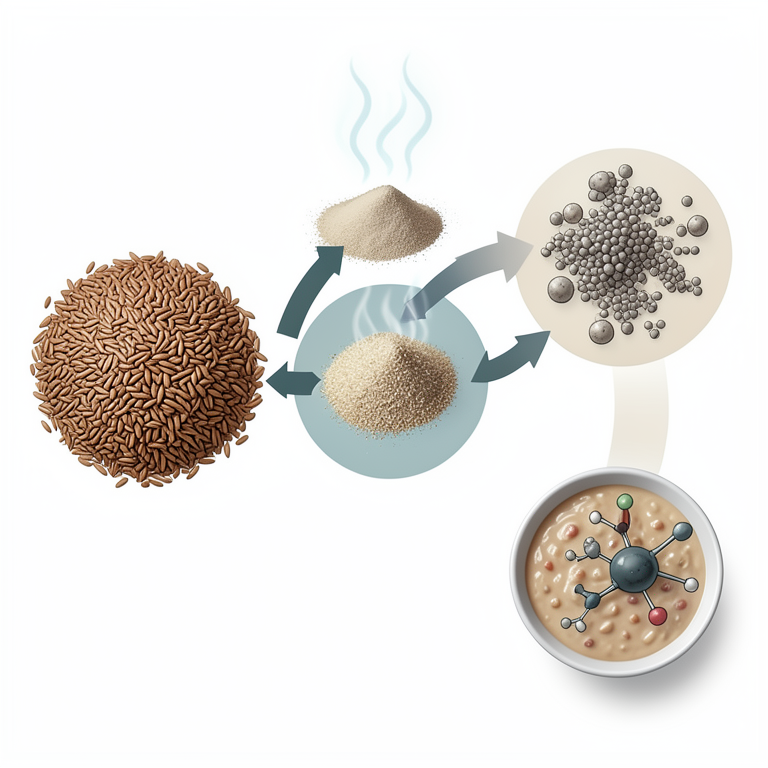
Millet Bran Processing Pathways
AI-generated conceptual illustration (foxtail and proso millet bran). It explains the idea and does not show study data.
View source evidence ↗Introduction
Millets are small-seeded grasses cultivated as cereal crops for both animal feed and human consumption. The by-product of processing millet into refined millet after shelling is known as millet bran, which is abundant in fats, bran wax, amino acids, phospholipids, glycolipids, multivitamins, polysaccharides, and various other nutrients. Typically, millet bran is discarded during the initial processing stages to enhance the edibility and palatability of the grains. Due to its high fat content, retaining millet bran may compromise the shelf life of the product, as it is prone to spoilage. Though it possesses significant nutritional benefits, millet bran remains mostly underutilized. Hence millet bran is subjected to some treatments and processing methods for its effective utilization. This review explores the various processing methods to improve the shelf lie, nutritional and bioactive properties and possibilities of production of functional foods.
Methods of Processing effect of millet bran Micronisation
Millet bran dietary fiber exhibits beneficial properties attributed to its superfine grinding, rendering it appropriate for incorporation into pharmaceutical and health food products. The reduction in particle size of foxtail millet bran powder enhances its distribution and surface area, as well as its functional attributes and antioxidant capacity, compared to coarser parts. The superfine milling of foxtail millet bran notably alters the cell wall structure, leading to a significant increase in total phenolic content and antioxidant capabilities (Liang, 2022) [1] . An investigation revealed that micronisation increased the antioxidant activity of proso millet bran as well as the of soluble fibre content. The fraction with diameter <500 μm had the highest nutrient density and it was oxidatively stable under refrigerator conditions for 150 days (Mustač et al., 2020a) [2] . In another study foxtail millet bran superfine powder demonstrated a significant level of bio accessibility for various phenolic compounds, including vanillic acid, protocatechuic acid, syringic acid, ferulic acid, isoferulic acid, and 2,3-dihydroxybenzoic acid. In addition, superfine grinding decreases the mean particle size and increases the brightness of the defatted millet bran powder. This process also changes the particle shape, reduces the particle sizes and surface roughness, and enhances some physicochemical and thermal properties, such as tap density, angle of repose, angle of slide, and peak temperature (Liang et al., 2024) [3] . It was found that ultrafine grinding, cellulase hydrolysis combined with carboxymethylation and phosphate crosslinking is a good choice to improve the hypolipidaemic properties of foxtail millet bran dietary fibre, while ultrafine grinding, cellulase hydrolysis and phosphate crosslinking is a good option for improving the hypoglycaemic properties of millet bran dietary fibre (Zheng et al., 2022) [4] . In other study it has been reported that the micronization of millet bran to a particle size ranging from 26 to 46 μm resulted in the enhancement of both antioxidant activity and soluble fiber content (Mustač et al., 2020b) [2] . Similarly the bran-rich milled derived on milling of pearl millet, showed the highest percentage of in vitro protein digestibility (Pushparaj & Urooj, 2011) [5] A research showed that millet bran and buckwheat hulls can be effectively incorporated into biscuits designed for individuals with diabetes, while the process of cryogenic comminution enhances certain sensory characteristics of the biscuits (Radoš et al., 2022 ) [6] .
Ultrasonic Treatment
Research has demonstrated that treatments involving high temperature, high pressure, and ultrasound significantly enhance the physicochemical properties and structural attributes of soluble dietary fiber derived from millet bran (Wei et al., 2022) [7] . Furthermore, certain studies indicate that dietary fiber from millet bran, when subjected to a combined ultrasonic and microwave treatment, shows a greater inhibition of alpha-glucosidase activity (Cao et al., 2018) [8] . Additionally, ultrasound treatment has been shown to improve the solubility, foaming properties, emulsifying capabilities, thermal stability, and antioxidant activities of foxtail millet bran protein hydrolysates, thereby expanding its potential applications in the pharmaceutical, cosmetic, and food industries (Peng et al., 2024) [9] . Moreover, the use of high-intensity ultrasound as a pretreatment has proven to be the most effective approach for increasing the antioxidant activity and total phenolic content of the proso millet bran fraction (Mustač et al., 2019) [10].
Enzyme Treatment
The use of millet bran dietary fiber in the food industry is constrained by its inadequate hydration characteristics. Research indicates that the hydration properties of foxtail millet bran dietary fiber can be improved through various modification techniques, including heating, xylanase and cellulase treatments, when applied in conjunction with carboxymethylation, acetylation, and crosslinking (Li et al., 2024) [11] . The use of xylanase on medium-sized proso millet bran produced through ultracentrifugal grinding proved to be more effective than its application on superfine bran obtained via multistage cryogrinding, as it led to an increased amount of soluble fiber in gluten-free bread. Additionally, xylanase demonstrated advantages in preserving the preferred sensory characteristics of the bread and enhancing the bioaccessibility of minerals (Novotni et al., 2023a) [12] .
Fermentation
Fermentation, a traditional and widely used method, has transformed into an ever-developing technology aimed at improving the nutritional quality of food. It increases the bioavailability and bioaccessibility of multiple nutrients, enhances the sensory attributes, and extends the shelf life of cereals (Hotz et al., 2007) [13] . Numerous research efforts have evaluated the impacts of millet bran fermentation. Fermentation increases the levels of bioactive components and alters the physical and chemical properties of millet bran extract, consequently enhancing its hypoglycemic and hypolipidemic effects. The fermentation technologies not only tackle the problem of millet bran waste but also encourage the investigation of more valuable uses for millet bran (Zhang et al., 2024) [14] . Millet bran is rich in bioactive phytochemicals, especially soluble dietary fiber, which functions as a prebiotic. Upon consumption, certain probiotics use soluble dietary fiber to promote their development, sustain a healthy gut microbiome, and enhance intestinal well-being. During the fermentation process, enzymes generated by microorganisms acting as starter cultures decompose complex substances into more basic forms, consequently boosting the bioactive component content (Chen et al., 2022) [15] . The fermentation of proso millet bran by lactic bacteria resulted in a transformation of its structure of fermented soluble dietary fiber and an enhanced capability to extract soluble dietary fiber. Moreover, fermented soluble dietary fiber showed various significant physical and chemical properties, such as excellent water retention capacity, oil absorption capacity, water expansion capacity, and functional features like the adsorption of cholesterol, sodium cholate, and nitrous acid. Additionally, the amounts of total phenols and the ability to neutralize free radicals were improved after fermentation. These changes in the characteristics of proso millet fiber, establish it as a promising functional ingredient in the food industry (Li et al., 2022) [16] . The method of fermenting millet bran with B. natto led to a change in the structure of millet bran dietary fiber, creating a kind of health-enhancing dietary fiber that is abundant in soluble dietary fiber. Dietary fiber derived from B. natto fermented millet bran exhibited various significant physical and chemical characteristics, encompassing excellent water holding capacity, water swelling capacity, oil binding capacity, and functional characteristics such as nitrite ion absorption capacity, cholesterol adsorption capacity, bile acid adsorption capacity, thereby making it appropriate for incorporation as a beneficial element in food products. The bioactive peptides derived from fermented millet bran possesses strongest antioxidant activity (Chu et al., 2019) [17] . It was noted that the total concentrations of phenolics, flavonoids, soluble dietary fiber, and antioxidant capacity in millet bran was increased after microbial fermentation (Liu et al., 2016) [18] . Further supporting this, studies revealed that fermented millet bran alleviates diarrhea by reducing IL-6, IL-12, and TNF-α levels in serum, increasing SIgA levels in the intestinal mucosa, and improving intestinal tissue lesions. It paves the way for the development of millet bran antidiarrheal products (Chen et al., 2022) [19] . Thus, fermented millet bran has been associated with several positive health effects.
Other Processing Methods
The authors stated that soaking barnyard millet bran in hot water at a temperature of 125°C for a duration of 15 minutes, followed by filtration and mixing with a 20% solution of 1% calcium hydroxide, and subsequently filtering and drying at 50°C, effectively reduces antinutritional factors such as trypsin inhibitors, lipase activity, and phytates when compared to untreated barnyard millet bran (Nazni & Karuna 2016a) [20] . Besides that, bran possesses a limited shelf life and necessitates stabilization prior to its industrial use. Hence it was demonstrated that stabilization of minor millet brans, including kodo, proso, barnyard, and foxtail effectively mitigated the increase in free fatty acids and moisture levels over a 15-day storage period, with microwave heating at 900 W for 2.5 minutes proving to be an efficient method for keeping free fatty acids within acceptable limits (Barbhai et al., 2022a) [21] .
Utilization of millet bran in the production of functional foods Bakery Products
Research has indicated that millet bran, a by-product resulting from the decortication of grains, can be utilized to enhance gluten-free bread by increasing its dietary fiber and phenolic compound content, as well as improving its volume and crumb softness (Mustač et al., 2020c) [2] . The authors indicated that opting a bran fraction with a suitable composition for the enrichment of gluten-free bread can significantly enhance its quality and extend its shelf-life (Phimolsiripol et al., 2012) [22] . Further supporting this, it was noted that gluten-free bread that incorporates 10% of the nutrient-rich fraction of millet bran exhibited increased levels of dietary fiber and phenolic compounds, as well as enhanced volume and crumb softness, irrespective of the size of the bran particles (Mustač et al., 2020d) [2] A study assessed steamed bread produced with millet bran dietary fiber and millet flour, revealing that it is abundant in dietary fiber and possesses favorable processing characteristics and functional properties. Notably, the steamed bread containing millet and dietary fiber exhibited a lower glycemic index compared to bread made solely from wheat flour, making it suitable for a healthy diet. The advancement of products rich in dietary fiber holds considerable importance within the food industry. The incorporation of mixed flour with coarse cereals and dietary fiber may provide significant nutritional advantages (Li et al., 2020) [23] . In a related study, it was found that breads supplemented with enzymatically treated bran received higher overall acceptability scores than those made with native bran. This suggests that the modification of bran enhances its morphology, resulting in a softer texture that is more appealing and acceptable to consumers (Coda et al., 2015) [24] . A study evaluating the effects of the incorporation of proso millet flour and fermented proso millet bran dietary fiber flour resulted in a decrease in the elasticity of the dough while simultaneously increasing its hardness. However, there was no notable impact on viscosity, cohesion, or resilience. Microstructural analysis revealed the absence of a well-formed continuous network in the proso millet dough. Furthermore, the analyses indicated that the combination of proso millet flour with the fermented dietary fiber group exhibited a significantly higher total phenol content and antioxidant activity compared to the other group. Additionally, the use of dietary fiber flour contributed to a marked reduction in the predicted glucose release levels in the reformulated cakes (Xiao et al., 2023) [25] . It was reported that the sensory characteristics of rusk made with a ratio of 85:15 and muffin with a ratio of 75:25, incorporating barnyard millet bran as a substitute, received high acceptance from the panel members. Therefore, the inclusion of barnyard millet bran in the formulation of baked goods is considered appropriate for the baking process and enhancement of nutritional value. It can serve as a partial substitute for wheat flour and function as a beneficial ingredient in bakery products, as it enhances nutritional quality while maintaining palatability (Nazni & Karuna 2016b) [20] . Recent study indicates that the bran-rich fractions of foxtail millet and kodo millet have been utilized in the formulation of specialized buns and muffins, respectively. It was noted that buns containing 20% foxtail millet bran and muffins with 30% kodo millet bran demonstrated superior sensory acceptability. The nutritional profile of these bran-enriched buns and muffins revealed significantly elevated levels of dietary fiber, iron, calcium, zinc, antioxidant capacity, and phytonutrient content. Furthermore, a decrease in available carbohydrates was observed in both products. Both buns and muffins showed a moderate glycemic index and glycemic load. Moreover, these baked goods can be safely stored at room temperature for up to 3 days for buns and 7 days for muffins. The results of the study suggest that incorporating millet bran-rich fractions into baked products not only enhances their nutritional value but also lowers the glycemic index, highlighting its potential as a functional ingredient in the food industry (Barbhai et al., 2022b) [21] . Similar studies concluded that muffins with 30% and buns with 20% proso and barnyard bran showed better acceptability (Barbhai et al., 2020) [26] . Another study also reported that breads supplemented with bran exhibited overall acceptability scores ranging from 71 for native sorghum bran to 84.67 for xylanase-treated sorghum bran, and from 79.2 for coarse millet bran to 83.56 for xylanase-treated millet bran. These results indicate that the structural modification of bran does not adversely affect its nutritional value. Therefore, this functional ingredient has the potential for enhancement and various applications in food products (Ahmad et al., 2018) [27] . An investigation was conducted to develop a suitable bread formulation incorporating sorghum bran, barley flour, and flaxseed. Sorghum bran was incorporated at levels ranging from 5% to 10% of the total flour in the bread recipe. Notably, sorghum bran exhibited the highest concentrations of dietary fiber, tannins, phenols, and ORAC value. Increasing the proportion of sorghum bran resulted in a decrease in specific volumes and an increase in firmness. Based on the assessment of bread quality and dietary fiber content, an optimal inclusion level of 6% sorghum bran was determined. The resulting bread mix demonstrated enhanced specific volume, moisture content, texture, darker crumb and crust coloration, as well as superior taste and aroma ratings, leading to high overall acceptability in sensory evaluations (Rudiger et al., 2003) [28] . Another research demonstrated that the pretreatment of bran with xylanase enhanced the bioaccessibility of zinc and copper in the enriched bread when compared to both the control and the bread that did not undergo xylanase treatment (Novotni et al., 2023) [12] . Similarly, it was stated that pure ragi bran is being integrated into various low-fiber foods in which the predominant dietary fiber component identified is the waterunextractable arabinoxylans, which are recognized as a functional food (Prashanth et al., 2015) [29] . Furthermore, the utilization of microbial fermentation technology in the processing of millet bran can increase the content of soluble dietary fiber, which may subsequently be applied in dairy products, as well as in fillers, bulking agents, and for oil retention in baked goods (Andualem et al., 2023) [30] . Another investigation recommended that the incorporation of brown bread into an infant's diet should be limited to a maximum of ten percent wheat or sorghum bran, as exceeding this amount may adversely impact digestibility (Badi et al., 1990) [31] .
Millet Bran Based Wine
Research on preparation of antioxidant-rich wine using foxtail millet bran was carried out and found that the wine produced from millet bran demonstrated a total polyphenol content that was up to six times greater than that of traditional millet wine, along with significantly enhanced antioxidant activity. Notable polyphenols, including vanillic acid, syringic acid, p-coumaric acid, and ferulic acid, were found in high concentrations in the millet bran-based wine. Additionally, the total amino acid content in millet bran wine exceeded that of millet wine by more than six times. The nutritional benefits of this wine can be attributed to the rich presence of phytochemicals, particularly polyphenols, found in foxtail millet bran (Guo et al., 2018) [32] .
Millet Bran Oil
Millet bran oil is highly nutritious and comprises oil, oryzanol, tocopherol and so on (Guifeng et al., 2018) [33] . Millet bran and its oil hold vast potential in pharma and nutraceutical applications. According to a study millet bran oil was rich in linoleic acid and oleic acid. The saturated fatty acids included palmitic acid and stearic acid. The major fatty acid in the SN-2 position of the millet oil was linoleic acid (Liang et al., 2010) [34] . Authors state that the production of oil from foxtail millet bran provides a kind of alternative oil resource for vegetable oil, adds value to agricultural products and improves the environment (Shi et al., 2015) [35] .
Conclusion
The research findings regarding millet bran suggest significant opportunities for the comprehensive utilization of agricultural by-products. Food products that incorporate millet bran present a healthier alternative to calorie-rich and nutrient-deficient foods. Furthermore, millet bran is increasingly recognized for its health benefits and glutenfree properties. Thus, this review highlighted the potential applications of millet bran as a valuable functional ingredient in food formulations and the processing industry, particularly in the development of fiber-rich, nutrient-dense products. Further research in the future should be oriented towards the isolation of each compound from millet bran and explored for their application in foods and pharmaceuticals.
References
34 in the original paper- Liang K, Zhu H, Zhang Y. Effect of mechanical grinding on the physicochemical, structural, and functional properties of foxtail millet (Setaria italica (L.) P. Beauv) bran powder. Foods. 2022;11(17):2688. https://doi.org/10.3390/foods11172688
- Mustač NC, Novotni D, Habuš M, Drakula S, Lj N, Voučko B. Storage stability, micronisation, and application of nutrient-dense fraction of proso millet bran in gluten-free bread. J Cereal Sci. 2020;91:102864. https://doi.org/10.1016/j.jcs.2019.102864
- Liang K, Liang S, Zhu H. The physicochemical characteristics and phenolic bioaccessibility of defatted millet bran powder prepared using superfine grinding. LWT -Food Sci Technol. 2024;201:116173. https://doi.org/10.1016/j.lwt.2024.116173
- Zheng Y, Wang X, Sun Y, Cheng C, Li J, Ding P, Xu B. Effects of ultrafine grinding and cellulase hydrolysis separately combined with hydroxypropylation, carboxymethylation and phosphate crosslinking on the in vitro hypoglycaemic and hypolipidaemic properties of millet bran dietary fibre. LWT -Food Sci Technol. 2022;172:114210. https://doi.org/10.1016/j.lwt.2022.114210
- Pushparaj FS, Urooj A. Influence of processing on dietary fiber, tannin and in vitro protein digestibility of pearl millet. Food Nutr Sci. 2011;2:895-900. DOI:10.4236/fns.2011.28122
- Radoš K, Mustač NC, Benković M, Kuzmić I, Novotni D, Drakula S, Habuš M, et al. The quality and shelf life of biscuits with cryo-ground proso millet and buckwheat by-products. J Food Process Preserv. 2022;46(10):e15532. https://doi.org/10.1111/jfpp.15532
- Wei CH, Ge Y, Liu DZ, Zhao ST, Wei MZ, Jiliu J, Hu X, Quan ZG, Wu YJ, Su YT, et al. Effects of hightemperature, high-pressure, and ultrasonic treatment on the physicochemical properties and structure of soluble dietary fibers of millet bran. Front Nutr. 2022;8:820715. https://doi.org/10.3389/fnut.2021.820715
- Cao LK, Kang LJ, Kou F, Sheng M, Ge YF, Wang WH. Structural analysis and in vitro inhibitory effect on alpha-glucosidase activity of millet bran dietary fiber before and after modification. Food Sci. 2018;39(11):46-52. DOI:10.7506/spkx1002-6630-201811008
- Peng Z, Wang F, Yu L, Jiang B, Cao J, Sun Z, Cheng J. Effect of ultrasound on the characterization and peptidomics of foxtail millet bran protein hydrolysates. Ultrason Sonochem. 2024;110:107044. https://doi.org/10.1016/j.ultsonch.2024.107044
- Mustač NC, Voučko B, Novotni D, Drakula S, Gudelj A, Dujmic F, Ćurić D. Optimization of high intensity ultrasound treatment of proso millet bran to improve physical and nutritional quality. Food Technol Biotechnol. 2019;57(2):183-190. https://doi.org/10.17113/ftb.57.02.19.6100
- Li Y, Feng C, Wang X, Zheng Y, Song X, Wang N, Liu D. Millet bran dietary fibers modified by heating and enzymolysis combined with carboxymethylation, acetylation, or crosslinking: influences on properties of heat-induced egg white protein gel. Foods. 2024;13(17):2827. https://doi.org/10.3390/foods13172827
- Novotni D, Nanjara L, Štrkalj L, Drakula S, Mustač NC, Voučko B, et al. Influence of particle size and xylanase pretreatment of proso millet bran on physical, sensory and nutritive features of gluten-free bread. Food Technol Biotechnol. 2023;61(1):73-84. https://doi.org/10.17113/ftb.61.01.23.7776
- Hotz C, Gibson RS. Traditional food-processing and preparation practices to enhance the bioavailability of micronutrients in plant-based diets. J Nutr. 2007;137(4):1097-1100. https://doi.org/10.1093/jn/137.4.1097
- Zhang S, Wang A, Lu Z, Lu F, Zhao H. Fermentation of millet bran with Bacillus natto: enhancement of bioactivity levels and the bioactivity of bran extract. J Sci Food Agric. 2024;104(10):6196-6207. DOI:10.1002/jsfa.13455
- Chen S, Hao M, Zhang L. Antidiarrheal effect of fermented millet bran on diarrhea induced by senna leaf in mice. Foods. 2022;11(14):2082. DOI:10.3390/foods11142082
- Li Y, Niu L, Guo Q, Shi L, Deng X, Liu X, et al. Effects of fermentation with lactic bacteria on the structural characteristics and physicochemical and functional properties of soluble dietary fiber from proso millet bran. LWT. 2022;154:112609. https://doi.org/10.1016/j.lwt.2021.112609
- Chu J, Zhao H, Lu Z, Lu F, Bie X, Zhang C. Improved physicochemical and functional properties of dietary fiber from millet bran fermented by Bacillus natto. Food Chem. 2019;294:79-86. DOI:10.1016/j.foodchem.2019.05.035
- Liu L, Zhang R, Deng Y, Zhang Y, Xiao J, Huang F, Zhang M. Fermentation and complex enzyme hydrolysis enhance total phenolics and antioxidant activity of aqueous solution from rice bran pretreated by steaming with alpha-amylase. Food Chem. 2017;221:636-643. DOI:10.1016/j.foodchem.2016.11.126
- Chen S, Hao M, Zhang L. Antidiarrheal effect of fermented millet bran on diarrhea induced by senna leaf in mice. Foods. 2022;11(14):2082. DOI:10.3390/foods11142082
- Nazni P, Karuna TD. Development and quality evaluation of barnyard millet bran incorporated rusk and muffin. J Food Ind Microbiol. 2016;2(2):2-6. DOI:10.4172/2572-4134.1000116
- Barbhai MD, Hymavathi TV, Kuna A, Mulinti SR, Voliveru SR. Quality assessment of nutri-cereal bran rich fraction enriched buns and muffins. J Food Sci Technol. 2022;59(6):2231-2242. DOI:10.1007/s13197021-05236-9
- Phimolsiripol Y, Mukprasirt A, Schoenlechner R. Quality improvement of rice-based gluten-free bread using different dietary fibre fractions of rice bran. J Cereal Sci. 2012;56(2):389-395. https://doi.org/10.1016/j.jcs.2012.06.001
- Li Y, Lv J, Wang L, Zhu Y, Shen R. Effects of millet bran dietary fiber and millet flour on dough development, steamed bread quality, and digestion in vitro. Appl Sci. 2020;10(3):912. https://doi.org/10.3390/app10030912
- Coda R, Katina K, Rizzello CG. Bran bioprocessing for enhanced functional properties. Curr Opin Food Sci. 2015;1:50-55. DOI:10.1016/j.cofs.2014.11.007
- Xiao J, Li Y, Niu L, Chen R, Tang J, Tong Z, Xiao C. Effect of adding fermented proso millet bran dietary fiber on micro-structural, physicochemical, and digestive properties of gluten-free proso millet-based dough and cake. Foods. 2023;12(15):2964. DOI:10.3390/foods12152964
- Barbhai MD, Hymavathi TV, Kuna A, Mulinti SR, Voliveru SR. Sensorial and functional properties of nutri-cereal bran enriched muffins and buns. Int Res J Pure Appl Chem. 2020;21(20):36-47. DOI:10.9734/IRJPAC/2020/v21i2030282
- Ahmad F, Pasha I, Saeed M, Asgher M. Biochemical profiling of Pakistani sorghum and millet varieties with special reference to anthocyanins and condensed tannins. Int J Food Prop. 2018;21(1):1586-1597. https://doi.org/10.1080/10942912.2018.1502198
- Prashanth MRS, Shruthi RR, Muralikrishna G. Immunomodulatory activity of purified arabinoxylans from finger millet (Eleusine coracana, v. Indaf 15) bran. J Food Sci Technol. 2015;52(9):6049-6054. doi:10.1007/s13197-014-1664-4
- Andualem M. Nutritional and anti-nutritional characteristics of okra (Abelmoschus esculents (L.) Moench) accessions grown in Pawe District, Northwestern Ethiopia. Int J Agri Biosci. 2023;12(1):18-21. DOI:10.47278/journal.ijab/2022.040
- Badi S, Pedersen B, Monowar L, Eggum BO. The nutritive value of new and traditional sorghum and millet foods from Sudan. Plant Foods Hum Nutr. 1990;40(1):5-19. DOI:10.1007/BF02193775
- Guo X, Sha X, Rahman E, Wang Y, Ji B, Wu W, Zhou F. Antioxidant capacity and amino acid profile of millet bran wine and the synergistic interaction between major polyphenols. J Food Sci Technol. 2018;55(3):10101020. DOI:10.1007/s13197-017-3014-9
- Guifeng L, Jianhu W, Huijuan B, Lei Z. Process optimization for extraction of millet small bran oil by aqueous ethanol. In: IOP Conf Ser: Mater Sci Eng. 2018;392(5):052023. DOI:10.1088/1757-899X/392/5/052023
- Liang S, Yang G, Ma Y. Chemical characteristics and fatty acid profile of foxtail millet bran oil. J Am Oil Chem Soc. 2010;87(1):63-7. https://doi.org/10.1007/s11746-009-1475-3
- Shi Y, Ma Y, Zhang R, Ma H, Liu B. Preparation and characterization of foxtail millet bran oil using subcritical propane and supercritical carbon dioxide extraction. J Food Sci Technol. 2015;52(5):3099-3104. DOI:10.1007/s13197-014-1311-0.