
Research article · 2025 · Full text
International Journal of Agriculture and Food ScienceChemical migration from packaging materials into consumable food matrices: A mini review
Volume 7(1) · Pages 21–25 · DOI: 10.33545/2664844x.2025.v7.i1a.233 ↗
Research areasConsumer Packaging Perceptions and TrendsFood Waste Reduction and Sustainability
Abstract
Author-writtenThe migration of chemical substances from food packaging materials into packaged foods presents a significant concern for food safety and public health. Packaging materials—such as plastics, metals, glass, and paper—often contain additives, residual solvents, and monomers that have the potential to migrate into the food, causing chemical contamination. This migration can occur through various mechanisms, including diffusion, volatilization, permeation, convection, solvent extraction, and heat transfer. Factors like temperature, food composition, contact time, and the characteristics of the packaging material influence these processes. A thorough understanding of the interactions between food and packaging is vital for assessing the extent of migration and its associated risks. Advanced analytical methods, such as chromatography and mass spectrometry, are used to detect and quantify migrating chemical compounds. Regulatory agencies like the European Food Safety Authority (EFSA) and the U.S. Food and Drug Administration (FDA) have established permissible migration limits for specific substances to safeguard consumer health. This review explores the factors influencing chemical migration, the mechanisms involved, and the techniques used for assessment. Addressing these issues can enhance food safety regulations, improve consumer protection, and foster the development of safer packaging materials.
Summary
Source-checkedPlain-language reading of the full paper, prepared with AI and checked against the text. Each point links to the authors' own words.
Why it matters
- The transfer of chemicals from packaging into food is a major concern for public health and food safety. View evidence ↗
- Prolonged exposure to migrating chemicals can lead to serious health issues, such as cancer and endocrine disruption. View evidence ↗
- Common packaging materials like paper, glass, metals, and plastics contain monomers, solvents, and additives that can contaminate food. View evidence ↗
The question
- The review aims to examine the mechanisms of chemical migration, the factors that influence it, and the methods used to assess it. View evidence ↗
What they did
- Mass spectrometry and chromatography are the primary advanced analytical tools used to quantify and detect migrating chemicals. View evidence ↗
- Food simulants are used in testing to mimic the real-world conditions food encounters when in contact with packaging. View evidence ↗
What they found
- Increased temperatures accelerate the migration rate by enhancing the diffusion of chemicals into the food. View evidence ↗
- Fatty foods are more susceptible to the migration of fat-soluble compounds, such as solvents and plasticizers, because they absorb lipophilic substances more effectively. View evidence ↗
- Diffusion, driven by concentration gradients, is identified as the most frequent mechanism for chemical migration. View evidence ↗
- Permeation allows small molecules to move through the packaging material, bypassing protective barriers. View evidence ↗
What it means
- To protect public health, the FDA and EFSA have implemented strict limits on the permissible migration of chemicals. View evidence ↗
Visual summary
1 visualsIllustrations explain the paper; they do not show study data.
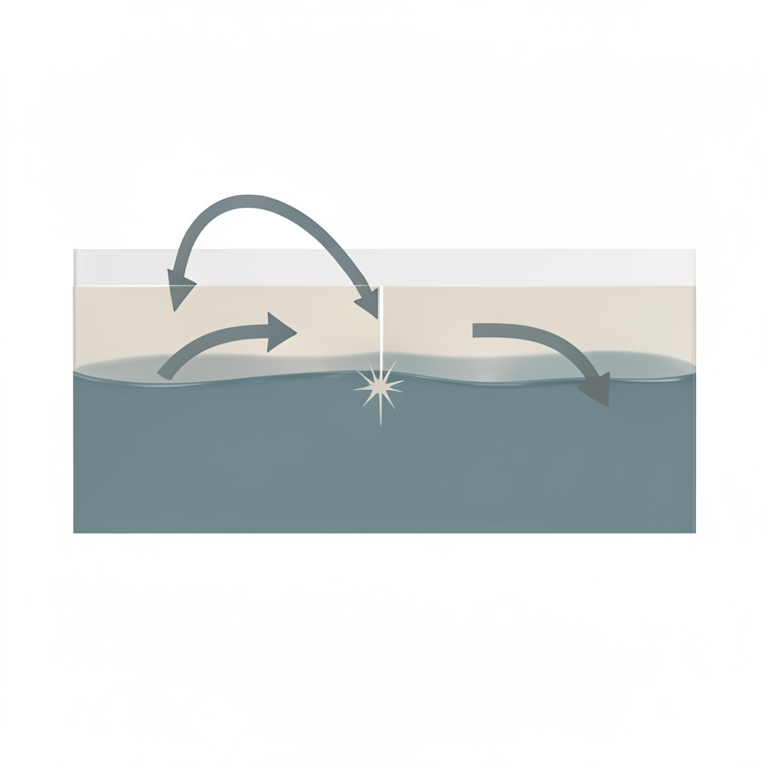
Mechanisms of Chemical Migration
AI-generated conceptual illustration (A cross-section of a plastic food packaging film in contact with a liquid food matrix). It explains the idea and does not show study data.
View source evidence ↗Figures & tables
From the original paper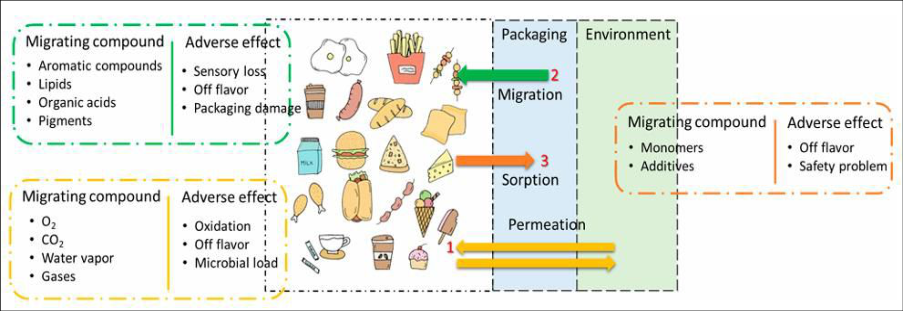 Figure 1
Introduction
Food packaging usage has steadily increased over the past few decades as a result of (i) globalization, (ii) supermarket operations, and (iii) household dynamics. As a result, the food industry has become more and more dependent on packing, to the extent that practically all processed foods are now packed (Chakori et al., 2021) [4] . The food industry chooses the most appropriate packaging materials for a product, considering the functional properties of the materials. Primary food packaging materials include materials like paper, paperboard, plastic, glass, aluminium or combinations of these (Dey et al., 2021) [6] . Food packaging plays an integral role in preserving the safety, quality, and shelf life of products. Packaging materials like plastic, glass and metal are selected based on their ability to protect food from contaminants, moisture, and light (Gupta et al., 2024) [12] . Although plastics are the most commonly used packaging materials because of their versatility and affordability, concerns have grown regarding the migration of chemicals from these materials into food (Gupta et al., 2024) [12] . Chemicals such as plasticizers, solvents and monomers can leach from packaging materials into food under certain conditions (Rodríguez-Ramos et al., 2024). Migration refers to the transfer of chemical substances frosm packaging materials into food, which can occur due to physical, chemical, or environmental factors (Zhao et al., 2023) [22] .
As consumer demand for sustainable packaging rises, it is also essential to explore alternative materials that minimize migration risks while maintaining product integrity (Zhao et al., 2023) [22] . This review not only supports the development of safer packaging but also strengthens consumer confidence and promotes innovations in the packaging industry (Gupta et al., 2024) [12] .
Chemical compounds in packaging materials
Chemical compounds in packaging materials
Plastic compounds
Plastic compounds, commonly used in food packaging, include materials like polyethylene (PE), polypropylene (PP), and polyvinyl chloride (PVC), which offer flexibility, durability, and cost-effectiveness (Chen et al., 2023) [5] . However, certain plasticizers, stabilizers, and additives used in these materials, such as bisphenol A (BPA) and phthalates, have raised concerns due to their potential to migrate into food and impact human health (Gao et al., 2024) [9] . These chemicals are linked to long -term adverse causing cancer, endocrine disruption and reproductive toxicity (Zhao et al., 2023) [22] .
Ink and Coatings
In food packaging, inks and coatings are essential for branding, product information, and protection. These inks and coatings often contain chemicals such as solvents, pigments, and heavy metals (Santos et al., 2024) [19] . Solvents like toluene and xylene are used to dissolve inks, while pigments often contain heavy metals such as lead, cadmium, and chromium, which can migrate into food under certain conditions (Gao et al., 2024) [9] . These substances are of particular concern due to their toxicological effects, including carcinogenicity and neurotoxicity, especially when food is in prolonged contact with the packaging (Zhao et al., 2023) [22] .
Additives and Plasticizers
Additives and plasticizers are commonly used in food packaging to enhance the flexibility, durability, and processing properties of plastics (Gao et al., 2024) [9] . Substances like phthalates, adipates, and citrates are often added to plastics such as PVC, PET, and polypropylene to improve their performance (Chen et al., 2023) [5] . However, many of these compounds can migrate into food products, raising concerns due to their potential toxicity, including endocrine disruption and developmental effects (Zhao et al., 2023) [22] . Migration from materials such as glass, metals, and paper-based packaging is also a concern, though generally to a lesser extent than plastics. Glass containers are typically inert but may leach trace amounts of metals like lead or cadmium from certain types of glass or coatings (Gao et al., 2024) [9] . Metal packaging, such as cans, can release substances like tin or aluminium, which can interact with acidic foods (Chen et al., 2023) [5] . Paper-based packaging, often treated with waxes, resins, or inks, can migrate chemicals, including solvents and heavy metals, into food under specific conditions (Su et al., 2023) [21] .
Antioxidants
Antioxidants are commonly used in packaging materials to prevent the oxidation of the packaging itself or the food within, thereby extending shelf life. However, these compounds can migrate into the food over time, especially under certain conditions like high temperatures or prolonged contact. Antioxidants such as butylated hydroxyl anisole (BHA), butylated hydroxyl toluene (BHT), and other phenolic compounds can leach into food, potentially altering its flavor, aroma, and safety (Fasihnia et al., 2020) [8] . Fatty and oily foods are particularly susceptible to antioxidant migration, as these compounds are lipophilic, making them more likely to be transferred from packaging to food. High temperatures, common in storage and transportation, can accelerate the migration of antioxidants from packaging into food (Alamri et al., 2021) [1] .
Monomers and Oligomer
Monomers and oligomers, which are often used as building blocks in the production of food packaging materials, can migrate into food under certain conditions. These substances are typically residual components from the polymerization process or degradation products that can leach from packaging materials into food. These compounds can migrate more readily when the packaging is exposed to elevated temperatures, prolonged storage, or acidic or fatty foods, which can facilitate the release of monomers like styrene from polystyrene or bisphenol A (BPA) from polycarbonate plastics (Zulkifli et al., 2021) [24] . Both monomers and oligomers, due to their smaller molecular size, have higher mobility, making them more likely to migrate into food, especially in high-fat or high-temperature conditions (Arvanitoyannis & Kotsanopoulos, 2014) [3] . Such migration raises concerns about the potential health effects of exposure to these substances, which have been linked to endocrine disruption, carcinogenicity, and other adverse health effects.
Factors affecting migration rates through packaging material
The migration of chemicals from food packaging into food products is influenced by various factors:
Physical and Chemical Factors
The migration of chemicals from food packaging into food products is influenced by various physical and chemical factors. One key factor is temperature; higher temperatures can increase the rate of migration by enhancing the diffusion of chemicals from the packaging material into the food. This is especially critical during transportation and storage under non-optimal conditions. The composition of the food itself also plays a significant role in migration. Fatty foods, for example, tend to absorb lipophilic substances more effectively, leading to higher migration of fat-soluble compounds such as plasticizers and solvents. Higher temperatures result in increased migration rates and a faster attainment of equilibrium.
Food composition
Food composition significantly influences the migration of chemicals from packaging materials. For instance, fatty foods, such as oils, cheeses and meats, are more likely to absorb fat-soluble compounds like plasticizers and solvents from packaging materials (Gao et al., 2021) [9] . The pH, moisture content, and fat content of the food affect the solubility and diffusivity of chemicals, thereby influencing migration rates (Zhao et al., 2022) [22] . Dry foods, such as crackers and cereals, typically have lower moisture content, which can reduce the migration of water-soluble chemicals, but they may still absorb volatile substances. The need for packaging materials to be evaluated with respect to the specific food types they will contact, to ensure safety and minimize potential risks from chemical migration (Triantafyllou et al., 2007) [22] .
Properties of packaging materials
The properties of packaging materials significantly influence the migration of chemicals into food. Materials like plastics, metals, glass, and paper have different levels of permeability, which influence the rate at which chemicals migrate. Plastics like polyethylene and polypropylene are more prone to releasing additives such as plasticizers, solvents, and stabilizers, especially under conditions of high temperature or prolonged contact with food. Glass and metal packaging, on the other hand, have lower permeability, but can still leach certain substances like metals or chemicals from coatings (Nerin et al., 2007) [15] . The structural design of packaging materials, such as multi-layered films, can act as barriers, reducing migration rates by limiting chemical diffusion. The presence of recycled ingredients showed no correlation with migration.
Interaction of food matrices with food packaging material
As packaging materials come into direct contact with food, various mechanisms of migration, leaching, and chemical reactions can occur, transferring substances from the packaging to the food. These interactions can affect the food's sensory attributes, nutritional content, and safety. A physical interaction may occur when chemical substances are transferred between foods through the food-package interface. A chemical interaction can take place if a food item causes corrosion in a metal package. Additionally, a microbial interaction may happen when food becomes contaminated by microorganisms due to contact with unsuitable packaging materials (Lee, 2010) [14] . [12] .
Migration mechanism
The migration mechanisms are influenced by factors such as temperature, time, food composition, and the characteristics of the packaging. The primary migration mechanisms include: Diffusion Diffusion is the most common migration mechanism, where chemical compounds move from the packaging material into the food due to concentration gradients. When the concentration of a substance is higher in the packaging material than in the food, the substance will naturally migrate to the area of lower concentration in an attempt to reach equilibrium. This process is typically driven by the physical properties of the packaging material (e.g., permeability) and the food product (e.g., fat content, acidity, moisture). For example, hydrophobic substances like plasticizers and antioxidants may diffuse more readily into fatty foods, as they tend to interact with the lipid content (Simoneau, 2008) [20] .
Volatilization
Volatilization occurs when volatile chemicals in the packaging material evaporate and migrate into the food. This typically happens with volatile compounds like solvents, fragrances, or certain additives used in food packaging. The rate of volatilization depends on the temperature and humidity conditions, with higher temperatures accelerating the evaporation of substances from packaging into food (Lee et al., 2010) [14] .
Permeation
Permeation refers to the process by which small molecules move through the packaging material itself, bypassing any protective layers or barriers. This process is particularly important for plastic packaging materials, where small molecules like monomers or oligomers may migrate over time through microscopic pores in the material (Jickells et al., 2005) [13] . For example, monomers such as styrene from polystyrene packaging can permeate into food, especially under conditions of prolonged contact or high temperature.
Convection
Convection refers to the migration of chemical compounds facilitated by fluid movement, such as the movement of gases or liquids in packaging. This can happen when food products contain liquids or are stored under conditions where fluid movement inside the packaging (e.g., gases or water vapour) helps carry chemicals from the packaging material into the food. This mechanism is especially relevant in vacuum-sealed or modified atmosphere packaging, where fluid dynamics can influence the rate of chemical migration (EFSA, 2008).
Chemical Reactions
Chemical reactions between the food and packaging materials can also contribute to migration. For instance, acidic or alkaline foods can react with metals in the packaging, leading to the release of metal ions into the food. A well-known example is the corrosion of aluminium cans, where acids from the food can cause the release of
aluminium ions into the food product (Arvanitoyannis and Stratakos 2011). Similarly, reactive chemicals in the packaging can degrade over time, releasing potentially harmful by-products into the food.
Migration testing methods
Migration testing methods
Food Simulants
Food simulants are employed to replicate the conditions that packaging materials would encounter when in contact with real food. These simulants are selected based on the characteristics of the food being tested, such as its fat content or acidity. Regulatory bodies like the EFSA and FDA set guidelines for simulant selection and testing conditions to ensure that migration tests accurately reflect potential real-world scenarios (EFSA, 2008) (Grob 2008).
Common simulants include
Water (for aqueous foods) Ethanol or isooctane (for fatty foods) Acidic solutions (for acidic foods like vinegar or fruit juices)
Specific Migration Testing
Specific migration testing evaluates the migration of individual substances, such as monomers, oligomers, plasticizers, and additives, from food packaging materials into food. This type of testing is essential for assessing substances that may pose specific health risks, such as bisphenol A (BPA) and phthalates. Advanced analytical techniques, including high-performance liquid chromatography (HPLC), HPLC with fluorescence detection (HPLC-FLD), liquid chromatography-tandem mass spectrometry (LC-MS/MS), gas chromatography-mass spectrometry (GC-MS), and gas chromatography coupled with Orbitrap mass spectrometry, are utilized to detect and quantify these substances at trace concentrations. (Garcia et al., 2006; Gupta et al., 2024) [12]. Regulatory authorities, including the European Food Safety Authority (EFSA) and the FDA, set migration limits to ensure the safety of food products, establishing safe thresholds for specific chemicals (EFSA, 2008) (Grob 2008).
Conclusion
The migration of chemical compounds from packaging materials into packaged foods is a critical focus in food safety and regulatory science. Packaging materials, commonly composed of plastics, metals, or paper, often contain chemical additives such as plasticizers, monomers, antioxidants, and stabilizers, which can transfer into food under specific conditions. Factors influencing this migration include temperature, time, food composition, and the chemical characteristics of both the packaging and the food. Migration is typically evaluated through comprehensive testing methods, including overall and specific migration tests, which replicate real-world conditions to quantify substance transfer. Recent research highlights the health risks posed by compounds like bisphenol A (BPA) and phthalates due to their endocrine-disrupting effects. Consequently, regulatory agencies such as the European Food Safety Authority (EFSA) and the U.S. Food and Drug Administration (FDA) have established strict migration limits to safeguard public health. While significant advancements have been made in understanding and managing chemical migration, ongoing research, innovation in testing methodologies, and robust regulatory frameworks remain essential to ensure consumer safety.
Figures and tables from the paper
References
24 in the original paper- Alamri MS, Qasem AAA, Mohamed AA, Hussain S, Ibraheem MA, Shamlan G, Alquah HA, Qasha AS. Food packaging's materials: A food safety perspective. Saudi Journal of Biological Sciences. 2021;28(8):44904499. doi:10.1016/j.sjbs.2021.04.047.
- Arvanitoyannis IS, Stratakos AC. Migration from food packaging materials in Technologies of Preservation of Food and Food Packaging (in Greek). Thessaloniki, Greece: University Studio Press; 2011.
- Arvanitoyannis IS, Kotsanopoulos KV. Migration phenomenon in food packaging. Food-package interactions, mechanisms, types of migrants, testing and relative legislation-A review. Food Bioprocess Technology. 2014;7:21-36. doi:10.1007/s11947-0131106-8.
- Chakori S, Aziz AA, Smith C, Dargusch P. Untangling the underlying drivers of the use of single-use food packaging. Ecological Economics. 2021;185:107063. doi:10.1016/j.ecolecon.2021.107063.
- Chen Y, Li H, Huang H, Zhang B, Ye Z, Yu X, Shentu X. Recent advances in non-targeted screening of compounds in plastic-based/paper-based food contact materials. Foods. 2023;12(22):4135. doi:10.3390/foods12224135.
- Dey D, Dharini V, Selvam SP, Sadiku ER, Kumar MM, Jayaramudu J, Gupta UN. Physical, antifungal, and biodegradable properties of cellulose nanocrystals and chitosan nanoparticles for food packaging application. Materials Today Proceedings. 2021;38:860-869. doi:10.1016/j.matpr.2020.04.885.
- EFSA CEF Panel (EFSA Panel on Food Contact Materials, Enzymes, Flavourings and Processing Aids). Note for guidance for the preparation of an application for the safety assessment of a substance to be used in plastic food contact materials. EFSA Journal. 2008;6(7):21r, 41. doi:10.2903/j.efsa.2008.21r.
- Fasihnia SH, Peighambardoust SH, Peighambardoust SJ, Oromiehie A, Soltanzadeh M, Peressini D. Migration analysis, antioxidant, and mechanical characterization of polypropylene-based active food packaging films loaded with BHA, BHT, and TBHQ. Journal of Food Science. 2020;85(8):2317-2328. doi:10.1111/1750-3841.15337.
- Gao Q, Feng Z, Wang J, Zhao F, Li C, Ju J. Application of nano-ZnO in the food preservation industry: Antibacterial mechanisms, influencing factors, intelligent packaging, preservation film, and safety. Critical Reviews in Food Science and Nutrition. 2024;3:1-27. doi:10.1080/10408398.2024.2387327.
- García RS, Silva AS, Cooper I, Franz R, Losada PP. Revision of analytical strategies to evaluate different migrants from food packaging materials. Trends in Food Science & Technology. 2006;17(7):354-366. doi:10.1016/j.tifs.2006.01.005.
- Grob K. The future of simulants in compliance testing regarding the migration from food contact materials into food. Food Control. 2008;19(3):263-268. doi:10.1016/j.foodcont.2007.04.001.
- Gupta RK, Pipliya S, Karunanithi S, Eswaran UG, Kumar S, Mandliya S, et al. Migration of chemical International Journal of Agriculture and Food Science https://www.agriculturaljournals.com compounds from packaging materials into packaged foods: Interaction, mechanism, assessment, and regulations. Foods. 2024;13(19):3125. doi:10.3390/foods13193125.
- Jickells SM, Poulin J, Mountfort KA, Fernandez-Ocana M. Migration of contaminants by gas phase transfer from carton board and corrugated board box secondary packaging into food. Food Additives & Contaminants. 2005;22(8):768-782. doi:10.1080/02652030500151992.
- Lee KT. Quality and safety aspects of meat products as affected by various physical manipulations of packaging materials. Meat Science. 2010;86(1):138150. doi:10.1016/j.meatsci.2010.04.035.
- Nerin C, Contin E, Asensio E. Kinetic migration studies using Poropak as solid-food stimulant to assess the safety of paper and board as food packaging materials. Analytical and Bioanalytical Chemistry. 2007;387(6):2283-2288. doi:10.1007/s00216-006-1080-3.
- Poças MF, Hogg T. Exposure assessment of chemicals from packaging materials in food: A review. Trends in Food Science & Technology. 2007;18(4):219-230. doi:10.1016/j.tifs.2006.12.008.
- Poças MF, Oliveira JC, Pereira JR, Brandsch R, Hogg T. Modelling migration from paper into a food simulant. Food Control. 2011;22(2):303-312. doi:10.1016/j.foodcont.2010.07.030.
- Rodríguez-Ramos R, Santana-Mayor A, HerreraHerrera AV, Socas-Rodríguez B, Rodríguez-Delgado MA. Recent advances in the analysis of plastic migrants in food. TrAC Trends in Analytical Chemistry. 2024;178:117847. doi:10.1016/j.trac.2024.
- Santos IJB, Gonçalves MM, Schogl AE, de Paiva GM, dos Reis Coimbra JS. Nanomaterial migration into the food matrix. In: Nanostructured Materials for Food Packaging Applications. Elsevier; 2024. p. 553-573. doi:10.1016/B978-0-323-99525-5.00025-0.
- Simoneau C. Food contact materials. In: Comprehensive Analytical Chemistry. Elsevier; 2008. p. 733-773. doi:10.1016/S0166-526X(08)00021-4.
- Su CY, Li D, Wang LJ, Wang Y. Biodegradation behavior and digestive properties of starch-based film for food packaging-a review. Critical Reviews in Food Science and Nutrition. 2023;63(24):6923-6945. doi:10.1080/10408398.2022.2036097.
- Triantafyllou VI, Akrida-Demertzi K, Demertzis PG. A study on the migration of organic pollutants from recycled paperboard packaging materials to solid food matrices. Food Chemistry. 2007;101(4):1759-1768. doi:10.1016/j.foodchem.2006.02.023.
- Zhao Y, Li B, Zhang W, Zhang L, Zhao H, Wang S, Huang C. Recent advances in sustainable antimicrobial food packaging: Insights into release mechanisms, design strategies, and applications in the food industry. Journal of Agricultural and Food Chemistry. 2023;71(31):11806-11833. doi:10.1021/acs.jafc.3c02608.
- Zulkifli S, Rahman AA, Kadir SHSA, Nor NSM. Bisphenol A and its effects on the systemic organs of children. European Journal of Pediatrics. 2021;180(10):3111-3127. doi:10.1007/s00431-02104085-0.
Cited by 5
From OpenAlex, OpenCitations and reference lists read by Scinovex
- Smart nano-packaging materials for sustainable food preservation and safety ↗
Oluwatoyin Adenike Fabiyi, Ayorinde Víctor Ogundele, Oyesolape Basirat Akinsipo, Abosede Adejoke Badeji, Héctor H. Silva · Discover Food · 2026
The growing complexity of global food supply chains and increasing demands for safety, longer shelf life, and sustainability have increased the need for advanced packaging technologies. Smart nano-packaging materials have emerged as a promising solution by integrating nanomaterials with active features that surpass the limitations presented by conventional packaging. This review examines the recent development in smart nano-packaging to preserve…
❝ 5PDF - Migration of Plastic Additives and Non-Intentionally Added Substances from Packaging into Edible Oils and Beverages: A Combined GC–MS and Hydrolysis–Capillary Electrophoresis Approach ↗
Rodica Sturza, Veronica Dragancea, Aliona Ghendov‐Moșanu, Ileana Denisa Nistor, Diana Mirilă, Dmitri Lazacovici · Polymers · 2026
The present study aimed to investigate the migration of potentially hazardous compounds from plastic food packaging into edible oils, bottled water and soft drinks available on the market in the Republic of Moldova. GC–MS screening was applied to identify plastic additives and unintentionally added substances (NIAS). The influence of key extraction parameters, including solvent type, extraction time, pH, alcohol content…
❝ 3PDF - Quantification of 40K and 137Cs in food packaging materials and radiation risk assessment due to their potential migration into food ↗
Predrag Kuzmanović, Marijana Srećković, Tanja Lužaić · The Science of The Total Environment · 2026
❝ 0PDF - Profiling of Total Residual Contaminants Migrating from Philippine-based Polyethylene Packaging to Fermented and Alcoholic Foods ↗
Andrea Kyla Mateo Carlos, Gabriel John Macapagal Manalo, Elyson Keith Ponce Encarnacion, Agaseve Famanilay Del Rosario, Josefino Antonio T. Mendoza, Anne Cardoza Alcantara et al. · Current Research in Nutrition and Food Science Journal · 2026
Fermented and alcoholic foods in the Philippines were traditionally developed as naturally preserved products that are easily repackaged and sold in single-use polyethylene (PE) bags. However, these foods contain organic acids that enhance the migration of chemical constituents from the PE packaging. Although this is widely used throughout the country, local data on the migration of total residual contaminants (TRCs)…
❝ 0PDF - Enhancing HACCP Decisions: A Comparative Risk Assessment for Table Olive Processing ↗
Cristina Campanero Pintado, Kharla Andreina Segovia Bravo, Antonio Benítez‐Cabello, Francisco Noé Arroyo‐López, Efrén Pérez‐Santín · Foods · 2026
Table olive processing comprises multiple stages in which physical, chemical, and biological hazards may occur. Although risk assessment is a core element of Hazard Analysis and Critical Control Points (HACCP) systems, the selection of assessment tools remains insufficiently standardized. This study compared a 4 × 4 risk matrix and Failure Mode and Effects Analysis (FMEA) for hazard evaluation in Spanish-style…
❝ 0PDF