
Research article · 2024 · Full text
International Journal of Agriculture and Food ScienceReview on textured cereal protein as an analogue of meat: How far we reached?
Volume 6(2) · Pages 187–193 · DOI: 10.33545/2664844x.2024.v6.i2c.226 ↗
Research areasMeat and Animal Product Quality
Abstract
Author-writtenPlant-based meat analogues present a promising alternative to traditional meat, offering numerous health benefits, including lower saturated fat and cholesterol levels, and significant environmental advantages, such as reduced greenhouse gas emissions and resource usage. However, challenges remain in achieving sensory and textural parity with traditional meat and ensuring cost-effectiveness. Future advancements in food technology, consumer education, and policy support are essential for the widespread adoption and success of these meat analogues. The findings suggest that continued innovation and optimization of processing techniques, coupled with the exploration of diverse plant-based ingredients, can enhance the nutritional and sensory profiles of meat analogues, making them a crucial component in the future of sustainable and ethical food systems.
Summary
Source-checkedPlain-language reading of the full paper, prepared with AI and checked against the text. Each point links to the authors' own words.
Why it matters
- Plant-based meat analogues are promising alternatives to traditional meat because they offer environmental benefits, such as lower resource usage and greenhouse gas emissions, and health benefits, including reduced cholesterol and saturated fat. View evidence ↗
- Animal-based food production, particularly beef, is a major global contributor to carbon emissions. View evidence ↗
- A primary challenge in adopting meat alternatives is consumer reluctance caused by the accessibility and sensory and nutritional appeal of traditional meat. View evidence ↗
The question
- The study aims to provide a comparative analysis of meat analogues from various vegan sources to understand their potential as sustainable alternatives to traditional meat. View evidence ↗
What they did
- The review examines meat analogues derived from several vegan sources, including soy protein, pea protein, wheat gluten, peanut protein, legumes, and mixtures of chickpea and oat flour. View evidence ↗
What they found
- Wheat gluten analogues are described as juicy and meaty, with protein content ranging from 11.33% to 13.39% and moisture levels between 49.88% and 50.11% depending on the gluten level (10% to 18%). View evidence ↗
- Pea protein analogues can achieve high protein content, with wet protein isolates reaching 89.2% and dry protein concentrates reaching 72.3%. View evidence ↗
- Soy protein analogues can be fibrous and meaty, with protein levels ranging from 41 g in soybean flour to 86.9 g in soy protein isolate. View evidence ↗
- Chickpea and oat flour analogues have a protein content of 16.57% and moisture of 43.87%, with a meaty texture achieved at ratios of 40:40 and 50:30. View evidence ↗
What it means
- The authors conclude that optimizing processing techniques and exploring diverse plant ingredients can improve the sensory and nutritional profiles of meat analogues, making them essential for sustainable food systems. View evidence ↗
- The authors note a lack of available data for comparative studies across different vegan meat sources regarding their sustainability, nutritional composition, and sensory attributes. View evidence ↗
Visual summary
1 visualsIllustrations explain the paper; they do not show study data.
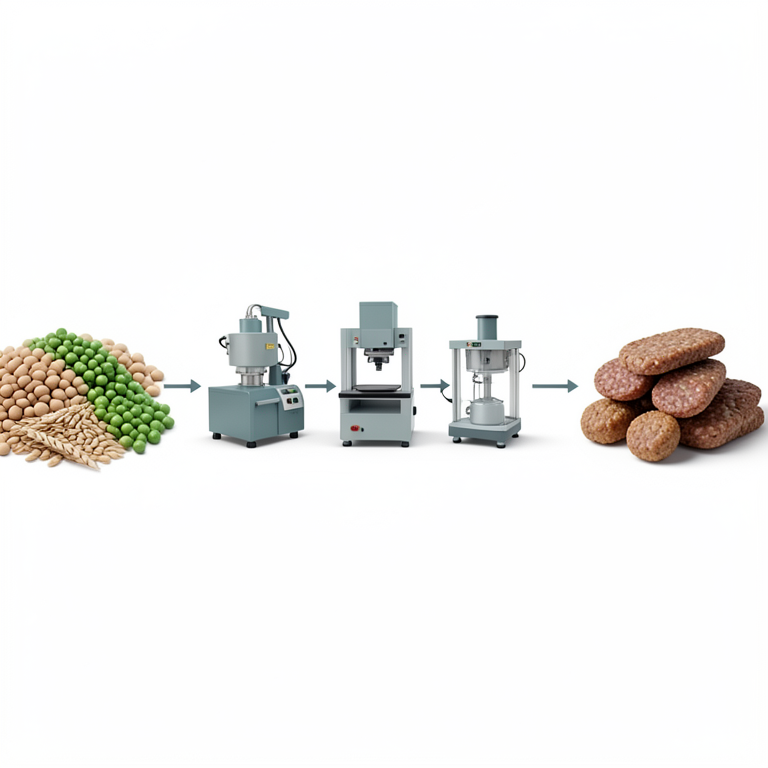
Plant-Based Meat Analogue Production Flow
AI-generated conceptual illustration (soy, pea, and wheat proteins processed into meat analogues). It explains the idea and does not show study data.
View source evidence ↗Figures & tables
From the original paper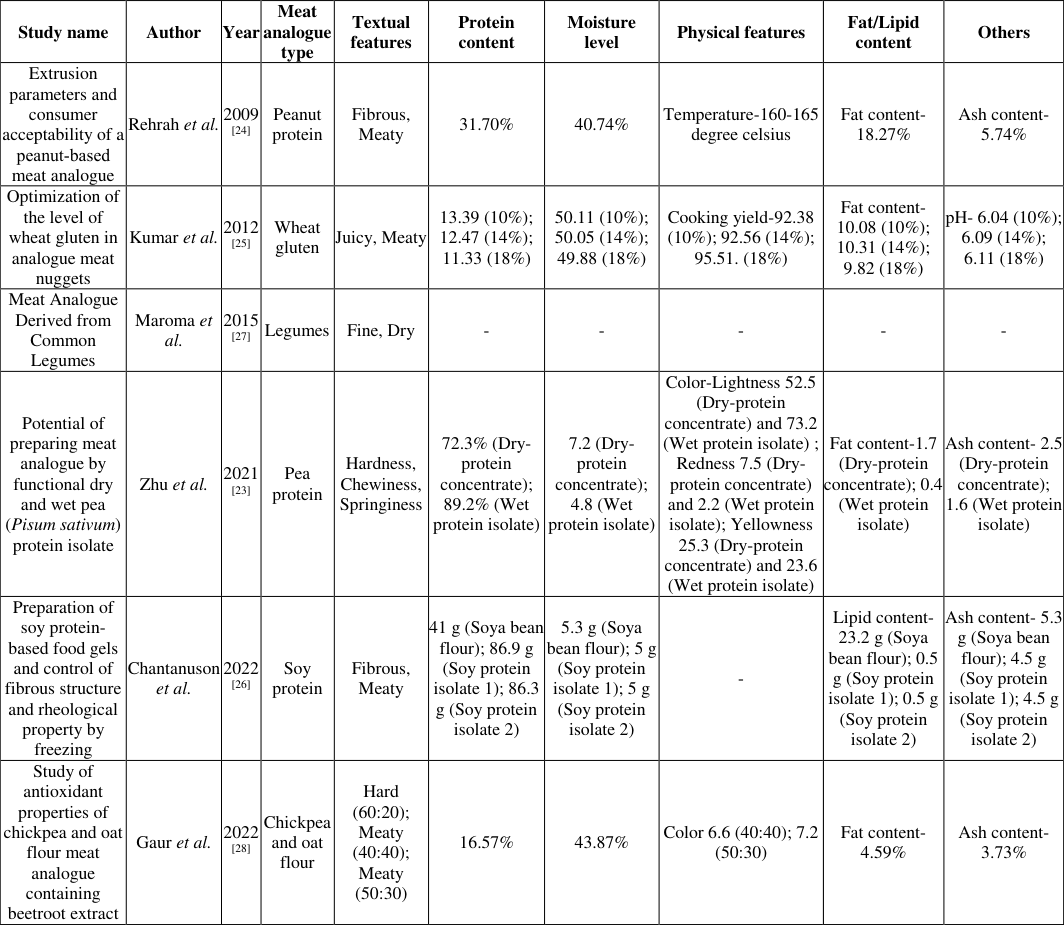 Table 1
Introduction
Although there are well-documented health and environmental difficulties associated with the production of traditional meat, various obstacles must be overcome to develop plantbased meat alternatives (Kyriakopoulou et al., 2021) [7] . The fact that consumers are reluctant to adopt dietary adjustments due to the sensory and nutritional appeal of meat-based goods, as well as the ease with which they can obtain these items, is one of the primary challenges that has to be addressed (Gómez et al., 2020) [8] . Despite this, plant-based meat substitutes are becoming increasingly significant because they are both practical and have been shown to have numerous health benefits against meat (He et al., 2020) [9] . In addition, the creation of meat analogs is focused not only on the nutritional content of the ingredients but also on the adjustments that are made to the physical features. The purpose of this is to ensure that these items have the right sensory qualities, which will ultimately lead to an increase in the products' sustainability. Recent advancements in processing methods have produced meat analogs that have superior physicochemical properties and a higher nutritional quality than traditional meat products (Singh & Sit, 2022) [10] . Creating plant-based meat alternatives, which are also sometimes referred to as meat analogs or substitutes, involves largely utilizing plant-based ingredients rather than animal products on the production side (McClements & Grossmann, 2021) [11] . These alternatives are designed to come close to imitating the consistency, flavor, and taste of goods made from animal meat (Ismail et al., 2020). Since the beginning of time, imitation meat products have been made with plant-based substances, with soy being a trendy option. As an illustration, the creation of tofu in South Asian countries, mainly China, occurred approximately two thousand years ago to imitate the texture and appearance of meat (Singh et al., 2021) [13] . In light of the fact that the consumption of meat is on the rise all over the world, there is a growing concern about the influence that it has been having on ethics and health from the standpoint of society. The amount of meat that is produced around the world has increased by a substantial factor of five since the year 1960 (Macleay et al., 2022) [14] . The consumption of meat continues to increase all over the world (Geiker et al., 2021) [15] , despite the fact that the health concerns that it entails have been widely documented (Henchion et al., 2021) [16] . Research has established a connection between a high consumption of meat and an increased risk of acquiring a variety of cardiovascular and zoonotic diseases, as well as type two diabetes, colon cancer, coronary heart disease, and heart disease. In the year 2021, the average amount of meat consumed by an individual in Austria was 58.9 kilograms, as disclosed by Statistics Austria and AMA Marketing (Rahim et al., 2022) [17] . The Austrian Ministry of Social Affairs has recommended a certain amount, although this amount is three times higher than what is recommended. In order to address the aforementioned problems, meat substitutes offer adaptable solutions. Plant-based alternatives to meat are among the most popular alternatives to meat at the moment (Onwezen et al., 2021) [18] , and they are already readily available to the typical person in Austria. There are a variety of technologies that may be utilized in order to produce a product that is quite similar to meat when it comes to the creation of plant-based alternatives to that of meat. The three-dimensional printing method, shear cell, high-or low-moisture extrusion, and other methods are included in this category. By utilizing these techniques, it is possible to manufacture items that are entirely composed of plant-based ingredients and look and feel like meat. It is essential to fine-tune and improve the composition of the printing mixture while using extrusion printing, which is a technology that is frequently employed. By doing so, printing is made possible, and the ultimate product is guaranteed to fulfill the expectations of the final consumer in terms of its nutritional value, sensory experience, and texture. A number of plant-based materials, including cereals, legumes, algae, and fungi, are texturized to form plant-based meat analogues, which are more frequently referred to as mixed gel systems (Liu et al., 2023). In order to simulate the flavor and consistency of real meat, plantbased meat substitutes frequently use a wide range of substances. Soy, legumes such as chickpeas and lentils, grain proteins derived from rice, oats, barley, or wheat, natural colorings such as cumin, carotene, lycopene, and beetroot juice, and flavorings such as spices, herbs, yeast extract, paprika, sugar, and mushrooms are considered to be examples of these. To further strengthen the connection and stability of the shape, a combination of oils (such as sunflower, coconut, palm, and others) and other "structural" components (such as carrageenan, starch, and cellulose, among others) is applied in order to obtain a texture and qualities that are comparable to those of meat. Furthermore, the mixes that have been talked about can be improved by adding a wide range of vitamins and other bioactive components (Ishaq et al., 2022) [20] . Recently, there has been a rise in the demand for vegetarian food products in the market (Aschemann-Witzel et al., 2020) [21] . This can be attributed to the increased awareness among consumers regarding issues related to health and the environment. Products that are made from plants and are intended to emulate the functional and sensory features of meat are known as plant-based meat alternatives (Boukid, 2020) [22] . The utilization of particular plant-based components that possess a fibrous texture allowed for the accomplishment of this goal. Throughout time, meat consumption has been part of the diet of human beings. It contains an important nutritional constituent: protein, iron, and vitamin B12 (Willet et al., 2019) [5] . However, in recent times, the view on the modern food landscape began to change to a larger extent, and in light of this growth in concern for environmental sustainability, animal well-being, and human health (Springmann et al., 2018) [4] , the modern food landscape is increasingly being characterized by plant-based diets. This shift has led to an increased interest in and innovation for the development of meat analogues. A meat analog is a plant-based product that mimics sensory, textural, and at times even nutritional characteristics of conventionally produced meat (Sethi et al., 2019) [3] . This study provides a comprehensive analysis of meat analogues derived from various vegan sources, examining their nutritional composition, sensory attributes, and potential benefits. The research reviewed includes meat analogues made from peanut protein, wheat gluten, legumes, pea protein, soy protein, and chickpea-oat flour mixtures. Rehrah et al., (2009) [24] demonstrated that peanut protein can create fibrous, meaty textures with a protein content of 31.70% and moisture level of 40.74%, highlighting its potential in meat analogue production. Kumar et al., (2012) [25] showed that wheat gluten can produce juicy, meaty nuggets with protein content ranging from 11.33% to 13.39% and high cooking yield, making it an effective ingredient for meat substitutes. Maroma (2015) [27] emphasized the versatility of legumes in creating meat analogues with desirable sensory attributes, although specific nutritional data were not provided. Zhu et al. (2021) [23] found that pea protein isolates, with protein content up to 89.2%, offer superior textural and nutritional qualities compared to traditional meat. Chantanuson et al., (2022) [26] explored soy protein, achieving fibrous, meaty gels with protein content ranging from 41 g to 86.9 g per 100 g, using advanced freezing methods. Gaur & Kaliyadan (2022) [28] highlighted the potential of chickpea and oat flour, enriched with beetroot extract, producing meat analogues with a protein content of 16.57% and high consumer acceptability.
Evolution of meat analogues 2.1 Subheading (Sentence case) 2.1.1 Sub subheading (Sentence case)
The rise of meat analogues is the history of a couple of centuries that reflects changes in eating habits related to technological progress and moves in societal attitudes toward food production and consumption. The development of meat analogues goes back in time to ancient civilizations, during which plant ingredients were ingeniously used to mimic the taste and structure of meat. For instance, in Asia, tofu and tempeh have been used for ages in place of flesh foods (Sabate, 2003) [2] . Those prototypes of meat analogues laid the foundation for innovative and potential sources of plant-based protein in the diet.
Industrial revolution and beyond
The beginning of the Industrial Revolution marked a great stride in the history of the development of meat analogs. With the advance of food processing technology under mass production techniques, manufacturers began experimenting with soy protein isolates and other plant-derived ingredients to make products simulating meat. Vegetarian sausage and patty products were first popularized by vegetarian movements in Europe and North America in the 19 th and early 20 th centuries.
Post-world war II era
Shortly after World War II, there was a resurgence in meat analogs caused by the food shortage and rationing that continued in many parts of the world. This scarcity in the availability of meat led the governments and food scientists to look into the alternative sources of protein, which they did by developing the Textured Vegetable Protein (TVP) and other extenders of meats (Baldwin et al., 1953) [6] . These early analogs mostly filled processed foods but set the stage for innovation in plant-based meat alternatives.
Rise of modern meat analogues
The growth of the meat analog products occurred in the latter part of the 20th century, chiefly accelerated by increasing environmental apprehensions regarding the effects of farming livestock and concerns for animal care as well as the effects on health that may occur due to the consumption of red and processed meats (Springmann et al., 2018) [4] . The growth rapidly through the 80s and 90s, as the number of consumers increases, which is looking towards ethically, environmentally, and health-based plant substitutes.
Technological innovations
However, recent advances in food science and technology have given thrust to the evolution of this product category, popularly known as 'meat analogues'. The capacity of extrusion technology has been tremendous in the revolution of processing-based meat analog plants, seeing as it allows the fibrous structures made to resemble closely with precision the textures of muscle tissue in animals (Mattick et al., 2018) [1] . Last but not least, some new ingredients include pea protein, wheat gluten, and mycoprotein (obtained from fungi) in the formulation of meat analogues with an aim to improve the nutritional value and sensory attributes. The meat analogs industry has experienced unprecedented growth and monumental innovation over the last few years. This has been attributed to an increase in consumer demand, investment in the area by food tech start-ups, and collaboration between food manufacturers and research institutions. At the moment, plant-based hamburgers, sausages, nuggets, and other meat analogs are one of the most demanded products that are represented in supermarkets, restaurants, and various fast-food chains, mainly on an increasing agenda of flexitarians, vegetarians, vegans, and supporters of healthy nutrition (Sethi et al., 2019) [3] . The development of meat analogues has been referred to as complicated development interacting historical, technological, and socio-cultural variables. From the basic forms of plant-based traditional meals to very complicated modern alternatives that mimic the taste and feel of animal meat, meat analogs have really come a long way. With the rapid growth of the global population and increased environmental worries, it is likely that meat analogs are cropping up in a more serious way to determine the future of food production and consumption. The products provide a sustainable, ethical, and nutritional alternative to the regular meat product.
Motivations for meat analogue development
The reasons for developing analog meat are many and range from environmental sustainability to health and ethical concerns. One of the major impulses for the meat analog concept is their potential for lessening the environmental load initiated by conventional meat production. The global livestock production produces the environmental pressure recognized as one of the major sources for many kinds of environmental burden; among them is the emission of greenhouse gases, deforestation, and water pollution (Springmann et al., 2018) [4] . For instance, it has been observed that animal-based food productions contribute the most to carbon emission worldwide, especially the case of beef (Springmann et al., 2018) [4] . In simple meaning, it means consumers decrease their carbon footprint and save natural resources by switching to plant-based substitutes, such as meat analogues. Animal welfare concerns are a big factor in pushing the demand for meat analogues. The practices followed in the intensification of farming, adopted in the meats industry, usually accompany a set of ethicbased concerns for cruelty and suffering of the animals (Willet et al., 2019) [5] . The poultry and livestock produced for human food are always kept crowded and filthy, fueled with antibiotics, while slaughters are atrocious. This has, however, led to growing awareness of this reality and, in its place, urged many consumers toward the search for alternatives to traditional meat products, such as plant-based meat analogues. Meat analogs potentially produce some benefits when consumed from a public health perspective compared to those products conventionally manufactured. For example, according to Willet et al., (2019) [5] , processed meats and those that are red often lead to the development of chronic diseases, such as diabetes, heart diseases, and some forms of cancer. It is in this light that a recent remarkable study published in The Lancet has indicated that adherence to a plant-based diet significantly reduces the risk of death from chronic diseases. Thus, the development of plant-based meat substitutes will be a very attractive alternative for this kind of customer (Willett et al., 2019) [5] . This thus provides an easy and nutritive alternative that would enable an individual to still relish the flavor and texture of meat yet cut down on consumption with a high level of saturated fats, cholesterol, and other harmful compounds often contained within animal-derived meats. Furthermore, the meat analogs satisfy the needs of individuals whose cultural and religious dietary practices would never allow them to take those kinds of meat. For example, most of the Hindus, Buddhists, and Jains are vegetarians or vegans due to religion (Sabate, 2003) [2] . Therefore, all people desiring to adhere to dietary laws such as kosher or halal will prefer plant-based meat alternatives in order to meet their religious laws. The meat analogues provide a variety of meat-free products and, as such, meet a number of cultural and religious dietary predilections. Reasons behind this development of meat analogues are many and relate to environmental sustainability, animal welfare, health issues, cultural, and religious considerations. That's not it; consumers are increasingly becoming aware of the environmentally ethical consequences of their food choice; therefore, the demand for meat substitutes can only increase. By meeting these various motivations, meat analogues have the potential to significantly contribute towards the redirection of the global food system to a more sustainable, ethical, and health-sensitive future.
Problem statement
Despite an upward trajectory in the production of meat analogs, very little data is available for comparison studies regarding the sensory attributes, nutritional composition, or sustainability aspects of the same across different sources of vegan meat. This, of course, does not allow us to at least mention the most promising sources of plant-based proteins for meat analogs and optimize their formulations in terms of both consumer preferences and nutritional value. There are, however, challenges related to increasing production, affordability, and availability for the consumers of the meat analog products to reach all people. Filling this research gap, therefore, may be achieved through the comparative study of meat analogs developed from different sources in the vegan domain, so as to inform stakeholders in the food industry, policymakers, and consumers about the potential influence plant-based alternatives can have in ensuring sustainable and ethical food systems.
Material and methods used for preparation of different textured protein 5.1 Pea protein nuggets
Pea protein nuggets were prepared by blending peas, with wheat protein, potato starch as binding agent and adjusting its accepted taste. Peas are Dry separated by ultrafine milling followed by air pre-classification to collect dry protein concentrate. Protein isolate was obtained by separation method involving suspension in deionized water, pH adjustment, centrifugation, and freeze-drying. Compositional analysis for moisture, crude fat, ash, protein content, and calculation of carbohydrate content. Showed that these are comparable to animal protein. Microstructure was observed using SEM at an acceleration voltage of 10 kV. Particle size analysis shows a very close microstructure to the meat analogues. Amino acid profile was determined by Determination of amino acid profiles and estimation of Amino Acid Score (AAS) and Chemical Score (CS) using HPLC. Protein composition was analysed by SDS-PAGE. Secondary structure composition was detected by Cd spectroscopy and surface hydrophobicity was measured using a fluorescence spectrophotometer. Other physical characteristics like solubility and water absorption capability of samples found to differ significantly to the meat analogues. Measurement of foaming and emulsifying abilities of sample solutions shows similar and close nature to texturised meat analogues. Developed nuggets were subjected to determination of their viscoelasticity properties using a rheometer which give insight into some mild deviation from the meat nuggets. Texture profile analysis (TPA) of the plant-based nuggets were done using a texture analyzer give comparable chew ability of the product. Color of the cross-section of the nuggets was determined by a using a colorimeter. The 2021 study by Zhu et al. focused on the development of meat analogues using pea protein sourced from Baicheng Academy of Agricultural Science in China. This comprehensive research incorporated additional ingredients such as wheat proteins, potato starch, methylcellulose, allpurpose flour, and soybean oil to enhance the properties of the final product. The preparation of the protein involved both dry and wet separation methods, yielding a Dry Protein Concentrate (Dry-PC) and a Wet Protein Isolate (Wet-PI). These forms were then analyzed to determine their suitability and effectiveness in the meat analogue formulation. The research team conducted a series of analyses on these analogues, including compositional analysis to ascertain the nutrient content, microstructure examination to observe the internal structure, and particle size analysis to understand the distribution of the particles within the product.
Further evaluations of the protein's nutritional quality were performed using High-Performance Liquid Chromatography (HPLC), SDS-PAGE analysis, and circular dichroism spectroscopy, focusing on the amino acid composition and protein structure. The functional properties of the pea protein, such as solubility, water absorption capacity, foaming, and emulsifying capabilities, were assessed to determine their practical applications in food products. Additionally, the meat analogues were specifically tested for viscoelasticity, texture, and color key factors that influence consumer acceptance. A thorough analysis of the data collected was carried out to derive meaningful conclusions from the study. This in-depth approach by Zhu et al. not only highlighted the potential of pea protein in creating meat substitutes but also provided valuable insights into optimizing the textural and nutritional qualities of such products.
Peanut protein
Defatted peanut flour and Peanut Protein Concentrate (PPC) was used in this process internally through dissolution, pH correction, centrifugation, and spray drying. The mixture is extruded through laboratory scale single screw extruder with precise temperature and speed control for partial extrusion cooking. The physicochemical characteristics, texture, surface properties and sensory attributes were identified using standard procedure to assess customer acceptability and approximate content of protein analogues through testing.
In the 2009 study by Rehrah et al., [24] the researchers provided a detailed methodology for producing and evaluating meat analogues from pea protein. The initial step involved obtaining defatted peanut flour from the Golden Peanuts Company based in Alpharetta, Georgia, USA. This flour was used to produce Peanut Protein Concentrate (PPC) within the company using a series of precise processes including dissolution, pH adjustment, centrifugation, and spray drying. Following the production of PPC, the researchers prepared for extrusion by combining the concentrate with more defatted peanut flour, meticulously adjusting the protein and moisture content of the mixture before extrusion. They used a laboratory-scale extruder equipped with precise temperature and speed controls to perform the extrusion cooking. Multiple experimental runs were conducted to refine this process, with the outcomes analyzed using response surface methodology to identify the most effective extrusion parameters. The resulting extruded products were then thoroughly examined for physicochemical properties, texture, and sensory attributes. Further steps included flavoring and formulation adjustments to mimic the taste and texture of ground beef closely. Consumer acceptability tests and analyses of the products' proximate composition were conducted to assess the items. Finally, statistical analyses were performed to evaluate the results, focusing on the quality and acceptability of the meat alternatives developed from pea protein.
Wheat based meat analog
Another meat analogous product developed out of Wheat gluten containing hydrated wheat dalia, soya protein and dudhchata mushroom protein (Colocybe indica), blended and extruded after adding seasoning agent and steam cooked for 20 minutes without application of any further pressure., gives an partially cooked and texturised protein nugget. (Kumar et al., 2012) [25] showed how the textured soy protein, which is sold under the brand name Nutrela, was hydrated by soaking it in water at a volume that was 1.5 times its volume for fifteen minutes. This was completed as part of the process of making analogue meat nuggets. After that, the soy protein that had been hydrated passed through a grinder for a period of twenty seconds. In order to prepare the Colocybe indica mushrooms for grinding into a thin paste, they were first thoroughly cleaned. Additionally, before being ground, hydrated wheat dalia, which is sold under the brand name Gopal Bhog, was soaked in water at a ratio of 2:1 for a period of fifteen minutes. In a Hobart Paddle mixer, the ground soy protein was combined with the mushroom paste and the wheat dalia paste for a period of one minute. Following that, refined soy oil was added, and the mixture was mixed for an additional thirty seconds. According to the instructions, singhara flour, gram flour, and arra-root flour were added to the mixture, and then it was mixed for a further thirty seconds. This resulted in the increased concoction. Last but not least, a number of other components were incorporated and left to blend for an extra thirty seconds. The material that was produced was then stuffed into boxes and cooked with steam for twenty minutes without being subjected to any pressure. Once the prepared mixture had cooled, it was masterfully sliced and carefully cut into bits that were both delicious and satisfying, which resulted in the nuggets that were sought.
Texturized soy nuggets
Soya Protein isolate blended with sodium alginate powder and oil, extruded in a single or twin screw extruded, gives texturised protein nuggets. The viscosity is measured in Rheometer and texture characterization done in a texture analyser for its firmness, elasticity etc. The 2022 study by Chantanuson et al., [26] meticulously outlines the production process of soy protein gel utilizing a freezing method. The procedure began by creating a solid phase suspension, which involved mixing soy flours, sodium alginate, salt, and glucono-d-lactone in specific weight ratios to achieve varying solid content levels. Concurrently, the liquid phase was prepared by blending canola oil with water. After thorough homogenization, the mixture was carefully transferred into cubic silicone molds, with a colorant added to facilitate better visualization of the product. The freezing process was conducted in two stages. Initially, the filled molds were stored at -10 °C for a duration of eight hours. Subsequently, they were immersed in a CaCl2 solution to stabilize overnight at a temperature of 4 °C. Following this, another freezing stage was applied. Postfreezing, the samples were maintained at 4 °C until further testing. For structural analysis, a digital microscope and ImageJ software were employed to assess the internal structures and measure the pore sizes within the gel. Additionally, the mechanical strength of the soy protein gels was evaluated using a rheometer, after the samples had been pre-treated and shaped into cuboids. Chicken meat served as a reference point for comparison in these analyses. This comprehensive approach detailed by Chantanuson et al., (2022) [26] elaborates on the intricate processes involved in the production and analysis of soy protein gel through freezing.
Legumes nuggets texturised
Defatted Legumes (White kidney beans: 1 kg, Cannelini Beans: 500 grams, Lima Beans: 500 grams) purchased from SM Hypermarket in Baliuag, Bulacan, Philippines. Protein nuggets in the texturised meat analogue form was developed using the following method. Production of protein concentrate from the dry legume beans, Production of meat analogue from legumes through chopping, drying, and packing. Product was evaluated by different physicochemical nutritional, microbial and texture analyses. In the research conducted by Maroma (2015) [27] , the primary objective was to develop a meat substitute utilizing legumes commonly included in human diets. The study placed considerable emphasis on maintaining cleanliness, carefully selecting and preparing raw materials, meticulously executing the production process, performing microbiological analysis, and evaluating the final product. The process commenced with rigorous sanitation practices, involving soaking instruments in a chlorine solution and airdrying them. The selected legumes were meticulously chosen from a reputable supermarket and subjected to processes such as soaking, cooking, and drying, preparing them for conversion into meat analogues. Subsequent steps included chopping, additional drying, and packaging of the legumes to form the meat substitute. These samples were then sent to the Analytical Testing Laboratory at Bulacan State University for microbiological testing. Ultimately, volunteers from the same university conducted evaluations of the product, assessing its flavor, aroma, texture, and overall taste quality. This comprehensive evaluation provided valuable insights into the development and assessment process of the meat substitute.
Chickpea and Oat flour texturised nugget as meat analogue
Dried Cheakpea and oat flour germinated, drying, and grinding. The components chickpea flour, oat flour, spices, beetroot extract, and vegetable oil were mixed to form dough. The dough was shaped and precooked by steaming, and frozen. Rest of the tests were done as before. In the study conducted by Gaur & Kaliyadan (2022) [28] , the researchers explored the feasibility of crafting a meat substitute from a mixture of chickpeas and oat flour, enriched with beetroot extract to enhance the coloration of the final product. They sourced an array of spices and condiments from local markets in Phagwara, Punjab, which were then incorporated into the formulation. Both a university food laboratory and these local markets provided the necessary raw materials. The researchers processed a batch of chickpea flour through germination, followed by drying and grinding. Subsequently, they combined this chickpea flour with oat flour, various spices, beetroot extract, and vegetable oil to create a dough. This dough was then used to form patties, which were meticulously shaped, steamed, and later freezer-stored for preservation. An evaluation involving students and faculty members from the School of Agriculture at Lovely Professional University was conducted using a nine-point hedonic scale, assessing multiple aspects of the meat analogs including their appearance, taste, color, flavor, texture, and overall acceptability. In the study conducted by Gaur & Kaliyadan (2022) [28] , the researchers explored the feasibility of crafting a meat substitute from a mixture of chickpeas and oat flour, enriched with beetroot extract to enhance the coloration of the final product. They sourced an array of spices and condiments from local markets in Phagwara, Punjab, which were then incorporated into the formulation. Both a university food laboratory and these local markets provided the necessary raw materials. The researchers processed a batch of chickpea flour through germination, followed by drying and grinding. Subsequently, they combined this chickpea flour with oat flour, various spices, beetroot extract, and vegetable oil to create a dough. This dough was then used to form patties, which were meticulously shaped, steamed, and later freezer-stored for preservation. An evaluation involving students and faculty members from the School of Agriculture at Lovely Professional University was conducted using a nine-point hedonic scale, assessing multiple aspects of the meat analogs including their appearance, taste, color, flavor, texture, and overall acceptability.
Rationale of the study
With the swell in world population, to such an exponential height, there should also be an increase in the demand for food. However the conventional way of meat production is not sustainable; it challenges the environment, animal welfare, and human health. There is, therefore, a pressing need to look into alternatives for protein sources that will replace meat and at the same time still reduce the negative effects caused by the farming of livestock. One of the hopeful solutions highlighted in the series was the rise of meat analogs. Essentially, these are any plant-based products designed to replicate the taste and texture of meat, often with efforts to match nutritional content as well. The present study aims to further research on development and comparative analysis of meat analogs from diverse vegan sources and provide additional knowledge in sustainable food systems by discussing the potential of plant-based alternatives for traditional meat products.
Figures and tables from the paper
References
28 in the original paper- Mattick CS, Landis AE, Allenby BR, Genovese NJ. Anticipatory life cycle analysis of in vitro biomass cultivation for cultured meat production in the United States. Environ Sci Technol. 2018;52(17):9632-9641.
- Sabaté J. The contribution of vegetarian diets to health and disease: a paradigm shift? Am J Clin Nutr. 2003;78(3):502S-507S.
- Sethi S, Tyagi SK, Anurag RK. Plant-based milk alternatives an emerging segment of functional beverages: A review. J Food Sci Technol. 2019;56(5):1893-1905.
- Springmann M, Clark M, Mason-D'Croz D, Wiebe K, Bodirsky BL, Lassaletta L, et al. Options for keeping the food system within environmental limits. Nature. 2018;562(7728):519-525.
- Willett W, Rockström J, Loken B, Springmann M, Lang T, Vermeulen S, et al. Food in the Anthropocene: the EAT-Lancet Commission on healthy diets from sustainable food systems. Lancet. 2019;393(10170):447-492.
- Baldwin HI, McGinnis J, Steffens WF. Textured vegetable protein. US Patent 2,615,835. 1953.
- Kyriakopoulou K, Keppler JK, van der Goot AJ. Functionality of Ingredients and Additives in PlantBased Meat Analogues. Foods. 2021;10(3):600.
- Gómez I, Janardhanan R, Ibañez FC, Beriain MJ. The Effects of Processing and Preservation Technologies on Meat Quality: Sensory and Nutritional Aspects. Foods. 2020;9(10):1416.
- He J, Evans NM, Liu H, Shao S. A review of research on plant-based meat alternatives: Driving forces, history, manufacturing, and consumer attitudes. Compr Rev Food Sci Food Saf. 2020;19(5):2639-2656.
- Singh A, Sit N. Meat Analogues: Types, Methods of Production and Their Effect on Attributes of Developed Meat Analogues. Food Bioprocess Technol. 2022;15(6):987-1004.
- McClements DJ, Grossmann L. The science of plant-based foods: Constructing next-generation meat, fish, milk, and egg analogs. Compr Rev Food Sci Food Saf. 2021;20(4):4049-4100.
- Ismail I, Hwang YH, Joo ST. Meat analog as future food: a review. J Anim Sci Technol. 2020;62(2):111120.
- Singh M, Trivedi N, Enamala MK, Chandrasekhar K, Parikh P, Nikolova MP, et al. Plant-based meat analogue (PBMA) as a sustainable food: a concise review. Eur Food Res Technol. 2021;247(7):15311542.
- Macleay CM, Carrick J, Shearer P, Begg A, Stewart M, Heller J, et al. A Scoping Review of the Global Distribution of Causes and Syndromes Associated with Mid-to Late-Term Pregnancy Loss in Horses between 1960 and 2020. Vet Sci. 2022;9(4):186.
- Geiker NRW, Bertram HC, Mejborn H, Dragsted LO, Kristensen L, Carrascal JR, et al. Meat and Human Health Current Knowledge and Research Gaps. Foods. 2021;10(7):1556.
- Henchion M, Moloney A, Hyland J, Zimmermann J, McCarthy S. Review: Trends for meat, milk and egg consumption for the next decades and the role played by livestock systems in the global production of proteins. Anim. 2021;15:100287.
- Rahim MA, Shoukat A, Khalid W, Ejaz A, Itrat N, Majeed I, et al. A Narrative Review on Various Oil Extraction Methods, Encapsulation Processes, Fatty Acid Profiles, Oxidative Stability, and Medicinal Properties of Black Seed (Nigella sativa). Foods. 2022;11(18):2826.
- Onwezen MC, Bouwman E, Reinders MJ, Dagevos H. A systematic review on consumer acceptance of alternative proteins: Pulses, algae, insects, plant-based meat alternatives, and cultured meat. Appetite. 2021;156:105058.
- Liu H, Zhang J, Chen Q, Hu A, Li T, Guo F, et al. Preparation of Whole-Cut Plant-Based Pork Meat and Its Quality Evaluation with Animal Meat. Gels. 2023;9(6):461.
- Ishaq A, Irfan S, Sameen A, Khalid N. Plant-based meat analogs: A review with reference to formulation and gastrointestinal fate. Curr Res Food Sci. 2022;5:973-983.
- Aschemann-Witzel J, Gantriis RF, Fraga P, PerezCueto FJA. Plant-based food and protein trend from a business perspective: markets, consumers, and the challenges and opportunities in the future. Crit Rev Food Sci Nutr. 2020;61(18):3119-3128.
- Boukid F. Plant-based meat analogues: from niche to mainstream. Eur Food Res Technol. 2020;246(8):13751388.
- Zhu HG, Tang HQ, Cheng YQ, Li ZG, Tong LT. Potential of preparing meat analogue by functional dry and wet pea (Pisum sativum) protein isolate. LWT. 2021;148:111702.
- Rehrah D, Ahmedna M, Goktepe I, Yu J. Extrusion parameters and consumer acceptability of a peanut-based meat analogue. Int J Food Sci Technol. 2009;44(10):2075-2084.
- Kumar P, Sharma BD, Kumar RR, Kumar A. Optimization of the level of wheat gluten in analogue meat nuggets. ResGate. 2012. Available from: https://www.researchgate.net/publication/274192817_O ptimization_of_the_level_of_wheat_gluten_in_analogu e_meat_nuggets.
- Chantanuson R, Nagamine S, Kobayashi T, Nakagawa K. Preparation of soy protein-based food gels and control of fibrous structure and rheological property by freezing. Food Struct. 2022;32:100258.
- Maroma DP. Meat Analogue Derived from Common Legumes. OAlib. 2015. Available from: https://doi.org/10.4236/oalib.1101249.
- Gaur SS, Kaliyadan S. Study of antioxidant properties of chickpea and oat flour meat analogue containing beetroot extract. Pharm J. 2022;11(6S):13178. Available from: https://www.thepharmajournal.com/specialissue?year=2022&vol=11&issue=6S&ArticleId=13178.