
Research article · 2024 · Full text
International Journal of Agriculture and NutritionFormulation and standardization of cookies integrated with fruit peels and seeds
Volume 6(2) · Pages 100–103 · DOI: 10.33545/26646064.2024.v6.i2b.188 ↗
Research areasGlobal Trade and CompetitivenessFood composition and properties
Abstract
Author-writtenThis study presents an innovative approach to develop nutritious and flavourful wheat-based cookies by integrating orange and avocado peel, along with jackfruit and muskmelon seeds. The cookies were formulated, baked, and subjected to sensory evaluation to assess their taste, texture, and aroma. The results revealed that the integration of orange and avocado peel extracts positively influenced the cookies flavor, aroma, and texture. Furthermore, the enriched cookies exhibited improved heart and bone health, anti-inflammatory properties, and antioxidant activity, possibly providing functional benefits to the traditional wheat-based product. It is also a great source of protein, carbohydrates, fat and phenolic components such as terpenoids, saponin, and flavonoids including anthocyanin. The findings of this study demonstrate a promising combination of wheat-based cookies enriched with various plant based ingredients, offering a delicious and nutrient-rich snacking option for health-conscious consumers who are looking forward for maintaining their weight. The successful development of these cookies suggests a promising approach to reducing food waste while promoting sustainability and enhancing the nutritional value of baked goods.
Summary
Source-checkedPlain-language reading of the full paper, prepared with AI and checked against the text. Each point links to the authors' own words.
Why it matters
- The baking industry is a major part of food processing in India, with cookies being a highly popular snack for both children and adults due to their convenience and long shelf life. View evidence ↗
- Food enrichment aims to maintain nutritional quality and prevent deficiencies by adding value through ingredients like fruit peels and seeds. View evidence ↗
- Orange peel, avocado peel, jackfruit seeds, and muskmelon seeds are identified as rich sources of fiber, proteins, vitamins, and phenolic compounds. View evidence ↗
The question
- The study aims to develop nutritious and flavorful wheat-based cookies by integrating orange peel, avocado peel, jackfruit seeds, and muskmelon seeds. View evidence ↗
What they did
- The final cookie formulation consisted of wheat flour (40g), Maida (15g), orange peel powder (5g), avocado peel powder (4g), jackfruit seed powder (3g), muskmelon seed powder (2g), and other ingredients including jaggery, butter, and milk. View evidence ↗
- The cookies were baked in a microwave oven at 180 °C for approximately 15 to 20 minutes. View evidence ↗
- Sensory qualities were assessed by students using a nine-point hedonic scale to rank attributes such as color, aroma, texture, and taste. View evidence ↗
What they found
- The addition of orange and avocado peel extracts was found to have a positive influence on the cookies' aroma, flavor, and texture. View evidence ↗
- The cookies contained approximately 0.254 mg/ml of ascorbic acid from orange peel and 35.64 mg/g of anthocyanin from avocado peel. View evidence ↗
- The enriched cookies demonstrated antioxidant activity and anti-inflammatory properties, potentially benefiting bone and heart health. View evidence ↗
What it means
- The authors conclude that combining wheat flour and jaggery with these fruit by-products creates a wholesome, eco-friendly treat with a delightful blend of textures and flavors. View evidence ↗
- The study suggests that this approach to cookie development can reduce food waste and promote sustainability while increasing the nutritional value of baked goods. View evidence ↗
Visual summary
1 visualsIllustrations explain the paper; they do not show study data.
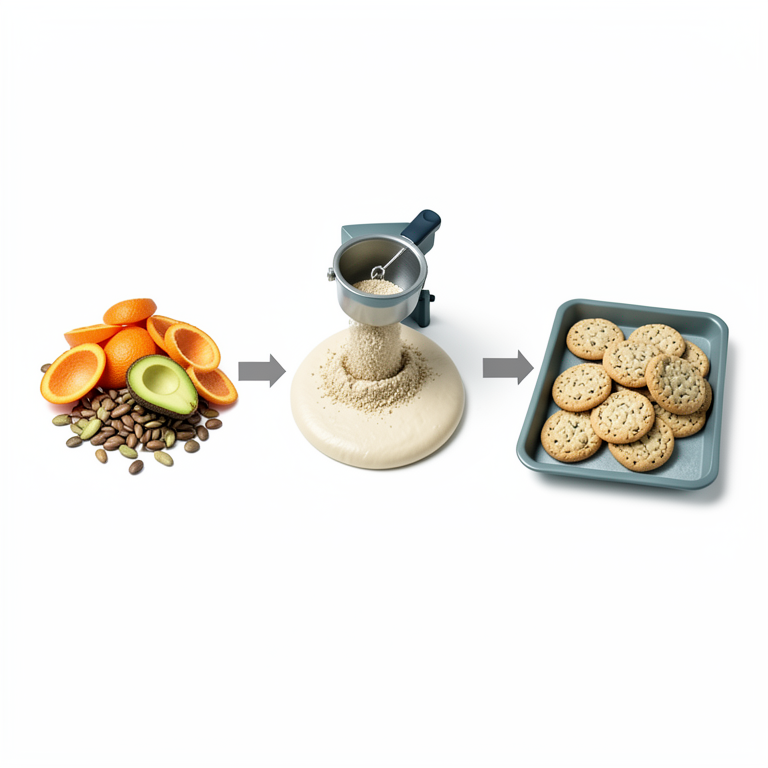
Circular Economy of Cookie Production
AI-generated conceptual illustration (wheat cookies, orange peels, avocado peels, jackfruit seeds, and muskmelon seeds). It explains the idea and does not show study data.
View source evidence ↗Figures & tables
From the original paper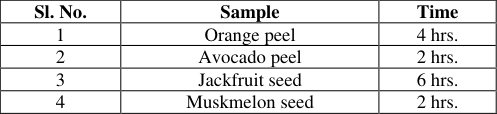 Table 1
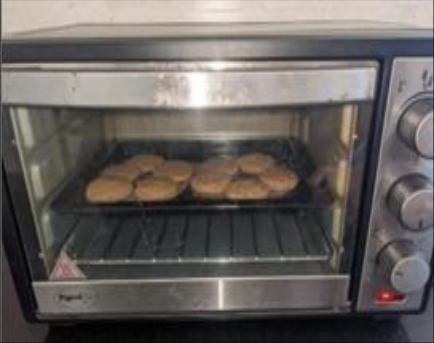 Figure 1
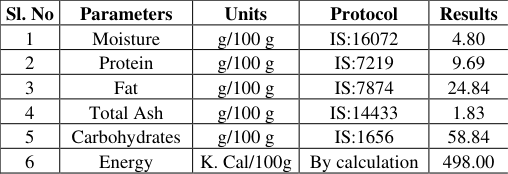 Table 1
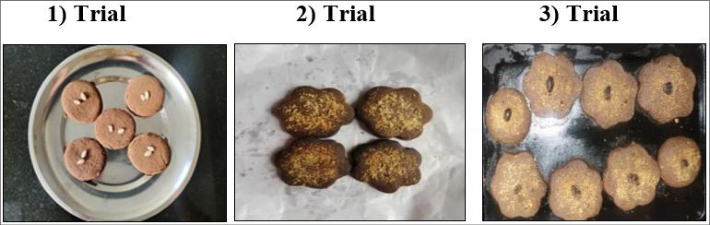 Figure 2
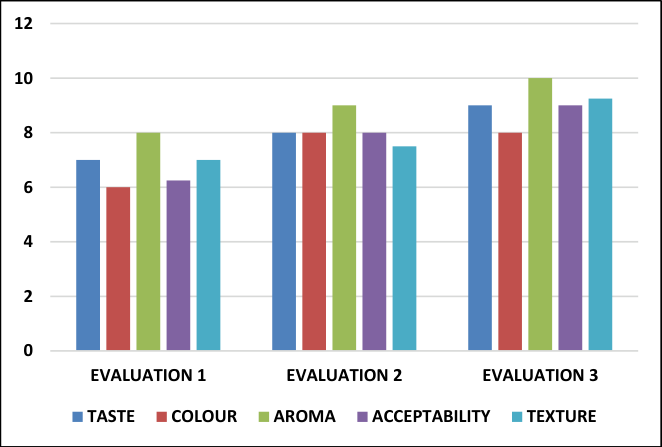 Figure 3
Introduction
One of the major segments of food processing in India is baking industry. Baked goods are very popular due to their easy availability, convenience and long lifespan. Cookie is the most common snack used by children and adults. Consumers are increasingly aware of the ingredients that have an impact health in both positive and negative aspects. The number of these health-conscious consumers is growing rapidly is growing, as is the health food industry. New foods with new health claims are flooding in market to meet the diverse needs of consumers. However, there are still many opportunities to enhance the nutritional value of biscuits in both quantity and quality. In this regard, there are some food ingredients that have special nutritional properties. Added value to existing foods containing those ingredients is a simple and feasible way to improve the nutritional value of food and thus improve health [1] . Their growing demand also enlarges the reach of their production, fortifications and other nutritional improvement. The goal of enrichment is primarily to maintain the nutritional quality of the products, to maintain adequate levels of nutrients in order to correct or prevent specific nutritional deficiencies in the population from certain deficiencies, to increase the added nutritional value of a product from orange peel, avocado peel, jack fruit and muskmelon seeds [2] . Orange peel powder is a rich source of crude fiber, phenolic compounds, βcarotene [3] . Avocado fruit has great nutritional significance as a source of carbohydrate, protein, and fiber and the avocado contains essential micronutrients for human consumption such as vitamins, minerals, and polyphenols [4] . Jackfruit seed can be converted into flour and to be used as a protein and carbohydrate supplement in diets or can also use as a functioning agent in a variety of formulated foods in bakery product [5] . Muskmelon is an excellent cause of naturally active compounds for people due to the good taste and rich chemical composition. Glucose and fructose, vitamin A, D, C, K, E, and some vitamins from group B are present in muskmelon [6] .
Materials and Methods
Materials and Methods
Preparation of cookies
Step 1: Selection of raw materials wheat flour 40g, Maida 15g, orange peel powder 5g, avocado peel powder 4g, jackfruit seed powder 3g, muskmelon seed powder 2g, cocoa powder 1g, cashew 4 pieces, almond 3 pieces, pista 3 pieces, jaggery 35g, butter 26g, milk 15ml, baking soda 0.5 g.
Step 2: Cleaning: Wash the orange and avocado thoroughly under running water to remove any dirt or residue, Pat them dry with a clean towel. For the jackfruit seeds, remove them from the fruit and rinse them to remove any pulp or debris
Step 3: Peeling: Remove the orange peel, carefully cut away the outer layer using a knife or peeler, being careful not to cut through the bitter white pith. Cut the peel into small pieces. Using a knife carefully cut the avocado peel. Gently remove the thin outer skin from the jackfruit seeds.
Step 4: Drying: Preheat the hot air oven to 40 °C, spread out the orange peel, avocado peel, jackfruit seeds and muskmelon seed on the plate in a single layer, separately and Let them dry at temperature 40 °C as mentioned in Table 1.1, until they become completely dry and brittle, observe carefully to prevent over-drying or burning. After drying remove the orange, avocado peel, jackfruit, and muskmelon seeds. Step 5: Mixing: In a mixing bowl, combine above all measured ingredients with butter and mix by hand until smooth, gradually add milk and knead the mixture into smooth dough. Adjust the amount of liquid as needed to achieve the right consistency. Transfer the filtrate to a volumetric flask after which made on top of things with ethanol Hcl and Shake properly study the absorbance the use of colorimeter at 535 nm [7] .
| Sl. No | Parameters | Units | Protocol | Results |
|---|---|---|---|---|
| 1 | Moisture | g/100 g | IS:16072 | 4.80 |
| 2 | Protein | g/100 g | IS:7219 | 9.69 |
| 3 | Fat | g/100 g | IS:7874 | 24.84 |
| 4 | Total Ash | g/100 g | IS:14433 | 1.83 |
| 5 | Carbohydrates | g/100 g | IS:1656 | 58.84 |
| 6 | Energy | K. Cal/100g | By calculation | 498.00 |
Table text extracted from the original PDF; superscript letters are shown inline. The original table image is below.
View original table image
| Sl. No. | Sample | Time |
|---|---|---|
| 1 | Orange peel | 4 hrs. |
| 2 | Avocado peel | 2 hrs. |
| 3 | Jackfruit seed | 6 hrs. |
| 4 | Muskmelon seed | 2 hrs. |
Table text extracted from the original PDF; superscript letters are shown inline. The original table image is below.
View original table image
Extraction of jackfruit seed powder:
The dried seed of the jackfruit became pulverized into powdered form. After that, jackfruit seed powder (5 g) became macerated the use of methanol for 24 hrs. The solvent was replaced every 24 hrs. The extract that turns into acquired from maceration emerge as centered using a rotary evaporator in an effort to accumulate methanol extract.
a) Terpenoids test:
The extract of jackfruit seed became inserted one by one into 1 ml check tubes and delivered with 0.5 mL of acetic acid anhydride and 2ml of sulfuric acid. The formation of green, bluish, and brown solutions indicated the Terpenoids presence [8] .
b) Flavonoid test: Separately, the jackfruit seed extract was added to test 1-milliliter tubes along with 0.2 grams of powdered magnesium and two milliliters of concentrated Hcl. The presence of flavonoids was indicated by the formation of red, orange, and green solutions [9] .
Extraction of muskmelon seed powder:
The muskmelon seed was dried and ground into a powder. Next, add 10ml of ethanol to a conical flask containing 2g of powdered muskmelon seed. Stir thoroughly. Put a rubber stopper on it and shake the conical flask at 140 rpm for 48 hours. Next, remove the shaker and use Whatman filter paper to extract the sample. a) Saponin test: Separately, the extract and fractions of muskmelon seed were added to 1 ml test tubes along with 2 ml of hot water. The tubes were then cooled and shaken for 10 seconds. It was declared positive for Saponin if the fume generated stabilized in less than 10 mins [10] .
b) Flavonoid test: Transfer 1 milliliter of muskmelon seed extract into a test tube. Make a 10% sodium hydroxide solution separately, and then add 1 milliliter of it to the extract. The formation of yellow color indicates the presence of flavonoid [11] .
Results and Discussion
The cookies are fortified ingredients like orange peel; avocado peel, muskmelon seeds, and jackfruit seeds can add unique flavors and nutritional benefits.
Trials for making cookies Trial 1: wheat flour 65 g, Maida 25 g, orange peel powder 5g, avocado peel powder 4 g, jackfruit seed powder 3 g, muskmelon seed powder 2 g, cocoa powder 1.5 g, cashew 4 pieces, almond 3 pieces, pista 3 pieces, jaggery 35 g, butter 50 g, milk 40ml, baking soda 0.5 gm.
Trial 2: wheat flour 60 g, Maida 20 g, orange peel powder 5g, avocado peel powder 4g, jackfruit seed powder 3g, muskmelon seed powder 2 g, cocoa powder 1g, cashew 4 pieces, almond 3 pieces, pista 3 pieces, jaggery 40g, butter 35g, milk 45ml, baking soda 0.5 gm. Sensory evaluation: The students from the department of food and nutrition at Padmashree Institution of management and sciences, Bangalore, Karnataka, assessed the cookies sensory qualities. To determine how much people, enjoy the cookies, the sensory analysis employed the nine-point hedonic scale. The participants were given instructions to rank the coded samples according to their level of liking for each sensory attribute, including color, appearance, aroma, texture, taste, and overall acceptability. (Fig 3) The cookies contain orange peel in which the ascorbic acid about 0.254mg/ml. Vitamin C enhances the absorption of non-heme iron (the type of iron found in plant-based foods) from the diet, which is particularly important for individuals who follow a vegetarian or vegan diet. Saponin decrease blood lipids, lower cancer risks, and lower blood glucose response. A high Saponin diet can be used in the inhibition of dental caries and platelet aggregation, in the treatment of Hypercalciuria in humans, and as an antidote against acute lead poisoning. Even small amounts of Nutraceuticals-rich foods, like cookies, can have a longterm positive impact on health and wellness. It could be a part of a well-balanced diet that has an emphasis on disease prevention and health maintenance. Nutraceuticals cookies might be advantageous, but it's important to keep in mind that the true health of these cookies primarily depends on the product's overall quality, the origin of its ingredients, and portion control.
Conclusion
To create a unique and sustainable cookie recipe by incorporating unconventional ingredients such as orange peel, avocado peel, jackfruit seeds, muskmelon seeds, milk, butter, and jaggery. Through experimentation and innovation, we have successfully developed a delicious and nutritious cookie that not only tantalizes the taste buds but also promotes environmental sustainability by reducing food waste. The cookies are a testament to the power of creativity and resourcefulness in the culinary world. By using ingredients that are often discarded, we have demonstrated that culinary excellence can go hand in hand with sustainability. The combination of wheat flour, jaggery, and these unique ingredients has resulted in a delightful blend of flavors and textures that is sure to please anyone seeking a wholesome and eco-friendly treat.
Acknowledgement
AcknowledgementsThe authors would acknowledge Padmashree Institute of Management and Sciences, Bangalore, Karnataka, India for academic support and encouragement.
Figures and tables from the paper
References
10 in the original paper- Biradar SD, Kotecha PM, Godase SN, Chavan UD. Studies on nutritional quality of cookies prepared from wheat flour and little millet. Int J Chem Stud. 2021;9(1):1675-1680.
- Harborne JB, Williams CA. Advances in flavonoid research since 1992. Phytochemistry. 2000;55(6):481504.
- Belose BB, Kotecha PM, Godase SN, Chavan UD. Studies on utilization of orange peel powder in the preparation of cookies. Int J Chem Stud. 2021;9(1):1600-1602.
- Otegbayo BO, Samuel FO, Alalade T. Functional properties of soy-enriched tapioca. Afr J Biotechnol. 2013;12(22):3583-3589.
- Conference, Plovdiv, Bulgaria, 8 November 2012. Proceedings. Plovdiv: Food Research and Development Institute; c2012, p. 23-26.
- Sant'Anna V, Gurak PD, Marczak LDF, Tessaro IC. Tracking bioactive compounds with colour changes in foods -A review. Food Chem. 2013;98:601-608.
- Gupta D, Mann S, Sood A, Gupta RK. Phytochemical, nutritional and antioxidant activity evaluation of seeds of jackfruit (Artocarpous heterophyllus Lam.). Int J Pharma Bio Sci. 2011;2(4):336-345.
- Nisar M, Zubair S, Sadawarte SK, Sawate AR, Kshirsagar RB. Studies on impact of different drying techniques on phyto-chemical and antioxidant properties of jackfruit seed powder. The Pharma Innovation J. 2021;10(4):57-60.
- Mehra M, Pasricha V, Gupta RK. Estimation of nutritional, phytochemical and antioxidant activity of seeds of musk melon (Cucumis melo) and watermelon (Citrullus lanatus) and nutritional analysis of their respective oils. J Pharmacogn Phytochem. 2015;3(6):98-102.
- Ainsworth EA, Gillespie KM. Estimation of total phenolic content and other oxidation substrates in plant tissues using Folin-Ciocalteu reagent. Nat Protoc. 2007;2(4):875-884.