
Research article · 2024 · Full text
International Journal of Agriculture and NutritionExploring new frontiers in banana (Musa spp.) farming: Challenges and opportunities
Volume 6(2) · Pages 38–43 · DOI: 10.33545/26646064.2024.v6.i2a.181 ↗
Research areasBanana Cultivation and Research
Abstract
Author-writtenBanana cultivation, predominantly led by Musa spp., represents a cornerstone of global agriculture, providing vital sustenance and economic opportunities for millions of people worldwide. This paper delves into the emerging challenges and opportunities in banana farming, aiming to shed light on the evolving landscape of this vital crop. The banana industry faces multifaceted challenges ranging from biotic and abiotic stresses to market dynamics and sustainability concerns. Pest and disease pressures, exemplified by the devastating Panama disease caused by Fusarium wilt, threaten global banana production. However, amidst these challenges lie promising opportunities for innovation and advancement. The advent of biotechnological tools offers novel avenues for breeding disease-resistant banana varieties, thereby bolstering resilience against prevalent pathogens. Furthermore, precision agriculture techniques, including remote sensing and data analytics, empower farmers to optimize resource utilization and mitigate environmental impacts. Market dynamics also present avenues for diversification and value addition in banana farming. The rising demand for organic and sustainably produced bananas provides an opportunity for farmers to adopt eco-friendly practices and cater to discerning consumer preferences.
Summary
Source-checkedPlain-language reading of the full paper, prepared with AI and checked against the text. Each point links to the authors' own words.
Why it matters
- Bananas are a globally significant crop essential for food security, nutrition, and economic growth in tropical and subtropical areas. View evidence ↗
- The industry is threatened by biotic stresses, specifically Panama disease (TR4), Black sigatoka, and banana bunchy top virus, which reduce plant health and yields. View evidence ↗
- The dominance of the genetically uniform Cavendish cultivar in global trade increases the industry's vulnerability to diseases. View evidence ↗
The question
- The paper aims to examine the challenges and opportunities in banana farming to identify innovative solutions for a more sustainable and resilient industry. View evidence ↗
What they did
- The authors analyzed the global production landscape, the economic significance of the crop, and the characteristics of various banana cultivars. View evidence ↗
- The study reviewed case studies on disease-resistant varieties, precision agriculture adoption, and market diversification across producing nations. View evidence ↗
What they found
- Global annual banana production is estimated to exceed 155 million metric tons. View evidence ↗
- India is the leading global producer, accounting for nearly 25% of the world's bananas. View evidence ↗
- Ecuador is the world's largest banana exporter, representing nearly 25% of global exports. View evidence ↗
- More than 85% of banana farms are small-scale operations used for subsistence and income. View evidence ↗
- In Costa Rica, the use of drones for monitoring led to a 30% reduction in pesticide usage. View evidence ↗
- IoT-enabled irrigation systems in Ecuador reduced water usage by 40% without decreasing yields. View evidence ↗
- Between 2015 and 2022, organic banana exports from Ecuador increased by 25% and achieved higher prices than conventional varieties. View evidence ↗
- A cooperative in Tamil Nadu, India, increased member income by 50% by processing surplus bananas into chips for export. View evidence ↗
What it means
- The authors conclude that the industry's future depends on adaptation and the integration of AI and machine learning to improve automation, precision farming, and disease management. View evidence ↗
- The authors recommend a multifaceted approach to climate resilience, combining the development of climate-smart varieties with adaptive farming practices. View evidence ↗
Visual summary
1 visualsIllustrations explain the paper; they do not show study data.
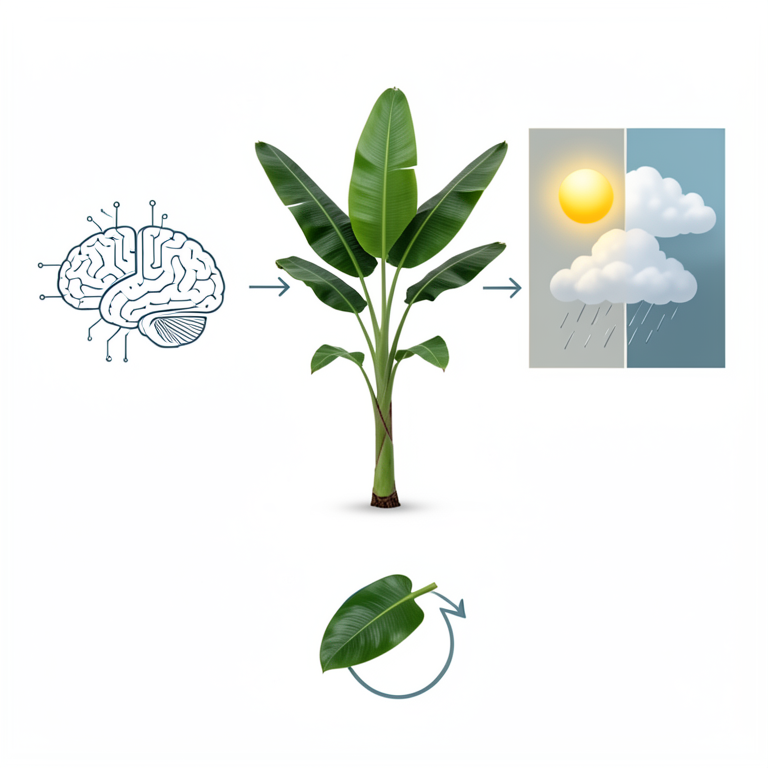
Future of Banana Farming Ecosystem
AI-generated conceptual illustration (banana plants (Musa spp.)). It explains the idea and does not show study data.
View source evidence ↗Text
products, provide avenues to enhance the resilience and profitability of banana farming systems. As consumer demand shifts toward sustainability, the adoption of ecofriendly practices, including organic farming and reduced pesticide usage, aligns with market trends while addressing environmental concerns. The rise of digital platforms and blockchain technology also facilitates traceability and transparency in banana supply chains, fostering trust and enabling farmers to command premium prices for ethically produced bananas. Addressing the challenges and capitalizing on these opportunities requires a multi-stakeholder approach involving governments, researchers, agribusinesses, and farmers. Policies that promote sustainable farming, investment in research and development, and access to financial and technical resources are crucial to securing the future of banana farming. This paper aims to explore the evolving landscape of banana cultivation by examining the interplay of challenges and opportunities, highlighting innovative solutions that can transform the industry into a more sustainable, resilient, and inclusive sector (Ploetz, 2015, Gómez, & Ricketts, 2013, García-Bastidas et al., 2014) [7,6,5] .
Current state of banana farming
Bananas (Musa spp.) play an indispensable role in global agriculture, serving as both a staple food and a critical export commodity. Cultivated across tropical and subtropical regions, bananas are integral to the livelihoods of millions of smallholder farmers while contributing significantly to the economies of producing countries. This section delves into the global production landscape and the economic importance of bananas, as well as highlighting the diversity of banana cultivars and their unique characteristics.
Global production and economic significance 2.1.1 Global production statistics
Bananas rank among the most cultivated fruits worldwide, with annual production exceeding 155 million metric tons (as of recent estimates). The crop is grown predominantly in regions with warm climates, including Asia, Africa, and Latin America. India leads global production, contributing nearly 25% of the world's bananas, followed by countries like China, Indonesia, the Philippines, and Ecuador. These regions benefit from favorable climatic conditions, fertile soils, and established farming practices. While Asia and Africa primarily produce bananas for domestic consumption, Latin America and the Caribbean dominate the export market. Ecuador, the largest banana exporter, accounts for nearly 25% of global banana exports. Other key exporters include the Philippines, Costa Rica, and Colombia, whose bananas are shipped mainly to Europe, the United States, and the Middle East (FAO, 2022) [4] .
Contribution to food security
Bananas are a staple food for millions, providing essential calories, vitamins, and minerals. In many countries, bananas are a key source of energy due to their carbohydrate-rich composition. For instance, in Uganda and Rwanda, bananas account for over 30% of daily caloric intake. Varieties like plantains and cooking bananas are particularly important in African diets, where they are prepared in various ways, from frying to boiling.
Economic importance
Banana farming significantly contributes to rural livelihoods and national economies in producing countries. Smallholder dominance: Over 85% of banana farms are small-scale, with farmers relying on the crop for subsistence and income generation. Employment opportunities: The banana industry provides employment to millions in farming, processing, transportation, and export sectors. In countries like Costa Rica and Ecuador, banana farming is a major source of income for rural communities. Export revenue: Bananas are a leading export commodity, generating billions of dollars annually. For example, in 2023, global banana exports were valued at over $15 billion. For many exporting countries, bananas account for a significant percentage of agricultural export revenue.
Market dynamics and trade challenges
The global banana trade is highly competitive, with multinational corporations controlling a significant share of the market. Companies such as Dole, Chiquita, and Fyffes dominate the supply chain, influencing pricing and production practices. Despite its economic significance, the banana trade faces challenges such as price volatility, logistical disruptions, and stringent quality standards imposed by importing countries. Furthermore, the reliance on monoculture systems, particularly the Cavendish variety, poses significant risks to the industry's stability and sustainability (Robinson, & Sauco, (2010) [8] .
Key cultivars and their characteristics
Bananas are highly diverse, with hundreds of cultivars adapted to varying climates and purposes. They are classified into two broad categories: dessert bananas, which are consumed raw, and plantains or cooking bananas, which are cooked before consumption.
Dessert bananas
The most widely cultivated and consumed type of banana is the dessert banana, with the Cavendish group dominating the global market.
Cavendish bananas
The Cavendish variety, including cultivars such as 'Grande Naine' and 'Williams,' accounts for nearly 50% of global banana production. Known for its sweet flavor, creamy texture, and long shelf life, the Cavendish is the preferred variety for export markets. However, its genetic uniformity makes it highly susceptible to diseases like Fusarium wilt (Panama disease) and Black Sigatoka, posing significant risks to global banana supply.
Other dessert bananas
Gros michel: Once the dominant export banana, it was largely replaced by the Cavendish due to its vulnerability to Fusarium wilt. Red bananas: Known for their reddish-purple skin and sweeter flavor, they are popular in niche markets. Lady finger bananas: Smaller and sweeter than Cavendish, these are grown in Australia and parts of Asia for local consumption.
Plantains and cooking bananas
Plantains are a staple food in many tropical regions, particularly in Africa, the Caribbean, and parts of South America. They are less sweet and starchier than dessert bananas, making them suitable for cooking (Simmonds & Shepherd, 1955) [9] .
Characteristics
Plantains are larger and tougher than dessert bananas, with thicker peels. Their high starch content makes them versatile, used in dishes such as fried plantains, stews, and chips.
Popular varieties
Bluggoe: A cooking banana common in Southeast Asia and Africa. Horn plantain: Cultivated extensively in West Africa and used in traditional dishes.
Wild bananas
Wild bananas, such as Musa balbisiana and Musa acuminata, are ancestors of cultivated varieties. These bananas are primarily valued for their genetic diversity, which is crucial for breeding programs aimed at developing disease-resistant and climate-resilient cultivars.
Regional preferences and diversities
Regional preferences and diversities
Banana cultivar preferences vary widely across regions based on local culinary traditions and climatic conditions:
Asia: Home to diverse banana varieties, including 'Pisang Raja' (Indonesia) and 'Lakatan' (Philippines). Africa: Cooking bananas like East African Highland Bananas dominate, alongside varieties adapted to semiarid conditions. Latin America: Cavendish remains dominant, but plantains and niche varieties like Manzano (apple banana) also play a role.
Case studies and success stories in banana farming
Banana farming has faced numerous challenges over the years, including disease outbreaks, climate variability, and market dynamics. However, several innovative approaches and success stories have demonstrated the potential for resilience and sustainability in the industry. This section highlights examples of disease-resistant banana varieties, the adoption of precision agriculture technologies, and market diversification initiatives that have positively impacted key producing countries.
Examples of disease-resistant varieties 3.1 Success with Fusarium wilt-resistant varieties
One of the most critical threats to banana farming is Fusarium wilt, particularly the Tropical Race 4 (TR4) strain, which affects the dominant Cavendish variety (Tripathi, et al., 2008) [10] . Efforts to combat this disease have resulted in the development and adoption of disease-resistant banana varieties.
Biotechnological innovations in disease resistance
Biotechnology has been instrumental in addressing banana diseases. The Queensland University of Technology in Australia, for instance, has developed genetically modified bananas with resistance to TR4. While still under regulatory review in some countries, these varieties hold promise for commercial cultivation in high-risk regions.
Adoption of precision agriculture by banana farmers
Precision agriculture, characterized by the use of technology to optimize farming practices, is transforming banana cultivation. Farmers in various regions have adopted tools such as drones, IoT devices, and data analytics to improve productivity and sustainability.
Drones for monitoring plant health
In Costa Rica, banana farmers have adopted drone technology to monitor plantations for signs of disease, pest infestations, and nutrient deficiencies. Equipped with multispectral cameras, drones provide high-resolution imagery, enabling early detection of issues and targeted interventions. For example: Farmers using drones reported a 30% reduction in pesticide usage by focusing applications on affected areas. Yield improvements of up to 15% were observed due to precise nutrient management guided by drone data.
IoT-driven irrigation systems
In Ecuador, where water scarcity is a growing concern, banana farmers have implemented IoT-enabled irrigation systems. These systems monitor soil moisture in real-time and deliver water only when necessary, reducing wastage and ensuring optimal plant hydration. Farmers using IoT irrigation have reduced water usage by 40% while maintaining or increasing yields. Improved water efficiency has also minimized runoff, reducing environmental impacts on nearby ecosystems.
Data analytics for decision-making
Farmers in India's Tamil Nadu region have partnered with agricultural technology companies to use data analytics platforms that integrate weather forecasts, soil health data, and crop growth models. These platforms guide decisions on planting, fertilization, and harvesting. Early adopters have reported a 20% increase in profitability through better resource allocation and reduced crop losses.
Market diversification initiatives in key producing countries
Market diversification has emerged as a crucial strategy for reducing dependence on single export markets and maximizing the economic potential of bananas. Key producing countries have implemented innovative initiatives to add value to bananas and explore new markets.
Ecuador's expansion into organic markets
Ecuador, the world's largest banana exporter, has invested heavily in producing organic bananas to cater to growing demand in Europe and North America. Farmers have adopted eco-friendly practices, such as composting and biological pest control, to meet organic certification standards.
Organic banana exports from Ecuador grew by 25% between 2015 and 2022, commanding higher prices than conventional bananas. Farmers participating in organic farming cooperatives have seen income increases of up to 40%, thanks to premium pricing and stable demand.
Value-added banana products in India
India, while primarily a producer for domestic consumption, has explored market diversification through the production of value-added banana products such as chips, flour, and purees. Tamil Nadu and Kerala are leading regions in this effort, with small-scale enterprises and cooperatives playing a significant role. A cooperative in Tamil Nadu reported a 50% increase in member income by processing surplus bananas into chips and exporting them to Gulf countries. Government initiatives like the "One District One Product" (ODOP) scheme have further supported these efforts by providing financial and technical assistance.
Agro-tourism in the Philippines
In the Philippines, banana farming regions such as Davao have embraced agro-tourism as a means of diversification. Visitors to banana plantations learn about sustainable farming practices, sample products, and contribute to local economies. Agro-tourism initiatives have created supplementary income streams for farmers, particularly those operating smallholdings. The promotion of niche banana varieties, such as Lakatan and Saba, through agro-tourism has boosted their market visibility and demand (UNCTAD), (2023) [11] .
Diversification in African countries
African nations like Uganda and Rwanda have focused on improving the utilization of cooking bananas and plantains, which are staple foods in the region. Initiatives include producing banana-based alcoholic beverages, flour, and livestock feed. In Uganda, a project converting bananas into wine and beer has provided a new revenue stream for farmers, particularly during periods of low market demand for fresh bananas.
Rwanda's focus on banana flour production has addressed food security concerns while creating export opportunities to neighboring countries.
Future directions for banana farming
As banana farming faces multifaceted challenges including disease outbreaks, climate variability, and sustainability demands, the future of the industry depends on innovative and adaptive approaches. The integration of advanced technologies, climate-resilient strategies, and sustainable practices offers significant opportunities to enhance productivity, profitability, and ecological balance. This section explores how Artificial Intelligence (AI) and Machine Learning (ML) can transform banana cultivation, strategies to enhance resilience against climate change, and the potential for scaling sustainable practices across bananaproducing regions (Vuylsteke, et al., 1993) [12] .
Leveraging AI and machine learning in banana cultivation
Artificial Intelligence (AI) and Machine Learning (ML) are revolutionizing agriculture, including banana farming, by enabling data-driven decision-making and improving efficiency.
Disease detection and management
AI-powered tools can play a pivotal role in identifying and managing banana diseases, which are a major threat to the crop.
Disease diagnosis: Image recognition algorithms, trained on datasets of banana leaf diseases, can detect issues such as Fusarium wilt, Black Sigatoka, and banana streak virus with high accuracy (Yang, & Xu, 2019) [13] . Farmers can use smartphone apps integrated with AI to capture images of affected plants and receive instant diagnostic feedback. Predictive analytics: AI systems can analyze weather patterns, soil conditions, and historical disease outbreaks to predict disease risks. This enables farmers to take preventive measures, such as targeted fungicide applications, reducing the need for broad-spectrum chemicals.
Precision farming with ML
Machine learning models can optimize farming practices by analyzing large datasets from IoT sensors, drones, and satellite imagery. Yield prediction: ML algorithms predict banana yields based on factors such as plant health, growth rates, and climatic conditions, enabling better planning and market readiness. Irrigation optimization: AI-driven irrigation systems adjust water delivery based on real-time soil moisture levels and weather forecasts, ensuring efficient water use.
Robotics and automation
AI-powered robots are being developed to assist in banana farming tasks such as planting, pruning, and harvesting. For example, autonomous harvesting robots equipped with AI vision systems can identify ripe bananas, reducing labor costs and improving harvest accuracy.
Enhancing resilience to climate change
Climate change poses significant threats to banana farming, including altered rainfall patterns, rising temperatures, and increased frequency of extreme weather events. Future resilience will require a combination of technological innovations and adaptive strategies.
Development of climate-resilient varieties
Development of climate-resilient varieties
Scaling sustainable practices across bananaproducing regions
Sustainability is an increasingly critical focus in banana farming, driven by environmental concerns and market demands for eco-friendly products. Scaling sustainable practices across regions involves adopting holistic approaches that benefit both farmers and the environment.
Organic farming and certification
Organic banana farming, which avoids synthetic inputs, is growing in popularity due to consumer preference for health-conscious and environmentally friendly products. Adoption challenges and solutions: Transitioning to organic farming requires training, financial support, and access to organic certification programs. Governments and NGOs are supporting farmers through subsidies and capacity-building initiatives. For example, Ecuador's organic banana program has increased exports and improved farmer incomes (Zhang, & Turner, 2020) [14] .
Circular economy in banana farming
Adopting circular economy principles minimizes waste and maximizes resource use in banana farming. Utilization of banana waste: Banana stems and peels can be processed into fiber, biochar, and organic fertilizers, reducing environmental impacts and creating additional income streams. (Zorrilla, & Romero, (2017) [15] Renewable energy production: Biogas systems that convert banana waste into energy are being implemented in India and the Philippines, reducing reliance on fossil fuels.
Collaborative initiatives and knowledge sharing
Scaling sustainable practices requires collaboration between farmers, researchers, and policymakers. Farmer cooperatives: Farmer cooperatives in countries like India and Costa Rica are driving the adoption of sustainable practices by pooling resources and sharing knowledge. These groups also facilitate access to markets and certifications. Digital platforms: Platforms like "BananaLink" provide farmers with real-time updates on best practices, market trends, and climate adaptation strategies, accelerating the dissemination of sustainable farming methods.
Reducing carbon footprint
The banana industry can reduce its carbon footprint through initiatives such as: Sustainable transportation practices, including the use of low-emission vehicles for export logistics. Localizing production for domestic markets to reduce the environmental impact of long-distance transportation.
Conclusion
The future of banana farming hinges on its ability to adapt to challenges while leveraging opportunities for innovation. AI and machine learning technologies hold immense potential for transforming banana cultivation through improved disease management, precision farming, and automation. Enhancing resilience to climate change requires a multifaceted approach, from developing climate-smart varieties to implementing adaptive agricultural practices. Meanwhile, scaling sustainable practices across bananaproducing regions ensures the long-term viability of the industry while meeting the growing demand for eco-friendly bananas. By embracing these future directions, the banana industry can chart a path toward resilience, sustainability, and profitability in an ever-changing agricultural landscape.
References
15 in the original paper- Aurore G, Parfait B, Fahrasmane L. Bananas, raw materials for making processed food products. Trends in Food Science & Technology. 2009;20(2):78-91.
- Bebber DP, Holmes T, Gurr SJ. The global spread of crop pests and pathogens. Global Ecology and Biogeography. 2014;23(12):1398-1407.
- De Lapeyre de Bellaire L, Fouré E, Abadie C, Carlier J. Black leaf streak disease is challenging the banana industry. Fruits. 2010;65(6):327-342.
- FAO (Food and Agriculture Organization). Banana market review. 2022. Available at: www.fao.org
- García-Bastidas FA, Ordoñez N, Konkol J, Al-Qasim M, Naser Z, Abdelwali M, Kema GHJ. First report of Fusarium oxysporum f. sp. cubense tropical race 4 causing Panama disease in Cavendish bananas in Pakistan and Lebanon. Plant Disease. 2014;98(5):692.
- Gómez MI, Ricketts KD. Food value chain transformations in developing countries: Selected hypotheses on nutritional implications. Food Policy. 2013;42:139-150.
- Ploetz RC. Management of Fusarium wilt of banana: A review with special reference to tropical race 4. Crop Protection. 2015;73:7-15.
- Robinson JC, Sauco VG. Bananas and Plantains. 2nd ed. CABI Publishing; 2010.
- Simmonds NW, Shepherd K. The taxonomy and origins of the cultivated bananas. Journal of the Linnean Society of London, Botany. 1955;55(359):302-312.
- Tripathi L, Tripathi JN, Kiggundu A. Field performance of transgenic bananas expressing antifungal protein against banana black leaf streak disease. Molecular Plant Pathology. 2008;9(6):687-695.
- United Nations Conference on Trade and Development (UNCTAD). Banana Market Report. 2023. Available at: www.unctad.org
- Vuylsteke DR, Swennen R, Ortiz R. Development and performance of black sigatoka-resistant tetraploid hybrids of plantain (Musa spp. AAB Euphytica. 1993;65(1):33-42.
- Yang Z, Xu X. Applications of artificial intelligence in agricultural production and management. Computers and Electronics in Agriculture. 2019;165:104972.
- Zhang D, Turner D. Climate change impacts on banana yield: Insights from global modeling and field observations. Agricultural and Forest Meteorology. 2020;284:107890.
- Zorrilla C, Romero M. Adoption of organic banana farming in Ecuador: A case study. Agricultural Systems. 2017;157:40-48.
Cited by 15
From OpenAlex, OpenCitations and reference lists read by Scinovex
- Optimization of aqueous extraction conditions for bioactive compounds and antioxidant properties of overripe banana (musa acuminata) using response surface methodology ↗
Yee Vern Ng, Majid Khan Majahar Ali, Wan Rosli Wan Ishak · Journal of Agriculture and Food Research · 2025
Overripe bananas, often considered waste, represent a rich source of bioactive compounds with significant antioxidant properties. This study focused on optimizing the extraction process of these compounds using Response Surface Methodology (RSM). Key extraction parameters, including water ratio, temperature, and incubation time, were systematically varied based on a central composite design. Responses evaluated included total phenolic content (TPC), total flavonoid…
❝ 9PDF - Improving storage of plantain (Musa paradisiaca L.) through using of improved shelters: Case of PITA 3 variety (Musa AAAB) ↗
Brou Koffi Siméon, Yves Djina, Yao Desiré Adjouman, Tano Kablan · International Journal of Chemical Studies · 2025
Plantains (Musa spp), like most tropical fruits and vegetables, are highly perishable, and there are still no effective preservation methods available to farmers. The aim of this study is therefore to help reduce post-harvest losses of plantains through improved storage. To this end, the PITA 3 variety was the subject of this study and was harvested on six different dates…
❝ 1PDF - A Biomass-Driven 3D Structural Model for Banana (Musa spp.) Fruit Fingers Across Genotypes ↗
Yongxia Liu, Ting Sun, Zhanwu Sheng, Bizun Wang, Lili Zheng, Yu‐Miao Yang et al. · Agronomy · 2026
Banana (Musa spp.) fruit morphology is a key determinant of yield and quality, yet modeling its 3D structural dynamics across genotypes remains difficult. To address this challenge, we developed a generic, biomass-driven 3D structural model for banana fruit fingers that quantitatively links growth and morphology. Field experiments were conducted over two growing seasons in Hainan, China, using three representative genotypes.…
❝ 0PDF - Advancing the battle against panama disease: a critical appraisal of global biocontrol research and applications ↗
Han Liangliang, Ali Qurban, Chen Yufeng, Wei Wang, Waseem Raza, Xie Jianghui · Journal of Advanced Research · 2026
BACKGROUND: Banana, the fourth most important food crop globally, is severely threatened by Panama disease caused by Fusarium oxysporum f. sp. cubense (Foc). The continued spread of Foc tropical race 4 (TR4), with recent first reports in Peru and Venezuela, demands renewed attention and a critical reevaluation of eco-friendly management strategies. Biocontrol has emerged as a promising approach, but its…
❝ 0PDF - Oosporein produced by the endophytic fungus Acremonium cavaraeanum S149 suppresses Fusarium wilt pathogen Foc TR4 through coordinated disruption of cellular homeostasis ↗
Yuhua Xian, Jin Xie, Haiyun Li, Bin Wang, Wenxia Fang · SSRN Electronic Journal · 2026
❝ 0PDF - Physiological functions of micronutrients in enhancing banana (Musa paradisiaca L.) yield: A comprehensive review
Milind Chandrakar, R. T. Gaikwad, Ashutosh Dhonde, S. P. Tiwari, Gagendra Singh Rajput · International Journal of Research in Agronomy · 2025
Bananas (Musa paradisiaca L.) are a vital global crop, underpinning food security, nutrition, and economic stability across tropical and subtropical regions. Their growth hinges on a delicate balance of macronutrients and micronutrients, which orchestrate photosynthesis, enzymatic activity, and stress resilience. Micronutrients—iron (Fe), manganese (Mn), zinc (Zn), copper (Cu), boron (B), molybdenum (Mo), and chlorine (Cl)—though required in trace amounts, are indispensable for plant vigor, fruit development, and disease resistance. Deficiencies lead to stunted growth, poor fruit quality, and
- Growth, nutrient uptake of plantain (Musa paradisiaca L) as affected by fertilizer types and rates in Ogbomoso Nigeria ↗
Adetoro IO, Olaniyi JO · Journal of Current Research in Food Science · 2025
Result showed that fertilizer type and rate significantly at (P=0.05) influenced the growth parameters, nutrient uptake and recovery efficiency of plantain. The plants treated with 300kg N/ha gave the highest plant height (43.00cm), number of leaves (8.67) while control gave the least values. It was observed that 60kg P205/ha recorded the highest plant height (44.67cm), number of leaves (9.67) while
- Effect of foliar fertilization of micronutrients on growth and yield of Banana (Musa spp.) cv. Karpooravalli (ABB)
K. Sha, R. Arulananth · International Journal of Horticulture and Food Science · 2025
The present investigation on “Effect of micronutrients on growth, yield and quality of Banana (Musa spp.) cv. Karpooravalli (ABB)” was carried out in the Orchard, Department of Horticulture, Faculty of Agriculture, Annamalai University, Annamalai Nagar, Tamil Nadu during 2023-2024. The study was conducted by three foliar sprays of micronutrients viz., Zinc sulphate, Borax and Ferrous sulphate at different concentrations along with recommended dose of fertilizer (110:35:330 NPK g plant-1) and farmyard manure (25 t ha-1) in Randomized Block Design (RBD) with three replications comprising thirtee
- The extent to which bloom's educational objectives were achieved in the art education lesson for the preparatory stage ↗
Khawla Ali Abdulla Al-Husiny · International Journal of Humanities and Education Research · 2025
The study had four chapters whose first chapter contained the problem of research, the significance of the research, and the necessity of such a research then its purpose: to understand the level of realization of Bloom educational objectives in the art education lesson of the preparatory stage. The limits of research were the academic year (2024-2025). The chapter was closed
- Green banana (Musa spp.) in obesity management: nutritional potential, food product formulation and ADMET-guided drug discovery from byproduct ↗
Anupreet Kaur Sobti, Iqbal Singh, Rashmita Subba, Shalini Duggal · Journal of Pharmacognosy and Phytochemistry · 2025
Obesity is a growing global health concern associated with metabolic disorders and chronic diseases. Functional foods rich in bioactive compounds offer promising avenues for obesity prevention and management. To explore the potential of green banana and its byproducts in food formulation and drug discovery for obesity management, focusing on nutritional properties, pathophysiological relevance, and in silico ADMET profiling of quercetin,
- Mapping and severity of pathogenic fungi of banana in major growing zones of Kenya ↗
Amakove Stellah Musonye, Javan Omondi Were, Becky Aloo, Samuel Muiruri Akariuki, Rimnoma Serge Ouedraogo · International Journal of Plant Pathology and Microbiology · 2025
Fungal diseases in banana are very devastating and can cause up to 50% loss. This study investigated the incidence and severity of fungal diseases affecting banana across Kisii, Meru, and Taita Taveta counties during the long rain season of 2024. Surveys were conducted across the three counties to assess the distribution, incidence, and severity of fungal diseases of banana. Disease
- Cultural significance of banana cultivation and its role in rural livelihoods ↗
Josephine M Nalukwago · International Journal of Humanities and Education Research · 2025
Banana cultivation is a cornerstone of agriculture in tropical regions, offering not only a reliable source of income but also serving as a cultural linchpin in rural communities. This paper examines the multifaceted role of banana farming, focusing on its cultural significance and its impact on rural livelihoods. Drawing upon secondary data from various studies and reports, the paper explores…
❝ 0PDF - Zoological Insights into Pest Dynamics and Their Impact on Banana Production Systems ↗
Leila B Rahman · Journal of Entomology and Zoology Studies · 2025
Banana cultivation is a cornerstone of tropical agriculture, yet it faces significant challenges from a diverse array of pests and diseases. This paper delves into the zoological aspects of pest dynamics affecting banana production systems, emphasizing the intricate interactions between pests, their natural enemies, and agricultural practices. By integrating ecological principles with pest management strategies, we aim to provide a
- Biochemical challenges in post-harvest banana storage and their role in food security ↗
Parkash Nandakumar · International Journal of Clinical Biology and Biochemistry · 2024
Banana (Musa spp.) is among the most widely cultivated fruits globally, serving as a critical source of nutrition and income for millions of people in tropical and subtropical regions. Despite its economic and dietary importance, post-harvest losses of banana remain significant, with estimates ranging from 20-50% in some developing regions. The biochemical processes governing banana ripening, such as starch hydrolysis,…
❝ 0PDF - Soil-Plant Interactions and Nutrient Management in Banana Cultivation: A Chemical and Biological Perspective ↗
Carmen González Santos · International Journal of Chemical and Biological Sciences · 2024
Banana (Musa spp.) is among the world’s top five fruit crops, with an annual production exceeding 120 million tons, cultivated in more than 135 countries. Its productivity is highly dependent on soil-plant nutrient interactions and sustainable fertility management. This paper integrates chemical and biological perspectives on soil-plant interactions in banana cultivation, examining nutrient dynamics, rhizosphere biology, and integrated nutrient management