
Research article · 2024 · Full text
International Journal of Geography Geology and EnvironmentClimate change and its impacts on agricultural landuse and migration in Almora district of Uttarakhand: Study from salt and Bhikiyasain blocks
Volume 6(2) · Pages 187–194 · DOI: 10.22271/27067483.2024.v6.i2c.304 ↗
Research areasAgriculture, Water, and Health
Abstract
Author-writtenClimate change is one of the major global problems of present. It is bringing significant changes in entire environmental processes. Annual weather pattern is changing and people are facing problems in their daily life due to the changes in livelihood practices. The Himalayas are also not untouched with it. The Himalayas are divided into their parallel ranges. The central Himalaya is dense populated part of this mighty mountain rage. Present paper discusses the climate change and its impacts on agriculture in the study area because agriculture is the back bone of hills from very ancient period. So it is necessary to understand the factors which are giving an adverse impacts on it because Himalayan people are directly associated for their livelihood with agricultural practices. It is also impacting out migration in the study area.
Summary
Source-checkedPlain-language reading of the full paper, prepared with AI and checked against the text. Each point links to the authors' own words.
Why it matters
- Climate change is a major global issue that is causing significant alterations to environmental processes. View evidence ↗
- Agriculture has historically been the backbone of the hill regions, making it critical to understand how climate change impacts this sector. View evidence ↗
- Because people in the Himalayas rely directly on agriculture for their livelihoods, environmental impacts on farming are linked to out-migration. View evidence ↗
What they did
- The researchers used a combination of secondary data and primary data collected through extensive fieldwork and surveys with village residents at various altitudes. View evidence ↗
What they found
- Agricultural wasteland in the Almora District increased from 41,552 hectares in 2018-2019 to 42,819 hectares in 2020-2021. View evidence ↗
- In the Salt block, agricultural wasteland rose from 11,240 hectares in 2018-2019 to 11,581 hectares in 2020-2021. View evidence ↗
- In the Bhikiyasen block, agricultural wasteland increased from 9,426 hectares in 2018-2019 to 9,712 hectares in 2020-2021. View evidence ↗
- The study found that irrigated land is significantly less in amount compared to rainfed land in the study area. View evidence ↗
- Agricultural production has dropped sharply over 30 years; for example, wheat production fell from 40 kg/Nali to 2 kg/Nali, and paddy fell from 35 kg/Nali to 2 kg/Nali. View evidence ↗
What it means
- The authors conclude that low agricultural productivity and migration are closely linked, with migration leading to the conversion of agricultural land into wasteland. View evidence ↗
- Climate change is identified as a major driver of land use change, as irregular rainfall reduces yields on unirrigated land, forcing people to abandon farming. View evidence ↗
Visual summary
3 visualsIllustrations explain the paper; charts are replotted from the paper's own table values.
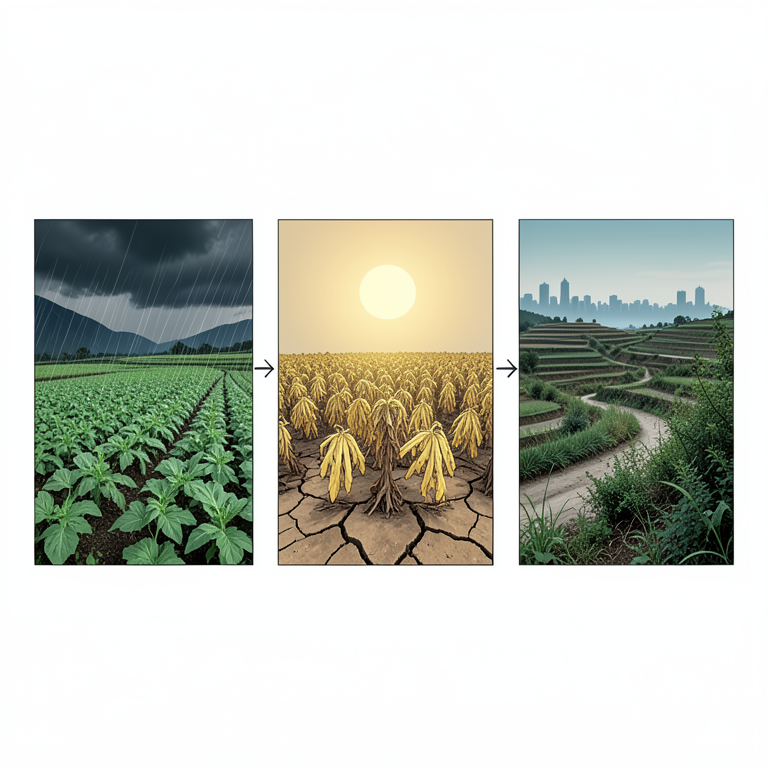
The Cycle of Agricultural Decline and Migration
AI-generated conceptual illustration (Terraced farmland in the Himalayan foothills of Uttarakhand). It explains the idea and does not show study data.
View source evidence ↗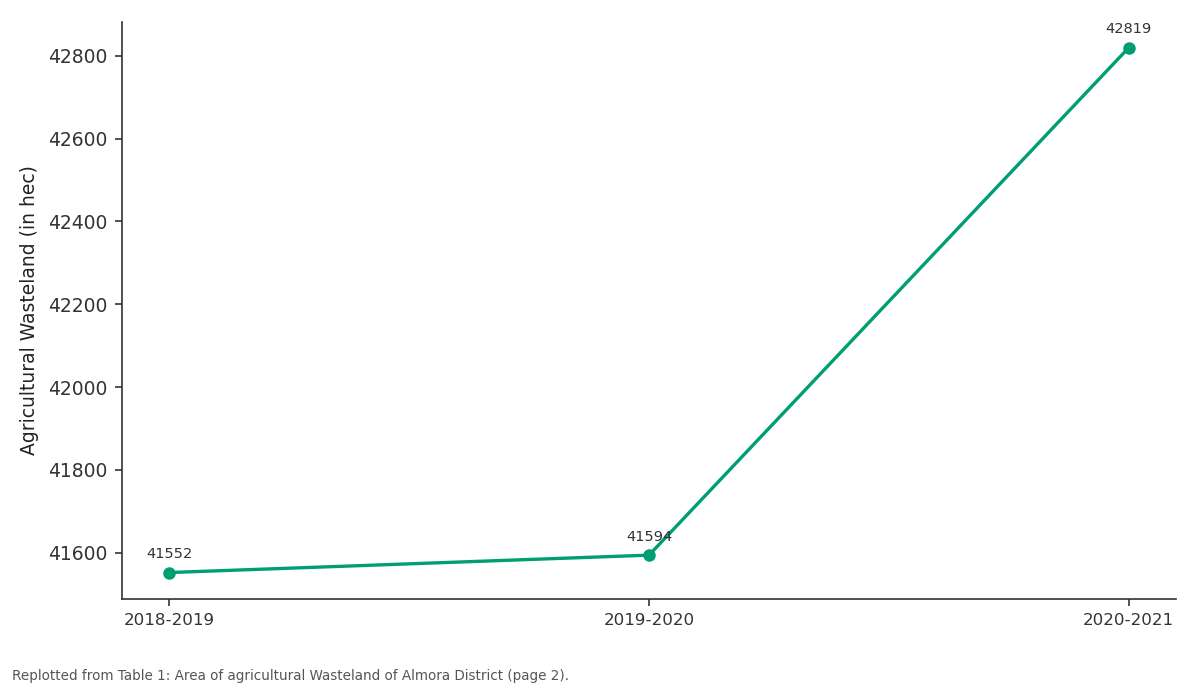
Agricultural Wasteland (in hec): 2018-2019 vs 2019-2020 vs 2020-2021
Replotted from Table 1 (page 2) of the original paper. Every bar is the paper's own table value.
View source evidence ↗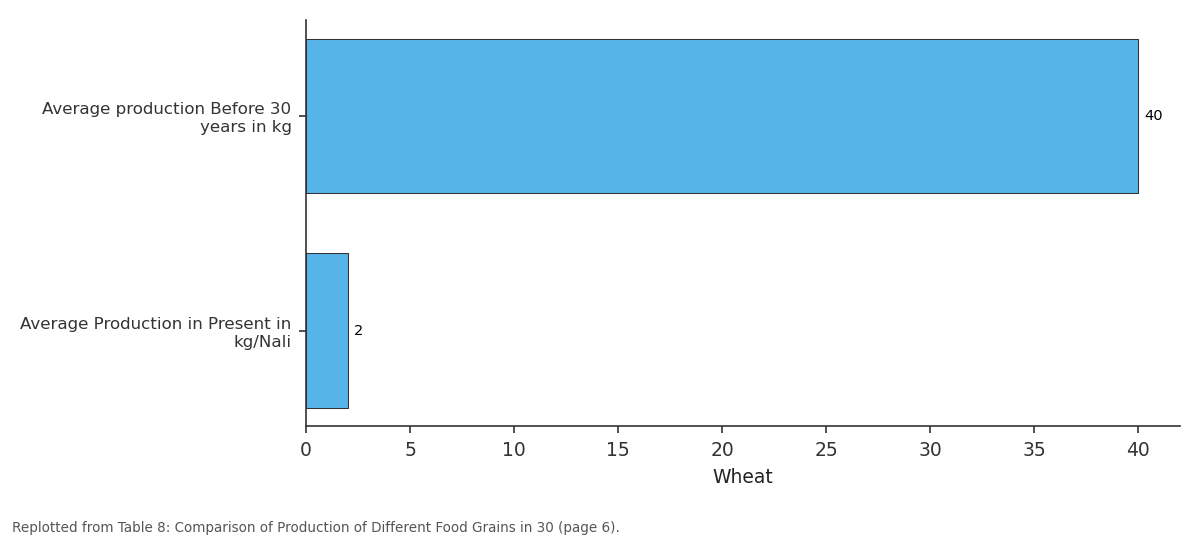
Wheat: Average production... vs Average Production in...
Replotted from Table 8 (page 6) of the original paper. Every bar is the paper's own table value.
View source evidence ↗Figures & tables
From the original paper Table 1
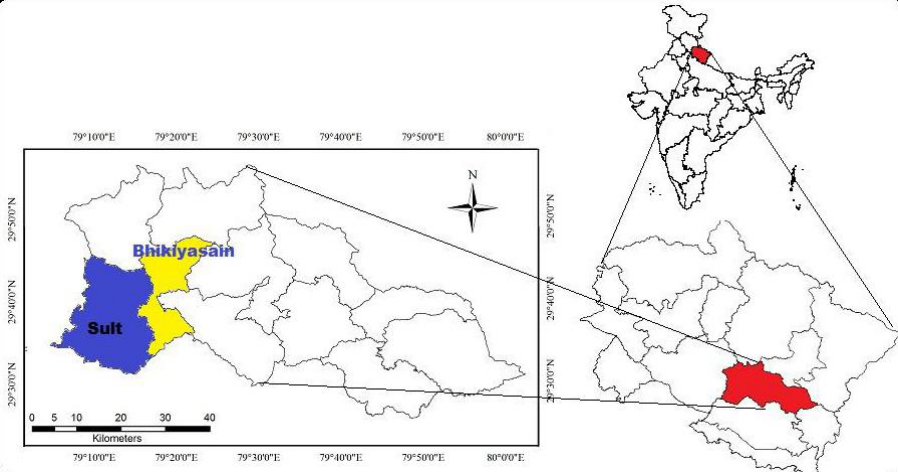 Figure 1
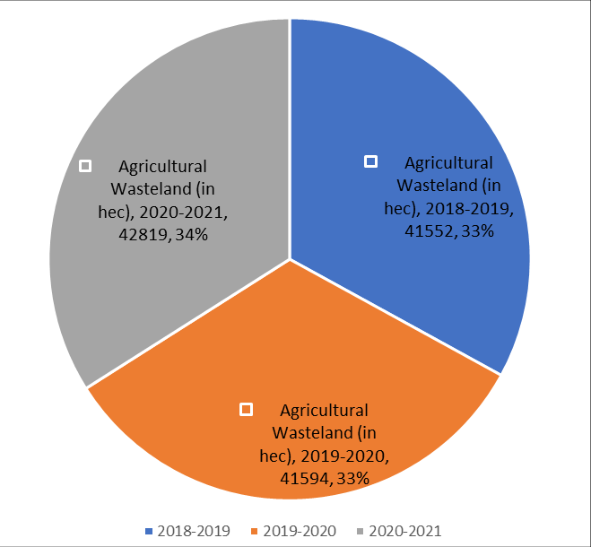 Figure 1
 Table 2
 Table 3
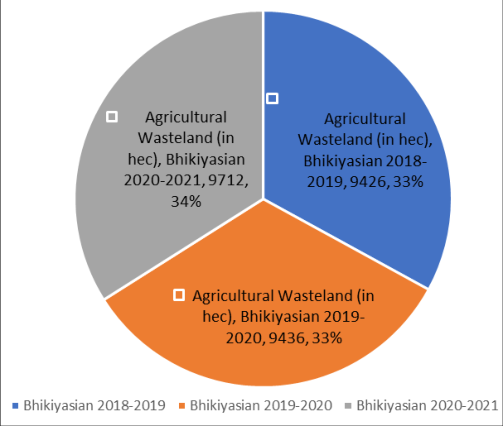 Figure 3
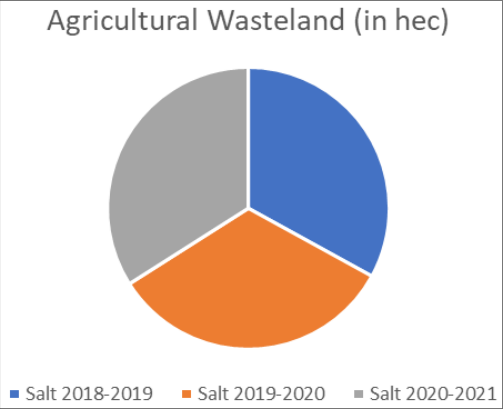 Figure 2
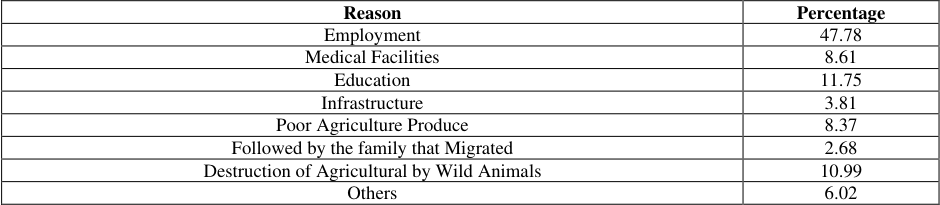 Table 4
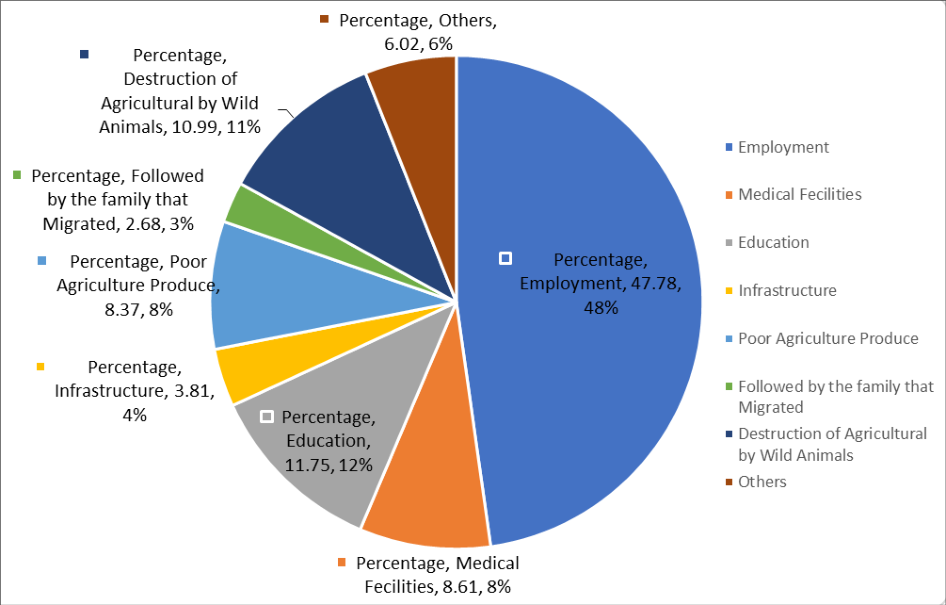 Figure 4
 Table 5
 Table 6
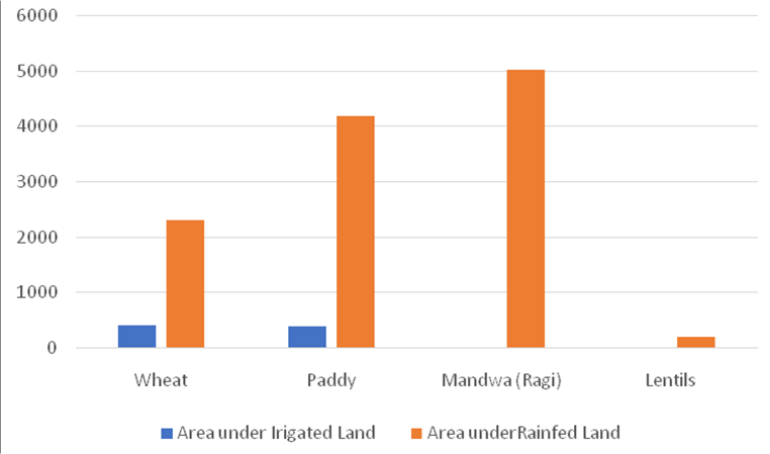 Figure 5
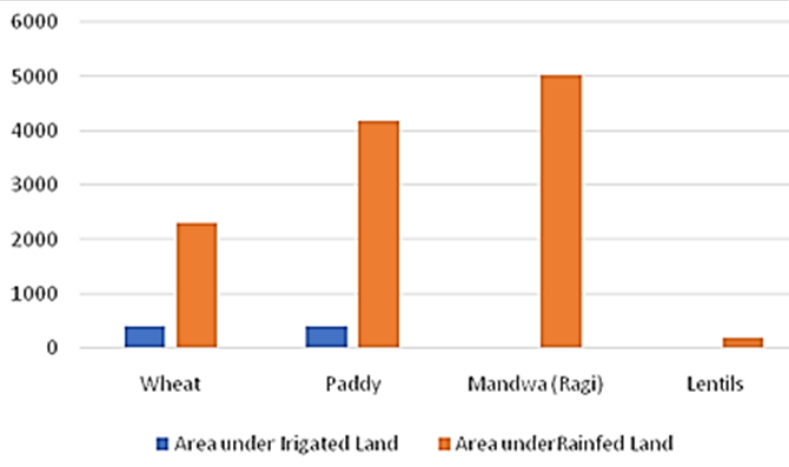 Figure 6
 Table 7
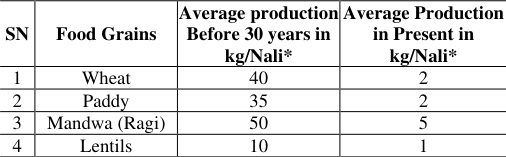 Table 8
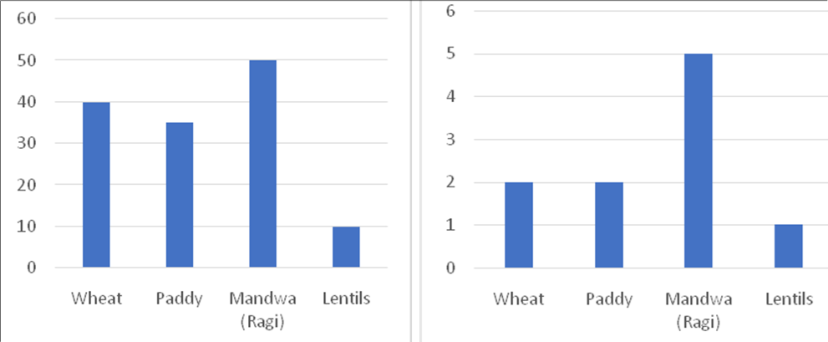 Figure 8
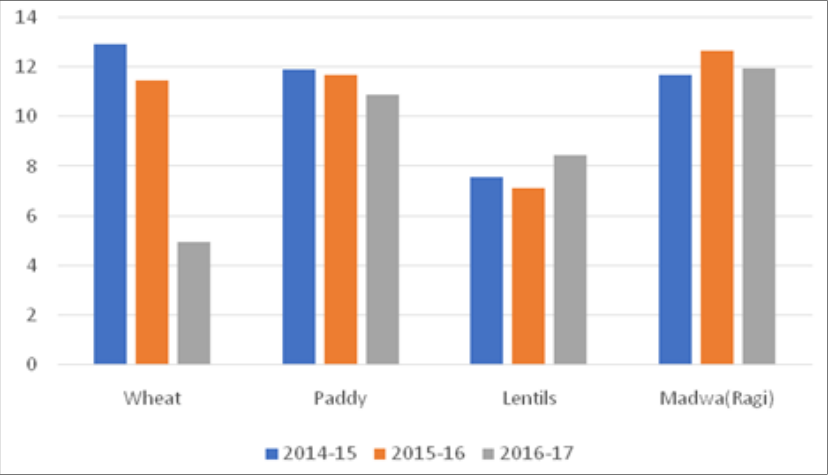 Figure 7
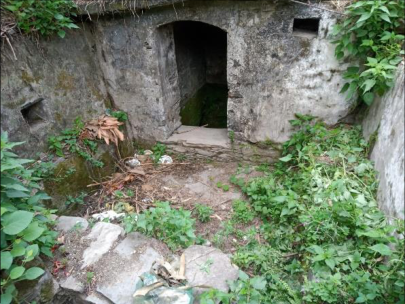 Plate 2
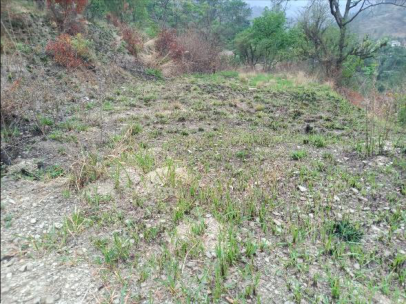 Plate 2
Introduction
The human population is responsible for the land use change on the Earth's surface. In the initial period of civilization, forest land was converted into agricultural land then agricultural land was converted into built-up land. It is a continuous process. First, we must understand the land use. There is one more term called 'land cover'. Land use and land cover refer to the physical and functional characteristics of the Earth's surface within a particular region. Their concepts are interrelated, but still, there is a difference between them.
Land Use: Land use describes how humans utilize the land for various activities, such as residential, agricultural, industrial, commercial, recreational, or conservation purposes. It focuses on human activities and the purpose for which land is used.
Land Cover: Land cover, on the other hand, refers to the physical or biological coverage of the Earth's surface, including natural and human-made features. It refers to the vegetation, water bodies, bare soil, impervious surfaces (such as roads and buildings), forests, wetlands, croplands, and other land features in an area. Land use and land cover are often analyzed to understand the patterns and changes in the landscape. These concepts are essential for land management, urban planning, environmental assessment, and conservation efforts. By studying land use and land cover, researchers and policymakers can gain insights into the impacts of human activities on the environment and make informed decisions about resource management and sustainability. If we talk about land use in Almora, it is rapidly changing. People are migrating from villages, so agricultural land use is also changing. In 2018-2019, the area of agricultural wasteland was 41552 hectares and 42819 hectares in 2020-2021. Land use change analyses play a crucial role in tracing out-migration patterns and understanding the factors that drive population movements. Land use change analyses provide valuable insights into migration dynamics by revealing the underlying environmental, social, and economic factors. Understanding these patterns is essential for developing effective policies and interventions to manage Migration, address its impacts, and promote sustainable development.
Objectives
The study has following objectives: 1. To understand the landuse in Almora district 2. To understand the impacts of climate change on migration in the study area.
Materials and Methods
Present study is based on both primary and seconday data. Primary data has been taken from extensive field work. Primary survey has been conducted to understand the impacts of climate change. This survey has been conducted with the residents of villages located at different altitudes in the study area. Secondary data has been collected from various government and non-government departments. Graphs and tables have been created to make the research more effective.
Results and Discussions
Land use and land cover help us understand the economic growth condition in any area. These are closely interrelated. For example, if agricultural land is converted into built-up land, we can observe that the primary sector of the economy is going towards secondary or tertiary. These small but essential changes help to understand the complete picture of the area of investigation. So, we can say firmly say that both the blocks have migration and people are changing their traditional occupation, i.e., agriculture. Researchers found in the study area that huge agricultural land was left barren during the fieldwork.
Agricultural production & migration
The Himalayas present challenging conditions for agriculture and resource utilization due to their rising heights, steep slopes, and harsh climate. These factors impose severe restrictions on the region's productivity and carrying capacity of natural resources. As a resalt, most of the population in the Himalayas relies on subsistence farming as the primary source of food and livelihood. One of the primary challenges farmers face in the Himalayas is the limited availability of arable land. The steep slopes and rugged terrain make it difficult to find suitable areas for cultivation. Farmers often have to terrace the land and construct terraced fields to create flat surfaces for farming. However, even with these efforts, the amount of cultivable land remains limited, leading to small landholdings for most farmers. Low agricultural productivity can have a momentous impact on migration patterns. Here are several ways in which low agricultural productivity can affect Migration: Economic Factors: Agriculture is often a primary source of income and livelihood for rural communities. When agricultural productivity is low, it can resalt in decreased incomes and limited job opportunities in the farming sector. As a resalt, people may be compelled to seek better economic prospects elsewhere, leading to rural-to-urban Migration or even international Migration.
Poverty and Food Insecurity: Low agricultural productivity can contribute to poverty and food insecurity in rural areas. Insufficient crop yields or failed harvests can lead to inadequate food supplies and increased vulnerability to hunger and malnutrition. In such situations, people may migrate for better access to food and economic opportunities.
Rural-Urban Migration: Low agricultural productivity can drive Migration from rural to urban areas. Urban centres often offer a more comprehensive range of employment opportunities in non-agricultural sectors, such as manufacturing, services, and construction. Individuals and families may move to cities for better-paying jobs and improved living conditions.
Land Degradation and Climate Change: Agricultural productivity can be vulnerable to land degradation, desertification. The adverse impacts of climate change, such as droughts, floods, and unpredictable weather patterns. These environmental factors can make farming less viable and push people to abandon their lands. Consequently, they may choose to migrate to areas less affected by such issues or to urban centers where alternative livelihood options are available.
Social Disruption: Low agricultural productivity can create social disturbance within rural communities. As people face challenges sustaining their livelihoods, social unity and traditional community structures may weaken. Sometimes, this can lead to conflicts over limited resources, land disputes, or social unrest, prompting individuals to migrate to escape such conditions. It is important to note that low agricultural productivity is rarely the sole factor driving Migration. Migration decisions are influenced by economic, social, political, and environmental factors. However, the impact of low agricultural productivity on Migration should not be overlooked, as it can play a significant role in shaping migration patterns, particularly in rural areas heavily dependent on agriculture. Table 4 shows the percentage of different migration reasons in the Almora district. If we study this table thoroughly, we can find that issues related to agricultural production are essential. A total of 19.26% reasons are related to poor agricultural produce and the destruction of agriculture by wild animals. If we segregate this value, it is 8.37 & 10.99, respectively. So, we can say there are many reasons to migrate, but reasons related to agricultural production are essential to reason in one of them because it is directly related to food security which is very important in a democratic society. Overall, while subsistence farming remains the mainstay of the Himalayan population, the limited arable land, low agricultural productivity, and dependence on other natural resources highlight the need for sustainable development strategies that can enhance livelihood opportunities and ensure food security in the region to check out Migration in the study area.
| Reason | Percentage |
|---|---|
| Employment | 47.78 |
| Medical Facilities | 8.61 |
| Education | 11.75 |
| Infrastructure | 3.81 |
| Poor Agriculture Produce | 8.37 |
| Followed by the family that Migrated | 2.68 |
| Destruction of Agricultural by Wild Animals | 10.99 |
| Others | 6.02 |
Table text extracted from the original PDF; superscript letters are shown inline. The original table image is below.
View original table image
Agricultural Production and Migration In The Study Area
Two forms of agriculture can be seen in the Himalayan region. The first is irrigated, and the second is rainfed. Irrigated land is significantly less in amount, whereas a large amount of land is cultivated as rainfed agriculture. In mountainous regions, where agriculture depends on rainfall, the higher elevated areas are referred to as the "Uparanv" or "upland". The land where irrigation is practised is known as "Talaav" or "reservoir".
Table number 6 shows the total amount of land under rainfed and irrigated categories. Irrigated land is less in amount as compared to the category under rainfed. During the survey, the researcher found that production is also less in rainfed agriculture. People are leaving agriculture due to low productivity. The planning commission of Uttarakhand state also identifies this fact. According to the report of the migration commission, 8.37% of people admit that low productivity is one primary reason in the whole state for Migration.
In mountainous regions, agriculture is indeed the primary source of livelihood. The possibility of commerce and trade is limited because agriculture in these areas primarily depends on weather conditions. However, in irrigated land, production is comparatively higher, allowing farmers to generate more income. Agricultural production is deficient in rainfed or non-irrigated land, and people rely solely on farming for their subsistence. In the present times, due to rapid population growth, agriculture is struggling to meet the needs of the people. According to table number 7 from 2014-2017, usually, a Decreasement is observed in agricultural production. It is subsistence agriculture from the past, but now this is impacted by climate change. Climate change has become one of the significant hurdles for decreasing crop production and productivity in the Himalayan region. Increasing temperatures, decreasing rainfall, and extreme weather conditions have been observed in the Himalayas. Agriculture is also destroyed by wild animals like monkeys and wild bears, forcing people to migrate. A primary survey has been conducted by the researchers in both blocks with their inhabitants about agricultural productivity. A questionnaire was formed for the survey based on present and past agricultural productivity. It was done with 300 households in the area of investigation.
Unpredictable Rainfall and Agricultural Decline
Climate change has altered weather patterns, causing irregular rainfall and extreme weather events such as droughts and floods. In the Himalayas, where rain-fed agriculture is dominant, these changes have reSalted in reduced crop yields. Farmers, dependent on predictable seasonal patterns, face increased uncertainty. As agricultural productivity declines, many households abandon farming, leading to large-scale conversion of agricultural land into barren or unused land.
Land Abandonment and Forest Regrowth
In areas where farming is no longer viable due to erratic weather conditions, there has been a trend toward land abandonment. As fields are left uncultivated, natural vegetation and forests gradually reclaim this land. This process, known as "forest regrowth," has been observed in several Himalayan regions. While this may contribute positively to ecosystem recovery, it also signifies a loss of agricultural livelihoods for rural communities.
Out-Migration and Economic Shifts
The decline in agriculture has contributed to a rise in ruralto-urban migration, particularly among young men, leaving behind aging populations. The scarcity of employment opportunities in rural areas, exacerbated by climate impacts on traditional farming, has led many to migrate to urban areas or even other countries for work. This out-migration has affected community structures, labor availability, and social support systems in rural Himalayan areas.
Conclusion
Conclusion
Figures and tables from the paper
| Year | Agricultural Wasteland (in hec) |
|---|---|
| 2018-2019 | 41552 |
| 2019-2020 | 41594 |
| 2020-2021 | 42819 |
Table text extracted from the original PDF; superscript letters are shown inline. The original table image is below.
View original table image
| Block | Year | Agricultural Wasteland (in hec) |
|---|---|---|
| Salt | 2018-2019 | 11240 |
| 2019-2020 | 11251 | |
| 2020-2021 | 11581 |
Table text extracted from the original PDF; superscript letters are shown inline. The original table image is below.
View original table image
| Block | Year | Agricultural Wasteland (in hec) |
|---|---|---|
| Bhikiyasen | 2018-2019 | 9426 |
| 2019-2020 | 9436 | |
| 2020-2021 | 9712 |
Table text extracted from the original PDF; superscript letters are shown inline. The original table image is below.
View original table image
| Food Grains | Irrigated Land (Talav) | Rainfed Land (Upranv) |
|---|---|---|
| Wheat | 382 | 2821 |
| Paddy | 384 | 1243 |
| Mandwa (Ragi) | 4 | 3235 |
| Lentils | 207 |
Table text extracted from the original PDF; superscript letters are shown inline. The original table image is below.
View original table image
| Food Grains | Irrigated Land (Talaav) | Rainfed Land (Uparanv) |
|---|---|---|
| Wheat | 399 | 2304 |
| Paddy | 389 | 4190 |
| Mandwa (Ragi) | 07 | 5020 |
| Lentils | 197 |
Table text extracted from the original PDF; superscript letters are shown inline. The original table image is below.
View original table image
| Year | Food Grains | Wheat | Paddy | Lentils | Mandwa (Ragi) |
|---|---|---|---|---|---|
| 2014-15 | 12.94 | 11.89 | 7.56 | 11.67 | |
| 2015-16 | 11.47 | 11.70 | 7.12 | 12.68 | |
| 2016-17 | 4.93 | 10.90 | 8.44 | 11.97 |
Table text extracted from the original PDF; superscript letters are shown inline. The original table image is below.
View original table image
References
7 in the original paper- Bhandari G, Reddy CBV. Impact of Out-Migration on Agriculture and Women Work Load: An Economic Analysis of Hilly Regions of Uttarakhand, India. Indian Journal of Agricultural Economics. 2015;70(3):395404.
- Chand R. Diversification through high-value crops in Western Himalayan Region: Evidence from Himachal Pradesh. Indian Journal of Agricultural Economics. 1996;41(4):652-63.
- Fatima K, Hussain A. Problems and prospects of hill farming. Research Journal of Agricultural Sciences. 2012;3:578-80.
- Joshi B. Recent Trends of Rural Out-migration and its Socio-economic and Environmental Impacts in Uttarakhand Himalaya. Journal of Urban and Regional Studies on Contemporary India. 2018;4(2):6-7.
- Sharma E, Bhuchar S, Xing M, Kothyar B. Land Use Change and its Impact on Hydro-ecological Linkages in Himalayan Watersheds. Tropical Ecology. 2007;48(2):151-61.
- Sati VP, Kumar S. Declining agriculture in Garhwal Himalaya: Major drivers and implications. Cogent Social Science. 2023, 9(1).
- Tiwari PC, Joshi B. Natural and socio-economic factors affecting food security in the Himalayas. Food Security. 2012;4(4):195-207.
Cited by 6
From OpenAlex, OpenCitations and reference lists read by Scinovex
- Landuse transition and livelihood vulnerability among marginal farming households in Kumaun Regiond
Andres Felipe Gutierrez · International Journal of Agriculture Extension and Social Development · 2026
Marginal landholdings those under half a hectare account for more than 60% of all farm households in the Kumaun Himalaya, yet their specific vulnerability to land-use transition has rarely been disaggregated from the broader agricultural-decline narrative. This research examined how land-use transitions from active cultivation through fallow to forest regrowth have reshaped livelihood vulnerability among marginal farming households across six blocks of Almora district between 2005 and 2023. Revenue department land records, satellite imagery (Landsat 8 OLI), and a household survey of 360 famili
- Feminization of agriculture and adaptive capacity in climate-stressed mountain communities ↗
Kwame Asante-Darko · International Journal of Home Science · 2024
As working-age men migrate to the plains, mountain agriculture is increasingly managed by women who must navigate both climatic stress and the institutional barriers that limit their access to credit, extension services, and market networks. This research examined the feminization of agriculture and its relationship to adaptive capacity in 24 climate-stressed villages across the Almora and Bageshwar districts of Uttarakhand.
- Socioeconomic drivers of rural depopulation and farmland disuse in Central Himalayan block-level analysis ↗
Kim Seo-Jun, Park Min-Young · International Journal of Political Science and Governance · 2024
Entire villages in the central Himalayan hill belt now have more empty houses than occupied ones, and the farmland surrounding them is reverting to scrub. While climate change has received much of the scholarly attention, the socioeconomic architecture of depopulation income disparities between hills and plains, inadequate healthcare, poor road connectivity, and limited educational access may be equally or more
- Spring water depletion and its cascading effects on rainfed agriculture in lesser Himalayan Villages ↗
Adebayo Oluwaseun Adeyemi, Ngozi I. Okafor, Chukwuemeka Nnamdi Eze · South Asian Journal of Agricultural Sciences · 2024
While global attention focuses on glacial melt and monsoon shifts, the quieter crisis of spring water depletion is arguably the more immediate threat to rainfed agriculture in the lesser Himalayan belt. This research investigated the cascading effects of declining spring discharge on rainfed crop production across 20 villages in the Almora and Bageshwar districts of Uttarakhand. Discharge measurements from 40
- Temperature extremes and declining crop diversity: Linkages to labour migration in mountain agriculture
Tiago Almeida Ribeiro · International Journal of Agriculture and Nutrition · 2024
Crop diversity is a form of insurance the more species a hillside farmer plants, the lower the chance that any single weather anomaly will destroy the entire harvest. But across the central Himalayan belt, that insurance policy is being cashed out. This research examined the relationship between temperature extremes, declining crop diversity, and labour migration in mountain agriculture across four blocks of Almora and Bageshwar districts in Uttarakhand. Temperature data from five meteorological stations (2000–2023) were analysed alongside seasonal crop-area records and a household survey of 3
- Wildlife intrusion and crop damage as push factors for agricultural decline in Himalayan settlements ↗
Ahmad Faizal bin Mohd Razali, Nur Aisyah binti Abdullah, Mohd Hafiz bin Ismail · International Journal of Fauna and Biological Studies · 2024
When wild boar uproot an entire potato field overnight, the loss is not merely economic it is a signal that farming in that location may no longer be worth the effort. This research investigated wildlife intrusion and crop damage as push factors for agricultural decline across eight Himalayan settlements in the Almora and Bageshwar districts of Uttarakhand between 2008 and