
Research article · 2024 · Full text
International Journal of Veterinary Sciences and Animal HusbandryImpact of drying temperature and time on some physical properties of emu (Dromaius novaehollandiae) meat powder
Volume 9(5S) · Pages 304–307 · DOI: 10.22271/veterinary.2024.v9.i5se.1813 ↗
Research areasMeat and Animal Product Quality
Abstract
Author-writtenEmu meat has gained attention due to its low-fat content, high protein levels, and rich vitamin composition. However, the perishable nature of meat necessitates proper preservation techniques to extend its shelf life. This study aims to explore the drying process of emu meat using a tray dryer and evaluate the impact of drying temperature and time on various physical properties of the resulting emu meat powder. The emu meat cooked at 40 °C for 10 minutes dried at 60, 70 and 80 °C temperature for 3, 4 and 5 hours were ground and sieved by sieve size of 500 μ. Average moisture content (% w.b), loose bulk density (g/cc) and tapped bulk density (g/cc) of meat powder dried at 60, 70 and 80 °C were in the range of 29.58 to 5.013, 0.886 to 0.872 and 0.949 to 0.932 respectively. L*, a*, b* of emu meat powder dried at 60, 70 and 80 °C were found to be 58.82 to 61.58, 5.98 to 4.51 and 18.31 to 17.01 respectively.
Summary
Source-checkedPlain-language reading of the full paper, prepared with AI and checked against the text. Each point links to the authors' own words.
Why it matters
- Emu meat is valued for its nutritional profile, specifically its high protein and vitamin levels and low fat content. View evidence ↗
- Because meat is inherently perishable, preservation methods are necessary to increase its shelf life. View evidence ↗
- Drying preserves meat by removing water, which extends shelf life and reduces costs associated with packaging, storage, and transport by lowering weight and volume. View evidence ↗
The question
- The study aimed to evaluate how different drying temperatures and durations in a tray dryer affect the physical properties of emu meat powder. View evidence ↗
What they did
- Researchers used 8 kg of emu meat, cooked at 40 °C for 10 minutes, and dried it at temperatures of 60, 70, and 80 °C for durations of 3, 4, and 5 hours before grinding and sieving. View evidence ↗
- The physical properties measured included color, bulk density, tapped density, and moisture content on a wet basis. View evidence ↗
- Statistical analysis was performed using two-way ANOVA and the Duncan multiple range test to identify significant differences at P≤0.05. View evidence ↗
What they found
- Increasing the drying temperature and time significantly decreased moisture content (p<0.001), with values ranging from 29.58% to 5.01%. View evidence ↗
- Both tapped and loose bulk densities decreased significantly as drying temperature (p<0.05) and time (p<0.001) increased. View evidence ↗
- Loose bulk density ranged from 0.872 to 0.886 g/cm³ and tapped bulk density from 0.929 to 0.949 g/cm³, with tapped density always being higher than loose density. View evidence ↗
- Higher drying temperatures and times led to a significant increase in L* (p<0.01) and b* (p<0.001) values, meaning the powder became lighter and more yellow. View evidence ↗
- The red color of the powder, represented by the a* value, decreased as drying temperature and time increased. View evidence ↗
- Both the hue (h) and chroma (C*) values increased with higher drying temperatures and longer drying times. View evidence ↗
What it means
- The authors concluded that tray drying temperature and time significantly influence the color, density, and moisture content of emu meat powder. View evidence ↗
- The authors noted that drying at 70 and 80 °C resulted in very low moisture content in the meat powder. View evidence ↗
Figures & tables
From the original paper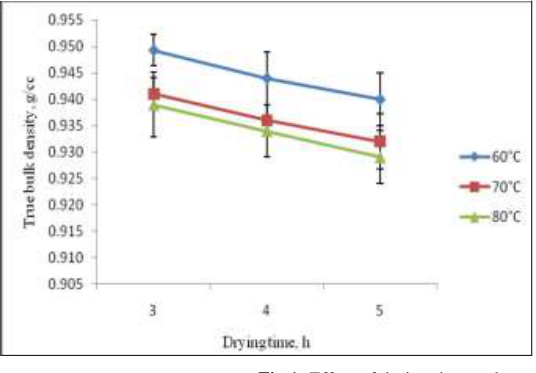 Figure 1
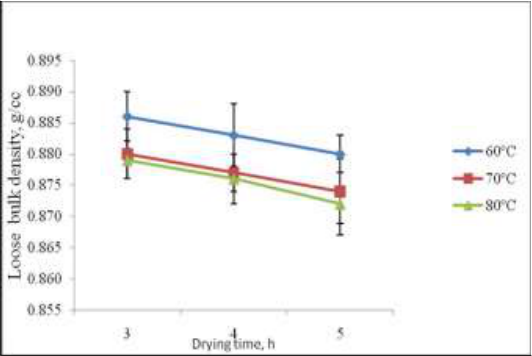 Figure 1
 Figure 2
Introduction
Emu (Dromaius novaehollandiae) is the second largest bird in the world. Emu meat, characterized by its low fat content, is recognized for its nutritional value, including high protein content, vitamins, heme iron, and creatine offers nutritional benefits but faces challenges in terms of its texture, color, and palatability (Jakubowska et al., 2019) [5] . The emu meat is 98% fat free, and the fat is 43% monounsaturated which helps to lower the "bad" LDL (Low Density Lipoprotein) cholesterol in the human body (Adewum et al., 2011) [2] . However, the inherent perishability of meat necessitates the development of preservation methods to optimize its shelf life and nutritional value (Zhou et al., 2010) [13] . Drying is a widely used technique for meat preservation, in which water is removed to increase the shelf life, lowers the cost of packaging, storage and transportation by reducing both the weight and volume of the final product. Tray drying is a commonly used method of drying food material. Food powder properties are majorly classified as physical and chemical properties. Physical properties consist of the reconstitution properties, particle shape, diameter, size, density, porosity, surface characteristics and hardness (Baysan, U et al., 2021) [2] . Understanding food density is crucial for studying material properties and optimizing industrial processes related to storage, processing, packaging, and distribution. Bulk density encompasses the total volume of both solid and liquid components, including the air or void spaces within a material. In contrast, true density refers solely to the volume of the solid and liquid components, excluding any air or void spaces. This distinction is essential for accurate assessments and applications in various food science and engineering context. (Figura, L., and Teixeira, A. A. (2007) [3]
Materials and Methods
Materials and Methods
Emu Meat Powder
Emu meat was cooked at 40 °C for 10 minutes, following the method described by Nithyalakshmi and Preeta (2015) [9] .
After cooking, the meat samples were drained and allowed to surface dry. Subsequently, the cooked emu meat was subjected to drying in a tray drier at various temperatures (60, 70, and 80 °C) for different durations (3, 4, and 5 hours). The drying chamber's temperature was maintained using a thermostat. For the drying process, a total of 8 kg of cooked meat was evenly distributed across four trays, with each tray accommodating 2 kg of meat. The dimensions of each tray were 900 mm × 400 mm × 30 mm, and the trays were arranged in two rows with a clearance of 12.5 cm between them. Drying continued until the samples reached a constant weight, enabling an evaluation of their drying characteristics. Once dried, the emu meat was ground using a domestic mixer equipped with a stainless steel blade. During this grinding process, heat was generated; therefore, sufficient time was allowed for the product to cool before continuing to ensure a fine powder consistency. The ground meat was then sieved through a handheld sieve with an aperture size of 354 µm (0.354 mm) to eliminate any coarse particles and to achieve a uniform particle size distribution.
Physical Properties
The sieved emu meat powder was analysed for its various physical properties such as moisture content (% w.b), bulk density (g/cm 3 ), tapped density (ρ t ) (g/cm 3 ) and colour.
Moisture Content
The moisture content of powder was determined by the hot air oven method by placing 2 g of powder at 105 °C drying temperature for 2 h. Thereafter, the sample was cooled in desiccators, weighed and re-dried in oven for 2 h. The process was repeated until a change in weight between the successive dryings at 2 h intervals was not more than 2 mg (Jittanit et al., 2010) [7] . The weight loss after drying in the oven was used to calculate the moisture content of emu meat powder and was expressed on percentage wet basis (% w.b)
Bulk and Tapped Densities
The bulk density (ρ b ) of the emu meat powder was determined by measuring the weight of the powder and the corresponding volume. Approximately 20 g of powder sample was placed in a 100 ml graduated measuring cylinder. The bulk density was calculated by dividing the mass of the powder by the volume occupied in the cylinder. For the tapped density (ρ t ), the cylinder was tapped 100 times vigorously by hand (Jinapong et al., 2008) [6] .
Colour Measurement
The color of the emu meat powder was assessed using a HunterLab calorimeter. The CIE Lab color coordinates (L*, a*, and b*) were directly measured in a glass cuvette with a MinScan MS/Y/2500 spectrophotometer (Hunter Lab, Reston, VA, USA). Prior to measurements, the instrument was calibrated using a white calibration tile. The L* value represents lightness, a* indicates redness, and b* represents yellowness. The differences in L*, a*, and b* values between the cooked treatments and the raw samples were evaluated using the ΔE metric. The chroma (C*) and hue angle (h) in degrees were calculated following the formulas outlined by Garcia-Segovia et al., (2007) [4] ,
where a hue angle of 0° corresponds to red and 90° to yellow.
Statistical Analysis
Statistical Analysis
Result and Discussion
Result and Discussion
Impact of Drying Time and Temperature on Moisture Content of Emu Meat Powder
Drying studies and subsequent analysis demonstrated that increasing drying time and temperature resulted in a significant decrease (p<0.001) in the moisture content of emu meat powder. The average moisture content (% w.b.) of the meat powder dried at 60, 70, and 80 °C for 3, 4, and 5 hours ranged from 29.58% to 5.01%. The greater the temperature differential between the drying medium and the meat particles, the higher the rate of heat transfer to the particles, facilitating moisture removal (Rawal and Masih, 2014) [10] . Higher temperatures corresponded with an increased drying rate, indicating an inverse relationship between drying time and moisture content. Nathakaranakule et al., (2007) [8] reported a similar trend for chicken, where the drying rate increased with higher temperatures due to enhanced heat transfer.
Impact of Drying Time and Temperature on Densities of Emu Meat Powder
The bulk density and tapped bulk density of emu meat powder dried under varying temperatures and times are illustrated in Figure 1. Both loose bulk density and tapped bulk density significantly decreased with increasing drying temperature (p<0.05) and drying time (p<0.001). According to Walton (2000) [12] , higher drying air temperatures generally lead to lower bulk and particle densities, resulting in a greater tendency for particles to exhibit hollow characteristics (Sarabandi et al., 2014) [11] . The observed variation in loose bulk density ranged from 0.872 to 0.886 g/cm³, while tapped bulk density varied from 0.929 to 0.949 g/cm³, with tapped bulk density consistently exceeding loose bulk density across all drying conditions.
Figures and tables from the paper
References
11 in the original paper- Adewumi AA, Ayodele IA, Lameed GA. Lean Meat for 21st Century: A Case Study of Emu Dromaius novaehollandiae (Le Souef 1907). Journal of Agricultural Science and Technology A. 2011;1:1022-1026.
- Baysan, Ulaş, Mehmet Koç, Banu Koç. Food Powders Particle Properties. Food Powders Properties and Characterization. 2021, p. 37-52.
- García-Segovia P, Andrés-Bello A, Martínez-Monzó J. Effect of cooking method on mechanical properties, color and structure of beef muscle (M. pectoralis). Journal of Food Engineering. 2007;80(3):813-821.
- Jinapong N, Suphantharika M, Jamnong P. Production of instant soymilk powders by ultrafiltration, spray drying and fluidized bed agglomeration. Journal of food engineering. 2008;84(2):194-205..
- Jittanit W, Niti-Att S, Techanuntachaikul O. Study of spray drying of pineapple juice using maltodextrin as an adjunct. Chiang Mai Journal of Science. 2010;37(3):498506.
- Nathakaranakule A, Kraiwanichkul W, Soponronnarit S. Comparative study of different combined superheatedsteam drying techniques for chicken meat. Journal of Food Engineering. 2007;80(4):1023-30.
- Nithyalakshmi V, Preetha R. Effect of cooking conditions on physico-chemical and textural properties of Emu (Dromaius novaehollandiae) meat. International Food Research Journal. 2015;22(5):1924.
- Rawal R, Masih D. Study of the effect on the quality attributes of apple pomace powder prepared by two different dryers. IOSR Journal of Agriculture and Veterinary Science. 2014;7(8):54-61.
- Sarabandi K, Peighambardoust SH, Shirmohammadi M. Physical properties of spray dried grape syrup as affected by drying temperature and drying aids. International Journal of Agriculture and Crop Sciences. 2014;7(12):928.
- Walton DE. The morphology of spray-dried particles a qualitative view. Drying Technology. 2000;18(9):19431986.
- Zhou GH, Xu XL, Liu Y. Preservation technologies for fresh meat-A review. Meat science. 2010;86(1):119-28.