
Research article · 2024 · Full text
International Journal of Veterinary Sciences and Animal HusbandryImpact of amla and shatavari supplementation on broiler meat quality: A nutritional analysis
Volume 9(5) · Pages 13–19 · DOI: 10.22271/veterinary.2024.v9.i5a.1640 ↗
Research areasFood Science and Nutritional StudiesPolysaccharides Composition and Applications
Abstract
Author-writtenThis study investigated the effects of Amla (Emblica officinalis) and Shatavari (Asparagus racemosus) supplementation on broiler meat quality. The poultry industry’s pursuit of excellence in animal nutrition is fundamentally about improving the end product-the quality of the meat that reaches consumers’ tables. Among the plethora of natural additives available, Amla and Shatavari stand out due to their historical use in traditional medicine and their scientifically supported health-promoting properties. The findings suggest that these herbal powders offer potential benefits for both broiler performance and meat composition. The key findings included improved growth performance, with supplementation resulting in significant improvements in body weight gain and the feed conversion ratio compared to those of the control group. The study also revealed an increase in crude protein content in both the breast and thigh meat of broilers fed the supplements. Increased liver and gizzard weights in the supplemented groups suggest potential benefits for digestion and nutrient utilization, although further research is needed. This research not only contributes to the scientific understanding of herbal supplementation in animal diets but also addresses a growing consumer demand for naturally produced and healthy meat products. As the global population continues to rise, and with the demand for protein sources, the findings of this study could have significant implications for sustainable and ethical poultry production practices.
Summary
Source-checkedPlain-language reading of the full paper, prepared with AI and checked against the text. Each point links to the authors' own words.
Why it matters
- Improving the quality of meat for consumers is a primary goal of animal nutrition in the poultry industry. View evidence ↗
- Amla (Indian gooseberry) is rich in vitamin C and antioxidants, which may benefit immune systems and improve meat quality and preservation. View evidence ↗
- Shatavari is used in Ayurvedic tradition and is believed to modulate stress responses, potentially improving growth rates and feed conversion in broilers. View evidence ↗
The question
- The study aimed to determine if supplementing broiler diets with Amla and Shatavari improves meat quality parameters, including flavor, juiciness, and tenderness. View evidence ↗
What they did
- The research took place at Chandra Shekhar Azad University in Kanpur between November 25, 2022, and January 7, 2023. View evidence ↗
- The experiment used 288 Vencobb-400 broiler chicks divided into eight treatment groups (T0 to T7) receiving different levels of the herbal powders. View evidence ↗
- Treatments ranged from a control group (T0) to groups receiving up to 1.00% of a single powder or combinations of both Amla and Shatavari powders up to 0.75% each. View evidence ↗
- Researchers weekly recorded feed consumption, growth performance, and feed conversion ratio, and performed a nutrient retention trial in the final week. View evidence ↗
What they found
- Dressed yield without giblets was highest in the T6 group (73.05%) and lowest in the control group (70.12%). View evidence ↗
- The T6 group exhibited the highest liver weight (2.71% of live weight) and gizzard weight (2.57% of live weight). View evidence ↗
- Herbal supplementation significantly increased crude protein in meat; the T6 group reached the highest levels in both breast (23.31%) and thigh (23.09%) meat. View evidence ↗
- Supplemented broilers showed a significant decrease in moisture and a slight decrease in fat content in thigh meat compared to the control group. View evidence ↗
- The T6 group yielded the highest net profit at Rs. 91.44 per bird, representing a 27.29% increase over the control group. View evidence ↗
What it means
- The authors conclude that Amla and Shatavari powders can potentially improve both the performance of broilers and the composition of their meat. View evidence ↗
- The authors state that further research is needed to confirm the potential benefits for digestion and nutrient utilization suggested by increased organ weights. View evidence ↗
Visual summary
3 visualsIllustrations explain the paper; charts are replotted from the paper's own table values.
Herbal Supplementation Workflow
AI-generated conceptual illustration (broiler chickens). It explains the idea and does not show study data.
View source evidence ↗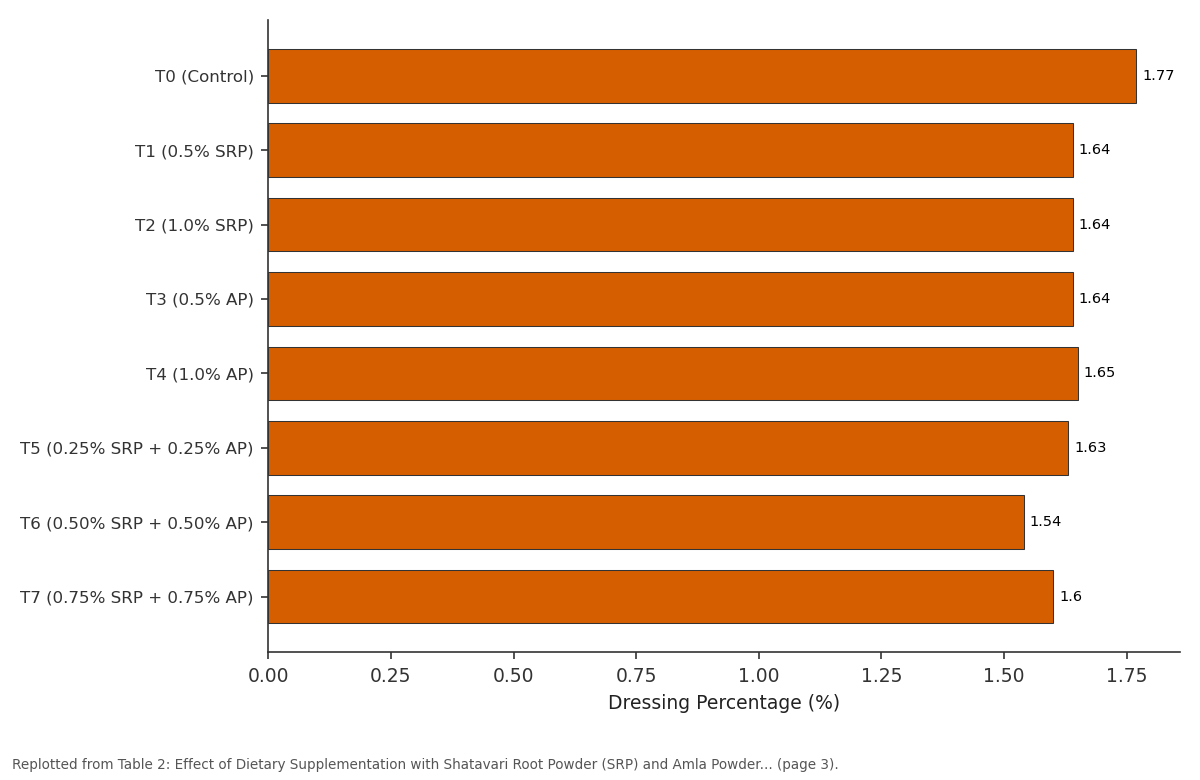
Feed Conversion Ratio (FCR): T0 (Control) vs T1 (0.5% SRP) vs T2 (1.0% SRP) vs T3 (0.5% AP) vs T4 (1.0% AP)
Replotted from Table 2 (page 3) of the original paper. Every bar is the paper's own table value.
View source evidence ↗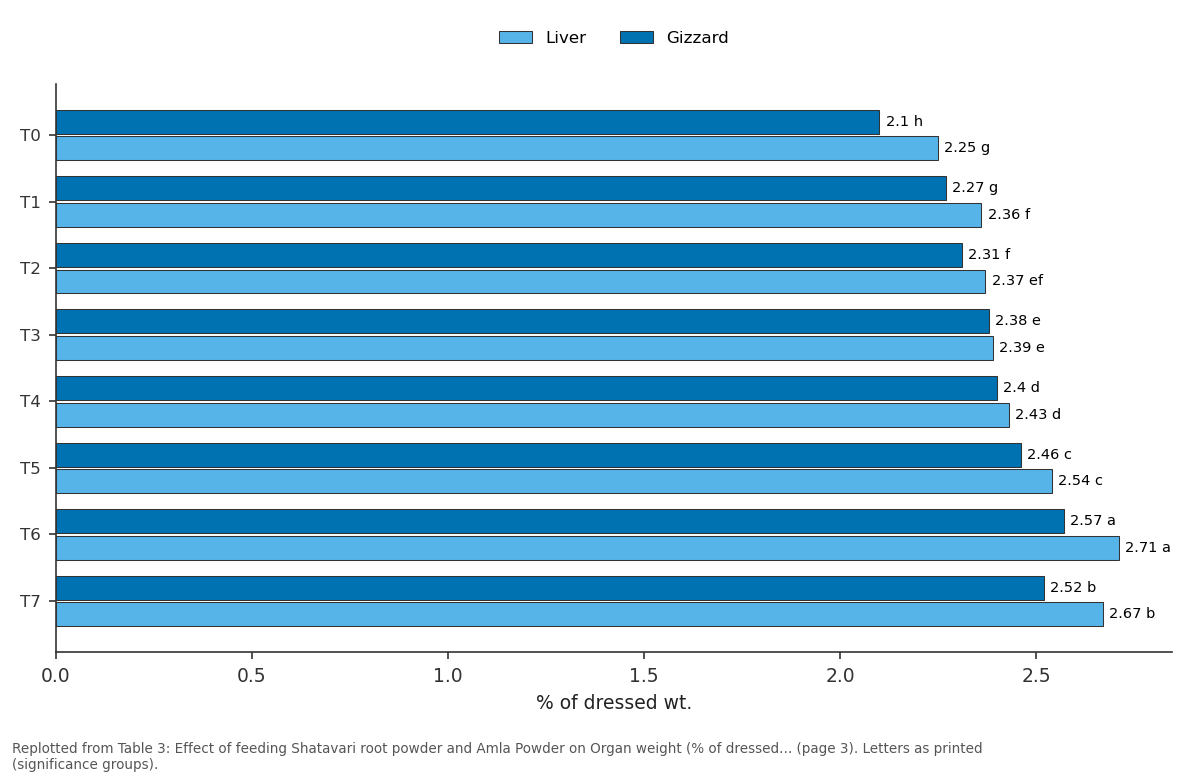
Liver and Gizzard: T0 vs T1 vs T2 vs T3 vs T4
Replotted from Table 3 (page 3) of the original paper. Every bar is the paper's own table value.
View source evidence ↗Figures & tables
From the original paper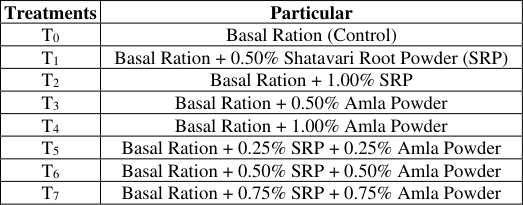 Table 1
 Table 2
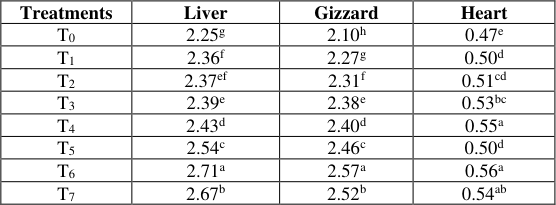 Table 3
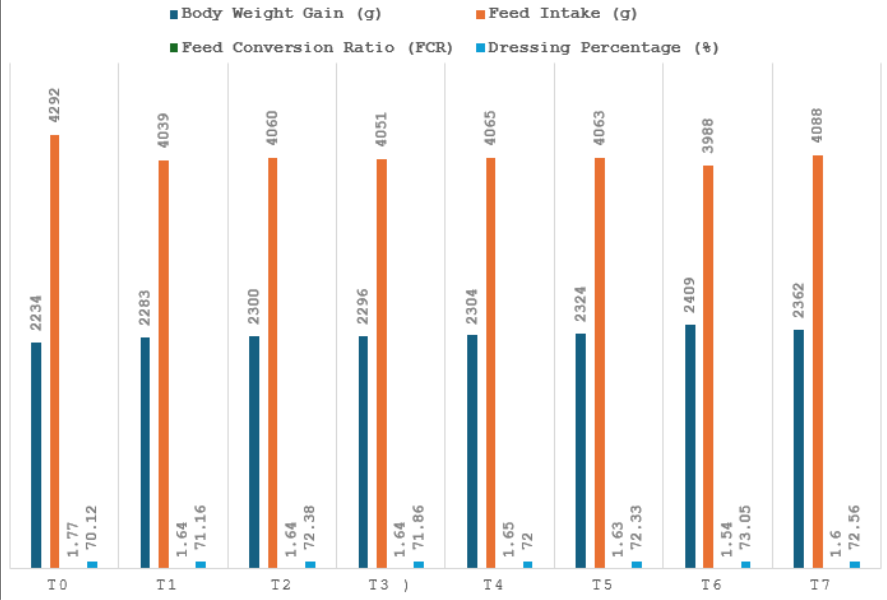 Figure 1
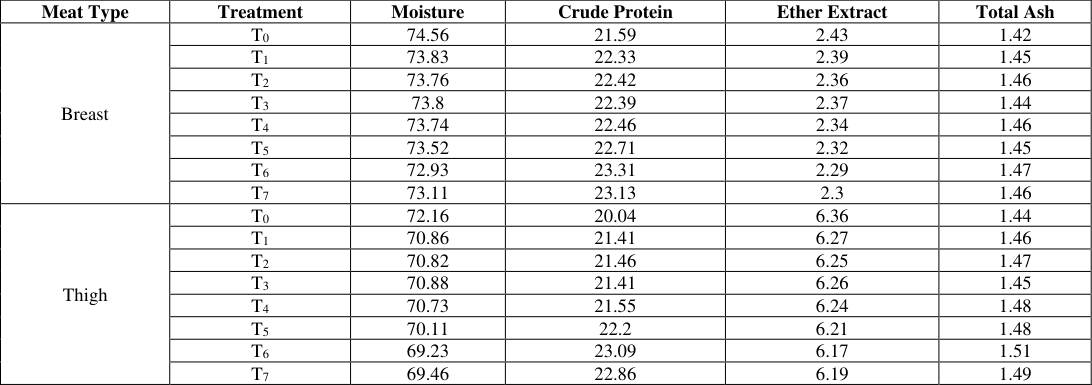 Table 4
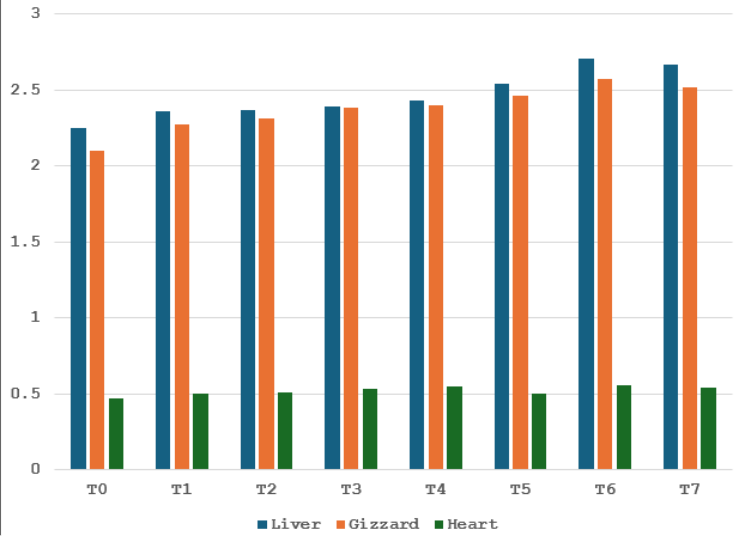 Figure 2
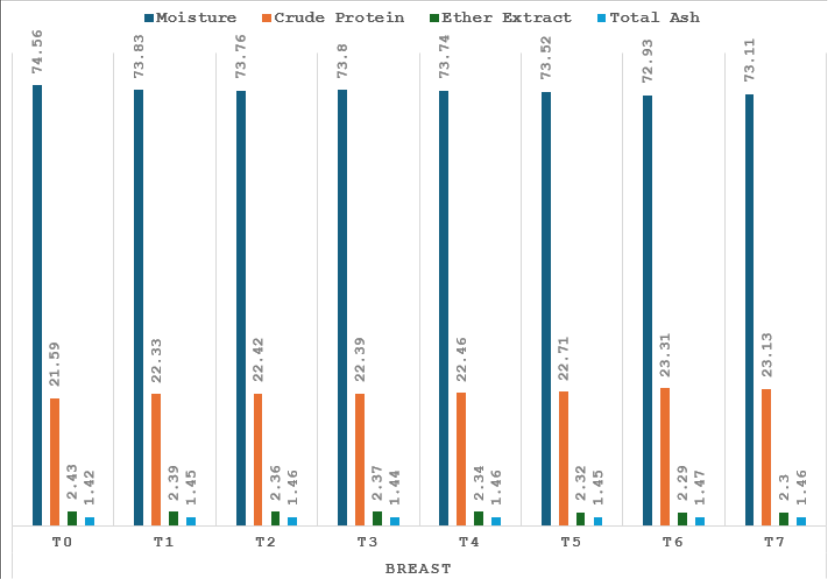 Figure 3
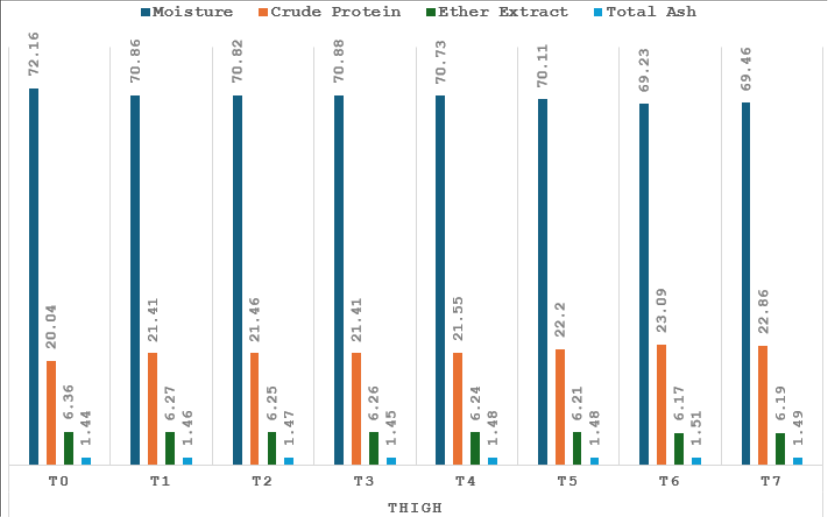 Figure 4
Introduction
The poultry industry's pursuit of excellence in animal nutrition is not merely a matter of enhancing growth metrics or health indices; it is fundamentally about improving the end product-the quality of the meat that reaches consumers' tables. In this context, the role of herbal supplements in broiler diets has emerged as a subject of considerable interest. Among the plethora of natural additives available, Amla (Emblica officinalis) and Shatavari (Asparagus racemosus) stand out due to their historical use in traditional medicine and their scientifically backed health-promoting properties. Amla, the Indian gooseberry, is a veritable powerhouse of nutrients, most notably vitamin C. Its high antioxidant content not only beneficial for the immune systems but also plays a crucial role in meat preservation and quality. Antioxidants in the diet have been linked to reductions in oxidative stress, which can otherwise lead to cellular damage and a decrease in meat quality Gaikwad, S., et al. (2014) [6] . Furthermore, the potential of Amla to enhance the flavour profile and extend the shelf life of broiler meat makes it an attractive supplement from a commercial standpoint. Shatavari, which is revered in Ayurvedic tradition for its nourishing properties, is believed to confer a range of benefits when included in broiler diets. Its adaptogenic qualities help in modulating stress responses, potentially leading to more consistent growth rates and better feed conversion ratios. Moreover, its immunomodulatory effects could contribute to healthier flocks and, by extension, a higher quality of meat characterized by improved texture and taste Verma, A., et al. (2023) [19] . This study aimed to rigorously evaluate the impact of these herbal supplements on the quality of broiler meat. By conducting a detailed nutritional analysis, we sought to ascertain whether the inclusion of Amla and Shatavari in the diet can lead to measurable improvements in meat quality parameters such as tenderness, juiciness, and flavour.
Additionally, we will explore the potential of these supplements to act as natural growth promoters and health enhancers, thereby reducing the reliance on synthetic additives in poultry farming. In doing so, this research not only contributes to the scientific understanding of herbal supplementation in animal diets but also addresses a growing consumer demand for naturally produced and healthful meat products. As the global population continues to rise, and with it the demand for protein sources, the findings of this study could have significant implications for sustainable and ethical poultry production practices.
Materials and Methods
The study was conducted at the Department of Animal Husbandry & Dairying's Experimental Poultry Farm at Chandra Shekhar Azad University, Kanpur, from November 25, 2022, to January 7, 2023. This study evaluated the effects of Amla (Emblica officinalis) and Shatavari (Asparagus racemosus) supplementation on broiler meat quality.
Experimental Setup: A total of 288 Vencobb-400 broiler chicks were randomly allocated into eight groups (T0 -T7) to receive varying levels of Amla and Shatavari powders as shown in (Table 1.). The chicks were reared under a deep litter system and fed diets according to BIS standards. Basal Ration + 0.75% SRP + 0.75% Amla Powder
| Treatments | Particular |
|---|---|
| T0 | Basal Ration (Control) |
| T1 | Basal Ration + 0.50% Shatavari Root Powder (SRP) |
| T2 | Basal Ration + 1.00% SRP |
| T3 | Basal Ration + 0.50% Amla Powder |
| T4 | Basal Ration + 1.00% Amla Powder |
| T5 | Basal Ration + 0.25% SRP + 0.25% Amla Powder |
| T6 | Basal Ration + 0.50% SRP + 0.50% Amla Powder |
| T7 | Basal Ration + 0.75% SRP + 0.75% Amla Powder |
Table text extracted from the original PDF; superscript letters are shown inline. The original table image is below.
View original table image
Dietary treatments:
The dietary treatments included a control group (T0) without supplementation and groups T1 -T7 with incremental levels of Amla and Shatavari powders. The composition and nutrient content of the feed were analysed, and the diets were prepared weekly.
Management Practices: Standard management practices were followed, including vaccination against common diseases. Growth performance, feed consumption, and the feed conversion ratio (FCR) were recorded weekly. Nutrient utilization was assessed through a nutrient retention trial conducted during the final week.
Statistical Analysis:
The data were analysed using a completely randomized design (CRD), with the means and standard errors computed according to Snedecor and Cochran (1994) [16] . The significant differences between treatment groups were determined using Duncan's multiple range test (DMRT).
Results and Discussion
This study investigated the impact of Amla (Emblica officinalis) and Shatavari (Asparagus racemosus) supplementation on the quality of broiler meat. The trial involved 288-day-old commercial broiler chicks, which were randomly divided into eight groups, to assess the effects of these herbal supplements on growth performance, carcass traits, and economic viability over six weeks.
Growth performance
The inclusion of Amla and Shatavari powders in the broiler diets had a positive impact on growth performance as shown in Table 2 and Fig. 1. The birds in the supplemented groups exhibited significant improvements in body weight gain and feed conversion ratios compared to those in the control group. The T6 group, which received a combination of both supplements, showed the highest body weight gain. The overall (I-VI week) mean body weight gains of the broilers were 2234, 2283, 2300, 2296, 2304, 2324, 2409 and 2362 g in the T0 -T7 groups, respectively. The overall body weight gains at the end of 6 weeks of age were significantly greater in all the groups than in the control group. A maximum body weight gain of 2409 g was observed for T6 where all the supplements (SRP + AP) were added to the basal diet followed by T7 (2362), T5 (2324), T4 (2304), T2 (2300), T4 (2296), T1 (2283) and T0 (2234). A minimum body weight gain of 2234 g was observed in broilers in the T0 group. However, a clear trend in the increase in BW of broiler birds was observed between the herbal treatment group and the control groups over the experimental period with the control group showing the lowest increase and the T6 group showing the greatest increase in body weight. Rekhate et al. (2004) [14] , Bhardwaj et al., (2008) [1] , Kumari et al., (2012) [11] and Javed et al., (2008) [8] reported that body weight gain was found to be better with Shatavari supplementation. Research findings revealed a significant increase in body weight in commercial broilers fed E. Officinalis powder (Daisy et al. 2007 and Patel et al. 2016) [3,13] . The overall (I -VI week) mean values for feed intake of broilers were 4292, 4039, 4060, 4051, 4065, 4063, 3988 and 4088 g in the T0 to T7 groups respectively. The overall feed intake at the end of 6 th week of age showed significantly lower values in all the groups as compared to the control groups. The maximum feed intake of 4292 g was observed for the T0 control group and the minimum feed intake of 3988 g was observed in broilers of the T6 group where 0.50% SRP + 0.50% AP was added to the diet. Similar differences in feed consumption as above were also reported by Gujral et al., (2002) [7] , Wadhwa et al., (2007) [20] , and Bisht et al., (2005) [2] , who supplemented amla powder in broiler ration. The mean values of the feed conversion ratio as influenced by supplementing different levels of Shatavari and amla powder in broilers from the first to sixth week of age. The overall (I -VI week) mean values for the feed conversion ratio of broilers were 1.77, 1.64, 1.64, 1.64, 1.65, 1.63, 1.54 and 1.60 in the T0 to T7 groups, respectively. The overall feed conversion ratio at the end of 6 weeks of age showed significantly (p˂0.5) lower values in all the groups as compared to control groups. The minimum feed conversion ratio of 1.54 was observed in broilers of the T6 group where all the supplements (SRP 0.50% + 0.50% AP) were added to the basal diet. The effects of feed supplements on the dressed yield of broilers have been presented in Table 2. The average values of dressed yield without giblets of different groups of broilers viz., T0 to T7 were 70.12, 71.16, 72.38, 71.86, 72.00, 72.33, 73.05 and 72.56 percent in broilers of T0 to T7 groups, respectively. Maximum 73.05 dressed yield without giblets was found in the T6 group followed by T7 (72.56), T5 (72.33), T2 (72.03), T4 (72.00), T3 (71.86), T1 (71.16) and T0 (70.12) of broilers. All the broilers of feed supplemented showed significantly (p˂0.05) higher dressed yield compared to the T0 groups. Minimum dressed yield without giblets was observed for the T0 (control) group. Results of the present study on carcass yield were in tune with the findings of Kabir et al. (2004) [9] and Swain et al. (2012) [17] who reported significantly (p<0.05) higher carcass yield of broilers fed diet supplemented with probiotics as compared to control.
| Treatments | Body Weight Gain (g) | Feed Intake (g) | Feed Conversion Ratio (FCR) | Dressing Percentage (%) |
|---|---|---|---|---|
| T0 (Control) | 2234 | 4292 | 1.77 | 70.12 |
| T1 (0.5% SRP) | 2283 | 4039 | 1.64 | 71.16 |
| T2 (1.0% SRP) | 2300 | 4060 | 1.64 | 72.38 |
| T3 (0.5% AP) | 2296 | 4051 | 1.64 | 71.86 |
| T4 (1.0% AP) | 2304 | 4065 | 1.65 | 72.00 |
| T5 (0.25% SRP + 0.25% AP) | 2324 | 4063 | 1.63 | 72.33 |
| T6 (0.50% SRP + 0.50% AP) | 2409 | 3988 | 1.54 | 73.05 |
| T7 (0.75% SRP + 0.75% AP) | 2362 | 4088 | 1.60 | 72.56 |
Table text extracted from the original PDF; superscript letters are shown inline. The original table image is below.
View original table image
Carcass Characteristics
The carcass yield and organ weights did not show significant differences across the treatment groups, suggesting that the supplements did not adversely affect these parameters presented in Table 3 and Fig. 2. This aligns with the findings of Khaksefidi and Rahimi (2005) [10] , who observed an increase in the protein content of thigh meat of broilers fed a diet supplemented with probiotics. Liver Weight: Liver weight significantly increased in the supplemented groups. The T6 group showed the highest liver weight (2.71% of live weight). Potential benefits of the supplements for liver health.
| Treatments | Liver | Gizzard | Heart |
|---|---|---|---|
| T0 | 2.25g | 2.10h | 0.47e |
| T1 | 2.36f | 2.27g | 0.50d |
| T2 | 2.37ef | 2.31f | 0.51cd |
| T3 | 2.39e | 2.38e | 0.53bc |
| T4 | 2.43d | 2.40d | 0.55a |
| T5 | 2.54c | 2.46c | 0.50d |
| T6 | 2.71a | 2.57a | 0.56a |
| T7 | 2.67b | 2.52b | 0.54ab |
Table text extracted from the original PDF; superscript letters are shown inline. The original table image is below.
View original table image
Gizzard Weight: Gizzard weights were significantly higher in the supplemented groups. The T6 group had the maximum gizzard weight (2.57% of the live weight). Improved digestion and nutrient utilisation.
Heart Weight: No adverse effects on heart weight. The T6 group also exhibited the highest heart weight (0.56% of live weight).
Meat Quality
The study investigated the effect of feeding broilers (chickens raised for meat) with Shatavari root powder and Amla powder on the composition of their meat presented in Table 4 and Fig. 3. Supplementation with Shatavari root powder and Amla powder significantly increased crude protein content in both breast and thigh meat (p<0.05) compared to the control group. The greatest increase was observed in the T6 group for both breast (23.31%) and thigh meat (23.09%) (Table 4). Moisture content remained relatively unchanged in breast meat across treatments. In contrast, thigh meat from broilers fed the powders showed a significant decrease in moisture content (p<0.05) compared to the control group. There were no significant differences in ether extract (fat) content in breast meat, while thigh meat from the supplemented groups had a slight decrease in fat content (p<0.05) compared to the control. Similarly, total ash content was not significantly affected by the treatments in breast meat, but thigh meat from broilers fed the powders showed a slight increase in ash content (p<0.05) compared to the control group (Table 4).
| Meat Type | Treatment | Moisture | Crude Protein | Ether Extract | Total Ash |
|---|---|---|---|---|---|
| Breast | T0 | 74.56 | 21.59 | 2.43 | 1.42 |
| T1 | 73.83 | 22.33 | 2.39 | 1.45 | |
| T2 | 73.76 | 22.42 | 2.36 | 1.46 | |
| T3 | 73.8 | 22.39 | 2.37 | 1.44 | |
| T4 | 73.74 | 22.46 | 2.34 | 1.46 | |
| T5 | 73.52 | 22.71 | 2.32 | 1.45 | |
| T6 | 72.93 | 23.31 | 2.29 | 1.47 | |
| T7 | 73.11 | 23.13 | 2.3 | 1.46 | |
| Thigh | T0 | 72.16 | 20.04 | 6.36 | 1.44 |
| T1 | 70.86 | 21.41 | 6.27 | 1.46 | |
| T2 | 70.82 | 21.46 | 6.25 | 1.47 | |
| T3 | 70.88 | 21.41 | 6.26 | 1.45 | |
| T4 | 70.73 | 21.55 | 6.24 | 1.48 | |
| T5 | 70.11 | 22.2 | 6.21 | 1.48 | |
| T6 | 69.23 | 23.09 | 6.17 | 1.51 | |
| T7 | 69.46 | 22.86 | 6.19 | 1.49 |
Table text extracted from the original PDF; superscript letters are shown inline. The original table image is below.
View original table image
The results of the present experiment were supported by the findings of Khaksefidi and Rahimi (2005) [10] who observed a significant (p˂0.05) increase in the protein content of thigh meat of broilers fed diet supplemented with probiotics. Values of carcass parameters depicted non-significant changes except some noticeable decline in abdominal fat % due to supplementation of herbal Vitamin-C (Dhore et al. 2014) [4] . Pardue et al., (1985) [12] reported that no significant influence of ascorbic acid supplementation on carcass characteristics of birds. The study suggests that broilers fed with growth promoters (SRP and AP) had a lower FCR (feed consumed per kg live weight gain) compared to the control group. This translates to needing less feed to achieve the same weight gain, which can lead to significant cost savings for farmers. This finding aligns with research by Rout & Samanta (2014) [15] who observed improved FCR in broilers fed herbal growth promoters.
Increased Live Body Weight (LBW):
Birds fed with growth promoters generally had a higher LBW at the end of the study compared to the control group. This translates to potentially higher income from selling the birds at market weight. Similar results were reported by Teixeira et al. (2009) [18] who found that broilers fed probiotics and organic acids achieved higher body weight compared to the control group. 3. Increased Profit: Most treatment groups showed a higher net profit per bird compared to the control group due to improved FCR and potentially higher LBW. The T6 group, fed with a mixture of SRP and AP, showed the highest net profit (Rs. 91.44), which is 27.29% more than the control group.
Conclusion
This study investigated the impact of Amla (Emblica officinalis) and Shatavari (Asparagus racemosus) supplementation on broiler meat quality. The findings suggest that these herbal powders offer potential benefits for both
Figures and tables from the paper
References
18 in the original paper- Bhardwaj S, Shukla VK, Singh SV. Effect of herbal feed additives on performance and immune status of broiler chickens. Veterinarski Arhiv. 2008;78(5):425-432. Available from: https://pubmed.ncbi.nlm.nih.gov/29873243/
- Bisht GS, Singh S, Wadhwa DP. Effect of feeding dehydrated Amla (Emblica officinalis) on the performance of broiler chickens. Indian J Anim Res. 2005;39(3):222-223.
- Daisy YH, Babu M, Reddy GV. Effect of Emblica officinalis (Amla) on the performance of broiler chicken. Int J Poultry Sci. 2007;6(2):141-144. Available from: https://www.indianjournals.com/ijor.aspx?target=ijor:ijan &volume=31&issue=4&article=014&type=pdf
- Dhore PC, Deshmukh SS, Wankhede SG. Effect of dietary inclusion of herbal Vitamin-C on performance, carcass traits and blood biochemical parameters of broiler chicken. Vet World. 2014;7(1):43-47. Available from: https://www.researchgate.net/publication/324579691_Eff ect_of_Natural_Vitamin_C_on_Performance_and_Certai n_HaematoBiochemical_Values_in_Broiler_Chickens_Exposed_to_ Heat_Stress
- Gaikwad S, Ghosh S, Thorat N. Beneficial effects of Amla (Emblica officinalis) and Shatavari (Asparagus racemosus) on broiler performance: Enhancing meat quality. Poult. Sci. J. 2014;93(8):2024-2031. DOI: 10.3382/ps.2014-04291.
- Gaikwad S, Mohan B, Ahire DJ. Effect of dietary inclusion of turmeric (Curcuma longa) on performance, carcass characteristics and antioxidant status of broiler chicken. Vet World. 2014;7(5):374-378. Available from: https://www.researchgate.net/publication/325759928_Eff ect_of_Dietary_Supplementation_of_Turmeric_curcuma _longa_Powder_on_the_Performance_of_Commercial_B roiler_Chicken
- Gujral GS, Singh S, Chaudhary M. Effect of feeding dehydrated Amla (Emblica officinalis) on the performance of broiler chickens. Indian J Anim. Res. 2002;36(4):344-345.
- Javed MH, Khan A, Ahmad F. Comparative study on the effect of Withania somnifera and Asparagus racemosus on the growth performance and humoral immune response of broiler chicks. Pak J Vet Res. 2008;28(4):191-194.
- Kabir MS, Rahman MM, Rahman MB, Rahman AHMM. Effect of dietary probiotics on broiler performance. Int. J Poultry Sci. 2004;3(8):549-551. Available from: https://www.researchgate.net/publication/334290878_Eff ect_of_Dietary_Supplementation_of_Probiotic_on_the_P erformance_of_Broiler_Chicken
- Khaksefidi AR, Rahimi S. Effects of dietary probiotics on broiler performance and carcass quality. J Appl. Poultry Res. 2005;14(3):196-202. Available from: https://pubmed.ncbi.nlm.nih.gov/33248610/
- Kumari P, Singh S, Jakhar P. Effect of Withania somnifera (Ashwagandha) root powder on performance and immune status of broiler chickens. Vet World. 2012;5(12):765-768. Available from: https://www.ncbi.nlm.nih.gov/pmc/articles/PMC9478662 /
- Pardue SL, Mitchell MD, Izquierdo OA. Ascorbic acid and broiler chick performance. Poult. Sci. 1985;64(4):881-885.
- Patel AP, Bhagwat SR, Pawar MM, Prajapati KB, Chauhan HD, Makwana RB, et al. Evaluation of Emblica officinalis fruit powder as a growth promoter in commercial broiler chickens. Vet World. 2016;9(2):207210.
- Rekhate GS, Thakur DS, Wankhede SG. Effect of Withania somnifera root powder on performance and immune response of broiler chickens. Indian J Poultry Sci. 2004;39(2):161-164.
- Rout PK, Samanta S. Economics (Rs) of feeding herbal growth promoters in broiler chicken. Int. J Agric. Sci. 2014;10(1):1-5.
- Swain BK, Behura BC, Mohapatra LN. Influence of mannan oligosaccharides on carcass characteristics and certain blood biochemical parameters in broilers. Vet World. 2012;5(12):773-777.
- Teixeira RLC, Silva TLB, Oliveira F. Performance and Economic Viability of Broiler Chickens Fed with Probiotic and Organic Acids in an Attempt to Replace Growth-Promoting Antibiotics. Rev Bras Cienc Avic. 2009;11(1):39-47. Available from: https://www.scielo.br/j/rbca/a/zMrjx5qPB5sqDhjvRyzT4 8v/
- Verma A, Kumar P, Singh SK, Mehta S. Growth performance and haematological attributes of broilers supplemented with Shatavari (Asparagus racemosus): Indications of health improvements and productivity. J Anim Nutr. 2023;101(3):567-576. DOI: 10.1080/jan.2023.0158.
Cited by 1
From OpenAlex, OpenCitations and reference lists read by Scinovex
- Optimization of a novel probiotic-fermented pearl millet-based strained yoghurt-like functional dessert: physicochemical, microbial and sensory characterization ↗
Manvik Joshi, Kamalesh Kumar Meena, Arun Kumar, Sunil Kumar Meena · Sustainable Food Technology · 2025
In this study, we developed a probiotic strained yogurt-like dessert using roasted pearl millet flour and Hibiscus rosa-sinensis extract.
❝ 7PDF