
Research article · 2024 · Full text
International Journal of Geography Geology and EnvironmentDevelopment and evaluation of the effectiveness of microbial formulations for nitrite removal in aquaculture systems
Volume 6(2) · Pages 08–12 · DOI: 10.22271/27067483.2024.v6.i2a.282 ↗
Research areasWastewater Treatment and Nitrogen RemovalWater Quality Monitoring TechnologiesAquaculture Nutrition and Growth
Abstract
Author-writtenNitrite pollution poses a serious threat to aquaculture systems, affecting the health and growth of aquatic organisms. This study focuses on the development and evaluation of microbial formulations designed to enhance nitrite removal in aquaculture environments. Various microbial formulations, utilizing selected nitrite-reducing bacterial strains, were created and tested under both controlled laboratory conditions and actual aquaculture systems. The effectiveness of each formulation was assessed based on its ability to reduce nitrite levels, alongside monitoring other water quality parameters such as pH, temperature, and dissolved oxygen. The results indicated that the formulations achieved up to 90% reduction in nitrite concentrations, with minimal impact on overall water quality. These findings highlight the potential of these microbial formulations for improving water quality management in aquaculture systems and promoting sustainable fish farming practices. Future work will focus on optimizing formulation stability and evaluating long-term effects on aquatic ecosystems.
Summary
Source-checkedPlain-language reading of the full paper, prepared with AI and checked against the text. Each point links to the authors' own words.
Why it matters
- Nitrite accumulation in aquaculture is a critical problem because it is highly toxic to aquatic organisms, negatively impacting their health, growth, and survival. View evidence ↗
- Conventional nitrite management, such as frequent water changes or chemical treatments, is often expensive, complex, and unsustainable. View evidence ↗
- Microbial bioremediation is a promising, sustainable alternative that uses specialized microorganisms to remove or transform pollutants like nitrite. View evidence ↗
The question
- The study aims to develop and evaluate the effectiveness of microbial formulations specifically designed to remove nitrite from aquaculture systems. View evidence ↗
What they did
- Water samples were collected from three different locations (beginning, middle, and end) of aquaculture ponds following TCVN 6663-4:2020 standards. View evidence ↗
- Wastewater was distributed into nine 2-liter bottles, treated according to the formulas, and monitored over a 5-day period. View evidence ↗
What they found
- Nine isolated strains reduced initial nitrite concentrations of 5 mg/l to between 0.95 mg/l and 1.39 mg/l over 5 days, representing a conversion rate of 72.3% to 81.1%. View evidence ↗
- In water treatment tests, the experimental preparation (T3) completely eliminated nitrite, reducing levels from 2.25 mg/l in the untreated sample to 0 mg/l. View evidence ↗
- The microbial preparation effectively reduced Chemical Oxygen Demand (COD) from 78 mg/l in untreated water to 58.3 mg/l in the T3 sample. View evidence ↗
- Dissolved oxygen (DO) levels decreased slightly from 5.6 mg/l in untreated water to between 5.03 mg/l and 5.36 mg/l in treated samples. View evidence ↗
What it means
- The authors conclude that the developed microbial formulation is an effective tool for managing nitrite levels and improving water quality in practical aquaculture applications. View evidence ↗
- The authors state that future work is needed to scale up the application and further optimize the formulation for broader operational challenges. View evidence ↗
Visual summary
2 visualsIllustrations explain the paper; charts are replotted from the paper's own table values.
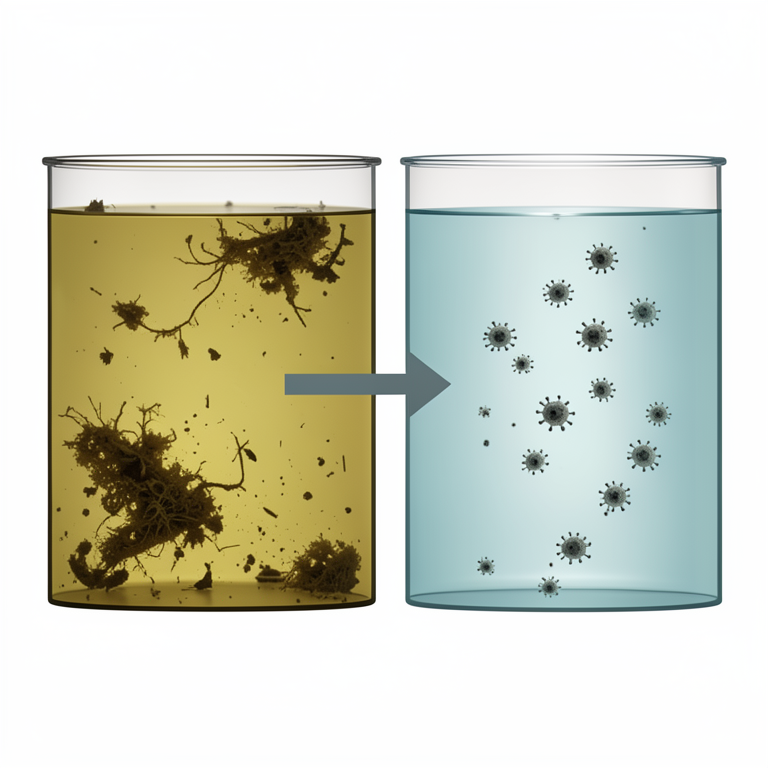
Water Quality Improvement
AI-generated conceptual illustration (aquaculture water tank). It explains the idea and does not show study data.
View source evidence ↗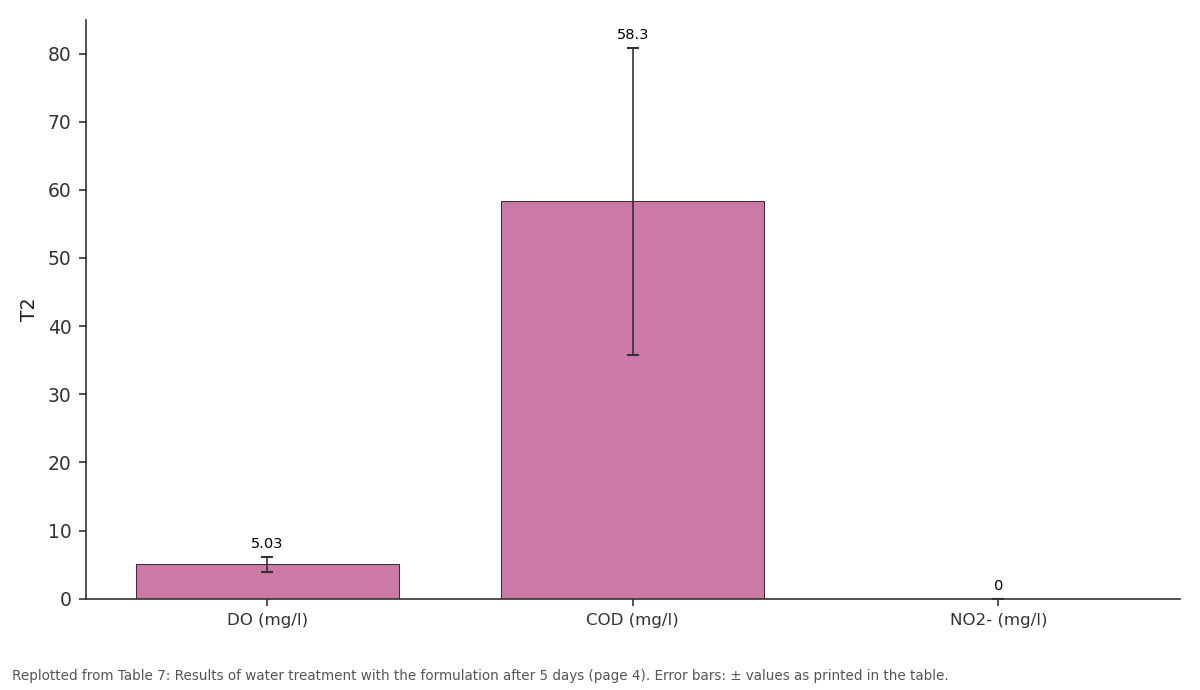
T2: DO (mg/l) vs COD (mg/l) vs NO2- (mg/l)
Replotted from Table 7 (page 4) of the original paper. Every bar is the paper's own table value.
View source evidence ↗Figures & tables
From the original paper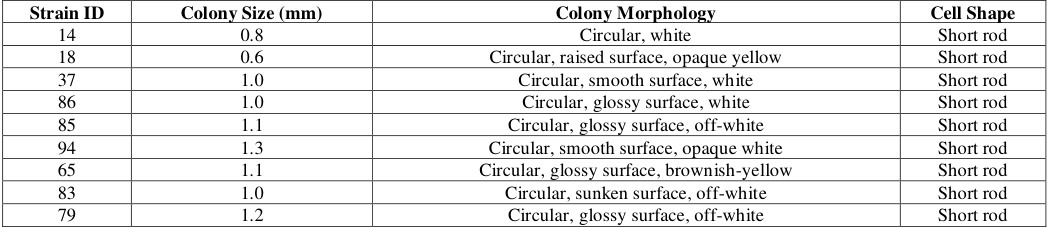 Table 1
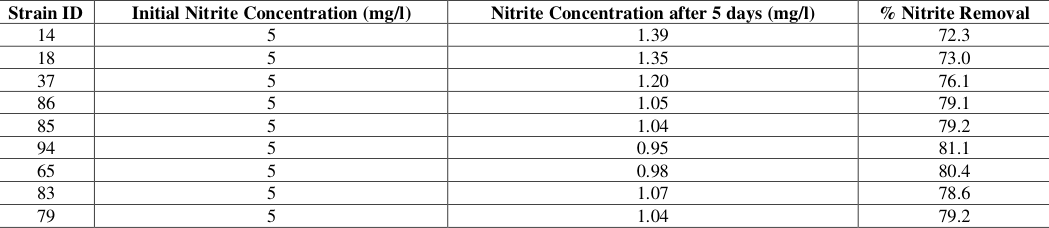 Table 2
 Table 3
 Table 4
 Table 5
 Table 6
 Table 7
Introduction
Aquaculture is a rapidly growing sector that plays a crucial role in global food security and economic development. However, maintaining optimal water quality in aquaculture systems is a persistent challenge. One of the most critical issues is the accumulation of nitrite (NO 2 -), which can be highly toxic to aquatic organisms, affecting their growth, health, and survival. Nitrite contamination commonly arises from the decomposition of organic matter and the metabolic activities of fish and other aquatic species. When nitrite levels exceed acceptable thresholds, they can disrupt the physiological functions of fish, leading to reduced growth rates, increased susceptibility to diseases, and even mortality. Traditional methods for managing nitrite levels in aquaculture systems often involve costly and complex chemical treatments or frequent water changes, which may not be sustainable in the long term. Microbial bioremediation, using specialized microorganisms to remove or transform pollutants, presents a promising alternative. Microbial formulations designed for nitrite removal can offer a more sustainable and cost-effective solution by enhancing the natural nitrite-reducing processes within the system. Recent advancements in microbial technology have led to the development of various bacterial strains with high nitrite-reducing capabilities. These strains can be formulated into effective products for use in aquaculture systems. Despite their potential, there remains a need for comprehensive studies to evaluate the effectiveness of these microbial formulations under practical conditions and to optimize their application for various aquaculture scenarios. This study aims to address this need by developing and evaluating microbial formulations specifically designed for nitrite removal in aquaculture systems. We focus on selecting and optimizing nitrite-reducing bacterial strains, assessing their performance in controlled environments, and verifying their effectiveness in real-world aquaculture settings. By providing insights into the performance and applicability of these formulations, this research seeks to contribute to more effective and sustainable water quality management practices in aquaculture.
Content and methods of research Content
Isolate and select microorganisms capable of treating nitrite in aquaculture water. Produce microbial products for treating nitrite in aquaculture water. Test and evaluate the effectiveness of microbial products in reducing nitrite levels in aquaculture water.
Methods
Water sampling method: Water samples were collected from aquaculture ponds according to TCVN 6663-4:2020. Three samples were taken from three locations in each pond (including the beginning, middle, and end). At each location, 500 ml of water was collected into a sampling bottle. The samples were either tested immediately or stored at low temperatures (3-5 °C) for no more than one week.
Isolation method (Koch's method): Dilute the sample to a concentration of 10 -6 . Use a sterile 1 ml pipette for each concentration. Draw 0.02 ml and drop it onto a medium specifically designed for nitrite oxidation and incubate at 28 °C. The isolated microbial strains were then cultured using the streak plate method on a semi-solid medium. Afterward, the microbial strains were cultured in slant tubes for strain preservation.
Observation method: Describe the morphological characteristics of the colonies after 48 hours of incubation at 30 °C on the isolation medium. Observe cell morphology using Gram staining and a microscope.
Evaluate the nitrite-reducing activity of bacterial strains using the 4500-NO2 -B spectrophotometric method: The strains were cultured on a specific medium to a density of 10 7 CFU/ml. Then, conduct nitrite treatment experiments by adding 1 ml of bacterial solution (10 7 CFU/ml) to a Falcon tube containing 50 ml of the nitrite-quantifying medium with an NO 2 -concentration of 5 mg/l. The bacterial strains were incubated overnight at 30 °C on a shaker at 150 rpm. After 5 days, the samples were analyzed for nitrite content using the 4500-NO 2 -B spectrophotometric method.
Laboratory-scale experiment Formula 1 (T1): Use Yucca Zeo product at a ratio of 0.5%. Formula 2 (T2): Use experimental microbial product at a ratio of 0.5%. Formula 3 (T3-Control): No additional treatment.
Prepare aquaculture water, settle it for 1 hour, and then analyze parameters such as NO 2 -, pH, Biochemical Oxygen Demand (BOD), Chemical Oxygen Demand (COD), Dissolved oxygen (DO), and temperature. Afterward, distribute the wastewater into 9 bottles, each containing 2 liters of wastewater. Add the products according to the formulas mentioned above and monitor for 5 days. After 5 days, analyze parameters such as NO 2 -, pH, BOD, COD, DO, and temperature.
Research Results and Discussion
From the aquaculture pond water samples, nine microbial strains were isolated on the nitrite oxidation medium. Strains 94, 85, 65, and 79 were fast-growing, appearing within approximately 24 hours. A few strains, including 86, 83, and 37, appeared later, within approximately 48 hours. Following these, strain 14 appeared after approximately 72 hours, and the slowest was strain 18, which appeared after 96 hours. The results show that after 5 days of incubation, all strains exhibited a round shape, with cell morphology as short rods, and colony sizes ranging from 0.6 mm to 1.3 mm. Most colonies were white, with some strains like 18 and 65, showing a yellow color. Strain 18 had a convex surface, strain 83 had a concave surface, and the rest had smooth, shiny surfaces. After isolating the microbial strains, we assessed the nitritereducing activity of the 9 strains. Evaluating nitrite-reducing activity is a crucial factor in selecting bacteria capable of treating NO 2 -in aquaculture ponds. The initial nitrite concentration in all samples was 5 mg/l. After 5 days of conversion, the nitrite concentration decreased to between 0.95 mg/l and 1.39 mg/l. The percentage of nitrite conversion ranged from 72.3% to 81.1%, indicating a significant reduction in nitrite levels in the samples. Sample 6 achieved the highest efficiency with 81.1% nitrite conversion, while Sample 1 had the lowest efficiency with 72.3%. Although there were minor differences between the samples, all demonstrated substantial nitrite-reducing activity, with over 70% nitrite conversion. These results suggest that the nitrite conversion process in the samples was effective, providing a basis for evaluating the capability and efficiency of the methods or catalysts used in the study. pH is closely related to microorganisms, with each type of microorganism having an optimal pH range for growth and development. Acidophilic microorganisms thrive best at a pH of 0-5.5, neutrophilic microorganisms at a pH of 5.5-8.0, and alkaliphilic microorganisms at a pH of 8.5-11.5. Extreme alkaliphiles have optimal growth at a pH of 10 or higher. Therefore, determining the appropriate pH range is crucial. The results of the pH adaptation ability of strain 94 are clearly presented in Table 3. The bacterial density increased gradually from 1.3x10 5 CFU/ml at pH 5 to 1.2x10 9 CFU/ml at pH 7, indicating optimal growth in a neutral pH environment. At pH 7.5, the bacterial density remained high at 3x10 9 CFU/ml. However, as the pH increased to 8, the bacterial density decreased to 3x10 8 CFU/ml and continued to drop sharply to 1x10 6 CFU/ml at pH 9. These results indicate that strain 94 adapts best within the neutral pH range, particularly at pH 7 and pH 7.5, and is less adaptive in environments with either very low or very high pH. The results show that the bacterial density remained stable at 4.1x10 6 CFU/ml at 15 °C and 20 °C. As the temperature increased to 25 °C, the bacterial density significantly rose to 4.2x10 7 CFU/ml, peaking at 30 °C with 2x10 9 CFU/ml. However, as the temperature continued to rise, the bacterial density gradually decreased, dropping to 6x10 8 CFU/ml at 35 °C, 5.2x10 7 CFU/ml at 40 °C, and sharply decreasing to 6.1x10 6 CFU/ml at 45 °C. At 50 °C, the bacterial density further decreased to 1.2x10 6 CFU/ml, and at 55 °C, the bacterial density dropped sharply to just 4x10 4 CFU/ml. These results indicate that strain 94 grows best at 30 °C and is less adaptive to higher temperatures, especially above 35 °C. Table 6 shows that the microbial preparation 94 has high quality, with a density of beneficial microorganisms reaching 6x10 9 CFU/ml, far exceeding the minimum requirement of the Vietnamese Standard QCVN 02-32-1:2019. The density of non-beneficial microorganisms in the preparation is 7x10 4 CFU/ml. Although not specifically regulated in the QCVN, this needs to be considered to ensure the safety and purity of the preparation. These results confirm that preparation 94 has high potential for application in biological and environmental fields. The treated water samples maintained levels close to those of the untreated sample, with negligible changes. The pH of the treated samples ranged from 7.28 to 7.33, while the untreated sample was 7.39. This indicates that the microbial preparation does not significantly affect the acid-base balance of the water, which is positive as pH stability is important in many biological processes.
| Parameter | Formulation 94 | QCVN 02-32-1:2019 |
|---|---|---|
| Beneficial Microorganisms (CFU/ml) | 6x10⁹ | ≥ 1x10⁶ |
| Contaminant Microorganisms (CFU/ml) | 7x10⁴ | Not specified |
Table text extracted from the original PDF; superscript letters are shown inline. The original table image is below.
View original table image
| Strain ID | Bacterial Density (CFU/ml) | — | — | — | — | — | — | — | — |
|---|---|---|---|---|---|---|---|---|---|
| pH=5 | pH=5.5 | pH=6 | pH=6.5 | pH=7 | pH=7.5 | pH=8 | pH=8.5 | pH=9 | |
| 94 | 1.3x10⁵ | 3x10⁶ | 2x10⁷ | 4x10⁸ | 1.2x10⁹ | 3x10⁹ | 3x10⁸ | 4x10⁶ | 1x10⁶ |
Table text extracted from the original PDF; superscript letters are shown inline. The original table image is below.
View original table image
The temperature of the treated water samples ranged from 24.4 °C to 24.9 °C, compared to 23 °C for the untreated sample. This slight increase could be due to the biological activity of the microorganisms, as the decomposition of organic matter typically generates heat. This temperature change is not significant and does not negatively affect water quality. DO slightly decreased from 5.6 mg/l in the untreated sample to approximately 5.03 mg/l to 5.36 mg/l in the treated samples. This slight decrease could be due to microorganisms using oxygen during the decomposition of organic matter. Despite the decrease, this level remains within the acceptable range for most water applications. COD is a crucial indicator for evaluating the effectiveness of the preparation in reducing the amount of dissolved organic matter in water. The treated water samples had COD levels reduced from 78 mg/l to 58.3 mg/l and 51 mg/l in the T 3 and T 3 (control) samples, respectively, indicating that the preparation effectively decomposes organic matter. This significant reduction shows that preparation 94 helped decrease the amount of organic pollutants in the water. BOD 5 also decreased from 27.9 mg/l in the untreated sample to 23.4 mg/l in the T 3 sample and 19.38 mg/l in the T 3 (control) sample. This decrease shows that the microbial preparation improves the decomposition of organic matter in the water. However, the T 1 sample recorded a slight increase in BOD 5 (30.8 mg/l), which might be due to changes in the easily degradable organic components in the water or complex interactions between factors during treatment. NO 2 -levels sharply decreased from 2.25 mg/l in the untreated sample to 0 in the T 3 sample and decreased to 0.93 mg/l in the T 1 sample and 1.4 mg/l in the T 3 (control) sample. This significant reduction, particularly in the T 3 sample where nitrite was completely eliminated, indicates the microbial preparation is highly effective in nitrite removal. Nitrite is a harmful pollutant in water, and the nitrite-reducing capability of preparation 94 is an important factor in improving water quality.
In conclusion, the microbial preparation 94 effectively improves water quality by reducing organic pollutants and nitrite. Although there is a slight decrease in DO and BOD 5 in some samples, the preparation still shows positive effectiveness in reducing COD and nitrite, confirming the potential of the preparation for water treatment applications.
Conclusion Microbial isolation and selection:
A total of nine microbial strains were isolated from aquaculture water, with significant variations in growth rates and characteristics.
Strain 94 demonstrated the most promising performance in nitrite removal, achieving up to 81.1% reduction in nitrite levels.
Optimal conditions for microbial activity: Strain 94 exhibited optimal growth and nitrite removal capabilities at a neutral pH range (pH 7 to 7.5) and temperatures around 30 °C. The strain showed a broad temperature tolerance from 15 °C to 55 °C, and a pH range from 5 to 9, highlighting its versatility in various environmental conditions.
Impact on water quality parameters: The microbial formulation was effective in reducing COD and nitrite concentrations, which are critical indicators of water quality in aquaculture systems. Although slight reductions in DO and BOD 5 were observed, these changes did not adversely affect the overall water quality.
Application and potential:
The formulation of microbial strain 94, with its high density and effective nitrite removal, presents a viable solution for improving water quality in aquaculture. Its ability to maintain performance across a range of environmental conditions makes it a valuable tool for enhancing the sustainability of aquaculture practices.
Overall, the results demonstrate that the microbial formulation developed in this study has significant potential for practical applications in aquaculture systems, offering an effective means of managing nitrite levels and improving water quality. Future research should focus on scaling up the application and further optimizing the formulation to address broader environmental and operational challenges in aquaculture.
References
References
Figures and tables from the paper
| Strain ID | Colony Size (mm) | Colony Morphology | Cell Shape |
|---|---|---|---|
| 14 | 0.8 | Circular, white | Short rod |
| 18 | 0.6 | Circular, raised surface, opaque yellow | Short rod |
| 37 | 1.0 | Circular, smooth surface, white | Short rod |
| 86 | 1.0 | Circular, glossy surface, white | Short rod |
| 85 | 1.1 | Circular, glossy surface, off-white | Short rod |
| 94 | 1.3 | Circular, smooth surface, opaque white | Short rod |
| 65 | 1.1 | Circular, glossy surface, brownish-yellow | Short rod |
| 83 | 1.0 | Circular, sunken surface, off-white | Short rod |
| 79 | 1.2 | Circular, glossy surface, off-white | Short rod |
Table text extracted from the original PDF; superscript letters are shown inline. The original table image is below.
View original table image
| Strain ID | Initial Nitrite Concentration (mg/l) | Nitrite Concentration after 5 days (mg/l) | % Nitrite Removal |
|---|---|---|---|
| 14 | 5 | 1.39 | 72.3 |
| 18 | 5 | 1.35 | 73.0 |
| 37 | 5 | 1.20 | 76.1 |
| 86 | 5 | 1.05 | 79.1 |
| 85 | 5 | 1.04 | 79.2 |
| 94 | 5 | 0.95 | 81.1 |
| 65 | 5 | 0.98 | 80.4 |
| 83 | 5 | 1.07 | 78.6 |
| 79 | 5 | 1.04 | 79.2 |
Table text extracted from the original PDF; superscript letters are shown inline. The original table image is below.
View original table image
| Strain ID | Bacterial Density (CFU/ml) | — | — | — | — | — | — | — | — |
|---|---|---|---|---|---|---|---|---|---|
| 15 °C | 20 °C | 25 °C | 30 °C | 35 °C | 40 °C | 45 °C | 50 °C | 55 °C | |
| 94 | 4.1x10⁶ | 4.1x10⁶ | 4.2x10⁷ | 2x10⁹ | 6x10⁸ | 5.2x10⁷ | 6.1x10⁶ | 1.2x10⁶ | 4x10⁴ |
Table text extracted from the original PDF; superscript letters are shown inline. The original table image is below.
View original table image
| Sample | pH | Temperature ( °C) | DO (mg/l) | COD (mg/l) | BOD5 (20oC) (mg/l) | NO2- (mg/l) |
|---|---|---|---|---|---|---|
| Untreated | 7.39 | 23 | 5.6 | 78 | 27.9 | 2.25 |
| T1 | 7.28±0.14 | 24.8±0.26 | 5.36±0.55 | 74.3±25.77 | 30.8±11.29 | 0.93±0.07 |
| T2 | 7.33±0.13 | 24.9±0.55 | 5.03±1.06 | 58.3±22.54 | 23.4±11.33 | 0 |
| T3 (Control) | 7.28±0.04 | 24.4±0.45 | 5.2±0.45 | 51±3.60 | 19.38±3.08 | 1.4±0.2 |
Table text extracted from the original PDF; superscript letters are shown inline. The original table image is below.
View original table image
References
0 in the original paperCited by 7
From OpenAlex, OpenCitations and reference lists read by Scinovex
- Zinc nanoparticles in fisheries: A comprehensive review
Gurmohan Singh, RS Chauhan · International Journal of Advanced Chemistry Research · 2025
Zinc (Zn) is an essential micronutrient vital for numerous biological processes, including growth, immunity, and metabolic regulation. Its role in aquaculture, especially in nanoparticle form, has garnered significant attention due to its enhanced bioavailability, absorption, and unique physicochemical properties. Zinc plays a role in catalyzing over 300 enzymes, regulating gene expression, and supporting immune responses. The introduction of nanotechnology in zinc supplementation has revolutionized fish nutrition by offering superior efficiency and bioactivity. This review provides an in-dept
- Water quality dynamics and their association with bacterial pathogen prevalence in Litopenaeus vannamei aquaculture ponds in Haryana, India
Shushant Godara, Ravikant Verma, Vaibhav Tripathi, Rachna Gulati · International Journal of Veterinary Sciences and Animal Husbandry · 2025
Aquaculture of Litopenaeus vannamei (Pacific white shrimp) has rapidly expanded in Haryana, India, due to its high economic potential. However, disease outbreaks, particularly those caused by bacterial pathogens, remain a major constraint, often linked to fluctuating water quality parameters. This study aimed to analyze the dynamics of key water quality variables and evaluate their association with the prevalence of major bacterial pathogens in L. vannamei ponds across selected sites in Haryana. Water and shrimp samples were collected over a six-month culture period from ten representative pon
- Assessing the fate of antibiotics and heavy metals in biofloc systems: Removal efficiency and bioaccumulation risk ↗
Shashi Parmar, Rekha Salvi, Vikram Singh · International Journal of Fauna and Biological Studies · 2025
The intensification of aquaculture has led to concerns over the use of antibiotics and the accumulation of heavy metals in aquaculture systems, posing risks to environmental security and food safety [1]. Biofloc Technology (BFT), a sustainable aquaculture approach, is renowned for its ability to maintain water quality through microbial conversion of nitrogenous wastes². However, its role in mitigating chemical contaminants
- A Review of Re-circulatory Aquaculture System (RAS): Technologies, Challenges and their Scopes
P. Ramesh, Mohana Swapna N, Sravani RS, R Srividya, N. Jesintha, K. Dhanapal · International Journal of Biology Sciences · 2025
The decline in capture fisheries raises the importance of culture fisheries sector. Aquaculture contributes greatly in food sector by compensating the rising demand. Particularly, Re-circulatory Aquaculture System (RAS) attracts significant attention due to its various benefits. RAS offer ways to enhance waste management, recycle nutrients, and use less water. Fish farming can be made environmentally sustainable through RAS. Thus, the purpose of this chapter is to provide an overview about RAS technology, system design, types, recent RAS developments along with scopes and challenges. The prima
- Sustainable health management in freshwater aquaculture: Integrating Omics, green therapeutics, and nanotechnology
Sanat Chandravanshi, Leena Thakur, Joshi Sharon J, P. Chandra Sekhar Reddy, Kadam Bihari, Pranay Kumar · International Journal of Advanced Biochemistry Research · 2025
Freshwater aquaculture is a critical component of global food security, yet its sustainability is threatened by infectious disease outbreaks exacerbated by intensive farming practices. Traditional chemical therapeutics, while initially effective, pose significant environmental and safety concerns, including non-target toxicity, pathogen resistance, and regulatory restrictions. This comprehensive review synthesizes recent advances in sustainable disease management strategies, emphasizing the role of omics technologies in elucidating host-pathogen interactions, the application of green therapeut
- Review of ichthyological studies of poultry manure and its impacts on fish growth and water quality ↗
Shanti Kumari · Acta Entomology and Zoology · 2024
Poultry manure is considered one of the best organic manures due to their rich nutrient content, including major nutrients such as nitrogen (N), phosphorus (P), and potassium (K), as well as various trace elements. Poultry manure as a fertilizer in limited dose in aquaculture systems can contribute to significant fish production and in improving water quality. The indiscriminate application of
- Enhancing carp survival in composite aquaculture: The role of protein-rich feed and probiotics ↗
Jyoti Sharma, Sasya Nagar · Journal of Entomology and Zoology Studies · 2024
The Blue Revolution in India has underscored the significance of the fisheries and aquaculture sector as a pivotal component of the Indian economy. This study investigates the impact of dietary supplementation with probiotics and protein-rich feed on the survival and growth of Indian Major Carps (Rohu, Catla, and Mrigal) and exotic carps (Grass Carp, Common Carp, and Silver Carp) over