
Research article · 2025 · Full text
International Journal of Advanced Chemistry ResearchZinc nanoparticles in fisheries: A comprehensive review
Volume 7(1) · Pages 28–31 · DOI: 10.33545/26646781.2025.v7.i1a.253 ↗
Research areasFish Biology and Ecology Studies
Abstract
Author-writtenZinc (Zn) is an essential micronutrient vital for numerous biological processes, including growth, immunity, and metabolic regulation. Its role in aquaculture, especially in nanoparticle form, has garnered significant attention due to its enhanced bioavailability, absorption, and unique physicochemical properties. Zinc plays a role in catalyzing over 300 enzymes, regulating gene expression, and supporting immune responses. The introduction of nanotechnology in zinc supplementation has revolutionized fish nutrition by offering superior efficiency and bioactivity. This review provides an in-depth exploration of zinc nanoparticles (ZnNPs) and their applications in fish nutrition and health. Key areas discussed include Zn metabolism in fish, the impact of ZnNPs on growth, haematological parameters, antioxidant responses, biochemical indices, and histopathological effects. The review highlights the potential benefits of ZnNPs, their dose-dependent effects, and toxicity concerns, presenting a holistic view of their utility and challenges. Additionally, it addresses gaps in current research and suggests future directions for sustainable aquaculture practices.
Summary
Source-checkedPlain-language reading of the full paper, prepared with AI and checked against the text. Each point links to the authors' own words.
Why it matters
- Zinc is a critical micronutrient for fish, supporting essential biological functions such as metabolic regulation, immunity, and growth. View evidence ↗
- A lack of zinc in fish can result in serious physiological issues, including impaired reproduction, weakened immune systems, and stunted growth. View evidence ↗
- Zinc nanoparticles (ZnNPs) are more efficient than traditional zinc sources because their small size and large surface area improve absorption and bioavailability. View evidence ↗
What they did
- The review analyzes several key areas, including zinc metabolism, the effects of ZnNPs on growth, biochemical indices, antioxidant responses, haematological parameters, and histopathology. View evidence ↗
What they found
- In Labeo rohita fingerlings, the maximum growth was observed when they were fed 20 mg/kg of nano ZnO. View evidence ↗
- Nano ZnO at a dose of 30 mg/kg resulted in higher specific growth rate (SGR) and weight gain in grass carp compared to zinc sulfate (ZnSO4). View evidence ↗
- Feeding L. rohita 20 mg/kg of nano ZnO led to increased levels of glucose and protein, which indicates higher metabolic activity. View evidence ↗
- ZnNP supplementation in L. rohita improved antioxidant responses by increasing GPx and SOD activities and decreasing MDA levels. View evidence ↗
- Combining ZnNPs with selenium nanoparticles (SeNPs) in O. niloticus diets enhanced the activities of CAT and SOD. View evidence ↗
- Fish fed with ZnNPs showed an upregulation of IGF-1 and growth hormone (GH), which correlates with their improved growth. View evidence ↗
- While rainbow trout can tolerate dietary zinc up to 1900 mg/kg, levels exceeding this cause haematological stress, evidenced by reduced haematocrit and haemoglobin values. View evidence ↗
- ZnNP exposure can cause histopathological damage, including hyperplasia and epithelial lifting in gills, and blood congestion, necrosis, and vacuolization in the liver. View evidence ↗
What it means
- The authors conclude that ZnNPs are valuable feed additives that can improve nutrient utilization, immunity, and growth in aquaculture. View evidence ↗
- The authors recommend careful dosage management to avoid toxicity and adverse effects when applying ZnNPs. View evidence ↗
- Future research is needed to determine the long-term effects of ZnNPs on environmental sustainability and fish health. View evidence ↗
Visual summary
1 visualsIllustrations explain the paper; they do not show study data.
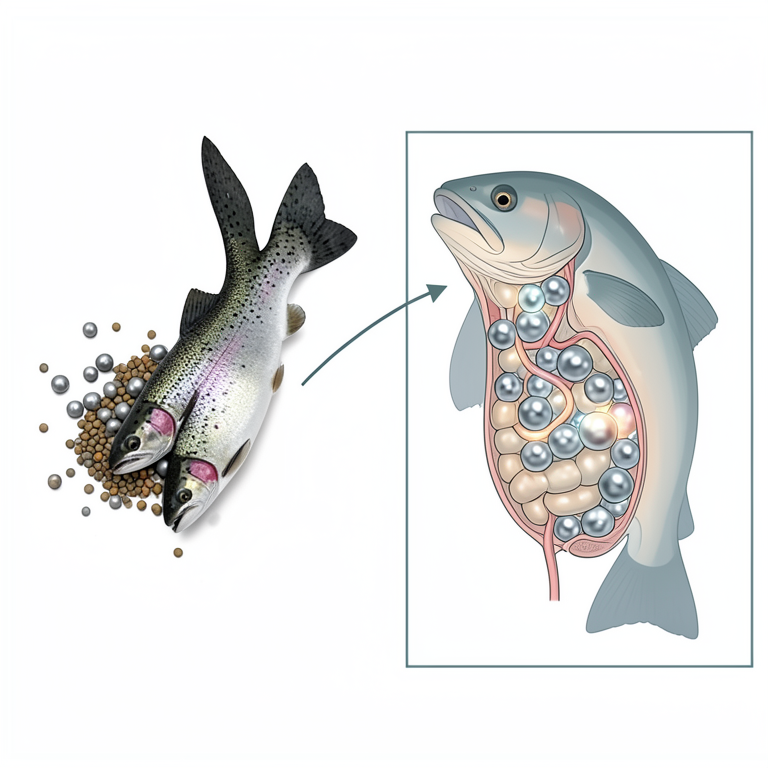
Mechanism of ZnNP Action in Fish
AI-generated conceptual illustration (Rainbow trout). It explains the idea and does not show study data.
View source evidence ↗Introduction
Zinc is the second most abundant trace element in living organisms and plays a catalytic, structural, and regulatory role in cellular processes [1,2] . It is indispensable for numerous enzymatic functions, including DNA synthesis, protein metabolism, and cell division, making it critical for growth and immune function. Zinc deficiency can lead to severe physiological disorders, including stunted growth, weakened immunity, and impaired reproductive performance. These deficiencies are especially concerning in aquaculture, where the natural availability of zinc in aquatic ecosystems is often inadequate. Thus, fish farmers rely on dietary zinc supplementation to meet the nutritional needs of cultured species. The advent of nanotechnology has revolutionized zinc supplementation by introducing zinc nanoparticles (ZnNPs) as an innovative alternative. Unlike conventional zinc sources, ZnNPs exhibit superior bioavailability and absorption efficiency due to their nanoscale size and large surface area. These properties enhance their interaction with biological systems, leading to improved nutrient uptake and physiological benefits. Additionally, ZnNPs possess unique antimicrobial and antioxidant properties, further augmenting their utility in aquaculture. Such advancements promise to address challenges like disease outbreaks and retarded growth, which are prevalent in fish farming, thereby improving productivity and sustainability. Despite these advantages, the application of ZnNPs in aquaculture raises concerns regarding potential toxicity and environmental impacts. High doses or prolonged exposure to ZnNPs can induce oxidative stress, tissue damage, and disruptions in metabolic processes. Additionally, the bioaccumulation of nanoparticles in aquatic environments may pose risks to non-target organisms. Therefore, understanding the optimal levels of ZnNP supplementation and their long-term effects on fish health and the ecosystem is imperative. This review aims to consolidate existing knowledge on ZnNPs, highlighting their benefits, limitations, and prospects in sustainable aquaculture. By addressing these aspects, it seeks to provide a framework for leveraging ZnNPs responsibly while safeguarding aquatic biodiversity.
Zinc Metabolism in Fish
Zinc's biological importance stems from its involvement in over 300 enzymatic activities, including RNA and DNA polymerases, superoxide dismutase (SOD), and carbonic anhydrase [3] . Zinc absorption in fish primarily occurs through the gastrointestinal tract and gills, mediated by carrier and calcium-dependent mechanisms [4,5] . Factors such as dietary composition, chemical form of Zn, and chelation with amino acids influence its bioavailability [7][8] . For instance, zinc methionine (Zn-Met) exhibits superior bioavailability compared to inorganic forms like zinc oxide (ZnO) and zinc sulfate (ZnSO 4 ). Understanding these pathways is crucial to optimizing dietary formulations and ensuring adequate zinc levels in fish.
Absorption and Distribution
Zinc is absorbed in freshwater fish via the gills and intestines, with mechanisms influenced by waterborne and dietary sources [5,9,10] . Chelation with amino acids such as histidine enhances Zn uptake and distribution in tissues. However, excessive dietary zinc competes with other bivalent minerals, potentially leading to toxicity. Studies have reported optimal Zn dietary levels for various species, such as 15-30 mg/kg for common carp and 20 mg/kg for channel catfish. Additionally, the form of zinc used in feed significantly impacts its absorption, as nanoforms often demonstrate higher efficiency. Improved zinc absorption translates to better growth and physiological resilience, making ZnNPs a valuable tool in aquafeeds [2,11] . Furthermore, the role of dietary protein sources and other chelating agents in enhancing zinc metabolism underscores the complexity of optimizing its supplementation.
Toxicity and Dose-Dependent Effects of Zinc Nanoparticles
The toxicity of ZnNPs varies with concentration and exposure duration [12] . While ZnNPs at low concentrations enhance growth and immunity, excessive levels disrupt physiological processes [12,13] . For example, rainbow trout tolerate dietary Zn levels up to 1900 mg/kg without adverse effects, but higher levels reduce haemoglobin and haematocrit values, indicating haematological stress. This demonstrates the fine line between beneficial and toxic concentrations of ZnNPs, highlighting the importance of precise dosing.
Toxicological Observations
ZnNPs induce histopathological changes in fish tissues, including liver necrosis, gill epithelial lifting, and renal vacuolation [14,15] . The presence of ZnNPs in the cytoplasm of red blood cells and kidney glomeruli underscores their systemic distribution. These effects necessitate careful optimization of ZnNP doses in aquafeeds. Toxicological studies also reveal variations in sensitivity among species, emphasizing the need for species-specific guidelines. Moreover, long-term exposure to sub-lethal doses of ZnNPs may exacerbate oxidative stress and impair immune function, making regular monitoring of fish health a priority.
Effects of Zinc Nanoparticles on Growth Performance
ZnNPs significantly enhance growth performance in fish due to their superior bioavailability. Studies on species like Labeo rohita and Oreochromis niloticus have demonstrated dose-dependent improvements in specific growth rate (SGR), feed conversion ratio (FCR), and weight gain [16,18] . For instance, L. rohita fingerlings fed 20 mg/kg nano ZnO exhibited maximum growth [19] . Similarly, a combination of ZnNPs and selenium nanoparticles (SeNPs) further amplified growth metrics. The influence of ZnNPs on metabolic efficiency and protein synthesis further explains their growth-promoting effects.
Comparative Analysis with Inorganic Zinc
Nano ZnO outperforms inorganic zinc forms in promoting growth and feed efficiency.
In grass carp (Ctenopharyngodon idella), nano ZnO at 30 mg/kg achieved higher weight gain and SGR than ZnSO 4 [20] . However, excessive ZnNP supplementation negatively impacts growth, emphasizing the importance of dose optimization [21] . Comparative studies also highlight the role of nanoparticle properties, such as surface charge and particle size, in determining their efficacy. These findings underscore the potential of ZnNPs to transform aquafeeds when used judiciously.
Haematological and Biochemical Implications of Zinc Nanoparticles
Haematological indices, such as red blood cell (RBC) count, haemoglobin concentration, and haematocrit levels, are vital indicators of fish health [22,23] . ZnNPs at optimal levels enhance these parameters, but excessive concentrations induce anaemia and physiological stress. For instance, C. idella fed with ZnNPs showed improved RBC and haemoglobin values compared to those on inorganic zinc diets [20] . These findings reinforce the need for balanced supplementation to avoid adverse health outcomes.
Biochemical Indicators
ZnNPs influence serum biochemical parameters, including total protein, glucose, and enzymatic activities [24,25] . Elevated protein and glucose levels were observed in L. rohita fed 20 mg/kg nano ZnO, reflecting enhanced metabolic activity [26] . Moreover, ZnNPs improved digestive enzyme activities, contributing to better nutrient assimilation. These biochemical enhancements correlate with improved growth and resilience against environmental stressors. However, the potential for biochemical alterations at higher doses necessitates vigilance in monitoring fish health during ZnNP supplementation trials.
Antioxidant Responses and Oxidative Stress
Antioxidant enzymes such as catalase (CAT), SOD, and glutathione peroxidase (GPx) are critical for mitigating oxidative stress. ZnNPs modulate these enzymes, enhancing the fish's ability to counteract reactive oxygen species (ROS). For example, ZnNP supplementation in L. rohita increased SOD and GPx activities while reducing malondialdehyde (MDA) levels, an indicator of lipid peroxidation. Enhanced antioxidant responses contribute to better immune function and overall health, particularly under stress conditions [19,27] .
Synergistic Effects with Selenium Nanoparticles
The combination of ZnNPs and SeNPs has demonstrated synergistic antioxidant effects. In O. niloticus, such diets enhanced SOD and CAT activities, highlighting the potential for combined nanoparticle therapies in aquaculture [18] . This synergy may open avenues for designing multifunctional supplements tailored to specific species and farming conditions, maximizing benefits while minimizing risks.
Histopathological Effects
ZnNP exposure leads to histological changes in fish tissues, serving as biomarkers of toxicity. Liver tissues exhibit vacuolization, necrosis, and blood congestion, while gills show epithelial lifting and hyperplasia. Chronic exposure also affects renal structures, with nanoparticle accumulation observed in lysosomes and glomeruli [28,29,32] . These histological changes provide valuable insights into the cellular-level impacts of ZnNPs.
Long-Term Implications
Prolonged ZnNP exposure induces ultrastructural changes, including desquamation in gill cells and vacuolation in chloride cells [13-15, 25, 28] . These findings emphasize the need for controlled usage to minimize adverse histopathological effects. Research into mitigating strategies, such as cosupplementation with protective agents, could further refine ZnNP applications in aquaculture.
Gene Expression and Immunomodulation
ZnNPs influence the expression of growth and immunerelated genes. Upregulation of growth hormone (GH) and insulin-like growth factor-1 (IGF-1) has been observed in ZnNP-fed fish, correlating with enhanced growth [28] . Additionally, ZnNPs modulate pro-inflammatory cytokines such as tumour necrosis factor-α (TNF-α) and interleukin-1 (IL-1), improving immune responses [29,30] . These molecular effects highlight the potential of ZnNPs to boost fish resilience against diseases.
Antioxidant Gene Expression
ZnNP supplementation upregulates antioxidant genes, including SOD and GPx [31,33] . For instance, O. niloticus exhibited increased SOD and GPx expression with ZnNP diets, enhancing oxidative stress resilience. However, excessive ZnNPs may suppress gene expression, highlighting the importance of dose regulation. Exploring gene expression profiles under varying ZnNP concentrations could provide deeper insights into their mode of action.
Conclusion
Zinc nanoparticles offer promising benefits in aquaculture, including enhanced growth, improved immunity, and better nutrient utilization. Their superior bioavailability and physicochemical properties make them a valuable feed additive. However, their application requires careful consideration of dosage and potential toxicity to prevent adverse effects. The integration of ZnNPs into fish diets should be accompanied by regular monitoring to ensure safety and efficacy. The long-term impacts of ZnNPs on fish health and environmental sustainability remain key areas for future research. Studies should focus on developing eco-friendly formulations, evaluating their interactions within aquatic ecosystems, and exploring their potential synergies with other micronutrients (Mondal et al., 2020; Sallam) [20] . By addressing these challenges, ZnNPs can contribute significantly to advancing sustainable practices in fisheries and aquaculture. Additionally, collaboration between researchers, policymakers, and industry stakeholders will be essential to harness the full potential of ZnNPs while minimizing risks.
References
31 in the original paper- Vallee BL, Falchuk KH. The biochemical basis of zinc physiology. Physiol Rev. 1993 Jan;73(1):79-118.
- Zalewski PD, Truong-Tran AQ, Grosser D, Jayaram L, Murgia C, Ruffin RE. Zinc metabolism in airway epithelium and airway inflammation: basic mechanisms and clinical targets. A review. Pharmacol Ther. 2005 Feb 1;105(2):127-149.
- Spry DJ, Hodson PV, Wood CM. Relative contributions of dietary and waterborne zinc in the rainbow trout, Salmo gairdneri. Can J Fish Aquat Sci. 2011 Apr 11; [cited 2022 Jan 19]. Available from: https://cdnsciencepub.com/doi/abs/10.1139/f88-005.
- Hogstrand C, Webb N, Wood CM. Covariation in regulation of affinity for branchial zinc and calcium uptake in freshwater rainbow trout. J Exp Biol. 1998 Jun;201(Pt 11):1809-1815.
- Lönnerdal B. Dietary factors influencing zinc absorption. J Nutr. 2000 May;130(5S Suppl):1378S1383S.
- Tan B. Zinc methionine and zinc sulfate as zinc sources of dietary zinc for abalone Haliotis discus hannai Ino. Aquaculture. 2001 Jan 1;192:67-84.
- Antony Jesu Prabhu P, Stewart T, Silva M, Amlund H, Ørnsrud R, Lock EJ, et al. Zinc uptake in fish intestinal epithelial model RTgutGC: Impact of media ion composition and methionine chelation. J Trace Elem Med Biol. 2018 Dec;50:377-383.
- Pentreath RJ. The accumulation of mercury from food by the plaice, Pleuronectes platessa L. J Exp Mar Biol Ecol. 1976 Nov 15;25(1):51-65.
- Glover CN, Hogstrand C. In vivo characterisation of intestinal zinc uptake in freshwater rainbow trout. J Exp Biol. 2002 Jan;205(Pt 1):141-150.
- Paripatananont T, Lovell RT. Chelated zinc reduces the dietary zinc requirement of channel catfish, Ictalurus punctatus. Aquaculture. 1995 [cited 2022 Jan 19]. Available from: https://scholar.google.com/scholar_lookup?title=Chelat ed+zinc+reduces+the+dietary+zinc+requirement+of+ch annel+catfish%2C+Ictalurus+punctatus&author=Paripa tananont%2C+T.+%28Auburn+Univ.%2C+Auburn%2 C+AL+%28USA%29.+Dept.+of+Fisheries+and+Allied +Aquacultures%29&publication_year=1995.
- Shaw BJ, Handy RD. Physiological effects of nanoparticles on fish: A comparison of nanometals versus metal ions. Environ Int. 2011 Aug 1;37(6):10831097.
- Lee JW, Kim JE, Shin YJ, Ryu JS, Eom IC, Lee JS, et al. Serum and ultrastructure responses of common carp (Cyprinus carpio L.) during long-term exposure to zinc oxide nanoparticles. Ecotoxicol Environ Saf. 2014 Jun;104:9-17.
- Kaya H, Aydın F, Gürkan M, Yılmaz S, Ates M, Demir V, et al. A comparative toxicity study between small and large size zinc oxide nanoparticles in tilapia (Oreochromis niloticus): Organ pathologies, osmoregulatory responses, and immunological parameters. Chemosphere. 2016 Feb;144:571-582.
- Chupani L, Niksirat H, Velíšek J, Stará A, Hradilová Š, Kolařík J, et al. Chronic dietary toxicity of zinc oxide nanoparticles in common carp (Cyprinus carpio L.): Tissue accumulation and physiological responses. Ecotoxicol Environ Saf. 2018 Jan 1;147:110-116.
- Mondal AH, Behera T, Swain P, Das R, Sahoo SN, Mishra SS, et al. Nano zinc vis-à-vis inorganic zinc as feed additives: Effects on growth, activity of hepatic enzymes, and non-specific immunity in rohu, Labeo rohita (Hamilton) fingerlings. Aquacult Nutr. 2020;26(4):1211-1222.
- Kishawy ATY, Roushdy EM, Hassan FAM, Mohammed HA, Abdelhakim TMN. Comparing the effect of diet supplementation with different zinc sources and levels on growth performance, immune response, and antioxidant activity of tilapia, Oreochromis niloticus. Aquacult Nutr. 2020;26(6):1926-1942.
- Swain P, Das R, Das A, Padhi SK, Das KC, Mishra SS. Effects of dietary zinc oxide and selenium nanoparticles on growth performance, immune responses, and enzyme activity in rohu, Labeo rohita (Hamilton). Aquacult Nutr. 2019;25(2):486-494.
- Faiz H, Zuberi A, Nazir S, Rauf M, Younus N. Zinc oxide, zinc sulfate and zinc oxide nanoparticles as sources of dietary zinc: Comparative effects on growth and hematological indices of juvenile grass carp (Ctenopharyngodon idella). Int J Agric Biol. 2015 Apr 1;17:568-574.
- Hayat M. Growth performance of metal stressed major carps viz. Catla catla, Labeo rohita and Cirrhina mrigala reared under semi-intensive culture system. Pak Vet J. 2007 Jan 1;27.
- Kori-Siakpere O, Oghoghene E. Sublethal haematological effects of zinc on the freshwater fish, Heteroclarias sp. (Osteichthyes: Clariidae). 2008.
- Onuegbu C, Aggarwal A, Singh NB. ZnO nanoparticles as feed supplement on growth performance of cultured African catfish fingerlings. J Sci Ind Res. 2018 Jan 1;77:213-218.
- Thangapandiyan S, Monika S. Green synthesized zinc oxide nanoparticles as feed additives to improve growth, biochemical, and hematological parameters in freshwater fish Labeo rohita. Biol Trace Elem Res. 2020 Jun;195(2):636-647.
- Kumar N, Krishnani KK, Singh NP. Effect of dietary zinc-nanoparticles on growth performance, antioxidative, and immunological status of fish reared under multiple stressors. Biol Trace Elem Res. 2018 Nov;186(1):267-278.
- Rajan MR, Rohini R. Impact of different quantities of zinc oxide nanoparticles on growth and hematology of mrigal Cirrhinus mrigala. J Water Environ Nanotechnol. 2021 Jan 1;6(1):62-71.
- Ghazi S, Diab AM, Khalafalla MM, Mohamed RA. Synergistic effects of selenium and zinc oxide nanoparticles on growth performance, hematobiochemical profile, immune and oxidative stress responses, and intestinal morphometry of Nile tilapia (Oreochromis niloticus). Biol Trace Elem Res. 2022 Jan 1;200(1):364-374.
- Miranda R, Silveira A, Jesus I, Grötzner S, Voigt C, de Campos S, et al. Effects of realistic concentrations of TiO2 and ZnO nanoparticles in Prochilodus lineatus juvenile fish. Environ Sci Pollut Res Int. 2016 Mar 1;23.
- Duclos MJ, Beccavin C, Simon J. Genetic models for the study of insulin-like growth factors (IGF) and muscle development in birds compared to mammals. Domest Anim Endocrinol. 1999 Oct;17(2-3):231-243.
- Yin Z, Lam TJ, Sin YM. Cytokine-mediated antimicrobial immune response of catfish, Clarias gariepinus, as a defence against Aeromonas hydrophila. Fish Shellfish Immunol. 1997 Feb 1;7(2):93-104.
- Saddick S, Afifi M, Abu Zinada OA. Effect of zinc nanoparticles on oxidative stress-related genes and antioxidant enzymes activity in the brain of Oreochromis niloticus and Tilapia zillii. Saudi J Biol Sci. 2017 Nov 1;24(7):1672-1678.
- Thom PT, Bai NV. Development and evaluation of the effectiveness of microbial formulations for nitrite removal in aquaculture systems. Int J Geogr Geol Environ 2024;6(2):08-12. DOI: 10.22271/27067483.2024.v6.i2a.282
- Abdelazim AM, Saadeldin IM, Swelum AAA, Afifi MM, Alkaladi A. Oxidative stress in the muscles of the fish Nile tilapia caused by zinc oxide nanoparticles and its modulation by vitamins C and E. Oxid Med Cell Longev. 2018;2018:6926712.