
Research article · 2024 · Full text
International Journal of Agriculture Extension and Social DevelopmentOvercoming hurdles: Navigating the key challenges faced by FPO members in Tiruvallur district
Volume 7(8) · Pages 98–102 · DOI: 10.33545/26180723.2024.v7.i8b.879 ↗
Research areasAgricultural risk and resilienceAgricultural Economics and PracticesAgricultural Innovations and Practices
Abstract
Author-writtenFarmer Producer Organizations (FPOs) are instrumental in enhancing agricultural productivity and income through collective farming practices. However, they face several constraints that impede their effectiveness. This study aims to identify and rank these constraints experienced by FPO members in Tiruvallur district, Tamil Nadu. Employing an ex-post facto research design, data were collected from 120 FPO members using a structured interview schedule. The constraints were categorize into personal, infrastructural, economic, marketing, organizational, and technical dimensions and analyzed using Garrett’s Ranking Technique. The findings reveal that personal constraints, such as lack of desire to attend meetings and insufficient time, are significant internal issues. Infrastructural constraints highlight the critical need for modern machinery and storage facilities. Economic constraints underscore the importance of improving credit awareness and funding sources. Marketing constraints reveal challenges in pricing and supply chain management. Organizational constraints indicate issues with labor distribution and management capacity, while technical constraints emphasize the need for timely inputs and better technical support. These insights provide a comprehensive understanding of the multifaceted challenges faced by FPOs, offering actionable recommendations for targeted interventions to improve their performance and sustainability.
Summary
Source-checkedPlain-language reading of the full paper, prepared with AI and checked against the text. Each point links to the authors' own words.
Why it matters
- Farmer Producer Organizations (FPOs) are groups of ten or more farmers who collaborate in agriculture and related businesses to increase their income. View evidence ↗
- FPOs benefit members by pooling produce under one brand, improving market negotiation power, removing middlemen, and securing funds for logistics and seeds. View evidence ↗
- Despite their benefits, FPOs face various constraints that hinder their overall effectiveness. View evidence ↗
The question
- The study aimed to identify and rank the specific constraints perceived by FPO members in the Tiruvallur district. View evidence ↗
What they did
- The research used an ex-post facto design in Tiruvallur district, Tamil Nadu, in 2024, collecting data from 120 participants via structured interviews. View evidence ↗
- Constraints were analyzed using Garrett's Ranking Technique and categorized into six dimensions: personal, infrastructural, economic, marketing, organizational, and technical. View evidence ↗
What they found
- Among personal constraints, the lack of desire to attend meetings was the most significant issue, with a mean score of 69. View evidence ↗
- The most critical infrastructural constraint was the absence of modern machinery, which received a mean score of 67. View evidence ↗
- The primary economic constraint was a lack of awareness regarding credit availability, scoring 71. View evidence ↗
- The most significant marketing challenge was receiving cheaper prices for produce, with a mean score of 69. View evidence ↗
- The top organizational constraint was the inequitable distribution of labor, which had a mean score of 73. View evidence ↗
- The most critical technical constraint was the absence of timely, affordable, and high-quality inputs, scoring 63. View evidence ↗
- Overall, personal constraints were ranked as the most significant, followed by marketing, organizational, economic, infrastructural, and technical constraints. View evidence ↗
What it means
- The authors conclude that improving FPO sustainability requires targeted policies, capacity building, enhanced support, and better infrastructure. View evidence ↗
Visual summary
3 visualsIllustrations explain the paper; charts are replotted from the paper's own table values.
Hierarchy of FPO Constraints
AI-generated conceptual illustration (Indian farmers in Tiruvallur district). It explains the idea and does not show study data.
View source evidence ↗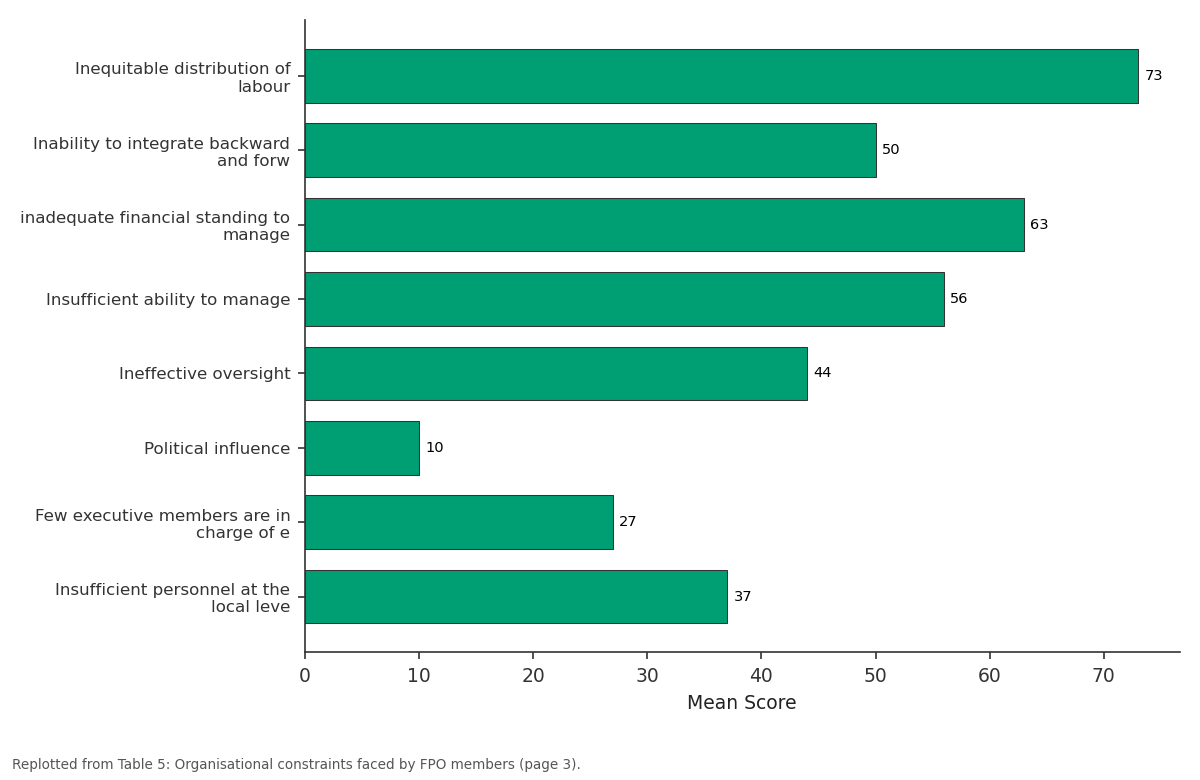
Mean Score: Inequitable... vs Inability to integrate... vs inadequate financial... vs Insufficient ability to... vs Ineffective oversight
Replotted from Table 5 (page 3) of the original paper. Every bar is the paper's own table value.
View source evidence ↗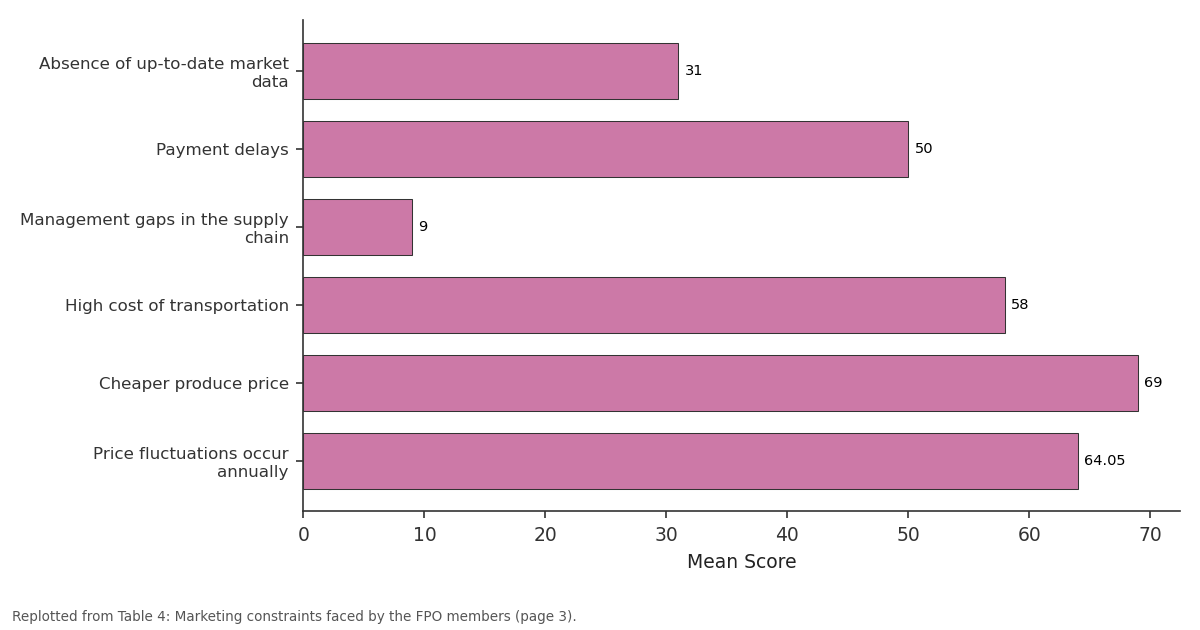
Mean Score: Absence of up-to-date... vs Payment delays vs Management gaps in the... vs High cost of... vs Cheaper produce price
Replotted from Table 4 (page 3) of the original paper. Every bar is the paper's own table value.
View source evidence ↗Figures & tables
From the original paper Table 1
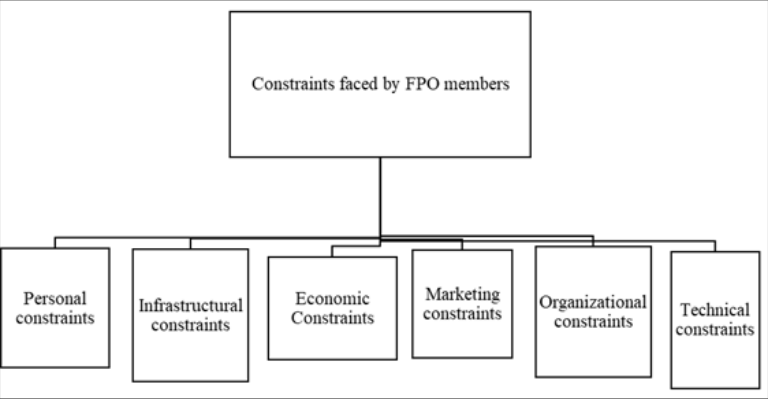 Figure 1
 Table 2
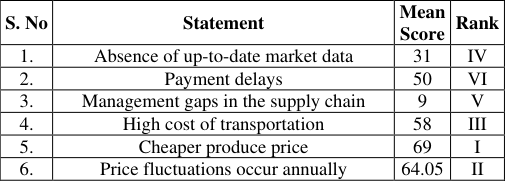 Table 4
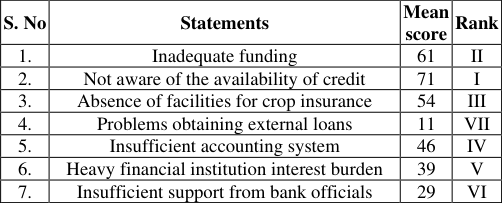 Table 3
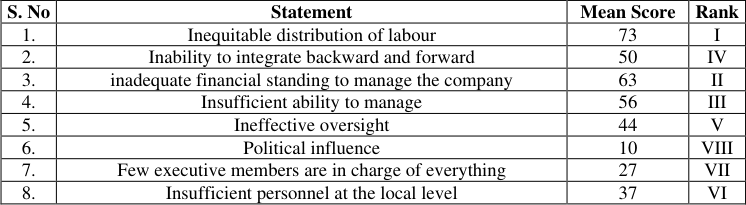 Table 5
 Table 6
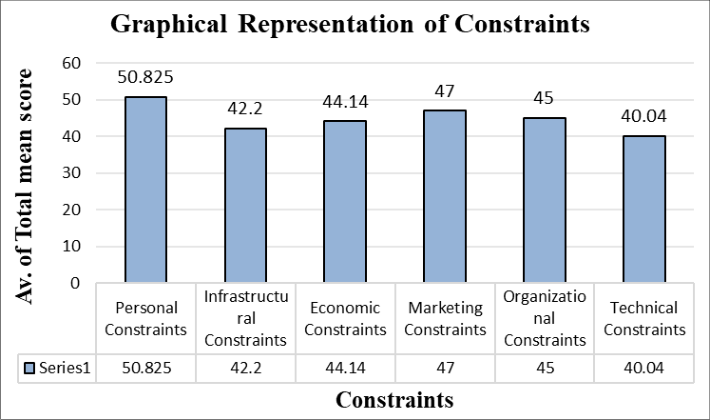 Figure 2
Introduction
A farmer producer organization is a group of ten or more farmers who decide to pursue agriculture and related businesses as a means of raising their members' income levels. It helps members pool their produce within the company so that it can be distributed under a single brand, strengthens their negotiating position in the market, cuts out or eliminates middlemen, and raises additional money for marketing, logistics, and the purchase of high-quality seeds. Their main challenges are those related to technology and operations, as well as administrative, financial, marketing, and governance issues. The mobilization and organization of farmers under FPOs can help to mitigate these issues to some extent. According to several studies (Mukherjee et al., 2019b; 2020) [9] , FPOs struggle with low working capital, cash flow problems, product quality issues, low product popularization, weak market connections, poor inventory management, high overhead costs, and a lack of expertise in creating workable business plans. Their primary challenges are related to technology, marketing, finance, governance, and input supply. The objective was to identify and rank the constraints perceived by members of Farmer Producer Organizations (FPOs) in Tiruvallur district. This involved a detailed analysis of various challenges faced by the FPO members, with the aim of prioritizing these constraints to inform targeted interventions. By systematically evaluating and ranking these issues, the study seeks to provide actionable insights for enhancing FPO effectiveness and addressing key areas of concern.
Methodology
This study employed an ex-post facto research design and conducted in Tiruvallur district, Tamil Nadu during 2024, the research utilized a structured interview schedule to gather information from a sample of 120 participants. This approach strengthens the study by providing a systematic method for data collection and ensuring consistency across participants. Constraints, which act as bottlenecks hampering the identified FPOs' functioning, was measured across several dimensions: technical, marketing, financial, www.extensionjournal.com governance, and input supply. The most significant issue was the lack of desire to attend meetings indicating internal motivation challenges. Insufficient time and lack of initiatives among members were also major hurdles, reflecting issues in time management and proactive engagement. Meanwhile, cooperation among members and family support were moderate concerns, and increased workload was the least significant constraint, suggesting that internal dynamics are more problematic than external pressures (Verma et al. 2020, Mukherjee et al., 2019b) [10,9] . Garrett's Ranking Techniques that converts the rank of constraints into numerical scores is applied. The following is Garrett's formula for converting ranks to percentages: Percent position = 100*(Rij -0.5)/Nj, Where Nj is the number of constraints ranked by the jth individual Rij is the rank provided for the ith constraint by the jth individual. The table provided by Garrett and Woodworth (1969) [5] that used to convert each rank's percent position into a score. The scores of each respondent have been totaled and divided by the total number of respondents for each constraint. The average results for each constraint were sorted in a descending order. In the end, the constraints were arranged according to mean scores by as per Mukherjee et al., (2012) [8] . The
Results and Discussion
Results and Discussion
Personal constraints
The table 1 illustrates that a study of the obstacles FPO members face, lack of desire to attend meetings is the biggest problem, ranking first followed by insufficient time and lack of initiatives among the FPO members. Lack of cooperation among members and absence of family support are also significant concerns. Increased workload was regarded as the least significant constraint. According to this ranking, internal motivation and time management issues are more significant obstacles than workload pressures from the outside world. [2] findings, the majority of banks are ignorant of FPO. The seventh most urgent issue is the difficulty in obtaining external loans. These rankings emphasize how important it is to raise credit awareness and develop better funding sources in order to provide farmers with financial support. Problems obtaining external loans 11 VII 5.
| S. No | Statements | Mean score | Rank |
|---|---|---|---|
| 1. | Increased workload | 2 | VI |
| 2. | Lack of co-operation among members | 59 | IV |
| 3. | Absence of family support | 50 | V |
| 4. | Lack of initiatives among the FPO members | 61.95 | III |
| 5. | Insufficient time | 63 | II |
| 6. | Lack of desire to attend meeting | 69 | I |
Table text extracted from the original PDF; superscript letters are shown inline. The original table image is below.
View original table image
Insufficient accounting system 46 IV 6.
Heavy financial institution interest burden 39 V 7.
Insufficient support from bank officials 29 VI
Marketing constraints
The table 4 depicts that the marketing constraints faced by FPO members highlight several critical issues. The most significant challenge is receiving lower prices for their produce, followed by the instability caused by annual price fluctuations. High transportation costs also pose a substantial burden, affecting overall profitability. The absence of up-to-date market data hampers informed decision-making, while management gaps in the supply chain contribute to inefficiencies. According to Deka and Goswami (2020) [2] , it points to a gap in supply chain management. Additionally, payment delays from buyers create financial stress for the farmers. These constraints collectively affect the FPO members' ability to market their produce effectively and maintain financial stability.
| S. No | Statement | Mean Score | Rank |
|---|---|---|---|
| 1. | Absence of up-to-date market data | 31 | IV |
| 2. | Payment delays | 50 | VI |
| 3. | Management gaps in the supply chain | 9 | V |
| 4. | High cost of transportation | 58 | III |
| 5. | Cheaper produce price | 69 | I |
| 6. | Price fluctuations occur annually | 64.05 | II |
Table text extracted from the original PDF; superscript letters are shown inline. The original table image is below.
View original table image
Organisational constraints
The table 5 denoted the organisational constraints faced by FPO members reveal several key challenges. The most pressing issue is the inequitable distribution of labour, which leads to inefficiencies and dissatisfaction among members. Additionally, inadequate financial standing hampers the ability to manage the company effectively, while insufficient management skills further exacerbate operational difficulties. The inability to integrate backward and forward linkages limits the FPO's potential for growth and value addition. Ineffective oversight contributes to a lack of accountability, and political influence within the organization can disrupt decision-making processes. Furthermore, having only a few executive members in charge leads to imbalances and potential misuse of authority. Lastly, the shortage of local-level personnel affects the FPO's ability to operate efficiently and respond to member needs.
| S. No | Statement | Mean Score | Rank |
|---|---|---|---|
| 1. | Inequitable distribution of labour | 73 | I |
| 2. | Inability to integrate backward and forward | 50 | IV |
| 3. | inadequate financial standing to manage the company | 63 | II |
| 4. | Insufficient ability to manage | 56 | III |
| 5. | Ineffective oversight | 44 | V |
| 6. | Political influence | 10 | VIII |
| 7. | Few executive members are in charge of everything | 27 | VII |
| 8. | Insufficient personnel at the local level | 37 | VI |
Table text extracted from the original PDF; superscript letters are shown inline. The original table image is below.
View original table image
Technical constraints
The table 6 shows that technical constraints faced by FPO members highlight several significant issues. The most critical challenge is the absence of timely, affordable, and high-quality inputs, which directly affects the productivity and quality of their produce. Another major constraint is the ignorance of the significance of packing and grading, coupled with insufficient technical assistance, which hinders their ability to meet market standards and demands. Additionally, the lack of computer literacy prevents members from leveraging available ICT tools, limiting their access to valuable information and resources that could enhance their operations. www.extensionjournal.com
| S. No | Statement | Mean Score | Rank |
|---|---|---|---|
| 1. | Incorrect need identification | 37 | III |
| 2. | Ignorance of the significance of packing and grading insufficient technical assistance | 49.166 | II |
| 3. | Absence of timely, affordable, and high-quality inputs | 63 | I |
| 4. | Lack of computer literacy, which prevents them from taking advantage of the ICT tools that are available. | 11 | IV |
Table text extracted from the original PDF; superscript letters are shown inline. The original table image is below.
View original table image
Conclusion
The study reveals that Farmer Producer Organizations (FPOs) in Tiruvallur district, Tamil Nadu, face a range of constraints, with personal challenges ranking as the most significant, followed by marketing, organizational, economic, infrastructural, and technical issues. Personal constraints, such as lack of desire to attend meetings and insufficient time, are critical barriers. Marketing constraints, including low prices and high transportation costs, affect profitability, while organizational constraints like inequitable labour distribution and inadequate financial management hinder efficient operations. Economic constraints highlight the need for better credit awareness and financial support, and infrastructural issues point to the necessity for modern machinery and storage facilities. Technical constraints, though less pressing, still affect productivity due to a lack of timely and quality inputs and technical assistance. Addressing these multifaceted challenges through enhanced support, capacity building, improved infrastructure, and targeted policies will be crucial for the effective functioning and sustainability of FPOs, ultimately fostering agricultural growth and farmer empowerment.
Figures and tables from the paper
| S. No | Statements | Mean score | Rank |
|---|---|---|---|
| 1. | Inadequate training facility | 33 | IV |
| 2. | Absence of advanced storage facilities | 55 | II |
| 3. | Absence of modern processing infrastructure | 7 | V |
| 4. | Inadequate machine maintenance | 45 | III |
| 5. | Absence of modern machinery | 67 | I |
Table text extracted from the original PDF; superscript letters are shown inline. The original table image is below.
View original table image
| S. No | Statements | Mean score | Rank |
|---|---|---|---|
| 1. | Inadequate funding | 61 | II |
| 2. | Not aware of the availability of credit | 71 | I |
| 3. | Absence of facilities for crop insurance | 54 | III |
| 4. | Problems obtaining external loans | 11 | VII |
| 5. | Insufficient accounting system | 46 | IV |
| 6. | Heavy financial institution interest burden | 39 | V |
| 7. | Insufficient support from bank officials | 29 | VI |
Table text extracted from the original PDF; superscript letters are shown inline. The original table image is below.
View original table image
References
7 in the original paper- Chopade SL, Kapse PS, Dhulgand VG. Constraints www.extensionjournal.com faced by the members of farmer producer company. International Journal of Current Microbiology and Applied Sciences. 2019;8(8):2358-2361.
- Deka N, Goswami K, Thakur AS, Bhadoria PBS. Are farmer producer companies ready to behave as business entities? Insights from the vegetable-based farmer companies in West Bengal, India. International Journal of Agricultural Sustainability. 2020;18(6):521-536.
- Jayashree V, Rani AJ, Karthikeyan C, Malarkodi M, Selvi RG. Sustainability of Farmer Producer Organisations: Major constraints in functioning of FPO in Tamil Nadu, India. Asian Journal of Agricultural Extension, Economics & Sociology. 2023;41(9):861868.
- Kumar S, Kumar R, Meena PC, Kumar A. Determinants of performance and constraints faced by Farmer Producer Organizations (FPOs) in India. Indian Journal of Extension Education. 2023;59(2):1-5.
- Mukherjee A, Bahal R, Burman RR, Dubey SK, Jha GK. Constraints in privatised agricultural technology delivery system of Tata Kisan Sansar. Journal of Global Communication. 2012;5(2):155-159.
- Mukherjee A, Singh P, Rakshit S, Satyapriya, Burman RR, Shubha K, Nikam V. Effectiveness of poultrybased farmers' producer organization and its impact on livelihood enhancement of rural women. Indian Journal of Animal Sciences. 2019;89:1152-1160.
- Verma AK, Singh AK, Dubey SK, Singh OP, Doharey RK, Bajpai V. Constraints faced by board of members of farmer producer organization. Indian Journal of Extension Education. 2020;56(3):75-78.
Cited by 1
From OpenAlex, OpenCitations and reference lists read by Scinovex
- Constraints in training programme implementation among Farmer Producer Organisations in South Kerala: Implications for extension strategies
P Safna, Gopika Somanath, Allan Thomas · International Journal of Agriculture Extension and Social Development · 2026
This study was conducted with the aim of identifying the constraints faced by the Board of Directors (BoDs) and Chief Executive Officers (CEOs) in implementing training programmes, as well as the constraints experienced by farmer members in participating in such programmes of Farmer Producer Organisations (FPOs). Based on the identified constraints, extension strategies were formulated to improve the design and effective implementation of training programmes. Ex-post facto research design was used, and data were collected from purposively selected five southern districts of Kerala namely Thiru