
Research article · 2023 · Full text
International Journal of Geography Geology and EnvironmentAssessing the environmental benefits of organic farming practices
Volume 5(1) · Pages 258–262 · DOI: 10.22271/27067483.2023.v5.i1c.269 ↗
Research areasOrganic Food and Agriculture
Abstract
Author-writtenOrganic farming practices are increasingly recognized for their potential to provide significant environmental benefits compared to conventional agricultural methods. This review paper examines the environmental impacts of organic farming, focusing on soil health, biodiversity, water quality, and greenhouse gas emissions. By synthesizing findings from previous studies, the paper aims to provide a comprehensive understanding of the advantages and challenges associated with organic farming practices and to suggest future research directions.
Summary
Source-checkedPlain-language reading of the full paper, prepared with AI and checked against the text. Each point links to the authors' own words.
Why it matters
- Modern agriculture is dominated by conventional farming, which relies on intensive monoculture and the heavy use of synthetic pesticides and fertilizers. View evidence ↗
- The use of synthetic chemicals in conventional farming leads to environmental degradation, including polluted water, degraded soil, and reduced biodiversity. View evidence ↗
- Conventional farming contributes to climate change because the production of synthetic inputs is energy-intensive and releases greenhouse gases. View evidence ↗
The question
- The objective of this review paper is to evaluate the environmental benefits provided by organic farming practices. View evidence ↗
What they did
- The authors conducted a review focusing on four key environmental areas: greenhouse gas emissions, water quality, biodiversity, and soil health. View evidence ↗
- The study's methodology involves synthesizing findings from existing research to understand the advantages and challenges of organic farming. View evidence ↗
What they found
- Organic soils generally exhibit superior structure and higher levels of organic matter than those managed conventionally. View evidence ↗
- Organic farming practices significantly reduce soil erosion when compared to conventional agricultural methods. View evidence ↗
- A meta-analysis indicated that organic farming generally increases species richness by approximately 30% compared to conventional farming. View evidence ↗
- Organic farming practices significantly reduce the leaching of nitrates compared to conventional farming, which helps maintain water quality. View evidence ↗
- Organic farming systems show significantly better water retention and performance during drought conditions than conventional systems. View evidence ↗
- Organic farming increases soil organic carbon stocks, which contributes to the sequestration of atmospheric carbon. View evidence ↗
- Per unit of production, organic farming systems have lower greenhouse gas emissions and lower energy use than conventional systems. View evidence ↗
What it means
- The authors conclude that organic farming provides significant environmental benefits across soil health, biodiversity, water quality, and greenhouse gas emissions. View evidence ↗
- The authors note that the adoption of organic farming is hindered by challenges in policy support, knowledge transfer, and economic viability. View evidence ↗
Visual summary
1 visualsIllustrations explain the paper; they do not show study data.
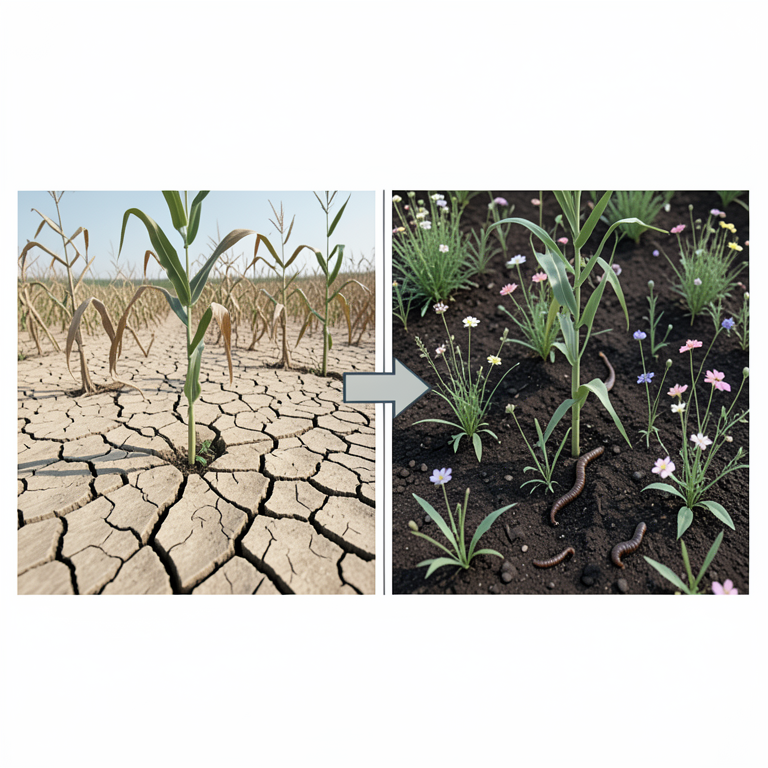
Conventional vs Organic Farming Environmental Cycle
AI-generated conceptual illustration (corn fields). It explains the idea and does not show study data.
View source evidence ↗Introduction
Agriculture is a cornerstone of human civilization, essential for providing food, fiber, and raw materials for a growing global population. As the demand for agricultural products continues to rise, the environmental impacts of farming practices have become increasingly significant. Conventional farming methods, which dominate modern agriculture, often rely heavily on synthetic fertilizers, pesticides, and intensive monoculture practices. While these methods have boosted crop yields and food production, they have also led to a range of environmental issues. Synthetic fertilizers and pesticides, widely used in conventional farming, contribute to soil degradation, water pollution, and loss of biodiversity. These chemicals can disrupt soil health by killing beneficial microorganisms and reducing soil fertility over time. The runoff of excess fertilizers and pesticides into water bodies causes nutrient pollution, leading to algal blooms and dead zones in aquatic ecosystems. Additionally, the heavy reliance on a few crop varieties in monoculture systems reduces genetic diversity, making crops more vulnerable to pests and diseases and leading to a loss of biodiversity in agricultural landscapes. Greenhouse gas (GHG) emissions from conventional agriculture are another major concern. The production and application of synthetic fertilizers and pesticides are energy-intensive processes that contribute to GHG emissions. Furthermore, conventional farming practices often involve significant soil disturbance through tillage, which releases carbon stored in the soil into the atmosphere, exacerbating climate change. In contrast, organic farming offers a more sustainable approach to agriculture by emphasizing the use of natural inputs and sustainable practices. Organic farming prohibits the use of synthetic fertilizers and pesticides, relying instead on organic fertilizers like compost and manure, crop rotations, and biological pest control. These practices aim to enhance soil health, conserve biodiversity, protect water quality, and reduce GHG emissions.
Objective of paper
The objective of this review is to assess the environmental benefits of organic farming practices.
Soil health
Organic farming practices have been shown to significantly improve soil health, primarily through the enhancement of soil structure and fertility, reduction in soil erosion, and increased soil biodiversity. These improvements result from the avoidance of synthetic chemicals and the adoption of sustainable practices such as the use of organic fertilizers, cover cropping, and reduced tillage.
Improvement of soil structure and fertility One of the most notable benefits of organic farming is the improvement in soil structure and fertility. Organic fertilizers such as compost and manure play a crucial role in this regard. These inputs increase the organic matter content in the soil, which enhances soil structure by improving soil aggregation. Improved soil structure leads to better water retention, aeration, and root penetration. Studies by Reganold and Wachter (2016) [1] and Mäder et al. (2002) [2] have demonstrated that soils managed organically tend to have higher levels of organic matter and superior soil structure compared to conventionally managed soils. These findings are consistent across various types of organic farming systems and geographic regions, indicating a robust benefit of organic management practices. In addition to organic fertilizers, cover cropping is another practice that contributes to soil fertility. Cover crops, such as legumes, not only protect the soil from erosion but also fix atmospheric nitrogen, enriching the soil with this essential nutrient. This natural process reduces the need for synthetic nitrogen fertilizers, which are energy-intensive to produce and can lead to environmental pollution if overapplied. The cumulative effect of these practices is an enhancement of nutrient availability in the soil, which supports healthy plant growth and increases crop yields over the long term.
Reduction in soil erosion
Soil erosion is a significant problem in conventional farming, often exacerbated by intensive tillage and monoculture practices. Organic farming addresses this issue through reduced tillage and the use of cover crops, both of which help maintain soil structure and prevent erosion. Reduced tillage minimizes soil disturbance, preserving soil aggregates and preventing the soil from becoming compacted and prone to erosion. Cover crops, on the other hand, provide a protective cover that shields the soil from the erosive forces of wind and water. A study by Teasdale et al. (2007) [3] found that organic farming practices significantly reduced soil erosion compared to conventional methods. This reduction in erosion is not only beneficial for maintaining soil health but also for preventing the loss of valuable topsoil, which is rich in nutrients and organic matter. The preservation of topsoil is crucial for long-term agricultural productivity and environmental sustainability.
Enhanced soil biodiversity
Organic farming promotes a diverse soil ecosystem by reducing the use of synthetic chemicals that can harm beneficial soil organisms. Studies have consistently shown that organic soils have higher microbial biomass, greater enzyme activity, and a more diverse microbial community compared to conventional soils. This increased biodiversity is beneficial for soil health as it enhances nutrient cycling, disease suppression, and overall soil resilience. For example, research by Birkhofer et al. (2008) [4] found that organic farming systems supported a higher abundance and diversity of soil fauna, such as earthworms and arthropods, compared to conventional systems. These organisms play vital roles in decomposing organic matter, aerating the soil, and facilitating nutrient exchange. The presence of a diverse and active soil biota is a key indicator of a healthy soil ecosystem, capable of supporting sustainable agricultural production.
Comparative studies between organic and conventional farming systems have consistently highlighted these benefits. For instance, a meta-analysis by Crowder and Reganold (2016) [1] concluded that organic farming practices generally lead to improvements in soil health indicators such as organic matter content, soil structure, and biodiversity. These findings are supported by long-term field studies, such as those conducted by the Rodale Institute, which have shown sustained improvements in soil health under organic management over several decades.
Biodiversity
Organic farming practices have a significant impact on biodiversity, both on and around farms. By creating diverse habitats and minimizing chemical inputs, organic farming enhances biodiversity at multiple levels, from microorganisms in the soil to larger fauna and flora. This section discusses the ways in which organic farming practices contribute to increased on-farm biodiversity, the conservation of pollinators, and the protection of natural ecosystems, comparing relevant studies to highlight the benefits of organic farming.
Increased on-farm biodiversity
One of the primary benefits of organic farming is the increase in on-farm biodiversity. This is achieved through practices such as crop rotations, intercropping, and the maintenance of hedgerows and buffer strips. Crop rotations disrupt pest and disease cycles, reduce weed pressure, and improve soil fertility, creating a more stable and diverse environment for various species. Intercropping, where different crops are grown together, provides multiple habitats and resources for insects, birds, and other wildlife. Hedgerows and buffer strips serve as corridors and refuges for wildlife, enhancing landscape connectivity and biodiversity. Studies have shown that organic farms generally support higher levels of biodiversity compared to conventional farms. Hole et al. (2005) [5] conducted a comprehensive review and found that organic farming practices lead to greater species richness and abundance, including more species of plants, birds, and insects. This increased biodiversity is attributed to the absence of synthetic pesticides and fertilizers, which can harm non-target organisms, and the presence of diverse habitats that provide resources and shelter for wildlife.
Conservation of pollinators
Pollinators, such as bees, butterflies, and other insects, are essential for crop production and ecosystem health. However, pollinator populations have been declining due to habitat loss, pesticide use, and other factors associated with conventional agriculture. Organic farming practices benefit pollinator populations by avoiding synthetic pesticides, which are known to be harmful to pollinators, and promoting habitat diversity. Research by Rundlöf et al. (2016) [6] indicated that organic farms had higher pollinator abundance and diversity compared to conventional farms. The study found that organic farming practices, such as the maintenance of flower-rich habitats and reduced pesticide use, provide safe and resource-rich environments for pollinators. This, in turn, contributes to improved pollination services and crop yields. The conservation of pollinators on organic farms is critical not only for maintaining biodiversity but also for ensuring agricultural productivity and food security.
Protection of natural ecosystems
Organic farming helps protect natural ecosystems by reducing the use of synthetic inputs, such as pesticides and fertilizers, which can have detrimental effects on surrounding environments. Pesticide runoff from conventional farms can contaminate soil and water bodies, harming aquatic life and disrupting ecosystem functions. Nutrient runoff, particularly nitrogen and phosphorus from synthetic fertilizers, can lead to eutrophication, causing algal blooms and oxygen depletion in water bodies. Organic farming mitigates these impacts by relying on natural inputs and practices that enhance nutrient cycling and soil health. Studies have shown that organic farms can act as buffers, reducing the negative impacts of conventional agriculture on nearby ecosystems. Highlighted the positive effects of organic farming on biodiversity in surrounding landscapes, noting that organic practices help maintain higher levels of species richness and ecosystem function in adjacent natural habitats. Comparative studies between organic and conventional farming systems consistently demonstrate the environmental benefits of organic farming in terms of biodiversity conservation. For example, a meta-analysis by Tuck et al. (2014) [7] found that organic farming practices generally increased species richness by about 30% compared to conventional farming. These findings are supported by longterm studies, such as those conducted by the Elm Farm Research Centre, which have shown sustained improvements in biodiversity on organic farms over time. In conclusion, organic farming practices contribute significantly to biodiversity conservation by creating diverse habitats, avoiding harmful chemicals, and protecting natural ecosystems from agricultural runoff. The positive impacts on on-farm biodiversity, pollinator populations, and surrounding environments are well-documented in the scientific literature, underscoring the importance of organic farming as a sustainable agricultural practice. Continued research and support for organic farming are essential to maximize these biodiversity benefits and promote ecological sustainability.
Water quality
Organic farming practices have been shown to significantly improve water quality by reducing nutrient runoff, enhancing water retention in soils, and protecting aquatic ecosystems from pollution and eutrophication. These benefits stem from the principles of organic farming, which prioritize natural inputs and sustainable land management practices over the use of synthetic chemicals. This section delves into the mechanisms by which organic farming improves water quality and compares findings from various studies to highlight the advantages of organic practices over conventional farming.
Reduction in nutrient runoff
One of the primary environmental benefits of organic farming is the reduction in nutrient runoff. Conventional farming practices often rely heavily on synthetic fertilizers, which are prone to leaching and runoff, especially in the presence of heavy rainfall or irrigation. These nutrients, primarily nitrogen and phosphorus, can contaminate groundwater and surface water bodies, leading to environmental issues such as eutrophication. Organic farming addresses this issue by minimizing the use of synthetic fertilizers and instead utilizing organic fertilizers like compost and manure. These organic inputs release nutrients more slowly and steadily compared to synthetic fertilizers, reducing the risk of nutrient leaching. Studies, such as those by Shepherd et al. (2003) [8] , have demonstrated that organic farming practices significantly reduce nitrate leaching compared to conventional farming. This reduction is crucial for maintaining water quality, particularly in agricultural regions where groundwater contamination is a significant concern. Moreover, organic farming practices such as cover cropping and crop rotations contribute to nutrient retention in the soil. Cover crops, for example, absorb residual nutrients and prevent them from leaching into waterways. Crop rotations improve soil health and nutrient balance, reducing the need for external fertilizer inputs and further mitigating the risk of runoff.
Improvement in water retention
Organic farming enhances soil structure and organic matter content, which in turn improves water retention capabilities of the soil. Soils with high organic matter content can hold more water, reducing the need for frequent irrigation and mitigating the risk of water runoff. This is particularly beneficial in regions prone to drought, as better water retention helps maintain crop productivity during dry periods. Studies have shown that organically managed soils have higher water-holding capacity than conventionally managed soils. For instance, Lotter et al. (2003) [9] found that organic farming systems had significantly better water retention and performed better under drought conditions compared to conventional systems. This improvement in water retention is attributed to the increased organic matter and enhanced soil structure resulting from organic farming practices. The ability of organic soils to retain water not only supports agricultural productivity but also reduces the risk of soil erosion and water runoff. When soils are better able to absorb and hold water, there is less surface runoff during heavy rain events, which can carry soil particles and nutrients into nearby water bodies. This reduction in runoff is essential for maintaining water quality and preventing sedimentation and nutrient pollution in aquatic ecosystems.
Protection of aquatic ecosystems
Organic farming practices play a critical role in protecting aquatic ecosystems from the adverse effects of agricultural runoff. Pesticides and synthetic fertilizers used in conventional farming can runoff into water bodies, leading to pollution and eutrophication. Eutrophication, caused by excess nutrients such as nitrogen and phosphorus, leads to algal blooms, oxygen depletion, and the subsequent decline of aquatic life. By avoiding synthetic pesticides and fertilizers, organic farming reduces the risk of nutrient and chemical runoff into water bodies. This practice is particularly important for protecting sensitive aquatic ecosystems and maintaining the health of freshwater and marine environments. Research by Schrama et al. (2018) [10] indicated that organic farming practices significantly reduce the risk of eutrophication and support healthier aquatic ecosystems. The study found that organic farms had lower levels of nutrient runoff and fewer incidences of algal blooms compared to conventional farms. Furthermore, the use of buffer strips and hedgerows in organic farming systems helps to filter runoff before it reaches water bodies. These vegetated areas trap sediments and nutrients, preventing them from entering streams, rivers, and lakes. The incorporation of such practices in organic farming not only enhances water quality but also provides additional habitats for wildlife, contributing to overall biodiversity. In comparative studies, the benefits of organic farming for water quality are consistently highlighted. For example, a study by Kramer et al. (2006) [11] found that organic farms had lower nitrate levels in groundwater compared to conventional farms, demonstrating the effectiveness of organic practices in reducing nutrient pollution. Similarly, a meta-analysis by Tuomisto et al. (2012) [12] confirmed that organic farming systems generally result in lower nutrient losses to the environment, supporting the notion that organic farming is more sustainable in terms of water quality. In conclusion, organic farming practices offer substantial benefits for water quality by reducing nutrient runoff, improving water retention in soils, and protecting aquatic ecosystems from pollution and eutrophication. These improvements are well-supported by scientific research, underscoring the importance of adopting organic farming practices to achieve sustainable agricultural and environmental outcomes. Continued research and policy support are necessary to further enhance the adoption and effectiveness of organic farming practices in promoting water quality and ecological health Greenhouse gas emissions Organic farming practices have been increasingly recognized for their potential to mitigate greenhouse gas (GHG) emissions, a critical factor in addressing climate change. These practices contribute to the reduction of GHG emissions through enhanced soil carbon sequestration, lower energy use, and mitigation of methane and nitrous oxide emissions. This section discusses these mechanisms in detail and compares findings from various studies to highlight the advantages of organic farming over conventional farming in terms of reducing greenhouse gas emissions.
Reduction in carbon footprint
Organic farming can significantly reduce its carbon footprint by enhancing soil carbon sequestration and reducing reliance on synthetic fertilizers and pesticides. Soil carbon sequestration involves capturing atmospheric carbon dioxide (CO₂) and storing it in the soil, a process that is facilitated by the addition of organic matter such as compost and manure, and the use of cover crops. These practices increase the organic carbon content of the soil, improving soil health and productivity while also mitigating climate change by removing CO₂ from the atmosphere. Studies by Gattinger et al. (2012) [13] have shown that organic farming systems can sequester more carbon in the soil compared to conventional systems. Gattinger et al. (2012) [13] conducted a meta-analysis and found that organic farming practices increase soil organic carbon stocks, thereby contributing to carbon sequestration. Also reported higher soil organic carbon levels in organic systems, which suggests that organic farming has a higher potential for carbon sequestration. The reduction in the use of synthetic fertilizers is another significant factor contributing to the lower carbon footprint of organic farming. The production of synthetic fertilizers is highly energy-intensive, involving the combustion of fossil fuels, which generates substantial GHG emissions. By substituting synthetic fertilizers with organic alternatives, organic farming reduces the energy consumption and emissions associated with fertilizer production.
Lower energy use
Organic farming typically requires less energy than conventional farming, primarily due to the avoidance of synthetic fertilizers and pesticides. The production, transportation, and application of these synthetic inputs are energy-intensive processes that contribute significantly to the overall energy use and GHG emissions of conventional farming systems. In contrast, organic farming relies on natural inputs and processes that require less energy. A study by Lynch et al. (2011) [14] found that organic farming systems had lower energy use and GHG emissions per unit of production compared to conventional systems. The study demonstrated that the reduced reliance on synthetic inputs in organic farming leads to significant energy savings and a smaller carbon footprint. This reduction in energy use is a key advantage of organic farming, contributing to its overall sustainability. In addition to lower energy use, organic farming practices such as reduced tillage and the use of renewable energy sources further enhance the energy efficiency of organic systems. Reduced tillage minimizes soil disturbance, preserving soil structure and organic matter, while also reducing the fuel consumption associated with tillage operations. The integration of renewable energy sources, such as solar and wind power, into organic farming systems can further reduce their reliance on fossil fuels and associated GHG emissions.
Mitigation of methane and nitrous oxide emissions
Methane (CH₄) and nitrous oxide (N₂O) are potent greenhouse gases with a much higher global warming potential than carbon dioxide. Organic farming practices can help mitigate emissions of these gases through improved manure management, the use of leguminous cover crops, and other sustainable practices. Improved manure management in organic farming involves the proper handling and composting of animal manure, which reduces methane emissions compared to conventional systems where manure is often left to decompose anaerobically, producing significant amounts of methane. Additionally, the use of leguminous cover crops in organic farming enhances nitrogen fixation from the atmosphere, reducing the need for synthetic nitrogen fertilizers and thereby lowering nitrous oxide emissions from soil. Research by Skinner et al. (2012) [13] indicated that organic farming systems could reduce methane and nitrous oxide emissions compared to conventional systems. The study found that organic practices such as improved manure management and the use of leguminous cover crops contributed to lower emissions of these potent greenhouse gases. These findings underscore the importance of organic farming in mitigating climate change through the reduction of methane and nitrous oxide emissions. Comparative studies consistently highlight the advantages of organic farming in terms of GHG emissions. For instance, a study by Tuomisto et al. (2012) [12] compared the GHG emissions of organic and conventional farming systems across Europe and found that organic systems generally have lower GHG emissions per unit of area and per unit of product. This reduction in emissions is attributed to the lower use of synthetic inputs, enhanced soil carbon sequestration, and improved management practices in organic farming. In conclusion, organic farming practices offer significant benefits in reducing greenhouse gas emissions through enhanced soil carbon sequestration, lower energy use, and mitigation of methane and nitrous oxide emissions. These environmental benefits are well-supported by scientific research, highlighting the potential of organic farming as a sustainable agricultural practice that can contribute to climate change mitigation. Continued research and policy support are essential to further enhance the adoption and effectiveness of organic farming practices in reducing greenhouse gas emissions and promoting environmental sustainability.
Conclusion
Organic farming practices offer significant environmental benefits, including improved soil health, increased biodiversity, enhanced water quality, and reduced greenhouse gas emissions. By avoiding synthetic chemicals and promoting sustainable practices, organic farming can mitigate many of the negative environmental impacts associated with conventional agriculture. However, the adoption of organic farming faces challenges related to economic viability, knowledge transfer, and policy support. Continued research, technological innovation, and supportive policies are essential to enhance the adoption and effectiveness of organic farming practices, contributing to a more sustainable agricultural future.
References
14 in the original paper- Reganold JP, Wachter JM. Organic agriculture in the twenty-first century. Nat Plants. 2016;2:15221.
- Mäder P, Fliessbach A, Dubois D, Gunst L, Fried P, Niggli U et al. Soil fertility and biodiversity in organic farming. Science. 2002;296(5573):1694-1697.
- Teasdale JR, Coffman CB, Mangum RW. Potential long-term benefits of no-tillage and organic cropping systems for grain production and soil improvement. Agron J. 2007;99(5):1297-1305.
- Birkhofer K, Bezemer TM, Bloem J, Bonkowski M, Christensen S, Dubois D et al. Long-term organic farming fosters below and aboveground biota: Implications for soil quality, biological control and productivity. Soil Biol Biochem. 2008;40(9):22972308.
- Hole DG, Perkins AJ, Wilson JD, Alexander IH, Grice PV, Evans AD et al. Does organic farming benefit biodiversity? Biol Conserv. 2005;122(1):113-130.
- Rundlöf M, Lundin O. Can costs of pesticide exposure for bumblebees be balanced by benefits from a massflowering crop?. Environmental Science & Technology. 2019 Nov 27;53(24):14144-14151.
- Tuck SL, Winqvist C, Mota F, Ahnström J, Turnbull LA, Bengtsson J. Land-use intensity and the effects of organic farming on biodiversity: A hierarchical meta-analysis. Journal of Applied Ecology. 2014 Jun;51(3):746-755.
- Wiklund J, Shepherd D. Knowledge-based resources, entrepreneurial orientation, and the performance of small and medium-sized businesses. Strategic management journal. 2003 Dec;24(13):1307-1314.
- Lotter DW, Seidel R, Liebhardt W. The performance of organic and conventional cropping systems in an extreme climate year. American Journal of Alternative Agriculture. 2003 Sep;18(3):146-154.
- Schrama M, Haan DJJ, Kroonen M, Verstegen H, Putten VDWH. Crop yield gap and stability in organic and conventional farming systems. Agriculture, Ecosystems & Environment. 2018 Mar 15;256:123130.
- Kramer M, Stairs IH, Manchester RN, McLaughlin MA, Lyne AG, Ferdman RD, et al. Tests of general relativity from timing the double pulsar. Science. 2006 Oct 6;314(5796):97-102.
- Tuomisto HL, Hodge ID, Riordan P, Macdonald DW. Does organic farming reduce environmental impacts?- A meta-analysis of European research. Journal of environmental management. 2012 Dec 15;112:309-320.
- Gattinger A, Muller A, Haeni M, Skinner C, Fliessbach A, Buchmann N, et al. Enhanced top soil carbon stocks under organic farming. Proceedings of the National Academy of Sciences. 2012 Oct 30;109(44):1822618231.
- Lynch JP. Root phenes for enhanced soil exploration and phosphorus acquisition: tools for future crops. Plant physiology. 2011 Jul 1;156(3):1041-1049.