
Research article · 2023 · Full text
International Journal of Horticulture and Food ScienceImpact of UV-C radiation on postharvest storage and shelf life of fresh produce
Volume 5(2) · Pages 81–83 · DOI: 10.33545/26631067.2023.v5.i2b.209 ↗
Research areasPostharvest Quality and Shelf Life ManagementPhytochemicals and Antioxidant ActivitiesLight effects on plants
Abstract
Author-writtenUltraviolet-C (UV-C) radiation has emerged as a promising non-chemical treatment for extending the shelf life and improving the quality of fresh produce during postharvest storage. This review article explores the mechanisms by which UV-C radiation influences the postharvest physiology of fresh produce, reviews the effectiveness of UV-C treatments across various types of fruits and vegetables, and discusses the practical implications and challenges of implementing UV-C technology in commercial storage facilities.
Summary
Source-checkedPlain-language reading of the full paper, prepared with AI and checked against the text. Each point links to the authors' own words.
Why it matters
- The postharvest phase is essential for determining the marketability, quality, and shelf life of fresh produce. View evidence ↗
- Conventional preservation methods like chemical treatments and refrigeration can present environmental and health risks. View evidence ↗
- There is a growing consumer preference for minimally processed and chemical-free food options. View evidence ↗
The question
- The objective of this paper is to evaluate how UV-C radiation affects the quality and shelf life of fresh produce during postharvest storage. View evidence ↗
What they did
- This is a review article that examines the physiological mechanisms of UV-C radiation, its effectiveness across different produce, and the challenges of commercial implementation. View evidence ↗
- The treatment discussed utilizes UV-C radiation with wavelengths ranging from 200 to 280 nm. View evidence ↗
What they found
- UV-C radiation kills microorganisms by creating thymine dimers in their DNA, which prevents replication. View evidence ↗
- In minimally processed spinach leaves, UV-C treatment was found to maintain quality and effectively reduce the microbial load. View evidence ↗
- UV-C treatments on peppers reduced decay, alleviated chilling injury, and preserved texture and color. View evidence ↗
- UV-C radiation induces resistance to Botrytis cinerea in tomatoes by triggering the accumulation of antimicrobial phytoalexins. View evidence ↗
- Treatment of broccoli with UV-C extended its shelf life by maintaining antioxidant properties and delaying yellowing. View evidence ↗
- UV-C radiation helped carrots retain firmness and color while reducing microbial spoilage during storage. View evidence ↗
- UV-C treatment in apples delayed softening and browning and reduced surface microbial contamination. View evidence ↗
- The shelf life and sensory qualities of lettuce leaves were extended through the significant reduction of spoilage microorganisms via UV-C radiation. View evidence ↗
What it means
- The author concludes that UV-C radiation is a promising non-chemical method for maintaining quality and extending the shelf life of fresh produce. View evidence ↗
- Challenges include the difficulty of ensuring uniform exposure on irregularly shaped produce and the risk of tissue damage if doses are too high. View evidence ↗
- High initial equipment costs and maintenance requirements are significant barriers to adoption, especially for small-scale producers. View evidence ↗
Visual summary
1 visualsIllustrations explain the paper; they do not show study data.
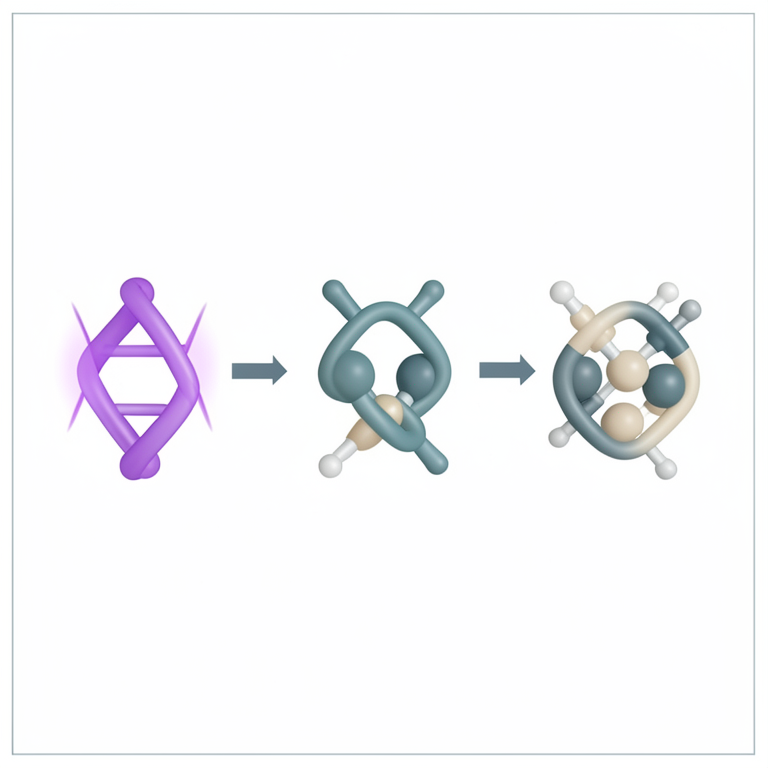
Mechanism of UV-C Germicidal Action
AI-generated conceptual illustration (bacterial DNA strand). It explains the idea and does not show study data.
View source evidence ↗Introduction
The postharvest period is a critical phase in the supply chain of fresh produce, determining its shelf life, quality, and marketability. Traditional methods to prolong the freshness of fruits and vegetables, such as refrigeration and chemical treatments, have limitations and can pose health and environmental risks. As consumer demand for safer, chemical-free, and minimally processed foods increases, alternative methods are being explored. Among these, ultraviolet-C (UV-C) radiation has gained significant attention due to its non-chemical nature and effectiveness in extending the shelf life of fresh produce. UV-C radiation, with wavelengths between 200 and 280 nm, is known for its potent germicidal properties. It inactivates microorganisms by causing DNA damage, specifically forming thymine dimers that prevent replication and lead to cell death. This makes UV-C an attractive option for reducing microbial load on the surfaces of fruits and vegetables. Moreover, UV-C radiation can induce physiological responses in plant tissues, enhancing their natural defence mechanisms and delaying senescence. Research into the application of UV-C radiation for postharvest treatment has shown promising results across various types of produce. Studies have demonstrated its ability to reduce microbial contamination, delay ripening, and maintain quality attributes such as color, texture, and nutritional value. For instance, UV-C treatment has been effective in reducing decay and preserving the quality of strawberries, tomatoes, apples, lettuce, carrots, and broccoli, among others. Despite its potential, the practical implementation of UV-C technology in commercial storage facilities faces several challenges. These include determining the optimal dosage and exposure duration to maximize effectiveness without causing damage to the produce, ensuring uniform exposure across all surfaces, and addressing the costs associated with UV-C equipment and maintenance. Additionally, the variability in responses among different types of produce necessitates tailored approaches for each specific application.
Objective of the paper
To evaluate the effectiveness of UV-C radiation in extending the shelf life and maintaining the quality of fresh produce during postharvest storage.
UV-C radiation
Ultraviolet-C (UV-C) radiation has garnered significant attention in the field of postharvest technology due to its potent germicidal properties and its ability to extend the shelf life of fresh produce. UV-C radiation, with wavelengths ranging from 200 to 280 nm, is particularly effective at inactivating a wide array of microorganisms, including bacteria, fungi, and viruses, by causing DNA damage that inhibits replication and leads to cell death. This capability is especially valuable for fresh produce, which is susceptible to microbial contamination that can lead to spoilage and reduced shelf life. Research into the application of UV-C radiation for postharvest storage has demonstrated varied results depending on the type of produce and the specific conditions of treatment. For instance, Allende et al. (2006) [1] studied the impact of UV-C radiation on minimally processed spinach leaves and found that UV-C treatment effectively reduced microbial load and helped maintain quality. This study highlighted the potential of UV-C to serve as a non-chemical alternative to traditional sanitization methods, aligning with consumer preferences for fewer chemical residues on fresh produce. In a similar vein, Vicente et al. (2005) [4] explored the effects of UV-C treatments on peppers and reported that UV-C not only reduced decay but also retained quality attributes such as color and texture, and alleviated chilling injury. The dual benefit of microbial reduction and quality maintenance positions UV-C as a valuable tool in the postharvest treatment arsenal. These findings are corroborated by Stevens et al. (1998) [3] , who observed that UV-C light had both germicidal and hormetic effects, suggesting that low doses of UV-C might stimulate defence mechanisms in plants, further enhancing their resistance to pathogens. Comparative studies have shown that the effectiveness of UV-C treatments can vary significantly. Charles et al. (2009) [2] investigated UV-C induced resistance to Botrytis cinerea in tomatoes and noted that pre-and post-challenge accumulation of phytoalexins, which are antimicrobial substances produced by plants, played a crucial role in the observed resistance. This study underscores the importance of understanding the physiological responses of different types of produce to UV-C radiation. Despite these promising results, there are challenges associated with the application of UV-C radiation. Ensuring uniform exposure across all surfaces of irregularly shaped produce can be difficult, and there is a fine line between effective doses and doses that may cause damage to the plant tissues. The variability in optimal UV-C doses for different types of produce necessitates careful calibration and testing. Furthermore, the initial cost of UV-C equipment and the need for ongoing maintenance represent significant barriers to widespread adoption, particularly for small-scale producers. The potential for UV-C radiation to reduce reliance on chemical treatments is particularly compelling in the context of increasing consumer demand for organic and minimally processed foods. Studies have consistently shown that UV-C treatment can achieve significant reductions in microbial load without leaving chemical residues, thereby enhancing food safety and quality. However, further research is needed to refine UV-C application techniques, understand the underlying mechanisms of plant responses, and develop cost-effective solutions for commercial implementation. In conclusion, UV-C radiation represents a promising, non-chemical approach to extending the shelf life and maintaining the quality of fresh produce during postharvest storage. While studies have demonstrated its effectiveness across various types of produce, challenges related to dosage optimization, uniform exposure, and cost must be addressed to fully realize its potential in commercial settings. The integration of UV-C technology with other preservation methods could offer a holistic approach to postharvest management, contributing to the sustainability and efficiency of food supply chains.
Effectiveness of UV-C treatments
The effectiveness of UV-C treatments in extending the shelf life and maintaining the quality of fresh produce has been extensively studied, with varying results depending on the type of produce, dosage, and duration of exposure. These factors collectively influence the microbial load reduction, delay in ripening, and maintenance of quality attributes such as color, texture, and nutritional value. Several studies have demonstrated the potential of UV-C radiation to effectively reduce microbial contamination on the surfaces of fruits and vegetables. Allende et al. (2006) [5] found that UV-C treatment significantly decreased the microbial load on minimally processed spinach leaves, thereby enhancing their shelf life and maintaining quality. Similarly, Vicente et al. (2005) [4] reported that UV-C radiation reduced decay and preserved the quality of peppers, suggesting that UV-C treatments can be an effective non-chemical alternative for postharvest management. Fruits like strawberries, tomatoes, and apples have shown promising results when treated with UV-C radiation. For instance, studies on strawberries have indicated that UV-C exposure reduces fungal growth, thereby extending their shelf life while maintaining firmness and color. Tomatoes treated with UV-C radiation exhibited delayed ripening and reduced decay, helping to preserve their nutritional quality and marketability. Apples also benefited from UV-C treatment, which reduced surface microbial contamination and delayed browning and softening. The effectiveness of UV-C treatments in vegetables has been equally notable. UV-C radiation has been shown to significantly reduce spoilage microorganisms on lettuce leaves, thereby extending their shelf life and maintaining sensory qualities. Carrots exposed to UV-C radiation retained their color and firmness during storage, experiencing reduced microbial spoilage. In the case of broccoli, UV-C treatment delayed yellowing and maintained antioxidant properties, thus extending its shelf life. Comparative studies highlight the variability in the effectiveness of UV-C treatments across different produce types. For example, Charles et al. (2009) [2] investigated the impact of UV-C on tomatoes and found that UV-C radiation induced resistance to Botrytis cinerea by triggering the accumulation of phytoalexins. This study illustrated that the physiological responses of different types of produce to UV-C radiation are critical in determining the effectiveness of the treatment. While the benefits of UV-C treatments are clear, challenges remain in optimizing the dosage and exposure duration to maximize effectiveness without causing damage to the produce. Overexposure to UV-C radiation can lead to tissue damage, while underexposure may not achieve the desired microbial reduction. Ensuring uniform exposure across all surfaces of the produce, particularly those with irregular shapes, is another challenge that must be addressed to fully realize the benefits of UV-C treatments. Moreover, practical considerations such as the initial cost of UV-C equipment and ongoing maintenance present barriers to widespread adoption, especially for small-scale producers. Despite these challenges, the nonchemical nature of UV-C treatments and their effectiveness in enhancing food safety and quality make them a compelling option for postharvest management. In conclusion, UV-C treatments have shown significant potential in reducing microbial load and extending the shelf life of a variety of fruits and vegetables. While the effectiveness of these treatments varies depending on the type of produce, careful optimization of dosage and exposure duration can maximize benefits. Addressing practical challenges related to uniform exposure and equipment costs will be essential for broader adoption of UV-C technology in commercial postharvest storage facilities.
Conclusion
In conclusion, UV-C radiation presents a promising nonchemical method for extending the shelf life and maintaining the quality of fresh produce during postharvest storage. Its ability to effectively reduce microbial load and delay senescence offers significant advantages over traditional preservation methods. The reviewed studies consistently demonstrate UV-C's potential across various types of fruits and vegetables, highlighting its benefits in enhancing food safety and quality. However, challenges such as optimizing dosage, ensuring uniform exposure, and addressing equipment costs need to be overcome for broader commercial adoption. Future research and technological advancements are essential to refine UV-C application techniques, ensuring that this innovative approach can be widely implemented to meet consumer demands for safer and higher-quality produce.
References
15 in the original paper- Allende A, McEvoy JL, Tao Y, Luo Y. Impact of UV-C radiation on the quality and microbial load of minimally processed spinach leaves. J Food Sci. 2006;71(1).
- Charles MT, Tano K, Asselin A, Arul J. Physiological basis of UV-C-induced resistance to Botrytis cinerea in tomato fruit I. Role of pre-and post-challenge accumulation of the phytoalexin-rishitin. Postharvest Biol Technol. 2009;54(1):10-6.
- Stevens C, Khan VA, Lu JY, Wilson CL, Chalutz E, Droby S, et al. The germicidal and hormetic effects of UV-C light on reducing decay of harvested fruits and vegetables. Crop Prot. 1998;17(7):461-4.
- Vicente AR, Pineda C, Lemoine L, Civello PM, Martínez GA. UV-C treatments reduce decay, retain quality and alleviate chilling injury in pepper. Postharvest Biol Technol. 2005;35(1):69-78.
- Martínez-Sánchez A, Allende A, Bennett RN, Ferreres F, Gil MI. Microbial, nutritional and sensory quality of rocket leaves as affected by different sanitizers. Postharvest Biol Technol. 2006;42(1):86-97.
- Cia P, Pascholati SF, Benato EA, Camili EC, Santos CA. Effects of UV-C light on postharvest control of papaya anthracnose and physiology. Postharvest Biol. Technol. 2010;57(1):72-7.
- Erkan M, Wang SY, Wang CY. Effect of UV treatment on antioxidant capacity, antioxidant enzyme activity and decay in strawberry fruit. Postharvest Biol. Technol. 2001;18(3):213-21.
- Gomes MH, Vieira MC, Silva CL. Effect of UV-C light on vegetable matrices. Innov. Food. Sci. Emerg. Technol. 2009;10(4):545-50.
- Hernández-Muñoz P, Almenar E, Del Valle V, Velez D, Gavara R. Effect of chitosan coating combined with postharvest calcium treatment on strawberry (Fragaria x ananassa) quality during refrigerated storage. Food Chem. 2006;96(4):795-802.
- Ignat A, Manzocco L, Maifreni M, Bartolomeoli I, Nicoli MC. Effects of UV-C light on safety and quality of fresh-cut melon. Innov. Food Sci. Emerg. Technol. 2014;22:197-202.
- Kim Y, Hwang E, Lee J. Effects of combined treatment with UV-C and chlorine dioxide gas on microbial and sensory quality of fresh-cut onions. LWT-Food Sci. Technol. 2017;75:390-6.
- Lu C, Charles MT. The impact of UV-C irradiation on human pathogens and quality of fresh fruits and vegetables. J Food Prot. 2007;70(5):1222-9.
- Masamba KG, Nguyen M. Effect of UV-C irradiation on shelf life and nutritional quality of tomatoes. J Food Sci Technol. 2008;45(4):115-20.
- Nigro F, Ippolito A, Lattanzio VMT. Effect of UV-C light on postharvest decay of strawberry fruit and the possible mechanisms involved. Postharvest Biol. Technol. 2000;18(2):127-34.
- Rodov V, Ben-Yehoshua S, Fang DQ. UV-C treatment of citrus fruits to delay mold development. Postharvest Biol Technol. 1992;1(1):209-15.