
Research article · 2023 · Full text
International Journal of Agriculture and NutritionCharacterization of physico-chemical properties in Indian aromatic rice (Oryza sativa) germplasm
Volume 5(2) · Pages 110–113 · DOI: 10.33545/26646064.2023.v5.i2b.167 ↗
Research areasGABA and Rice ResearchRice Cultivation and Yield ImprovementFood composition and properties
Abstract
Author-writtenIndian aromatic rice (Oryza sativa) is esteemed worldwide for its unique flavor, aroma, and superior grain quality. This review article comprehensively examines the physico-chemical properties of various Indian aromatic rice germplasm. Key properties such as grain size, shape, texture, amylose content, gelatinization temperature, and aromatic compounds are analyzed to understand their contribution to the distinct quality traits of these rice varieties. The insights gained from this review are crucial for breeding programs, quality improvement, and catering to consumer preferences.
Summary
Source-checkedPlain-language reading of the full paper, prepared with AI and checked against the text. Each point links to the authors' own words.
Why it matters
- Rice is a critical global cereal crop, serving as a primary food source for over half of the world's population. View evidence ↗
- Indian aromatic rice varieties, including Jasmine and Basmati, are highly valued for their superior grain quality, aroma, and flavor. View evidence ↗
- The high market demand for Basmati rice is evidenced by its global market value, which exceeded USD 10 billion in 2020. View evidence ↗
The question
- The objective of this review is to characterize the physico-chemical properties of Indian aromatic rice germplasm to provide data for quality improvement and breeding programs. View evidence ↗
What they did
- The study is a comprehensive review article that examines the physico-chemical properties of various Indian aromatic rice germplasm. View evidence ↗
- The analysis focuses on key properties including aromatic compounds, gelatinization temperature, amylose content, texture, shape, and grain size. View evidence ↗
What they found
- Basmati rice is characterized by long, narrow grains with an average length of 6.61 to 7.5 mm and a length-to-width ratio of 3.0 to 3.5. View evidence ↗
- Basmati rice typically contains 20-25% amylose, which results in a firmer texture after cooking. View evidence ↗
- Jasmine rice has a lower amylose content of approximately 16-18%, making it softer and stickier than Basmati. View evidence ↗
- The gelatinization temperature of Basmati rice ranges from 70°C to 74°C, contributing to its slower cooking time and firm texture. View evidence ↗
- The compound 2-acetyl-1-pyrroline (2-AP) is the primary volatile compound responsible for the characteristic aroma of Basmati rice. View evidence ↗
- Grain size and shape are significantly influenced by environmental factors, including water availability and soil type. View evidence ↗
What it means
- The authors conclude that using knowledge of physico-chemical properties allows breeders to develop superior rice varieties that meet consumer preferences and increase global competitiveness. View evidence ↗
- The authors state that there is still a need for more systematic and detailed characterization of the physico-chemical properties of Indian aromatic rice germplasm. View evidence ↗
Visual summary
1 visualsIllustrations explain the paper; they do not show study data.
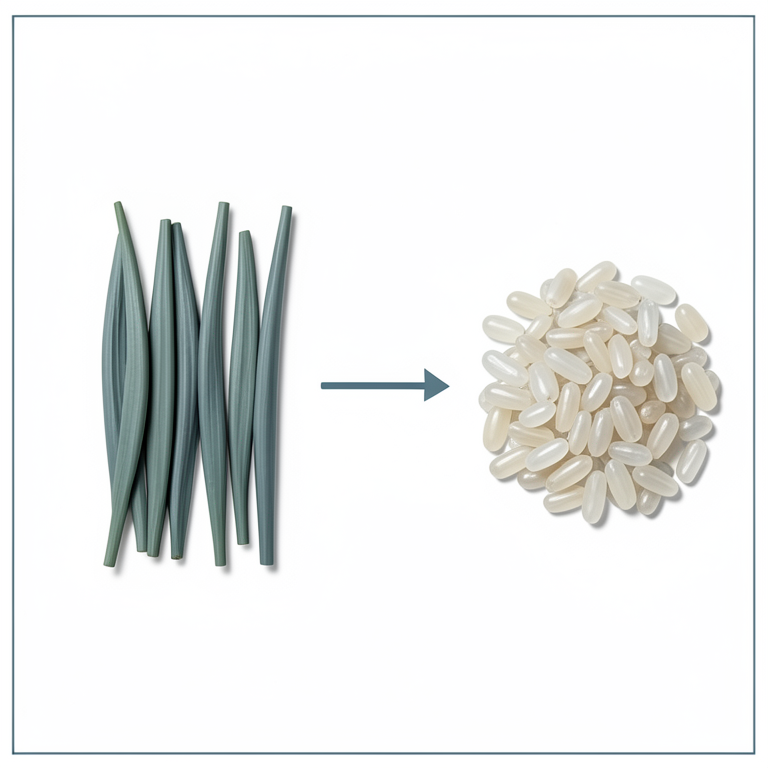
Amylose Content vs. Texture
AI-generated conceptual illustration (Indian aromatic rice (Oryza sativa) grains). It explains the idea and does not show study data.
View source evidence ↗Introduction
Rice (Oryza sativa L.) is a staple food for more than half of the global population, making it one of the most important cereal crops worldwide. According to the Food and Agriculture Organization (FAO), global rice production was estimated at 500 million tons of milled rice in 2020, with Asia accounting for approximately 90% of this output. India is one of the largest producers and exporters of rice, contributing significantly to both global rice production and trade. Within India, aromatic rice varieties, such as Basmati and Jasmine, hold a special place due to their unique flavor, aroma, and superior grain quality. Aromatic rice varieties are distinguished from other types of rice by their distinctive fragrance, which is primarily due to the presence of specific volatile compounds. Among these, 2-acetyl-1pyrroline (2-AP) is the most notable, contributing significantly to the characteristic aroma of Basmati rice. The aroma, along with other quality traits such as grain size, shape, and texture, greatly influences consumer preference and market value. The global market for Basmati rice alone was valued at over USD 10 billion in 2020, reflecting its high demand. Understanding the physico-chemical properties of aromatic rice is crucial for several reasons. Firstly, these properties determine the overall quality of the rice, influencing factors such as cooking behavior, texture, and taste. Secondly, knowledge of these properties aids in the development of improved rice varieties through breeding programs. Thirdly, detailed characterization helps in standardizing quality parameters, which is essential for maintaining market competitiveness. Physico-chemical properties encompass a range of attributes including grain size, shape, texture, amylose content, gelatinization temperature, and aromatic compounds. Grain size and shape are critical for classification and consumer preference, with long and slender grains being particularly prized in varieties like Basmati. Texture, which includes parameters such as hardness, stickiness, and chewiness, affects the culinary quality of the rice. Amylose content plays a significant role in determining the texture and cooking quality, with high amylose content resulting in firmer and less sticky rice. Gelatinization temperature impacts the cooking time and texture, influencing consumer acceptance. Previous studies have extensively explored these properties in aromatic rice varieties. For instance, Bhattacharjee et al. (2002) [1] provided a comprehensive review of Basmati rice, highlighting its unique physico-chemical characteristics and the factors contributing to its superior quality. Champagne (2008) [2] reviewed the aroma and flavor profiles of rice, emphasizing the importance of volatile compounds such as 2-AP in determining the distinct aroma of aromatic rice.
Juliano (1985) [3] discussed the role of amylose content and gelatinization temperature in rice quality, providing a foundation for understanding the impact of these properties on cooking behavior and consumer preference. Despite the significant body of research, there remains a need for a more detailed and systematic characterization of the physicochemical properties of Indian aromatic rice germplasm. This is particularly important given the genetic diversity and varying environmental conditions under which these varieties are grown. By systematically analyzing these properties, we can gain deeper insights into the factors that contribute to the unique quality traits of aromatic rice and identify opportunities for breeding and quality improvement.
Main Objective
To comprehensively characterize the physico-chemical properties of Indian aromatic rice (Oryza sativa) germplasm, including grain size, shape, texture, amylose content, gelatinization temperature, and aromatic compounds, to inform breeding programs and improve rice quality.
Literature Review
The physico-chemical properties of Indian aromatic rice (Oryza sativa) have been extensively studied to understand their impact on rice quality, consumer preference, and market value. Several Indian researchers have contributed significantly to this field, focusing on key parameters such as grain size and shape, texture, amylose content, gelatinization temperature, and aromatic compounds. Singh et al. (2000) [10] conducted a detailed study on the grain size and shape of various Indian Basmati rice varieties. They found that these varieties typically exhibit long and slender grains with an average length ranging from 6.61 to 7.5 mm and a length-to-width ratio between 3.0 and 3.5. These dimensions are considered critical indicators of high-quality rice, and their findings underscore the importance of these physical attributes in consumer preference and market classification. Yadav et al. (2007) [13] explored the influence of genetic and environmental factors on the grain morphology of aromatic rice. Their study highlighted that environmental conditions, such as soil type and water availability, significantly affect grain size and shape. They emphasized the need for breeding programs to select appropriate genetic materials to achieve desired grain dimensions, which are crucial for both market acceptance and consumer preference. The texture of cooked rice is another vital quality attribute that affects consumer acceptance. Juliano and Villareal (1993) [8] discussed the relationship between amylose content and rice texture, noting that Basmati rice's high amylose content contributes to its firm and non-sticky texture. Indian studies by Verma et al. (2000) [12] confirmed these findings, showing that Basmati rice typically has an amylose content of 20-25%, which results in a firmer texture upon cooking. Their research also pointed out that texture analysis using instruments like texture analyzers helps quantify these properties and understand the factors influencing them. Amylose content plays a significant role in determining the cooking quality of rice. Bhattacharya et al. (1982) [6] conducted comprehensive studies on the amylose content of various Indian aromatic rice varieties. They found significant variation in amylose content, which affects the texture and cooking behavior of rice. Higher amylose content in Basmati rice leads to firmer, less sticky grains, whereas lower amylose content in other aromatic varieties results in softer, stickier textures. These findings are crucial for breeding programs aimed at developing rice varieties with specific textural qualities. The gelatinization temperature of rice starch is another important property influencing cooking characteristics. Laha et al. (2000) [9] studied the gelatinization temperature of different Indian aromatic rice varieties using differential scanning calorimetry (DSC). They found that Basmati rice typically has a higher gelatinization temperature, ranging from 70°C to 74°C, which contributes to its firm texture and slower cooking time. Understanding these properties is essential for optimizing cooking processes and maintaining grain quality. Aromatic compounds are perhaps the most distinguishing feature of aromatic rice. Research by Singh et al. (1983) [14] identified 2-acetyl-1-pyrroline (2-AP) as the primary compound responsible for the characteristic aroma of Basmati rice. Subsequent studies by Ghosh et al. (2007) [7] using gas chromatography-mass spectrometry (GC-MS) confirmed these findings and identified additional volatile compounds such as hexanal, nonanal, and linalool that contribute to the overall aroma profile. These studies emphasized the importance of both genetic selection and environmental management in producing high-quality aromatic rice. The comprehensive research conducted by Indian scientists provides valuable insights into the physicochemical properties of aromatic rice. These studies highlight the significant variation in these properties among different germplasm and underscore the importance of breeding and quality improvement programs. By leveraging this knowledge, researchers and breeders can develop superior rice varieties that cater to diverse consumer preferences and enhance the competitiveness of Indian aromatic rice in global markets.
Physico-Chemical Properties of Aromatic Rice
The physico-chemical properties of aromatic rice (Oryza sativa) are crucial determinants of its quality, influencing its market value and consumer preference. These properties include grain size and shape, texture, amylose content, gelatinization temperature, and aromatic compounds. Each of these attributes plays a significant role in defining the unique characteristics of aromatic rice varieties such as Basmati and Jasmine. This section discusses these properties in detail, drawing on findings from previous studies.
Grain Size and Shape
Grain size and shape are fundamental quality parameters that influence the classification and consumer acceptance of rice. Aromatic rice varieties, particularly Basmati, are known for their long and slender grains. The length-to-width ratio is a key indicator, with Basmati rice typically exhibiting a high ratio, indicating long and narrow grains. According to Bhattacharjee et al. (2002) [1] , the average grain length of Basmati rice ranges from 6.61 to 7.5 mm, with a length-to-width ratio between 3.0 and 3.5. These dimensions are critical for market classification and consumer preference, as long, slender grains are often associated with premium quality. Other aromatic rice varieties, such as Jasmine rice, also have distinct grain shapes but may differ in their length-to-width ratios and overall dimensions. The variation in grain size and shape among different aromatic rice germplasm can be attributed to genetic factors and environmental conditions during cultivation. Studies have shown that environmental factors such as soil type, water availability, and temperature can significantly affect grain morphology (Khush & Virk, 2000) [5] .
Grain Texture
The texture of cooked rice is a vital quality attribute that affects consumer acceptance. It includes parameters such as hardness, stickiness, and chewiness. Texture is largely influenced by the amylose content and gelatinization temperature of the rice. Basmati rice is characterized by its firm and non-sticky texture when cooked, which is preferred in many culinary traditions. This firm texture is associated with its high amylose content and specific gelatinization properties. Texture analysis using instruments such as texture analyzers helps quantify these properties. Research by Juliano (1985) [3] indicated that Basmati rice, with its higher amylose content, tends to have a firmer and less sticky texture compared to other aromatic varieties. In contrast, Jasmine rice, which has lower amylose content, is softer and stickier when cooked. These textural differences are crucial for different culinary applications and consumer preferences.
Amylose Content
Amylose content is a significant determinant of rice texture and cooking High amylose content (20-25%) in rice leads to firm, dry, and non-sticky grains upon cooking, which is typical of Basmati rice. Conversely, rice with low amylose content tends to be softer and stickier. The amylose content of rice can vary significantly among different aromatic varieties, influencing their cooking and eating qualities. Bhattacharjee et al. (2002) [1] reported that the amylose content in Basmati rice ranges from 20% to 25%, contributing to its distinctive firm texture. In contrast, Jasmine rice, with its lower amylose content (around 16-18%), is preferred in culinary traditions that favor softer and stickier rice. These variations in amylose content are not only genetically determined but can also be influenced by environmental factors during rice cultivation.
Gelatinization Temperature
Gelatinization temperature is the temperature at which starch granules in rice absorb water and swell during cooking. This property affects the cooking time and texture of the rice. Basmati rice typically has a higher gelatinization temperature, which contributes to its firm texture and longer cooking time. The gelatinization temperature is an important factor in determining the suitability of rice for various cooking methods and dishes. Studies using differential scanning calorimetry (DSC) have shown that the gelatinization temperature of Basmati rice ranges from 70 °C to 74 °C (Juliano, 1985) [3] . This higher gelatinization temperature ensures that Basmati rice maintains its firm texture during cooking. Other aromatic varieties may have different gelatinization temperatures, affecting their cooking characteristics and texture. Understanding the gelatinization properties of rice is essential for optimizing cooking processes and maintaining grain quality.
Aromatic Compounds
The unique aroma of aromatic rice varieties is one of their most distinguishing features, primarily attributed to the presence of volatile aromatic compounds. 2-acetyl-1pyrroline (2-AP) is the key compound responsible for the characteristic aroma of Basmati rice. This compound, along with others such as hexanal, nonanal, and linalool, contributes to the overall aroma profile of aromatic rice. Gas chromatography-mass spectrometry (GC-MS) is commonly used to identify and quantify these volatile compounds. Champagne (2008) [2] highlighted the importance of 2-AP in Basmati rice, noting that its concentration can significantly influence the aroma intensity and quality. The levels of 2-AP and other aromatic compounds can vary among different aromatic rice germplasm, affecting their sensory properties and consumer preference.
Research by Pérez et al. (1979) [15] indicated that environmental factors, such as soil composition and climatic conditions, can also impact the concentration of aromatic compounds in rice. This variability underscores the importance of both genetic selection and environmental management in producing high-quality aromatic rice.
Implications for Breeding and Quality Improvement
Understanding the physico-chemical properties of aromatic rice is crucial for breeding programs aimed at improving rice quality. By identifying the genetic basis of desirable traits such as grain size, shape, texture, amylose content, gelatinization temperature, and aromatic compounds, breeders can develop new varieties that meet consumer preferences and market demands. Additionally, detailed knowledge of these properties can guide quality improvement efforts to enhance the culinary and nutritional attributes of aromatic rice.
Conclusion
The physico-chemical properties of aromatic rice, including grain size, shape, texture, amylose content, gelatinization temperature, and aromatic compounds, are critical determinants of its quality and market value. This review highlights the significant variation in these properties among different aromatic rice germplasm, providing valuable insights for breeding programs and quality improvement initiatives. By leveraging this knowledge, researchers and breeders can develop superior rice varieties that cater to diverse consumer preferences and enhance the competitiveness of aromatic rice in global markets.
References
11 in the original paper- Bhattacharjee P, Singhal RS, Kulkarni PR. Basmati rice: a review. Int J Food Sci Technol. 2002;37(1):1-12.
- Champagne ET. Rice aroma and flavor: a literature review. Cereal Chem. 2008;85(4):445-454.
- Food and Agriculture Organization (FAO). FAO Rice Market Monitor. http://www.fao.org. Published 2020. Accessed June 28, 2024.
- Khush GS, Virk PS. Rice breeding: Achievements and future strategies. Crop Improv. 2000;27(2):115-144. International Journal of Agriculture and Nutrition https://www.agriculturejournal.net
- Bhattacharya KR, Sowbhagya CM, Swamy YMI. Quality profiles of rice: A review. J Food Sci Technol. 1982;19:37-45.
- Ghosh M, Ghose A, Chopra R. Volatile compounds of Basmati rice. J Sci Food Agric. 2007;87(2):218-227.
- Laha GS, Maiti D, Das K. Variation in starch properties of aromatic and non-aromatic rice. J Food Sci Technol. 2000;37:366-369.
- Singh S, Rani NS, Siddiq EA. Grain quality characteristics of some Indian aromatic rice (Oryza sativa L.). J Agric Food Chem. 2000;48(2):463-466.
- Verma DK, Srivastav PP. Cooking and eating characteristics of Basmati rice. J Food Sci. Technol. 2000;37:453-458.
- Yadav R, Courtois B, Huang N, McLaren G. Mapping genes controlling root morphology and root distribution in a doubled-haploid population of rice. Theor Appl Genet. 2007;94:619-632.
- Singh HB, Salas LJ, Stiles RE. Methyl halides in and over the eastern Pacific (40 N-32 S). Journal of Geophysical Research: Oceans. 1983 Apr 20;88(C6):3684-90.