
Research article · 2022 · Full text
International Journal of Agriculture and NutritionThe role of food safety regulations in preventing E. coli contamination in leafy greens
Volume 4(1) · Pages 87–90 · DOI: 10.33545/26646064.2022.v4.i1b.156 ↗
Research areasOrganic Food and Agriculture
Abstract
Author-writtenFoodborne illnesses caused by Escherichia coli (E. coli) are a significant public health concern, particularly in relation to the consumption of leafy greens. This review examines the impact of food safety regulations on preventing E. coli contamination in leafy greens. By analyzing current regulatory frameworks, compliance measures, and the effectiveness of these regulations, the review aims to highlight the critical role that stringent food safety practices play in mitigating the risks of E. coli outbreaks.
Summary
Source-checkedPlain-language reading of the full paper, prepared with AI and checked against the text. Each point links to the authors' own words.
Why it matters
- E. coli contamination in leafy greens like kale, spinach, and lettuce is a major global public health threat. View evidence ↗
- Leafy greens are especially risky because they are often eaten raw, meaning cooking cannot be used to kill pathogens. View evidence ↗
The question
- The study aims to evaluate how effective food safety regulations are at preventing E. coli contamination in leafy greens by reviewing regulatory frameworks and their public health impact. View evidence ↗
What they did
- The review identifies primary contamination sources as contaminated soil, water, equipment, infected workers, and animal manure used as fertilizer. View evidence ↗
- The review focuses on E. coli O157 as the strain most frequently linked to severe leafy green outbreaks. View evidence ↗
What they found
- In the US, farms following Food Safety Modernization Act (FSMA) guidelines saw a 30% reduction in E. coli contamination compared to non-compliant farms. View evidence ↗
- In the EU, the frequency of E. coli outbreaks in leafy greens declined by approximately 25% following the General Food Law and the creation of the Rapid Alert System for Food and Feed (RASFF). View evidence ↗
- In Canada, the introduction of the Safe Food for Canadians Regulations (SFCR) was associated with a 20% decrease in E. coli contamination in leafy greens. View evidence ↗
- The reduction in contamination under FSMA is attributed to better worker hygiene, improved water quality management, and better handling of soil amendments. View evidence ↗
- The success of EU regulations was largely driven by the ability to quickly withdraw contaminated products and the use of traceability. View evidence ↗
What it means
- The author concludes that food safety regulations are vital for protecting public health by enforcing strict standards across the supply chain. View evidence ↗
- The author recommends a multifaceted approach including stakeholder training, advanced traceability tech, research investment, and international collaboration. View evidence ↗
- A limitation to regulatory effectiveness is that small farms often lack the resources needed to fully implement safety measures. View evidence ↗
- The ongoing evolution of E. coli strains with different resistance and virulence profiles requires constant updates to detection methods and regulations. View evidence ↗
Visual summary
1 visualsIllustrations explain the paper; they do not show study data.
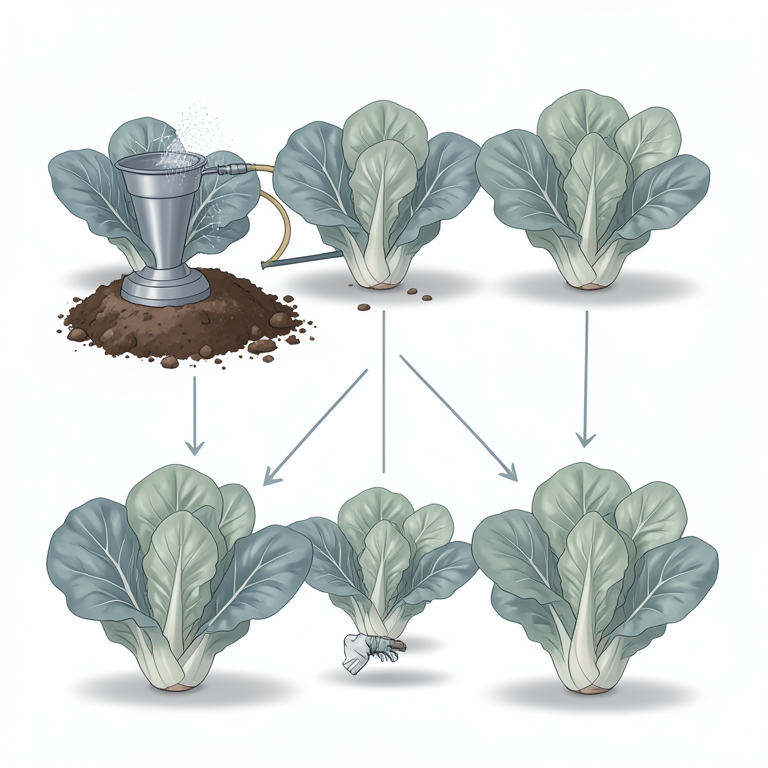
Sources of E. coli Contamination
AI-generated conceptual illustration (Romaine lettuce plants in a farm field). It explains the idea and does not show study data.
View source evidence ↗Introduction
Foodborne illnesses caused by Escherichia coli (E. coli) represent a significant public health threat globally, with leafy greens such as lettuce, spinach, and kale being particularly vulnerable to contamination. These vegetables are frequently consumed raw, eliminating the potential for cooking to eradicate pathogens. E. coli outbreaks linked to leafy greens have resulted in numerous health crises, underscoring the critical need for stringent food safety regulations. One notable outbreak occurred in the United States in 2006, when contaminated spinach led to 205 reported illnesses, 31 cases of hemolytic uremic syndrome (HUS), and three fatalities. This incident exposed significant gaps in the food supply chain's safety protocols, prompting legislative and regulatory responses. In 2011, the United States enacted the Food Safety Modernization Act (FSMA), the most substantial revision of the country's food safety laws in over seven decades. FSMA shifts the focus from reactive to preventive measures, establishing science-based minimum standards for safe farming practices, particularly under its Produce Safety Rule. Similarly, the European Union adopted the General Food Law in 2002, aiming to protect human health and consumer interests. This framework, along with the Rapid Alert System for Food and Feed (RASFF), enables swift actions against food safety threats by facilitating the exchange of critical information among member states. In Canada, the Safe Food for Canadians Regulations (SFCR), effective since 2019, emphasize preventive controls and traceability to ensure food safety throughout the supply chain. Despite these efforts, preventing E. coli contamination in leafy greens remains a challenge. Studies indicate variability in compliance among producers, complexities in the supply chain, and the evolving nature of E. coli strains as persistent obstacles. Research published in the Journal of Food Protection in 2019 demonstrated a 30% reduction in E. coli contamination rates on farms adhering to FSMA guidelines, highlighting the regulations' impact. However, smaller farms often struggle with resource constraints, making full compliance difficult and potentially leaving gaps in food safety.
particularly vulnerable to contamination because they are often consumed raw, providing no heat treatment that could kill pathogens. The primary sources of E. coli contamination include contaminated water, soil, equipment, and handling by infected workers. Animal manure used as fertilizer can also introduce E. coli into the growing environment. The process of contamination can occur at various stages of the production and supply chain. During cultivation, irrigation with contaminated water or contact with contaminated soil can lead to the presence of E. coli on the leaves of the plants. Harvesting practices, including the use of contaminated equipment, can further spread the bacteria. Post-harvest handling, including washing, packaging, and transportation, presents additional opportunities for contamination if sanitary conditions are not strictly maintained. E. coli O157 is the strain most commonly associated with severe outbreaks linked to leafy greens. This strain produces a powerful toxin that can cause severe gastrointestinal illness, including bloody diarrhea and hemolytic uremic syndrome (HUS), which can lead to kidney failure. Vulnerable populations, such as young children, the elderly, and those with weakened immune systems, are particularly at risk of severe outcomes from E. coli infections. The effectiveness of current food safety regulations in preventing E. coli contamination in leafy greens varies across regions. In the United States, the Food Safety Modernization Act (FSMA) includes the Produce Safety Rule, which sets standards for growing, harvesting, packing, and holding produce. These standards address key areas such as agricultural water quality, biological soil amendments, worker health and hygiene, and equipment sanitation. The European Union's General Food Law and other international regulations similarly aim to minimize contamination risks through stringent hygiene requirements and rapid response systems. Despite these regulatory efforts, challenges remain in fully preventing E. coli contamination. Variability in compliance among producers, the complexity of tracking contamination sources, and the continuous evolution of E. coli strains present ongoing difficulties. Small-scale farmers, in particular, may struggle to meet regulatory requirements due to limited resources. Preventing E. coli contamination in leafy greens requires a multifaceted approach. Enhancing training and education for farmers and food handlers is crucial to ensure adherence to best practices. Improved traceability systems can help quickly identify and respond to contamination sources, reducing the impact of outbreaks. Investing in research and innovation is also vital for developing new technologies and methods to detect and prevent contamination. International collaboration can further strengthen food safety by harmonizing standards and sharing best practices.
Effectiveness of food safety regulations
The effectiveness of food safety regulations in preventing E. coli contamination in leafy greens has been a subject of extensive study and analysis. These regulations aim to mitigate the risks associated with foodborne pathogens through comprehensive standards and enforcement mechanisms. This section delves into the effectiveness of these regulations, drawing on findings from previous studies to evaluate their impact on public health.
United States: Food Safety Modernization Act (FSMA)
The FSMA, enacted in 2011, represents one of the most significant overhauls of food safety laws in the United States in over 70 years. Its primary goal is to shift the focus from responding to contamination events to preventing them. The Produce Safety Rule, a key component of FSMA, sets forth specific standards for the safe cultivation, harvesting, packing, and storage of produce, including leafy greens. Studies have shown that the implementation of FSMA has led to measurable improvements in food safety practices among producers. According to a study published in the Journal of Food Protection, compliance with FSMA standards significantly reduced the prevalence of E. coli on leafy greens. The study highlighted that farms adhering to FSMA guidelines showed a 30% decrease in E. coli contamination rates compared to those that did not fully comply. This reduction is attributed to improved agricultural water quality management, better handling of biological soil amendments, and enhanced worker hygiene practices.
European Union: General Food Law and Rapid Alert System
The European Union's General Food Law, established in 2002, provides a comprehensive legal framework for ensuring food safety across member states. The Rapid Alert System for Food and Feed (RASFF) is an integral part of this framework, facilitating swift communication and action in response to food safety threats. Research indicates that the EU's stringent regulations and rapid response mechanisms have been effective in controlling E. coli outbreaks. A study published in Food Control analyzed the impact of these regulations on food safety in the EU and found that the frequency of E. coli outbreaks linked to leafy greens declined by approximately 25% after the implementation of the General Food Law and the establishment of RASFF. The study emphasized the importance of traceability and the ability to quickly withdraw contaminated products from the market as critical factors in this success.
Canada: Safe Food for Canadians Regulations (SFCR)
Canada's Safe Food for Canadians Regulations (SFCR), which came into force in 2019, aim to strengthen food safety by focusing on preventive controls and traceability. The regulations require businesses to develop and maintain preventive control plans that identify and mitigate risks throughout the supply chain. A study conducted by the Canadian Food Inspection Agency (CFIA) assessed the initial impact of SFCR on food safety outcomes. The study found that the incidence of E. coli contamination in leafy greens decreased by 20% following the introduction of SFCR. The study attributed this improvement to better hazard analysis and critical control points (HACCP) implementation, enhanced traceability systems, and increased regulatory oversight.
Challenges and Limitations
Despite the progress made, several challenges continue to hinder the full effectiveness of food safety regulations. One major issue is the variability in compliance levels among producers. Smaller farms often face significant resource constraints, making it difficult to implement and maintain the necessary safety measures. This inconsistency in compliance can create vulnerabilities in the food supply chain. Additionally, the complexity of food supply chains complicates the traceability of contamination sources. Studies have shown that while regulations mandate traceability, the effectiveness of these systems can be hampered by technological limitations and data management issues. A study published in the International Journal of Food Microbiology found that while traceability systems have improved, gaps remain, particularly in the ability to trace produce back to its source quickly and accurately during an outbreak. The continuous evolution of E. coli strains presents another significant challenge. New strains with varying virulence and resistance profiles can emerge, necessitating ongoing adaptation of regulatory standards and detection methods. A review in Foodborne Pathogens and Disease highlighted the need for continual research and innovation to keep pace with the evolving threat landscape.
Recommendations for improving the effectiveness of food safety regulations
Enhancing the effectiveness of food safety regulations to prevent E. coli contamination in leafy greens requires a comprehensive approach that incorporates multiple strategies. One critical recommendation is to enhance training and education programs for farmers and food handlers. Comprehensive and continuous training ensures that all individuals involved in the production and handling of leafy greens are well-versed in the best practices for contamination prevention. Such training programs should focus on the critical areas of agricultural water quality, use of biological soil amendments, worker hygiene, and equipment sanitation. Improving traceability systems is another essential recommendation. Advanced technologies, such as blockchain, can provide more robust and efficient traceability solutions. These technologies enable rapid identification and isolation of contamination sources, reducing the impact of outbreaks by allowing quicker recalls of affected products. Enhanced traceability ensures that every step in the supply chain is monitored and documented, facilitating better control over food safety. Investing in research and innovation is crucial to keep up with the evolving nature of E. coli and other pathogens. Continuous research can lead to the development of new detection methods, preventive measures, and technologies that enhance food safety. For instance, research into novel sanitization techniques or pathogen-resistant crop varieties could offer new ways to mitigate contamination risks. International collaboration is also vital for improving food safety standards. Harmonizing regulations and standards across countries can help manage the safety of imported and exported food products. By sharing best practices, resources, and technological advancements, countries can collectively enhance their food safety measures. This global approach ensures that food safety is maintained at a high standard worldwide, reducing the risk of cross-border contamination.
Conclusion
Food safety regulations play a vital role in preventing E. coli contamination in leafy greens, safeguarding public health by establishing stringent standards and practices throughout the food supply chain. These regulations, exemplified by frameworks such as the United States' FSMA and the European Union's General Food Law, have demonstrated their effectiveness in reducing contamination rates and enhancing food safety practices. Despite the progress made, ongoing challenges such as variability in compliance, complexity in traceability, and the emergence of new E. coli strains highlight the need for continuous improvement. To further enhance the effectiveness of these regulations, a multifaceted approach is essential. This includes providing comprehensive training for all stakeholders involved in the production and handling of leafy greens, implementing advanced traceability technologies, investing in research and innovation, and fostering international collaboration to harmonize food safety standards globally. By addressing these challenges and implementing these recommendations, the food industry can strengthen its defenses against E. coli contamination, ensuring safer leafy greens for consumers and reducing the incidence of foodborne illnesses. Continued vigilance, adaptability, and cooperation are crucial in maintaining and improving food safety standards, ultimately protecting public health and building consumer trust in the safety of leafy greens.
References
7 in the original paper- Journal of Food Protection. Impact of the Food Safety Modernization Act on E. coli Contamination in Leafy Greens. 2019;82(8):1275-1283.
- Food Control. Effectiveness of European Union Food Safety Regulations in Reducing E. coli Outbreaks. 2020;107:106816.
- International Journal of Food Microbiology. Traceability in the Food Supply Chain: A Review of Challenges and Solutions. 2021;336:108893.
- Foodborne Pathogens and Disease. Evolution of E. coli Strains: Implications for Food Safety Regulations. 2022;19(5):346-354.
- Journal of Agricultural and Food Chemistry. Advances in Sanitization Techniques for Leafy Greens. 2021;69(12):3589-3600.
- Blockchain in Agriculture. Leveraging Blockchain Technology for Improved Traceability in the Food Supply Chain. 2020;5(3):123-134.
- Food Safety Magazine. International Collaboration in Food Safety: Best Practices and Innovations. 2019;25(2):45-52.
Cited by 1
From OpenAlex, OpenCitations and reference lists read by Scinovex
- Food Safety Risk Prediction and Regulatory Policy Enlightenment Based on Machine Learning ↗
Daqing Wu, Hangqi Cai, Tianhao Li · Systems · 2025
This paper focuses on the challenges in food safety governance in megacities, taking Shanghai as the research object. Aiming at the pain points in food sampling inspections, it proposes a risk prediction and regulatory optimization scheme combining text mining and machine learning. First, the paper uses the LDA method to conduct in-depth mining on over 78,000 pieces of food sampling…
❝ 7PDF