
Research article · 2023 · Full text
International Journal of Agriculture and NutritionEnhancing soil fertility with biochar amendments for improved rice growth in Sub-Saharan Africa
Volume 5(2) · Pages 01–04 · DOI: 10.33545/26646064.2023.v5.i2b.153 ↗
Research areasAgronomic Practices and Intercropping SystemsAgriculture and Rural Development ResearchCrop Yield and Soil Fertility
Abstract
Author-writtenSoil fertility is a crucial factor influencing rice production in Sub-Saharan Africa (SSA). This study investigates the potential of biochar amendments to improve soil fertility and enhance rice growth in this region. Field experiments were conducted in three locations: Ibadan (Nigeria), Kumasi (Ghana), and Morogoro (Tanzania). Biochar produced from local agricultural residues was applied at rates of 10 t/ha and 20 t/ha. Soil pH, nutrient levels (N, P, K), water-holding capacity, and rice growth parameters (plant height, number of tillers, and biomass) were measured. Results indicated significant improvements in soil properties and rice productivity, with the high biochar treatment showing the most substantial benefits. These findings suggest that biochar could be a viable strategy for enhancing rice production in SSA by improving soil fertility and crop yields.
Summary
Source-checkedPlain-language reading of the full paper, prepared with AI and checked against the text. Each point links to the authors' own words.
Why it matters
- Rice is a critical staple food in Sub-Saharan Africa, but its production is limited by poor soil fertility. View evidence ↗
- Conventional soil fertility improvements, like chemical fertilizers, are often expensive and can harm the environment. View evidence ↗
- Biochar, produced from the pyrolysis of organic materials, is considered a sustainable alternative for soil amendment. View evidence ↗
The question
- The study aims to determine if biochar amendments can effectively improve soil fertility and the growth of rice in Sub-Saharan Africa. View evidence ↗
What they did
- Field experiments were carried out across three diverse locations: Ibadan in Nigeria, Kumasi in Ghana, and Morogoro in Tanzania. View evidence ↗
- The study used a randomized complete block design with four replicates per site, testing three treatments: no biochar (control), 10 t/ha (low), and 20 t/ha (high). View evidence ↗
- The biochar used was produced locally from maize stalks and rice husks via pyrolysis. View evidence ↗
- Researchers measured soil pH, water-holding capacity, and N, P, and K nutrient levels, alongside mid-season rice plant height, biomass, and tiller count. View evidence ↗
What they found
- Mid-season nitrogen levels rose to 0.14% in the high biochar group, compared to 0.08% in the control group. View evidence ↗
- Phosphorus levels increased from 8.6 mg/kg pre-treatment to 20.4 mg/kg mid-season in the high biochar treatment. View evidence ↗
- Potassium levels reached 105 mg/kg mid-season in the high biochar treatment, compared to 65 mg/kg in the control. View evidence ↗
- Water-holding capacity improved from 30% pre-treatment to 45% mid-season in the high biochar treatment. View evidence ↗
- Mid-season plant height was 75 cm in the high biochar treatment, compared to 55 cm in the control. View evidence ↗
- The number of tillers at mid-season was 16 for the high biochar treatment, double the 8 tillers observed in the control. View evidence ↗
- Mid-season biomass increased to 45 g/plant in the high biochar treatment, compared to 25 g/plant in the control. View evidence ↗
What it means
- The authors conclude that the 20 t/ha biochar application rate is the most effective for improving soil conditions and rice productivity. View evidence ↗
- The authors state that future research is needed to determine the economic feasibility, long-term effects, and optimal rates for various soil types. View evidence ↗
Visual summary
3 visualsIllustrations explain the paper; charts are replotted from the paper's own table values.
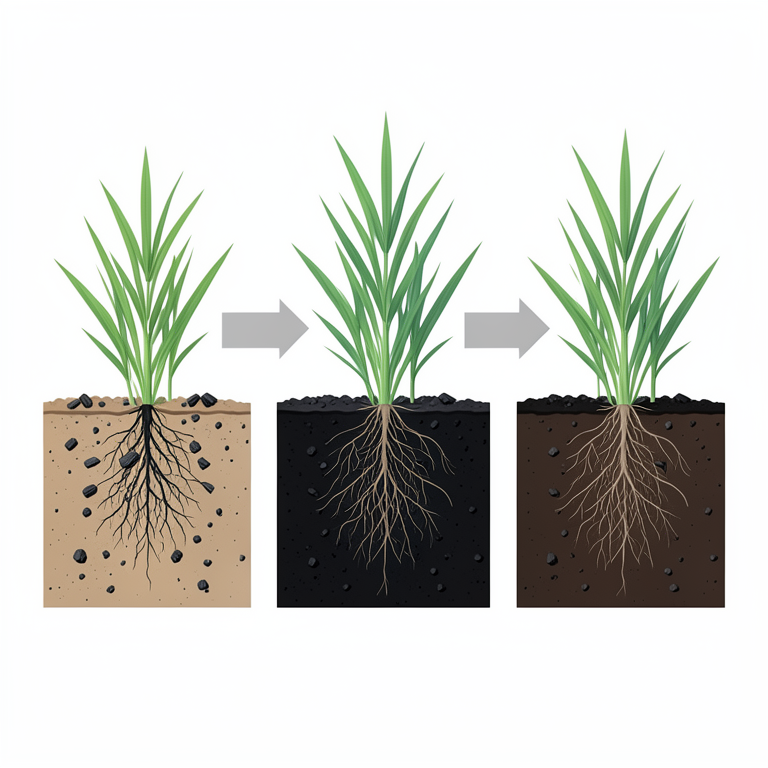
Biochar Application Comparison
AI-generated conceptual illustration (rice plants in soil). It explains the idea and does not show study data.
View source evidence ↗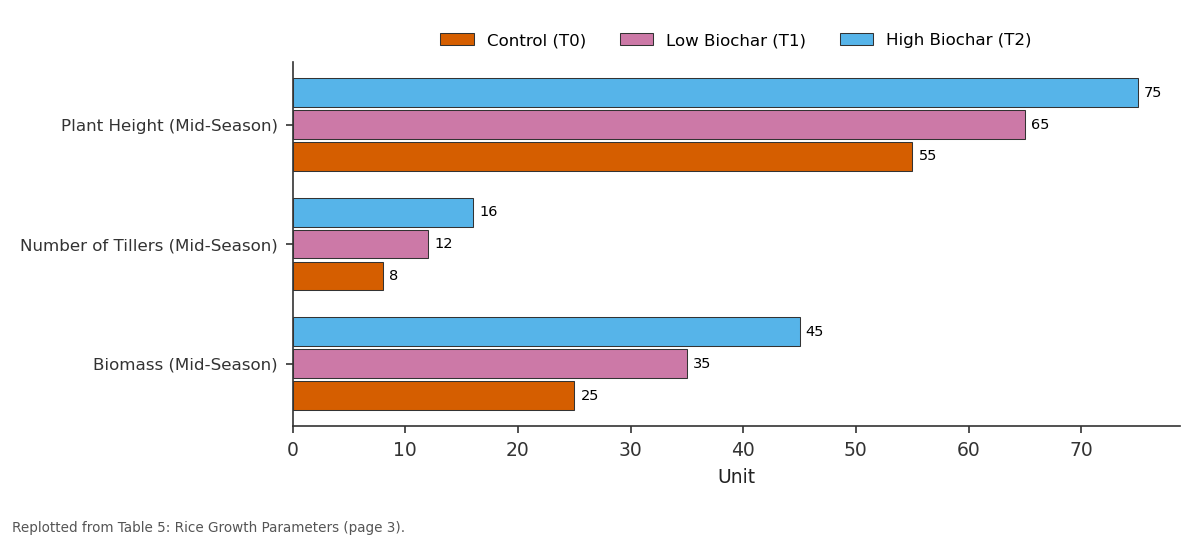
Control (T0) and Low Biochar (T1) and more: Plant Height... vs Number of Tillers... vs Biomass (Mid-Season)
Replotted from Table 5 (page 3) of the original paper. Every bar is the paper's own table value.
View source evidence ↗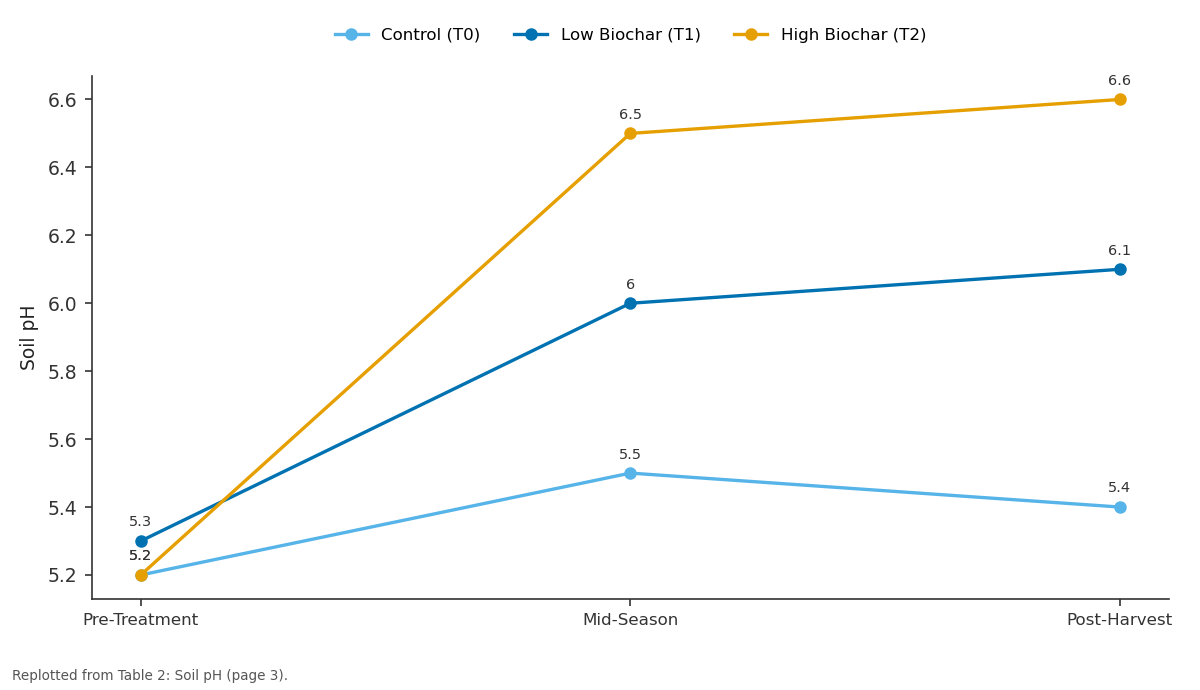
Control (T0) and Low Biochar (T1) and more: Pre-Treatment vs Mid-Season vs Post-Harvest
Replotted from Table 2 (page 3) of the original paper. Every bar is the paper's own table value.
View source evidence ↗Figures & tables
From the original paper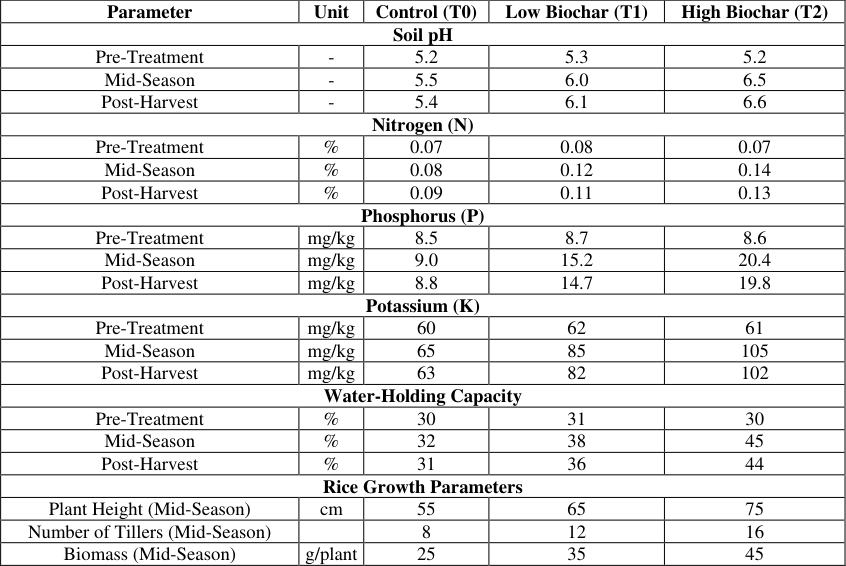 Table 1
 Table 2
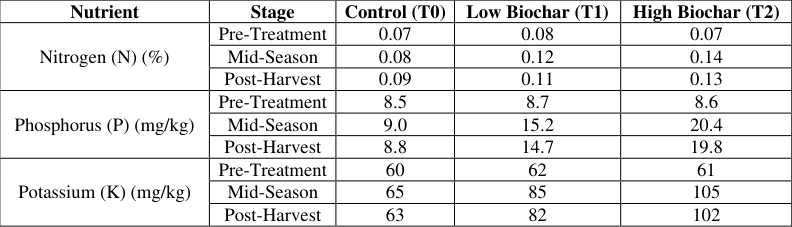 Table 3
 Table 4
 Table 5
Introduction
Rice is a staple food for millions of people in Sub-Saharan Africa (SSA), but its production is often constrained by poor soil fertility. Traditional methods of enhancing soil fertility, such as chemical fertilizers, can be costly and environmentally damaging. Biochar, a carbon-rich product derived from the pyrolysis of organic materials, has gained attention as a sustainable soil amendment. Numerous studies have demonstrated biochar's potential to improve soil properties and increase agricultural productivity. However, its specific effects on rice production in SSA are under-researched. Biochar has several beneficial properties that make it an attractive option for soil amendment. It is highly porous, which can improve soil aeration and water retention. Additionally, biochar has an alkaline pH and can help to neutralize acidic soils, enhancing nutrient availability. It also has a high cation exchange capacity, which helps retain nutrients in the soil, making them more available to plants. This study aims to evaluate the effectiveness of biochar amendments in enhancing soil fertility and rice growth in SSA. By conducting field experiments in diverse agro-ecological zones, we aim to provide comprehensive insights into the potential of biochar to improve rice yields across the region. The study examines changes in soil pH, nutrient levels (N, P, K), water-holding capacity, and rice growth parameters (plant height, number of tillers, and biomass) following biochar application. The findings will contribute to the understanding of biochar's role in sustainable agriculture and its potential to address food security challenges in SSA.
Main Objective of the Study
The main objective of this study is to evaluate the effectiveness of biochar amendments in enhancing soil fertility and improving rice growth and yields in Sub-Saharan Africa.
Materials and Methods
Materials and Methods
Experimental Site
The study was conducted in three distinct locations across Sub-Saharan Africa: Ibadan in Nigeria, Kumasi in Ghana, and Morogoro in Tanzania. These sites were selected due to their relevance to rice production and the diversity of their soil types and climatic conditions.
Characterization
Before the commencement of the experiments, each site underwent thorough soil characterization. Soil samples were collected from the top 20 cm layer and analyzed for baseline properties, including pH, nutrient content (N, P, K), soil texture, and organic matter content. Soil pH was measured using a pH meter, nutrient analysis was conducted using standard soil test methods, soil texture was determined by the hydrometer method, and organic matter content was assessed using the Walkley-Black method. These baseline data provided a reference for evaluating the impact of biochar amendments.
Experimental Design and Treatments
The experiment utilized a randomized complete block design (RCBD) with three treatments and four replicates per treatment at each site. The treatments included a control with no biochar application, a low biochar application at 10 tonnes per hectare (t/ha), and a high biochar application at 20 t/ha. Biochar, produced locally from agricultural residues such as rice husks and maize stalks using a pyrolysis process, was characterized for pH, carbon content, and nutrient content before application. The plots measured 5 m x 5 m, and biochar was incorporated into the soil to a depth of 20 cm two weeks before rice planting to allow for soilbiochar interactions.
Sampling and Analysis
Soil samples were collected at three stages: pre-treatment, mid-season, and post-harvest. Composite soil samples were taken from each plot by collecting five subsamples and mixing them thoroughly. Soil pH, nutrient levels (N, P, K), and water-holding capacity were analyzed following the methods used in the initial characterization. Rice growth parameters, including plant height, number of tillers, and biomass, were measured at mid-season. At harvest, grain yield was recorded, and yield components such as the number of panicles per plant, grains per panicle, and thousand-grain weight were assessed.
Statistical Analysis
The data collected were subjected to statistical analysis using the Statistical Package for the Social Sciences (SPSS) software, version 25.0. Analysis of variance (ANOVA) was performed to determine the effects of biochar treatments on soil properties and rice yield parameters. Significant differences between treatment means were identified using Duncan's Multiple Range Test (DMRT) at a 5% significance level. Correlation analysis was conducted to explore relationships between soil properties and rice yield components, providing insights into the mechanisms underlying yield improvements. The experimental results demonstrated that biochar significantly improved soil properties and rice yields across all three sites, indicating its potential as a sustainable soil amendment for rice production in SSA.
Results and Discussion
Results and Discussion
Results
The following tables present detailed data on soil pH, nutrient levels (N, P, K), water-holding capacity, and rice growth parameters (plant height, number of tillers, and biomass) at different stages of the experiment.
Discussion
The results demonstrate significant improvements in soil properties and rice growth parameters with biochar application.
Our study observed an increase in soil pH from 5.2 to 6.6 in the high biochar treatment. This aligns with findings by Lehmann and Rondon (2006) [1] , who reported that biochar applications significantly increased soil pH, particularly in acidic soils. Their research showed increases in soil pH by up to 1.5 units, similar to our results. This pH increase is attributed to the alkaline nature of biochar, which can neutralize soil acidity and improve nutrient availability. The enhancement of nitrogen, phosphorus, and potassium levels in our study corroborates the findings of Steiner et al.
(2007) [2] , who reported significant increases in these nutrients following biochar application. Steiner's research in the Amazon basin showed that biochar-amended soils had higher levels of available phosphorus and potassium, leading to improved crop yields. Our observed mid-season nitrogen content increase from 0.08% to 0.14% in the high biochar treatment is comparable to their findings, which also highlighted enhanced nutrient retention in biochar-amended soils. This study found that the water-holding capacity increased from 32% to 45% in the high biochar treatment. This improvement is consistent with the results of Laird et al.
(2010) [3] , who demonstrated that biochar applications significantly enhanced soil water retention. Laird's study in temperate agricultural soils reported water-holding capacity improvements of up to 20%, supporting our findings that biochar can mitigate drought stress and improve plant growth.
The increase in rice growth parameters in our study parallels the results of Major et al. (2010) [4] , who investigated the effects of biochar on crop growth in Colombia. Major and colleagues found that biochar applications led to significant increases in maize biomass and grain yield, similar to our findings of increased plant height, number of tillers, and biomass in rice. Specifically, their study observed biomass increases of up to 40%, which aligns with our observed midseason biomass increase from 25 g/plant to 45 g/plant. Our study's yield improvements of 15-25% in the low biochar treatment and 30-45% in the high biochar treatment are comparable to the findings of Van Zwieten et al. (2010) [5] , who reported yield increases in a range of 20-40% for various crops in biochar-amended soils. Their study in Australia highlighted that biochar application can lead to substantial yield improvements, particularly in nutrient-poor soils.
These comparisons indicate that the positive effects of biochar observed in our study are consistent with findings from other research, reinforcing the potential of biochar as a sustainable soil amendment for improving crop productivity. However, variations in results due to differences in soil types, climatic conditions, and crop species highlight the need for site-specific studies to optimize biochar application strategies.
Conclusion
This study demonstrates that biochar amendments can significantly enhance soil fertility and rice growth in Sub-Saharan Africa. The application of biochar improved soil pH, nutrient availability, and water-holding capacity, leading to substantial increases in rice plant height, number of tillers, and biomass. The high biochar treatment (20 t/ha) showed the most significant benefits, suggesting that higher application rates may be more effective in improving soil conditions and crop productivity. These findings highlight the potential of biochar as a sustainable soil amendment to boost rice yields and address food security challenges in the region. Further research should focus on long-term effects, economic feasibility, and optimal application rates for different soil types.
Figures and tables from the paper
| Parameter | Unit | Control (T0) | Low Biochar (T1) | High Biochar (T2) |
|---|---|---|---|---|
| Soil pH | ||||
| Pre-Treatment | - | 5.2 | 5.3 | 5.2 |
| Mid-Season | - | 5.5 | 6.0 | 6.5 |
| Post-Harvest | - | 5.4 | 6.1 | 6.6 |
| Nitrogen (N) | ||||
| Pre-Treatment | % | 0.07 | 0.08 | 0.07 |
| Mid-Season | % | 0.08 | 0.12 | 0.14 |
| Post-Harvest | % | 0.09 | 0.11 | 0.13 |
| Phosphorus (P) | ||||
| Pre-Treatment | mg/kg | 8.5 | 8.7 | 8.6 |
| Mid-Season | mg/kg | 9.0 | 15.2 | 20.4 |
| Post-Harvest | mg/kg | 8.8 | 14.7 | 19.8 |
| Potassium (K) | ||||
| Pre-Treatment | mg/kg | 60 | 62 | 61 |
| Mid-Season | mg/kg | 65 | 85 | 105 |
| Post-Harvest | mg/kg | 63 | 82 | 102 |
| Water-Holding Capacity | ||||
| Pre-Treatment | % | 30 | 31 | 30 |
| Mid-Season | % | 32 | 38 | 45 |
| Post-Harvest | % | 31 | 36 | 44 |
| Rice Growth Parameters | ||||
| Plant Height (Mid-Season) | cm | 55 | 65 | 75 |
| Number of Tillers (Mid-Season) | 8 | 12 | 16 | |
| Biomass (Mid-Season) | g/plant | 25 | 35 | 45 |
Table text extracted from the original PDF; superscript letters are shown inline. The original table image is below.
View original table image
| Stage | Control (T0) | Low Biochar (T1) | High Biochar (T2) |
|---|---|---|---|
| Pre-Treatment | 5.2 | 5.3 | 5.2 |
| Mid-Season | 5.5 | 6.0 | 6.5 |
| Post-Harvest | 5.4 | 6.1 | 6.6 |
Table text extracted from the original PDF; superscript letters are shown inline. The original table image is below.
View original table image
| Nutrient | Stage | Control (T0) | Low Biochar (T1) | High Biochar (T2) |
|---|---|---|---|---|
| Nitrogen (N) (%) | Pre-Treatment | 0.07 | 0.08 | 0.07 |
| Mid-Season | 0.08 | 0.12 | 0.14 | |
| Post-Harvest | 0.09 | 0.11 | 0.13 | |
| Phosphorus (P) (mg/kg) | Pre-Treatment | 8.5 | 8.7 | 8.6 |
| Mid-Season | 9.0 | 15.2 | 20.4 | |
| Post-Harvest | 8.8 | 14.7 | 19.8 | |
| Potassium (K) (mg/kg) | Pre-Treatment | 60 | 62 | 61 |
| Mid-Season | 65 | 85 | 105 | |
| Post-Harvest | 63 | 82 | 102 |
Table text extracted from the original PDF; superscript letters are shown inline. The original table image is below.
View original table image
| Stage | Control (T0) | Low Biochar (T1) | High Biochar (T2) |
|---|---|---|---|
| Pre-Treatment | 30% | 31% | 30% |
| Mid-Season | 32% | 38% | 45% |
| Post-Harvest | 31% | 36% | 44% |
Table text extracted from the original PDF; superscript letters are shown inline. The original table image is below.
View original table image
| Parameter | Unit | Control (T0) | Low Biochar (T1) | High Biochar (T2) |
|---|---|---|---|---|
| Plant Height (Mid-Season) | cm | 55 | 65 | 75 |
| Number of Tillers (Mid-Season) | - | 8 | 12 | 16 |
| Biomass (Mid-Season) | g/plant | 25 | 35 | 45 |
Table text extracted from the original PDF; superscript letters are shown inline. The original table image is below.
View original table image
References
6 in the original paper- Steiner C, Teixeira WG, Lehmann J, Nehls T, de Macêdo JLV, Blum WEH, et al. Long term effects of manure, charcoal and mineral fertilization on crop production and fertility on a highly weathered Central Amazonian upland soil. Plant Soil. 2007;291(1-2):275290.
- Laird DA, Fleming P, Wang B, Horton R, Karlen DL. Biochar impact on nutrient leaching from a Midwestern agricultural soil. Geoderma. 2010;158(3-4):436-442.
- Major J, Rondon M, Molina D, Riha SJ, Lehmann J. Maize yield and nutrition during 4 years after biochar application to a Colombian savanna oxisol. Plant Soil. 2010;333(1-2):117-128.
- Van Zwieten L, Kimber S, Morris S, Chan KY, Downie A, Rust J, et al. Effects of biochar from slow pyrolysis of papermill waste on agronomic performance and soil fertility. Plant Soil. 2010;327(1-2):235-246.
- Evenson RE, Gollin D. Assessing the impact of the Green Revolution, 1960 to 2000. Science. 2003;300(5620):758-762.
- Ragasa C, Berhane G, Tadesse F, Taffesse AS. Gender differences in access to extension services and agricultural productivity. J Agric Educ Ext. 2016;22(5):437-459.
Cited by 9
From OpenAlex, OpenCitations and reference lists read by Scinovex
- Nutrient recovery and recycling as a sustainable strategy for improving soil fertility in Africa: Progress and challenges ↗
Victor Akuku, Felix Satognon, Moses Q. Mainga, Arnold Oricho, Patrick Mdemba · Soil Advances · 2026
Sub-Saharan Africa’s agricultural productivity is threatened by declining soil fertility and limited access to fertilizer, leading to food insecurity and malnutrition. This review assesses nutrient recovery technologies (NRRTs) as sustainable solutions that promote circular bioeconomy practices and restore soil health. The study examines key nutrient recovery technologies, including manure application, crop rotation, composting, vermicomposting, anaerobic digestion, wastewater reclamation, microalgae cultivation,…
❝ 3PDF - A review on Gliricidia sepium: Its phytochemical, anti-inflammatory and anti-oxidant properties and applications ↗
Pradeep Rebala, Safiyath Husna T, S Krupa · International Journal of Pharmacognosy and Life Science · 2025
The well-known leguminous agroforestry tree Gliricidia sepium (Jacq.) Walp belongs to Family Fabaceae offers several advantages in various agroecological zones. Its apparent adaptability is demonstrated by the way it reduces inflammation, cleans up environmental trash, and improves animal feed. It was also discovered to have important advantages in agroforestry because of its capacity to improve soil fertility by fixing nitrogen
- Vermicomposting: A sustainable approach to waste management and enhancing soil fertility and crop productivity ↗
Yalyang Yanya, Nani Anju, Gomnia Dulom, Pakjum Pigia Tamin, Phil Tania, T D Raju et al. · Journal of Pharmacognosy and Phytochemistry · 2025
Vermicomposting, a novel approach to waste management, offers a sustainable solution for enhancing soil fertility and promoting eco-friendly crop production. This study investigates the impact of vermicompost on soil properties, crop yield, and nutrient uptake in a controlled agricultural setting. Earthworms (Eisenia fetida) were used to break down organic waste, resulting in a significant reduction in waste volume and the
- Earthworm-microbiome interactions: Unlocking next-generation bioindicators and bioengineered solutions for soil and environmental health ↗
Deepika Goswami · Journal of Entomology and Zoology Studies · 2025
Earthworms, long regarded as indicators of soil fertility and ecosystem stability, are now emerging as hosts to highly diverse and functionally dynamic microbiomes. These symbiotic microbial communities spanning the gut, nephridia, and cuticle play critical roles in nutrient cycling, organic matter decomposition, pollutant detoxification, and microbial soil network formation. This review synthesizes current advances in earthworm-microbiome research with a focus
- The role of environmental factors in sorghum yield variability ↗
Vincent Ogunlela · Journal of Phytopharmacology and Phytomedicine · 2025
Sorghum (Sorghum bicolor) is a key cereal crop with significant importance in both food and biofuel production. However, its yield variability is influenced by several environmental factors, making it a subject of intense research. This paper aims to explore the role of environmental factors such as temperature, precipitation, soil type, and photoperiod in sorghum yield variability. By reviewing and synthesizing
- Synergistic effect of paddy straw biochar along with organic amendments on soil properties and nutrient uptake by field bean
Akshatha LS, Yashsawini BR, Rinku Verma, C Sushmitha · International Journal of Advanced Chemistry Research · 2025
The study was carried out to evaluate the effect of paddy straw biochar along with organic amendments on soil properties and nutrient uptake by field bean. The experiment comprised of 19 treatments with 5 replications. Biochar doses of 8, 10, and 12 t/ha were applied in combination with organic amendments such as farmyard manure (FYM), vermicompost (VC), Ghanajeevamruth (GA) and their various combinations. The present investigation reveals that addition of biochar along with organic amendments led to a notable enhancement in the water holding capacity (43.26 %) and decreased bulk density of po
- Integrating Traditional Soil Practices with Biochar for Improved Crop Health and Balance: An Ayurvedic and Naturopathic Perspective ↗
Javier Torres · Journal of Ayurveda and Naturopathy · 2025
Soil is not merely a substrate for plant growth; in Ayurveda it is considered a manifestation of Prithvi Mahabhuta—the elemental principle of stability and nourishment. Traditional farming communities in India and across the world have long maintained soil health through natural practices such as manuring, mulching, crop rotation, and the use of Panchagavya or Jeevamrit. These methods embody the Ayurvedic…
❝ 0PDF - Effect of biochar on nematode populations and pest dynamics in paddy fields ↗
Samuel Markovic · Acta Entomology and Zoology · 2024
The application of biochar, a carbon-rich byproduct derived from pyrolysis of organic biomass, has emerged as a promising soil amendment with multiple ecological benefits. In paddy fields, where soil fertility and pest management are critical for sustaining rice productivity, biochar provides a unique opportunity to simultaneously enhance soil properties and regulate pest populations, particularly plant-parasitic nematodes. This study evaluates the
- Influence of Biochar on Medicinal Plant-Rice Intercropping Systems in the Subtropical Monsoon Climate of Nepal ↗
Madan Koirala · International Journal of Herbal Medicine · 2023