
Research article · 2024 · Full text
International Journal of Agriculture Extension and Social DevelopmentUnlocking digital potential: Overcoming challenges in agricultural communication for agri-input dealers
Volume 7(6) · Pages 330–335 · DOI: 10.33545/26180723.2024.v7.i6e.720 ↗
Research areasDigital Marketing and Social MediaDigitalization and Economic Development in Agriculture
Abstract
Author-writtenDigitalization has become a transformative force across various sectors, including agriculture, by revolutionizing communication and service delivery. This study focuses on the implementation of digital agricultural communication and services among agri-input dealers in Telangana, India. Through a strategic sampling approach encompassing diverse agricultural settings, the study identified and analyzed constraints faced by input dealers in adopting digital technologies. The research employed the Garrett ranking method to rank the identified constraints, providing valuable insights into personnel, technological, economic, and situational challenges. Results indicate that input dealers encounter significant personnel constraints, including poor knowledge of stakeholders, difficulty in handling digital content, and lack of confidence in using digital tools. Technological constraints, such as restricted availability of agricultural services in digital formats and the complexity of digital tools, further impede their adoption of digital communication. Economic challenges, such as high costs associated with purchasing digital gadgets and telecommunication services, pose additional barriers. Situational constraints, including non-availability of repair services for digital gadgets and insufficient training, exacerbate the challenges faced by input dealers. To address these constraints, the study proposes various strategies, including comprehensive training programs, financial incentives, and simplified digital interfaces. Efforts to enhance content accessibility, improve network reliability, and promote stakeholder participation are also recommended. By implementing these strategies, input dealers can optimize their utilization of digital agricultural communication and services, leading to enhanced efficiency, improved decision-making, and better customer support.
Summary
Source-checkedPlain-language reading of the full paper, prepared with AI and checked against the text. Each point links to the authors' own words.
Why it matters
- Agri-input dealers are essential to the rural economy because they provide both critical farm inputs and extension services to farmers. View evidence ↗
- Farmers often rely on agri-input dealers for agricultural advice more than any other source. View evidence ↗
- Digitalization is transforming agriculture by changing how services are delivered and how communication occurs. View evidence ↗
The question
- The study aims to examine how digital agricultural communication and services are implemented among agri-input dealers in Telangana, India. View evidence ↗
- The research specifically seeks to identify and analyze the constraints that prevent input dealers from adopting digital technologies. View evidence ↗
What they did
- The research was conducted in Telangana state between March and June 2023. View evidence ↗
- Data was collected using individual interviews to obtain detailed insights from the respondents. View evidence ↗
- The Garrett ranking method was used to analyze the data and rank the most significant constraints. View evidence ↗
What they found
- Among personnel constraints, the top overall issue was the poor knowledge of stakeholders in handling digital communication and services, with a Garrett mean score of 57.13. View evidence ↗
- The most significant technological constraint overall was that most content is not available in the local vernacular language, scoring 64.20. View evidence ↗
- The primary economic constraint for dealers in Telangana was the high cost of purchasing digital gadgets, with a Garrett mean score of 57.00. View evidence ↗
- The top situational constraint overall was the poor participation of stakeholders unless it is made mandatory, with a Garrett mean score of 59.37. View evidence ↗
- The second most significant situational constraint was the lack of local repair services and spare parts for digital gadgets, scoring 57.40. View evidence ↗
What it means
- The authors recommend implementing comprehensive training programs and workshops to improve the digital literacy and skills of input dealers. View evidence ↗
- The authors conclude that successful digitalization requires collaboration between government agencies, financial institutions, and technology providers. View evidence ↗
Visual summary
2 visualsIllustrations explain the paper; charts are replotted from the paper's own table values.
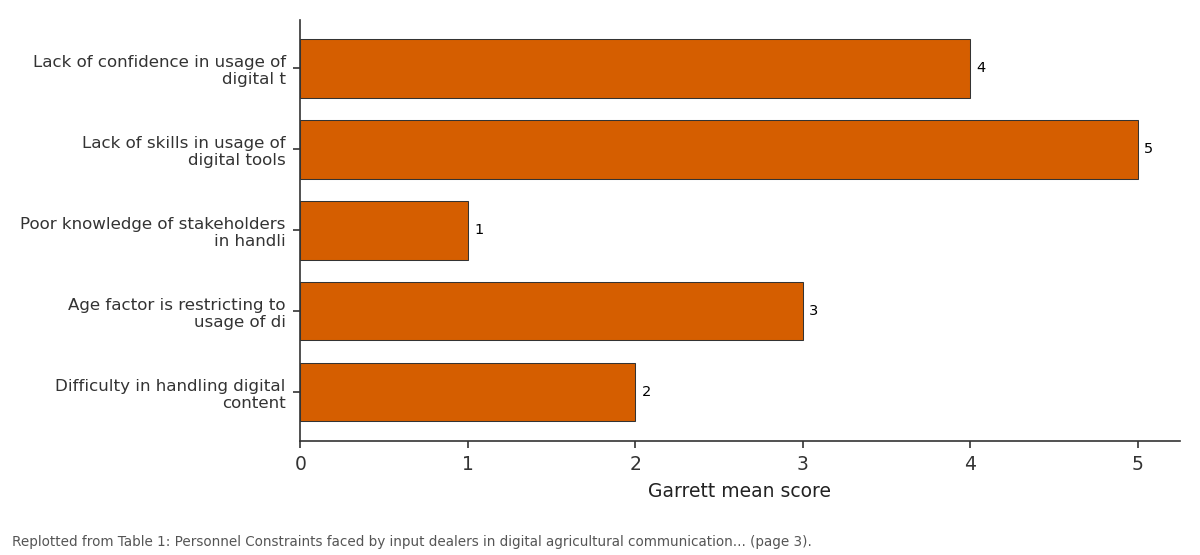
Rank: Lack of confidence in... vs Lack of skills in usage... vs Poor knowledge of... vs Age factor is... vs Difficulty in handling...
Replotted from Table 1 (page 3) of the original paper. Every bar is the paper's own table value.
View source evidence ↗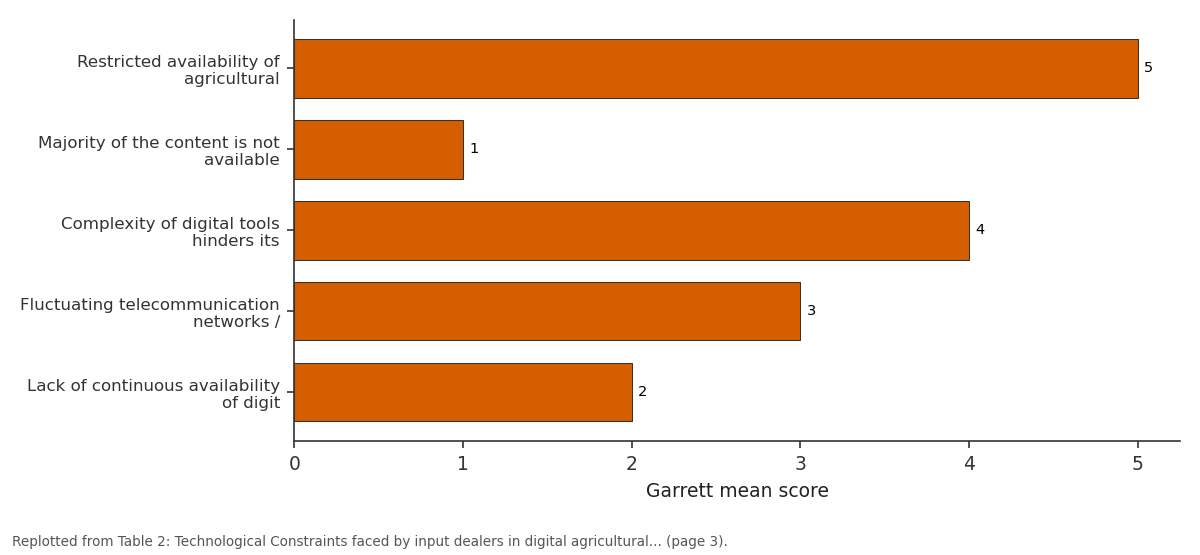
Rank: Restricted availability... vs Majority of the content... vs Complexity of digital... vs Fluctuating... vs Lack of continuous...
Replotted from Table 2 (page 3) of the original paper. Every bar is the paper's own table value.
View source evidence ↗Figures & tables
From the original paper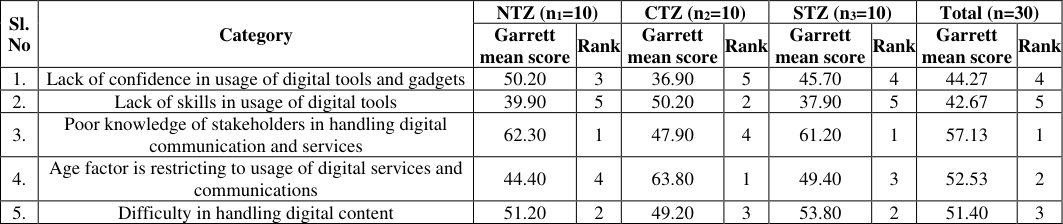 Table 1
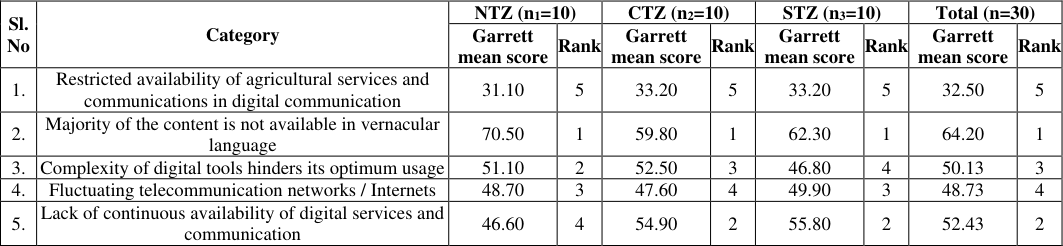 Table 2
 Table 3
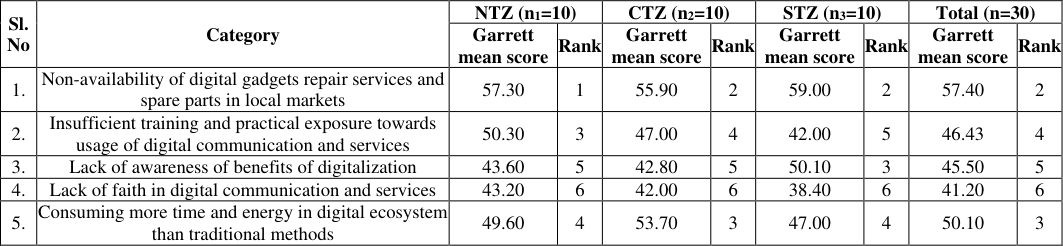 Table 4
Introduction
Digitalization is reshaping industries and societies, with agriculture emerging as one of the most pivotal sectors undergoing profound impacts. It molds modern society by exerting influence on both business operations and daily routines (Hagberg et al., 2016) [6] . It drives innovation, creates jobs, and stimulates economic growth (Shallu et al., 2019) [13] . The integration of Information and Communication Technology (ICT), including Artificial Intelligence (AI), the Internet of Things (IoT), and advancements from the fourth industrial revolution, is pivotal in this transformation (Morley et al., 2018) [8] . Digital empowerment accelerates development by optimizing human resource utilization (Dutta & Jeerh, 2023) [4] . Incorporating digital technology into Indian agriculture holds substantial potential for revolutionizing the sector. It provides real-time information, expert advice, and e-Services that enhance government efficiency, reduce corruption, increase transparency, and empower citizens (Dutta & Devi, 2015) [3] . Digitalization involves adopting digital technologies at individual, organizational, and societal levels (Brennen & Kreiss, 2016) [1] . Effective agricultural knowledge systems are crucial for empowering Indian farmers with the critical information they need to make informed decisions. Traditionally, farmers have relied heavily on informal networks for accessing agricultural information and services (Singh et al., 2023) [14] . Digital tools, such as mobile apps, Interactive Voice Response (IVR) systems, digital kiosks, and social media, significantly enhance the efficiency and effectiveness of agricultural systems (Rai, 2023) [10] . Digital communication is transforming access to agricultural advisory services, bridging the gap between small-scale farmers and emerging markets (Zolkepli & Kamarulzaman, 2015) [15] . The integration of ICT in agriculture is a crucial component of agricultural extension, aiming to advance rural and agricultural development through improved communication and information dissemination (Dhaka & Chayal, 2010) [2] . The declining costs of smartphones and the availability of budget-friendly options have expanded technology access. The growing role of social media in general and agricultural discourse is evident, with content tailored to user needs and user-friendly interfaces on these platforms (Nain et al., 2019; Sandeep et al., 2022) [9,11] . www.extensionjournal.com Agri-input dealers are pivotal in the rural agrarian economy, selling essential farm inputs such as fertilizers, seeds, and pesticides while also providing farm extension services to farmers. Studies indicate that farmers frequently consult agri-input dealers more than other sources for agricultural advice (Goel, 2003) [5] . These dealers serve as crucial intermediaries between manufacturers and farmers, ensuring the dissemination of the latest farm technologies to the field level (Koshe, 2004) [4] . Formal farm extension services in India are governed by institutions like SAUs, the State Department of Agriculture, KVKs, and ICAR institutes. However, these institutions are often insufficient to meet the vast demands of the farming community. Informally, farmers receive agricultural counseling, services, and inputs from local agri-input dealers, who often provide these extension services free of charge despite earning from product sales. Public extension services have been criticized for their inability to handle the diverse needs of farmers effectively. In the digital age, platforms like the Online License Management System (OLMS) and social media play a significant role in the activities carried out by input dealers. Input dealers have shown a positive attitude towards digital agricultural communication and services (Sandeep et al., 2023) [12] . These digital tools enhance the efficiency and reach of agri-input dealers, making them indispensable in the dissemination of agricultural information and inputs (Koshe, 2004) [4] . It is essential to conduct a comprehensive analysis of the constraints faced by input dealers to better develop this digital ecosystem and bolster the rural economy.
Methodology
The study was strategically conducted in Telangana state from March to June 2023, with the objective of encompassing a diverse range of agricultural settings. To achieve comprehensive representation, two districts were randomly selected from each of the Agro-Climatic Zones (ACZs) within the state i.e. Northern Telangana Zone (NTZ), Southern Telangana Zone (STZ) and Central Telangana Zone (CTZ). A simple random sampling technique was employed to ensure the selection of a representative sample from each district. Specifically, With each ACZ a sample of 10 input dealers were selected. By involving sample from the from all the ACZs, the study aimed to develop a holistic understanding of the challenges implementation of digital communication and services in agriculture at the Input dealers level. The list of hypothetical statements of constraints covering personal, technological, economic and situational constraints were developed by though review of literature, discussion with expert using focused group discussions. Primary data collection was meticulously carried out through individual interviews with each respondent. This method was chosen to facilitate indepth discussions and to capture nuanced insights that might not be evident through other data collection methods. To analyze and interpret the collected data, Garrett ranking method were employed, which was specifically utilized to identify and rank the most significant constraints. The statistical analysis provided a robust framework for interpreting the data and deriving meaningful conclusions.
Percent position = ----(i)
Where, R ij = Rank given for the i th attribute by j th respondent, Nj = Number of attributes ranked by j th respondent
Results
Results
Personnel constrains analysis of input dealers faced in digital agricultural communication and services ecosystem
From Table 1, it can be observed that "Poor knowledge of stakeholders in handling digital communication and services" constraint ranked top in with garret mean score 62.30 in personnel constraints in NTZ among input dealers, followed by "Difficulty in handling digital content" with Garrett mean score of 51.20, "Lack of confidence in usage of digital tools and gadgets" with Garrett mean score of 50.20, "Age factor is restricting to usage of digital services and communications" with Garrett mean score of 44.40 and the constraint "Lack of skills in usage of digital tools" ranked least with garret mean score of 39.90. In case of CTZ, of the constraint "Age factor is restricting to usage of digital services and communications" ranked top with garret mean score of 63.80 which indicates as major constraints, followed by "Lack of skills in usage of digital tools" with garret mean score of 50. improving their understanding of digital tools, content management, and effective usage. Additionally, efforts should be made to address the age factor restriction by offering specialized training tailored to the needs and preferences of older input dealers. Building their confidence in using digital tools and gadgets can be achieved through hands-on training, providing technical support, and demonstrating success stories. Furthermore, enhancing digital content accessibility and simplifying its handling can alleviate the constraint of difficulty in managing digital content. Lastly, fostering skill development programs to improve the overall digital literacy and competence of input dealers can mitigate the constraint of lacking skills in utilizing digital tools. By implementing these strategies, input dealers can optimize their utilization of digital agricultural communication and services, leading to improved efficiency, better decision-making, and enhanced customer support.
| Sl. No | Category | NTZ (n1=10) | — | CTZ (n2=10) | — | STZ (n3=10) | — | Total (n=30) | — |
|---|---|---|---|---|---|---|---|---|---|
| Garrett mean score | Rank | Garrett mean score | Rank | Garrett mean score | Rank | Garrett mean score | Rank | ||
| 1. | Lack of confidence in usage of digital tools and gadgets | 50.20 | 3 | 36.90 | 5 | 45.70 | 4 | 44.27 | 4 |
| 2. | Lack of skills in usage of digital tools | 39.90 | 5 | 50.20 | 2 | 37.90 | 5 | 42.67 | 5 |
| 3. | Poor knowledge of stakeholders in handling digital communication and services | 62.30 | 1 | 47.90 | 4 | 61.20 | 1 | 57.13 | 1 |
| 4. | Age factor is restricting to usage of digital services and communications | 44.40 | 4 | 63.80 | 1 | 49.40 | 3 | 52.53 | 2 |
| 5. | Difficulty in handling digital content | 51.20 | 2 | 49.20 | 3 | 53.80 | 2 | 51.40 | 3 |
Table text extracted from the original PDF; superscript letters are shown inline. The original table image is below.
View original table image
Conclusion
the findings of this study shed light on the multifaceted constraints faced by input dealers in the adoption and utilization of digital agricultural communication and services. Across various dimensions including personnel, technological, economic, and situational factors, input dealers encounter challenges that hinder the optimal integration of digital tools into their operations. Personnel constraints, such as poor knowledge of stakeholders and difficulties in handling digital content, underscore the importance of comprehensive training programs to enhance digital literacy among input dealers. Addressing these constraints is vital to ensure effective utilization of digital tools and maximize their potential benefits. Moreover, technological constraints, including restricted availability of agricultural services in digital formats and complexity of digital tools, emphasize the need for user-friendly interfaces and improved digital infrastructure. Overcoming these barriers requires collaborative efforts between stakeholders to enhance accessibility and usability of digital platforms in agricultural communication. Economic constraints, such as high costs associated with purchasing digital gadgets and lack of subsidies, pose significant challenges for input dealers, highlighting the need for financial incentives and support mechanisms to facilitate the adoption of digital technologies. Additionally, situational constraints, such as non-availability of repair services and insufficient training, underscore the importance of localized solutions and capacity-building initiatives tailored to the specific needs of input dealers. In light of these findings, it is imperative to implement targeted strategies aimed at mitigating the identified constraints and fostering an enabling environment for the effective utilization of digital agricultural communication and services by input dealers. By addressing these challenges comprehensively, stakeholders can harness the transformative potential of digitalization to drive agricultural development, enhance productivity, and improve livelihoods in rural communities. Collaboration between government agencies, technology providers, financial institutions, and other relevant stakeholders is essential to ensure the successful implementation of these strategies and realize the full benefits of digitalization in
Acknowledgement
www.extensionjournal.com agriculture.
Figures and tables from the paper
| Sl. No | Category | NTZ (n1=10) | — | CTZ (n2=10) | — | STZ (n3=10) | — | Total (n=30) | — |
|---|---|---|---|---|---|---|---|---|---|
| Garrett mean score | Rank | Garrett mean score | Rank | Garrett mean score | Rank | Garrett mean score | Rank | ||
| 1. | Restricted availability of agricultural services and communications in digital communication | 31.10 | 5 | 33.20 | 5 | 33.20 | 5 | 32.50 | 5 |
| 2. | Majority of the content is not available in vernacular language | 70.50 | 1 | 59.80 | 1 | 62.30 | 1 | 64.20 | 1 |
| 3. | Complexity of digital tools hinders its optimum usage | 51.10 | 2 | 52.50 | 3 | 46.80 | 4 | 50.13 | 3 |
| 4. | Fluctuating telecommunication networks / Internets | 48.70 | 3 | 47.60 | 4 | 49.90 | 3 | 48.73 | 4 |
| 5. | Lack of continuous availability of digital services and communication | 46.60 | 4 | 54.90 | 2 | 55.80 | 2 | 52.43 | 2 |
Table text extracted from the original PDF; superscript letters are shown inline. The original table image is below.
View original table image
| Sl. No | Category | NTZ (n1=10) | — | CTZ (n2=10) | — | STZ (n3=10) | — | Total (n=30) | — |
|---|---|---|---|---|---|---|---|---|---|
| Garrett mean score | Rank | Garrett mean score | Rank | Garrett mean score | Rank | Garrett mean score | Rank | ||
| 1. | High cost in purchasing digital gadgets | 66.90 | 1 | 53.90 | 2 | 50.20 | 3 | 57.00 | 1 |
| 2. | High cost of tele network and internet services | 51.60 | 2 | 51.40 | 3 | 49.90 | 4 | 50.97 | 3 |
| 3. | Lack of capital to servicing or maintaining or update digital tools for agricultural communication and services | 35.10 | 4 | 36.30 | 4 | 50.30 | 2 | 40.57 | 4 |
| 4. | Lack of subsidies on digital gadgets procurement | 47.40 | 3 | 59.40 | 1 | 50.60 | 1 | 52.47 | 2 |
Table text extracted from the original PDF; superscript letters are shown inline. The original table image is below.
View original table image
| Sl. No | Category | NTZ (n1=10) | — | CTZ (n2=10) | — | STZ (n3=10) | — | Total (n=30) | — |
|---|---|---|---|---|---|---|---|---|---|
| Garrett mean score | Rank | Garrett mean score | Rank | Garrett mean score | Rank | Garrett mean score | Rank | ||
| 1. | Non-availability of digital gadgets repair services and spare parts in local markets | 57.30 | 1 | 55.90 | 2 | 59.00 | 2 | 57.40 | 2 |
| 2. | Insufficient training and practical exposure towards usage of digital communication and services | 50.30 | 3 | 47.00 | 4 | 42.00 | 5 | 46.43 | 4 |
| 3. | Lack of awareness of benefits of digitalization | 43.60 | 5 | 42.80 | 5 | 50.10 | 3 | 45.50 | 5 |
| 4. | Lack of faith in digital communication and services | 43.20 | 6 | 42.00 | 6 | 38.40 | 6 | 41.20 | 6 |
| 5. | Consuming more time and energy in digital ecosystem than traditional methods | 49.60 | 4 | 53.70 | 3 | 47.00 | 4 | 50.10 | 3 |
Table text extracted from the original PDF; superscript letters are shown inline. The original table image is below.
View original table image
References
14 in the original paper- Dhaka BL, Chayal K. Farmers' experience with ICTs on transfer of technology in changing agri-rural environment. Indian Research Journal of Extension Education. 2010;10(3):114-118.
- Dutta A, Devi SM. E-governance status in India. International Journal of Computer Sciences and Engineering. 2015;3(7):27-31.
- Dutta A, Jeerh N. Digital infrastructure development in India for citizen empowerment. International Journal of Creative Research Thoughts. 2023;11(1):616-620.
- Goel AK. Diploma course in agricultural extension services for input Dealers (DAESI). National Institute of Agricultural Extension Management (MANAGE), Ministry of Agriculture, Government of India. 2003;1(1):1-4.
- Hagberg J, Sundstrom M, Egels-Zandén N. The digitalization of retailing: an exploratory framework. International Journal of Retail & Distribution Management. 2016;44(7):694-712.
- Khose. Zonal conference. Rabi-2004-05. Fertilizer Marketing News. 2004;35(1):7-8.
- Morley J, Widdicks K, Hazas M. Digitalization, energy and data demand: The impact of Internet traffic on overall and peak electricity consumption. Energy Research & Social Science. 2018;38:128-137.
- Nain MS, Singh R, Mishra JR. Social networking of innovative farmers through WhatsApp messenger for learning exchange: A study of content sharing. Indian Journal of Agricultural Sciences. 2019;89(3):556-558.
- Rai A. Digitalization in agriculture for innovative transformation in India. Indian Farming. 2023;73(6):3034.
- Sandeep GP, Prashanth P, Sreenivasulu M, Madavilata A. Effectiveness of agricultural information disseminated through social media. Indian Journal of Extension Education. 2022;58(2):186-190.
- Sandeep GP, Ganesamoorthi S, Raghuprasad KP, Gowda VG, Benherlal PS, Kumar TLM, et al. Exploring Stakeholder Attitudes towards Digital Agricultural Communication and Services. Indian Journal of Extension Education. 2023;59(4):91-96. https://doi.org/10.48165/IJEE.2023.59419
- Shallu, Sihmar S, Meena KR. Digitalization in India: An innovative concept. International Journal of Engineering Development and Research. 2019;7(1):452-456.
- Singh A, Singh R, Nain MS, Mishra JR, Kumar P, Sharma DK, Paul RK. Linkage network structures of farmers: analysing FPOs of M.P. and Bihar in India. Indian Journal of Extension Education. 2023;59(3):1420.
- Zolkepli IA, Kamarulzaman Y. Social media adoption: The role of media needs and innovation characteristics. Computers in Human Behavior. 2015;43:189-209.