
Research article · 2024 · Full text
International Journal of Advanced Chemistry ResearchSynthesis of some novel benzimidazole derivatives act as antibreast cancer activity
Volume 6(1) · Pages 190–200 · DOI: 10.33545/26646781.2024.v6.i1c.186 ↗
Research areasSynthesis and biological activityFungal Plant Pathogen Control
Abstract
Author-writtenBenzimidazole, the benzo derivative of imidazole, is a class of bicyclic aromatic organic compound consisting of six-membered benzene ring fused to five membered imidazole at 4- and 5-positions of the imidazole ring. It is a vital pharmacophore of many biologically active heterocyclic compounds with a variety of pharmacological activities. Over the time, benzimidazole and its derivatives have evolved as vibrant heterocyclic systems due to their potency in a wide range of bioactive compounds like analgesics, antifungals, anti-inflammatory, antihypertensives, proton pump inhibitors, anti-HIV, antiviral, and so on. Multi-drug resistance in cancer that led to the failure of many chemotherapeutic drugs is a major concern. Various approaches are being developed to overcome this problem. One of them is target based drug discovery, which is an effective method to develop a novel anticancer drug. To develop newer drugs, previously reported work needs to be studied. Keeping this in mind, last 5 years literature on benzimidazole used as anticancer agent has been reviewed and summarized in the paper this research article along with the target of cancer also deal with structure activity relationship of various compounds having benzimidazole.
Summary
Source-checkedPlain-language reading of the full paper, prepared with AI and checked against the text. Each point links to the authors' own words.
Why it matters
- Breast cancer is a major global health issue and the primary cause of cancer-related deaths in women. View evidence ↗
- The effectiveness of many chemotherapy drugs is limited by the development of multi-drug resistance in cancer cells. View evidence ↗
- Benzimidazole is a bicyclic aromatic organic compound that serves as a critical structural component (pharmacophore) for various biologically active substances. View evidence ↗
The question
- The study aimed to synthesize novel benzimidazole derivatives to evaluate their potential as anti-breast cancer agents using a target-based drug discovery approach. View evidence ↗
What they did
- The final compounds were synthesized by heating a mixture of benzimidazole derivatives, formaldehyde, and para-amino salicylic acid in ethanol under reflux for 4 hours. View evidence ↗
- The anti-breast cancer activity of the synthesized compounds was screened using an MTT assay on the MCF-7 breast cancer cell line. View evidence ↗
- The purity and structure of the compounds were verified using melting point analysis, thin layer chromatography (TLC), and Fourier Transform Infrared (FT-IR) spectroscopy. View evidence ↗
What they found
- The first derivative was characterized by a yield of 0.25 and a melting point between 145-150 °C. View evidence ↗
- The second derivative showed a yield of 0.27 and a melting point of 120-125 °C. View evidence ↗
- The third derivative had a yield of 0.31 and a melting point of 55-60 °C. View evidence ↗
- The standard drug 5-FU exhibited a 70.58% inhibition of the MCF-7 cell line at a concentration of 100 µg/m. View evidence ↗
- Compound PA III showed a 45.82% inhibition of the MCF-7 cell line at a concentration of 100 µg/m. View evidence ↗
What it means
- The authors conclude that the synthesized benzimidazole derivatives (FA-I, AA-II, and PA-III) exhibit good anti-breast cancer activity compared to the standard drug. View evidence ↗
Visual summary
1 visualsIllustrations explain the paper; charts are replotted from the paper's own table values.
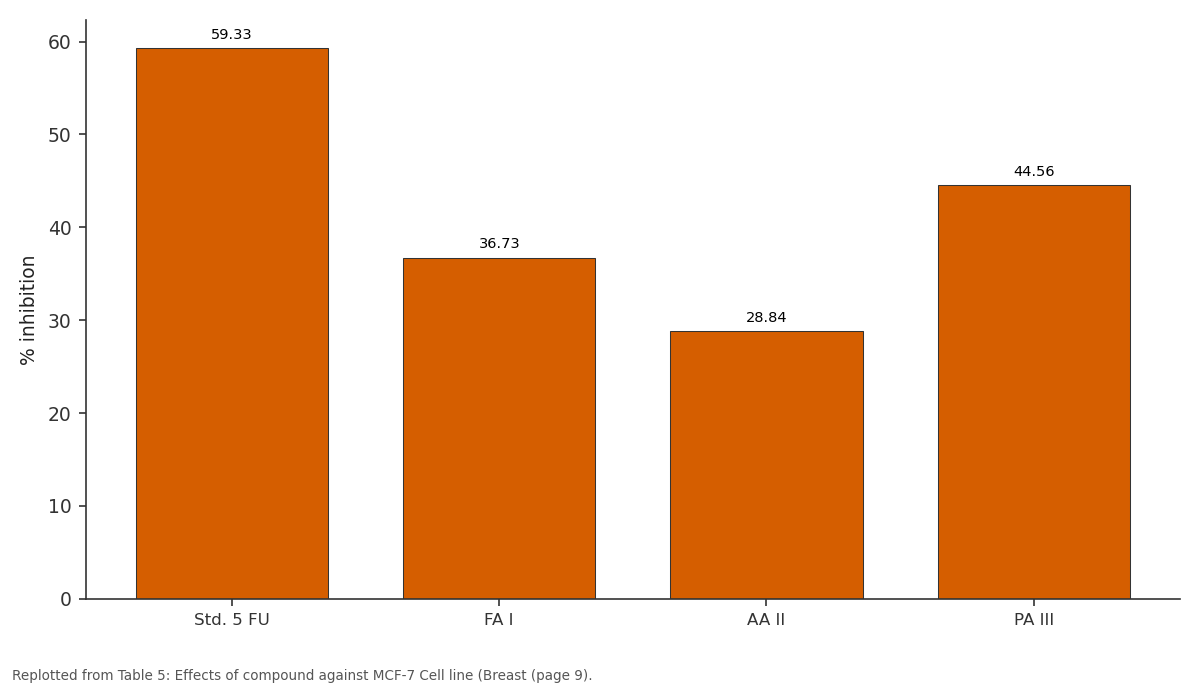
% inhibition: Std. 5 FU vs FA I vs AA II vs PA III
Replotted from Table 5 (page 9) of the original paper. Every bar is the paper's own table value.
View source evidence ↗Figures & tables
From the original paper Figure 1
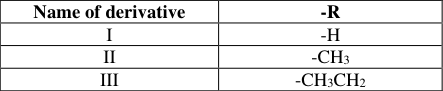 Table 1
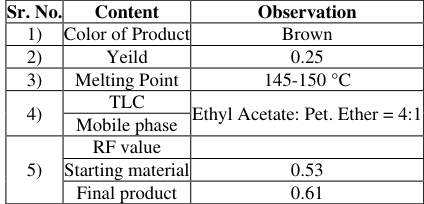 Table 2
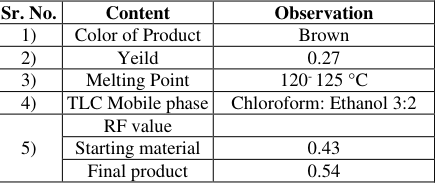 Table 3
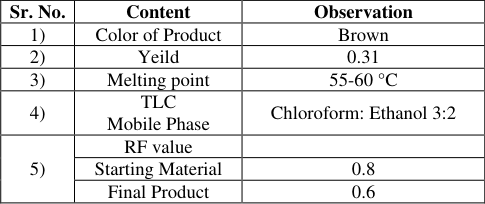 Table 4
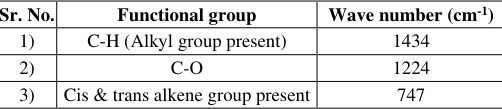 Table 5
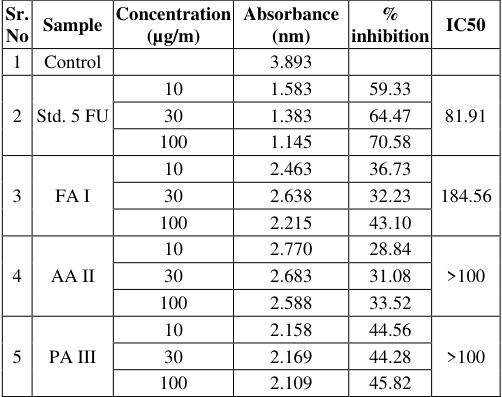 Table 5
Introduction
Cancer is a class of diseases in which group of cells display uncontrolled growth, invasion that intrudes upon and destroys adjacent tissues and sometimes metastasis, or spreading to other locations in the body via lymph or blood. Cancer is a major human health problem worldwide and is the second leading cause of death in the United State. Breast cancer: Breast cancer is one of the most prevalent cancers and the leading cause of cancer death among women worldwide [1] . Apoptosis is an important biological process of cell death that is critical for elimination of unwanted, damaged or infected cells and is associated with diverse biological events including cell development, differentiation and proliferation [2] .
The epidermal growth factor receptor (EGFR) is one of the first identified important target of these novel antitumor agents. Approximately half of cases of Triple-Negative Breast Cancer (TNBC) and Inflammatory Breast Cancer (IBC) overexpress EGFR. Cancer continues to pose a serious threat to human life, ranking as the second most common cause of death globally in 2022. According to estimates, 13.1 million individuals will pass away from cancer by 2030 Breast cancer is the most common kind among women in both developed and developing nations, accounting for one in ten of all new cancer diagnoses worldwide each year [3] . The regulation of tumor cell proliferation, differentiation, angiogenesis, and death is significantly influenced by EGFR. The majority of malignant epithelial cells in breast cancer overexpress EGFR and its receptors, EGFR indicating that plays a critical role in the angiogenic progression and metastasis of breast cancer. Reviews of the literature revealed that numerous heterocyclic scaffolds have been studied as potential treatments for breast cancer [4] . While several novel strategies, including as targeted medication therapy (e.g., atezolizumab, erlotinib, and Second, it's getting harder and harder to discover novel anti-cancer medication According to a recent study, the average cost of research and development for a new drug is $985.3 million, with anticancer drugs costing even more [5] .
Benz imidazole based marketed anticancer drugs Binimetinib:
The USFDA has approved binimetinib a chemical 5-((4-bromo-2-fluorophenyl) amino) -4-fluoro-N-(2-hydroxyethoxy)-1-methyl-1H-benzimidazole-6carboxamide, in 2018 [6] . It is a strong, oral inhibitor of mitogen-activated protein kinase (MEK 1/2) that is selective. Array Biopharma is the developer of binimetinib, which is sold commercially under the brand Mektovi [7] . It is recommended as combination therapy with BRAF inhibitors Encorafenib for patients with metastatic melanoma with a BRAF mutation [8] . Currently, binimetinib is being developed clinically in different stages as an immunotherapy or combination treatment for diseases such as non-small cell lung cancer with a mutant KRAS mutation [9] .
Bendamustin
Bendamustine (2) is an alkylating agent that is widely recognized for its effectiveness and tolerance in treating a variety of hematologic malignancies. Its chemical formula is 4-(5-(bis (2-chloroethyl)amino)-1-methyl-1H-benzimidazol-2-yl) butanoic acid [10] . Bendamustine is recommended for the treatment of non-Hodgkin lymphoma and chronic lymphocytic leukemia For the treatment of patients with mantle cell lymphoma who are older than 60, bendamustine is now being investigated as a combination therapy in addition to Venetoclax, a Bcl-2 inhibitor, and Rituximab (NCT03834688) [11] .
Selumetinib
Recently, on April 10, 2020, the US FDA approved selumetinib (3), which is chemically 5-((4-bromo-2chlorophenyl) amino)-4-fluoro-N-(2-hydroxyethoxy)-1methyl-1H-benzimidazole-6-carboxamide, for the treatment of plexiform neurofibromas and neurofibromatosis in pediatric patients AstraZeneca developed selumetinib, an oral MEK 1/2 kinase inhibitor that is marketed under the Koselugo brand [12] .
Veliparib
Chemically speaking, veliparib is an oral PARP inhibitor, namely (R)-2-(2-methylpyrrolidin-2-yl)-1H-benzimidazole-4-carboxamide. In preclinical and clinical trials, the experimental medication velaparib demonstrated encouraging outcomes when used to treat ovarian cancer, including ovarian cancer with a mutant form that is BRCAmutated [13]
Dovitinib
This powerful oral pan tyrosine kinase inhibitor, dovitinib (6), is chemically 4-amino-5-fluoro-3-(5-(4methylpiperazin-1-yl)-1H-benzoimidazol-2-yl) quinolin-2 (1H)-one It targets VEGFR, FGFR, and other tyrosine kinases [14] . 2. The flask was removed and cooled, to this solution 10% NaOH is added until the mixture is just alkaline to litmus paper. 3. Filter the product and wash it with cold water. The product can be purified by boiling it with 40 ml water and 0.2gm of charcoal for 15 minute. 4. It was filtered in hot condition and filtrate was cooled to 10 °C, crystal will start to appear. Melting Point: 170-172 °C, Mobile Phase-Chloroform: Methanol = 3:2.
Experiment work Scheme of work
Experiment work Scheme of work
General procedure for synthesis of final compound
A mixture of Benzimidazole and its derivatives (0.02mole), Formaldehyde (0.02) and Para-amino salicylic acid (0.02 mole) in ethanol (15 ml) was heated under reflux for 4hrs.
Subsequently ethanol was distilled off and the lump mass obtained. It was triturated with petroleum ether (40-60 °C).
The solid was isolated and dried in air.
Reaction Reaction Involve in the Synthesis Mechanism Reaction
The Mannich reaction is an organic reaction which consists of an amino alkylation of an acidic proton placed next to a carbonyl functional group by Formaldehyde and a Primary or secondary amine/ammonia The final product is a beta-amino-carbonyl compound also known as "Mannich base". The reaction is named after "Chemist Carl Mannich".
The Mannich reaction is an example of nucleophilic addition of an amine to a carbonyl group followed by dehydration to the Schiff base. The Schiff base is an electrophile which reacts in the second step in an electrophilic addition with a compound containing an acidic proton.
The Mannich reaction is also considered a Condensation reaction NaOH is added until the mixture is just alkaline to litmus paper. 3. Filter the product and wash it with cold water. The product can be purified by boiling it with 40 ml water and 0.2 gm of charcoal for 15 minute.
General procedure for synthesis of final Compound
A mixture of Benzimidazole and its derivatives (0.02 mole), Formaldehyde (0.02) and Para-amino salicylic acid (0.02 mole) in ethanol (15 ml) was heated under reflux for 4 hrs. Subsequently ethanol was distilled off and the lump mass obtained. It was triturated with petroleum ether (40-60 °C).
The solid was isolated and dried in air. Anti-breast cancer screening
Reaction
Reaction
Results
Results
Physicochemical Characteristics
Physicochemical Characteristics
Infrared spectroscopy study
The infrared spectra of the first, second and the final representative compound FAI. AAII PAIII using JASCO FT IR Spectrometer 4000 1 was obtained in KBr and peaks are expressed in terms of wavenumber (cm) The FT IR spectra are presented in spectra 1,2,3. The FT-IR interpretation is satisfied and the entire compounds contain to their anticipated structure
Biological Studies
The biological screening was done by using MCF-7 cell line culture the synthesize series of compound has generated certain compounds that can inhibit % growth which were screen on MCF-7 cell line. The result suggested that synthesized compound FAI, AAII, PAIII has given activity as compared to standard drug.
Conclusion
At the Concentration 100 µg/ml, HI and HAIII samples showed good percent inhibition MCF-7 cell line as compared to standard drug.
Screening of anti-breast cancer activity Conclusion
Although cancer has traditionally been viewed as a genetic disease the perspective of cancer as an epigenetic disease is rapidly emerging thus in addition to mutation in the DNA it code increasingly clear that cancer can result from aberration in chromatin and chromatin modifying proteins such as aEGFR result EGFR inhibitors represent one promising subgroup of compound for epigenetic therapy this all has been summarised in the section introduction.
The experimental method consists of synthesis of
Acknowledgement
AcknowledgementThe author would like to express sincere gratitude to the management of Late Bhagirathi Yashwantrao Pathrikar College of Pharmacy for their continuous support and encouragement in this work.
Figures and tables from the paper
| Name of derivative | -R |
|---|---|
| I | -H |
| II | -CH3 |
| III | -CH3CH2 |
Table text extracted from the original PDF; superscript letters are shown inline. The original table image is below.
View original table image
| Sr. No. | Content | Observation |
|---|---|---|
| 1) | Color of Product | Brown |
| 2) | Yeild | 0.25 |
| 3) | Melting Point | 145-150 °C |
| 4) | TLC | Ethyl Acetate: Pet. Ether = 4:1 |
| Mobile phase | ||
| 5) | RF value | |
| Starting material | 0.53 | |
| Final product | 0.61 |
Table text extracted from the original PDF; superscript letters are shown inline. The original table image is below.
View original table image
| Sr. No. | Content | Observation |
|---|---|---|
| 1) | Color of Product | Brown |
| 2) | Yeild | 0.27 |
| 3) | Melting Point | 120- 125 °C |
| 4) | TLC Mobile phase | Chloroform: Ethanol 3:2 |
| 5) | RF value | |
| Starting material | 0.43 | |
| Final product | 0.54 |
Table text extracted from the original PDF; superscript letters are shown inline. The original table image is below.
View original table image
| Sr. No. | Content | Observation |
|---|---|---|
| 1) | Color of Product | Brown |
| 2) | Yeild | 0.31 |
| 3) | Melting point | 55-60 °C |
| 4) | TLC Mobile Phase | Chloroform: Ethanol 3:2 |
| 5) | RF value | |
| Starting Material | 0.8 | |
| Final Product | 0.6 |
Table text extracted from the original PDF; superscript letters are shown inline. The original table image is below.
View original table image
| Sr. No. | Functional group | Wave number (cm-1) |
|---|---|---|
| 1) | C-H (Alkyl group present) | 1434 |
| 2) | C-O | 1224 |
| 3) | Cis & trans alkene group present | 747 |
Table text extracted from the original PDF; superscript letters are shown inline. The original table image is below.
View original table image
| Sr. No | Sample | Concentration (µg/m) | Absorbance (nm) | % inhibition | IC50 |
|---|---|---|---|---|---|
| 1 | Control | 3.893 | |||
| 2 | Std. 5 FU | 10 | 1.583 | 59.33 | 81.91 |
| 30 | 1.383 | 64.47 | |||
| 100 | 1.145 | 70.58 | |||
| 3 | FA I | 10 | 2.463 | 36.73 | 184.56 |
| 30 | 2.638 | 32.23 | |||
| 100 | 2.215 | 43.10 | |||
| 4 | AA II | 10 | 2.770 | 28.84 | >100 |
| 30 | 2.683 | 31.08 | |||
| 100 | 2.588 | 33.52 | |||
| 5 | PA III | 10 | 2.158 | 44.56 | >100 |
| 30 | 2.169 | 44.28 | |||
| 100 | 2.109 | 45.82 |
Table text extracted from the original PDF; superscript letters are shown inline. The original table image is below.
View original table image
References
15 in the original paper- Choi HS, Ko YS, Jin H, Kang KM, Ha IB, Jeong H, et al. Anticancer effect of benzimidazole derivatives, especially mebendazole, on Triple-Negative Breast Cancer (TNBC) and Radiotherapy-Resistant TNBC in vivo and in vitro. Molecules. 2021;26(17):5118. Available from: https://doi.org/10.3390/molecules26175118
- Jubie S, Durai U, Latha S, Ayyamperumal S, Wadhwani A, Prabha T et al. Repurposing of benzimidazole scaffolds for HER2 positive breast cancer therapy: an in-silico approach. 2021;13(1):7383. DOI: 10.2174/2589977512999200821170221
- Sun YS, Zhao Z, Yang ZN, Xu F, Lu HJ, Zhu ZY, et al. Risk factors and preventions of breast cancer. Int J Biol Sci. 2017;13(11):1387-1397. DOI:10.7150/ijbs.21635.
- Buttacavoli M, Albanese N, Cara G, Alduina R, Faleri C, Gallo M, et al. Anticancer activity of biogenerated silver nanoparticles: An integrated proteomic investigation. Oncotarget. 2017;9(11):9685-9705. DOI:10.18632/oncotarget.23859.
- Alvandi N, Rajabnejad M, Taghvaei Z, Esfandiari N. New generation of viral nanoparticles for targeted drug delivery in cancer therapy. J Drug Target. 2022;30(2):151-165. DOI:10.1080/1061186X.2021.1949600.
- Ferlicot S, Vincent-Salomon A, Medioni J, Genin P, Rosty C, Sigal-Zafrani B, et al. Wide metastatic spreading in infiltrating lobular carcinoma of the breast. Eur J Cancer. 2004;40(3):336-341.
- Rakha EA, El-Sayed ME, Powe DG, Green AR, Habashy H, Grainge MJ, et al. Invasive lobular carcinoma of the breast: response to hormonal therapy and outcomes. Eur J Cancer. 2008;44(1):73-83.
- Sneige N, Wang J, Baker BA, Krishnamurthy S, Middleton LP. Clinical, histopathologic, and biologic features of pleomorphic lobular (ductal-lobular) carcinoma in situ of the breast: a report of 24 cases. Mod Pathol. 2000;15(10):1044-1050.
- Dhorajiya B, Malani M, Dholakiya B. Extraction and preservation protocol of anti-cancer agents from marine world. Chem Sci J; c2012. CSI-38, Accepted version, Oct 22, 2011.
- Sasaki J, Ramesh R, Chada S, Gomyo Y, Roth JA, Mukhopadhyay T et al. The anthelmintic drug mebendazole induces mitotic arrest and apoptosis by depolymerizing tubulin in non-small cell lung cancer cells. Mol Cancer Ther. 2002;1(13):1201-1209. PMID: 12479701.
- Larsen AR, Bai RY, Chung JH, et al. Repurposing the antihelminthic mebendazole as a hedgehog inhibitor. Mol Cancer Ther. 2015;14(1):3-13. DOI:10.1158/15357163.MCT-14-0755-T. PMID: 25376612.
- Upcroft P, Upcroft JA. Drug targets and mechanisms of resistance in the anaerobic protozoa. Clin Microbiol Rev. 2001;14(1):150-164. DOI:10.1128/CMR.14.1.150-164.2001. PMID: 11148007.
- Pourgholami MH, Woon L, Almajd R, Akhter J, Bowery P, Morris DL et al. In vitro and in vivo suppression of growth of hepatocellular carcinoma cells by albendazole. Cancer Lett. 2001;165(1):43-49. DOI: 10.1016/S0304-3835(01)00382-2. PMID: 11248417.
- Khalilzadeh A, Wangoo KT, Morris DL, Pourgholami MH. Epothilone-paclitaxel resistant leukemic cells CEM/dEpoB300 are sensitive to albendazole: Involvement of apoptotic pathways. Biochem Pharmacol. 2007;74(3):407-414. DOI: 10.1016/j.bcp.2007.05.006. PMID: 17560963.
- Chu SW, Badar S, Morris DL, Pourgholami MH. Potent inhibition of tubulin polymerisation and proliferation of paclitaxel-resistant 1A9PTX22 human ovarian cancer cells by albendazole. Anticancer Res. 2009;29(10):3791-3796. PMID: 19846910.