
Research article · 2024 · Full text
International Journal of Advanced Chemistry ResearchDesign and synthesis of some novel 1, 3, 5-trisubstituted pyrazolines derivatives for antimicrobial activities
Volume 6(1) · Pages 201–215 · DOI: 10.33545/26646781.2024.v6.i1c.187 ↗
Research areasSynthesis and biological activityMulticomponent Synthesis of Heterocycles
Abstract
Author-writtenIn this study, chalcones and pyrazoline derivatives were synthesized and evaluated for their multifarious pharmacological profiles, particularly their antimicrobial and antimalarial activities. The synthesis of compounds 3a-3p and 4a-4p was achieved through the Claisen-Schmidt reaction and subsequent reactions with nicotinic acid hydrazide, yielding products with high purity and anticipated structures confirmed by physico-chemical characterization methods including FT-IR, 1H-NMR, mass spectral, and elemental analyses. The compounds displayed solubility in various organic solvents but were insoluble in water. Antimicrobial activity assays against Gram-positive and Gram-negative bacteria, as well as antifungal activity tests, demonstrated that several compounds exhibited mild to good activity. Notably, compounds 4d, 4h, 4l, 4n, and 4p showed significant antibacterial activity, while 4i, 4k, 4l, and 4p were most effective against fungi. Furthermore, the in vitro antimalarial activity identified compound 4p as the most promising candidate. Compounds 4d and 4p are highlighted as potential leads for further analog synthesis and structure-activity relationship studies to enhance antimicrobial efficacy. These findings suggest promising directions for the development of new therapeutic agents based on chalcone and pyrazoline scaffolds.
Summary
Source-checkedPlain-language reading of the full paper, prepared with AI and checked against the text. Each point links to the authors' own words.
Why it matters
- Infectious diseases remain a critical global health issue, ranking as the second leading cause of death despite medical progress. View evidence ↗
- The increase in microbial resistance to traditional antibiotics makes it necessary to find new classes of compounds with novel antibacterial mechanisms. View evidence ↗
- Pyrazolines are 5-membered heterocyclic compounds that are highly valued in medicinal chemistry for their wide range of biological activities, including antibacterial and antifungal properties. View evidence ↗
The question
- The study aims to synthesize new pyrazoline derivatives by reacting appropriate acid hydrazides with chalcones. View evidence ↗
What they did
- The final pyrazoline derivatives (4a-4p) were synthesized by refluxing the chalcones with nicotinic acid hydrazide in n-butanol for 8 to 10 hours. View evidence ↗
- The synthesized compounds were characterized using melting point determination, FT-IR, 1H-NMR, and elemental analysis. View evidence ↗
- Antimicrobial testing used stock solutions of the compounds and ciprofloxacin (standard) at a concentration of 100 µg/ml in DMSO. View evidence ↗
- The compounds were tested against Gram-positive (S. aureus, B. subtilis) and Gram-negative (E. coli, P. aeruginosa) bacteria, as well as fungi (A. niger, C. albicans). View evidence ↗
- The antimicrobial activity was evaluated using the cup plate agar diffusion method. View evidence ↗
What they found
- Antibacterial results showed that compounds 4d, 4h, 4l, 4n, and 4p exhibited good activity, while others showed moderate or mild activity. View evidence ↗
- Antifungal results identified compounds 4i, 4k, 4l, and 4p as having good activity against fungi. View evidence ↗
- Compound 4p showed strong broad-spectrum activity, with inhibition zones ranging from 16 mm to 19 mm across all tested bacteria and fungi. View evidence ↗
- In vitro testing identified compound 4p as the most promising candidate for antimalarial activity. View evidence ↗
What it means
- The authors conclude that compounds 4d and 4p are potential lead structures for developing new antimicrobial analogues and studying structure-activity relationships. View evidence ↗
- The authors state that further studies on long-term toxicity and activity are required before final conclusions can be drawn. View evidence ↗
Visual summary
2 visualsIllustrations explain the paper; charts are replotted from the paper's own table values.
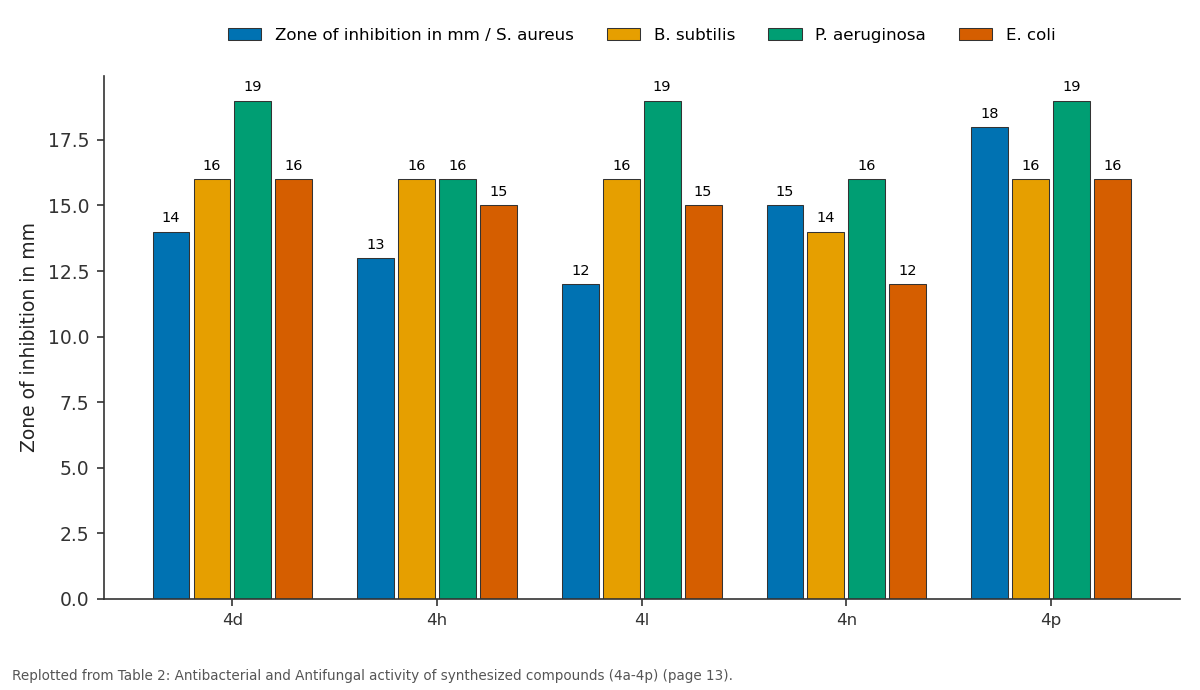
Zone of inhibition in mm / S. aureus and B. subtilis and more: 4d vs 4h vs 4l vs 4n vs 4p
Replotted from Table 2 (page 13) of the original paper. Every bar is the paper's own table value.
View source evidence ↗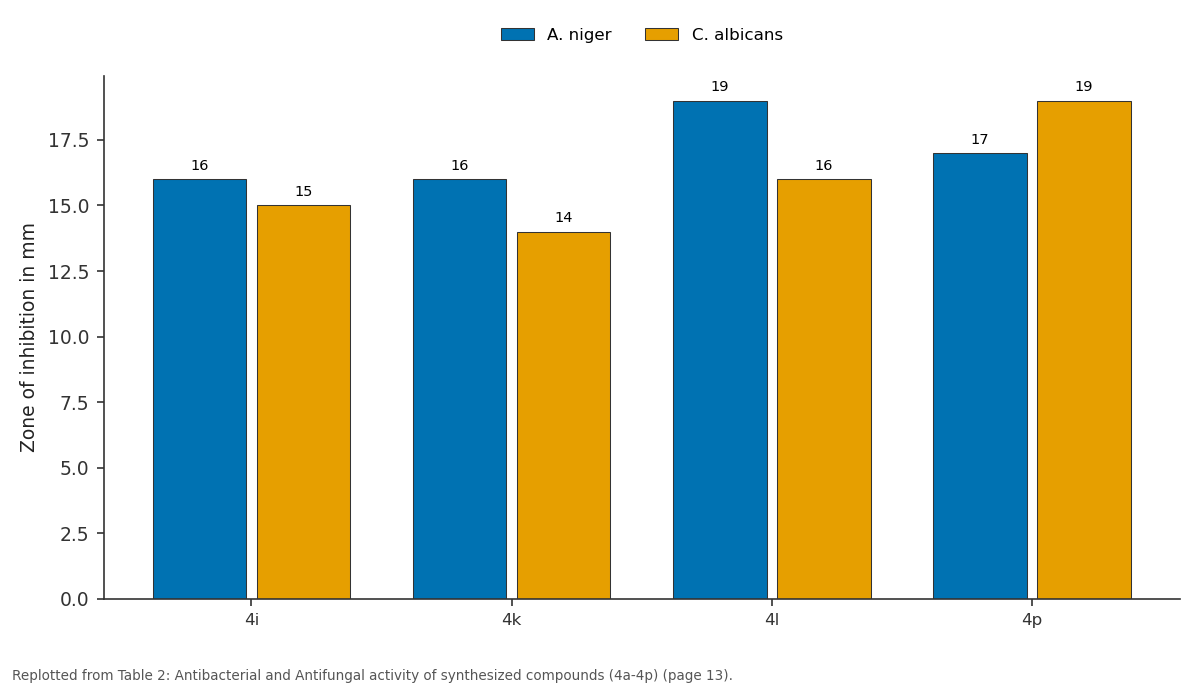
A. niger and C. albicans: 4i vs 4k vs 4l vs 4p
Replotted from Table 2 (page 13) of the original paper. Every bar is the paper's own table value.
View source evidence ↗Figures & tables
From the original paper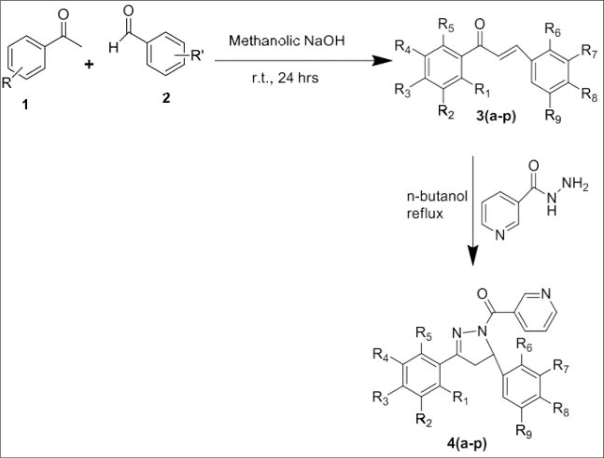 Figure 1
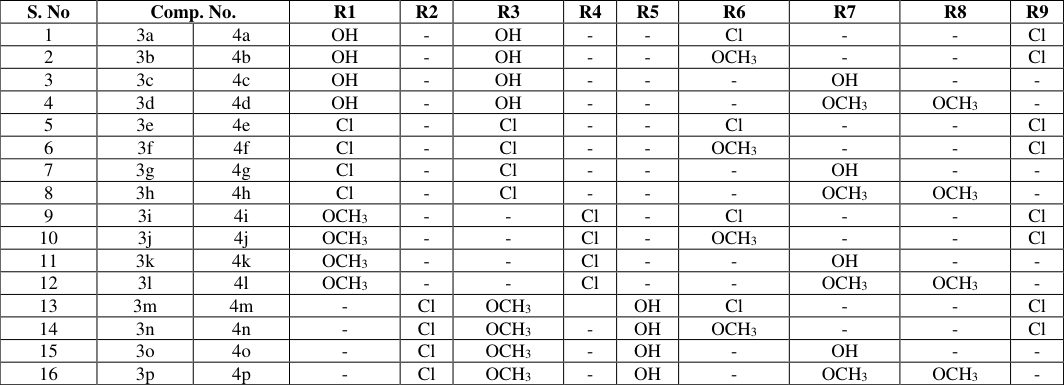 Table 1
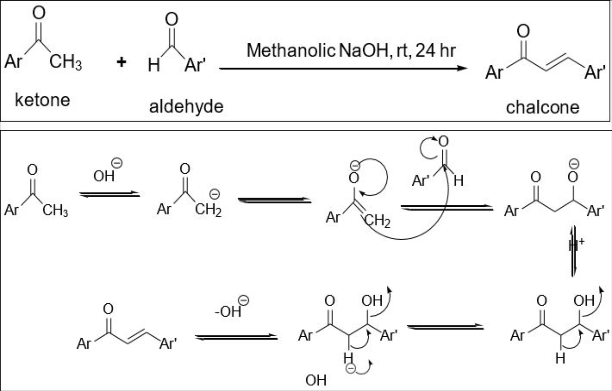 Figure 2
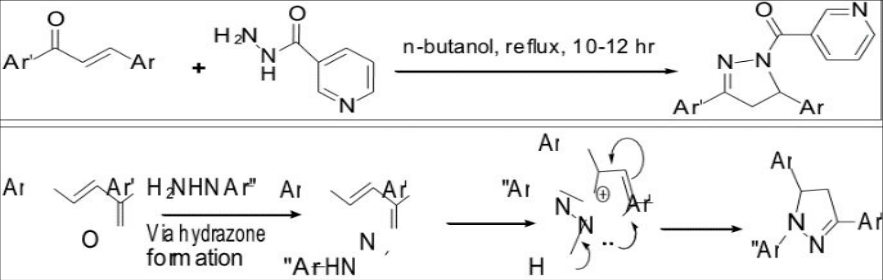 Figure 3
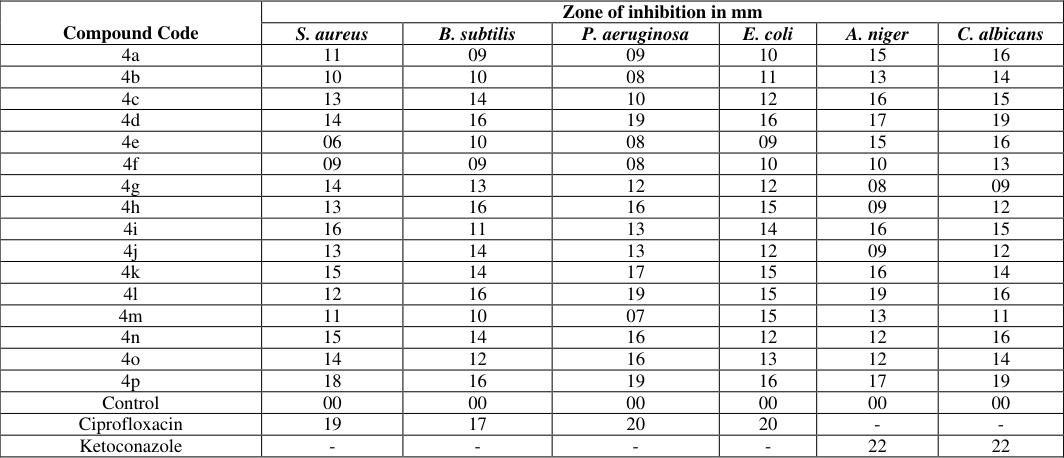 Table 2
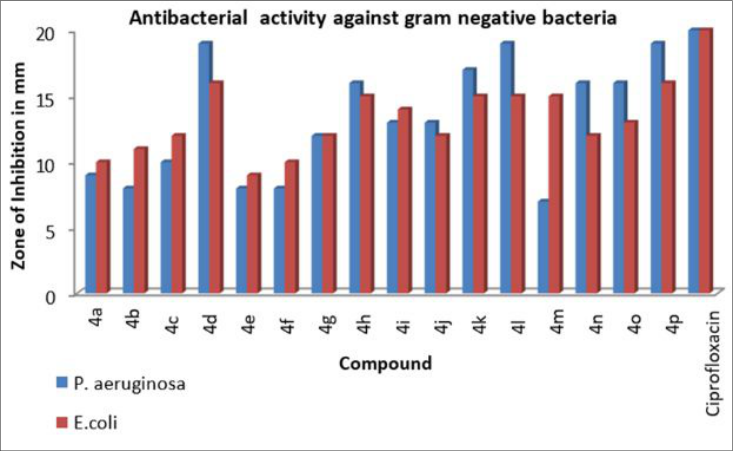 Figure 4
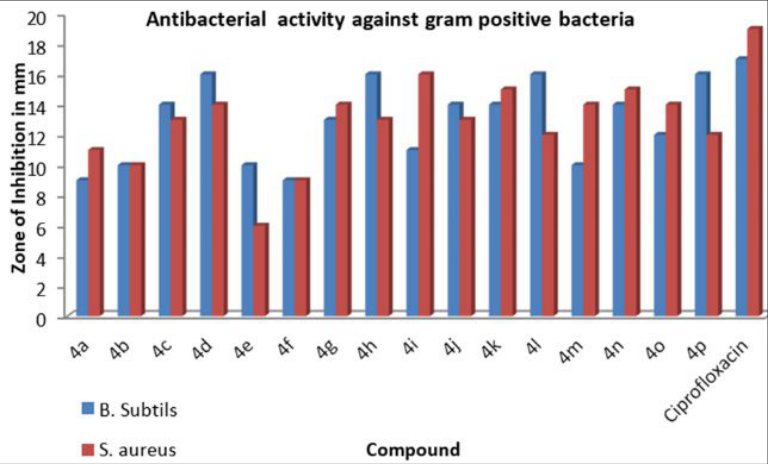 Figure 5
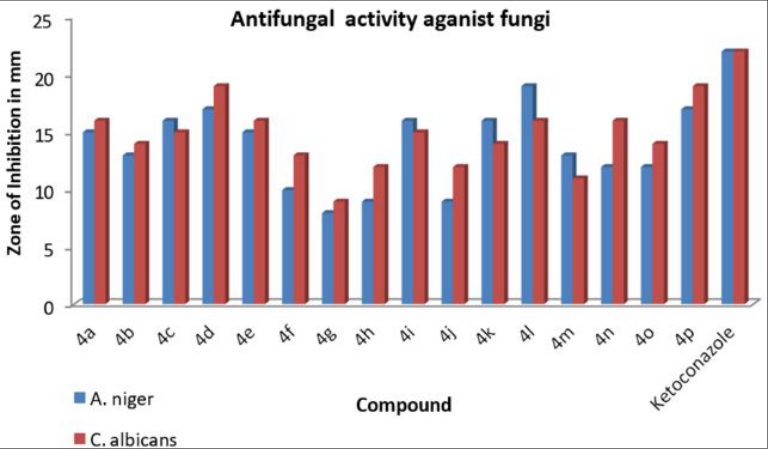 Figure 6
Introduction
Medicinal or Pharmaceutical Chemistry is a branch of science at the interface of chemistry and biology, which deals with the design, synthesis and development of agents for therapeutic use. Each year, hundreds of thousands of new molecules are synthesized and screened for their pharmacological activity. These molecules are categorized into different classes depending upon their chemical structure or pharmacological activity. One of the challenges of future malarial chemotherapy is to develop compounds that are innovative with respect to the chemical scaffold and molecular target. Many approaches to antimalarial drug discovery currently being deployed include optimization of therapy with available drugs including combination therapy, developing analogs of the existing drugs, evaluation of potent agents from natural products especially plants, use of compounds originally developed against other diseases, and evaluation of drug-resistance reversers (Chemosensitizers) as well as new chemotherapeutic targets. It is hope that these approaches might present good prospective in the search for safe and efficient new drugs for the treatment of malaria (Pandeya et al., 1999) [11] . Microorganisms are ubiquitous. The association of humans with such microorganisms is generally harmonious as microbial flora in human gut and skin. In spite of this, the tissues of healthy animals and plants are essentially microbe-free. This is achieved through provision of a number of non-specific and specific defense mechanisms. Violation of these defenses by microorganisms, through the expression of virulence factors and adaptation to a pathogenic mode of life, or following disease, accidental trauma or implantation of medical devices may lead to the establishment of microbial infections (Acharya et al., 2007) [1] .
An infection is invasion of a host organism by microorganisms, proliferation of the invading organisms and host reaction to those microorganisms where as an infectious disease is infection with outbreak of clinical symptoms. Common routes of invasion for microorganisms, also called portal of entry are skin, respiratory tract, intestinal tract, urinogenital tract and conjunctiva (Acharya et al., 2010) [2] . Many of bacteria are sensitive to antibiotics and most infectious diseases are curable. Infectious diseases are still, despite the medical advances made during the last century, second leading cause of death. No more than six deadly infectious diseases -pneumonia, tuberculosis, diarrhoeal diseases, malaria, measles and more recently HIV/AIDSaccount for half of all premature deaths, killing mostly children and young adults. Between 14 and 17 million people die each year due to infectious diseases -nearly all live in developing countries. Since their discovery antimicrobial agents are widely used and proven extremely effective in the treatment of bacterial infections. The antibacterial agents may be bacteriostatic or bactericidal in nature. The rapid rise in microbial resistance to the traditional antibiotics has necessitated a continuing search for new classes of compounds with novel modes of antibacterial activity. Considering all the scaffolds of heterocyclic ring, pyrazoline among the various 5-membered heterocyclic compound derivatives have received significant attention in the recent years due to their diverse pharmacological and biological activities such as antifungal, antidepressant, anticonvulsant, anti-inflammatory, antibacterial, antitubercular, anticancer, human acyl-CoA: cholesterol acyltransferase inhibitors and analgesic properties (Bansal 2001, Acharya et al., 2010, Joshi et al., 2010) [13,2,14] . The stability and broad range of promising pharmacological properties inspired chemists to synthesize and study more pyrazoline derivatives since structural modifications can lead to different bioactivity. A number of pyrazolines prepared from hydrazines, arylhydrazines and a few acid hydrazides were reported in literature. Literature reports indicated that additional ester group, amide group or in general carbonyl group can enhance many of the bioactivities of pyrazolines. Among the various synthetic strategies reported, one pot cyclic condensation between chalcones and appropriate acid hydrazide seems to be more promising and challenging. This led to the planning of the synthesis of the above mentioned new 2-pyrazolines using similar strategy. Thus the present work aims at the synthesis of some new pyrazolin derivatives through the reaction between appropriate acid hydrazide and chalcones.
Experimental
All the other chemicals used were obtained from Sigma-Aldrich, Spectrochem and High Media.
Physico-chemical data of the synthesized compounds
The structures of synthesized compounds were determined using melting points, Infrared spectroscopy (IR), 1 H nuclear magnetic resonance spectroscopy ( 1 H-NMR) and elementary analysis. The melting point of the synthesized compounds were determined using an open capillary and are uncorrected. IR spectra were recorded on a FT-IR Shimadzu DZU 8400S spectrophotometer in KBr disks and Elemental analysis was done on a Perkin-Elmer 2400C, H, N analyzer and values were found to be within the acceptable limits of the calculated values. The 1 H-NMR spectra of the synthesized compounds in CDCl3/DMSO were recorded at 400 MHz by Bruker Advance II 400 NMR spectrometer. Chemical shift values are given in (ppm) scale using Tetramethylsilane (TMS) as an internal standard. Significant 1 H-NMR data are written in order: number of protons, multiplicity (b, broad; s, singlet; d, doublet; dd, double doublet; t, triplet; m, multiplet), coupling constants in Hertz, assignment. The FAB mass spectra (at room temperature) were recorded on TOF MS ES + mass spectrometer. All these above analysis were done at SAIF, Punjab University, Chandigarh. Progress of reaction and purity of synthesized compounds was ascertained by thin layer chromatography (A) using Silica gel G and Iodine vapors as detecting agent.
Chemistry
The synthesis of the designed compounds (4a-4p) was performed in a manner as outlined in Figure 1. General method of synthesis of Chalcone (3a -3p) Chalcones are synthesized by Claisen-Schmidt condensation (Furniss et al., 1989; Kumar et al., 2010) [4,8] of aldehyde and ketone by base catalyzed or acid catalyzed followed by dehydration to yield chalcones (Figure 2).
General procedure for the synthesis of chalcones (3a-3p)
To a solution of substituted acetophenone (16 mmole) in 10 mL of methanol on an ice bath, freshly prepared 2 N methanolic NaOH solution (60 mL) was added and stirred for 10 min. To this, appropriate aldehyde (16 mmole) was added and stirred at room temperature for 12-24 hr. The reaction mixture was cooled on an ice bath, neutralized with diluted HCl and the precipitate was washed three times with 50 mL distilled water to give the crude product. The product was recrystallized from methanol or ethanol/ water. The purity of the product was checked by TLC using ethylacetate and hexane (4:6) as mobile phase and iodine vapors as detecting agent.
1-(5-chloro-2-hydroxy-4-methylphenyl)-3-(5'-chloro-2'methoxyphenyl)prop-2-en-1-one (3n)
Synthesized by above method from 3-chloro, 6-hydoxy, 4methylacetophenone (16 mmol) and 2-methoxy
General method for synthesis of substituted 2pyrazolines (4a-4p)
The substituted 2-pyrazolines (4a-4p) were synthesized according to the scheme depicted in Figure 3 (Ozdemir et al., 2008) [10] . In this method, chalcone and nicotinic acid hydrazide were refluxed in n-butanol in order to synthesize the desired product (Kini and Gandhi, 2008) [7] . Factors such as the structure and position of the substituents have profoundly influenced the rate of the reaction. The generally accepted interpretation of this reaction, involves the initial formation of an aryl hydrazone with subsequent nucleophilic attack of nitrogen upon the carbon-carbon double bond at position. Hence the electropositive nature of carbon may control the overall rate of the reaction. The electropositive nature of carbon is controlled by the aromatic ring directly connected to it. Halogens being electron withdrawing in nature significantly increase the positive character of carbon lead to faster reaction while electron donating alkyl and alkoxy groups contributed for slower reaction. To the solution of the appropriate chalcone 3a -3p (4 mmole) in 10 mL of n-butanol, (0.55 g, 4 mmole) of nicotinic acid hydrazide was added and the reaction mixture was refluxed for 8-10 hr. The excess of solvent was removed under reduced pressure and the reaction mixture was cooled on an ice bath. The products precipitated out at low temperature were washed five times with 50 mL distilled water, reconstituted in minimum amount of methanol and dried under reduced pressure. This product was further purified by crystallization from the ethanol-DMF mixture (1:1). Purity of the products was checked by TLC using mixture of acetone and petroleum ether (40:60 V/V) as mobile phase.
Antimicrobial evaluation
Microbiology is the study of living organisms of microscopic size, which include bacteria, fungi, algae, protozoa, and the infectious agents at the borderline of life that are called viruses. It is concerned with their form, structure, reproduction, physiology, metabolism and classification. It includes the study of their distribution in nature, their relationship to each other and to other living organisms, their effects on human beings, animals and plants, and their reactions to physical and chemical agents. Microorganisms are closely associated with the health and welfare of human beings. Some microorganisms are beneficial and others are detrimental (Tripathi, 2003) [12] . For example, microorganisms are involved in making of yoghurt, cheese, and wine, in production of penicillin, interferon and alcohol, microorganisms can cause disease, spoil food and deteriorate materials like iron pipes, glass lenses and wood pilings. A number of microbial species are responsible for mild to severe infectious diseases in man. Drugs, which are helpful in combating the infections diseases caused by microbes, are known as anti-microbial agents. Anti-microbial agents are chemical substance of either natural or synthetic origin, which suppress the growth of different microorganisms and may eventually destroy them. As literature reveals that pyrazoline compounds showed anti-microbial activities, anti-microbial screening of the synthesized compounds was carried out to explore their potential as anti-microbial agents.
Methods of Antimicrobial Evaluation
After the development of desired new drug molecules, with different structure, an in vitro screening is done necessary to uncover the desired activity of the compounds. The inhibition of the microbial growth under standardized condition may be utilized for demonstrating the therapeutic efficacy of the synthesized compounds. The following two are the methods available for screening of the antimicrobial agent: 1. Turbidimetric/photometric/tube dilution method. 2. Agar diffusion/cup-plate/cylinder plate method.
Turbidimetric method
In this method a graded concentration of the antimicrobial substance in sterile fluid nutrient media is prepared. All of them are inoculated with a loop of specific microorganism. A positive control, a negative control and a blank is also maintained. They are incubated at 37 °C for 24 hours or necessary conditions depending on the organism chosen. Among the different concentrations of the substance, the least one, which inhibits the growth of the microorganism, is noted visually or by measuring the percentage transmittance or absorbance at 530 nm against a blank. By this method Minimum Inhibitory Concentration (MIC) for the newly synthesized compound is determined.
Agar diffusion method
This method gives the extent of growth of the microorganism, inoculated into a solid nutrient agar bed by the antimicrobial substance. The test substance is kept in a cup made-up of agar bed and diffuses to inhibit the growth pyrazoline derivatives. The fragmentation pattern obtained in the mass spectra was also according to the anticipated structures. All the above results confirmed the formation of the synthesized compounds. These signals clearly showing the formation of pyrazoline ring.
In vitro antimicrobial activity
The derivatives were screened for antibacterial and antifungal activity using ciprofloxacin and Ketoconazole as standards. Ciprofloxacin has shown maximum activity against S. aureus, B. subtilis, P. aeruginosa and E. coli with the zone of inhibition of 19mm, 17mm, 20 mm and 20 mm while Ketoconazole has shown maximum activity against Aspegallus niger and Candida albicans with zone of inhibition of 22 mm and 22 mm (Table 2 andFig In accordance with the data obtained from antibacterial activity, all the synthesized 1,3,5-trisubstituted pyrazoline derivatives have showed mild to good activity against tested organisms. Among these 1,3,5-trisubstituted pyrazoline derivatives, compound 4a, 4b, 4e, 4f, 4m showed mild activity and compound 4c, 4g. 4i, 4j, 4k, 4o showed moderate activity and 4d, 4h, 4l, 4n, 4p showed good activity against bacteria. In accordance with the data obtained from antifungal activity, compound 4g, 4h, 4j showed mild activity and compound 4a-4f, 4m-4o showed moderate activity and 4i, 4k, 4l, 4p showed good activity against fungi. However, further studies on activity and long term toxicity are to be carried out before any conclusion are drawn, as these categories of drug are known to have potential antimicrobial activity. Testing on different models can further substantiate the antimicrobial activity of the synthesized analogues. 4.1. In the first step, syntheses of chalcones 3a-3p were carried out by the well-known Claisen-Schmidt reaction and products were purified by recrystallization from methanol (60-70% yield). In the second step, chalcone and nicotinic acid hydrazide were refluxed in n-butanol or methanol respectively, in order to synthesize the desired product. Purity of the compounds was checked on TLC plates (Silica gel G) which were visualized by exposing to iodine vapours. Physico-chemical characterization, melting point, FT-IR, 1
| Compound Code | Zone of inhibition in mm | — | — | — | — | — |
|---|---|---|---|---|---|---|
| S. aureus | B. subtilis | P. aeruginosa | E. coli | A. niger | C. albicans | |
| 4a | 11 | 09 | 09 | 10 | 15 | 16 |
| 4b | 10 | 10 | 08 | 11 | 13 | 14 |
| 4c | 13 | 14 | 10 | 12 | 16 | 15 |
| 4d | 14 | 16 | 19 | 16 | 17 | 19 |
| 4e | 06 | 10 | 08 | 09 | 15 | 16 |
| 4f | 09 | 09 | 08 | 10 | 10 | 13 |
| 4g | 14 | 13 | 12 | 12 | 08 | 09 |
| 4h | 13 | 16 | 16 | 15 | 09 | 12 |
| 4i | 16 | 11 | 13 | 14 | 16 | 15 |
| 4j | 13 | 14 | 13 | 12 | 09 | 12 |
| 4k | 15 | 14 | 17 | 15 | 16 | 14 |
| 4l | 12 | 16 | 19 | 15 | 19 | 16 |
| 4m | 11 | 10 | 07 | 15 | 13 | 11 |
| 4n | 15 | 14 | 16 | 12 | 12 | 16 |
| 4o | 14 | 12 | 16 | 13 | 12 | 14 |
| 4p | 18 | 16 | 19 | 16 | 17 | 19 |
| Control | 00 | 00 | 00 | 00 | 00 | 00 |
| Ciprofloxacin | 19 | 17 | 20 | 20 | - | - |
| Ketoconazole | - | - | - | - | 22 | 22 |
Table text extracted from the original PDF; superscript letters are shown inline. The original table image is below.
View original table image
Figures and tables from the paper
| S. No | Comp. No. | — | R1 | R2 | R3 | R4 | R5 | R6 | R7 | R8 | R9 |
|---|---|---|---|---|---|---|---|---|---|---|---|
| 1 | 3a | 4a | OH | - | OH | - | - | Cl | - | - | Cl |
| 2 | 3b | 4b | OH | - | OH | - | - | OCH3 | - | - | Cl |
| 3 | 3c | 4c | OH | - | OH | - | - | - | OH | - | - |
| 4 | 3d | 4d | OH | - | OH | - | - | - | OCH3 | OCH3 | - |
| 5 | 3e | 4e | Cl | - | Cl | - | - | Cl | - | - | Cl |
| 6 | 3f | 4f | Cl | - | Cl | - | - | OCH3 | - | - | Cl |
| 7 | 3g | 4g | Cl | - | Cl | - | - | - | OH | - | - |
| 8 | 3h | 4h | Cl | - | Cl | - | - | - | OCH3 | OCH3 | - |
| 9 | 3i | 4i | OCH3 | - | - | Cl | - | Cl | - | - | Cl |
| 10 | 3j | 4j | OCH3 | - | - | Cl | - | OCH3 | - | - | Cl |
| 11 | 3k | 4k | OCH3 | - | - | Cl | - | - | OH | - | - |
| 12 | 3l | 4l | OCH3 | - | - | Cl | - | - | OCH3 | OCH3 | - |
| 13 | 3m | 4m | - | Cl | OCH3 | OH | Cl | - | - | Cl | |
| 14 | 3n | 4n | - | Cl | OCH3 | - | OH | OCH3 | - | - | Cl |
| 15 | 3o | 4o | - | Cl | OCH3 | - | OH | - | OH | - | - |
| 16 | 3p | 4p | - | Cl | OCH3 | - | OH | - | OCH3 | OCH3 | - |
Table text extracted from the original PDF; superscript letters are shown inline. The original table image is below.
View original table image
References
9 in the original paper- Acharya BN, Kaushik MP. Pharmacophore-based predictive model generation for potent antimalarials targeting haem detoxification pathway. Med Chem Res. 2007;16(4):213-229.
- Acharya BN, Saraswat D, Tiwari M, Shrivastava AK, Ghorpade R, Bapna S, et al. Synthesis and antimalarial evaluation of 1, 3, 5-trisubstituted pyrazolines. European Journal of Medicinal Chemistry 2010;45(2):430-438. https://doi.org/10.1016/j.ejmech.2009.10.023.
- Agrawal OP, Sonar PK, Saraf SK. 4-Thiazolidinone and 1-thia-3,4,9-triaza fluorene conjugates: synthesis, characterization and antimicrobial screening. Medicinal Chemistry Research 2012;22(4):1972-1978. https://doi.org/10.1007/s00044-012-0200-1.
- Ganesh A. Biological activities of some pyrazoline derivatives Int. J Pharm Bio Sci. 2013;4(2):727-733.
- Kini S, Gandhi AM. Novel 2-pyrazoline derivatives as potential antibacterial and antifungal agents. Indian J. Pharm. Sci. 2008;70(1):105-108.
- Kumar R, Mohanakrishnan D, Sinha AK, Sahal D. Reinvestigation of structure-activity relationship of methoxylated chalcones as antimalarials: Synthesis and evaluation of 2,4,5-trimethoxy substituted patterns as lead candidates derived from abundantly available natural asarone. Eur. J Med. Chem. 2010;45(11):52925301.
- Ozdemir A, Turan-Zitouni G, Kaplancikli ZM. Novel analogues of 2-pyrazoline: Synthesis and antimycobacterial evaluation. Turk. J Chem. 2008;32(5):529-538.
- Bansal HS, Mendelson MB, Sharma B. The impact of internal marketing activities on external marketing outcomes. Journal of quality management. 2001 Oct;6(1):61-76.
- Joshi RK, Nayak S. Gene pyramiding-A broad spectrum technique for developing durable stress resistance in crops. Biotechnol. Mol. Biol. Rev. 2010 Aug;5(3):51-60.