
Research article · 2024 · Full text
International Journal of Agriculture and Food ScienceEffect of different urea coating formulation, method and number of fertilizer partitions on some chemical characteristics of pepper plants
Volume 6(1) · Pages 139–149 · DOI: 10.33545/2664844x.2024.v6.i1b.180 ↗
Research areasAgricultural Science and FertilizationPotato Plant Research
Abstract
Author-writtenA field experiment was conducted during the 2023 growing season. The experiment aimed to investigate the impact of four treatments of coated urea fertilizer. The experiments aim to assess the efficiency of the coating in providing nitrogen during the crop growth period while reducing production costs. The experiment involved three factors: Factor 1: Coating Material Type (F): four coating materials were selected, and uncoated urea including: F1: Uncoated urea (control), F2: Finely ground tree bark + Arabic gum + water, F3: Finely ground tree bark + paraffin wax, F4: Residual oil + sulfur + soybean oil, F5: Residual oil + finely ground compost + soybean oil. Factor 2: Fertilizer Application Method (M): M1: Broadcasting Method: M2: Banding Method and Factor 3: Nitrogen Fertilizer Splitting (P): P1: Two Splits and P2: Three Splits. Coating treatment F2 exhibited significantly higher compared to the other coated treatments. All coated treatments Were significantly superior over the uncoated urea treatment in terms of Nitrogen and Phosphorus concentration in plant leaves. However, all coated treatments Were superior over the uncoated urea treatment in these parameters. While F3 coating treatment superior over the other coated treatments in terms of Potassium concentration in plant leaves, and all coated treatments superior over the uncoated urea treatment. F2 coating treatment superior over the other coated treatments in terms of total soluble solids and vitamin C concentration in pepper fruits, and all coated treatments superior over the uncoated urea treatment in terms of total soluble solids and vitamin C concentration in pepper plants.. Regarding application method, the banding method (M2) Were superior over the broadcasting method (M1) across all treatments. Regarding nitrogen fertilizer splitting, splitting into three applications (P2) generally Were superior over splitting into two applications (P1) in most plant traits (total soluble solids and vitamin C concentration in pepper plants). Splitting into two applications (P1) was superior only in terms of (NPK) concentration in plant leaves.
Summary
Source-checkedPlain-language reading of the full paper, prepared with AI and checked against the text. Each point links to the authors' own words.
Why it matters
- Nitrogen is a critical plant nutrient required in larger quantities than others, playing a key role in chlorophyll synthesis, protein formation, and cell division. View evidence ↗
- Standard urea fertilizer often suffers from low efficiency because soil microorganisms can cause nitrogen loss through ammonia volatilization and nitrate leaching. View evidence ↗
- There is a critical need for agricultural systems that increase food production while reducing the environmental damage caused by fertilizer mismanagement. View evidence ↗
The question
- The study aimed to evaluate how different urea coating materials, application methods, and splitting schedules affect nutrient availability and growth parameters in pepper plants. View evidence ↗
What they did
- The researchers tested five coating formulations (F1-F5) using a fixed 4.5% coating material weight, including a control of uncoated urea. View evidence ↗
- Two fertilizer application methods were compared: broadcasting (M1) and banding (M2). View evidence ↗
- A total dose of 120 kg N/ha was applied using either two splits (P1) or three splits (P2). View evidence ↗
What they found
- All coated urea treatments resulted in higher leaf nitrogen concentrations than uncoated urea, which had the lowest value at 1.38%. View evidence ↗
- The banding application method (1.70%) was more effective at increasing leaf nitrogen concentration than the broadcasting method (1.54%). View evidence ↗
- Coated urea treatments increased leaf phosphorus concentrations (0.16% to 0.17%) compared to uncoated urea (0.14%). View evidence ↗
- Coating treatments F2, F3, and F4 significantly increased leaf potassium concentrations compared to the uncoated control (2.22%). View evidence ↗
- Coating treatments F2 and F4 produced the highest total soluble solids in fruits (approx 7.02%), while uncoated urea was the lowest (6.09%). View evidence ↗
- All coated urea treatments increased vitamin C concentration in fruits, with F2 reaching 51.52 mg/100g compared to 25.65 mg/100g for uncoated urea. View evidence ↗
- The combination of banding, three splits, and F2 coating (M2P2F2) yielded the highest vitamin C concentration (64 mg/100g), while broadcasting, two splits, and uncoated urea (M1P1F1) was the lowest (18.36 mg/100g). View evidence ↗
What it means
- The authors conclude that coating urea with tree bark and either gum Arabic or paraffin wax effectively controls nitrogen release and reduces nutrient loss. View evidence ↗
- The authors state that more research is required to understand the specific molecular and physiological mechanisms by which coated urea increases vitamin C biosynthesis. View evidence ↗
Visual summary
3 visualsIllustrations explain the paper; charts are replotted from the paper's own table values.
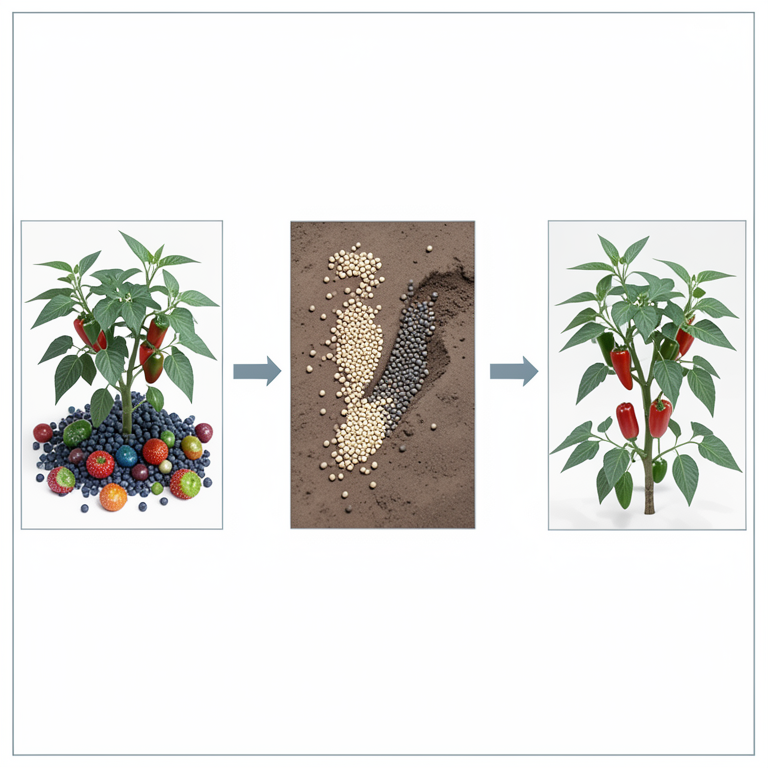
Experimental Factor Matrix
AI-generated conceptual illustration (pepper plants). It explains the idea and does not show study data.
View source evidence ↗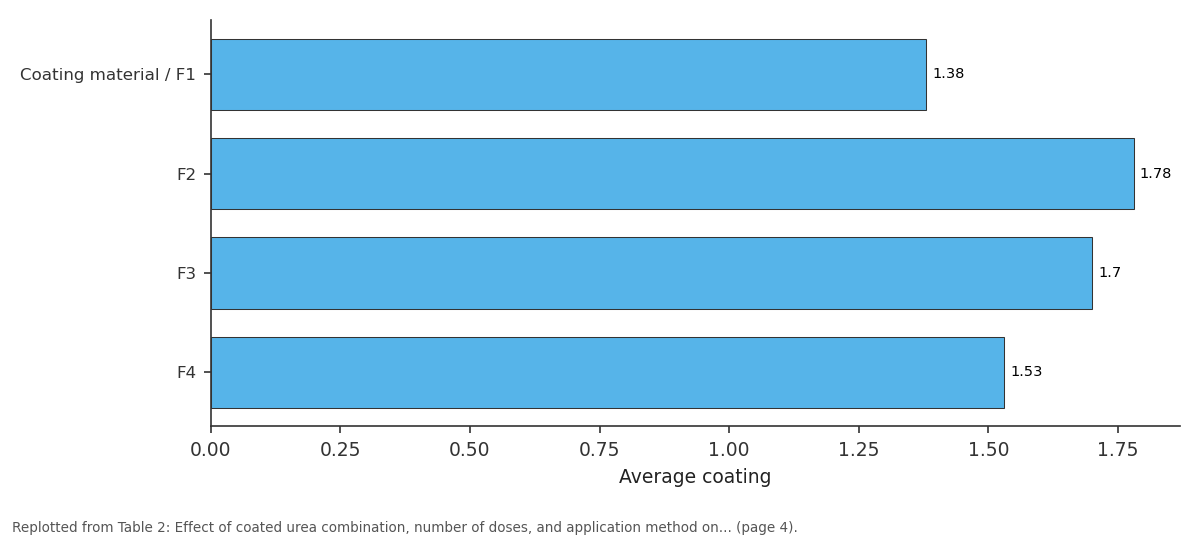
Average coating: Coating material / F1 vs F2 vs F3 vs F4
Replotted from Table 2 (page 4) of the original paper. Every bar is the paper's own table value.
View source evidence ↗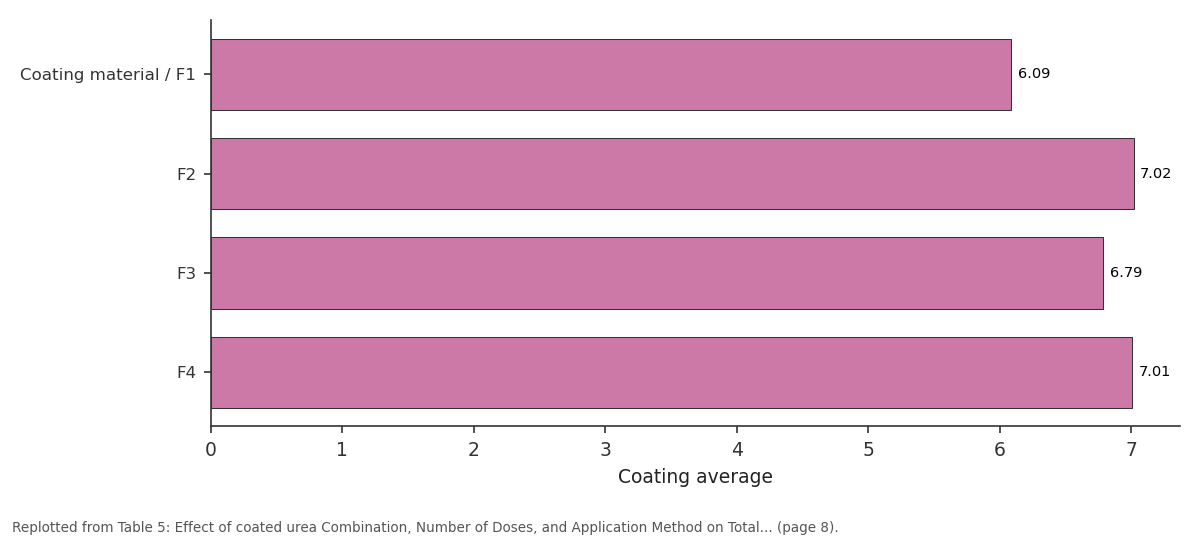
Coating average: Coating material / F1 vs F2 vs F3 vs F4
Replotted from Table 5 (page 8) of the original paper. Every bar is the paper's own table value.
View source evidence ↗Figures & tables
From the original paper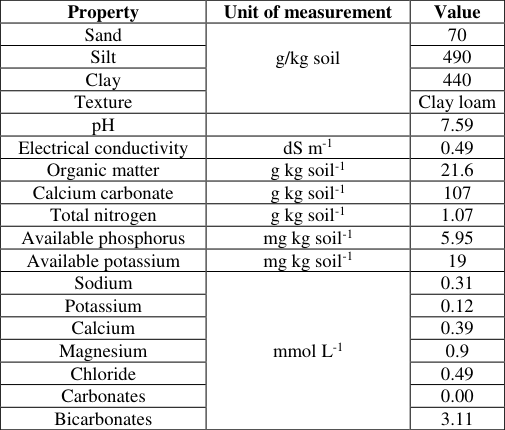 Table 1
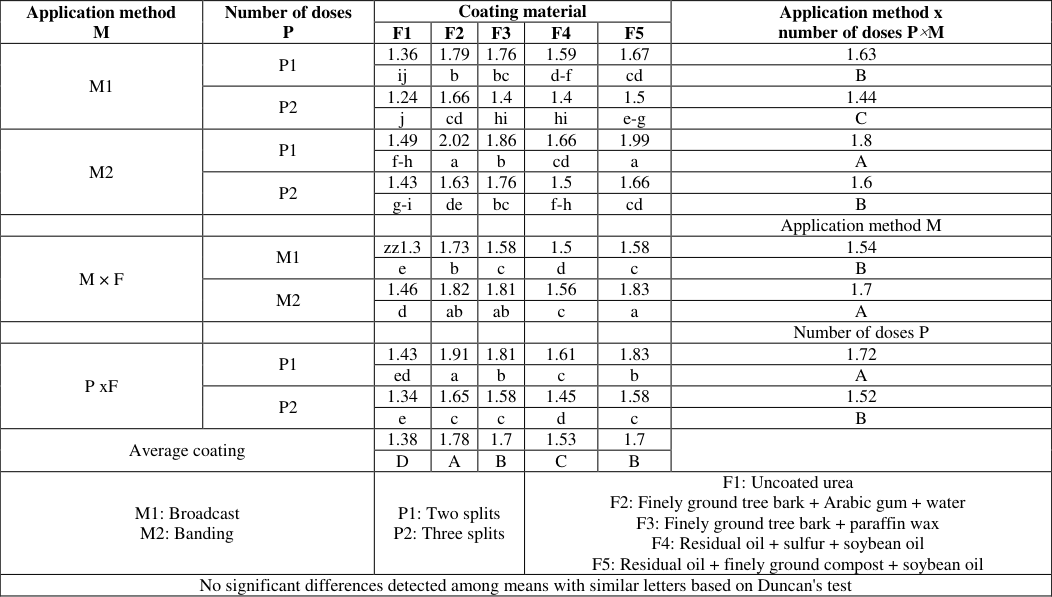 Table 2
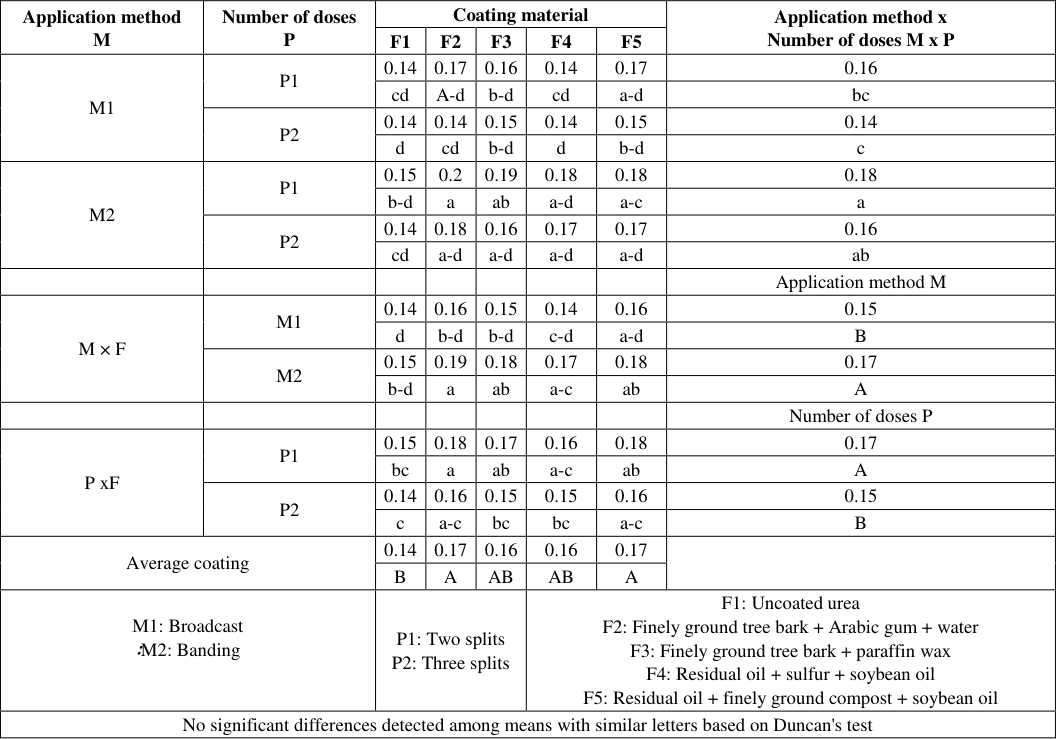 Table 3
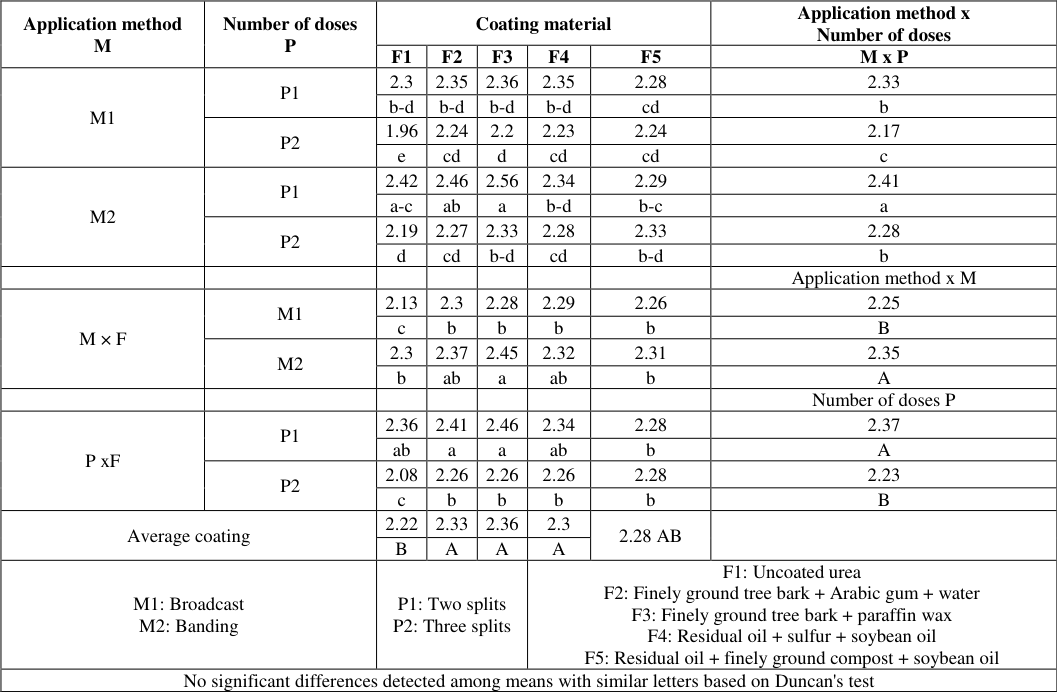 Table 4
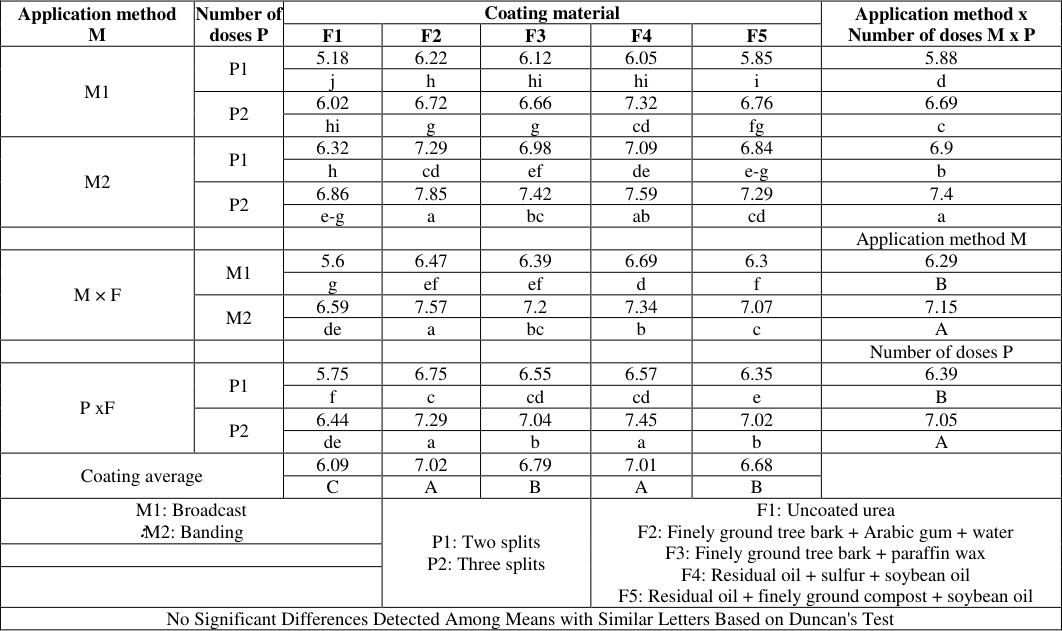 Table 5
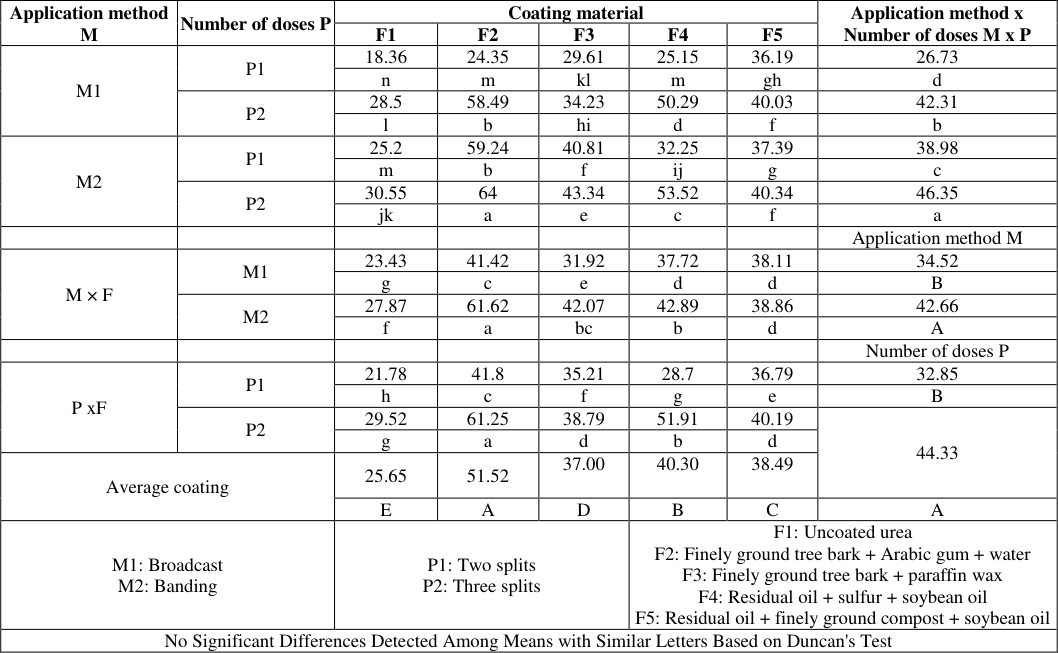 Table 6
Introduction
With the world's rapidly growing population, the agricultural sector must utilize larger quantities of fertilizers to enhance food supplies, consequently escalating food production costs and global food demands. Simultaneously, arable land is dwindling due to soil degradation stemming from various factors. To meet the rising demand for food, the agricultural sector is compelled to employ vast amounts of fertilizers, which have thus far exhibited low fertilizer use efficiency and undesirable environmental impacts. Therefore, developing systems to augment production and mitigate environmental concerns is paramount (Chien et al., 2009) [15] . Nitrogen is one of the most widely used nutrients in fertilization programs because plants generally require it in higher quantities compared to other nutrients. Nitrogen plays a crucial role in the synthesis of chlorophyll molecules, the formation of proteins, enzymes, and cell membranes, cell division and elongation, and the generation of new cells. Additionally, it enhances plant tolerance to extreme environmental conditions. Urea fertilizer is the most common nitrogen source for crops worldwide, owing to its high nitrogen content (46%) and low production costs. However, the hydrolysis of the amide molecule in urea fertilizer by the urease enzyme secreted by soil microorganisms can lead to significant nitrogen losses through nitrate leaching, ammonia volatilization, or other biological processes, thereby reducing nitrogen use efficiency in the soil (Parfitt et al., 2006) [34] .
International Journal of Agriculture and Food Science 2024 ; 6(1): 139-149 urea with equal proportions of gypsum and sulfur exhibited high resistance to degradation and a reduced dissolution rate. However, its effectiveness was further enhanced by applying molten paraffin wax to the hot urea surface. The efficiency of coated urea was optimized by employing a 26% gypsum-sulfur blend (20% total coating), 3% paraffin wax, and sieving the coating materials prior to application. Consequently, the aim of this study was to investigate different urea coating materials to minimize nitrogen losses and enhance nutrient availability in the soil, and evaluate the effects of coated urea formulations with the proposed materials on certain growth parameters of pepper plants (plant height, number of leaves, number of branches, leaf chlorophyll content, leaf area) and to mitigate the negative environmental impact of nitrogen losses.
Materials and methods
A field experiment was conducted in a calcareous soil with physical and chemical properties as outlined in Table 1 to investigate the influence of coated urea, application method, and number of fertilizer applications on in some chemical properties of pepper crops
| Property | Unit of measurement | Value |
|---|---|---|
| Sand | g/kg soil | 70 |
| Silt | 490 | |
| Clay | 440 | |
| Texture | Clay loam | |
| pH | 7.59 | |
| Electrical conductivity | dS m-1 | 0.49 |
| Organic matter | g kg soil-1 | 21.6 |
| Calcium carbonate | g kg soil-1 | 107 |
| Total nitrogen | g kg soil-1 | 1.07 |
| Available phosphorus | mg kg soil-1 | 5.95 |
| Available potassium | mg kg soil-1 | 19 |
| Sodium | mmol L-1 | 0.31 |
| Potassium | 0.12 | |
| Calcium | 0.39 | |
| Magnesium | 0.9 | |
| Chloride | 0.49 | |
| Carbonates | 0.00 | |
| Bicarbonates | 3.11 |
Table text extracted from the original PDF; superscript letters are shown inline. The original table image is below.
View original table image
Experimental factors
The study encompassed three factors:
Factor 1: Coating material type (Represented by symbol F) Four formulations were selected with a fixed proportion of 4.5% coating material weight in addition to uncoated urea: 1. uncoated urea (F1) 2. Finely ground tree bark + Arabic gum + water (F2) 3. Finely ground tree bark + paraffin wax (F3) 4. Residual oil + sulfur + soybean oil (F4) 5. Residual oil + finely ground compost + soybean oil (F5) Factor 2: Application method (Represented by symbol M) 1. Broadcast method (M1) 2. Banding method (M2) Factor 3: Split application of nitrogen fertilizer (Represented by symbol P) The recommended nitrogen fertilizer dose of 120 kg N/ha (Ministry of Agriculture, 2011) was split and applied as follows:
1. 1/2 of the recommended amount at planting + 1/2 one month after planting (P1) 2. 1/3 of the recommended amount at planting + 1/3 one month after planting + 1/3 70 days after planting (P2). The experimental field was prepared by plowing twice perpendicularly using a moldboard plow. Subsequently, leveling and smoothing operations were conducted using disc harrows. The field was then divided into three blocks (RCBD design) with a 1-meter spacing between each block. Each block was further divided into 20 plots (experimental units) with an area of 4 m² per unit and dimensions of 2 m x 2 m. A 1-meter spacing was maintained between each plot. This resulted in a total of 60 experimental units. Sweet pepper seedlings of the cultivar 'Flavio F1' were transplanted on April 19, 2023, in rows spaced 75 cm apart, with a plant spacing of 25 cm within each row. Each plot had three rows, and each row had six plants. The experiment was irrigated using a drip irrigation system according to the plants' water requirements. Organic fertilizers were applied to each plot by broadcasting and mixing them with the soil using a hoe and then a hand cultivator. Weeding was done manually, while insect control was achieved using the insecticide Acetamiprid (Powder) at a rate of 1 g/L to combat chewing insects, whiteflies, and aphids. The insecticide was applied uniformly to all treatments whenever necessary. Spraying was carried out in the early morning until the plants were fully wetted. Field management and irrigation continued until August 20, 2023. Urea fertilizer was applied in split doses according to the splitting factor. Triple superphosphate (P2O5 (P 46%)) was applied as a phosphorus source at a rate of 160 kg P ha -1 , and potassium sulfate (K2O (K 41%)) was applied as a potassium source at a rate of 120 kg K ha -1 in a single dose after planting. Five plants were randomly selected from each experimental unit, and their means were used to calculate the following experimental parameters: NPK Analysis in Leaves: Two months after planting in the field: Leaves were collected and air-dried. After grinding the samples, the following analyses were performed on the digested material: Nitrogen: Quantified using the micro-Kjeldahl method as described in Page et al., (1982) [46] . Phosphorus (%): Quantified using ammonium molybdate and ascorbic acid with a spectrophotometer at 840 nm wavelength following the Olsen method (Page et al., 1982) [46] . Potassium (%): Quantified using ammonium acetate solution and then a flame photometer as described in Page et al., (1982) [46] . Total Soluble Solids (TSS) percentage in fruits was measured using a digital refractometer and expressed as Brix%.
An electric blender was used to obtain plant juice, and 91 ml of fresh juice was taken using a pipette and placed in a 911 ml volumetric flask. The juice was then diluted with distilled water to the mark, and 91 ml of the solution was taken using a pipette and 2 drops of starch indicator were added. The solution was titrated with iodine solution slowly until a blue color appeared. These steps were repeated four times for each sample (Al-Fijm and Abdul Aziz, 1993) [4] . Vitamin C was estimated by oxidizing ascorbic acid (vitamin C) with an oxidizing agent, iodine. Iodine is relatively insoluble in water, but this can be improved by complexing iodine with iodide to form triiodide.
As long as vitamin C is present in the solution, triiodide is rapidly converted to iodide ions. However, once all of the vitamin C has been oxidized, iodide and triiodide will be present and will react with starch to turn the solution blue. This is the endpoint of the titration, at which point the number of millimoles of iodine is equal to the number of millimoles of ascorbic acid. The following relationship is used to convert vitamin concentration from units of mole/L to mg/100ml, taking into account the dilution factor.
(𝑚𝑔/100 𝑚𝑙) = (𝑚𝑜𝑙𝑒/𝐿) × 𝐴𝑀 × 100 where AM is the molecular weight of ascorbic acid (Quan, 2011) [14] .
Results and Discussion
Chemical properties of pepper leaves Nitrogen, phosphorus, and potassium concentrations 1. Percentage of nitrogen in leaves Table (2) shows the effect of study factors on the percentage of nitrogen in leaves. Coating treatments had a significant effect on the percentage of nitrogen in plant leaves between treatments (F2, F3, F5, F4). The average coating values were (1.78, 1.70, 1.70, 1.53%), respectively, and all coated treatments were significantly superior to the uncoated urea treatment, which gave the lowest nitrogen content value (1.38%). Treatment F2 was superior to the other treatments because the materials used to coat urea granules differ in their solubility, which in turn results in a difference in the amount of nitrogen released. This leads to an increase in available nitrogen in the soil in the coated urea fertilizer treatment during growth periods due to the slow decomposition of coated urea fertilizer and its provision of nitrogen to meet the plant's needs, which increased its absorption and transport by the roots into the plant, which in turn increased its concentration in plant tissues. This result is supporting the General Sugar Manufacturing Company (2018) that illustrated the coated treatment caused enhancement of nitrogen content in the leaves of sugarcane. This may be because nitrogen is present in the fertilizer and in the root zone and identified as highly available in the ammonium and nitrates throughout the application period leading to increased uptake by the plant hence increased concentration in the leaves. These results are similar to the findings made by the Castellano et al., (2011) [14] . These results are also consistent with those of Yassin (2023) [45] , who found that the addition of nitrogen fertilizer led to a significant increase in nitrogen concentration in yellow corn leaves. The leaves were analyzed in the early stages of plant life, as this is considered the best period for measuring element concentration in plant leaves, as element concentration in leaves decreases with plant age. Several researchers (Hochmuth et al., 1989) [25] have observed a decrease in nitrogen concentration in tomato leaves with plant age, which is attributed to increased vegetative growth rates with plant age, leading to a dilution of the element in the leaves, as well as increased nitrogen movement from leaves to fruits during their formation. As is evident from the same table, the method of applying nitrogen fertilizer has a significant effect on the nitrogen concentration in the leaves. Adding nitrogen by the banding method recorded the highest value, reaching (1.70%), and superior over the broadcasting method, which recorded a value of (1.54%). The reason for the higher nitrogen concentration in the leaves with the banding method may be due to the fact that adding the fertilizer in this way at a depth of 10 cm helped to keep the nitrogen in the soil and reduce its loss through volatilization, thus allowing the plant to benefit from the largest possible amount. Li et al., (2020) [29] confirmed that applying nitrogen fertilizer by the banding method increased nitrogen efficiency compared to the broadcasting method, which led to increased nutrient uptake from the soil, especially nitrogen. A strong root system was observed, as evidenced by the longer root length and larger root volume of the rice crop, which was the reason for the increased nitrogen uptake. Islam et al., (2023) [38] concluded that applying nitrogen fertilizer by banding reduces nitrogen loss from the soil in the form of ammonia by increasing the contact between fertilizer granules and soil clay particles, which increases nitrogen uptake and utilization efficiency by providing more nitrogen in the root zone, which ensures a long-term supply of nitrogen and its retention in the form of non-exchangeable ammonium in the reduction zone throughout the rice growing season, which increases the nitrogen content in the plant leaves compared to the broadcasting method. Table (2) shows the superiority of adding nitrogen in two splits, where it recorded a value of (1.72%) over adding it in three splits, which recorded a value of (1.52%). Yassin (2023) [45] concluded that splitting nitrogen fertilizer led to a significant increase in nitrogen concentration in the leaves, as splitting nitrogen fertilizer resulted in a significant increase in absorbed nitrogen in the leaves. The reason for this might be that at this stage of development of the plants the splitting treatment allowed for more effective delivery of the nitrogen to the plants, and therefore, an increase in the amount of nitrogen applied over time, would correspond to the growth stage of the plant, leading to an increase in the nitrogen content of the leaves. Al-Baraki and Al-Ajmi (2020) [3] corroborated the implication of the splitting of nitrogen fertilizer to an increased amount of nitrogen absorbed and most other growth traits, yield, and its components. These findings agree with Abo-Zeid et al., (2017) [1] where splitting of nitrogen fertilizer was significant difference in terms of nitrogen content when right amount of nitrogen is given during plant growth stage because the plant requires nitrogen at constant, and nitrogen has positive effect on the root growth thus enhancing the nitrogen uptake from the soil in adequate quantity and hence increasing its content in plant tissues. The two-splits treatment was superior due to the fact that plant leaf samples were taken for element analysis shortly after the addition of the third batch, so the plants did not have the opportunity to benefit from the third batch, and the same was true for the elements phosphorus and potassium. The triple interaction among the study factors (application method, number of doses, and coating material) showed clear significant differences between the treatments. Treatment (M2P1F2) recorded the highest mean, reaching (2.02%), which was superior to all treatments, while treatment (M1P1F1) gave the lowest mean, reaching (1.36%).
Percentage of phosphorus in leaves
Table (3) shows the effect of study factors on the phosphorus percentage in pepper leaves. Coated treatments did not show a significant effect on the phosphorus percentage in the leaves of the plant between the treatments (F2, F5, F4, F3). The average coated percentage was (0.17, 0.17, 0.16, 0.16%), respectively. However, it was significantly higher than the average coated percentage for the uncoated urea treatment, which gave the lowest value for phosphorus percentage of (0.14%). These results are consistent with those who found that coated urea slows the release of urea and reduces the amount released for a longer period during the growing season. This reflected positively on improving the plant's root system and its ability to reach phosphorus absorption sites, which increased its efficiency in absorbing elements in the soil solution, including phosphorus. This result is also consistent with Awwad and Mashhut (1987) [10] , who showed that increasing the level of available nitrogen in the soil led to an increase in the phosphorus content of the leaves. In a study conducted on tomato plants, coated urea increased phosphorus absorption in the leaves by 30% compared to uncoated urea. This superiority of the coated urea fertilizer may be attributed to increased nitrogen processing and increased vegetative and root growth, which encouraged the absorption of the largest amount of phosphorus, as well as the action of hydrogen ions released from the nitrification process. Mengel and Kirkby (1982) [33] . The role of nitrogen in increasing the absorbed phosphorus may be through preventing the ammonium ions released from ammonia fertilizers from competing with the phosphate ions for absorption sites in the roots, reducing the degree of soil interaction due to the nitrification process, and increasing the solubility of nonready phosphorus compounds, as well as increasing vegetative and root growth, which encouraged greater absorption. The amount of phosphorus is consistent with the results of Al-Hilli (2007) [6] . Table (3) shows that the banding application method was superior to the broadcasting method, with values of (0.17 and 0.15%), respectively. Nitrogen affects phosphorus availability in the soil by influencing the activity of soil microorganisms: These microorganisms convert organic phosphorus into inorganic phosphorus, which is more readily available for plant uptake. Affecting the dissolution and mobility of inorganic phosphorus: Nitrogen can help to dissolve and mobilize inorganic phosphorus, making it more accessible to plant roots. Hence, increasing the nitrogen use efficiency by using banded application of nitrogenous fertilizers could also increase phosphorus availability and its absorption by plants. These findings are in line with those of other empirical investigations, including the studies conducted by Raun (1998) [36] , Huijsmans (2003) [26] , and Al-Hamdani (2008) [5] . The subscript 0 represents the base level, or in other words, no treatment at all; the subscript 1 represents splitting fertilizer into three doses as the treatment; the subscript 2 represents splitting fertilizer into two doses as the treatment; The value 0. 17% was preferred to the value of 0. 15% because it was closer to the base level, meaning that splitting fertilizer into two doses proved to be more effective than splitting The two-dose splitting method might have been superior to the one-dose splitting method because the samples of the leaves to be analyzed for element analysis (NPK) were collected before the third dose of fertilizers was applied. This means that the plants have already accumulated most of the phosphorus from the first two doses of the fertilizers. The third fertilizer dose might not have influenced much on the phosphorus uptake because at this stage the plants were able to uptake phosphorus to their maximum capacity. Nitrogen fertiliser can also be split applied in the field to increase the availability of phosphorus in the plant nutrient cycle by reducing nutrient leaching and nutrient volatilisation. It can also have a negative effect on the rate of nitrification as well, thus increasing the likelihood of nutrients being released in to the soil and the tissues of the plants. This synchrony of nutrients correlates with the study by Shilpha et al., (2017) [41] who demonstrated that split application of coated urea enhanced phosphorus uptake in maize plants. While a study conducted by Feleafel et al., (2005) [19] on eggplant plants showed that splitting the amount of applied nitrogen into five or six doses during the growing season did not significantly affect the nutrient and phosphorus content of eggplant leaves, in both seasons (2001, 2002) in which the study was conducted. The triple interaction between the three study factors (application method, number of doses, and coating materials) showed clear significant differences between the treatments. Treatment (M2P1F2) recorded the highest average of (0.20%) and outperformed all other treatments, while treatment (M1P1F1) gave the lowest average of (0.14%).
Percentage of potassium in leaves
Table (4) shows the effect of study factors on the percentage of potassium in the leaves. There was a significant effect between the average of coated urea and uncoated urea. However, there were no significant differences between all the combinations. There was a significant difference between the treatments (F4, F2, F3), which recorded (2.36, 2.33, 2.30%), respectively. Except for treatment (F5), which had a value of (2.28) and did not show a significant difference from uncoated urea (F1), which had a value of (2.22%). This may be attributed to the addition of potassium fertilizer to the soil and also the presence of potassium in the soil before planting at a good level according to the proposed limits (Liu et al., 2007) [31] . In addition, proper nitrogen supply to the plant leads to increased growth and consequently to a large absorption of potassium from the soil. This increase may be attributed to the ability of coated materials to provide nitrogen and its superiority and increased concentration in the plant, which leads to an increase in potassium in the plant due to the existence of a positive correlation between them (Gill and Meelo, 1982) [22] . The superiority in the potassium percentage in the leaves may be due to the effect of the two elements nitrogen and phosphorus in encouraging root growth and increasing the absorption of as much potassium as possible, which raised its concentration within the plant tissues. The positive effect of nitrogen in increasing the absorbed potassium started from the soil by increasing its readiness, in addition to the role of nitrogen in encouraging potassium absorption in the plant, as indicated by many researchers (Al-Naimi, 1999) [7] . 4) also shows the significant superiority of the banding application method, which recorded a value of (2.35%) over the broadcasting method, which recorded (2.25%). The superiority of this method may be attributed to the fact that the fertilizer applied in this way was concentrated in small quantities on the sides of the plant, which led to increased root growth due to the presence of effective and direct contact areas between the roots and the fertilizer on both sides. It also increased the readiness of nitrogen, which led to an increase in dry matter yield, and consequently, an increase in leaf area, growth indicators, and plant height, which led to an increase in lateral root extension and consequently increased potassium readiness and uptake by the plant. These results are consistent with those of Barar and Benbi (1992) [11] , who found that banding application of phosphate fertilizer to maize plants led to increased root system development (increased root system size) and consequently increased nutrient uptake. These results are also consistent with those of John et al., (2005) [27] , who found that banding application of fertilizer led to optimal plant utilization of fertilizer, as the roots absorbed from both sides by increasing the contact areas between the root and the fertilizer, which leads to an increase in the root system and thus increases the uptake of nutrients from both sides. This is in agreement with the findings of Al-Mujammai (2013) [2] . It can be concluded from the same table that the two-dose application method was superior, recording the highest value of (2.37%), while the three-dose application method recorded the lowest value of (2.23%). Leaf samples for element analysis (NPK) were taken seven days before the third fertilizer dose was applied. Splitting nitrogen fertilizer and providing nitrogen at the right time for plant growth encourages root growth and increases the absorption of as much potassium as possible, which leads to an increase in its concentration within plant tissues (Abo-Zeid et al., 2017) [1] . These results are consistent with those of Mengel and Kirkby (1982) [33] , who found that the threedose splitting treatment was superior to the other treatments and achieved the highest average potassium percentage in plant leaves. The triple interaction between the three study factors (application method, number of doses, and coating materials) showed clear significant differences between the treatments. Treatment (M2P1F3) recorded the highest average of (2.56%), superior over all other treatments, while treatment (M1P2F1) gave the lowest average of (1.96%).
Table (5) shows the effect of study factors on the percentage of total soluble solids in pepper fruits. Treatments (F4, F2) did not show significant differences in the total soluble solids trait, with average coating values of (7.01, 7.02%), respectively. They were significantly superior to treatments (F5, F3), which recorded values of (6.68, 6.79%), respectively. Treatment (F1) of uncoated urea gave the lowest average of (6.09%). The superiority of F2 may be attributed to the fact that the treatment coated with Arabic gum and tree bark caused the coating to adhere well. Tree bark, as mentioned earlier, contains cellulose and cork materials that are not easily soluble in water. These materials affect the slow release of nitrogen and its presence at the times needed by the plant, which was the reason for the increase in the percentage of total soluble solids. The increase in total soluble solids may be due to the role of nitrogen and its entry into the composition of amino acids, which are the building blocks of proteins. Nitrogen also enters with magnesium into the chlorophyll molecule and into the structure of enzymes, some vitamins, and some growth regulators (Haile et al., 2012) [24] . Table (5) shows the superiority of the banding fertilizer application method, which recorded a value of (7.15%), over the broadcasting method, which recorded (6.29%). However, it is worth to point out, that the level of total soluble solids, as influenced by the banding application of nitrogen fertilizer can be quite variable and many factors, to achieve the best optimized results. Such factors include soil testing to assess the availability of nitrogen, correct application of nitrogen fertilizers depending on what the plant may require, plant growth observation, and making changes to the fertilization program as and when required. By managing nitrogen as such, these results can be compared to those obtained by Biesiada et al., (2009) [12] in an experiment on squash plants, where they also verified the efficiency of the method of banding applications of nitrogen fertilizer in increasing the percentage of TSS, carotenoids and sugars in fruits after harvest. These results are also in consonance with earlier work by Arvayo-Ortiz et al., (1994) [9] in a study involving zucchini plants. From table (5) it was observed that the fertilizer splitting method of three doses produced higher yield of (7. 05%) as compared to that of two doses which yielded (6. 39%). The effects of nitrogen concentration are as follows: high concentration of nitrogen lowers the total soluble solids and low concentration of nitrogen raises the percentage total soluble solids. Therefore, it is preferable to add fertilizer in three doses to provide nitrogen at different stages of plant growth instead of losing a large amount of it when added in one dose. This is attributed to the fact that the nitrogen fertilizer applied by the banding method made the fertilizer available in a good way, i.e., it gives the ammonium ion a greater chance to be adsorbed on the surface of soil particles, which reduces its exposure to the loss process. In addition, placing the fertilizer under the soil surface reduces the effect of environmental factors on the fertilizer, including reducing the effect of direct air currents when the fertilizer is spread on the soil surface. The percentage of nitrogen lost through volatilization reached more than 50% of the nitrogen added to the soil surface. These results are consistent with those of Sánchez-Bel et al., (2010) [39] . Dhillon et al., (2009) [16] confirmed the significant effect of total fruit juice solids content on nitrogen fertilization, where the highest total solids content was recorded with the nitrogen fertilization treatment, but on condition that it is divided into doses, as adding it in one dose led to a decrease in the total solids content of the juice. Ghoneim (2005) [21] , in a study on the addition of nitrogen fertilization in several doses, showed that splitting nitrogen fertilization into three doses was the best, as it led to a significant increase in the percentage of total soluble solids in the fruits of the pepper crop. Table (5) shows the triple interaction between the three study factors (application method, number of doses, and coating materials) with clear significant differences between the treatments, as treatment (M2P2F2) recorded the highest average of (7.85%), which outperformed all treatments, while treatment (M1P1F1) gave the lowest average of (5.18%). Vitamin C concentration (mg 100 g -1 fruit) in pepper fruits Table (6) shows the effect of study factors on vitamin C concentration in pepper fruits. Coating treatments had a clear significant effect on vitamin C in fruits, as coating treatments (F3, F5, F4, F2) recorded average coating values of (37, 38.49, 40.30, 51.52) mg 100 g -1 fruit, respectively, and were significantly superior to the uncoated urea treatment, which gave the lowest average of (25.65) mg 100 g -1 fruit. This means that treatment F2 was 101% higher than treatment F1, which is the uncoated urea treatment. The superiority of F2 over the other treatments is attributed to the fact that the materials in the treatment coated with tree bark and gum Arabic were able to provide the appropriate amounts of nitrogen in a ready-to-absorb form at the time the plant needed it. Li et al., (2017) [30] confirmed that the use of slow-release fertilizers (coated fertilizers) leads to an increase in vitamin C concentration. There are several possible explanations for this effect. First, the nitrogen in urea can help improve plant growth, which can lead to increased vitamin C production. Second, nitrogen can help regulate soil pH levels, which can affect vitamin C production. Third, by reducing oxidative stress, nitrogen can protect vitamin C from degradation and promote its accumulation in fruits. In general, studies indicate that adding coated urea to the soil can have a positive effect on the levels of vitamin C in fruits and vegetables because nitrogen is provided in large quantities when adding uncoated urea negatively affects the concentration of vitamin C, but the slow release of nitrogen positively affects the level of vitamin C in vegetables and fruits, so that it is available at all stages of plant growth (Dong et al., 2016) [18] . Further research is needed to fully elucidate the molecular and physiological processes underlying the positive effects of coated urea on vitamin C biosynthesis Shoji (2005) [42] and Tachibana (2007) [44] . As also shown in Table (6), the banding fertilizer application method was superior to the broadcasting method, as the banding method recorded a value of (42.66) mg 100 g -1 fruit, while the broadcasting method recorded (34.52) mg 100 g -1 fruit. Nitrogen is important for plants because it enters into the formation of chlorophyll and increases the efficiency of photosynthesis. It is also involved in protein metabolism and helps in the synthesis of vitamins. Therefore, good management of nitrogen fertilization leads to an improvement in the quality of fruits in terms of their components, especially vitamin C (Parisi et al., 2022) [35] . Gordon and Whitney (2000) [23] stated that fertilizer placement is one of the factors affecting plant growth and yield. Therefore, placing the fertilizer in the appropriate place, so that it is close to the root, facilitates the absorption of nutrients by the plant, thus helping the plant to manufacture important components, including vitamins.
Anghinon and Barber (1980) [8] demonstrated that the banding application method of superphosphate fertilizer superior over the broadcasting method in increasing maize yield. These findings align with those of Biesiada (2009) [12] , who showed that applying nitrogen fertilizer in band around the plant ensures satisfactory nutritional value for squash fruits with the highest vitamin C content. Table (6) also shows the main effect of the number of urea application doses, as the three-dose fertilizer application method, which recorded a value of (44.33) mg 100 g -1 fruit, outperformed the two-dose method, which recorded (32.85) mg 100 g -1 . These results are generally consistent with those of Dod et al., (1983) [17] , who showed that the highest vitamin C content in chili pepper fruits was obtained by applying nitrogen in four equal doses; at planting and 30, 51, and 72 days later. Frontela and Morejon (1988) [20] reported that the highest vitamin C content in pepper fruits was obtained by applying nitrogen in three doses: 25% of the nitrogen at planting, followed by 25% after 30 days, and 50% after 60 days. Table (6) shows triple interaction between the three study factors (application method, number of doses, and coating materials) with clear significant differences between the treatments, as treatment (M2P2F2) recorded the highest average of (64) mg 100 g -1 fruit, which outperformed all treatments, while treatment (M1P1F1) gave the lowest average of (18.36) mg 100 g -1 fruit. and tree bark plus paraffin wax effectively reduced losses and provided a controlled release of nitrogen throughout plant growth stages. This resulted in superior nitrogen, potassium, and phosphorus concentrations in plant leaves, as well as higher soluble solids and vitamin C content in pepper fruits. 2. Splitting urea fertilizer into three doses, applied 1/3 at planting, 3/1 one month after planting, and 3/1 two months after planting, significantly superior other treatments in terms of soluble solids and vitamin C concentration in pepper fruits. 3. Splitting urea fertilizer into two doses led to improved nitrogen, phosphorus, and potassium concentrations in plant leaves, depending on the period from which plant leaves samples were taken for elemental analysis. 4. The banding fertilizer application method consistently superior over the broadcasting method in all studied parameters.
Figures and tables from the paper
References
28 in the original paper- Abo-Zeid ST, Abd El-Latif AL, El Shafey S. Effect of sources and rates of nitrogen fertilizers on forage yield and nitrate accumulation for Sudan grass. Egyptian Journal of Soil Science. 2017;57(1):23-30.
- Anghinoni I, Barber SA. Phosphorus application rate and distribution in the soil and phosphorus uptake by corn. Soil Science Society of America Journal. 1980;44(5):1041-1044.
- Arvayo-Ortiz RM, Garza-Ortega S, Yahia FM. Postharvest response of winter squash to hot-water treatment, temperature and length of storage. HortTechnology. 1994;4(3):253-255.
- Barar SA, Benbi JH. Using a mechanistic model to evaluate the effect of soil phosphorus uptake. Plant and Soil Journal. 1992;14:18-55.
- Biesiada A, Nawirska A, Kucharska A, Sokol LA. Effect of nitrogen fertilization methods on yield and chemical composition of pumpkin (Cucurbita maxima) fruits before and after storage. Vegetable Crops Research Bulletin. 2009;70(1):203-211.
- Castellanos TM, Cabello MJ, Cartagena MC, Tarquis AM, Ribas F. Growth dynamics and yield of melon as influenced by nitrogen fertilizer. Scientia Agricola. 2011;68(2):157-163.
- Dong YJ, He MR, Wang ZL, Chen WF, Hou J, Qiu XK, et al. Effects of new coated release fertilizer on the growth of maize. Journal of Soil Science and Plant Nutrition. 2016;16(3):637-649.
- Feleafel MN. Response of growth, yield and its quality of eggplant to varying nitrogen fertilizer rates and their application systems. Journal of Agriculture and Environmental Sciences. 2005;4(1):122-136.
- Frontela RA, Morejon JMM. Effect of split nitrogen applications on sown and transplanted pepper (cv. Medalla de oro). Centro Agricola. 1988;15(1):51-60.
- Ghoneim IM. Effect of nitrogen fertilization and its application systems on vegetative growth, fruit yield and quality of sweet pepper. Journal of Agriculture and Environmental Sciences, Alexandria University, Egypt. 2005;4(2):58-77.
- Gill Flanigen HS, Meel OP. Studies on the substitution of inorganic fertilizer with organic manure and their effect on soil fertility in rice-wheat rotation. Fertilizer Research. 1982;3:303-314.
- Haile D, Nigussie D, Ayana A. Nitrogen use efficiency of bread wheat: Effects of nitrogen rate and time of application. Journal of Soil Science and Plant Nutrition. 2012;12(3):389-409.
- Hochmuth GJ, Hanlon E, Gilreath P, Shuler K. Field evaluations of nitrogen fertilization programs for subsurface irrigated tomato. Proceedings of the Florida State Horticultural Society. 1989;102(12):351-354.
- Khairul RM, Farahnaz EB, Robiah Y. Comparative performance of different urea coating materials for slow release. Journal of Elsevier. 2014;17(12):165-172.
- Li SD, Feng B, Han W, Li WJ, Li ZX, Wang ZS, et al. Effect of optimized nitrogen application on summer maize yield and water-nitrogen utilization. Shandong Agricultural Sciences. 2020;52(8):57-63.
- Li Y, Zhang M, Zheng J, Pan L, Kong P, Lei Z et al. Design and experiment of prototype soil pretreatment device for ISE-based soil nitrate-nitrogen detection. Transactions of the Chinese Society of Agricultural Engineering. 2017;33(1):120-125.
- Liu GC, Li YC, Alva AK. Moisture quotients for ammonia volatilization from four soils in potato production regions. Water, Air, and Soil Pollution. 2007;183(1-4):115-127.
- Kaplan M, Sönmez S, Tokmak S. Antalya-Kumluca yöresi kuyu sularının nitrat içerikleri. Turkish Journal of Agriculture and Forestry. 1999;23(2):309-313.
- Parfitt RL, Schipper LA, Baisder WT, Elliott AH. Nitrogen inputs and outputs for New Zealand in 2001 at national and regional scales. Biogeochemistry. 2006;80(1):71-88.
- Parisi M, Burato A, Pentangelo A, Ronga D. Towards the optimal mineral nitrogen fertilization for improving peeled tomato quality grown in Southern Italy. Horticulturae. 2022;8(8):697.
- Raun L. Surface banding superior to broadcasting on reduced tiller. Fluid Journal. 1998;7:10-13.
- Stecker JA, Brown JR, Kitchen NR. Residual phosphorus distribution and sorption in starter fertilizer bands applied in no-till culture. Soil Science Society of America Journal. 2001;65(4):1173-1183.
- Mofijul Islam SM, Gaihre YK, Islam MR, Islam A, Singh U, Sander BO et al. Effects of integrated plant nutrition systems with fertilizer deep placement on rice yields and nitrogen use efficiency under different irrigation regimes. Heliyon. 2023;9(12).
- Selim EM, Elsirafy ZM, Taha AA. Effect of irrigation methods and nitrogen application on the utilization of nitrogen by sugar beet grown under arid conditions. Australian Journal of Basic and Applied Sciences. 2010;4(7):2114-2124.
- Shilpha SM, Soumya TM, Girijesh GK, Dhananjaya BC. Effect of different natural oil coated urea fertilizers on productivity and nutrient uptake of maize. International Journal of Pure and Applied Bioscience. 2017;5(2):807-812.
- Shoji S. Innovative use of controlled availability fertilizers with high performance for intensive agriculture and environmental conservation. Science China Life Sciences. 2005;48:912-920.
- Sönmez İ, Sönmez S, Kaplan M. The Contents of the Nutritional Elements of the Municipal Waste Compost and Comparison with Some Organic Manures. Selcuk Journal of Agriculture and Food Sciences. 2002 Jun 6;16(29):31-38.
- Page D, de Martinville B, Barker D, Wyman A, White R, Francke U. Single-copy sequence hybridizes to polymorphic and homologous loci on human X and Y chromosomes. Proceedings of the National Academy of Sciences. 1982;79(17):5352-5356.