
Research article · 2024 · Full text
International Journal of Horticulture and Food ScienceEffect of humic acid on vegetative growth characteristics and yield of citrus fruits
Volume 6(1) · Pages 129–132 · DOI: 10.33545/26631067.2024.v6.i1b.201 ↗
Research areasPlant Growth Enhancement TechniquesPlant Physiology and Cultivation Studies
Abstract
Author-writtenBecause comparable research on the impact of humic acid on the concentration of certain nutrients has not been conducted in Iraq, vegetative growth, and yield characteristics, and due to the climate of Iraq that is suitable for growing citrus fruits and obtaining good quality fruits, and due to the increase in the proportion of population in Iraq and the world, and the increase in consumer requirements for citrus fruits due to their high content of vitamins. The vegetative and flowering parts of citrus fruits are the finest types of essential oils: Limonine, which is used in the manufacture of perfumes, foodstuffs, and soap. This study aims to collect previous studies on citrus seedlings and trees.
Summary
Source-checkedPlain-language reading of the full paper, prepared with AI and checked against the text. Each point links to the authors' own words.
Why it matters
- These fruits are highly valued for their nutritional content, particularly as a primary source of vitamin C and several B and A vitamins. View evidence ↗
- A significant challenge in citrus production is the slow growth of orange seedlings, which increases the time and cost required to reach the grafting stage. View evidence ↗
The question
- The objective of this review is to compile and analyze existing research regarding the effects of humic acid on citrus seedlings and trees. View evidence ↗
What they did
- The authors reviewed literature describing both direct effects (on cell walls and membranes) and indirect effects (improving soil nutrients and microorganisms) of humic acid. View evidence ↗
- The review notes that humic acids typically consist of 50-62% carbon, 31-40% oxygen, 2.8-6% hydrogen, and 2-6% nitrogen. View evidence ↗
What they found
- Research on two-year-old Cleopatra mandarin, Sungle strumello, and Lemon volca mariana seedlings showed that a 1% humic acid concentration significantly increased stem length, diameter, leaf area, and dry weight. View evidence ↗
- In one-year-old Eureka lemon seedlings grafted on citron root in calcareous soil, humic acid application increased leaf chlorophyll percentages. View evidence ↗
- Organic fertilizers were found to be significantly more effective than calcium or nitrate fertilizers for the vegetative growth of Newhall orange trees. View evidence ↗
- For local orange seedlings, spraying with 5 ml/L of humic acid produced the maximum stem length (56.35 cm), outperforming concentrations of 0, 3, and 4 ml/L. View evidence ↗
- Organic fertilization significantly increased stem length in Citrus grandis L. seedlings to 34.94 cm (Volcamariana) and 34.40 cm (Orange) compared to controls of 24.92 cm and 21.34 cm. View evidence ↗
- Humic acid spraying improved overall vegetative and root growth, including stem dimensions, leaf area, chlorophyll, and the concentration of NPK macronutrients in leaves. View evidence ↗
What it means
- The authors conclude that humic acid treatment consistently increases both vegetative and fruit growth characteristics in citrus. View evidence ↗
- The authors state that humic acid improves the growth of citrus fruits by enhancing the plant's ability to absorb nutrients. View evidence ↗
Visual summary
1 visualsIllustrations explain the paper; they do not show study data.
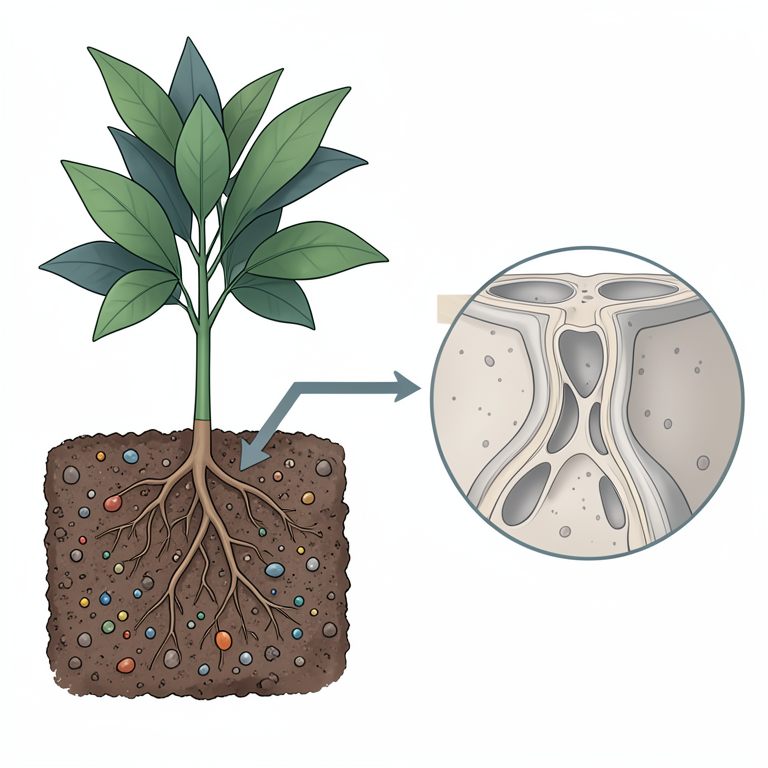
Direct vs Indirect Effects of Humic Acid
AI-generated conceptual illustration (citrus plants in soil). It explains the idea and does not show study data.
View source evidence ↗Introduction
Citrus is one of the important fruit trees for local consumption in Iraq, as the number of trees produced is about (11,156,000) trees, the cultivated area is (33,900) dunums, and the production rate per tree is (27.3) kg. (Annual Statistical Collection, 2002) [16] The number of citrus trees in Iraq reached about 5,583,591 trees, of which the number of orange trees was about 4,454,045 trees, while the general production of citrus reached about 97,630 metric tons, and the production of oranges reached 72,816 metric tons. The average production of one tree is 16.3 kg. Citrus fruits belong to the Rutaceae family, which are tropical plants that adapted to subtropical and warm regions, and in this new environment they changed some of their characteristics to suit their new environment (Al-Jumaili and Hassan, 1989) [11]. This family includes many genera, including the genus Poncirus, which has three-leafed oranges, as well as the genus Fortunella, the most important of which is the kumquat.
The genus Citrus is one of the most important genera of this family from an economic standpoint and includes five groups: the orange group, the tangerine group (lanki), the Indian lemon group, and the citrus group. And the camel group. These groups include many species that include many varieties and breeds (Agha and Daoud, 1991) [1]. Citrus fruits are characterized by their high nutritional value, as they are a major source of vitamin C and significant amounts of vitamins (B12, B2, B1, A) and some sugars.
They are also rich in some mineral salts that humans need, such as potassium, calcium, and magnesium, and smaller amounts of phosphorus, iodine, iron, copper, and sodium. They also contain Citrus fruits contain organic acids, the most important of which is citric acid, which mainly causes acidity in fruits, in addition to other acids such as malic, formic, and oxalic, and a group of amino acids (Al- Khafaji et al., 1990) [12]. Most types of citrus are propagated by grafting on various citrus roots, including the seed roots of orange, which is considered one of the most widely used rootstocks in Iraq. Orange is considered an excellent rootstock for most types of citrus because of its deep root system in the soil, its tolerance of heavy soil conditions, and its resistance to gum disease caused by (Phytophthora citrophthora Kester).
Orange is propagated by seeds planted in the spring. It is considered a semi-shortened rootstock on which most citrus species succeed, and the fruits of the varieties grafted on it have good characteristics (Salman, 1988, Al-Khafaji et al., 1990) [21, 12]. However, the slow growth of various orange seedlings and the relatively long time period for the seedling to reach the stage suitable for grafting are among the main problems that lead to an increase in its production costs. Ahmed S Bahauldin Department of Horticulture and Landscape Design, College of Agriculture, University of Kirkuk, Iraq Azheen O Mohammed Department of Horticulture and Landscape Design, College of Agriculture, University of Kirkuk, Iraq Israa H Kareem Department of Biology, College of Education for Pure Sciences, University of Kirkuk, Iraq https://www.hortijournal.com Since citrus fruits are thought to be a rich source of vitamins, particularly vitamin C, and the mineral elements needed to build the human body, they are extremely important compared to other fruit trees in terms of nutrition, the environment, health, and economic and medical value.
As for the various types of organic materials, it is an important source and the basis for the components the plant needs it to recover from it and grow, besides its crucial function in enhancing the soil Matters that are physical, chemical, and biological. It has become clear lately how important it is to use the abundance of organic materials. It is one of the most crucial trace elements for the nutrients that fruit seedlings require since it includes organic acids like oleic and humic acids, as well as other compounds and amino acids. It stands out for its low cost, simplicity of usage, and lack of contamination of the soil's physical, chemical, and biological mechanisms, all of which promote the development of native plants and increase their output.
According to Hassan et al. (2010) [18], Plant roots quickly absorb these chemicals, allowing for swift release and transportation of their ions. This enables plants to profit from them by engaging in physiological processes. This provides the plant with the necessary energy to assimilate these nutrients, especially during the critical periods of growth. Various sources are utilized in the production of organic fertilizers.
They could be made of synthetic, animal, or plant materials. They might be liquid or solid, soft or broken down. They are applied to various plants in a variety of methods and in amounts that are determined based on the crop type, soil, weather, and the proportion of liquid to solid in the organic fertilizer, among other factors. (Al-Shibni, 2005) [13]. As (Varanini and Pinton, 2001 and Chen et al., 2004, lateef et al., 2021) [22, 17, 20] showed through their studies that there are direct and indirect effects of humic acid on plant growth.
The indirect effects are through increasing soil nutrients, increasing the effectiveness of microorganisms in the soil, and high exchange of cation exchange capacity, which It improves soil composition. The direct effects of humic acid are through its effect on cell walls, membranes, and cytoplasm, mainly on natural hormones, humic acid represents a group of humic substances that are extracted from the soil with alkaline solutions (or other solvents) in the form of dark-colored solutions, which are precipitated in acidic solutions in the form of an amorphous gelatinous precipitate. Humic acids extracted from various soils are characterized by the following proportions of elements. Carbon 50-62% Oxygen 31-40% Hydrogen 2.8-6% Nitrogen 2-6% When analyzing humic acids, the elements phosphorus, iron, silicon, aluminum, and sulfur were found in quantities of 1-10%, depending on the degree of their variation, in addition to the following main elements: carbon, hydrogen, nitrogen, and oxygen (Alwan, Al-Hamdani, 2012) [14].
Lecturer review (Potter, 2005) [26] stated in terms of his study that marine plant extracts lead to an increase in leaf area Furthermore, there is a rise in chlorophyll concentration, resulting in an augmentation of carbohydrates produced by photosynthesis. This, in turn, leads to the development of a robust and extensively branching root system, enhancing the plant's growth and nutrient absorption capacity. From the soil, it also works to increase plants’ resistance to freezes, diseases and insects. According to El-Hayani et al. (2014) [9], when compared to the control treatment, most of the vegetative growth traits under study (main stem length, stem diameter, leaf area, and dry weight of the shoot and root system) significantly increased in the treatment of seedlings of three citrus roots (Cleopatra mandarin, Sungle strumello, and Lemon volca mariana) At the age of two, humic acid was applied to each pot at a concentration of 1%.
The irrigation water was supplemented with three additions of humic acid, with a 30-day interval between each addition. Ammaria et al. (2015) [15] Discovered that the addition of humic acid to lemon seedlings of the Eureka type that are one year old, grafted on citron root and grown in calcareous soil, affected the increase in the percentage of chlorophyll in the leaves. From the study conducted by Alcaantara and others (2016) [7] in their experiment to compare the performance of two liquid organic fertilizers on four-year-old tangerine trees, it was found that liquid organic fertilization led to an increase in the ready absorption of nutrients compared to nitrogen fertilization, and the liquid organic fertilizers also had an effect. The positive thing is that the carbohydrate content of the leaves increases, mainly during the summer.
The content of organic matter in the soil also increased and its nitrate content decreased when using liquid organic fertilizers compared to using nitrogen fertilization. In a study by researcher Ahmed and others (2017) [2] to compare the importance of spraying orange trees of the Newhall variety grafted on orange rootstock with three types of fertilizers: organic fertilizer, calcium, and nitrate fertilizer, where he found from the results he obtained that the organic fertilizer was significantly superior to other fertilizers in terms of growth characteristics. Vegetative (Branch length, branch diameter, leaf count, and leaf area). In another study by Al- Hamdani and Al-Samarrai (2018) [8], When utilizing organic fertilizer, they saw the greatest significant improvement in the tangerine seedlings' vegetative and root growth parameters (plant height, stem diameter, number of branches, leaf area, root length, root diameter, and number of lateral shoots).
In contrast to chemical fertilizers, biogen produced a significant increase in the characteristics of vegetative growth, leaf area, and the ratio of carbohydrates to nitrogen in the branches, suggesting that the amount of fertilizer applied to Citrus reticulate tangerine trees grafted on citrus roots could be reduced, according to El-Salhy et al. (2010) [24] discovered that, when compared to the control treatment, moral improvements were obtained when ground application of organic fertilizer or spraying on the vegetative total of seedlings or the interaction between them in all vegetative growth characteristics. The experiment examined the effects of these methods on the growth and vegetative growth of orange seedlings. The organic fertilizer contained humic at three concentrations (0, 2, and 4 ml.L-1). In his research, Al-Alaf (2019) [5] discovered that, when using humic organic fertilizer, the success of grafting local oranges and the ensuing growth of seedlings on vegetative growth characteristics superior to the comparison treatment depended on the date of grafting as well as chemical, organic, and biological fertilization.
Foliar feeding with humic acid was conducted by Zainal and Hussein (2017) [23] to determine the impact on the growth characteristics of Citrus aurantium L. seedlings. Their findings were that the main stem length which is the most important measure of growth increased when the seedlings were sprayed with https://www.hortijournal.com Horticultural Science & Ornamental Plants. 2017;9(2):86-97. 3. Al-Abbasi GBA, Al-Zuhairi FFA. The effect of biological and organic fertilization on the growth of Sindhi (Citrus grandis L.) seedlings grafted on different roots.
Kufa Journal of Agricultural Sciences. 2018;10(2):39-61. 4. Al-Akaishi SFA, Al-Abbasi GBA. The effect of biological and organic fertilization on the vegetative growth characteristics of local orange (Citrus sinensis L. Osbeck) seedlings grafted on orange root.
Karbala University Scientific Journal. 2018;16(4):44-52. 5. Al-Alaf IH. The effect of the date of grafting and chemical, organic and biological fertilization on the success of grafting local oranges and the subsequent growth of seedlings [Doctoral thesis]. Mosul: University of Mosul; c2019. 6.
Al-Araji JM, Al-Alaf IH, Al-Ilm ITS. Response of Dunia linki seedlings to the addition of different sources of liquid organic fertilizers. Kirkuk Journal of Agricultural Sciences. 2014;5(2):11-19. 7. AlcAntara B, Mary R, Almudena B, Francisco L.
Liquid Organic Fertilizers for Sustainable Agriculture: Nutrient Uptake of Organic versus Mineral Fertilizers in Citrus Trees. PLoS ONE. 2016;11(10):01-20. 8. Al-Hamdani KA, Wahba SA, Al-Arai MTA. The effect of spraying with diprolorophy, Salicylic acid and foliartal nutrient sweetener in the vegetable growth of lalanki seedlings Clementine variety.
Proceedings of the First International and Third Scientific Conference of the College of Science - Tikrit University. 2012 Dec;1(3):21-22. 9. Al-Hayani AMA, Al-Samarrai OA, Al-Shammari MFM. The effect of inoculation with the fungus Trichoderma spp and organic fertilization with humic acid and algex marine extract on the growth of some citrus roots. Diyala Journal of Agricultural Sciences. 2014;2(6):96-106. 10.
Al-Janabi AMI, Abdel Shaabani NT. The effect of spraying with the growth regulator CPPU and Oligo-x marine algae extract on some growth characteristics of orange water (Citrus aurantium L.). Anbar Journal of Agricultural Sciences. 2017;15(10):45-58. 11. Al-Jumaili AA, Hassan JA.
Fruit production. Iraq: Ministry of Higher Education, Baghdad University; c1989. 12. Al-Khafaji MA, Atrah SA, Abdel-Razzaq A. The Evergreen Fruit.
Iraq: Baghdad University, Ministry of Higher Education and Scientific Research; c1990. 13. Al-Shibini JM. Fertilization programs for fruit orchards. Alexandria, Egypt: Egyptian Library for Publishing and Distribution; c2005. p. 318. 14.
Alwan JM, Al-Hamdani RIA. Organic agriculture and environment. Iraq: College of Agriculture and Forestry, University of Mosul; c2012. 15. Ammari TG, Al-Zu’bi Y, Abubaker S, Qrunfleh I. humic acid at the concentration of (2 mg.
L-1) that it would maximize the benefit derived from humic acid if it got to 129. 44 cm when compared to the comparison treatment which was $114. 55 cm. Al-Akaishi and Al-Abbasi (2018) [4] have also tried in their study to know the impact of organic fertilization on vegetative growth characteristics of local orange seedlings (Citrus sinensis L. Osbeck) grafted on orange rootstock. The spraying treatment with humic acid at a concentration of (5 ml.
L-1) was found to be effective in yielding the maximum enhancement in stem length if it was (56. 35 cm) compared to the rest of the treatments at concentrations of (0, 3, 4) ml. L-1 which was equal to $35. 08, 43. 18 and 53. 71 cm, respectively. In a study in which Al-Abbasi and Al-Zuhairi (2018) [8] showed how organic fertilization affected the growth of Citrus grandis L. seedlings grafted on Orange and Volcamariana rootstocks, where there was a significant increase in the seedling stem length for both origins, which amounted to (34.94) cm and (34.40) cm for Volcamariana and Volcamariana. Respectively when compared with the control treatment, which amounted to (24.92) cm and (21.34) cm for Volcamariana and Orange, respectively.
In a study conducted by (Ismail, 2020) [19] to study the effect of spraying with humic acid and different growing media and the interaction between them on the growth and development of local orange seedlings, spraying with humic acid led to a significant increase in the characteristics of vegetative growth (length and diameter of the main stem, vegetative total, number of total leaves, leaf area, and leaf content of Chlorophyll and dry weight of shoots. It also increased the characteristics of root growth (length of the main root and dry weight of the root system), as well as an increase in the content of macronutrients (NPK) in the leaves. Al-Janabi and Al-Shaabani (2017) [10] in their study on the effect of spraying with the growth regulator CPPU and marine algae extract on some growth characteristics of orange juice, which included spraying with the marine extract at three concentrations (0, 2, and 4) ml L-1, where spraying with the marine extract achieved a concentration of 4 ml L-1. A significant increase in the number of leaves, leaf area, rate of increase in stem diameter, and dry weight of the shoot.
Al-Falahi and Abdullah (2017) [25] in their study on the effect of spraying with antioxidants and marine algae extract on some growth characteristics and mineral content of tangerine seedlings, where spraying led to a significant increase in the percentage of nitrogen, phosphorus and potassium.
Conclusion
Treatment with humic acid in the aforementioned research led to an increase in the studied vegetative growth traits and fruit growth traits of citrus fruits. Humic acid is the most common form of carbon in nutrients, and humic acid increased nutrient absorption and has the ability to improve nutrient absorption and growth of citrus fruits.
References
13 in the original paper- Agha JT, Dawoud A. Production of evergreen fruits. Part Two. Iraq: Ministry of Higher Education, University of Al Mosul; c1991.
- Ahmed FK, Nadia A, Hamed A, Magdy A, Ibrahim A, Humic Acid-Like Substances Extracted from Compost Improve Fe Nutrition of Lemon Grown on Calcareous Soil: An Environmentally Safe Approach. Communications in soil Science and Plant Analysis. 2015 Apr 28;46(8):954-964.
- Annual Statistical Collection. Iraq: Ministry of ELazazy AM, et al. Effect of tryptophan and some nutrient elements foliar application on yield and fruit quality of Washington Navel Orange. Journal of Planning, Central Bureau of Statistics; c2002.
- Chen Y, Nobili M, Aviad T. Stimulatory effect of https://www.hortijournal.com humic substances on plant growth. In: Magdoff F, editor. Soil Organic Matter in Sustainable Agriculture. Washington: CRC Press; c2004. p. 123-145.
- Hassan HS, Laila A, Hagag F, Abou Rawash M, El- Wakeel H, Abdel-Galel A, et al. Response of Klamata Olive young trees to mineral, organic Nitrogen fertilization and some other treatments. Nature and Science. 2010;8(11):59-65.
- Ismail JR. The effect of spraying with humic acid and different growing media and their interaction on the growth and development of local orange seedlings [Master's thesis]. Kirkuk: Kirkuk University, College of Agriculture; c2020.
- Lateef MAA, Fadhil NN, Mohammed BK. Effect of Spraying With Cal-Boron and Potassium Humate and Maturity Stage on Fruit Quantity, Quality Characteristics of Apricot Prunus armeniaca L. cv. Royal. In: IOP Conference Series: Earth and Environmental Science. IOP Publishing. c2021;910(1):01-08.
- Salman MA. Propagation of horticultural plants. Iraq: Baghdad University, Ministry of Higher Education and Scientific Research; c1988.
- Varanini Z, Pinton R. Direct and indirect effects of soil humic substances on plant growth and nutrition. In: editors. The rhizosphere: Biochemistry and organic substances at the soil-plant interface. NY: Marcel Dekker Inc.; c2001. p. 141-157.
- Zainal AMN, Hussein SA. The effect of foliar feeding with humic acid and Alga 300 marine extract on the vegetative growth characteristics of orange seedlings (Citrus aurantium L.). Karbala University Scientific Journal. 2017;15(4):123-135.
- El-Salhy M, Lomholt-Beck B, Hausken T. Chromogranin A as a possible tool in the diagnosis of irritable bowel syndrome. Scandinavian Journal of Gastroenterology. 2010;45(12):1435-1439.
- AL-falahi AA, Neama AS, Jabbar BA, AL-Abodi HK. The efficacy of subsurface drip irrigation for cucumber (Cucumis sativus L.) In protected agriculture. 2017:22(6):25-35.
- Potter J. Making psychology relevant. Discourse & Society. 2005 Sep;16(5):739-747.
Cited by 11
From OpenAlex, OpenCitations and reference lists read by Scinovex
- Microbial interactions facilitated by humic acid in citrus tree rhizosphere: Implications for growth and yield ↗
Isabella Schmidt, Ahmed Zayed, Lucia Bianchi · Journal of Advances in Microbiology Research · 2025
Microbial interactions in the rhizosphere of citrus trees play a significant role in plant growth, nutrient acquisition, and disease suppression. Humic acid (HA), a complex mixture of organic molecules formed during the decomposition of plant and animal matter, has been found to enhance microbial activity in the rhizosphere. This article explores the role of HA in facilitating beneficial microbial interactions…
❝ 1PDF - Влияние Лигногумата АМ на морфологию, урожайность и товарное качество плодов Citrus reticulata var. unshiu ‘Kowano Wase’ в условиях субтропиков России ↗
V. M. Gorshkov, A. S. Kuleshov, Raisa Vasilievna Kulyan · Agrarian Bulletin of the North Caucasus · 2026
Введение. В условиях снижения плодородия почв и усиления абиотических стрессоров актуальным направлением является применение экологически безопасных биостимуляторов, в том числе гуминовых препаратов, способных повышать продуктивность и устойчивость сельскохозяйственных культур. Особый интерес представляет их использование при возделывании цитрусовых, отличающихся высокой чувствительностью к условиям внешней среды. Влажные субтропики России характеризуются значительной изменчивостью температурного режима и влагообеспечения, что оказывает существенное влияние на рост,…
❝ 0PDF - Data-driven models for optimizing humic acid application in citrus farming using IoT and AI technologies ↗
Elena Martinez · International Journal of Engineering in Computer Science · 2025
Humic acid is widely recognized for its beneficial effects on soil fertility and plant growth. In citrus farming, its application enhances nutrient uptake, improves soil structure, and promotes healthy fruit production. Traditional methods of applying humic acid, however, often lack precision, leading to suboptimal resource utilization. This paper explores the potential of integrating Internet of Things (IoT) and Artificial Intelligence
- Optimizing humic acid usage for sustainable citrus farming: A management perspective on yield enhancement ↗
M. Lopez, Ahmed Al-Farsi, Mariana Oliveira · International Journal of Research in Management · 2025
Humic acids (HAs), organic compounds derived from decomposed plant and animal matter, are gaining recognition for their potential to enhance agricultural sustainability. In citrus farming, the application of humic acid has demonstrated beneficial effects on soil fertility, water retention, and plant growth, which are essential for improving yields under various environmental conditions. This review examines the use of humic acids
- Chemical composition and impact of humic acid on citrus fruit growth: A molecular approach ↗
Miguel González · Journal of Research in Chemistry · 2025
Humic acid (HA), a key organic compound derived from decomposed plant and animal matter, plays a significant role in soil fertility and plant growth. Recent studies have demonstrated its potential to enhance plant growth and fruit yield, particularly in citrus crops. This review explores the chemical composition of humic acid and its molecular impacts on citrus fruit growth. Humic acid…
❝ 0PDF - The role of smart irrigation systems using humic acid for optimizing citrus yield: An electrical engineering approach ↗
Carlos J Martins, Maria L Fernandez, Ahmed S Al-Mansoori · International Journal of Advances in Electrical Engineering · 2025
The integration of smart irrigation systems with humic acid is emerging as a promising approach to optimize agricultural productivity, particularly in citrus farming. This research explores the potential of utilizing electrical engineering techniques in smart irrigation systems to improve citrus yield by incorporating humic acid as a key factor in soil and water management. Humic acid, known for its ability
- Humic acid as a natural growth enhancer in citrus crops: A phytopharmacological evaluation ↗
Ahmed Al-Sayed, Maria Gonzalez, George Yeboah · Journal of Phytopharmacology and Phytomedicine · 2025
Humic acid (HA), a key component of soil organic matter, has garnered significant attention in agriculture for its potential to enhance plant growth and productivity. This natural bio stimulant is derived from the decomposition of organic matter and has been shown to improve soil fertility, stimulate plant growth, and increase crop yields. In citrus farming, HA has been recognized for
- The role of humic acid in enhancing the nutritional quality and yield of citrus fruits
Juan Carlos González, Maria Silva, Ahmed Al-Harbi, Elena Ivanova · International Journal of Agriculture and Nutrition · 2025
The growing demand for high-quality citrus fruits has prompted extensive research into improving the nutritional quality and yield of these crops. Humic acid, a complex mixture of organic compounds derived from decomposed plant and animal matter, has garnered attention for its potential role in enhancing soil health, plant growth, and overall fruit production. This review examines the impact of Humic acid on citrus crops, focusing on its ability to enhance nutritional quality and increase yield. Humic acid has been shown to influence various physiological processes in plants, including nutrien
- Humic acid-mediated chemical processes in citrus fruit growth: A comprehensive review ↗
Maria J Lopez, Peter Jansen, Luca Bianchi · International Journal of Chemical Studies · 2025
Humic acids, complex organic compounds derived from the decomposition of plant and animal matter, are widely recognized for their positive effects on plant growth and development. This review explores the role of humic acid-mediated chemical processes in citrus fruit growth, with a particular focus on its effects on soil chemistry, nutrient uptake, and plant metabolism. Citrus cultivation, which is economically
- A multidisciplinary approach to understanding cellular senescence: mTOR pathway as a target for polyphenol-based interventions ↗
Peter Müller · International Journal of Research in Management · 2024
Cellular senescence is a complex biological process involving the irreversible arrest of cell proliferation, often linked to aging, tissue dysfunction, and a variety of age-related diseases. The mechanistic target of rapamycin (mTOR) pathway plays a crucial role in regulating cellular metabolism, growth, and senescence, making it an attractive target for therapeutic interventions. Polyphenols, a group of bioactive compounds found in…
❝ 0PDF - Humic acid as a natural fertilizer: Impacts on citrus growth and yield in South Asian agricultural systems ↗
Arif Rahman · South Asian Journal of Agricultural Sciences · 2024
Humic acid (HA), a complex mixture of organic substances formed through the decomposition of plant and animal matter, is increasingly recognized for its potential as a natural fertilizer in agriculture. In South Asian agricultural systems, characterized by intensive crop cultivation and challenges like soil degradation and nutrient depletion, HA has shown promise in enhancing soil fertility, improving crop yield, and