
Research article · 2024 · Full text
International Journal of Horticulture and Food ScienceThe role of Ehuru (Monodora myristica) in flavor enhancement and food preservation in West African cuisine
Volume 6(1) · Pages 114–117 · DOI: 10.33545/26631067.2024.v6.i1b.196 ↗
Research areasAfrican Botany and Ecology StudiesSeed and Plant Biochemistry
Abstract
Author-writtenEhuru (Monodora myristica), commonly known as African nutmeg, is a spice widely used in West African cuisine. This review explores the role of Ehuru in flavor enhancement and food preservation. It examines the spice\\\\\\\'s chemical composition, culinary applications, and traditional uses in food preservation, supported by scientific studies. The article highlights the importance of Ehuru in West African culinary traditions and its potential benefits.
Summary
Source-checkedPlain-language reading of the full paper, prepared with AI and checked against the text. Each point links to the authors' own words.
Why it matters
- Ehuru, also known as African nutmeg (Monodora myristica), is a traditional spice that has been central to West African cooking for centuries. View evidence ↗
- The spice is traditionally used to extend the shelf life of perishable foods due to its antioxidant and antimicrobial properties. View evidence ↗
- Ehuru's preservative qualities are especially vital in areas lacking modern refrigeration. View evidence ↗
The question
- The review aims to examine how Ehuru contributes to flavor and food preservation in West African cuisine by analyzing its chemical makeup and traditional uses. View evidence ↗
What they did
- The authors conducted a review of scientific studies to evaluate the chemical composition and traditional applications of Ehuru. View evidence ↗
What they found
- Carbohydrates are the most abundant nutrient in Ehuru seeds, making up 45% of the composition. View evidence ↗
- Fats constitute 25% of the seed composition and provide essential fatty acids. View evidence ↗
- Eugenol, a compound known for antimicrobial and antioxidant activities, makes up 1.50% of the seed. View evidence ↗
- Dietary fiber accounts for 10% of the seed, which supports digestive health. View evidence ↗
- Proteins make up 8% of the seed composition, providing essential amino acids. View evidence ↗
- The flavor profile is created by monoterpenes (citrus-like aroma) and sesquiterpenes (earthy, woody notes). View evidence ↗
- Eugenol in Ehuru prevents food spoilage by inhibiting pathogens like E. coli, S. aureus, and Salmonella. View evidence ↗
- Ehuru prevents oxidative spoilage and rancidity in fats and oils by scavenging free radicals and inhibiting lipid peroxidation. View evidence ↗
- In traditional pickling, Ehuru is used alongside salt and vinegar to preserve vegetables. View evidence ↗
What it means
- The authors suggest that the food industry could adopt Ehuru as a natural alternative to synthetic preservatives. View evidence ↗
- The authors conclude that further research is needed to fully unlock the potential of Ehuru in both traditional and modern culinary contexts. View evidence ↗
Visual summary
2 visualsIllustrations explain the paper; charts are replotted from the paper's own table values.
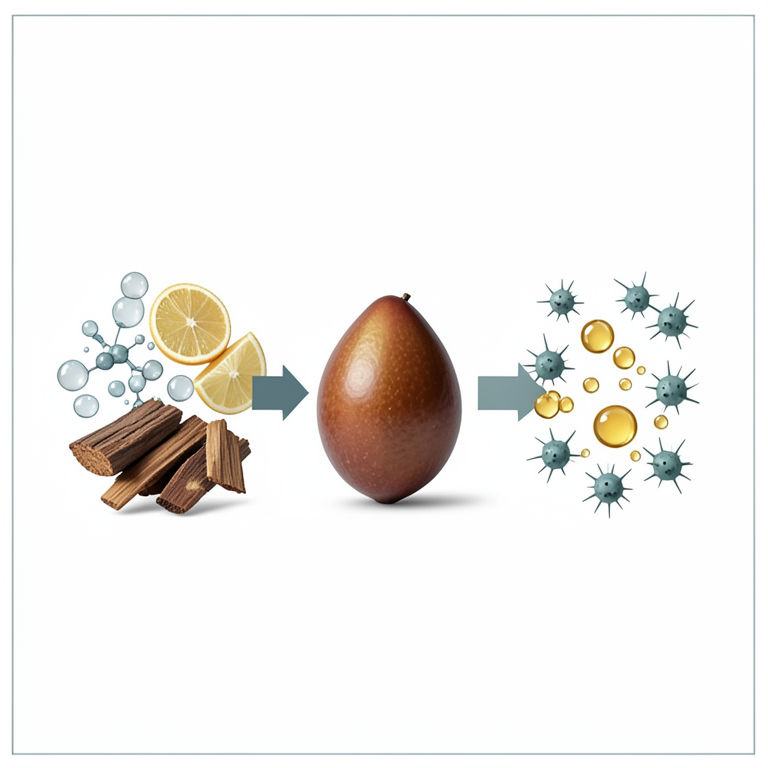
Multifaceted Role of Ehuru
AI-generated conceptual illustration (Monodora myristica (African Nutmeg) seeds). It explains the idea and does not show study data.
View source evidence ↗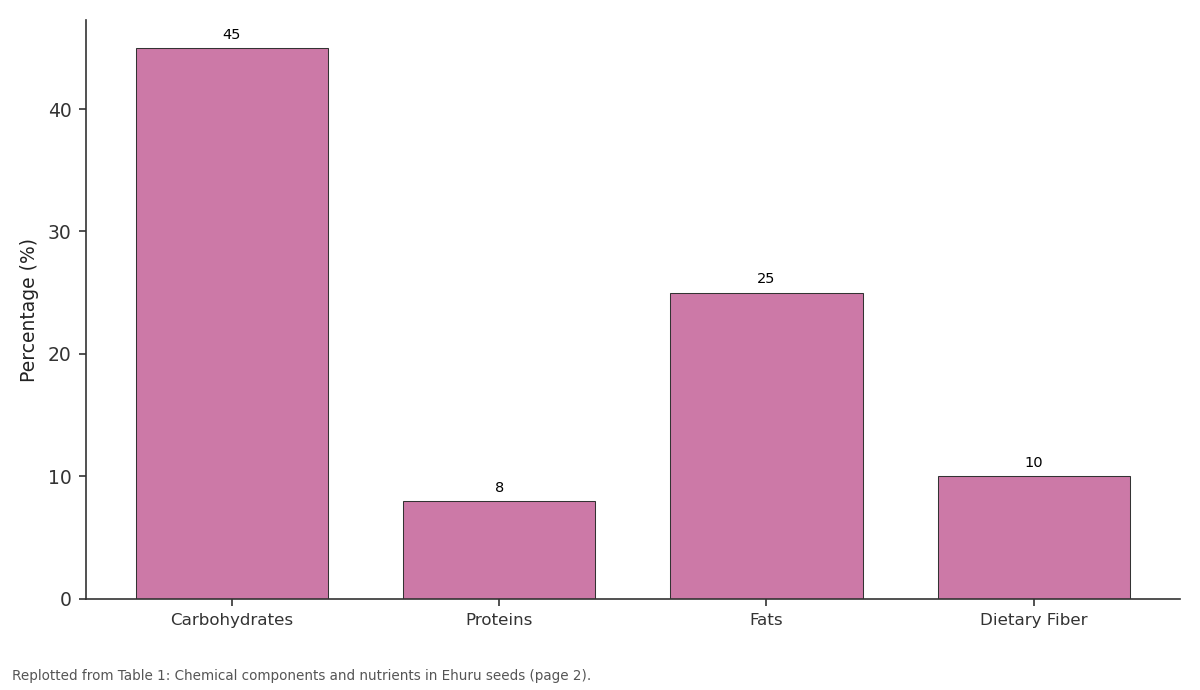
Percentage (%): Carbohydrates vs Proteins vs Fats vs Dietary Fiber
Replotted from Table 1 (page 2) of the original paper. Every bar is the paper's own table value.
View source evidence ↗Figures & tables
From the original paper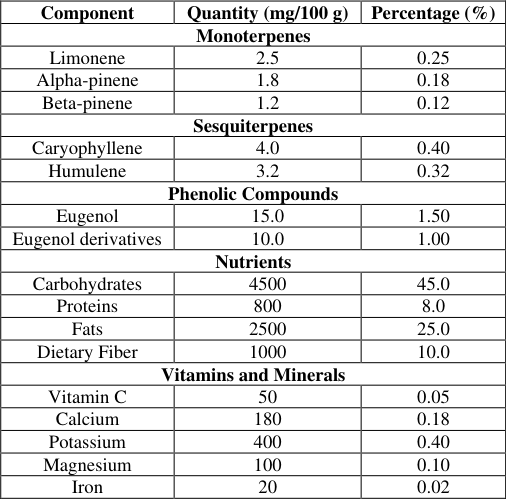 Table 1
Introduction
Ehuru, scientifically known as Monodora myristica and commonly referred to as African nutmeg, is a spice that has been an integral part of West African culinary traditions for centuries. This plant, belonging to the Annonaceae family, is native to tropical West Africa, where it is widely cultivated and used for both its culinary and medicinal properties. The seeds of the Monodora myristica tree are particularly valued for their unique aromatic profile and rich flavor, which contribute significantly to the complexity and depth of various traditional dishes. In West African cuisine, Ehuru is renowned for its ability to enhance the flavor of a wide range of foods. The seeds, which are typically roasted and ground into a fine powder, release a warm, spicy, and slightly nutty aroma that enriches soups, stews, rice dishes, and even baked goods. The spice is a staple in many iconic dishes, such as pepper soup, Egusi soup, and jollof rice, where it not only adds a distinctive taste but also contributes to the overall sensory experience of the meal. Beyond its culinary applications, Ehuru has long been utilized for its preservative qualities. In traditional West African food preservation methods, the antimicrobial and antioxidant properties of Ehuru play a crucial role in extending the shelf life of perishable foods. These properties are particularly important in regions where modern refrigeration facilities may be limited or unavailable. By inhibiting the growth of bacteria and fungi, and by preventing oxidative damage, Ehuru helps maintain the safety and quality of food products, allowing them to be stored and consumed over extended periods. The chemical composition of Ehuru seeds is rich and diverse, encompassing a variety of essential oils and phenolic compounds. Key components include monoterpenes such as limonene, alpha-pinene, and beta-pinene, sesquiterpenes like caryophyllene and humulene, and significant amounts of phenolic compounds, particularly eugenol. These compounds are responsible for the spice's aromatic properties and its potent biological activities. Eugenol, in particular, is known for its strong antimicrobial and antioxidant effects, which are central to the preservative functions of Ehuru. Scientific studies have increasingly explored the chemical and biological properties of Monodora myristica, providing empirical support for its traditional uses. Research has demonstrated that the essential oils extracted from Ehuru seeds exhibit significant antimicrobial activity against a variety of pathogenic microorganisms, including bacteria and fungi. This antimicrobial action is primarily due to the ability of eugenol and other bioactive compounds to disrupt microbial cell membranes and inhibit their growth. Additionally, the antioxidant properties of Ehuru, attributed to its high phenolic content, help scavenge free radicals and prevent lipid peroxidation, thereby protecting food from oxidative spoilage.
The dual roles of Ehuru in flavor enhancement and food preservation highlight its multifaceted value in West African cuisine. Its ability to impart a distinctive taste and aroma to dishes, combined with its natural preservative qualities, makes it an indispensable ingredient in traditional cooking. As the global food industry increasingly seeks natural and sustainable alternatives to synthetic preservatives, the potential applications of Ehuru are gaining broader recognition. Chefs and food scientists around the world are beginning to explore its unique properties, incorporating it into new culinary creations and preservation techniques.
Main Objective
The main objective of this review is to explore the role of Ehuru (Monodora myristica) in flavor enhancement and food preservation in West African cuisine, highlighting its chemical composition, culinary applications, and traditional preservation methods, supported by scientific evidence.
Chemical Composition of Ehuru
Ehuru seeds are rich in essential oils and bioactive compounds, which contribute to their unique flavor and preservative properties. The primary components of the essential oil extracted from Ehuru seeds include: The table outlining the chemical composition of Ehuru (Monodora myristica) seeds reveals a complex mixture of essential oils, phenolic compounds, and nutrients that contribute to its unique properties and applications in West African cuisine and traditional medicine.
The presence of monoterpenes such as limonene, alphapinene, and beta-pinene, although in small quantities, significantly impacts the aromatic profile of Ehuru. These compounds are known for their fresh, citrus-like aromas and their role in enhancing the flavor of various dishes. Sesquiterpenes like caryophyllene and humulene are also notable for their aromatic contributions and potential health benefits, including anti-inflammatory and antimicrobial properties. Phenolic compounds, particularly eugenol and its derivatives, are present in substantial quantities, with eugenol alone constituting 1.50% of the seed composition.
Eugenol is well-known for its strong antimicrobial and antioxidant activities, which play a crucial role in the preservative qualities of Ehuru. These properties help in extending the shelf life of food products by inhibiting the growth of spoilage organisms and protecting against oxidative damage. The nutritional content of Ehuru seeds is also noteworthy.
Carbohydrates make up the largest proportion at 45%, providing a significant source of energy. Fats, comprising 25% of the seed composition, include essential fatty acids that are important for maintaining cellular functions and overall health. Proteins account for 8%, contributing to the seeds' nutritional value by providing essential amino acids necessary for various bodily functions. Dietary fiber, at 10%, supports digestive health by promoting regular bowel movements and aiding in the prevention of constipation. Additionally, Ehuru seeds contain a variety of vitamins and minerals that further enhance their nutritional profile. Vitamin C, though present in a relatively small amount (0.05%), contributes to the antioxidant properties of the seeds and supports immune function. Essential minerals such as calcium, potassium, magnesium, and iron are present in trace amounts, but they play important roles in maintaining bone health, muscle function, and oxygen transport in the blood. In summary, the chemical composition of Ehuru seeds highlights their multifaceted role in flavor enhancement and food preservation. The combination of aromatic compounds, phenolic constituents, and essential nutrients not only contributes to the sensory qualities of food but also provides various health benefits. This comprehensive chemical profile underscores the importance of Ehuru in West African culinary traditions and its potential applications in modern food science and nutrition.
Flavor Enhancement
Ehuru (Monodora myristica), commonly known as African nutmeg, plays a significant role in flavor enhancement in West African cuisine. Its unique combination of aromatic compounds and rich, nutty flavor profile makes it a valuable spice in various traditional dishes. The use of Ehuru in cooking not only adds depth and complexity to food but also provides distinct sensory attributes that are characteristic of West African culinary practices. The flavor profile of Ehuru is primarily attributed to its essential oils, which include monoterpenes and sesquiterpenes. Limonene, alpha-pinene, and beta-pinene contribute to the spice's fresh, citrus-like aroma, while caryophyllene and humulene add earthy, woody notes. These aromatic compounds interact synergistically to create a well-rounded and robust flavor that enhances the overall taste of dishes. In traditional West African cooking, Ehuru is commonly used in a variety of ways:
1. Soups and Stews: Ehuru is a key ingredient in many traditional soups and stews, such as pepper soup and Egusi soup. Its warm, spicy flavor complements the rich and hearty nature of these dishes, adding depth and complexity. The spice is often roasted and ground into a fine powder before being added to the pot, allowing its flavors to infuse throughout the dish.
Rice and Grain Dishes:
Ehuru is also used to flavor rice and other grain-based dishes. In dishes like jollof rice and waakye, Ehuru provides a unique aromatic dimension that enhances the overall flavor profile. It is often combined with other spices like cloves, nutmeg, and cinnamon to create a complex and harmonious blend.
Meat and Fish:
The spice is frequently used as part of a marinade or rub for meat and fish. Its robust flavor pairs well with the rich taste of proteins, making it a popular choice for seasoning grilled, roasted, or smoked meats. Ehuru's essential oils help to tenderize the meat while imparting a distinctive flavor that elevates the dish. 4. Baked Goods: In some regions, Ehuru is incorporated into baked goods such as cakes, cookies, and pastries. Its warm, spicy notes add a unique twist to sweet treats, making them more aromatic and flavorful.
The use of Ehuru in flavor enhancement is not limited to its culinary applications. The spice's aromatic properties also make it a valuable ingredient in traditional medicine, where it is used to improve the palatability of herbal remedies. Additionally, Ehuru is known for its potential health benefits, including antimicrobial, antioxidant, and antiinflammatory properties, which further contribute to its appeal as a spice. Scientific studies have supported the traditional use of Ehuru in flavor enhancement. The essential oils and phenolic compounds present in Ehuru have been shown to possess significant aromatic qualities, making them effective in improving the taste and aroma of food. Research has demonstrated that these compounds interact with taste receptors, enhancing the perception of flavors and aromas in food (Nwofia et al., 2012) [1] .
In conclusion, Ehuru (Monodora myristica) plays a vital role in flavor enhancement in West African cuisine. Its rich, aromatic profile and versatile application make it an essential spice in traditional dishes. The unique combination of monoterpenes, sesquiterpenes, and phenolic compounds in Ehuru contributes to its distinctive flavor, while its potential health benefits add to its overall value. As interest in global cuisines continues to grow, the use of Ehuru in flavor enhancement is likely to gain wider recognition and appreciation.
Food Preservation
The seeds of Ehuru contain a rich array of essential oils and phenolic compounds that confer significant antimicrobial and antioxidant properties, which are crucial for extending the shelf life of food products and maintaining their quality. The antimicrobial properties of Ehuru are primarily due to its essential oils, especially eugenol and its derivatives. These compounds are effective in inhibiting the growth of a wide range of pathogenic bacteria and fungi, making Ehuru a valuable natural preservative. This is particularly important in regions where refrigeration may not readily available. In West African cuisine, Ehuru is commonly used to preserve meat. The seeds are ground into a powder and used as part of a spice rub or marinade for meat, which is then dried, smoked, or cooked. The antimicrobial action of eugenol helps prevent spoilage by inhibiting the growth of bacteria such as Escherichia coli, Staphylococcus aureus, and Salmonella species, thereby extending the shelf life and ensuring the safety of the meat. Similarly, Ehuru is employed in preserving fish, protecting it from microbial contamination during traditional preservation methods such as drying and smoking. Ehuru's antioxidant properties are attributed to its high phenolic content, which helps protect food from oxidative damage. Oxidative damage can cause rancidity in fats and oils, leading to off-flavors and the deterioration of food's color and texture. The antioxidants in Ehuru, such as eugenol, scavenge free radicals and inhibit lipid peroxidation, preventing oxidative spoilage. This is especially beneficial in preserving foods rich in fats and oils, such as meat and fish, by maintaining their sensory qualities, including flavor, aroma, and appearance. Traditional West African preservation methods often combine Ehuru with other natural preservatives like salt, vinegar, and smoke. These methods take advantage of the synergistic effects of multiple preservation agents to enhance food preservation. Ehuru is commonly used in pickling processes, where it is combined with salt and vinegar to preserve vegetables and other perishable foods. Its antimicrobial and antioxidant properties complement the preservative effects of salt and vinegar, creating a more effective preservation method. Additionally, traditional smoking and drying techniques for meat and fish often incorporate Ehuru in the spice blend, protecting the food during these processes and ensuring it remains safe and flavorful for extended periods. Scientific studies have validated the chemical composition and biological activities of Monodora myristica, confirming its efficacy as a natural preservative. Research has shown that the essential oil of Monodora myristica exhibits significant antimicrobial activity against various pathogens, including bacteria and fungi. This antimicrobial action is primarily due to bioactive compounds like eugenol, which disrupt microbial cell membranes and inhibit their growth. Furthermore, the antioxidant potential of Monodora myristica, highlighted by its high phenolic content, effectively scavenges free radicals and inhibits lipid peroxidation, making it a valuable component in preserving foods prone to oxidative spoilage. Ehuru (Monodora myristica) is a crucial ingredient in food preservation in West African cuisine. Its antimicrobial and antioxidant properties make it an effective natural preservative, extending the shelf life of various food products and maintaining their quality. Traditional preservation methods incorporating Ehuru, such as drying, smoking, and pickling, benefit from its ability to inhibit microbial growth and prevent oxidative damage. Scientific studies support the use of Ehuru as a preservative, underscoring its value in both traditional and modern food preservation practices. As interest in natural and sustainable food preservation methods grows, the potential applications of Ehuru are likely to expand, further enhancing its value in the culinary and food industry.
Conclusion
Ehuru (Monodora myristica), also known as African nutmeg, holds a prominent place in West African cuisine due to its dual roles in flavor enhancement and food preservation. The chemical composition of Ehuru seeds, rich in essential oils and phenolic compounds, underpins its effectiveness in these roles. The primary components, including monoterpenes, sesquiterpenes, and eugenol, contribute not only to its distinctive and robust flavor profile but also to its potent antimicrobial and antioxidant properties. In flavor enhancement, Ehuru is prized for its ability to add depth and complexity to a wide range of dishes. Its warm, spicy, and slightly nutty flavor profile enhances soups, stews, rice dishes, meats, and even baked goods, making it a versatile spice in the culinary arts. The aromatic compounds in Ehuru interact synergistically to create a well-rounded and robust flavor that elevates the sensory experience of traditional West African dishes. The role of Ehuru in food preservation is equally significant. Its antimicrobial properties, primarily due to eugenol and other bioactive compounds, inhibit the growth of pathogenic bacteria and fungi, extending the shelf life of preserved foods and ensuring their safety. This is particularly valuable in traditional preservation methods such as drying, smoking, and pickling, where refrigeration is often unavailable. The antioxidant properties of Ehuru further protect food from oxidative damage, preventing rancidity and maintaining the nutritional and sensory quality of preserved foods. Scientific research supports the traditional uses of Ehuru, confirming its efficacy in both flavor enhancement and food preservation. Studies have demonstrated its significant antimicrobial and antioxidant activities, validating its role in extending the shelf life and maintaining the quality of food products. The synergy between its chemical constituents and its application in traditional culinary practices highlights its multifaceted value. As interest in natural and sustainable food preservation methods grows, the potential applications of Ehuru are likely to expand beyond traditional practices. The food industry, driven by consumer demand for natural preservatives, may increasingly incorporate Ehuru into modern food preservation strategies. Additionally, the unique flavor profile of Ehuru offers opportunities for its integration into global cuisines, bringing the rich culinary heritage of West Africa to a broader audience. In summary, Ehuru (Monodora myristica) is a spice of considerable importance in West African culinary traditions, celebrated for its ability to enhance flavor and preserve food. Its rich chemical composition endows it with potent antimicrobial and antioxidant properties, making it an effective natural preservative. Supported by both traditional knowledge and scientific evidence, Ehuru stands as a testament to the enduring value of indigenous spices in contemporary culinary and food preservation practices. Further research and exploration of its applications could unlock new possibilities, cementing its role as a vital component of both traditional and modern cuisine.
Figures and tables from the paper
| Component | Quantity (mg/100 g) | Percentage (%) |
|---|---|---|
| Monoterpenes | ||
| Limonene | 2.5 | 0.25 |
| Alpha-pinene | 1.8 | 0.18 |
| Beta-pinene | 1.2 | 0.12 |
| Sesquiterpenes | ||
| Caryophyllene | 4.0 | 0.40 |
| Humulene | 3.2 | 0.32 |
| Phenolic Compounds | ||
| Eugenol | 15.0 | 1.50 |
| Eugenol derivatives | 10.0 | 1.00 |
| Nutrients | ||
| Carbohydrates | 4500 | 45.0 |
| Proteins | 800 | 8.0 |
| Fats | 2500 | 25.0 |
| Dietary Fiber | 1000 | 10.0 |
| Vitamins and Minerals | ||
| Vitamin C | 50 | 0.05 |
| Calcium | 180 | 0.18 |
| Potassium | 400 | 0.40 |
| Magnesium | 100 | 0.10 |
| Iron | 20 | 0.02 |
Table text extracted from the original PDF; superscript letters are shown inline. The original table image is below.
View original table image
References
8 in the original paper- Nwofia GE, Ojimelukwe P, Eji C. Chemical composition of Monodora myristica (Gaertn) Dunal seeds. Advances in Food and Energy Security. 2012;2(1):1-5.
- Ezekiel CN, Ayeni KI, Osidipe OO. Chemical composition and antioxidant activity of Monodora myristica. African Journal of Biotechnology. 2014;13(20):2062-2069.
- Okwu DE. Phytochemicals, vitamins and mineral contents of two Nigerian medicinal plants. International Journal of Molecular Medicine and Advance Sciences. 2005;1(4):375-381.
- Peter-Onoh CA, Obiefuna JC, Ngwuta AA, Onoh PA, Ibeawuchi II, Ekwugha EU, et al. Efficacy of five different growth media on seedling emergence and juvenile phenology of Monodora myristica (African nutmeg, Ehuru) in the nursery. Journal of Agriculture and Veterinary Science. 2014;7(5):60-63.
- Onyenibe NS, Fowokemi KT, Emmanuel OB. African nutmeg (Monodora myristica) lowers cholesterol and modulates lipid peroxidation in experimentally induced hyper cholesterolemic male Wistar rats. International Journal of Biomedical Science: IJBS. 2015;11(2):8692.
- Eruteya OC, Odunfa SA. Antimicrobial properties of three spices used in the preparation of suya condiment against organisms isolated from formulated samples and individual ingredients. African Journal of Biotechnology. 2009;8(10):2316-2320.
- Onyeneke EN. Comparative quality evaluation of Nigerian local Oha dish produced with the selected spices; Dawadawa (Parkia biglobosa), UDA (Xylopia aethiopica), Uziza (Piper guineense) and Ehuru (Monodora myristica). International Journal of Agriculture and Nutrition. 2021;3(1):19-24.
- Amamechi N, Ngozi E. Effect of Boiling on Amino Acid Composition of Jackfruit (Artocarpus Heterophyllus) Seed From South East Nigeria. Journal of Advances in Food Science & Technology. 2016;3(4):175-181.