
Research article · 2024 · Full text
International Journal of Research in AgronomyA study of wheat morphology for yield prediction
Volume 7(5) · Pages 346–349 · DOI: 10.33545/2618060x.2024.v7.i5e.695 ↗
Research areasLeaf Properties and Growth MeasurementRemote Sensing in AgricultureGenetics and Plant Breeding
Abstract
Author-writtenA study is being conducted to develop a prediction model for wheat yield in Patiala district of Punjab, India. The prediction model is to be developed based on different meteorological and agronomic factors that affect the wheat plant and hence the wheat yield. This paper presents a comprehensive study on the morphology of wheat in the context of developing a predictive model for wheat yield in Patiala district, Punjab, India. The research investigates the form and structure of the wheat plant, focusing on various growth stages and their corresponding morphological characteristics. Following the prescribed agricultural practices, a detailed examination of wheat morphology is conducted within a designated 250 square yard plot. The study employs photographs and sketches to illustrate different growth stages of the wheat plant. By understanding the morphology of wheat, insights are gained into its growth patterns and potential yield.
Summary
Source-checkedPlain-language reading of the full paper, prepared with AI and checked against the text. Each point links to the authors' own words.
Why it matters
- Wheat is a globally consumed grain and serves as a primary cereal crop in the Punjab region. View evidence ↗
- Increasing population and the expansion of residential and industrial areas have reduced available agricultural land, making optimum land use for crop production essential. View evidence ↗
- Accurate wheat yield prediction is critical for maintaining food security and managing forward marketing. View evidence ↗
The question
- The researchers aim to develop a model to predict wheat yield specifically for the Patiala district of Punjab, India. View evidence ↗
- This specific study focuses on understanding wheat morphology as a necessary prerequisite for building the yield prediction model. View evidence ↗
What they did
- The study involved growing a wheat crop within a designated plot measuring 250 square yards. View evidence ↗
- Agricultural practices were implemented according to the 2015-16 Package of Practices for Crops of Punjab Rabi from Punjab Agriculture University, Ludhiana. View evidence ↗
- The researchers used sketches and photographs to document and illustrate the various growth stages of the wheat plant. View evidence ↗
What they found
- The wheat shoot system terminates in a head or spike that typically contains about 20 spikelets. View evidence ↗
- Each spikelet in the wheat plant contains between three and six fertile florets. View evidence ↗
- The endosperm constitutes 83% of the total weight of the wheat kernel. View evidence ↗
- The bran, which is the outer protective covering of the seed, makes up approximately 14.5% of the kernel weight. View evidence ↗
- The germ, or the embryo of the seed, accounts for about 2.5% of the kernel weight. View evidence ↗
What it means
- The authors conclude that a detailed understanding of wheat morphology is essential for the effective management and prediction of wheat yields. View evidence ↗
- The authors recommend that yield prediction models incorporate morphological characteristics to increase forecasting accuracy and improve agricultural decision-making. View evidence ↗
Visual summary
1 visualsIllustrations explain the paper; they do not show study data.

Wheat Kernel Composition
AI-generated conceptual illustration (wheat kernel). It explains the idea and does not show study data.
View source evidence ↗Figures & tables
From the original paper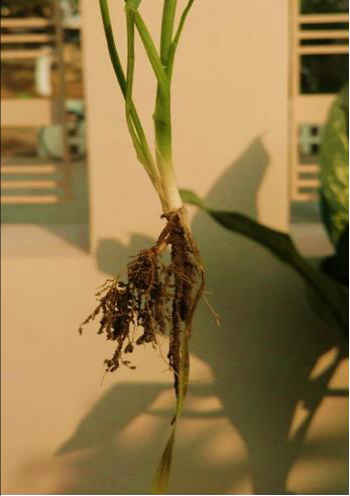 Figure 1
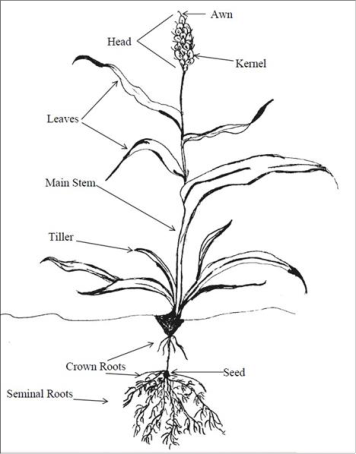 Figure 2
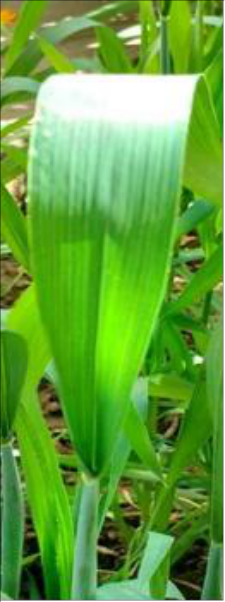 Figure 3
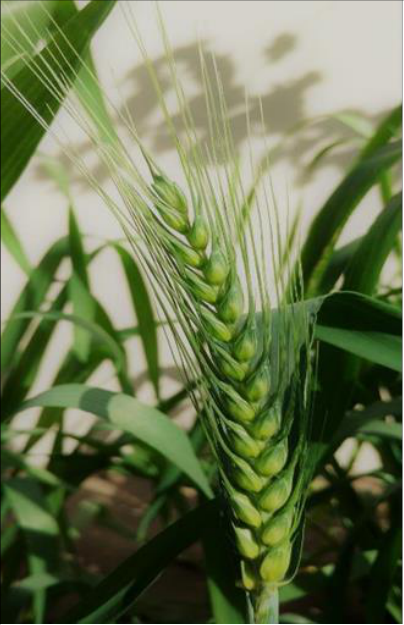 Figure 4
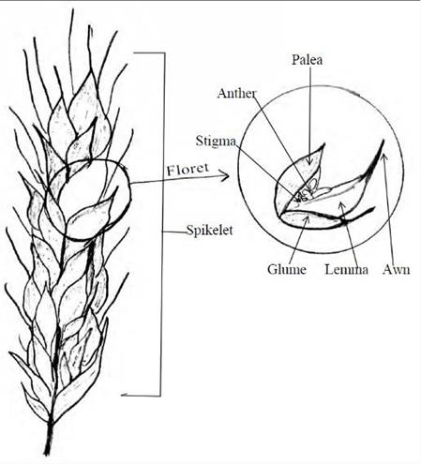 Figure 5
Introduction
Wheat is a major cereal crop of Punjab. Not only in Punjab, perhaps it is one of the highly consumed grain at world level. The alarming increase in population in past few decades has increased the pressure on land. On the one hand, the demand of food in market, and the demands of residential and industrial area have increased, on the other hand, the vast land patches for the development project have shrunk the agricultural area. However, the land being a constant factor, it becomes pertinent to use land under optimum conditions for crop production. As per the data recorded, in 2013-14 in Punjab, Wheat was grown on 35.12 lakh hectares with a production of 176.2 lakh tones and yield of 50.17 quintals per hectare (i.e. 20.07 quintals per acre) [1] . Many scientists and scholars from diverse fields have made researches in their respective areas to help increase the wheat yield. However, better results can be obtained through interdisciplinary research in the field of agriculture engineering and computer engineering. Besides this, an effective and accurate prediction of the wheat yield is pivotal to control the forward marketing and maintain the food security. A study is being conducted to develop a model for prediction of wheat yield in Patiala district of Punjab, India. As part of this study, a framework has already been proposed to develop a model for crop yield prediction [2] . To develop the wheat yield prediction model, it is pertinent to understand the morphology of the wheat crop. The study in the current paper is the pre-requisite of the study conducted to develop this model [3] . Morphology refers to the study of the form and structure of a plant. So, wheat crop was grown in a 250 square yard plot. The agricultural practices as prescribed by Punjab Agriculture University, Ludhiana in Package of Practices for Crops of Punjab Rabi 2015-16 [1] were followed. The morphology of the wheat plant is closely studied. This study offers a detailed explanation of Morphology of the wheat plant. The aim of the researchers is to facilitate the understanding of the basic structure of the Crop under study. The study of the Plant is divided into two parts based on its two systems. The first part explains the root system of the plant and the second parts explores the shoot system:
Root system
Root system in the wheat plant can further be classified on the basis of two types -The Seminal or The Seedling Roots, and The Nodal or The Clonal Roots.
The Seminal Roots belong to embryo and these roots are the production of the germinating seedlings. As the seed germinates and the plant grows, roots develop at the depth where the seed is planted. Initially, the primary root system is established, but it typically dies off as the plant matures, being replaced by a more permanent secondary root system. Another set of roots, known as clonal roots, emerges from the basal nodes of the plant, forming a dense vegetative cluster called the crown. These clonal roots become the plant's permanent root system, while the original seminal roots typically dry up and disappear around thirty days after the seedlings emerge.
Fig 1: Root System
Shoot System he above-ground parts of a wheat plant make up its shoot system, consisting of stems, leaves, and inflorescence. The shoot is composed of repeating units known as phytomers, each potentially comprising a node, a leaf, an elongated internode, and a bud located in the leaf axil [4] . At the tip of the shoot is a head or spike that bears around 20 spikelets.
STEM
The wheat plant's stem is characterized by its smooth, upright, cylindrical shape, and segmented structure. It consists of nodes and internodes, with nodes being the points where active cell division occurs, giving rise to leaves, tillers, and crown roots [5] . The internode, the region between two nodes, elongates as the stem grows. Enclosed by the sheaths of surrounding leaves, the stem provides structural support to the shoot, ensuring the plant remains upright. As the stem continues to grow, its role shifts from supporting leaves to storing carbohydrates and nutrients, crucial for grain filling [6] .
Leaves
The leaf of a wheat plant consists of a sheath and a leaf blade, also known as the lamina. The sheath wraps around the emerging leaf and contributes to the stem's strength. The lamina has a distinct midrib, which houses the leaf's major vascular bundle. This midrib divides the blade into two nearly equal parts, each containing several parallel lateral ribs or veins [4] . The point where the leaf sheath meets the leaf blade is called the leaf collar. The leaf collar features two important structures: the ligule, a thin, colorless membrane around the base of the collar, and the auricles, small hairy projections extending from the collar's sides. Leaves emerge in a specific order, alternating sides of the stem. The flag leaf, the last to emerge before head emergence, is of particular importance [6] .
Fig 3: Flag Leaf
Fig 3: Flag Leaf
Tiller
The wheat plant has the ability to produce lateral branches. These lateral branches that arise from buds at the nodes of a plant are called Tillers. A number of tillers develop by the end of Vegetative Phase. Each of the tiller represents the wheat plant potency to develop an additional complete stem [7] . Although, only a proportion of these tillers will be able to survive because of the competition for resources, like light and nutrients [4] .
HEAD/SPIKE
The head/spike of the wheat plant has a stem or the main axis called Rachis. It consists of nodes, and short and flattened internodes. At the nodes of the Rachis, there are Spikelets which are small inflorescences bearing one or more florets, or small flowers.
Fig 4: Spikelet
After pollination, the fruits, that is, the grain is formed within the spikelet. Each of the spikelet contains three to six fertile florets [8] . A floret is wrapped within the lemma and palea, which are two protective bracts. These structures enclose the carpel. The carpel has one ovary with the feathery stigmas, three stamens holding the anthers (pollen sacs), and one ovule. The ovule when fertilised is transformed into the grain.
Kernel
The seed, grain or kernel of wheat is a dry indehiscent (does not open to release seeds) fruit. The grain is the end product and the seed for the plant. The kernel can be divided into three parts -Endosperm, Bran and Germ.
1) Endosperm
2) It is the tissue which surrounds the embryo and is the source of energy for germination. The germinating seed depends on endosperm until the seed develops its own root system. It makes up the bulk of the grain and contains the starch and protein which are milled to get white flour [6] . 83 percent of the kernel weight is of endosperm [9] . The endosperm contains proteins, carbohydrates and iron as well as the major B vitamins. It is also a source of soluble fiber.
3)
3)
Bran
It is the outer protective covering of the seed. It comprises about 14.5 percent of the kernel weight [9] . Bran is present in whole wheat flour.
4) Germ 5)
The embryo or sprouting part of the seed is called the germ, which is usually separated from the flour as the fat in it decreases its shelf-life. It comprises about 2.5 percent of the kernel weight [9] .
Conclusion
To conclude, a thorough understanding of wheat morphology is vital for predicting and managing wheat yield effectively. By studying the form and structure of the wheat plant, we can identify key morphological traits that influence yield potential. As wheat holds immense importance for both the economy and social security, accurate prediction models must consider morphological characteristics to improve yield forecasting accuracy and inform decision-making in agricultural practices
Figures and tables from the paper
References
16 in the original paper- Bhatti DS. Package of Practices for Crops of Punjab Rabi 2015-16. Ludhiana: Punjab Agricultural University; 2015.
- Attwal KPS, Dhiman AS. Investigation and Comparative Analysis of Data Mining Techniques for the Prediction of Crop Yield. Int. J Sustainable Agric Manag. Inform. 2020;6(1):43-74.
- Attwal KPS. Design and Development of a Model for Wheat Yield Prediction Using Data Mining. Patiala: Punjabi University; 2020.
- Herbek J, Lee C. Growth and Development. In: A Comprehensive Guide to Wheat Management in Kentucky. University of Kentucky; 2009:6-12.
- Gill KK, Kaur N, Babuta R. Crop Growth Behaviour and Yield Characteristics of Wheat (Triticum aestivum L.) in Two Different Agro climatic Zones of Punjab. J Agric Phys. 2013;126-132.
- Evans WRF. Wheat. In: Crop physiology. Cambridge, UK: Cambridge University Press; 1975:101-149.
- Paulsen GM. Growth and Development. In: Wheat Production Handbook. Manhattan, Kansas: Kansas State University; 1997:2-6.
- Landau S, Mitchell R, Barnett V, Colls J, Craigon J, Payne R. A Parsimonious Multiple Regression Model of Wheat Yield Response to the Environment. Agric Forest Meteorol. 2000;151-166.
- Jalota S, Singh S, Chahal G, Ray S, Panigraghy S, Bhupinder-Singh, Singh K. Soil Texture, Climate and Management Effects on Plant Growth, Grain Yield and Water Use by Rainfed Maize-wheat Cropping System: Field and Simulation Study. Agric Water Manag. 2010;8390.
- Singh D, Singh D, Kang J, Aggarwal N. Management Practices to Mitigate the Impact of High Temperature on Wheat: a Review. IIOAB J. 2011;2(7):11-22.
- Leona MRCd, Jalao ERL. A Prediction Model Framework for Crop Yield Prediction. In: Asia Pacific Industrial Engineering and Management System. Cebu, Philippines; 2013.
- Zheng CY, Yu ZW, Shi Y, Cui SM, Wang D, Zhang YL, Zhao JY. Effects of tillage practices on water consumption, water use efficiency and grain yield in wheat field. J Integr Agric. 2014;13(11):2378-2388.
- Krupnik TJ, Ahmed ZU, Timsina J, Yasmin S, Hossain F, Mamun AA, et al. Untangling Crop Management and Environmental Influences on Wheat Yield Variability in Bangladesh: An Application of Non-Parametric Approaches. Agric Syst. 2015;139:166-179.
- Gouache D, Bouchon AS, Jouanneau E, Bris XL. Agrometeorological Analysis and Prediction of Wheat Yield at the Departmental Level in France. Agric Forest Meteorol. 2015;1-10.
- Ahmad A, Kumar R. Effect of Irrigation Scheduling on the Growth and Yield of Wheat Genotypes. Agric Sci. Digest-A Res J. 2015;35(3):199-202.
- Kumar R, Singh VP, Kalhapure A, Pandey DS. Effect of tillage, time of first irrigation and nitrogen management on wheat under rice-wheat cropping system. Int. J Trop Agric. 2015;33(2):1075-1078.
Cited by 2
From OpenAlex, OpenCitations and reference lists read by Scinovex
- Integrated machine learning model for wheat yield prediction using agronomic and meteorological factors: A case study from Punjab, India
Kanwal Preet Singh Attwal · International Journal of Agriculture and Food Science · 2025
The study aims to develop a Prediction Model for the wheat yield based on meteorological and agronomic factors using Data Mining techniques. The target area of the Research is the cultivators in the Patiala district of Punjab, India. The researcher has applied the knowledge of the wheat morphology and phenology to build the model. Crop yield is affected by several agronomic factors such as soil type and date of sowing, and meteorological factors such as temperature and rainfall. The existing models apply classification or regression techniques to all the identified factors for the prediction o
- A study of wheat phenology and the factors affecting the wheat yield
Kanwal Preet Singh Attwal, Amardeep Singh Dhiman · International Journal of Agriculture Extension and Social Development · 2024
The paper focusses on the study of Wheat Phenology and the factors affecting the Wheat yield. A study is being conducted to develop a model for prediction of wheat yield in Patiala district of Punjab, India. The prediction model has been developed based on different meteorological and agronomic factors that affect the wheat plant and hence the wheat yield. Various factors have different effects at different stages of plant growth and the yield is affected accordingly. For this, it is pertinent to understand the phenology of the wheat crop. Phenology is the study of different stages of developm