
Research article · 2024 · Full text
International Journal of Advanced Biochemistry ResearchEffect of membrane processing on biochemical quality of pomegranate and pineapple fruit juices
Volume 8(4) · Pages 736–744 · DOI: 10.33545/26174693.2024.v8.i4i.1039 ↗
Research areasBanana Cultivation and ResearchPineapple and bromelain studiesPomegranate: compositions and health benefits
Abstract
Author-writtenPineapple (Ananas comosus L., Merril) and pomegranate (Punica granatum L., Punicaceae) are the most popular tropical non-citrus fruits, mainly because of their attractive aroma, refreshing flavour and favourable brix/acid ratio. The research was carried out on the biochemical analysis of membrane clarified pomegranate and pineapple juices. Membrane clarified permeates of both the juices were collected and the biochemical analysis was conducted. Among the MF membranes 0.1 µm membrane operated at 15 psi (1.0342 bar) TMP and 30 Lph flow rate gave higher flux and permeate of improved biochemical properties for pomegranate juice. In UF of pomegranate juice, in the order of permeates that recorded higher flux and improved biochemical properties were at membrane operating conditions 70 kDa, 15 psi (1.0342 bar) and 30 Lph; 44 kDa, 15 psi (1.0342 bar) and 40 Lph and 10 kDa, 15 psi (1.0342 bar) and 40 Lph. Similarly, the pineapple juice also recorded higher permeate flux and improved biochemical properties during both MF and UF when operated at 0.1 µm, 15 psi (1.0342 bar) and 30 Lph; 70 kDa, 15 psi (1.0342 bar) and 30 Lph and 44 kDa, 15 psi (1.0342 bar) and 40 Lph. It can be concluded that both MF and UF can be used to clarify juices, but UF appears to be better than MF.
Summary
Source-checkedPlain-language reading of the full paper, prepared with AI and checked against the text. Each point links to the authors' own words.
Why it matters
- Pomegranate and pineapple are highly popular tropical non-citrus fruits valued for their aroma, flavor, and Brix/acid ratio. View evidence ↗
- The natural turbidity of pomegranate and pineapple juices creates stability and preservation challenges during storage. View evidence ↗
- Microfiltration (MF) and ultrafiltration (UF) are emerging low-cost, non-thermal technologies used to reduce juice turbidity. View evidence ↗
The question
- The study aims to evaluate how membrane filtration and clarification treatments affect the turbidity, color, phenolic compounds, and organic acid compositions of pineapple and pomegranate juices. View evidence ↗
What they did
- Juices were pretreated with egg albumin, with a concentration of 2 g/L found most effective for removing colloidal substances. View evidence ↗
- Clarification was performed using a hollow fiber membrane setup testing various pore sizes (0.1-0.2 µm for MF; 10-120 kDa for UF), transmembrane pressures (5-20 psi), and flow rates (20-40 Lph). View evidence ↗
- Biochemical quality was measured using a refractometer for TSS (% Brix), a digital pH meter for pH, and a spectrophotometer for turbidity and color. View evidence ↗
What they found
- The highest Total Soluble Solids (TSS) were found in pomegranate juice (10.322% Brix) and pineapple juice (11.005% Brix) using a 0.1µm membrane at 15 psi and 30 Lph. View evidence ↗
- The lowest browning index values were achieved with 10 kDa membranes for pomegranate juice (3.722) and 44 kDa membranes for pineapple juice (3.687). View evidence ↗
- Minimum turbidity was recorded for pomegranate juice (0.421) using 10 kDa membranes and for pineapple juice (0.485) using 44 kDa membranes. View evidence ↗
- Pineapple juice exhibited higher titrable acidity (1.785% to 1.925%) compared to pomegranate juice (0.734% to 0.756%) across the tested membrane conditions. View evidence ↗
- Pomegranate juice had significantly higher Total Anthocyanin Content (up to 30.572 mg/g) than pineapple juice (up to 12.6333 mg/g), with both peaking at 0.1µm, 15 psi, and 30 Lph. View evidence ↗
- Pineapple juice showed higher Total Phenolic Content (up to 59.245 mg GAE/g) than pomegranate juice (up to 53.004 mg GAE/g) under the 0.1µm, 15 psi, 30 Lph condition. View evidence ↗
- Reducing sugar recovery was higher in pineapple juice (up to 7.497%) than in pomegranate juice (up to 4.992%) using 0.1µm membranes at 15 psi and 30 Lph. View evidence ↗
What it means
- The authors conclude that while both MF and UF are effective for juice clarification, UF provides superior permeate quality and flux. View evidence ↗
Visual summary
1 visualsIllustrations explain the paper; they do not show study data.
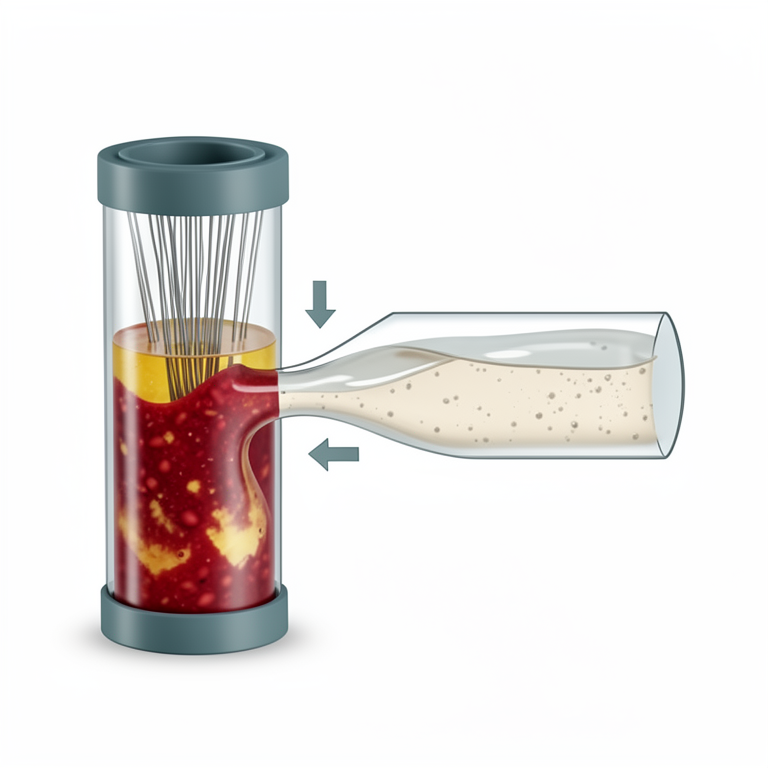
Membrane Clarification Process Flow
AI-generated conceptual illustration (pomegranate and pineapple fruit juices in a hollow fiber membrane filtration system). It explains the idea and does not show study data.
View source evidence ↗Figures & tables
From the original paper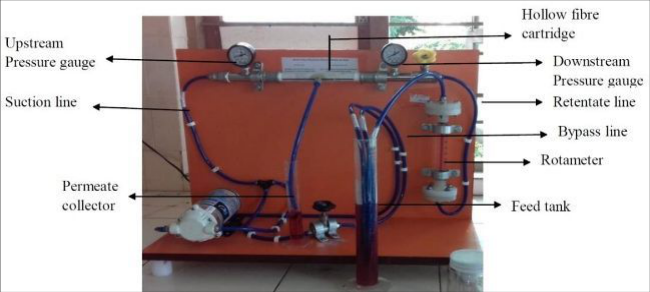 Figure 1
 Table 1
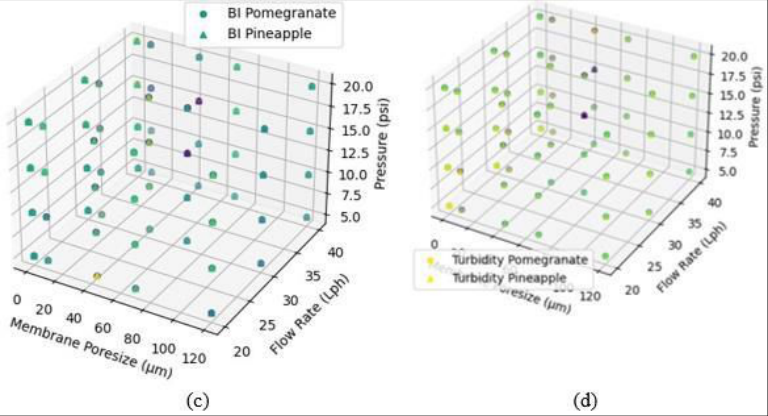 Figure 2
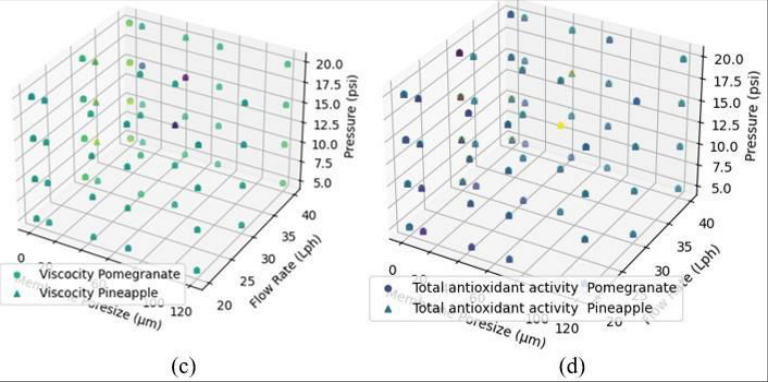 Figure 3
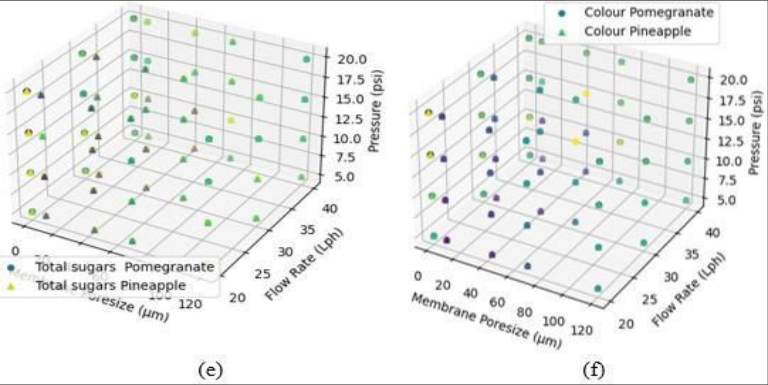 Figure 4
Introduction
There is a worldwide increasing tendency for the consumption of tropical fruits, juices and fruit drinks due to the interest in ready to consume healthy products. Fruit juices are liquid foods that provide vitamins, sugars, mineral compounds and water. Consumers have individual preferences for specific appearance, consistency and flavor characteristics. Pomegranate (Punica granatum L., Punicaceae) and pineapple (Ananas comosus L., Merril) are the most popular tropical non-citrus fruits, mainly because of their attractive aroma, refreshing flavour and Brix/acid ratio. Their juices have been used in fruit based beverages individually, in the form of mixture or combined with other fruit juices. As an ingredient, the concentrated juice from pomegranate and pineapple, blends well with other aromas of fruits resulting in a pleasant product with a competitive market price. Pomegranate, mainly produced in the middle east, have a number of nutritional and health benefits and is a potential source of anthocyanins, ellagic acid, phytoestrogenic flavonoids, tannins and organic acids, some of which are antioxidants. Further, as reported in biological studies, pomegranate juice is rich in anti-atherosclerotic and anti-atherogenic compounds which have been shown to reduce blood pressure and low density lipoprotein oxidation (Aviram and Dornfeld, 2001) [2] . Pineapple juice is a popular product with increasing demand in many countries. Thailand is one of the biggest countries for the production of pineapple and exports more than a half the total of world volume annually. Pineapple juice is marketed world-wide because of its attractive aroma, flavour and other beneficial components. Nutritional compounds in pineapple juice for human health are generally identified as phytochemicals, such as vitamin C, carotenoid, flavanoid and phenolic compounds (Laorko et al., 2010) [11] . These components not only reduce the risk of oxidative damage related to the presence of free radicals, but also, the risk of contracting different types of cancer and cardiovascular and neurological diseases. Due to these characteristics and increasing public awareness about nutritional food, the demand for the pineapple and pomegranate fruits has significantly increased in the last years. Consequently, many industries producing pineapple and pomegranate fruit juices as well as pharmaceutical companies extracting health beneficial compounds from the fruits have been developed. Pineapple and pomegranate juices in its original state have a turbid appearance that makes it hard to preserve during the storage. Since the main problem with juices is stability, there is a need for research to solve this problem besides preservation of color. According to the literature, the present methods used for polyphenol elimination to produce stable juice involve liquid extraction with organic solvents. However, these methods require high temperature to increase the extraction rate and yield, but, may denature the polyphenols leading to undesirable byproducts. Therefore, MF and UF as modern methods are used to reduce juice turbidity. MF and UF are non-thermal and low cost separation technologies for juices emerging in recent years. UF and MF have been applied in vegetal juices, pulps and wine industries, reducing many steps of the conventional clarification. Also, pectinolytic enzymes can be reduced and sometimes can even be eliminated. Purpose of this study is to evaluate the effects of clarification treatments combined with membrane filtration on organic acid compositions, phenolic compounds and on some other quality parameters including color and turbidity of pineapple and pomegranate juice. MF/UF process alone has no observable effect on the phenolic compounds and organic acid compositions of both juices. Although effects of some clarifying agents on some quality characteristics of fruit juices such as pH, turbidity, total color density, total phenolic substances and anthocyanins have been reported previously, membrane filtration has been replacing conventional treatments for clarifying fruit juices with the advantages of elimination of clarifying agents together with their associated problems and production with a continuous simplified process. By MF/UF treatment, all proteins larger than the membrane molecular weight cutoff (MWCO) can be removed. Keeping in view of the above points, a study was undertaken on processing of pineapple and pomegranate juices that constituted the study of physicochemical characteristics of both membrane clarified juices.
Material and Methods
Fully matured pomegranate and pineapple fruits were selected and cleaned to remove extraneous material. The juices were extracted and subjected to physicochemical analysis. Pretreatment of pomegranate and pineapple was performed using a fining agent called egg albumin. The juice was subjected to four concentration levels i.e., 0.25, 0.5, 1 and 2 g/L and effect of pretreatment was analysed. Among the four concentration levels, 2 g/L concentration gave good results in removal of colloidal substances of both juices. After the collection of juice, the egg albumin powder was added and mixed thoroughly. The juice samples were muslin cloth filtered and centrifuged at 4000 rpm (2147 g) for 5 min (Domingues et al., 2011) [9] . Colloids can decrease the permeate flux during filtration of the juice due to presence of pectinases, cellulase, hemicellulase, xylanase, carbohydrase, glucanase or arabinose. Removal of aggregates of these species via pretreatment may increase the permeate flux due to the reduction in the size of the particles and the subsequent decrease in viscosity (Valero et al., 2014) [21] . Membrane clarification (MF and UF) of pomegranate and pineapple juices after pretreatment was carried out in hollow fibre membrane module setup. The hollow fiber membrane set up is shown in Fig 1 . Membrane processing of pomegranate and pineapple juice was carried out in the membrane module setup with different hollow fibre cartridges. The container was filled with 250 mL of juice. The operation was done in total recycle mode. The suction, retentate, by-pass lines were kept in feed solution and continuous operation was carried out. The permeate was collected at permeate line separately. All microfiltration (MF) and ultrafiltration (UF) experiments were carried out at transmembrane pressures (TMPs) of 0.3447 bar (5 psi), 0.6894 bar (10 psi), 1.0342 bar (15 psi) and 1.3789 bar (20 psi). The pore sizes of hollow fibre cartridges used for microfiltration and ultrafiltration experiments were 0.1 and 0.2 µm and 120, 70, 44 and 120 kDa (MWCO), respectively. The permeate was collected at regular intervals of time and tabulated. Initially the membranes were compacted at 1.0342 bar 15 psi, 30 Lph with distilled water for 2 hours in total recycle mode. Further, pure water flux data was collected both for MF and UF membranes using distilled water. After each run, the set up was flushed with distilled water and then cleaned with 0.1 N hydrochloric acid (HCl) for 30 mins in total recycle mode according to the washing protocol given by the manufacturer. After thorough washing, the permeability of the cartridges was analysed to measure the change in permeability of the hollow fibres. All the experiments were conducted in triplicate at room temperatures (30±2 °C). After every experiment, the membranes were cleaned properly and stored in the 1% formalin solution for future use. The permeate collected was stored in glass bottles. The experiments were performed according to the different conditions laid down in the table 1 and analysed to obtain high permeate flux. The juices processed by different membrane pore sizes, transmembrane pressures and feed flow rates were collected and biochemical analysis was conducted. Total soluble solids (TSS) of juice were measured by Refractometer (ATAGO make, range 58-90%) and expressed in terms of % Brix. The juice recovery per 100g of fruit was estimated. The pH measurement was performed using a digital pH meter (Systronics digital pH meter 355).
| Operating variables | — |
|---|---|
| Membrane poresizes: | MF - 0.1 and 0.2 µm UF – 120, 70, 44 and 10 kDa |
| Transmembrane pressures (TMP): | 0.3447 bar (5 psi), 0.6894 bar (10 psi), 1.0342 bar (15 psi) and 1.3789 bar (20 psi) |
| Crossflow Velocities/ Feed flow rates: | 0.024 m/s (20 Lph), 0.037 m/s (30 Lph) and 0.049 m/s (40 Lph) |
Table text extracted from the original PDF; superscript letters are shown inline. The original table image is below.
View original table image
The colour intensity was measured using a Systronics PC based Double Beam Spectrophotometer at absorbance of 510 nm. Similarly, Browning index was expressed as the ratio of 420 nm to 520 nm using Systronics PC based Double Beam Spectrophotometer (Valero et al., 2014) [21] .
The turbidity and color was also measured using Systronics PC based Double Beam Spectrophotometer at absorbance of 700 nm and 420 nm respectively. The turbidity values of both juices were measured according to the procedure given by Valero et al. (2014) [21] . Titrable acidity of both juices are determined by the procedure of AOAC (2005) [3] . Titrable acidity is expressed as the amount of free acid mainly as anhydrous citric acid present in fruit, conveniently in g acid per 100 g or 100 ml. Viscometer (Brookfield, Model: DV1MLV). Lane and Eynon method (Ranganna, 1986) [6] was used for determination of total, reducing and nonreducing sugars.
Reducing sugars % = [20,1] The antioxidant assay was estimated by ferric reducing antioxidant power method using ascorbic acid as standard and total Phenolic content by Folin Ciocalteu'smethod using gallic acid as standard (Kametkar et al., 2014) [10] . The total anthocyanin content was determined by the procedure given by Raj et al. (2011) [15] . Anthocyanins are water soluble phenolic glycosides belonged to flavonoid pigments having C 15 skeleton of flavones as basic structural unit.
Results and Discussion
Development of process technology for preservation of juices involves selection of processing steps, appropriate membrane processes, membrane pore sizes and optimum operating conditions. Membrane processing was explored as an alternative to thermal/ added preservative processes or as an additional minimal processing method to achieve shelf stable high quality fruit juices. Therefore membrane processing of both pomegranate and pineapple juices was performed in combination of six different pore sizes (0.2 µm, 0.1 µm, 120 kDa, 70 kDa, 44 kDa and 10 kDa), four transmembrane pressures 0.3447, 0.6894, 1.0342 and 1.3789 bar (5, 10, 15 and 20 psi) and 3 feed flowrates (20, 30 and 40 Lph). The permeates collected from all these operational parameter combinations were analysed for biochemical quality in order to evaluate the best permeate among all the seventy two combinations. The best samples were analysed statistically using mixed anova effect.
Total soluble solids
The [12] in their research on sugarcane juice clarification. Similar observations were made for pineapple juice, where high TSS values were noted for the operational conditions of 0.1µm, 15 psi (1.0342 bar) TMP, 30 Lph (11.005%), 70 kDa, 15 psi TMP, 30 Lph (11.004%), and 44 kDa, 15 psi TMP, 40 Lph (10.994%). The relatively higher TSS values in these permeates could be attributed to reduced fouling, allowing for almost complete permeation of solids. This phenomenon is likely to occur due to the selected operational parameters. Moreover, the comparison of permeate values with feed values indicated a significant difference (p<0.01), signifying the efficiency of the membrane process.
Colour intensity
The most intense color, with a value of 7. [13] during their research on the clarification of pomegranate juice.
Browning index (BI)
The [21] , who observed similar trends when clarifying pomegranate juice using egg albumin as a clarifying agent. This decrease in turbidity for both pomegranate and pineapple juices can be attributed to the reduction in total soluble solids. These findings align with similar observations made by Mirsaeedghazi et al. (2010) [13] and Carvalho et al. (1998) [8] , demonstrating the consistent impact of membrane processing on reducing turbidity levels in fruit juices. [8] . Furthermore, an increase in titrable acidity was observed with higher values of TMPs and flow rates. Interestingly, this is contrary to the study conducted by Couto et al. (2011) [5] , where the concentration process of pineapple juice led to a 2.9-fold increase in titrable acidity. In our study, which focused on the clarification process using various membranes, a decrease in titrable acidity was observed. Lastly, it's worth noting that the permeate values were compared with the initial feed values, and a significant difference (p<0.01) was observed, highlighting the impact of the membrane processing on the titrable acidity levels of both juices. [5] revealed that the pH values of juices remained relatively stable during the concentration process achieved through reverse osmosis. This aligns with our findings, suggesting that the chosen membrane processing conditions have a limited impact on the pH values of the juices
Turbidity
Turbidity
Viscosity
The [6] , who reported a decrease in viscosity by 29.6% for single-strength pineapple juice to hydrolyzed juice and a reduction of 22.0% for pulp content. The decrease in viscosity with decreasing membrane pore size is attributed to the restriction of larger colloidal components from passing through the membrane, consequently resulting in lowered viscosity.
Total antioxidant activity
The From the data, it's evident that pineapple juice exhibited a higher phenolic content compared to pomegranate juice. Notably, significant differences (p<0.05) were observed among the TPC values of all the permeate juices. This decrease in phenolic content as the pore size decreased could be attributed to the potential retention of certain components. Wen and Wrolstad (2002) [22] reported the presence of non-flavonoid phenolics in pineapple fruit, juice, and shell fibers. Couto et al. (2011) [5] demonstrated that concentrating pineapple juice through reverse osmosis led to increased phenolic compounds, indicating a 2.6-fold increase in phenolic content in the retentate side. Comparing the permeate values with the initial feed values revealed a significant distinction (p<0.01), underscoring the impact of membrane processing on phenolic content. It's noteworthy that a reduction in anthocyanin content was observed as the membrane pore size decreased. Moreover, the highest anthocyanin levels were achieved at elevated TMPs and flow rates for both pineapple and pomegranate juices. Importantly, pomegranate juice exhibited significantly higher anthocyanin contents compared to pineapple juice. The permeate values were subjected to comparison with the initial feed values, revealing a significant discrepancy (p<0.01) between the two datasets. This emphasizes the tangible influence of the membrane processing on the anthocyanin content of both juices.
Total anthocyanin content
Total anthocyanin content
Reducing sugars
The samples from the permeate with elevated levels of reducing sugars were subjected to analysis for both pomegranate and pineapple juices. For pineapple juice, the permeates exhibiting notable recovery of reducing sugars were observed under the following conditions: 0. [4] also revealed the loss of sugars and soluble solids due to factors like membrane cut-off, configuration, temperature, and the presence of concentration polarization and fouling. These findings align with our study, demonstrating a decline in sugars. A notable statistical distinction (p<0.05) emerged among the combinations of treatments for both juices. Moreover, a significant variance (p<0.01) with feed values was observed when comparing the permeate values. [4] corroborate these observations, as they reported the retention of sugars and soluble solids when using membranes with smaller cut-off sizes and specific configurations. Additionally, their study highlighted that higher Transmembrane Pressures (TMPs) were associated with increased sugar recoveries in the permeate. Furthermore, the research by Oliveria et al. (2012) [14] emphasized that higher TMPs lead to significant impediment to sugar passage across the membrane, resulting in a reduction in total sugar content in the permeate. These studies collectively underline the critical role of membrane cut-off sizes and TMPs in influencing sugar recovery during membrane processing. The choice of membrane characteristics, coupled with appropriate processing conditions, has a direct impact on the separation and retention of total sugars in fruit juice permeates, as evident from both the pomegranate and pineapple juice data. The color values for both pomegranate and pineapple juices were significantly reduced under these specific membrane processing conditions. This reduction in color values is likely attributed to the decrease in anthocyanin content. Anthocyanins are color pigments present in fruits responsible for their vibrant hues, and their concentration tends to decrease as the membrane pore size is reduced. As a result, when using smaller membrane pore sizes (such as 0.1µm), more anthocyanins are retained, leading to a higher color intensity in the permeate. The study's observations align with findings reported by Oliveiria et al. (2012) [14] , suggesting that membrane processing with smaller pore sizes results in a decrease in color values due to the retention of color pigments, including anthocyanins. This finding underscores the importance of membrane selection in fruit juice processing to achieve desired color characteristics. By carefully choosing the appropriate membrane pore size and MWCO, fruit juice manufacturers can control the color attributes of their products and produce juices with consistent color quality.
Non-reducing sugars
Non-reducing sugars
Colour
Overall, the data demonstrates the impact of membrane processing on the color of pomegranate and pineapple juices and highlights the significance of membrane properties in determining the color values in fruit juice permeates. These insights can assist juice manufacturers in optimizing their processes to achieve desired color profiles and maintain product quality.
Conclusions
Permeates from both juices were collected after membrane clarification, followed by conducting biochemical analysis. For pomegranate juice, using a 0.
Figures and tables from the paper
References
19 in the original paper- Ahmmed L, Islam MN, Islam MS. A quantitative estimation of the amount of sugar in fruit jam available in Bangladesh. Sci J Anal Chem. 2015;3:52-55.
- Aviram M, Dornfeld L. Pomegranate juice consumption inhibits serum angiotensin converting enzyme activity and reduces systolic blood pressure. Atherosclerosis. 2001;158:195-198.
- Carvalho LMJD, Castro IMD, Silva CABD. A study of retention of sugars in the process of clarification of pineapple juice (Ananas comosus, L. Merril) by micro and ultrafiltration. J Food Eng. 2008;87:447-454.
- Couto DS, Cabral LMDC, Matta VMD, Deliza R, Freitas DDGC. Concentration of pineapple juice by reverse osmosis: physicochemical characteristics and consumer acceptance. Food Sci Technol. 2011;31:905910.
- Carneiro L, Sa IDS, Gomes FDS, Matta VM, Cabral LMC. Cold sterilization and clarification of pineapple juice by tangential microfiltration. Desalination. 2002;148:93-98.
- Chilukuri VS, Marshall AD, Munro PA, Singh H. Effect of sodium dodecyl sulphate and cross-flow velocity on membrane fouling during cross-flow microfiltration of lactoferrin solutions. Chem Eng Process. 2001;40:321-328.
- Carvalho LMJD, Silva CABD, Pierucci APTR. Clarification of pineapple juice (Ananas comosus L. Merryl) by ultrafiltration and microfiltration: Physicochemical evaluation of clarified juices, soft drink formulation, and sensorial evaluation. J Agric Food Chem. 1998;46:2185-2189.
- Domingues RC, Junior SB, Silva RB, Madrona GS, Cardoso VL, Reis MH. Evaluation of enzymatic pretreatment of passion fruit juice. Chem Eng Trans. 2011;24:517-522.
- Kamtekar S, Keer V, Patil V. Estimation of Phenolic content, Flavanoid content, Antioxidant and Alpha amylase Inhibitory Activity of marketed Polyherbal Formulation. J Appl Pharm Sci. 2014;4:61-65.
- Laorko A, Li Z, Tongchitpakdee S, Chantachum S, Youravong W. Effect of membrane property and operating conditions on phytochemical properties and permeate flux during clarification of pineapple juice. J Food Eng. 2010;100:514-521.
- Moreno RMC, Oliveira RCD, Barros STDD. Comparison between microfiltration and addition of coagulating agents in the clarification of sugar cane juice. Acta Sci Technol. 2012;34:413-419.
- Mirsaeedghazi H, Djomeh ZE, Mousavi SM, Aroujalian A, Navidbakhsh M. Clarification of pomegranate juice by microfiltration with PVDF membranes. Desalination. 2010;264:243-248.
- Oliveira RCD, Doce RC, de Barros STD. Clarification of passion fruit juice by microfiltration: Analyses of operating parameters, study of membrane fouling and juice quality. J Food Eng. 2012;111:432-439.
- Samreen, Satyanarayana Ch VV, Edukondalu L, Vimala B, Rao VS. Effect of pre-treatment on aggregation, biochemical quality and membrane clarification of pineapple juice. Indian J Ecol. 2023;50:1209-1219.
- Samreen, Satyanarayana Ch VV, Edukondalu L, Vimala B, Rao VS. Effect of pre-treatment on aggregation, biochemical quality and membrane clarification of pomegranate juice. Indian J Ecol. 2022;49:910-918.
- Samreen, Satyanarayana Ch VV, Edukondalu L, Vimala B, Rao VS. Physicochemical characteristics of pomegranate and pineapple juice. Indian J Ecol. 2020;43:60-63.
- Saeed, Iftikhar. Quantitative test (chemical) for sugars in sugarcane. Sargodha: Univ. Sargodha, Inst. Food Sci Nutr; 2002.
- Valero M, Vegara S, Martí N, Saura D. Clarification of pomegranate juice at industrial scale. J Food Process Technol. 2014;5:1-6.
- Wen L, Wrolstad RE. Phenolic composition of authentic pineapple juice. J Food Sci. 2002;67:155-161.