
Research article · 2024 · Full text
International Journal of Biology SciencesFirst detection of anopheles stephensi (Deptera: culicidae) in Gash Barka Region: Eritrea
Volume 6(1) · Pages 176–182 · DOI: 10.33545/26649926.2024.v6.i1c.203 ↗
Research areasInsect Resistance and GeneticsVector-Borne Animal DiseasesEnvironmental and Biological Research in Conflict Zones
Abstract
Author-writtenBackground: Anopheles (An) gambiae and (An) funestus are the dominant vectors in Africa. These vectors inhibit at the rural area and as a result malaria was being restricted to the rural areas. Recently, (An) stephensi as a competent vector of both Plasmodium (p). vivax and P. falciparum appear to be better adapted in urban and peri-urban areas of East African countries. So far, An. Stephensi found to inhibit in Djibouti, Ethiopia, Sudan, and Somalia and further distributed in Nigeria and Kenya, since 2012. If the invasion of anopheles stephensi continue across the African continent, additional 126 million people from urban areas will be at risk of malaria infection. Gash Barka (GB) Region has shared a border with Ethiopia and Sudan (An. Stephensi prevalent areas). So the current surveillance aimed to ascertain the presence of An. Stephensi in GB region using morphological and molecular identification. Method: Cross sectional entomological survey was conducted during the period Sep. - Dec. 2022 in three towns of Gash Barka Region (Vis. Tesseney, Agurdet and Gulj) to assess the presence of An. Stephensi. Result: This is the first report in Eritrea to identify the invasive malaria vector An. Stephensi. Cement basin was the principal breeding habitat in the study site. It was accountable for more than 90% of the immature anopheles species. Other habitats include plastic/metal basin barrels, clay pots and overhead tanks were found with immature mosquitos. Conclusion: An. Stephensi co-exists with native vector species in the study sites. Further research is needed to determine its relative role in malaria transmission in the Region. Heath authorities need to revise the existing vector control strategies to target An. Stephensi alongside the native malaria vector species.
Summary
Source-checkedPlain-language reading of the full paper, prepared with AI and checked against the text. Each point links to the authors' own words.
Why it matters
- Traditionally, malaria in Africa has been largely restricted to rural areas because the dominant vectors, Anopheles gambiae and Anopheles funestus, primarily inhabit those regions. View evidence ↗
- Anopheles stephensi is an invasive vector capable of transmitting both P. vivax and P. falciparum, and it is better adapted to urban and peri-urban environments in East Africa. View evidence ↗
- The continued spread of An. stephensi across Africa could put an additional 126 million urban residents at risk of malaria infection. View evidence ↗
The question
- The study aimed to determine if An. stephensi was present in the Gash Barka (GB) region of Eritrea using morphological and molecular identification methods. View evidence ↗
What they did
- A cross-sectional entomological survey was performed from September to December 2022 in the towns of Tesseney, Agurdet, and Gulj within the Gash Barka Region. View evidence ↗
- Researchers inspected household water-holding containers for larvae and pupae, which were then reared to adulthood for species identification. View evidence ↗
- The survey involved the inspection of 828 containers across three urban sites: Teseney, Aqordet, and Omhajer. View evidence ↗
What they found
- This study represents the first report of the invasive malaria vector An. stephensi in Eritrea. View evidence ↗
- Cement basins were the most productive breeding sites, accounting for 87% of the collected Anopheles mosquitoes. View evidence ↗
- Morphological identification confirmed An. stephensi in all three sites, with prevalence rates of 96.1% in Omhajer, 71.9% in Tesseney, and 56.8% in Aqordet. View evidence ↗
- The study found that Anopheles, Aedes, and Culex mosquito species co-breed within the same habitats. View evidence ↗
What it means
- The authors conclude that health authorities must revise vector control strategies to target An. stephensi in addition to native malaria vectors. View evidence ↗
- A limitation of the study was that surveillance targeted only immature mosquitoes, without using light traps or other adult collection methods. View evidence ↗
Visual summary
3 visualsIllustrations explain the paper; charts are replotted from the paper's own table values.
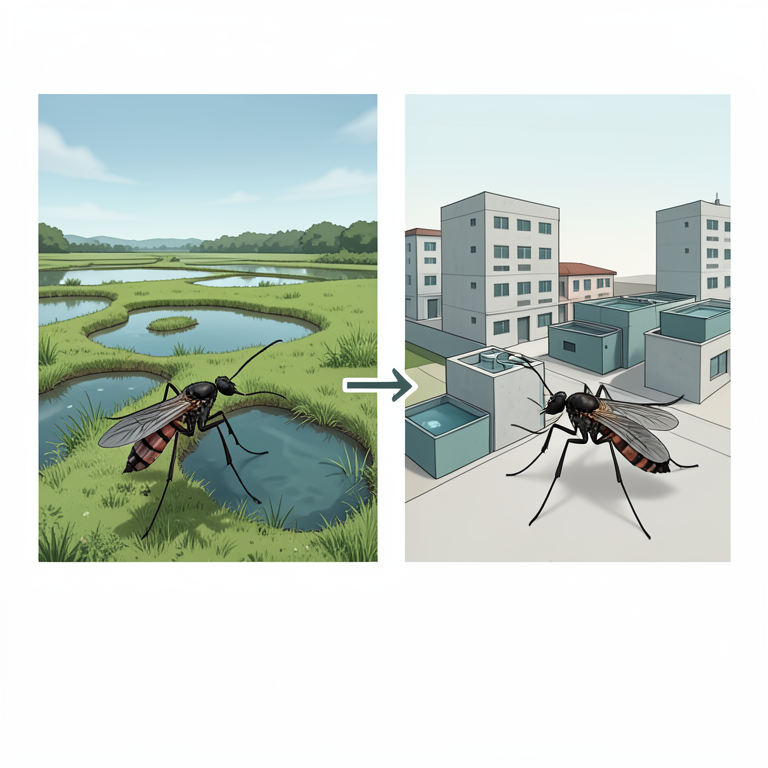
Vector Habitat Shift
AI-generated conceptual illustration (Anopheles stephensi mosquitoes in rural and urban Eritrean landscapes). It explains the idea and does not show study data.
View source evidence ↗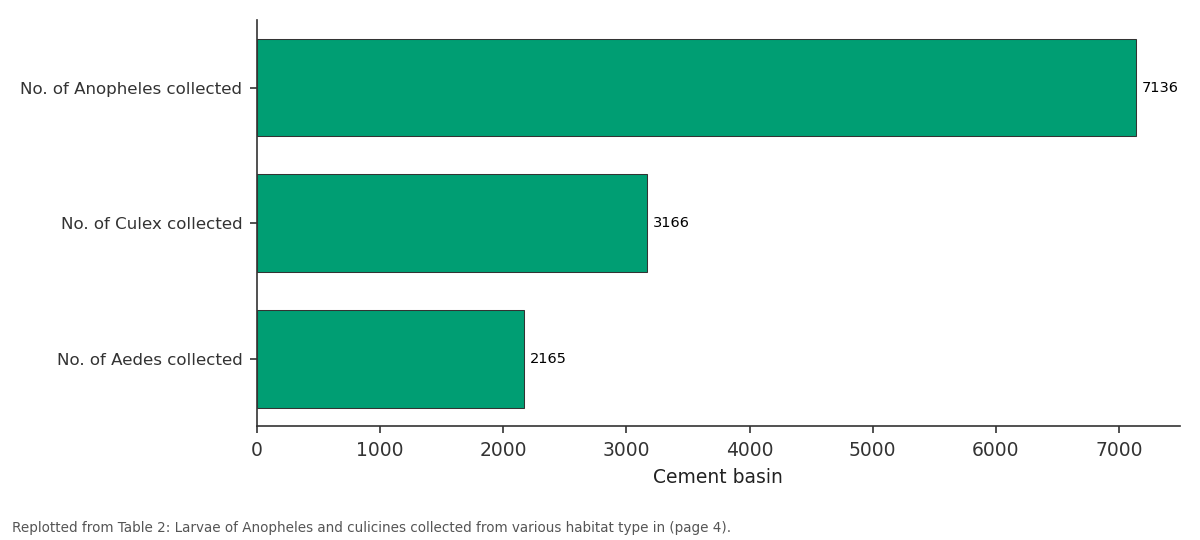
Cement basin: No. of Anopheles... vs No. of Culex collected vs No. of Aedes collected
Replotted from Table 2 (page 4) of the original paper. Every bar is the paper's own table value.
View source evidence ↗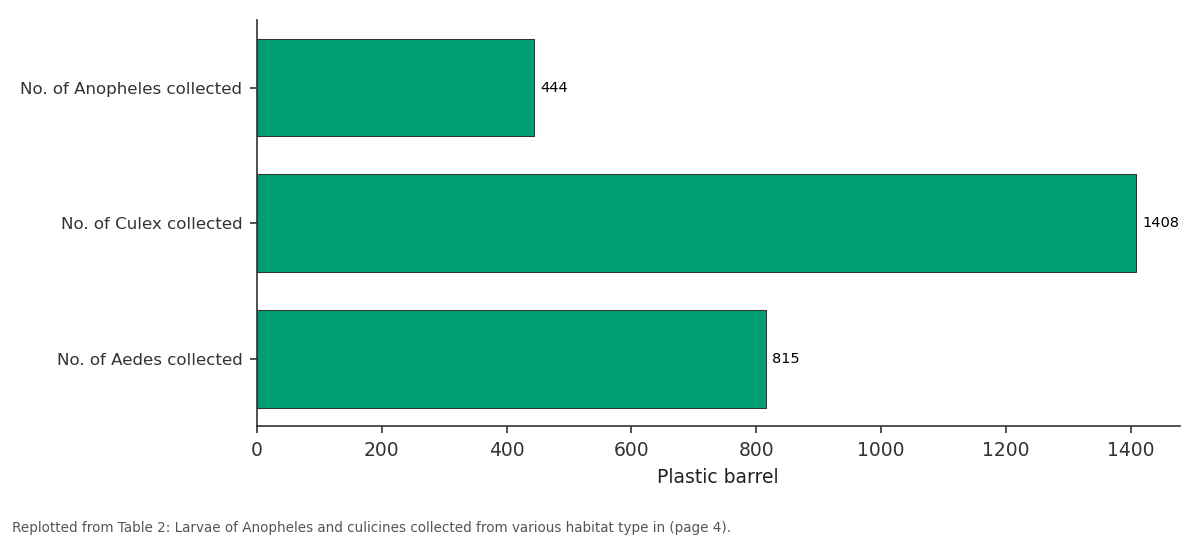
Plastic barrel: No. of Anopheles... vs No. of Culex collected vs No. of Aedes collected
Replotted from Table 2 (page 4) of the original paper. Every bar is the paper's own table value.
View source evidence ↗Figures & tables
From the original paper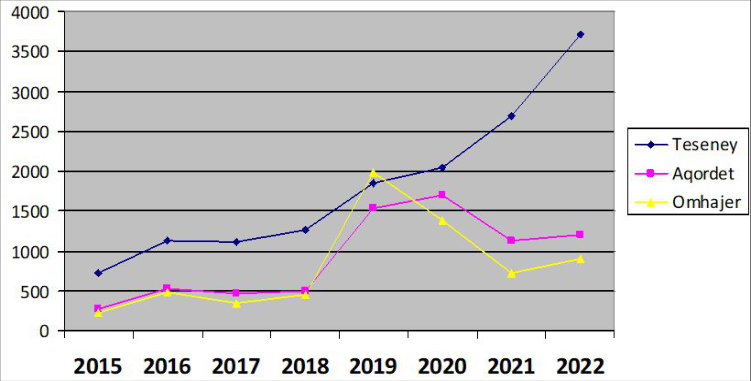 Figure 1
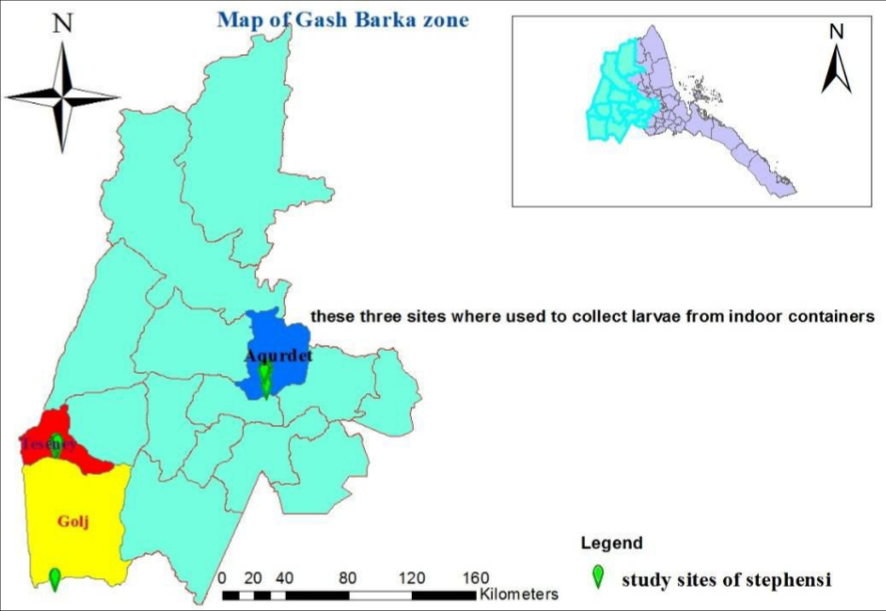 Figure 2
 Table 1
 Table 2
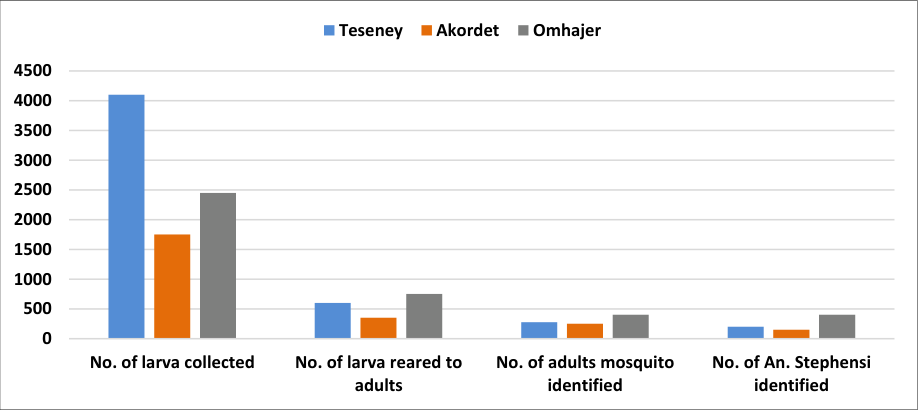 Figure 3
Introduction
According to World Health Organization (WHO) annual report 2021, an impact limitation was occurred in 2015-2020. The progress of malaria control and elimination was remained the same. The report revealed African region as a whole missed the milestone of the Global Technical Strategy for malaria (GTS) 2020, incidence and mortality reduction by 38% and 40%, respectively. In Botswana, Comoros, Eritrea and Madagascar, the malaria mortality rate were increased by 40% or more (WHO, 2021) [32] . In 2021 alone there were 247 million cases and 619,000 deaths globally. The sub Saharan Africa (SSA) were responsible for the 96% of the cases and 96% of deaths (WHO, 2022) [34] . Anopheles arabiensis, a member of the Anopheles gambiae species complex, is the principal malaria vector in East African countries like Djibouti, Sudan, Somalia, and Ethiopia, as well as in some countries of the Arabian Peninsula, such as Yemen and Saudi Arabia (WHO, 2022) [34] . Twenty years ago, a study conducted in Eritrea investigated the distribution of Anopheles mosquitoes throughout the country. The study identified thirteen species, and Anopheles arabiensis emerged as the most dominant vector, accounting for more than 80% of the total (Shililu et al. 2007) [20] . A similar study conducted in the Anseba region of Eritrea in 2020 also revealed the same result; Anopheles gambiae was found to be the dominant vector in that particular location (Yenus et al., 2021) [36] . It is believed that An. arabiensis is a rural malaria vector breeds in a variety of breeding habitats like streams, animal hoof prints, river edges, in both temporary and permanent ground pools (Yenus et al., 2021, Shililu et al., 2007, Sinka et al., 2010, Himeidan and Rayah, 2008) [36,20,24,16] .
In Africa, malaria has been restricted to the rural areas due to the vectors breeding behavior (Robert et al., 2003) [18] . But this time the invasive An. Stephensi has been established in Africa region since 2012. It was first detected in Djibouti in 2012 (Faulde et al., 2014) [12] . Since then, the vector was identified from urban and rural sitting in Ethiopia, Sudan and Somalia in between 2016 and 2019 (Ahmed et al., 2021, WHO 2022 [34] , Carter et al., 2018) [3,34,10] and further detected from Nigeria (2020), Yemen (2021) and Kenya (2022) (WHO, 2023) [31] . Based on the experience observed from Djibouti, P. falciparum incidence might be increased by 50% in Ethiopia due to the invasive An. Stephensi (Tadesse et al., 2021, Hamlet et al., 2022) [27,2] . If the invasion of Anopheles stephensi continue across the African continent, additional 126 million people from urban areas will be at risk of malaria infection (Sinka et al., 2020) [25] . Recently, (Ae) stephensi as a competent vector of both Plasmodium (p). vivax and P. falciparum appear to be better adapted in urban and peri-urban areas of East African countries (Al-eryani et al., 2023) [6] . It primarily breeds in domestic and peri-domestic Household (HH) water containers including water tanks, tyres, basins either plastic or cement, construction sites, barrels and other human-made habitats (Singh et al., 2021, Thomas et al., 2016) [22,28] . An. Stephensi is the primary vector of malaria in Asia (Sinka et al. 2011) [23] . Several strategies have been employed in countries endemic with An. Stephensi, predominantly targeting the aquatic stages due to the confirmed resistance of this vector to the four major insecticide classes: organochlorines, pyrethroids, organophosphates, and carbamates (Enayati, et al. 2020) [11] . In India, Larva control through chemicals and biological means (larvivorous fish and bacteria) are commonly used. Temephos and Bacillus thuringiensis var israelensis (Bti) are the widely used larvicides (Subbarao, et al., 2019) [26] . According to Al-Eryani et al. 2023 [6] , the emergence and spread of An. Stephensi threatens the progress in malaria control in the Horn of Africa and SSA.
Gash Barka (GB) Region is one of the six Regions in Eritrea. 95% population of the region are living in malarias area. This region is responsible for more than 80% of the total cases produced in Eritrea. According to the annual report from the Communicable Diseases Control (CDC): Eritrea, there was a 57% increase in malaria cases observed between 2015 and 2019, paradoxically contradicting the goals of the 2020-Enitiative: a 38% and 40% reduction in incidence and mortality, respectively. GB records high transmission with annual parasite index of 57.7 in contrast to the other Regions 3.6 in Maekel, 3.8 in Anseba, 9.7 in Debub, 13.8 in Southern Red Sea (SRS) and 7.4 in Northern Red Sea (NRS) regions. GB Region has shared a border with Ethiopia and Sudan where An. Stephensi was incriminated in 2016 and 2019, respectively. The current surveillance effort aims to determine the presence of An. Stephensi in the GB Region, using both morphological and molecular identification.
Methodology Study design
Cross sectional entomological survey during the period Sep-Dec 2022.
Study area: Gash-Barka is one of the most malarias zones in the country. It has an altitude range of 142 to 2,702 meters above sea level; it is divided into sixteen administrative sub-zones; and it has mainly a July-September rain season with a small rain season in April/May. The zone is one of the malaria zones in the country. It has a total population of 910, 082, of which 95% (864, 578) live in malaria-endemic areas. Based on recent 2022 malaria data, Plasmodium falciparum is the dominant parasite species in the zone, accounting for 88% of infections. Plasmodium vivax follows with 12%, and the remaining percentage comprises mixed infections involving either Pf, Pv, or other species. The study was conducted in three towns of the Region: Teseney, Omhajer and Agordet.
Tesseney
Tesseney, located in the western part of the Gash Barka Region (GBR), is known as a land port due to its role as a center of trade between Eritrea and its neighboring countries, Sudan and Ethiopia. Tesseney has a total population of 30, 000, and its economy relies heavily on farming and animal husbandry. The Gash River runs alongside the town, increasing its vulnerability to malaria transmission. Tesseney is located at 14°19'23" N, 36°54'43" E, at an elevation of 600 meters above sea level (masl). A dramatic increment in malaria cases was observed between 2015-2022. The number of malaria cases in Tesseney increased more than fivefold, jumping from 727 in 2015 to 3,702 in 2022.
Agordat
Agordat is the third largest town in GBR, with a population of 22,048. This town has maximum population movement for trade and other economic matters. The economy is heavily driven by agriculture and animal raising, even though malaria cases are increasing. The Gash Barka River, flowing through the town, provides permanent breeding grounds for mosquitoes, contributing to the persistent malaria epidemic despite extensive efforts against both adult and immature mosquitoes. An outstanding achievement was observed in malaria reduction in Eritrea between 2000-2015, but paradoxically a significant increment has been observed since 2015 for unknown reasons. In this town, malaria cases were increased by 624% between 2015-2020 (From 272 to 1699). Akordat located at 15,551174'' N and 37.886464'' E at an elevation of 615 masl.
Omhajer
Omhajer is indeed the closest town to both Ethiopia and Sudan with a population of near 10, 000. Omhajer's location at the confluence of borders with Sudan and Ethiopia,
Study population
Larva of Anopheles mosquito.
Sampling technique and sampling size determination
To identify Anopheles mosquito breeding in Households (HH), we inspected wet water-holding containers for Anopheles larvae and pupae. Collected specimens were then reared to adulthood for morphological and molecular identification. Any water-holding containers were inspected for the presence of immature mosquitoes (Larva or pupa). To maximize the detection of Anopheles mosquito breeding, we inspected all readily accessible water-holding containers within local households (HH). These included basins (Cement, plastic, metal), discarded tins and tires, clay pots, barrels, hand washing basins, leaky faucets, gutters, and other potential breeding sites. A sufficient number of Anopheles mosquito immature stages were collected and reared at the malaria entomology laboratory under controlled, optimal environmental conditions.
Data collection
During the present survey, only immature mosquitoes were used. Larvae and pupa from indoor and outdoor containers were collected either by pipetting or dipping methods. Dipping was done in accordance with the larva searching strategies recommended by WHO (WHO, 1975) [30] .
Pipetting was used in small containers not suitable for dipping. The water was first emptied into an enamel tray and local materials and all the larvae and pupae were collected in a vials. The collected larva and pupa were brought to the mosquito rearing facility at Tesseney town, where they were placed in trays and raised to adult. Each enamel tray containing larvae or pupae was labeled by habitat type. The larvae were allowed to develop in the water that was drawn from the field, to maintain the same aquatic environment. The pupae were sorted and transferred with pipettes from the enamel trays to beakers with modest volumes of water, then kept inside cages. A dissecting microscope was used to identify emerging adults to the species using identification key. All identified specimens were preserved individually in Eppendorf tubes for further analysis and were sent to the national malaria control program for further molecular identification.
Data analysis
CSPro7.2 and Statistical Package for Social Science (SPSS) software version 21 were used as data entry and analysis respectively. Descriptive statistics were calculated for both variables, and a chi-square test was performed to assess the significance of the association between them. A p-value of less than 0.05 was considered to indicate a statistically significant association. Estimates were given in percentages, odds ratio and confidence intervals.
Ethical clearance
Ethical clearance was first obtained from the ethical review committee at the Eritrean Ministry of Health. Upon entering the selected study area, permission was obtained from the sub-zonal administration, municipalities, and local administrations. Additionally, verbal consent was obtained from all household heads.
Result
Result
Malaria morbidity
During the last eight years 28,315 malaria cases were reported from both study areas. Plasmodium falciparum (pf) accounts for more than 80% of the cases and the rest were Plasmodium vivax (pv) and mixed infection with both pf and pv. ver the past eight years, malaria cases in GB increased nearly fivefold, from 1,224 in 2015 to 5,806 in 2022. (Fig 1).
Habitat types: Their positivity and productivity for Anopheles and other mosquito type during a 4-month study period with 8 collection rounds, a total of 828 containers were inspected from three urban sites in Gash Barka Zone (Teseney, Aqordet, and Omhajer). Of these, 186 (22%) were positive for at least one of the three mosquito types. And more than 94% of the total positive containers were found harboring Anopheles species (Table 1). The positivity of containers and the number of larva per container were almost the same at all the study sites. Table 3 shows that cement basins and barrels (plastic or metal) were the most common breeding sites for mosquitoes, accounting for over 62% of positive traditional water containers inspected during the study. Although widely used at all study sites, clay pots accounted for only 3% of the total positive mosquito breeding containers. Table 2: During the study, 18,607 larvae and 1,225 pupae were collected from various container types, including cement basins, plastic basins, 200-liter barrels (plastic and metal), flower vases, clay pots, and overhead tanks. Of these, 8,212 were Anopheles mosquitoes, 7,046 Culex mosquitoes, and 4,349 Aedes mosquitoes. Cement basins stood out as the most productive breeding site, contributing a staggering 87% of collected Anopheles mosquitoes, followed by 45% of Culex and 50% of Aedes species. 200liter plastic or metal barrels emerged as the second-most productive breeding site, contributing 12% of Anopheles, 31% of Culex, and a notable 42% of Aedes mosquitoes collected during the study. Table 4 reveals that all three mosquito species, Anopheles, Aedes, and Culex, were found to co-breed in the same habitats.
| Container type | No. of positive containers | No. of containers positive for both mosquito type | No. of Anopheles collected | No. of Culex collected | No. of Aedes collected | No. of pupa |
|---|---|---|---|---|---|---|
| Cement basin | 116 | 38 (31%) | 7136 | 3166 | 2165 | 681 |
| Plastic barrel | 31 | 12 (26%) | 444 | 1408 | 815 | 380 |
| Metal barrel | 24 | 5 (21%) | 546 | 800 | 999 | 151 |
| Flower vase | 2 | 0 | 5 | 200 | 50 | 1 |
| Clay pot | 5 | 0 | 7 | 195 | 30 | 0 |
| Metal tank | 7 | 1(14%) | 74 | 500 | 240 | 4 |
| Shower vase | 1 | 0 | 0 | 578 | 50 | 8 |
| Total | 186 | 56 | 8212 | 7046 | 4349 | 1225 |
Table text extracted from the original PDF; superscript letters are shown inline. The original table image is below.
View original table image
| Container type | No. of inspected n (%) | Positive for any mosquito larva | Positive for Anopheles larva n (%) |
|---|---|---|---|
| Cement basin | 178 | 116 (65%) | 109 (94%) |
| Plastic barrel | 312 | 31 (10%) | 16 (52%) |
| Metal barrel | 143 | 24 (17%) | 10 (42%) |
| Flower vase | 84 | 2 (2%) | 2 (100%) |
| Clay pot | 63 | 5 (8%) | 1 (20%) |
| Metal tank | 45 | 7 (16%) | 5 (55%) |
| Shower vase | 3 | 1 (33%) | 0 (0%) |
| Total | 828 | 186 (22%) | 143 (77%) |
Table text extracted from the original PDF; superscript letters are shown inline. The original table image is below.
View original table image
Prevalence of Anopheles stephensi
Figure 3 reveals that 383, 242, and 185 female Anopheles mosquitoes were reared for identification from Omhajer, Tesseney, and Agordat, respectively. Each adult mosquito emerged from the pupa was identified to species level using morphological characters under a dissecting microscope two to four days of post-emergence. During morphological identification: 368 (96.1%) from Omhajer, 174 (71.9%) from Tesseney and 105 (56.8%) from Aqordet were found to be An. Stephensi. All the distinct features of An. Stephensi was observed. The present result shows the invasive malaria vector known as An. Stephensi is well-established at all the study sites.
Discussion
The result of the present study presented the morphological identification of An. stephensi in the urban sites of western part of Eritrea. This Region shared a border with Ethiopia and Sudan. An. stephensi was previously identified in almost all the neighboring countries, in Djibouti in 2012 (Faulde et al., 2014) [12] , Ethiopia in 2016 (Carter et al., 2018) [1] , and later in western Ethiopia in 2022 (Hawaria et al., 2023) [15] , in Central Sudan, 2019 (Ahmed et al., 2021) [3] , in Somalia (Somaliland) 2019 (Ali et al., 2022) [27] , Kenya (Ochomo et al., 2023) [17] and in the in the Middle East like in Yemen (Allan et al., 2023) [8] and Saudi Arabia (Al Ahmad et al., 2011) [5] . The surveillance targets only immature mosquito. No CDC light trap and other adult collection methods were deployed. It was only conducted to ascertain the presence of An.
Stephensi. Based on the recommendation from WHO, to incorporate Integrating An. stephensi surveillance into the existing malaria vector monitoring system in Eritrea yielded significant results. Surveys conducted in four out of six regions confirmed the presence of this mosquito with a very high prevalence in all urban sites surveyed within Gash Barka region. Molecular identification performed in Sudan by the National Malaria Control Program (NMCP) confirmed the presence of Anopheles stephensi in the samples. Unfortunately, detailed information necessary for phylogenetic analysis and comparison with neighboring countries was not provided. Finding phylogenetic similarities with neighboring countries might not be essential in this case, as it's possible that multiple introductions of different clades occurred simultaneously in various parts of Africa (Ochomo et al., 2023) [17] . The recent surge in malaria cases observed in our study areas over the past five years may be linked to the emergence of this invasive vector. This mosquito species has been demonstrated to be a highly efficient transmitter of both Plasmodium falciparum (Pf) and Plasmodium vivax (Pv), the parasites responsible for the most severe forms of malaria. A study from Ethiopia suggested that an increment of 50% in malaria incidence could have happened in areas where An. Stephensi is prevalent (Hamlet et al., 2022) [2] . A 2020 study by Sinka et al. predicted that an additional 126 million people in African urban areas could be exposed to malaria due to the spread of this invasive vector. The 2013 outbreak in Djibouti serves as a stark reminder of how quickly malaria cases can surge. With fewer than 3,000 cases reported in 2013, the number skyrocketed to over 49,000 just five years later (Seyfarth et al., 2019) [19] , highlighting the importance of vigilant mosquito control measures.
An. stephensi shares the same breeding habitat with Aedes (Ae.) aegypti. These mosquitoes prefer HH water holding containers. Cement basins emerged as the dominant breeding site across all study areas, with over 87% of Anopheles immatures collected from them. A study in India identified overhead tanks as the dominant breeding site for Anopheles stephensi, with over 78% of mosquito larvae collected from this source (Thomas et al., 2016) [22] . All three mosquito species (Anopheles, Culex, and Aedes) were found co-inhabiting the same breeding sites across the study areas, with a relatively even distribution observed. In contrast, a study by Thomas found very limited coinhabitation of Anopheles with other mosquito types in overhead tankers (Less than 5%). This contrasts with our findings of widespread co-inhabitation across different breeding sites. Unplanned urbanization is creating mosquito-friendly infrastructure, leading to a surge in threats like arboviruses and, more recently, malaria transmitted by An. Stephensi, posing significant risks to urban residents. These factors, coupled with climate change creating favorable breeding conditions, pose a significant threat for the spread and establishment of An. stephensi across Africa. (Ochomo et al., 2023) [17] . Furthermore, it was believed that this vector is resistant to the four classes of insecticides. In Ethiopia, resistance testing revealed that Anopheles stephensi mosquitoes are highly resistant to pyrethroids, carbamates, and organophosphates, which are the main classes of insecticides used for mosquito control (Balkew et al., 2020) [19] . Our understanding of Anopheles stephensi's resting and biting behavior remains limited, despite its growing importance as a malaria vector in Africa. This knowledge gap, as highlighted by Mnzava, hinders effective control strategies (Mnzava et al., 2022) [36] . The finding that An.
Stephensi bites outdoors challenges the effectiveness of traditional control methods like Insecticide-Treated Nets (ITNs) and Indoor Residual Spraying (IRS), which primarily target indoor-resting mosquitoes (Ochomo et al., 2023) [17] .
A community-based intervention targeting the Aedes aegypti mosquito, the primary vector of dengue fever, was implemented in Anseba Region, Eritrea. The effectiveness of the intervention, which involved door-to-door education and community mobilization for mosquito breeding site elimination, was assessed through a reduction in both mosquito populations and reported dengue cases. The community-based approach achieved an impressive 10-fold reduction in larval indices, suggesting its potential as a valuable tool for controlling dengue fever transmission in similar settings (Yenus et al., 2021) [13] . This intervention would be a choice of intervention against An. stephensi, as this vector has the same breeding behavior with Ae. aegypti. In addition to this, a social and behavioral change guidance for An. stephensi in Africa was developed and disseminated, which targets to promote the utilization of core interventions (ITS, IRS and prompt care-seeking for fever) and larval source management (Household larviciding, community larviciding, regulatory finding and removing standing water and covering water storage container.
Conclusion and Recommendation
Anopheles co-occurred with various native vector species, including [Culex and Aedes], at all three study sites. Further research is needed to determine its relative role in malaria transmission in the region. Given the co-existence of Anopheles stephensi with native malaria vectors, health authorities urgently need to revise existing control strategies. This comprehensive approach must simultaneously target both dominant and newly identified vectors to effectively manage their behavior and prevent disease transmission.
Figures and tables from the paper
References
31 in the original paper- Carter TE, Yared S, Gebresilassie A, Bonnell V, Damodaran L, Lopez K, et al. First detection of Anopheles stephensi Liston, 1901 (Diptera: Culicidae) in Ethiopia using molecular and morphological approaches. Acta Tropica. 2018;188:180-186.
- Hamlet A, Dengela D, Tongren JE, Tadesse FG, Bousema T, Sinka M, et al. The potential impact of Anopheles stephensi establishment on the transmission of Plasmodium falciparum in Ethiopia and prospective control measures. BMC Medicine. 2022;20(1):135.
- Ahmed A, Khogali R, Elnour MAB, Nakao R, Salim B. Emergence of the invasive malaria vector Anopheles stephensi in Khartoum State, Central Sudan. Parasites & Vectors. 2021;14(1):1-5.
- Al Ahmad A, Sallam M, Khuriji M, Kheir S, AzariHamidian S. Checklist and pictorial key to fourth-instar larvae of mosquitoes (Diptera: Culicidae) of Saudi Arabia. Journal of Medical Entomology. 2011;48(4):1737.
- Al-Eryani SM, Irish SR, Carter TE, Lenhart A, Aljasari A, Montoya LF, et al. Public health impact of the spread of Anopheles stephensi in the WHO Eastern Mediterranean Region countries in Horn of Africa and Yemen: Need for integrated vector surveillance and control. Malaria Journal. 2023;22(1):187.
- Ali S, Samake JN, Spear J, Carter TE. Morphological identification and genetic characterization of Anopheles stephensi in Somaliland. Parasites & Vectors. 2022;15(1):247.
- Allan R, Weetman D, Sauskojus H, Budge S, Hawail TB, Baheshm Y et al. Confirmation of the presence of Anopheles stephensi among internally displaced people's camps and host communities in Aden city, Yemen. Malaria Journal. 2023;22(1):1-8.
- Balkew M, Mumba P, Dengela D, Yohannes G, Getachew D, Yared S, et al. Geographical distribution of Anopheles stephensi in eastern Ethiopia. Parasites & Vectors. 2020;13:35.
- Carter TE, Yared S, Gebresilassie A, Bonnell V, Damodaran L, Lopez K, et al. First detection of Anopheles stephensi Liston, 1901 (Diptera: Culicidae) in Ethiopia using molecular and morphological approaches. Acta Tropica. 2018;188:180-186.
- Enayati A, Hanafi-Bojd AA, Sedaghat MM, Zaim M, Hemingway J. Evolution of insecticide resistance and its mechanisms in Anopheles stephensi in the WHO Eastern Mediterranean Region. Malaria Journal. 2020;19:258.
- Faulde MK, Rueda LM, Khaireh BA. First record of the Asian malaria vector Anopheles stephensi and its possible role in the resurgence of malaria in Djibouti, Horn of Africa. Acta Tropica. 2014;139:39-43.
- Mensur Y, Micheal B, Mickeal B, Amanuel K, Kiros S. A comprehensive analysis on abundance, distribution and bionomics of potential malaria vectors in Anseba zone, Eritrea. International Journal of Mosquito Research. 2021;8(2):116-124.
- Hamlet A, Dengela D, Tongren JE, Tadesse FG, Bousema T, Sinka M, et al. The potential impact of Anopheles stephensi establishment on the transmission of Plasmodium falciparum in Ethiopia and prospective control measures. BMC Medicine. 2022;20(1):135.
- Hawaria D, Kibret S, Zhong D, Lee MC, Lelisa K, Bekele B, et al. First report of Anopheles stephensi from southern Ethiopia. Malaria Journal. 2023;22(1):373.
- Himeidan YE, Rayah EE. Role of some environmental factors on the breeding activity of Anopheles arabiensis in New Halfa Town, Eastern Sudan. EMHJ-Eastern Mediterranean Health Journal. 2008;14(2):252-259.
- Robert V, et al. Malaria transmission in urban subSaharan Africa. American Journal of Tropical Medicine and Hygiene. 2003;68(2):169-176.
- Seyfarth M, Khaireh BA, Abdi AA, Bouh SM, Faulde MK. Five years following first detection of Anopheles stephensi (Diptera: Culicidae) in Djibouti, Horn of Africa: Populations established-malaria emerging. Parasitology Research. 2019;118(3):725-732.
- Shililu J, Mbogo C, Ghebremeskel T, Githure J, Novak R. Mosquito larval habitats in semiarid ecosystems in Eritrea: impact of larval habitat management on Anopheles arabiensis population. The American Journal of Tropical Medicine and Hygiene. 2007;76(1):103-110.
- Shilulu J, Ghebremekel T, Mengistu S, Fekadu H, Zerom M, Mbogo C, et al. Distribution of Anopheles mosquitoes in Eritrea. The American Journal of Tropical Medicine and Hygiene. 2003;69(3):295-302.
- Singh H, Gupta SK, Vikram K, Saxena R, Sharma A. The impact of mosquito proof lids of underground tanks on the breeding of Anopheles stephensi in a village in western Rajasthan. India Malaria Journal. 2021;20:412.
- Sinka ME, Bangs MJ, Manguin S, Chareonviriyaphap T, Patil AP, Temperley WH, et al. The dominant Anopheles vectors of human malaria in the Asia-Pacific region: occurrence data, distribution maps and bionomic précis. Parasites & Vectors. 2011;4:1-46.
- Sinka ME, Bangs MJ, Manguin S, Coetzee M, Mbogo CM, Hemingway J, et al. The dominant Anopheles vectors of human malaria in Africa, Europe and the Middle East: occurrence data, distribution maps and bionomic précis. Parasites & Vectors. 2010;3:117.
- Sinka ME, Pironon S, Massey NC, Longbottom J, Hemingway J, Moyes CL, et al. A new malaria vector in Africa: Predicting the expansion range of Anopheles stephensi and identifying the urban populations at risk. Check for updates, University of Oslo, Norway. 2020;177(40):24900-24908.
- Subbarao SK, Nanda N, Rahi M, Raghavendra K. Biology and bionomics of malaria vectors in India: existing information and what more needs to be known for strategizing elimination of malaria. Malaria journal. 2019;18:01-11.
- Tadesse FG, Ashine T, Teka H, Esayas E, Messenger LA, Chali W, et al. Anopheles stephensi mosquitoes as vectors of Plasmodium vivax and Plasmodium falciparum, Horn of Africa, 2019. Emerging Infectious Diseases. 2021;27(2):603-607.
- Thomas S, Ravishankaran S, Justin JA, Asokan A, Mathai MT, Valecha N, et al. Overhead tank is the potential breeding habitat of Anopheles stephensi in an urban transmission setting of Chennai, India. Malaria Journal. 2016;15:274.
- Thomas S, Ravishankaran S, Justin JA, Asokan A, Mathai MT, Valecha N, et al. Overhead tank is the potential breeding habitat of Anopheles stephensi in an urban transmission setting of Chennai, India. Malaria Journal. 2016;15:1-10.
- World Health Organization. World malaria report. Regional data and trends. Goals and milestones of the global technical strategy for malaria 2016-2030; c2021.
- World Health Organization. Zeroing in on malaria elimination; c2021: final report of the E-2020 initiative.
- World Health Organization. World malaria report 2022. Geneva, World Health Organization; c2022. Available from: https://apps.who.int/iris/handle/10665/365169
- Mnzava A, Monroe AC, Okumu F. Anopheles stephensi in Africa requires a more integrated response. Malaria Journal. 2022;21(1):156.
Cited by 9
From OpenAlex, OpenCitations and reference lists read by Scinovex
- The origin, history, and resistance architecture of an invasive urban malaria mosquito in Africa ↗
Tristan P. W. Dennis, Jihad Eltaher Sulieman, Mujahid Nouredayem, Temesgen Ashine, Yehenew Asmamaw Ebstie, Adane Eyasu et al. · Science · 2026
The invasive urban malaria vector Anopheles stephensi threatens 126 million city dwellers in Africa. Controlling An. stephensi requires greater understanding of its origin, invasion dynamics, and insecticide resistance mechanisms. Analysis of 645 whole genomes sampled across Africa, the Middle East, and Asia supports an invasion scenario in which an initial South Asian introduction established a bridgehead population in Djibouti, which…
❝ 4PDF - The origin, invasion history and resistance architecture of Anopheles stephensi in Africa ↗
Tristan P. W. Dennis, Jihad Eltaher Sulieman, Mujahid Sheikhedin Abdin, Temesgen Ashine, Yehenew Asmamaw Ebstie, Adane Eyasu et al. · bioRxiv (Cold Spring Harbor Laboratory) · 2025
Abstract The invasion of Africa by the Asian urban malaria vector, Anopheles stephensi, endangers 126 million people across a rapidly urbanising continent where malaria is primarily a rural disease. Control of An. stephensi requires greater understanding of its origin, invasion dynamics, and mechanisms of widespread resistance to vector control insecticides. We present a genomic surveillance study of 551 An. stephensi…
❝ 4PDF - Prevention of Re-establishment of Malaria Transmission in China: Insights from the World Malaria Report 2025 ↗
Jianhai Yin, Tao Zhang, Ying Liu, Jian Li, Yangmu Huang · Zoonoses · 2026
The World Health Organization (WHO) “World Malaria Report 2025” outlined global and regional malaria morbidity and mortality patterns; assessed progress toward the WHO’s 2016–2030 Global Technical Strategy milestones; and described funding for malaria initiatives and research. It further examined achievements and gaps across prevention, diagnosis, treatment, elimination, and re-establishment interventions; discussed emerging biological threats; and included a dedicated chapter on…
❝ 0PDF - Microbial flora of Anopheles stephensi breeding sites and its role in mosquito larval proliferation in semi-arid regions ↗
Wanjiku Njeri Kamau, Omondi Otieno, Achieng Lavender Adhiambo · Journal of Advances in Microbiology Research · 2026
❝ 0Found by Scinovex - Chemical composition analysis of larval breeding habitats associated with Anopheles stephensi detection in arid ecological zones
Zahra Rostami Fard, Javad Karimi Nejad · International Journal of Advanced Chemistry Research · 2026
Anopheles stephensi, an invasive malaria vector of South Asian origin, has expanded its geographical range into the Middle East and the Horn of Africa, colonizing novel ecological niches in arid and semi-arid zones. The chemical characteristics of larval breeding habitats play a decisive role in determining the suitability of water bodies for mosquito oviposition and larval development, yet few investigations have systematically profiled the physicochemical and elemental composition of breeding sites in dry-climate urban environments. This research examined the chemical composition of confirme
- Genetic differentiation in Anopheles stephensi from India and Ethiopia: insights from mitochondrial genome analysis ↗
Bhavna Gupta, Melveettil Kishor Sumitha, Mariapillai Kalimuthu, G Navaneetha Pandiyan, Ramalingam Natarajan, S. GOPALAKRISHNAN et al. · bioRxiv (Cold Spring Harbor Laboratory) · 2025
Abstract Anopheles stephensi is a primary malaria vector, particularly in urban areas of South Asia and the Middle East. Its recent spread into Africa has raised significant interest in understanding its genetic structure and evolutionary history. This study presents a comprehensive analysis of 98 mitochondrial genomes of An. stephensi from India, Pakistan, and Ethiopia, providing critical insights into the species’…
❝ 0PDF - Biochemical characterization of Anopheles stephensi populations newly detected in the horn of Africa: Implications for vector competence ↗
Mariam Yusuf Osman, Tariq Nour Abdalla, Rania Samir Hassan · International Journal of Bioscience and Biochemistry · 2025
The recent detection of Anopheles stephensi in multiple countries across the Horn of Africa has raised urgent concerns regarding its potential to sustain urban malaria transmission in a region where indigenous vector populations have been historically confined to rural and peri-urban settings. Biochemical characterization of invasive mosquito populations provides critical information about metabolic enzyme profiles, detoxification capacities, and physiological adaptations
- First record of Anopheles stephensi (Diptera: Culicidae) in gash barka region of Eritrea: Distribution, habitat characteristics and faunal implications ↗
Tesfu Berhe Weldemichael, Senait Goitom Tesfay, Dawit Tewelde Habtemariam · International Journal of Fauna and Biological Studies · 2025
Anopheles stephensi, an urban-adapted malaria vector of South Asian origin, has been progressively detected across the Horn of Africa, raising significant concerns about the potential establishment of urban malaria transmission cycles in previously unaffected areas. This paper reports the first documented record of Anopheles stephensi in the Gash Barka Region of western Eritrea, based on entomological surveys conducted between April
- CONTRIBUTING FACTORS FOR INCREASING INCIDENCE OF MALARIA IN Talata asher VILLAGE, TESSENEY DISTRICT, GASH BARKA, ERITREA 2023 ↗
Awet Mebrahtu Gebremariam -, Amanuel Mhretab Weldu, Ibrahim Salih, Ruta Zeru Hadgu - · International Journal For Multidisciplinary Research · 2024
Abstract Background: The expansion of new malaria vector knows to call An. stephensi in Sub-Saharan-Africa (SSA) is another challenge in malaria elimination .The use of long lasting insecticidal net(LLINs) ,indoor residual spraying (IRS) and environmental management targeted to eliminating mosquitoes breeding sites is the main malaria prevention strategies. This study aimed at assessing the factors for increasing incidence of malaria…
❝ 0PDF