
Research article · 2026 · Full text
International Journal of Advanced Chemistry ResearchChemical composition analysis of larval breeding habitats associated with Anopheles stephensi detection in arid ecological zones
Volume 8(4) · Pages 45–49 · DOI: 10.33545/26646781.2026.v8.i4a.676 ↗
Research areasMalaria Research and ControlMosquito-borne diseases and controlDengue and Mosquito Control Research
Abstract
Author-writtenAnopheles stephensi, an invasive malaria vector of South Asian origin, has expanded its geographical range into the Middle East and the Horn of Africa, colonizing novel ecological niches in arid and semi-arid zones. The chemical characteristics of larval breeding habitats play a decisive role in determining the suitability of water bodies for mosquito oviposition and larval development, yet few investigations have systematically profiled the physicochemical and elemental composition of breeding sites in dry-climate urban environments. This research examined the chemical composition of confirmed and suspected Anopheles stephensi breeding habitats across five distinct site categories in Tehran Province during the dry season of 2022. Water samples were collected from urban water-storage cisterns, construction-site excavation pools, peri-urban irrigation canals, natural desert depressions, and rooftop storage tanks. Parameters including pH, dissolved oxygen, total dissolved solids, electrical conductivity, nitrate, phosphate, sulphate, chloride, and selected heavy metals were quantified using standard analytical methods comprising ion chromatography, atomic absorption spectrometry, and titrimetric techniques. Results indicated that breeding-positive sites exhibited significantly higher phosphate concentrations and lower dissolved oxygen levels compared with breeding-negative controls. Construction-site pools and rooftop tanks emerged as the most chemically favourable habitats for larval persistence, characterized by moderate alkalinity and elevated organic nutrient loads. Heavy metal concentrations remained below WHO drinking-water guideline values at all sites except one industrial-adjacent canal. Principal component analysis identified phosphate, dissolved oxygen, and total dissolved solids as the primary variables discriminating between breeding-positive and breeding-negative locations. These findings contribute to the understanding of habitat-level chemical determinants that facilitate Anopheles stephensi establishment in arid urban ecosystems and may inform targeted larval source management strategies.
Summary
Source-checkedPlain-language reading of the full paper, prepared with AI and checked against the text. Each point links to the authors' own words.
Why it matters
- Anopheles stephensi is an invasive malaria vector from South Asia that has spread into arid and semi-arid regions of the Middle East and the Horn of Africa. View evidence ↗
- The chemical properties of water bodies are critical in determining if a site is suitable for mosquito egg-laying and larval growth. View evidence ↗
- There is a lack of research on the chemical nature of breeding habitats for Anopheles stephensi in arid zones, where factors like water scarcity and human contamination create unique conditions. View evidence ↗
The question
- The study aimed to analyze the chemical composition of potential Anopheles stephensi breeding sites in Tehran Province, Iran, to find which variables distinguish sites where larvae are present from those where they are absent. View evidence ↗
What they did
- The study took place in three districts of Tehran Province during the dry season from June to September 2022. View evidence ↗
- Researchers surveyed 45 sites across five categories: urban cisterns (12), construction pools (10), irrigation canals (8), desert depressions (6), and rooftop tanks (9). View evidence ↗
- Water quality was measured in the field (pH, dissolved oxygen, temperature, conductivity, and TDS) and in the lab (anions via ion chromatography and heavy metals via atomic absorption spectrometry). View evidence ↗
- Statistical analysis included Mann-Whitney U and t-tests to compare breeding-positive and negative sites, and Principal Component Analysis (PCA) to identify key variables of variation. View evidence ↗
What they found
- Out of 45 surveyed sites, 28 (62.2%) were confirmed as breeding-positive for Anopheles stephensi larvae. View evidence ↗
- Total dissolved solids were slightly higher in breeding-positive sites but not significantly so (p = 0.067), and heavy metal levels did not differ significantly between the two groups. View evidence ↗
- PCA showed that the primary chemical difference between sites (38.2% of variance) was driven by phosphate, dissolved oxygen, and total dissolved solids. View evidence ↗
- Heavy metal concentrations in Tehran's urban environment do not appear to prevent larval establishment, as they did not distinguish between breeding-positive and negative sites. View evidence ↗
What it means
- The authors recommend that vector control programs in arid urban areas use chemical water-quality monitoring, focusing specifically on rooftop tanks and construction-site pools. View evidence ↗
- Recommended strategies to reduce suitable breeding habitats include better drainage at construction sites, regular cleaning of storage containers, and reducing nutrient loads in waterways. View evidence ↗
- Because sampling was limited to the dry season, the results cannot be generalized to the entire year. View evidence ↗
- The use of single 'grab' samples instead of continuous monitoring may have missed temporary changes in water chemistry. View evidence ↗
Visual summary
3 visualsIllustrations explain the paper; charts are replotted from the paper's own table values.
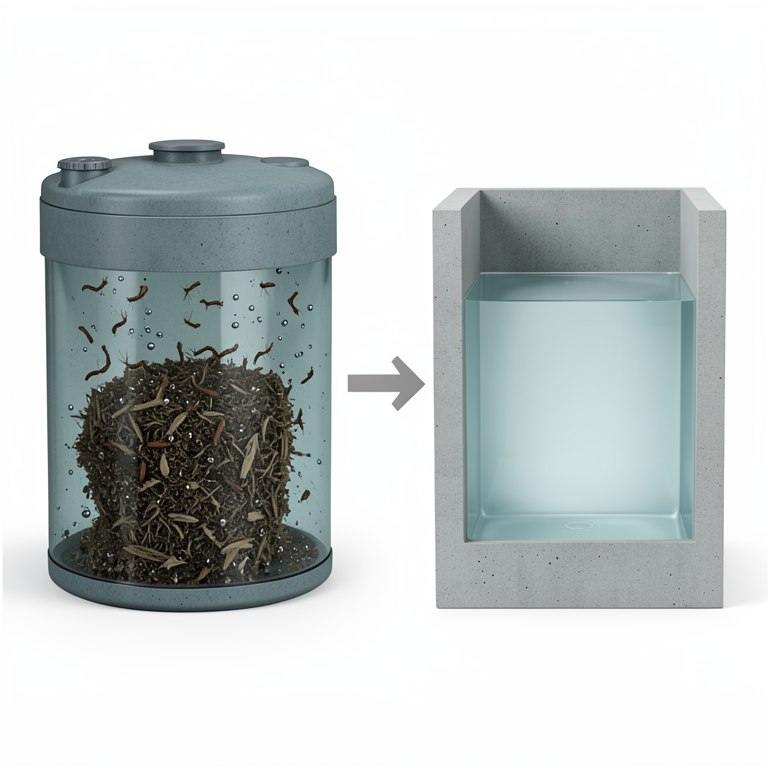
Chemical Profile of Breeding Sites
AI-generated conceptual illustration (Anopheles stephensi mosquito larvae in urban water containers). It explains the idea and does not show study data.
View source evidence ↗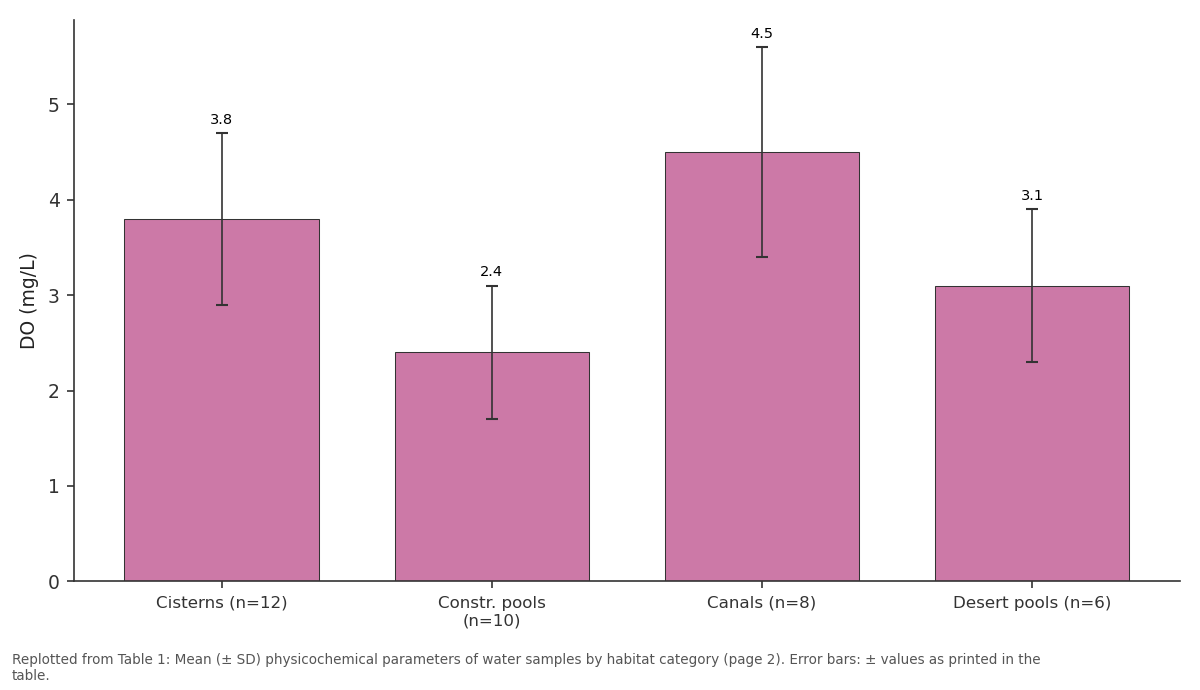
DO (mg/L): Cisterns (n=12) vs Constr. pools (n=10) vs Canals (n=8) vs Desert pools (n=6)
Replotted from Table 1 (page 2) of the original paper. Every bar is the paper's own table value.
View source evidence ↗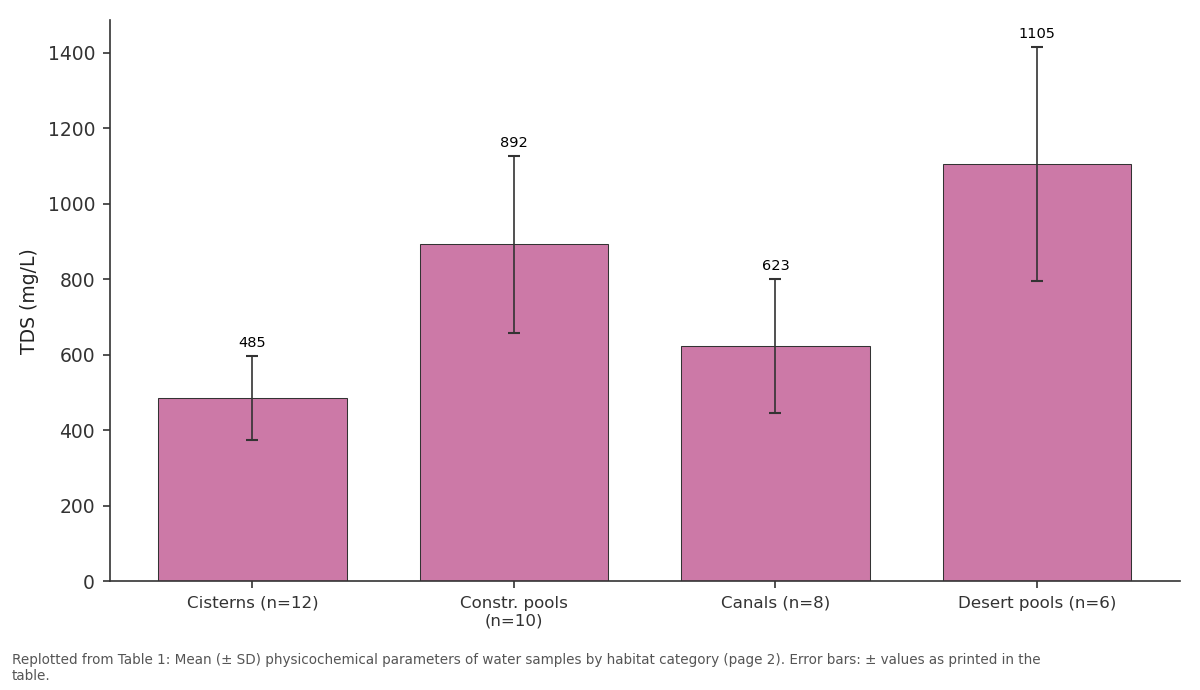
TDS (mg/L): Cisterns (n=12) vs Constr. pools (n=10) vs Canals (n=8) vs Desert pools (n=6)
Replotted from Table 1 (page 2) of the original paper. Every bar is the paper's own table value.
View source evidence ↗Figures & tables
From the original paper Table 1
 Table 2
 Table 3
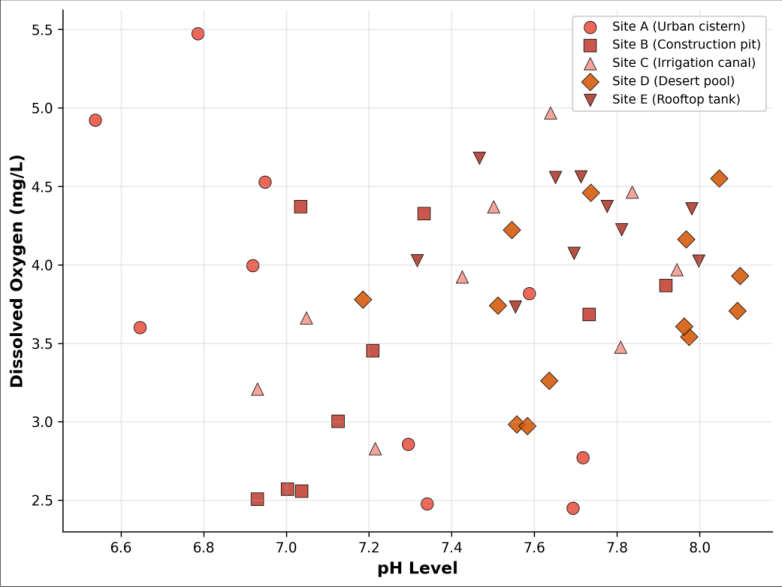 Figure 1
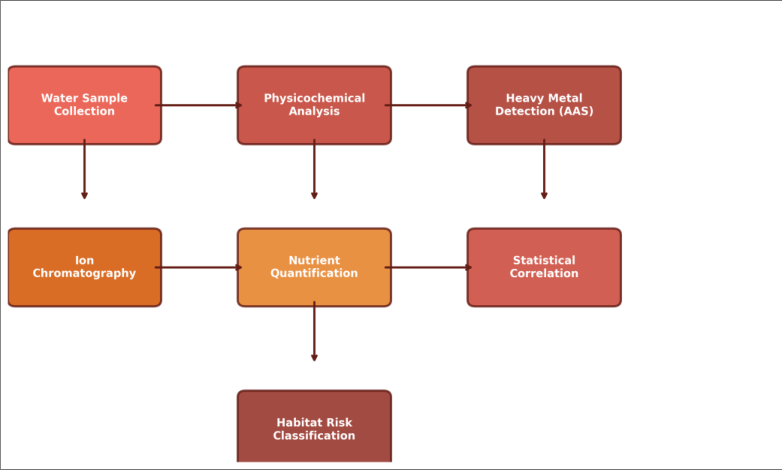 Figure 2
Introduction
The emergence of Anopheles stephensi outside its native range in South Asia represents one of the most consequential entomological developments of the past decade. Originally confined to the Indian subcontinent, this highly adaptable malaria vector has demonstrated a remarkable capacity to colonize anthropogenic water sources in urban and peri-urban settings across the Arabian Peninsula, the Horn of Africa, and parts of western Asia [1,2] . The World Health Organization issued a formal alert in 2019 regarding the potential of this species to undermine malaria control gains in newly invaded territories, particularly in regions where healthcare infrastructure and entomological surveillance remain underdeveloped [3] . The chemical properties of larval breeding habitats constitute a fundamental ecological parameter governing mosquito distribution, abundance, and species composition. Physicochemical variables such as pH, dissolved oxygen, nutrient content, and ionic concentrations collectively define the suitability of aquatic environments for anopheline oviposition and immature-stage development [4,5] . In tropical and subtropical regions, extensive research has characterized the water-quality preferences of various malaria vectors, revealing species-specific tolerances to salinity, organic loading, and mineral composition [6] . However, comparatively few investigations have examined habitat chemistry in the context of Anopheles stephensi invasion into arid ecological zones, where water scarcity, elevated evaporation rates, and anthropogenic contamination create distinct chemical regimes [7] . Arid and semi-arid urban environments present unique breeding conditions characterized by limited natural surface water, heavy reliance on stored water, and intermittent availability of construction-related standing water [8] . In Tehran Province, rapid urbanization and infrastructure development have generated a proliferation of temporary and semi-permanent water bodies that may serve as larval habitats. Previous entomological surveys conducted in southern Iran documented the presence of Anopheles stephensi in diverse urban container habitats, including overhead tanks, ornamental fountains, and subterranean reservoirs [9,10] . Nevertheless, the chemical dimensions of these habitats have received scant analytical attention, and the specific physicochemical parameters that distinguish breeding-positive from breeding-negative sites in this ecological context remain poorly elucidated. Chemical analysis of breeding habitats offers practical value for vector control programmes by enabling the identification of environmental signatures associated with high larval productivity. Such information can guide larval source management strategies, including environmental modification, water treatment, and targeted larviciding, towards the most productive habitat categories [11] . The present research was undertaken to characterize the chemical composition of confirmed and suspected Anopheles stephensi larval breeding habitats across five site categories in arid zones of Tehran Province, Iran, and to identify the physicochemical variables that best discriminate between breeding-positive and breeding-negative locations.
Material and Methods
Material and Methods
Research area and site selection
The research was conducted across three administrative districts of Tehran Province during the dry season (June through September 2022). Five categories of potential breeding habitats were identified through preliminary entomological reconnaissance: urban water-storage cisterns (n = 12), construction-site excavation pools (n = 10), periurban irrigation canals (n = 8), natural desert depressions (n = 6), and rooftop storage tanks (n = 9). A total of 45 sites were surveyed, with breeding status confirmed through standardized dipping protocols employing 350 mL capacity WHO-recommended larval dippers. Each site was sampled on three occasions at fortnightly intervals.
Water sample collection and physicochemical analysis
Water samples were collected in acid-washed polyethylene bottles (500 mL capacity) from each site during morning hours (06:00 to 09:00 local time) to minimize diurnal temperature effects. Field measurements of pH, dissolved oxygen, water temperature, electrical conductivity, and total dissolved solids were performed in situ using a calibrated multiparameter water-quality meter (YSI ProDSS, Xylem Inc., USA). Samples for laboratory analysis were transported on ice to the Analytical Chemistry Laboratory, University of Tehran, within four hours of collection. Anion concentrations (nitrate, phosphate, sulphate, chloride) were determined by ion chromatography (Metrohm 930 Compact IC Flex). Heavy metals (lead, cadmium, chromium, iron, zinc) were quantified by flame atomic absorption spectrometry (Varian SpectrAA 220FS) following acid digestion with concentrated nitric acid. All analytical procedures adhered to standard methods for the examination of water and wastewater [12] .
Statistical analysis
Data were analysed using SPSS version 26.0 and R version 4.2.1. Normality was assessed by the Shapiro-Wilk test. Differences in chemical parameters between breedingpositive and breeding-negative sites were evaluated using the Mann-Whitney U test for non-normally distributed variables and the independent-samples t-test for normally distributed parameters. Principal component analysis was employed to identify the chemical variables contributing most to inter-site variation. Spearman rank correlation coefficients were calculated to assess associations between larval density and individual chemical parameters. A significance threshold of p < 0.05 was applied throughout.
Research Design
This investigation adopted a cross-sectional analytical design incorporating repeated-measures sampling to capture temporal variation in habitat chemistry during the dry season. The comparative framework contrasted confirmed breeding-positive sites with breeding-negative controls matched by habitat category and geographical proximity. The stratified sampling approach ensured representation of the five major habitat categories identified during preliminary surveys, while the repeated sampling protocol enabled assessment of within-site chemical stability across the study period. Quality assurance measures included field blanks, duplicate samples analysed independently, and recovery experiments for heavy metal determinations. All instruments were calibrated daily using certified reference materials.
Results
Table 1 presents the physicochemical parameters of water samples collected from the five habitat categories. The data reveal substantial variation in chemical composition across site types, with construction-site pools exhibiting the highest total dissolved solids and rooftop tanks displaying the most alkaline pH values. Across all habitat categories, 28 of the 45 surveyed sites (62.2%) were classified as breeding-positive based on the confirmed presence of Anopheles stephensi larvae during at least one sampling occasion. Construction-site pools demonstrated the highest breeding positivity rate (80.0%), followed by rooftop tanks (77.8%), whereas natural desert depressions had the lowest rate (33.3%). The relationship between pH and dissolved oxygen varied substantially among habitat types, as depicted in Figure 1. The statistical comparison between breeding-positive and breeding-negative sites revealed significant differences for several key parameters. Breeding-positive sites exhibited markedly lower dissolved oxygen concentrations (median 2.8 mg/L versus 4.2 mg/L; p = 0.003) and substantially higher phosphate levels (median 2.9 mg/L versus 1.1 mg/L; p < 0.001). Total dissolved solids were moderately higher in breeding-positive sites, although this difference approached but did not reach statistical significance (p = 0.067). No significant differences were observed for heavy metal concentrations between the two groups. Construction-site pools and rooftop tanks, which represented the most chemically favourable habitats, share common features of limited water turnover and organic matter accumulation that create conditions conducive to larval development. The relative unimportance of heavy metal concentrations in discriminating between breedingpositive and breeding-negative sites suggests that the tracemetal levels encountered in the Tehran urban environment do not constitute significant barriers to larval establishment at the concentrations observed.
| Parameter | Cisterns (n=12) | Constr. pools (n=10) | Canals (n=8) | Desert pools (n=6) | Rooftop tanks (n=9) |
|---|---|---|---|---|---|
| pH | 7.2 ± 0.3 | 7.6 ± 0.5 | 7.8 ± 0.4 | 8.1 ± 0.6 | 7.9 ± 0.3 |
| DO (mg/L) | 3.8 ± 0.9 | 2.4 ± 0.7 | 4.5 ± 1.1 | 3.1 ± 0.8 | 2.9 ± 0.6 |
| TDS (mg/L) | 485 ± 112 | 892 ± 234 | 623 ± 178 | 1105 ± 310 | 348 ± 95 |
| EC (µS/cm) | 728 ± 168 | 1338 ± 351 | 935 ± 267 | 1658 ± 465 | 522 ± 143 |
| Phosphate (mg/L) | 1.8 ± 0.5 | 3.4 ± 1.2 | 2.1 ± 0.7 | 0.9 ± 0.4 | 2.8 ± 0.8 |
| Nitrate (mg/L) | 8.2 ± 2.4 | 15.6 ± 4.8 | 12.3 ± 3.5 | 4.7 ± 1.9 | 6.5 ± 2.1 |
| Chloride (mg/L) | 52 ± 18 | 128 ± 42 | 86 ± 29 | 245 ± 78 | 38 ± 12 |
Table text extracted from the original PDF; superscript letters are shown inline. The original table image is below.
View original table image
Discussion
The findings of the present research provide the first comprehensive chemical characterization of Anopheles stephensi breeding habitats in an arid urban context in Iran and contribute new evidence regarding the physicochemical parameters governing habitat suitability for this invasive vector species. The identification of phosphate concentration, dissolved oxygen level, and total dissolved solids as the principal discriminating variables between breeding-positive and breeding-negative sites aligns with and extends the existing understanding of anopheline habitat preferences in tropical settings [4,6] . The elevated phosphate concentrations observed in breeding-positive habitats likely reflect the accumulation of organic matter from anthropogenic sources, including domestic wastewater seepage, construction-related debris, and atmospheric deposition of particulate matter. Phosphate enrichment promotes algal and microbial growth, thereby enhancing the availability of food resources for filterfeeding Anopheles larvae [5] . This observation is consistent with earlier investigations in India that reported positive associations between phosphate levels and anopheline larval density in urban containers [9] . The concomitant reduction in dissolved oxygen at breeding-positive sites may be attributable to increased biological oxygen demand associated with organic decomposition and microbial respiration in nutrient-enriched waters.
The exceptionally high breeding positivity rate observed in construction-site pools (80.0%) merits particular attention from vector control authorities. Rapid urbanization in Tehran has generated numerous temporary excavation pools that accumulate rainwater and construction runoff, creating ideal breeding conditions characterized by nutrient-rich, low-oxygen, moderately alkaline water with limited predator pressure [8] . These habitats are often transient and difficult to identify through conventional surveillance methods, highlighting the need for proactive environmental management at construction sites during the mosquito breeding season. The finding that heavy metal concentrations did not significantly differ between breeding-positive and breedingnegative sites contrasts with reports from industrial urban areas in South Asia, where elevated concentrations of lead and cadmium were associated with reduced larval survival [7] . The generally low heavy metal levels observed in the present research suggest that Tehran's urban water bodies fall within the tolerance range of Anopheles stephensi, which has demonstrated adaptability to a broad spectrum of water-quality conditions across its geographical range [2,10] . The results of the principal component analysis provide a quantitative framework for habitat risk classification that may prove operationally useful for vector control programmes. By monitoring a reduced set of chemical indicators-principally phosphate, dissolved oxygen, and total dissolved solids-surveillance teams could prioritize habitats with the highest probability of supporting productive breeding populations. Such an approach would complement traditional entomological surveillance methods and could improve the efficiency of larval source management interventions in resource-limited settings [3,11] .
Analytical Considerations
Analytical Considerations
Acknowledgement
AcknowledgementsThis research was supported by a faculty research grant from the University of Tehran. The authors express sincere gratitude to the Tehran Provincial Health Centre for facilitating access to entomological surveillance data and field sites. Technical assistance from Mr. Ali Mohammadi and Ms. Fatemeh Hosseini in sample collection and laboratory analysis is gratefully acknowledged. The authors also thank the municipal authorities of the three surveyed districts for their cooperation during the field phase of this research.
Figures and tables from the paper
| Metal | Cisterns | Constr. pools | Canals | Desert pools | Rooftop tanks |
|---|---|---|---|---|---|
| Lead (Pb) | 0.004 ± 0.002 | 0.012 ± 0.005 | 0.008 ± 0.003 | 0.003 ± 0.001 | 0.006 ± 0.003 |
| Cadmium (Cd) | < 0.001 | 0.002 ± 0.001 | < 0.001 | < 0.001 | < 0.001 |
| Chromium (Cr) | 0.008 ± 0.003 | 0.015 ± 0.006 | 0.022 ± 0.009 | 0.005 ± 0.002 | 0.003 ± 0.001 |
| Iron (Fe) | 0.18 ± 0.06 | 0.85 ± 0.28 | 0.42 ± 0.15 | 0.12 ± 0.05 | 0.09 ± 0.03 |
| Zinc (Zn) | 0.15 ± 0.07 | 0.52 ± 0.18 | 0.28 ± 0.11 | 0.08 ± 0.03 | 0.21 ± 0.09 |
Table text extracted from the original PDF; superscript letters are shown inline. The original table image is below.
View original table image
| Variable | PC1 (38.2%) | PC2 (22.7%) | PC3 (14.1%) |
|---|---|---|---|
| pH | 0.312 | 0.728 | -0.185 |
| Dissolved oxygen | -0.856 | 0.142 | 0.098 |
| TDS | 0.745 | -0.318 | 0.412 |
| Phosphate | 0.892 | 0.105 | -0.223 |
| Nitrate | 0.634 | -0.485 | 0.156 |
| Chloride | 0.418 | 0.612 | 0.524 |
| Iron | 0.278 | -0.156 | 0.782 |
Table text extracted from the original PDF; superscript letters are shown inline. The original table image is below.
View original table image
References
13 in the original paper- Sinka ME, Bangs MJ, Manguin S, Chareonviriyaphap T, Patil AP, Temperley WH, et al. The dominant Anopheles vectors of human malaria in the Asia-Pacific region: occurrence data, distribution maps and bionomic précis. Parasites Vectors. 2011;4:89.
- Faulde MK, Rueda LM, Khaireh BA. First record of the Asian malaria vector Anopheles stephensi and its possible role in the resurgence of malaria in Djibouti, Horn of Africa. Acta Trop. 2014;139:39-43.
- Muturi EJ, Shililu J, Jacob B, Gu W, Githure J, Novak R. Mosquito species diversity and abundance in relation to land use in a riceland agroecosystem in Mwea, Kenya. J Vector Ecol. 2006;31(1):129-137.
- Minakawa N, Mutero CM, Githure JI, Beier JC, Yan G. Spatial distribution and habitat characterization of anopheline mosquito larvae in western Kenya. Am J Trop Med Hyg. 1999;61(6):1010-1016.
- Sattler MA, Mtasiwa D, Kiama M, Premji Z, Tanner M, Killeen GF, et al. Habitat characterization and spatial distribution of Anopheles sp. mosquito larvae in Dar es Salaam (Tanzania) during an extended dry period. Malar J. 2005;4:4.
- Kamareddine L. The biological control of the malaria vector. Toxins. 2012;4(9):748-767.
- Mhreteab A, Yenus M, Mebrahtu A. First detection of Anopheles stephensi (Diptera: Culicidae) in Gash Barka Region: Eritrea. Int J Biol Sci. 2024;6(1):176-182. doi:10.33545/26649926.2024.v6.i1c.203.
- Thomas S, Ravishankaran S, Justin NA, Asokan A, Mathai MT, Valecha N, et al. Resting and feeding preferences of Anopheles stephensi in an urban setting, perennial for malaria. Malar J. 2017;16:111.
- Hanafi-Bojd AA, Vatandoost H, Oshaghi MA, Charrahy Z, Haghdoost AA, Zamani G, et al. Spatial analysis and mapping of malaria risk in an endemic area, south of Iran. Trop Med Int Health. 2012;17(11):1391-1400.
- Tusting LS, Thwing J, Sinclair D, Fillinger U, Gimnig J, Bonber KE, et al. Mosquito larval source management for controlling malaria. Cochrane Database Syst Rev. 2013;8:CD008923.
- American Public Health Association. Standard methods for the examination of water and wastewater. 23rd ed. Washington (DC): APHA; 2017.
- Vatandoost H, Oshaghi MA, Abaie MR, Shahi M, Yaaghoobi F, Baghaii M, et al. Bionomics of Anopheles stephensi Liston in the malarious area of Hormozgan province, southern Iran. Acta Trop. 2006;97(2):196203.
- Surendran SN, Sivabalakrishnan K, Gajapathy K, Arthiyan S, Jayadas TTP, Karvannan K, et al. Genotype and biotype of invasive Anopheles stephensi in Mannar Island of Sri Lanka. Parasites Vectors. 2018;11:3.