
Research article · 2024 · Full text
International Journal of Veterinary Sciences and Animal HusbandryUse of artificial intelligence (AI) in ensuring quality and safety of food of animal origin: A review
Volume 9(2S) · Pages 240–247 · DOI: 10.22271/veterinary.2024.v9.i2sd.1294 ↗
Research areasSpectroscopy and Chemometric AnalysesIdentification and Quantification in Food
Abstract
Author-writtenThe increasing demand for food products derived from animals worldwide has raised serious concerns about the hygiene and overall quality of animal food. In the animal food production sector, traditional techniques of monitoring, inspection and quality control are labor-intensive, time-consuming and subject to human error. In this perspective, Artificial intelligence (AI) has become a revolutionary technology that provides novel methods to improve the safety and quality of animal food products. This review provides an overview of the applications of AI in the animal food industry, focusing on its pivotal role in quality and safety of food. We delve into various aspects of AI implementation, including computer vision, biosensor, machine vision, ultrasonic sensing, Internet of things and electronic method. The review explores the application of AI in quality control, disease detection, feed optimization and supply chain management in the animal food industry. By utilising the potential of AI, the animal food industry can enhance food safety, improve product quality and meet the ever-increasing demands of a global consumer base concerned about the source and safety of their food. This review aims to throw light on the diverse AI applications within the animal food industry, highlighting the potential to revolutionize the sector's quality and safety standards while driving innovation and sustainability in an increasingly interconnected world.
Summary
Source-checkedPlain-language reading of the full paper, prepared with AI and checked against the text. Each point links to the authors' own words.
Why it matters
- Global demand for animal-derived food is increasing, which has led to significant concerns regarding the hygiene and quality of these products. View evidence ↗
- Traditional quality control and monitoring methods in animal food production are often inefficient because they are time-consuming, labor-intensive, and prone to human error. View evidence ↗
- Meat products are vulnerable to spoilage and various microbiological risks, including pathogens like Salmonella and E. coli. View evidence ↗
The question
- The objective of this review is to provide an overview of how artificial intelligence (AI) is applied to ensure the quality and safety of food in the animal food industry. View evidence ↗
What they did
- The review examines several AI implementation methods, such as computer vision, biosensors, the Internet of Things (IoT), and electronic sensing methods. View evidence ↗
- The scope of the review covers AI applications in supply chain management, feed optimization, disease detection, and quality control. View evidence ↗
What they found
- An AI system using Adaptive FL (AFLS) and ANFIS achieved 94.28% accuracy in categorizing beef samples. View evidence ↗
- The use of Artificial Neural Networks (ANN) and Principal Component Analysis (PCA) resulted in 96.87% accuracy for categorizing and detecting fish spoilage. View evidence ↗
- A Support Vector Machine (SVM) model demonstrated 87% accuracy in detecting the adulteration of raw milk. View evidence ↗
- A deep learning-powered live bacteria detection system reduced detection time by more than 12 hours compared to EPA-approved methods. View evidence ↗
- A luminous bacterial biosensor can screen chicken muscle for tetracycline in 3 hours, significantly faster than the 12-hour turnaround of standard assays. View evidence ↗
- Amperometric biosensors can calculate nitrate levels in meat with a rapid response time of 10 seconds. View evidence ↗
- Carbon nanotube-based biosensors have been used to detect E. coli in 5 minutes with a detection limit of 2 log CFU/mL. View evidence ↗
What it means
- Widespread commercial use of optical biosensors is currently hindered by high costs, stability issues, sensitivity concerns, and design challenges. View evidence ↗
Visual summary
1 visualsIllustrations explain the paper; they do not show study data.
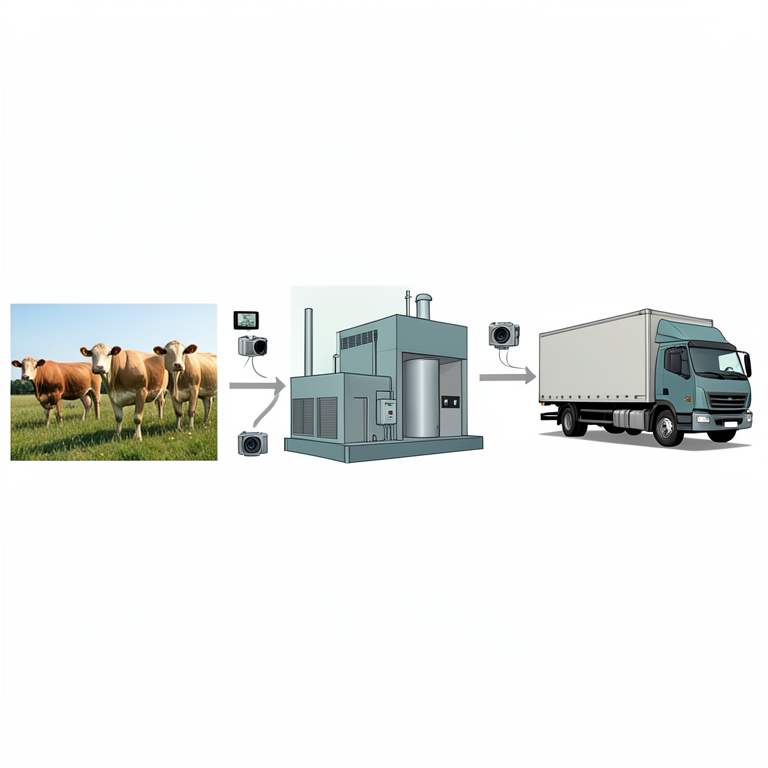
AI Integration in Animal Food Chain
AI-generated conceptual illustration (Livestock food production chain including cattle, a processing facility, and a refrigerated transport truck). It explains the idea and does not show study data.
View source evidence ↗Figures & tables
From the original paper Table 1
 Table 2
Introduction
All living organisms on Earth depend on food as a key source of energy for their growth and survival. Food of high quality is essential to absorbing the nutrients required for the growth and development of body. People are consuming food in the form of meat, milk, fish, mutton, chevon, pork etc. Meat is the main source of protein found in animal food and is highly beneficial for mankind. Worldwide consumption of meat (beef, poultry, hog, and lamb) keeps rising each year [1] . Quality is influencing consumer's purchase decision more and more as meat consumption rises [2] . Meat and meat products are susceptible to spoiling and microbiological risks such as Shiga-toxin-producing Escherichia coli O157:H7, Campylobacter jejuni, Yersinia enterocolitica, Salmonella enteritidis, Salmonella typhimurium and Listeria monocytogenes, and [3] . These risks may arise at various stages of processing in the meat production chain, including during the production, processing, distribution or preparation of the food, leading to foodborne outbreaks. Ensuring the health of consumers requires maintaining the quality and safety of meat from the farm to the fork, is also important to prevent zoonotic outbreaks and food poisoning associated with meat [4] . Therefore, food quality inspections and consumer safety assurances are now required, globally. As part of the industrial revolution, artificial intelligence (AI) improves the food production by lowering resource use and increasing production, quality and nutrition. [5] . According to Kritthanawong et al. [6] , AI is a branch of computer science that replicates human thought processes, learning capacities and knowledge stores. To meet the need for food, AI has been applied to supply chain management, food sorting, production development, food quality enhancement and good industrial hygiene. [7] .
According to Talaviya et al. [8] , AI is used to boost productivity while lowering costs and promoting ethical production and consumption.
AI Technologies in Food quality management Computer vision system (CVS) for meat quality
Cross-contamination in food processing and distribution facilities can result in food safety incidents, and there is plenty of scope for AI applications in food traceability systems in the future. [9] . A computer vision system based on CNN (Convolutional Neural Network) or ML (Machine Learning) models, such as SVM (Support Vector Machine), KNN (K-Nearest Neighbour) and J48 has been seen as a potential technique for automatic food classification, adulterant quantification and feature extraction [10] . As a result of the quick development of computer technologies, image processing and machine vision-based non-destructive detection systems have become widely used in the extraction of image-based characteristics and feature recognition related to meat quality detection. A computer vision system was created by Sun et al. [11] to test the quality of pork loin objectively. A CVS analyses and processes images using bionic human brains to create digital information that is subsequently utilised to track, identify and detect target objects. [12] . A computer, an industrial camera, an illumination system and an image processing software system are the main components of a typical CVS. [13] . Subsequently, a support vector machine (SVM) AI prediction model was developed to ascertain the colour of the pork and the grades of marbling quality. Liu et al. [14] investigated the possibility of using CVS to predict the intramuscular fat percentage of pork along with the development of stepwise regression and SVM models. In order to evaluate the freshness of beef, Arsalane et al. [15] used an embedded machine vision system based on digital signal processing (DSP). Principal component analysis (PCA) and SVM results demonstrated perfect prediction accuracies with new unknown samples. Additionally, few researches have been done to apply CVS to check meat problems. In a 2012 study, Chmiel et al. [16] examined CVS's capability for spotting dark, firm, and dry (DFD) beef. L*, a* and b* colour components were discovered to have a substantial association with pH, which is an indicator to find DFD beef. Chmiel and Sowiski [17] assessed a CVS's performance in assessing meat colour to identify meat flaws caused by M. longissimus lumborum (LL) in commercial settings. They claimed that the CVS demonstrated strong potential for identifying PSE (pale, soft, exudative) and DFD as well as for categorising meat according to quality groups.
AI in the manufacture of quality minced meat
A new automatic minced meat production line design, utilising innovative meat milling methods, enable the appropriate level of grinding of raw materials for food preparation. This eliminates the need for traditional comminution equipment, it results in an increase in production intensity. To maintain consistent product quality, an online automatic control system incorporating AI methods is implemented in the minced meat production process, featuring automatic line design and single-stage comminution. Throughout operation, the system is flexible and trainable, adapting to variations in the properties of the raw materials as well as external impacts. It produces meat shavings with minimal particle size dispersion. The control system contains instruments for rapidly detecting the temperature and chemical composition of minced meat following comminution. In Automatic line design and single-stage comminution, precise time-based control ensures strict regulation of the minced meat production process and eliminates subjective assessments. This results in consistently production of high-quality finished meat products [18] .
Application of Biosensors to Evaluate Quality of Meat
Biosensors, also known as indication sensors, have been used as monitoring tools in the past few years to track various hazards, whether they are present in raw meat or occur throughout various stages of processing that determine the quality of the product. Over time, advancements in research and development have driven the use of biosensors at industrial or commercial levels for food. Freshness indicators, time-temperature integrators, microbial spoilage biosensors, nanosensors, barcodes, RFID (Radio Frequency Identification) tags, and other applications are among the many useful applications of biosensors. [19,20] .
Biosensors to detect contaminants, antibiotics residues in meat and meat products
Hazardous food additives, veterinary medicine residues, herbicides, toxins, and antibiotics are just a few of the contaminants that can contaminate an entire batch and enter the food chain system at any stage of processing. The samples can be examined when all of the processing steps are complete using a variety of analytical techniques, including mass spectrometry, capillary electrophoresis and HPLC. These operations require expensive, complex equipment, expert staff assistance and expensive procedures. There is growing interest in the rapid, reliable and more sensitive identification of contaminants in the manufacturing processes itself to reduce the undesired hazard to consumers health. This can be done by utilising biosensor technology [21] . To find such drug residues, SPR (Surface Plasmon Resonance) is widely accepted technique in biosensors. Chloramphenicol and sulphonamide levels in various meat species, including pig, beef and chicken have been measured using the SPR [22] . A chemiluminescence-based sensor was created by Cai et al. [23] to detect benzimidazole residues in beef and mutton. This sensor can detect residues in just 18 min and has an extremely high sensitivity. An aptamer-based electrochemical biosensor was created by Mohammad-Razdari et al. [24] to identify sulfadimethoxine (SDM) in beef and poultry flesh. In comparison to about 12 h turnaround time required by standard microbiological assays, a luminous bacterial biosensor was able to screen a large number of chicken muscle samples for tetracycline in just 3 h [25] . Using an electrochemical biosensor, Staphylococcal enterotoxin B was found in milk and pork [26] , and Trichothecene (T-2 toxin) was found in pork [27] . The nitrate levels in meat were calculated using the amperometric biosensor, revealing that this technology is straightforward and affordable with good accuracy and sensitivity with a response time of 10 sec [28] . Donkey meat samples in beef sausages were identified using SPR-based DNA biosensors with high sensitivity and specificity [29] . When applied up to 10% in biological samples, an electrochemical DNA biosensor was able to identify pork in food products [30] . Without the need of any genetic material extraction or amplification, an amperometric PCR-free electrochemical biosensor can identify the adulteration of beef meat with horse meat in less than an hour [31] .
Biosensors to identify microbial contamination in meat
Food poisoning and other common diseases can result from food contamination, which is a concern to the world's public health. Cross-contamination in the food processing system or raw material contamination can result in microbial contamination [32] . To ensure microbiological safety and the rapid detection of pathogens in the food chain, a microbiological monitoring system is essential [33] . Besides traditional methods like bacterial colony counts, staining and methylene blue reduction tests, modern techniques such as ELISA, PCR and fluorescence detection are also used for microbial contamination detection [34] . Modern analytical techniques for microbiological identification typically require expensive equipment, highly trained staff and well-equipped laboratories. Results from these techniques can take up to 10 days because they frequently require intensive sample preparation and processing, including enrichment and incubation phases [35][36][37] . Due to these drawbacks, novel in situ analysis techniques are required, which should provide improved sensitivity, accuracy, speed and specificity over existing techniques [38][39][40] . In recent times, highly sensitive and selective biosensors have become available as analytical instruments. These biosensors can identify toxins, their metabolites and limits that are safe for microbes in a variety of items. Biosensors are easy, affordable instruments that can quickly identify infections without the need for pre-enrichment procedures, unlike nucleic acid-based and immunological methods [41] .
Nowadays, optical, electrochemical, photoelectrochemical and bioluminescence principles are frequently used to create user-friendly biosensors. [34] . Optical biosensors enable the real-time monitoring of microbial activity in food. By measuring microbial cell densities on the sensing site of the optical transducer surface, they can distinguish between different types of microorganisms, either by changes in signal or refractive index [42] . Among optical analysing techniques such as colorimetric, fluorescence, localised SPR and chemiluminescence SPR is widely employed as an optical biosensor [43] . In SPR, Bioreceptors on a metal surface transducer produce resonance when they interact with particular wavelengths of electromagnetic radiation. Refractive index changes significantly in response to bacterial cell interaction [35] , making reflectance spectroscopy a useful tool for identifying target pathogens. Numerous studies highlight optical biosensors for detecting pathogens in meat products. In one, a fiber optic immunosensor detected L. monocytogenes in meat at concentrations up to 3 × 10² CFU/mL, employing robust immunomagnetic separation [44] . An aptamer-based fiber-optic biosensor successfully identified pathogenic L. monocytogenes in ready-to-eat meat products, distinguishing it from other non-pathogenic or pathogenic species [45] . Using localised SPR, Oh et al. [46] detected S. typhimurium from pork meat up to 4 log CFU/mL in 30 min. A multi-channel SPR biosensor was created by Zhang et al. [47] to detect three distinct foodborne pathogens, namely E. coli O157:H7, S. enteritidis, and L. monocytogenes, together in naturally contaminated food. In another experiment, fluorescence biosensors containing basic aptamers were used to precisely identify and extract Shigella sonnei bacteria from other enteric organisms such as E. coli and S. typhimurium [48] . Wang et al. [49] used lateral flow biosensors with multiple cross displacement amplification to obtain high specificity and sensitivity in detecting Shigella spp. in less than an hour. However, current limitations, including high costs, quality assurance concerns, stability disputes, sensitivity issues and instrumentation design, must be addressed before the widespread commercialization and application of optical biosensors. There are numerous electrochemical biosensors available that are based on antigen-bioreceptor interactions, including conductometric, potentiometric, amperometric and impedimetric ones. [47] . It has been reported that a composite electrochemical immunosensor made of chitosan and gold nanoparticles has a broad detection range of 1-4 Log CFU/mL, which helps with the accurate detection of Salmonella infection [50] . Similarly, Campylobacter spp. were detected from chicken meat by Morant-Miñana and Elizalde [51] using an electrochemical genosensor with thin-film gold electrodes. Che et al. [52] detected C. jejuni in samples of chicken and turkey meat using a fluorescent biosensor with a detection limit of 2.1 × 10⁴ CFU/mL. For C. jejuni, a major food-borne pathogen that causes fever and diarrhoea in consumers, prompt diagnosis is essential. Food-borne infections and poisons are well detected using nano-based sensors [35] . Yamada et al. [53] employed carbon nanotube-based biosensors to detect E. coli in 5 min with a 2 log CFU/mL limit. A quartz crystal microbalance (QCM) biosensor, is characterised by the resonant frequency of quartz crystals, which exhibits high sensitivity for identifying and measuring microbial entire cells at low levels. By using QCM, C. jejuni (LOD: 1.30 log CFU/mL) and S. typhimurium (LOD: <100 CFU/mL) were detected in poultry meat samples [54, 49, 55] . Liu et al. [56] developed an impedance-based microfluidic biosensor to detect Salmonella serotypes B and D in turkey flesh that was fit for human consumption. The sensor showed selectivity against non-specific E. coli strains, differentiated between high quantities of inactivated Salmonella and very low levels of live Salmonella cells, and identified a low concentration of Salmonella (300 cells/mL) in less than an hour. A portable, low-cost paper-based DNA biosensor was used by Vizzini et al. [57] to identify Campylobacter spp. in poultry meat. The pathogen detection level of biosensors was 3 pg/µL of DNA, which is comparable to existing qPCR kits.
Robotics in food security
Recently, many slaughterhouses are now starting to implement automation and quality assessment sensors to the slaughter processing line to overcome insufficient human resources, improve the efficiency of the slaughter process and standardize meat quality. Depending on the animals to be slaughtered, different processing instruments and sensor technologies may be used; however, a standardised procedure design for a smart abattoir has not yet been developed. Slaughterhouses are being increasingly industrialised, using data analysis and collecting to stimulate growth and improve productivity. Thus, in order to meet production demands, abattoir automation is important and in order to maximise cost-effective equipment and systems, an optimised design appropriate for the size of each company is needed. The abattoir uses robotic technology to carry out a variety of tasks, including deboning, preparing carcasses and visceral laparotomy [58] . Robotic technology will need to be a key component of security system for the food industry in order to accomplish this. The robotics is also the part of AI and in the future, it will play important role in food production. This AI robotics system has produced germ free and high-quality meals [59] .
AI Technologies in Food processing management Machine vision for monitoring personal health and sanitation
Machine vision is an automatic, non-destructive and costeffective technique which is based on neural networks used to determine whether personal protective equipment was worn or not. Deep learning is used to create two object detection models, YOLOv3 and the quicker R-CNN for the detection of face masks. During the spread of airborne diseases, in particular, this face mask detection technology is utilised to keep an eye on people wearing masks in public places [60] , and it may also be employed in slaughterhouses and animal food processing units to maintain the personal health of the workers.
Ultrasonic sensing and optical fluorescence imaging for cleaning
Repairing and maintaining the production machinery in any food sector requires lots of time and money for cleaning resources. According to ongoing research studies, a system known as the self-optimizing clean-in-place (SOCIP) can shorten cleaning times and significantly reduce the resources required for cleaning, including water [61] . The AI technology uses features like optical fluorescence imaging and ultrasonic sensing to find even the smallest quantity of food residue and microbial waste in the apparatus. This helps the cleaning/maintenance procedures go as efficiently as possible. In addition, companies may utilise artificial intelligence for machine maintenance and periodic most effective working. It can quickly recognise any broken hardware and isolate it so that the damaged equipment may be replaced immediately. Since there is a much better system in place that provides early detection of any issue, this will ultimately lead to greater employee efficiency and human resource management [62] .
Efficient supply chain management
The operation of the food supply chain can be closely monitored by AI to reduce delay and increase profit margins in the food business. Additionally, this aids businesses in accurate forecasting for improved pricing and product stock management. AI has also been used to follow items from the farm to customers to provide transparency in response to growing concerns about it. With the introduction of this approach into food production and distribution, the flow of products will be as efficient and streamlined as feasible [63] .
AI Technologies in Food safety management Automated food adulteration detection
AI plays a significant role in quality control and food safety, and the food sector makes use of the most recent developments in this field. The food sector places a great value on product inspection, which includes classifying and grading food as well as making sure that food items are of a specified grade. When creating an artificial intelligence system to detect food contamination, the data required for analysis may arrive in two alternative formats. A vision-based model is constructed using the first type of data, and its major goal is to evaluate food product quality based on several parameters, such as colour, texture, size, form, morphological traits, etc. Through the use of machine learning (ML) models for data training, the products are classified according to their external appearance. In order to assess the chemical composition of food products, factors such as moisture, pH, pressure, temperature, humidity, viscosity and other related variables constitute the second type of data. The Internet of Things (IoT) can be used to gather data from different sensors for this purpose, and the contents of the food product are used to determine whether adulteration has occurred. Other contemporary devices, such as electronic tongue and electronic nose, collect this data and analyse it to assess the food quality [64] .
IoT based food adulteration detection methods
IoT and AI have shown to be crucial platforms for ensuring the security and safety of food. Using Internet of Things technology, a smart device for the adulteration detection system can be developed. By keeping an eye on food conditions and providing customers with up-to-date information, it might contribute to the food supply chain and raise food quality. The system operates in three steps: (i) Sense; (ii) Analyse and (iii) Predict. Data is gathered in phase one utilising a variety of sensors and may be utilised to record data. The development and implementation of an AI system that may utilise the information gathered from sensors will come next in phase two. The food quality system can be set up to monitor a variety of environmental conditions, including temperature, humidity, alcohol level and light exposure which may cause food to spoil. The smart decisions for the food adulteration detection system are recommended in phase three and anticipate the result if the food product is pure or contaminated. Food adulteration monitoring systems can be built on top of the ability to assess food quality [64] .
Quality Control of Animal Food using Electronic methods
Similar to the human nose and taste organs, the electronic tongue (E-Tongue) and electronic nose (E-Nose) are devices composed of a range of sensors. These systems are widely applicable in the detection of food adulteration because they combine complex data sets from E-Nose and E-Tongue signals with multivariate statistics to create quick and efficient tools for classifying, discriminating, recognising and identifying samples as well as predicting the levels of various compound concentrations. [64] . Smell detection using an E-nose is even more accurate than with a human nose. This smart sensing device uses a range of gas sensors that overlap with the component of the pattern of reorganisation and applies the principle of chemical detection to determine the nature of the chemicals being studied. The electrical properties of the sensors that comprise the e-nose's detecting system alter when they come into touch with volatile molecules. The precise reaction that transforms the signals into digital values is recorded by the electronic surface. [65] . Computation is carried out using the collected data and the statistical models. It is widely used in the scientific community because it is able to detect dangerous gases in contaminated food that are impossible for the human nose to detect. The elements of liquid samples are identified, categorised, and measured using a multichannel taste sensor known as the E-Tongue. These sensors collect information about the samples and work similarly to the gustatory cells found in the taste buds of the tongue. A particular set of sensors is used to build the digital fingerprint and electrical impulses of sample that convey information about the components that are utilised as profile input by the data recognition system. Unlike liquids, where the food item's taste is taken into account, gases are evaluated based on the odour of the chemicals they release, and solid compounds are evaluated according to their texture, shape, colour, temperature, and optical characteristics. To study gaseous elements and liquid compounds, respectively, these technical instruments mimic the tongue's gustatory receptors and the nose's olfactory system. [64] . Sensory instruments such as spectrophotometers and thermometers are used to analyse the solid objects. On the basis of classification and pattern recognition, ML and DL models can also be used to make predictions concerning the presence of adulterants in food. Additionally, it is possible to analyse other parameters including odour, taste, food flavour, aroma appearance and texture of the food from the prediction of the model [64] . Tables 1 and2 provide descriptions of the some research that has been done in relation to these electronic approaches. Pork meat To distinguish frozen-thawed meat from fresh meat BPANN 85.1% Sensitivity and 97.5% specificity [67] Cow ghee To detect the adulteration of the margarine in cow ghee ANN ANN show high accuracy [68] Fish To categorise and detect the spoilage of fish ANN, PCA 96.87% Accuracy [69] Chicken meat
To categorise the frozen-thawed and fresh chicken meat FK-NN FK-NN algorithm show high performance [70] Note: ANFIS-Adaptive Neuro Fuzzy Inference System, AFLS-Adaptive Fuzzy Logic System, BPANN-Back-Propagation Artificial Neural Network, ANN-Artificial Neural Network, PCA-Principal Component Analysis, FK-NN-Fuzzy K-nearest nighbors algorithm
Milk
To detect the adulteration of raw milk SVM 87% Accuracy [72] Note: ANN-Artificial Neural Network, PCA-Principal Component Analysis, SVM-Support Vector Machine, KNN-k-Nearest Neighbors, DT-Decision Tree
Application of AI in detection of Foodborne Pathogens
In order to quickly detect bacterial growth and identify the correct species, a computational live bacteria detection system continuously captures coherent microscopy images of bacterial growth inside an agar plate with a diameter of 60 mm by using deep neural networks to analyse these timelapsed holograms. When compared to EPA-approved methods, the system reduced the detection time by more than 12 h. E. coli and total Coliform bacteria, such as Klebsiella aerogenes and Klebsiella pneumoniae subsp. pneumoniae, were readily found in water samples utilising the system. By pre-incubating the samples in growth media, these systems were able to attain a limit of detection (LOD) of 1 colony forming unit (CFU)/L in a total of 9 h of testing. This platform is very cost-effective and high-throughput, scanning the entire plate surface at a speed of 24 cm²/min, therefore it is well suited for integration with the current technologies used for bacterial identification on agar plates. This automated and cost-effective and deep learning-powered live bacteria detection device can revolutionise a variety of microbiological applications by significantly reducing the detection times and automating the identification of colonies without the need for professional assistance or labelling. [73] . As a pathogen identification tool, a machine learning-enabled paper chromogenic array (PCA) is used. The PCA is composed of a paper substrate that has been loaded with 23 chromogenic dyes and dye combinations, which change colour when exposed to the volatile organic compounds found in pathogens of interest. Digitally recorded colour variations are used to train a multi-layer neural network (NN) so that it can accurately detect and quantify stain-specific pathogens with an accuracy of 91-95%. The trained PCA-NN system is capable of distinguishing between Escherichia coli, viable E. coli O157:H7, and other viable pathogens while concurrently recognising L. monocytogenes and E. coli O157:H7 on freshcut romaine lettuce, which represents a realistic and complex environment. Enrichment, culturing and other invasive techniques are not needed with this procedure, which could facilitate non-destructive pathogen identification and detection on food. [74] .
Advantages of AI in Quality and Safety of Animal Food
The food industry is one of the many areas that AI is revolutionising. The production, processing and consumption of food are being revolutionised by the use of AI technology in the food industry. AI has the following benefits for the food industry: (1) Enhanced quality assurance: A major advantage of AI for the food business is better quality control. With a high degree of precision, the technology can identify and detect faults in food products. AI systems can analyse data from sensor and camera to find problems such as contamination, spoiling and other quality problems. (2) Enhanced production and processing efficiency: AI-powered robots have the potential to automate production and processing operations, boost efficiency, and save labour costs by revolutionising the way food is produced and processed.
(3) Personalised nutrition and dietary advice: People may track their eating habits with AI-powered applications and gadgets, and AI algorithms can analyse data to deliver customised dietary and nutritional advice. This makes it possible for people to choose their diet with knowledge, which improves their health results. (4) Improved food safety and shelf life: Businesses are now able to predict shelf life and identify any safety risks through AI technology. Food manufacturers can make real-time adjustments to assure the safety and quality of their products by using the ability of algorithms to analyse data from sensors and cameras to detect changes in temperature, humidity, and other environmental conditions that might affect food safety and quality. (5) Better Customer Service: Food companies may offer round-the-clock customer support and help by utilising chatbots and AI-powered virtual assistants. This facilitates prompt and effective handling of consumer inquiries and grievances.
Future of AI in Animal Food Industry
A significant expenditure in the food production and processing sector is required for the application of AI. Compared to man-based systems, AI-powered systems can more easily identify a range of problems in food production. Additionally, it has been noted that researchers are actively involved in this area of study. Some of the future perspectives of AI in animal food industry are: (1) Enhanced Sensory Evaluation -This can help in standardizing sensory evaluations and ensuring consistency in food product quality.
(2) IoT Integration -Internet of Things devices in food processing and storage can provide real-time monitoring of critical parameters, ensuring optimal conditions and minimizing the risk of contamination. (3) Robotics for Food Processing -Robots can streamline food processing tasks, reducing human intervention and the potential for crosscontamination. (4) Regulatory Compliance -Automating regulatory compliance processes, helping food manufacturers adhere to safety standards and maintain necessary documentation. ( 5) Global Collaboration -It will be crucial for governments, food safety organizations, and industry stakeholders to collaborate globally to establish common standards and best practices for AI implementation in the food industry.
Conclusion
AI is a very potent field that will continue to grow and have a gigantic impact on modern society. AI is becoming more significant because of its capacity to enhance waste management, food safety, and sanitary systems. AI is becoming more and more important in the food industry because of its ability to reduce waste, forecast product markets, enable efficient and effective monitoring around-theclock, improve sanitation, manage costs, and increase income. Public health surveillance, the prediction of preharvest food safety risk factors and the detection, identification and characterization of foodborne pathogens, comprise the majority of data and instances that offer significant evidence for the successful use of AI to food safety.
Figures and tables from the paper
| Application | Objective | AI technique | Outcome/Impacts | Reference |
|---|---|---|---|---|
| Beef | To categorise the samples of beef | Adaptive FL system (AFLS); ANFIS | 94.28% Accuracy | [66] |
| Pork meat | To distinguish frozen-thawed meat from fresh meat | BPANN | 85.1% Sensitivity and 97.5% specificity | [67] |
| Cow ghee | To detect the adulteration of the margarine in cow ghee | ANN | ANN show high accuracy | [68] |
| Fish | To categorise and detect the spoilage of fish | ANN, PCA | 96.87% Accuracy | [69] |
| Chicken meat | To categorise the frozen-thawed and fresh chicken meat | FK-NN | FK-NN algorithm show high performance | [70] |
Table text extracted from the original PDF; superscript letters are shown inline. The original table image is below.
View original table image
| Application | Objective | AI technique | Outcome/Impacts | Reference |
|---|---|---|---|---|
| Fish | To determine the freshness of fish | ANN, PCA | 94.17% Accuracy | [71] |
| Milk | To detect the adulteration of raw milk | SVM | 87% Accuracy | [72] |
Table text extracted from the original PDF; superscript letters are shown inline. The original table image is below.
View original table image
References
73 in the original paper- De Smet S, Vossen E. Meat: The balance between nutrition and health. A review. Meat Sci. 2016;120:145156.
- Wen-song W, Yan-kun P, Xiao-chun Z, Wen-xiu W. Research on detection of beef freshness parameters based on multi spectral diffuse reflectance method. Spectrosc Spectr Anal. 2019;39(4):1177-1185.
- Nastasijevic I, Mitrovic R, Jankovic S. Biosensors for animal health and meat safety monitoring: Farm-toslaughterhouse continuum. IOP Conf Ser Earth Environ Sci. 2021;854(1):012063.
- Centre for Disease Control. Food Net Fast. Centers for Disease Control. [Online] Available at: https://wwwn.cdc.gov/foodnetfast/. Accessed 2021.
- Kim SS, Kim S. Impact and prospect of the fourth industrial revolution in food safety: Mini-review. Food Sci Biotechnol. 2022;31(4):399-406.
- Krittanawong C, Zhang H, Wang Z, Aydar M, Kitai T. Artificial Intelligence in precision cardiovascular medicine. J Am Coll Cardiol. 2017;69(21):57-64.
- Utermohlen K. Applications of artificial intelligence in the food industry. Heartbeat. [Online] 2019;48(4). Available at: https://heartbeat.fritz.ai/4-applications-ofartificial-intelligence-ai-in-the-food-industrye742d7c029. Accessed 2019.
- Talaviya T, Shah D, Patel N, Yagnik H, Shah M. Implementation of artificial intelligence in agriculture for optimisation of irrigation and application of pesticides and herbicides. Artif Intell Agric. 2020;4:58-73.
- Ma Y, Zhang Z, Kang Y, Özdo˘gan M. Corn yield prediction and uncertainty analysis based on remotely sensed variables using a Bayesian neural network approach. Remote Sens Environ. 2021;259:112408.
- Lopes JF, Ludwig L, Barbin DF, Grossmann MVE, Barbon SJr. Computer vision classification of barley flour based on spatial pyramid partition ensemble. Sensors. 2019;19(13):2953.
- Sun X, Young J, Liu JH, Newman D. Prediction of pork loin quality using online computer vision system and artificial intelligence model. Meat Sci. 2018;140:72-77.
- Girolami A, Napolitano F, Faraone D, Braghieri A. Measurement of meat colour using a computer vision system. Meat Sci. 2013;93(1):111-118.
- Taheri-Garavand A, Fatahi S, Shahbazi F, De La Guardia M. A non-destructive intelligent approach to real-time evaluation of chicken meat freshness based on computer vision technique. J Food Process Eng. 2019;42(4):e13039.
- Liu JH, Sun X, Young JM, Bachmeier LA, Newman DJ. Predicting pork loin intramuscular fat using computer vision system. Meat Sci. 2018;143:18-23.
- Arsalane A, El Barbri N, Tabyaoui A, Klilou A, Rhofir K, Halimi A. An embedded system based on DSP platform and PCA-SVM algorithms for rapid beef meat freshness prediction and identification. Comput Electron Agric. 2018;152:385-392.
- Chmiel M, Słowiński M, Dasiewicz K, Florowski T. Application of a computer vision system to classify beef as normal or dark, firm and dry. J Anim Sci. 2012;90(11):4126-4130.
- Chmiel M, Słowiński M. The use of computer vision system to detect pork defects. LWT. 2016;73:473-480.
- Kapovsky BR, Pchelkina VA, Plyasheshnik PI, Dydykin AS, Lazarev AA. Use of artificial intelligence in the production of high quality minced meat. IOP Conf Ser Earth Environ Sci. 2017;85(1):012039.
- Ahmed I, Lin H, Zou L, Li Z, Brody AL, Qazi IM, et al. An overview of smart packaging technologies for monitoring safety and quality of meat and meat products. Packag Technol Sci. 2018;31(7):449-471.
- Park YW, Kim SM, Lee JY, Jang W. Application of biosensors in smart packaging. Mol Cell Toxicol. 2015;11(3):277-285.
- Nanda PK, Bhattacharya D, Das JK, Bandyopadhyay S, Ekhlas D, Lorenzo JM, et al. Emerging role of biosensors and chemical indicators to monitor the quality and safety of meat and meat products. Chemosensors. 2022;10(8):322.
- Gao D, Guan C, Wen Y, Zhong X, Yuan L. Multi-hole fiber based surface plasmon resonance sensor operated at near-infrared wavelengths. Opt Commun. 2014;313:9498.
- Cai Y, He X, Cui PL, Liu J, Li ZB, Jia BJ, et al. Preparation of a chemiluminescence sensor for multidetection of benzimidazoles in meat based on molecularly imprinted polymer. Food Chem. 2019;280:103-109.
- Mohammad-Razdari A, Ghasemi-Varnamkhasti M, Izadi Z, Rostami S, Ensafi AA, Siadat M, et al. Detection of sulfadimethoxine in meat samples using a novel electrochemical biosensor as a rapid analysis method. J Food Compos Anal. 2019;82:103252.
- Pikkemaat MG, Rapallini MLBA, Karp MT, Elferink JWA. Application of a luminescent bacterial biosensor for the detection of tetracyclines in routine analysis of poultry muscle samples. Food Addit Contam Part A. 2010;27(8):1112-1117.
- Tang D, Tang J, Su B, Chen G. Ultrasensitive electrochemical immunoassay of Staphylococcal enterotoxin B in food using enzyme-nanosilica-doped carbon nanotubes for signal amplification. J Agric Food Chem. 2010;58(20):10824-10830.
- Wang Y, Zhang L, Peng D, Xie S, Chen D, Pan Y, et al. Construction of electrochemical immunosensor based on gold-nanoparticles/carbon nanotubes/chitosan for sensitive determination of T-2 toxin in feed and swine meat. Int J Mol Sci. 2018;19(12):3895.
- Dinçkaya E, Akyilmaz E, Kemal Sezgintürk M, Nil Ertaş F. Sensitive nitrate determination in water and meat samples by amperometric biosensor. Prep Biochem Biotechnol. 2010;40(2):119-128.
- Mansouri M, Fathi F, Jalili R, Shoeibie S, Dastmalchi S, Khataee A, et al. SPR enhanced DNA biosensor for sensitive detection of donkey meat adulteration. Food Chem. 2020;331:127163.
- Hartati YW, Suryani AA, Agustina M, Gaffar S, Anggraeni A. A gold nanoparticle-dna bioconjugatebased electrochemical biosensor for detection of sus scrofa mtdna in raw and processed meat. Food Anal Methods. 2019;12(11):2591-2600.
- Ruiz-Valdepeñas Montiel V, Gutiérrez ML, TorrenteRodríguez RM, Povedano E, Vargas E, Reviejo ÁJ, et al. Disposable amperometric polymerase chain reaction-free biosensor for direct detection of adulteration with horsemeat in raw lysates targeting mitochondrial DNA. Anal Chem. 2017;89(17):9474-9482.
- Das AK, Nanda PK, Das A, Biswas S. Hazards and safety issues of meat and meat products. In: Food safety and human health. Elsevier; 2019. p. 145-68.
- Pradhan SR, Patra G, Nanda PK, Dandapat P, Bandyopadhyay S, Das AK. Comparative microbial load assessment of meat, contact surfaces and water samples in retail chevon meat shops and abattoirs of Kolkata, WB, India. Int J Curr Microbiol Appl Sci. 2018;7:158-164.
- Ali AA, Altemimi AB, Alhelfi N, Ibrahim SA. Application of biosensors for detection of pathogenic food bacteria: a review. Biosensors. 2020;10(6):58.
- Zhao X, Lin CW, Wang J, Oh DH. Advances in rapid detection methods for foodborne pathogens. 2014.24(3):297-312.
- Rajapaksha P, Elbourne A, Gangadoo S, Brown R, Cozzolino D, Chapman J. A review of methods for the detection of pathogenic microorganisms. Analyst. 2019;144(2):396-411.
- Batani G, Bayer K, Böge J, Hentschel U, Thomas T. Fluorescence in situ hybridization (FISH) and cell sorting of living bacteria. Sci Rep. 2019;9(1):18618.
- Sionek B, Przybylski W, Banska A, Florowski T. Applications of biosensors for meat quality evaluations. Sensors. 2021;21(22):7430.
- Poghossian A, Geissler H, Schöning MJ. Rapid methods and sensors for milk quality monitoring and spoilage detection. Biosens Bioelectron. 2019;140:111272.
- Weng X, Neethirajan S. Ensuring food safety: Quality monitoring using microfluidics. Trends Food Sci Technol. 2017;65:10-22.
- Singh A, Poshtiban S, Evoy S. Recent advances in bacteriophage based biosensors for food-borne pathogen detection. Sensors. 2013;13(2):1763-1786.
- Ivnitski D, Atanassov P. Biosensors based on direct bioelectrocatalysis for environmental monitoring. Biosens Bioelectron. 1999;14:599-624.
- Alamer S, Eissa S, Chinnappan R, Herron P, Zourob M. Rapid colorimetric lactoferrin-based sandwich immunoassay on cotton swabs for the detection of foodborne pathogenic bacteria. Talanta. 2018;185:275280.
- Gagaoua M, Troy D, Mullen AM. The extent and rate of the appearance of the major 110 and 30 kDa proteolytic fragments during post-mortem aging of beef depend on the glycolysing rate of the muscle and aging time: an LCMS/MS approach to decipher their proteome and associated pathways. J Agric Food Chem. 2021;69(1):602-614.
- Oh SY, Heo NS, Shukla S, Cho HJ, Vilian AE, Kim J, et al. Development of gold nanoparticle-aptamer-based LSPR sensing chips for the rapid detection of Salmonella typhimurium in pork meat. Scientific Reports. 2017;7(1):10130.
- Zhang G. Foodborne pathogenic bacteria detection: an evaluation of current and developing methods. The Meducator. 2013;1(24).
- Van Eenennaam AL, Li J, Thallman RM, Quaas RL, Dikeman ME, Gill CA, et al. Validation of commercial DNA tests for quantitative beef quality traits. J Anim Sci. 2007;85(4):891-900.
- Wang Y, Zhang L, Peng D, Xie S, Chen D, Pan Y, et al. Construction of electrochemical immunosensor based on gold-nanoparticles/carbon nanotubes/chitosan for sensitive determination of T-2 toxin in feed and swine meat. Int J Mol Sci. 2018;19(12):3895.
- Xiang C, Li R, Adhikari B, She Z, Li Y, Kraatz HB. Sensitive electrochemical detection of Salmonella with chitosan-gold nanoparticles composite film. Talanta. 2015;140:122-127.
- Morant-Miñana MC, Elizalde J. Microscale electrodes integrated on COP for real sample Campylobacter spp. detection. Biosens Bioelectron. 2015;70:491-497.
- Che Y, Li Y, Slavik M. Detection of Campylobacter jejuni in poultry samples using an enzyme-linked immunoassay coupled with an enzyme electrode. Biosens Bioelectron. 2001;16(9-12):791-797.
- Yamada K, Choi W, Lee I, Cho BK, Jun S. Rapid detection of multiple foodborne pathogens using a nanoparticle-functionalized multi-junction biosensor. Biosens Bioelectron. 2016;77:137-143.
- Masdor NA, Altintas Z, Tothill IE. Sensitive detection of Campylobacter jejuni using nanoparticles enhanced QCM sensor. Biosens Bioelectron. 2016;78:328-336.
- Fulgione A, Cimafonte M, Ventura DB, Iannaccone M, Ambrosino C, Capuano F, et al. QCM-based immunosensor for rapid detection of Salmonella typhimurium in food. Sci Rep. 2018;8(1):16137.
- Liu J, Jasim I, Shen Z, Zhao L, Dweik M, Zhang S, et al. A microfluidic-based biosensor for rapid detection of Salmonella in food products. PLoS One. 2019;14(5):e0216873.
- Vizzini P, Manzano M, Farre C, Meylheuc T, Chaix C, Ramarao N, et al. Highly sensitive detection of Campylobacter spp. in chicken meat using a silica nanoparticle enhanced dot blot DNA biosensor. Biosens Bioelectron. 2021;171:112689.
- Kim J, Kwon YK, Kim HW, Seol KH, Cho BK. Robot technology for pork and beef meat slaughtering process: A review. Animals. 2023;13(4):651.
- Sahni V, Srivastava S, Khan R. Modelling Techniques to Improve the quality of food using artificial intelligence. In: Durazzo A, editor. J Food Qual. 2021;2021:1-10.
- Singh S, Ahuja U, Kumar M, Kumar K, Sachdeva M. Face mask detection using YOLOv3 and faster R-CNN models: COVID-19 environment. Multimed Tools Appl. 2021;80(13):19753-19768.
- Qin J, Burks TF, Zhao X, Niphadkar N, Ritenour MA. Multispectral detection of citrus canker using hyperspectral band selection. Trans ASABE. 2011;54(6):2331-2341.
- Rady A, Ekramirad N, Adedeji AA, Li M, Alimardani R. Hyperspectral imaging for detection of codling moth infestation in goldrush apples. Postharvest Biol Technol. 2017;129:37-44.
- Mao D, Wang F, Hao Z, Li H. Credit evaluation system based on blockchain for multiple stakeholders in the food supply chain. Int J Environ Res Public Health. 2018;15(8):1627.
- Goyal K, Kumar P, Verma K. Food adulteration detection using artificial intelligence: A systematic review. Arch Comput Methods Eng. 2022;29(1):397-426.
- Roy RB, Tudu B, Bandyopadhyay R, Bhattacharyya N. Application of electronic nose and tongue for beverage quality evaluation. In: Engineering tools in the beverage industry. Elsevier; 2019. p. 229-254.
- Kodogiannis VS, Alshejari A. Neuro-fuzzy based identification of meat spoilage using an electronic nose. In: 2016 IEEE 8th International Conference on Intelligent Systems (IS). IEEE; 2016. p. 96-103.
- Górska-Horczyczak E, Horczyczak M, Guzek D, Wojtasik-Kalinowska I, Wierzbicka A. Chromatographic fingerprints supported by artificial neural network for differentiation of fresh and frozen pork. Food Control. 2017;73:237-44.
- Ayari F, Mirzaee-Ghaleh E, Rabbani H, Heidarbeigi K. Using an E-nose machine for detection of the adulteration of margarine in cow ghee. J Food Process Eng. 2018;41(6):e12806.
- Vajdi M, Varidi MJ, Varidi M, Mohebbi M. Using electronic nose to recognize fish spoilage with an optimum classifier. J Food Meas Charact. 2019;13(2):1205-1217.
- Mirzaee-Ghaleh E, Taheri-Garavand A, Ayari F, Lozano J. Identification of fresh-chilled and frozen-thawed chicken meat and estimation of their shelf life using an enose machine coupled fuzzy KNN. Food Anal Methods. 2020;13(3):678-689.
- Huang X, Yu S, Xu H, Aheto JH, Bonah E, Ma M, et al. Rapid and nondestructive detection of freshness quality of postharvest spinach based on machine vision and electronic nose. J Food Saf. 2019;39(6):e12708.
- Tohidi M, Ghasemi-Varnamkhasti M, Ghafarinia V, Bonyadian M, Mohtasebi SS. Development of a metal oxide semiconductor-based artificial nose as a fast, reliable and non-expensive analytical technique for aroma profiling of milk adulteration. Int Dairy J. 2018;77:38-46.
- Wang H, Ceylan Koydemir H, Qiu Y, Bai B, Zhang Y, Jin Y, et al. Early detection and classification of live bacteria using time-lapse coherent imaging and deep learning. Light Sci Appl. 2020;9(1):118.
- Yang M, Liu X, Luo Y, Pearlstein AJ, Wang S, Dillow H, et al. Machine learning-enabled non-destructive paper chromogenic array detection of multiplexed viable pathogens on food. Nat Food. 2021;2(2):110-117.
Cited by 7
From OpenAlex, OpenCitations and reference lists read by Scinovex
- Applications of Machine Learning in Food Safety and HACCP Monitoring of Animal-Source Foods ↗
Panagiota‐Kyriaki Revelou, Efstathia Tsakali, Anthimia Batrinou, Irini F. Strati · Foods · 2025
Integrating advanced computing techniques into food safety management has attracted significant attention recently. Machine learning (ML) algorithms offer innovative solutions for Hazard Analysis Critical Control Point (HACCP) monitoring by providing advanced data analysis capabilities and have proven to be powerful tools for assessing the safety of Animal-Source Foods (ASFs). Studies that link ML with HACCP monitoring in ASFs are limited.…
❝ 60PDF - Emerging Technologies in Food Safety: AI-Powered, Nano-enabled, and Biosensor-Based Strategies for Rapid Contaminant Detection ↗
Shikha Pandhi, Nilima Kumari, Amit Jain, Vinay Sharma · Food Analytical Methods · 2025
❝ 21 - Microfluidics in smart food safety ↗
Liyuan Gong, Yang Lin · Advances in food and nutrition research · 2024
❝ 4PDF - Smart food safety in dairy production: Enose technologies with digital traceability systems – A review ↗
Ranganathan Akimsha, Tharaga Sharmilan, Dakshika C. Wanniarachchi · Food and Humanity · 2025
❝ 2 - Rapid Colorimetric and Artificial Intelligence-Based Methods for Determining the Microbial Quality of Raw Milk, Processed Milk, and Milk Products ↗
S. Muthusundari, Gomasani Sreeja, GM HemaSree, K HemaPriya · International Conference on Inventive Computation Technologies (ICICT) · 2025
Besides maintaining the microbial quality of milk anddairy foods for food safety and public health, contamination detection by traditional methods has been slow and labor-intensive. Fast and efficient alternative methods are therefore urgently needed. This paper discusses the application of the advanced colorimetric and artificial intelligence (AI)-based approaches of assessing microbial quality in raw milk, processed milk, and different dairy…
❝ 1 - Role of AI in food processing operations ↗
Vishal Ahuja, Ishita Sudani, D C Kothari, Shikha Chauhan, Niralee Patel · Elsevier eBooks · 2026
❝ 0 - Artificial intelligence in food safety and quality control: applications, challenges, and future perspectives ↗
Aysel İçöz · Frontiers in Food Science and Technology · 2026
The increasing complexity of global supply chains, rising contamination risks, and evolving consumer expectations have made food safety and quality control critical priorities. The limitations of traditional inspection and analytical methods in terms of speed, accuracy, and real-time monitoring have driven the rapid adoption of artificial intelligence (AI)-based technologies in this field. This review evaluates current AI applications in food…
❝ 0PDF