
Research article · 2024 · Full text
International Journal of Advanced Biochemistry ResearchCharacterization of linseed (Linum usitatissimum L.) germplasms at morphological, biochemical and molecular level
Volume 8(3) · Pages 681–687 · DOI: 10.33545/26174693.2024.v8.i3h.835 ↗
Research areasPhytoestrogen effects and researchFood composition and propertiesGABA and Rice Research
Abstract
Author-writtenCharacterization of the germplasms gives precise information about the extent of genetic diversity which helps in the development of an appropriate breeding program. Characterization of available germplasm is very crucial to identify desired traits or genes. In the present study, morphological, biochemical and molecular markers are used for characterization of 18 linseed germplasms. Morphological markers generally include those pivotal features that can be scored and distinguished by naked eye and easily be expressed in all environmental conditions. Morphological results indicate that the similarity matrix among 18 linseed accessions ranged from 0.14 (RLC-133- RLC-153), (RLC-133-KIRAN), (RLC-92-R-552) and (RLC-165-DEEPIKA) to 1.0 (RLC-92-RLC-167). Thus, the most similar germplasm RLC-92-RLC-167 and the most dissimilar germplasm (RLC-133- RLC-153), (RLC-133-KIRAN), (RLC-92-R-552) and (RLC-165-DEEPIKA) were identified. At biochemical level total seed protein profiling of the germplasms done using SDS-PAGE shows high level similarity between them. According to the similarity index, the dissimilar germplasm (R-7-RLC-161) has a 25% similarity. In contrast, molecular markers are used at molecular level and are more suitable for precise characterization, which in turn can successfully be utilized in the development of new cultivars with premium and desired traits. Two types of molecular markers, Inter Simple Sequence Repeats (ISSR) and simple sequence repeat (SSR), were used to determine the genetic diversity and molecular characterisation of 18 linseed germplasms. The current SSR primers investigation revealed that germplasms IA-32 and KIRAN (22%) were the most diverse, and primers LU-3 (0.84) and LU-8 (0.77) demonstrated the highest PIC value and 100% polymorphism. ISSR analysis revealed that genotypes IA-32 and DEEPIKA (20%) were the most diverse, with primers UBC-825(0.71) and UBC-850 (0.70) showing the highest PIC value and 100% polymorphism.
Summary
Source-checkedPlain-language reading of the full paper, prepared with AI and checked against the text. Each point links to the authors' own words.
Why it matters
- Characterizing germplasms provides detailed information on genetic diversity, which is essential for creating effective breeding programs. View evidence ↗
- Analyzing available germplasm is critical for identifying specific genes or traits that are desired for crop improvement. View evidence ↗
- Linseed (Linum usitatissimum L.) is an important oilseed crop from the Linaceae family with a genetic makeup of 2n = 30. View evidence ↗
The question
- The study aimed to characterize 18 linseed germplasms using a combination of morphological, biochemical, and molecular markers. View evidence ↗
What they did
- The research was conducted between 2021 and 2022 at the Department of Plant Biotechnology in Latur, India. View evidence ↗
- Morphological data were collected from five randomly selected plants per entry using a randomized block design with three replications. View evidence ↗
- Biochemical characterization involved estimating total seed protein from dehulled mature grains and analyzing protein profiles via SDS-PAGE. View evidence ↗
- Molecular analysis utilized five SSR primers and a set of ISSR primers (with six being successful) to amplify genomic DNA via PCR. View evidence ↗
What they found
- Days to first flower varied from 36 days in KARTIKA to 46 days in RLC-165, with an average of 41.70 days. View evidence ↗
- Plant height ranged from 33 cm (R-17) to 56 cm (RLC-172), averaging 43.93 cm. View evidence ↗
- Morphological similarity among the 18 accessions ranged from 0.14 (most dissimilar) to 1.0 (most similar, RLC-92 and RLC-167). View evidence ↗
- Biochemical analysis using seed protein profiling identified R-7 and RLC-161 as the most dissimilar germplasms, with only 25% similarity. View evidence ↗
- SSR analysis showed high genetic diversity, with 103 out of 120 amplicons being polymorphic, resulting in an average polymorphism of 85%. View evidence ↗
- ISSR analysis revealed lower polymorphism than SSR, with 84 out of 210 amplicons being polymorphic (41.79% average). View evidence ↗
- ISSR similarity ranged from 0.20 (IA-32 and DEEPIKA) to 0.92 (RLC-148 and RLC-167). View evidence ↗
What it means
- The authors conclude that combining SSR and ISSR markers provides a more reliable method for precise identification and genetic divergence analysis. View evidence ↗
Figures & tables
From the original paper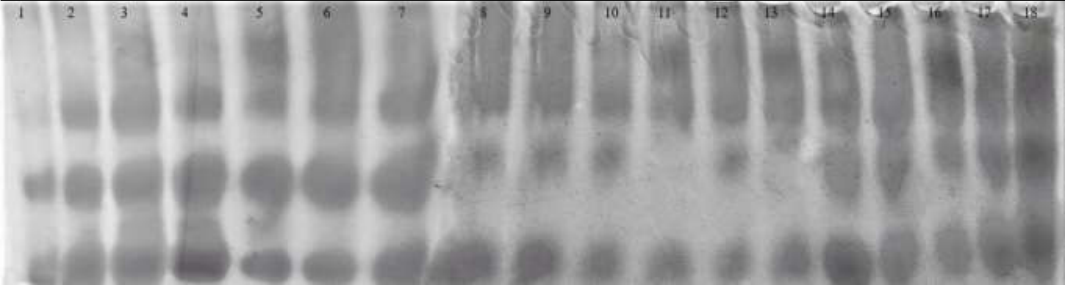 Figure 2
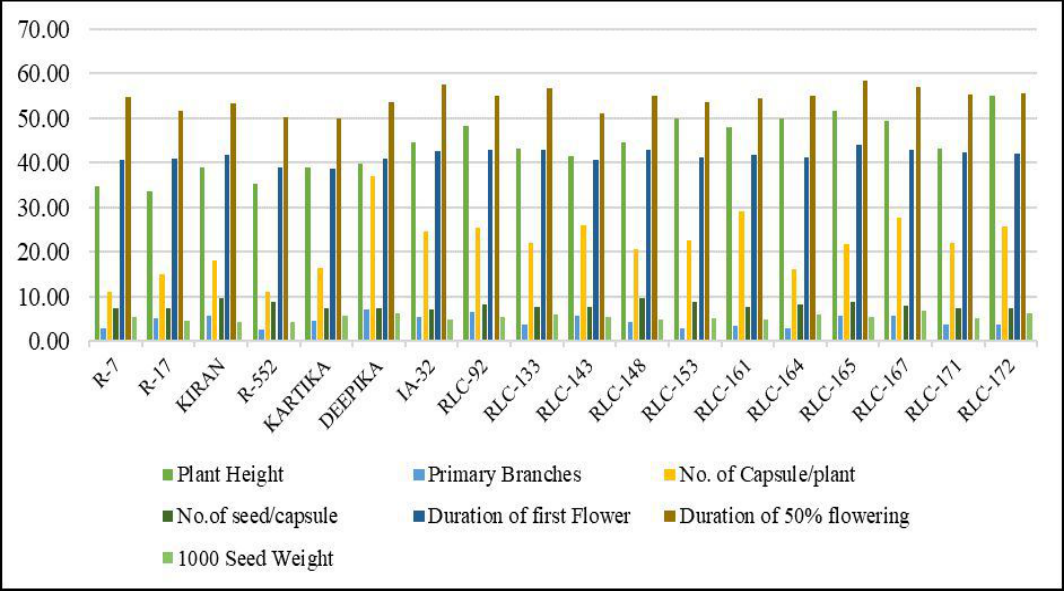 Figure 1
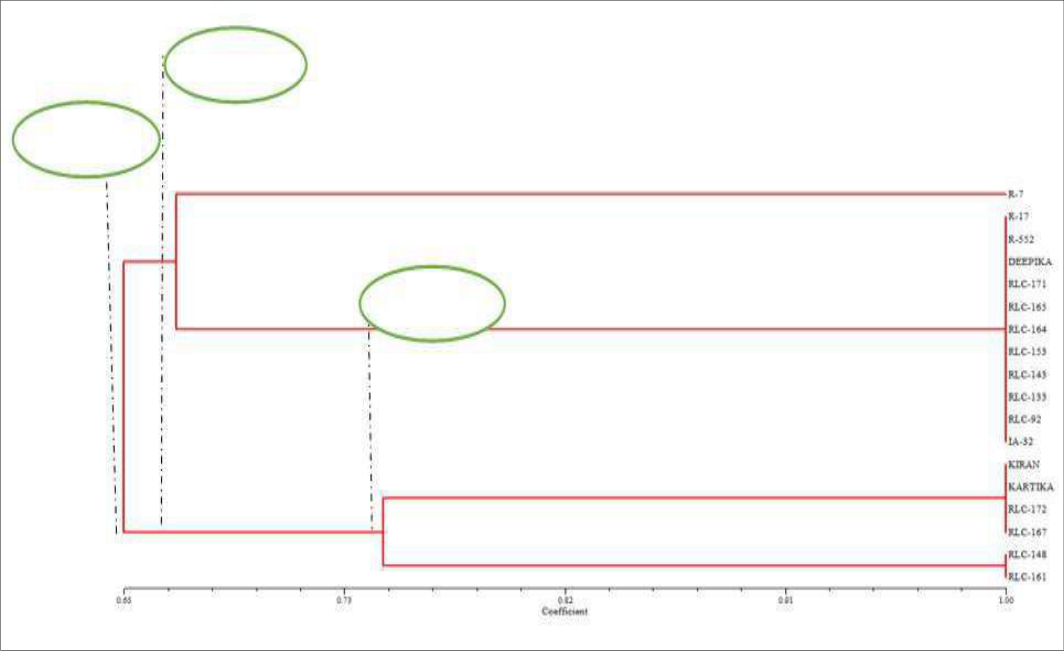 Figure 3
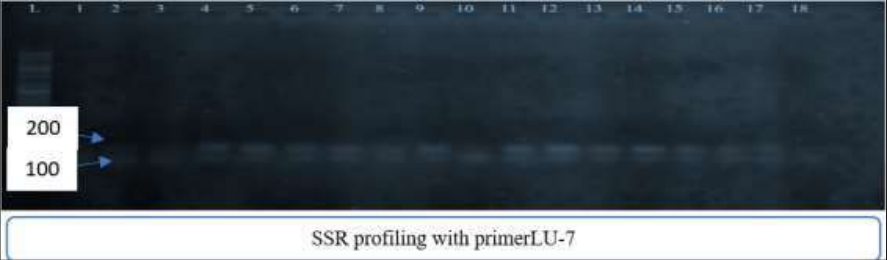 Figure 4
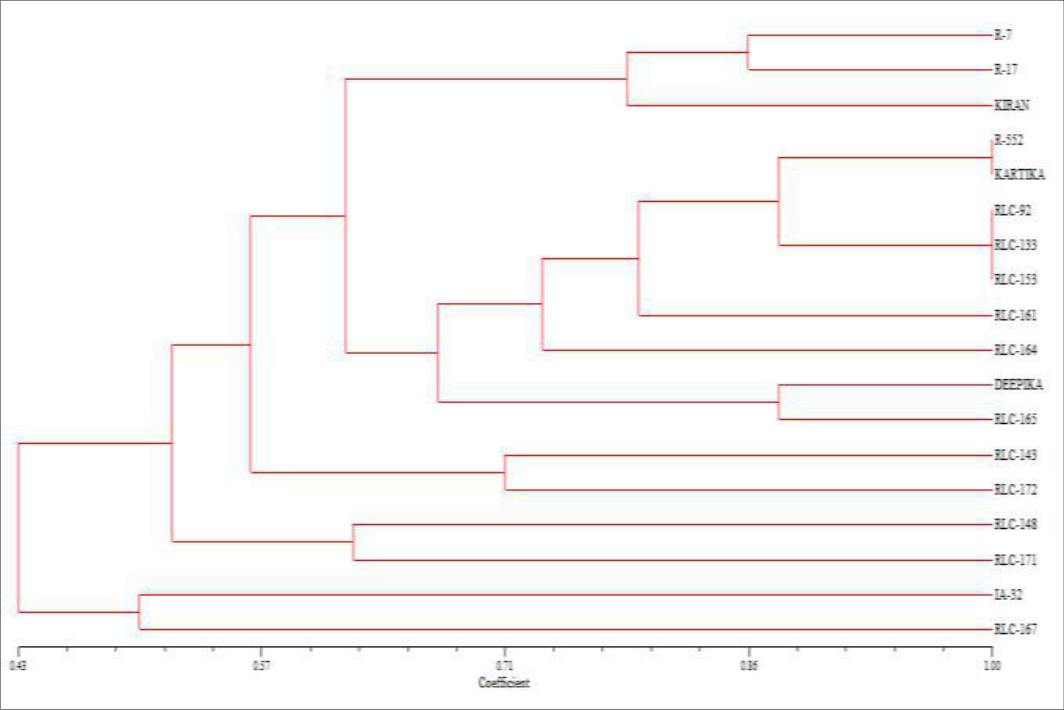 Figure 5
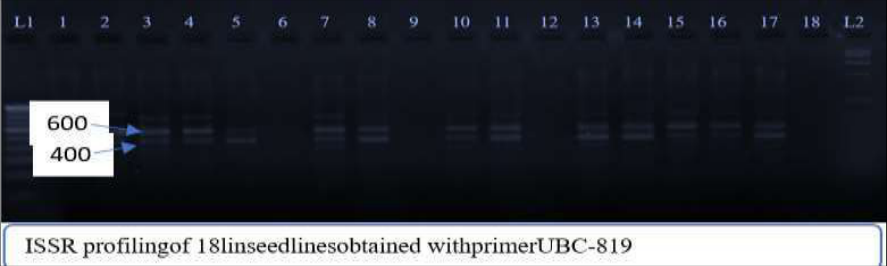 Figure 6
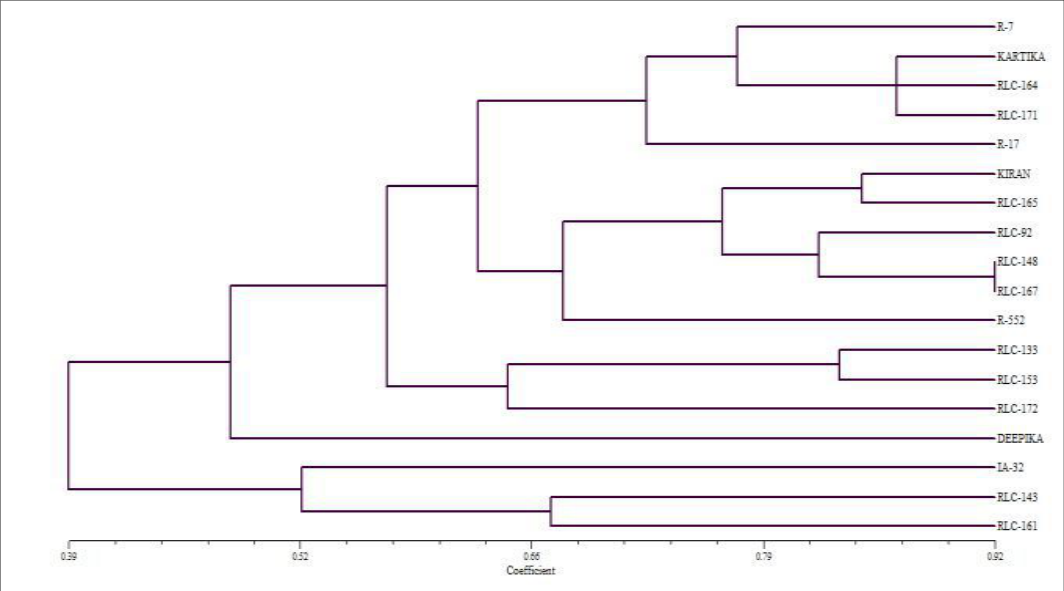 Figure 7
Introduction
The essential oilseed crop linseed (Linum usitatissimum L.), with a 2n = 30 genetic makeup, is a member of the Linaceae family and the genus Linum. The term flax or flaxseed is also used. While Linum derives its name from the Latin word lin, which means "thread," the species name usitatissimum has a very practical Latin meaning [1] . Linseed's origins can be traced to two areas in terms of the variety of plant species: South West Asia, particularly India; and South East Asia [13,9] . Flaxseed is a tiny, self-pollinated, annual diploid species with a 370 Mb genome that may be a member of the Linaceae family [5] . Germplasm is the most important source of the qualities required to create excellent cultivars. Characterization involves determining the level of diversity across the population of individuals [4] . It is useful for improved germplasm utilization and conservation to describe a crop species' traits based on accepted descriptors [3,6] . Various molecular or biochemical techniques have been used to study flax germplasm accession. An important first step in improving linseed cultivars is to characterise the relevant features in the germplasm and assess genetic variability. Linseed cultivars were created through traditional breeding techniques, such as introduction, selection, and hybridization, despite their nutritional and commercial importance. The evaluation of flax's genetic diversity in the past was frequently done using morphological and Isozyme markers. Isozyme was the first biochemical marker utilised to examine the genetic diversity of flax [8] . In addition to being frequently utilised for phylogenetic investigations and crop variety fingerprinting, ISSR marker genotyping is a well-liked method for genotyping nonsequenced genomes [14] . An inter-simple sequence repeat (ISSR)-polymerase chain reaction (PCR) polymorphism was developed to produce effective markers for evaluating the genetic diversity within flax germplasm collections. This method was optimised for the identification of genetic diversity in flax. Recently, a better method based on simple sequence repeats (SSRs) or microsatellite DNA has been developed [12] . Many genomic SSR markers have already been developed in Flax MAS and genetic diversity studies in flax [10] . This marker system has been extensively used to describe plant germplasm, and numerous researchers have demonstrated its efficacy in the evaluation of genetic variability.
Materials and Methods
The present investigation "Characterization of linseed (Linum usitatissimum L.) germplasm at morphological, biochemical and molecular level" was carried out between 2021-2022 at the Department of Plant Biotechnology, College of Agricultural Biotechnology, Latur (Vasantrao Naik Marathwada Agricultural University, Parbhani).
Materials
Linseed germplasm for the present study received from the germplasm maintained at Indira Gandhi Agricultural University, Raipur (C. G.) through MTA. Total 18 germplasm lines were utilized for the morphological, biochemical and molecular analysis during the present investigation.
Methods
Methods
Morphological analysis
For morphological characterization the experiment was carried out in a randomized block design with three replications at Oil Seed Research Station, Latur and observations were record on five randomly selected plants in each entry from each replication. Days to the first flower, Days to 50% flowering, Color of flower, Plant height at maturity (cm), Number of primary branches per plant, Number of capsules per plant, Number of seeds per capsule, 1000 seed weight (g). The results obtained for morphological characters were analyzed statistically like arithmetic mean, Coefficient of Range, Standard Error etc.
Biochemical analysis Isolation of total seed protein
Total seed protein content in Linseed grain was estimated by method of Sardar et al. 2012 from linseed flour of dehulled mature grains. 3 mg of flour and 100 μL of extraction buffer (0.055 M Tris-HCl pH 6.8, 2.3% SDS, 5% βmercaptoethanol, 10% Glycerol and 0.1% Bromo phenol blue) was added and allowed to boil for 10 min. The freshly prepared protein extraction solution was added in each tube. The content of tubes was thoroughly mixed with help of cyclo-mixer. Tubes were incubated at -20 °C for 1-2 hours and after incubation, it was centrifuged at 10,000 rpm for 5 min at 4 °C. The supernatant was collected and kept in water bath at 950 C for 5 min by mixing with dye and this denatured protein used for further SDS-protein profiling. Protein profiling of extracted samples were analysed through SDS-PAGE [7] in a discontinuous buffer system with a 5% stacking gel and 15% acrylamide gel. The extracted proteins (10 μL) were loaded along with a protein marker and the gel was subjected to electrophoresis at 30mA using Tris-glycine buffer for 3hr. The banding patterns of protein were considered as "finger print" of the genotype.
Molecular analysis
Genomic DNA was extracted from the leaves of 18 linseed genotypes following the Cetyltrimethyl Ammonium Bromide (CTAB) method with some modifications as described by Doyle and Doyle [2] .
ISSR and SSR analysis
A total of four ISSR and Five SSR primers were used in analysis. PCR amplifications were performed in 25µL of reaction volume containing the following reagents: 25-30ng of genomic template DNA, 0.1µmol/L of primer, 3U Taq polymerase, 1x PCR buffer, 2.0 mmol/L MgCl2, 100 µmol/L of each dNTP [14] . Some adjustments in the annealing temperature and changes in the number of amplification cycles were made to the original program to improve the results. The amplification protocol was 94 °C for 5 min to pre-denature, followed by 45 cycles of 94 °C for 1 min, 36 °C (for ISSR analysis) or 58-60 °C (for SSR analysis) for 1 min and 72 °C for 1 min, with a final extension at 72 °C for 10 min. Amplification products were visualized using 1.8% (for ISSR analysis) or 2.5% (for SSR analysis) agarose gel electrophoresis stained with ethidium bromide. Each fragment length (bp) in the amplified product was determined with reference 100bp and 1000bp DNA marker ladder.
Result and Discussion
Result and Discussion
Morphological Characterization
The phenotypic data were recorded on 18 genotypes. The agro-morphological characterizations were attempted. The character days to first flower ranged from 36 days (KARTIKA) to 46 days (RLC-165) with a mean of 41.70 days. Among all genotypes, KARTIKA had the earliest flowering (36 days) and RLC-165 had the first flower observed (46 days). The character days to 50% flowering ranged from 48 days (RLC-153) to 60 days (RLC-167), with a mean of 53.43 days. RLC-153 had the earliest 50% flowering of any genotype (48 days). Late 50% flowering was observed in RLC-167 among all germplasm (60 days). For the character number of capsules per plant ranged from 10.67 (R-552) to 37 (DEEPIKA), with a mean of 21.74 capsules per plant. Among all genotypes, R-552 (10.67 capsules/plant) has the fewest capsules per plant and DEEPIKA has the most capsules per plant (37 capsules/plant). Plant height varies between 33 cm (R-17) and 56cm (RLC-172), with a mean range 43.93 cm. Among all genotypes, R-17 (33 cm) had the shortest plant and RLC-172 (56 cm) had the tallest. The number of seeds per capsule ranged from 7 (IA-32) to 10 (RLC-148) with a mean of 8.02 seed per capsule. The lowest number of seeds was found in IA-32 (7 seed/capsule), while the highest number of seeds was found in RLC-148 (10 seed/capsule). The 1000 seed weight ranged from 4.32 gm (KIRAN) to 6.37 gm (RLC-172) across all linseed genotypes. The highest 1000 seed weight was recorded in RLC-172 (6.37 gm), and the lowest in KIRAN (4.32 gm). The number of primary branches per plant significantly differed among the linseed genotypes, ranging from 2 (R-552) to 7 (DEEPIKA) with a mean of 4.5. DEEPIKA (7) had the most primary branches, while R-552 had the fewest (2) primary branches. Out of 18 lines, the germplasm of the linseed lines did not show any significant variation in flower colour, only RLC-133 show white in colour and remaining 17 lines were in blue colour.
Similarity Matrix Based on Morphological Characters
According to the morphological character scoring, Jaccard's estimates of similarity matrix were assessed for a set of 18 linseed germplasms. The similarity ranged from 0. From the similarity index the dissimilar germplasm were found to be (R-7-RLC-161) show 25% similarity. Similar study was done by Saradar et al. [11] which reported low level of genetic diversity for total seed protein profiles (Fig No .2).
Molecular Characterization Characterization by using SSR primers
In the current study, 5 SSR primers produced a total of 120 amplicons out of them 103 amplicons were found to be polymorphic, with an average polymorphism of 85%. Each primer produced 29 amplicons on average. The size of the amplification product ranged from 300bp to 150bp. The polymorphic information content (PIC) value per primer ranged from 0.15 to 0.84, with an average of 0.48. SSR primer LU-3 with 100% polymorphism was found to be the most informative marker, with a PIC value of 0.84, while SSR primer LU-3 with a PIC value of 0.14 was found to be the least informative. SSR results indicate that the similarity matrix among 18 linseed accessions ranged from 0.22 (IA-32-KIRAN) to 1.0 (R-552-KARTIKA), (RLC-92-RLC-153, RLC-153-RLC-133). Thus, the most similar genotypes were identified as R-552, KARTIKA, RLC-92, RLC-153, RLC-133 and the most dissimilar genotypes as IA-32-KIRAN were noticed (Fig. No.4). The genetic similarity matrix was used to generate a dendrogram using UPGMA-based cluster analysis which reported two major clusters, (I and II). II major cluster contain only two germplasm IA-32 and RLC-167 similar at around 50%., I contain 16 germplasm. Major cluster I further divided into minor cluster IA and IB similar at around 57% cut-off on scale. IB minor cluster contain only two germplasm RLC-148 and RLC-171 similar with each other at 63% cut-off on the scale. Minor cluster IA subdivided into sub-cluster IAa and IAb. IAa sub cluster divided into IAa1 and IAa2 similar at around 57%. IAa1 had two germplasms R-7 and R-17 similar with each other at 86% cut-off on the scale. KIRAN found to be out-grouped from IAa1. Sub-cluster IAa2 subdivided into IAa2i and IAa2ii show similarity at around 66%. Germplasm RLC-161 and RLC-164 found to be out-grouped from IAa2i. Subcluster IAa2ii contain two germplasm RLC-143 and RLC-172 similar with each other at around 87% cut-off on the scale (Fig. No. 5.).
Characterization by using ISSR primers
Using a set of ten ISSR primers, 18 genomic DNA were amplified using PCR. Six of the ten ISSR primers used in this study were successful in amplifying the genomic DNA.
Six ISSR primers produced a total of 210 amplicons in the current study using ISSR primers. Polymorphism was observed in 84 amplicons, with an average polymorphism of 41.79 percent. Each primer produced an average of 63. 35 amplicons. The amplification product size ranged from 7500bp to 400bp. UBC 807 produced the most amplicons (46), while UBC 825 and UBC 819 produced 45 and 38 amplicons, respectively, and UBC 815 produced the fewest amplicons (28). Primer UBC 810 (74%) revealed the least amount of polymorphism. The polymorphic information content (PIC) of each primer ranged from 0.34 to 0.71, with an average value of 0.55. ISSR primer UBC-825 with 100% polymorphism was found to be the most informative primer, with a PIC value of 0.29, while ISSR primer the least informative primer, UBC-807, had a PIC value of 0.34, while the most informative marker, UBC-825, had a PIC value of 0.71 (Fig. No. 6). ISSR results indicate that the similarity matrix among 18 linseed accessions ranged from 0.20 (IA-32-DEEPIKA) to 0.92 (RLC-148-RLC-167). Thus, the most dissimilar genotypes, IA-32 and DEEPIKA, with the lowest similarity index (0.20) were observed, while the most similar germplasm RLC-148 and RLC-167 (0.92) were observed. The cluster analysis based on ISSR markers across various linkage groups analysis shows that the indigenous linseed lines have a relatively broad genetic background. Two distinct and significant clusters (I and II) were observed to represent distinct groupings of 18 linseed germplasm. The number of genotypes in each cluster ranged between 1 and 5.In major cluster-I, two minor clusters, IA and one outgrouped, were noticed to be similar to each other at around 40% cut-off on the scale. DEEPIKA found to be outgrouped from IA. IA minor cluster has been subdivided into two sub-clusters, IAa and IAb, which are similar at around 57% cut-off on the scale and contain 14 linseed lines. Subcluster IAa is further divided into IAa1 and IAb2 which are similar at around 62% cut-off on the scale. Germplasms R-7 and R-17 found to be out-grouped from IAa1. From cluster IAa1 KARTIKA, RLC-164 and RLC-171 show similarity at around 87% cut-off on the scale. Sub-cluster IAa2 contain six germplasm. R-552 found to be outgrouped fromIAa2. Sub-cluster IAb had two germplasm RLC-133 and RLC-153 similar with each other at around 83% cut-off on the scale and RLC-172 found to be out-grouped from IAb (Fig. No. 7).
Conclusion
The variability analysis revealed that will be able to differentiate germplasms. The reality that genotypic variance was slightly lower than phenotypic variance indicated that environment did have a masking effect on the expression of genetic variability. In the current study, the earliest first flower was observed in KARTIKA and the late flower was observed in RLC-165. The early days to 50% flowering was observed in RLC-15 and more was observed in RLC-167. The tallest plant was observed in RLC-172 and the smallest plant height was observed in R-17. DEEPIKA had the most primary branches and R-552 fewest. R-552 had the fewest capsules per plant, while DEEPIKA had the most capsules per plant. The RLC-148 had the most capsule per seeds, while the IA-32 had the fewest. KIRAN had the lowest test weight, while RLC-172 line had the highest. The linseed lines genotype did not show any significant variation concerning flower colour. While out of 18 lines only RLC-133 show white in colour and remaining 17 lines were in blue colour. The current morphological studies showed that the most dissimilar genotypes, namely RLC-133 and RLC-153), RLC-133 and KIRAN, (RLC-92 and R-552) and RLC-165 and DEEPIKA, were found to be 14%. These germplasms used for next breeding programme. The polymorphic information content (PIC) of SSR primer ranged from 0.15 to 0.84, with an average value of 0.48. The most informative marker, with a PIC value of 0.84, was SSR primer LU-3, which had 100% polymorphism, while the least informative primer, with a PIC value of 0.15, was SSR primer LU-9, which had the most dissimilar germplasm IA-32-KIRAN was noticed. The polymorphic information content (PIC) of ISSR primer ranged from 0.34 to 0.71, with an average value of 0.55. The most informative primer was ISSR primer UBC-825 with 100% polymorphism and a PIC value of 0.71, while the least informative primer was ISSR primer UBC-807 with a PIC value of 0.34. The most dissimilar genotypes were IA-32-DEEPIKA with a similarity index of 0.34. The combination of SSR and ISSR markers was more reliable for precise identification, genetic divergence analysis, and revealing allelic variations. As a result, these markers serve as a foundation for future efficient use in marker assisted selection in linseed.
Figures and tables from the paper
References
11 in the original paper- Deng X, Long S, He D, Li X, Wang Y, Hao D, et al. Isolation and characterization of polymorphic microsatellite markers from flax (Linum usitatissimum L.). Afr J Biotechnol. 2011;10(5):734-739.
- Doyle JJ, Doyle JL. A Rapid DNA Isolation Procedure for Small Quantities of Fresh Leaf Tissue. Phytochem Bull. 1987;19:11-15.
- Imran M, Ahmad N, Anjum FM. Potential protective properties of flax lignan secoisolariciresinol diglucoside. Nutr J. 2015;14:71.
- Kumari SP, Nirala RB, Rani N, Prasad BD. Selection criteria of linseed (Linum usitatissimum L.) genotypes for seed yield traits through correlation and path coefficient analysis. J Oilseeds Res. 2017;34(3):171174.
- Laemmli UK. Cleavage of Structural Proteins during the Assembly of the Head of Bacteriophage T4. Nature. 1970;227:680-685.
- Månsby E, Díaz OV, Von Bothmer R. Preliminary study of genetic diversity in Swedish flax (Linum usitatissimum). Genet Resour Crop Evol. 2000;47(4):417-424.
- Sandip MK, Varsha CP, Narendra YK, Prakash BG, Murari MJ, Vidya SG, et al. Development of genomic simple sequence repeat markers for linseed using next generation sequencing technology. Mol Breed. 2012;30:597-606. doi:10.1007/s11032-011-9648-9.
- Sardar AK, Shinwari ZK, Rabbani A. Study of total seed protein pattern of rice (Oryza sativa L.) breeding lines of Pakistan through SDS-PAGE. Pak J Bot. 2012;45(3):871-876.
- Tautz D. Hypervariability of simple sequences as a general source for polymorphic DNA markers. Nucleic Acids Res. 1989;17:6463-6471. doi:10.1093/nar/17.16.6463.
- Vavilov NI. Studies on the origin of cultivated plants. Bull Bot Pl Breed. 1935;16:39-145.
- Zietkiewicz E, Rafalski A, Labuda D. Genome fingerprinting by simple sequence repeat (SSR)- Anchored Polymerase Chain Reaction Amplification. Genomics. 1994;20:176-183.