
Research article · 2024 · Full text
International Journal of Advanced Biochemistry ResearchFrom ocean depths to nutrient rich plates: A comparative study on the toxicity, nutritional composition and antioxidant potential of selected seaweeds
Volume 8(3S) · Pages 36–40 · DOI: 10.33545/26174693.2024.v8.i3sa.685 ↗
Research areasProtein Hydrolysis and Bioactive PeptidesBiological Research and Disease StudiesFood Industry and Aquatic Biology
Abstract
Author-writtenSeaweeds, thriving in intertidal, shallow, and deep waters, are rich reservoirs of proteins, essential amino acids, fatty acids, vitamins, minerals, and phytochemicals. Their unique ability to flourish in environments laden with toxic minerals underscores their potential as absorbers of such elements, necessitating a thorough toxicity analysis for safety assessment. This study focuses on Sargassum wightii and Ulva lactuca, aiming to investigate their toxicity, nutritional composition, and antioxidant potential as contributors to overall health. Collected from the Mandapam coastal area of Rameswaram, Tamil Nadu, India, both seaweeds underwent rigorous processing, including washing, drying, and powdering, followed by comprehensive analyses. Primary toxicity assessment revealed concentrations of heavy metals (Mercury, Lead, Cadmium, Arsenic) below quantifiable limits for both species, affirming their non-toxic nature. Secondary toxicity analysis, employing a brine shrimp lethality assay, indicated low toxicity levels for both Sargassum wightii and Ulva lactuca. Nutritional composition analysis unveiled diverse profiles: Sargassum wightii exhibited richness in Carbohydrates (54.97 g), Protein (5.13 g), Fat (0.21 g), Fiber (24.1 g), Calcium (32.64 mg), and Iron (0.77 mg), while Ulva lactuca excelled in Fiber (27.6 g), Calcium (878.2 mg), and Iron (2.11 mg). Phytochemical screening highlighted various bioactive compounds, and antioxidant potential, assessed through the DPPH method, showcased significant activity in Sargassum wightii compared to Ulva lactuca. In conclusion, both seaweeds demonstrated edibility, absence of toxic heavy metals, and low toxicity levels, suggesting their potential as health-promoting dietary components. Their diverse nutritional profiles and notable antioxidant activity position Sargassum wightii and Ulva lactuca as promising candidates for inclusion in balanced and nutritious diets, emphasizing their safety and potential health benefits.
Summary
Source-checkedPlain-language reading of the full paper, prepared with AI and checked against the text. Each point links to the authors' own words.
Why it matters
- Seaweeds are valuable biological resources found in various ocean depths, containing a wide array of essential nutrients and bioactive phytochemicals. View evidence ↗
- Because seaweeds can absorb toxic minerals from their environment, it is necessary to perform toxicity analyses to ensure they are safe for human consumption. View evidence ↗
The question
- The study aims to evaluate the toxicity, nutritional value, and antioxidant properties of Sargassum wightii and Ulva lactuca to determine if they are suitable as health-promoting dietary components. View evidence ↗
What they did
- Sargassum wightii and Ulva lactuca samples were collected from the Mandapam coastal area of Rameswaram, India, between December and January. View evidence ↗
- The seaweeds were processed by washing them multiple times with portable water and shadow-drying them for one to two days before grinding them into a powder. View evidence ↗
- Primary toxicity was assessed by analyzing the presence of mercury, lead, cadmium, and arsenic using AOAC 21st edition standards. View evidence ↗
- Secondary toxicity was measured using a brine shrimp lethality assay, testing volumes from 100 to 1500 μl on 30 shrimps over 24 hours, compared against a potassium dichromate control. View evidence ↗
- Antioxidant potential was measured using the DPPH method, with ascorbic acid serving as the standard. View evidence ↗
What they found
- Primary toxicity analysis showed that concentrations of mercury, lead, cadmium, and arsenic were below the limit of quantification for both species, indicating they do not accumulate these harmful metals. View evidence ↗
- In the brine shrimp lethality assay, Sargassum wightii was found to be less toxic than Ulva lactuca. View evidence ↗
- Nutritional analysis showed Sargassum wightii was richer in carbohydrates (54.97 g) and protein (5.13 g), while Ulva lactuca had significantly higher calcium (878.2 mg) and iron (2.11 mg). View evidence ↗
- Phytochemical screening revealed that Sargassum wightii has a more diverse profile, containing sterols and cardiac glycosides which were absent in Ulva lactuca. View evidence ↗
- Ulva lactuca exhibited an inverse relationship between concentration and antioxidant activity after 50 ml, starting at 60.00% inhibition at 10 ml. View evidence ↗
What it means
- The authors conclude that both seaweeds are safe, nutritionally rich, and potentially beneficial for health, making them promising candidates for inclusion in sustainable diets. View evidence ↗
Visual summary
3 visualsIllustrations explain the paper; charts are replotted from the paper's own table values.
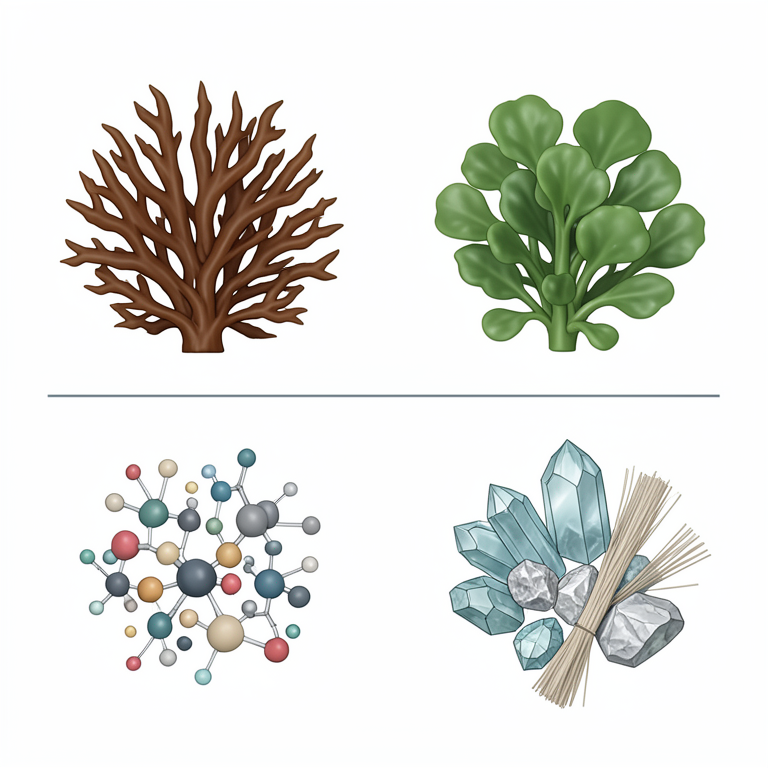
Nutritional and Phytochemical Comparison
AI-generated conceptual illustration (Sargassum wightii (brown seaweed) and Ulva lactuca (green seaweed)). It explains the idea and does not show study data.
View source evidence ↗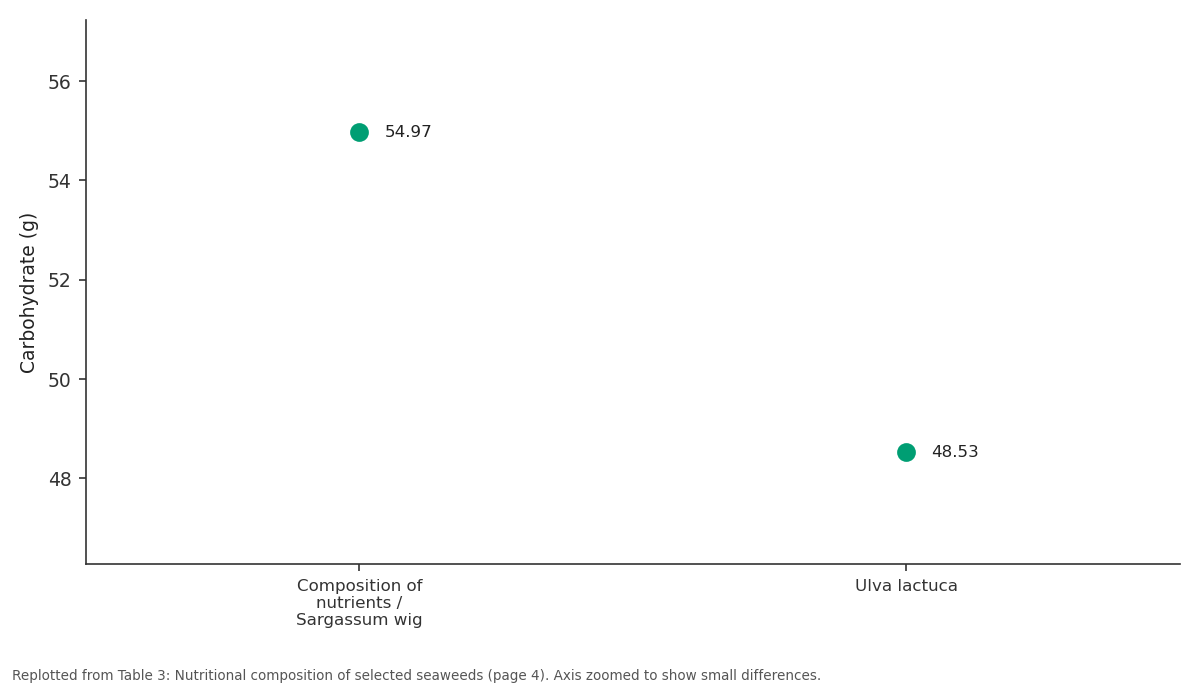
Carbohydrate (g): Composition of... vs Ulva lactuca
Replotted from Table 3 (page 4) of the original paper. Every bar is the paper's own table value.
View source evidence ↗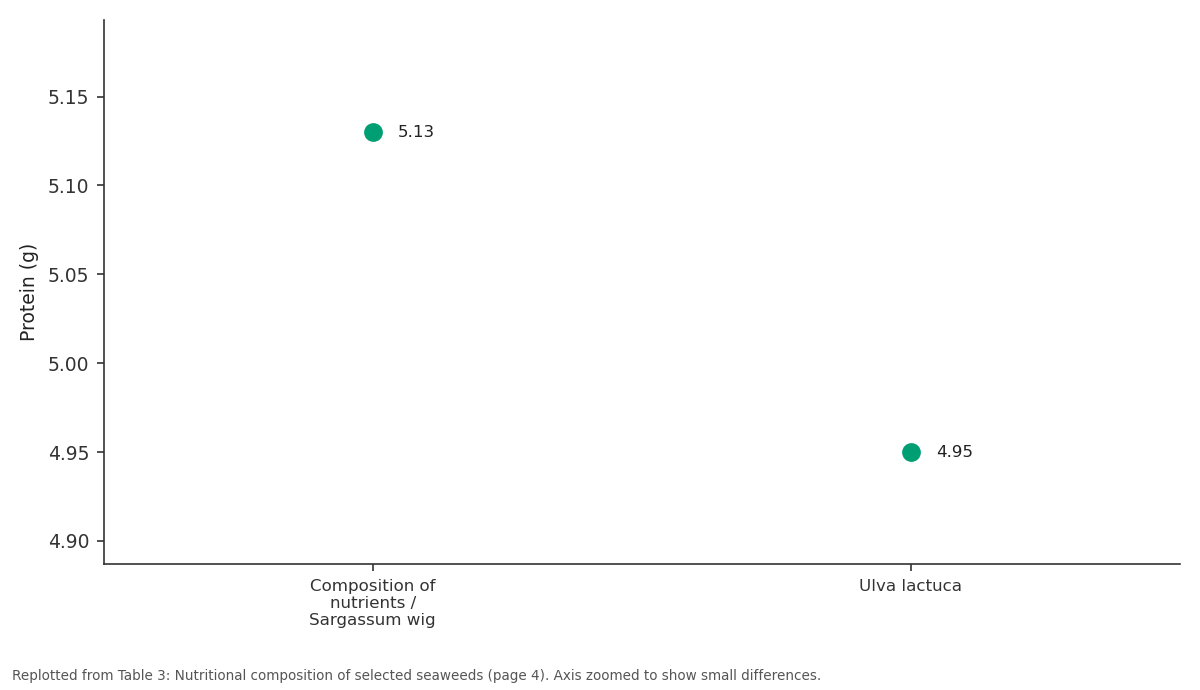
Protein (g): Composition of... vs Ulva lactuca
Replotted from Table 3 (page 4) of the original paper. Every bar is the paper's own table value.
View source evidence ↗Figures & tables
From the original paper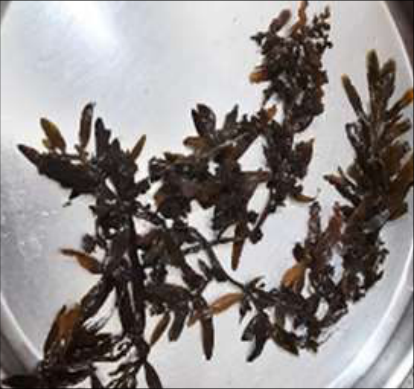 Figure 1
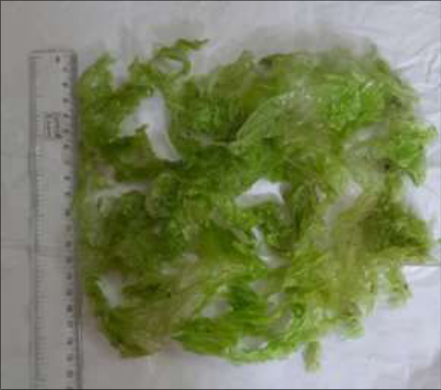 Figure 1
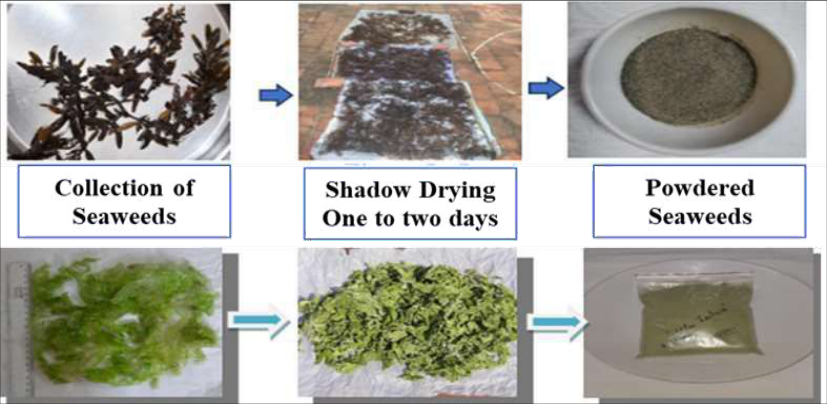 Figure 2
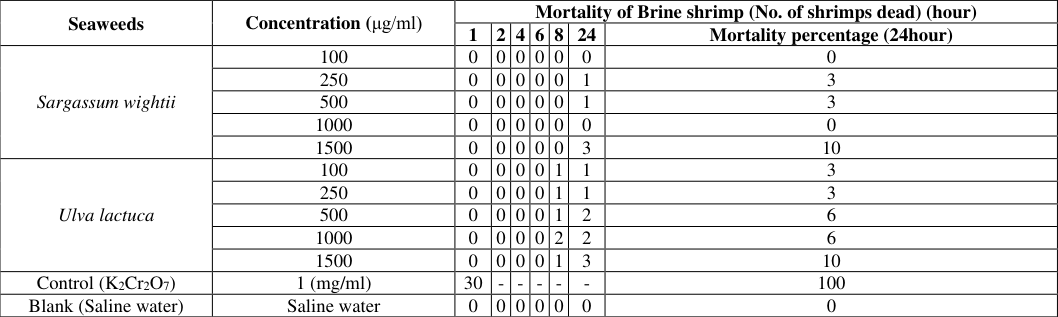 Table 2
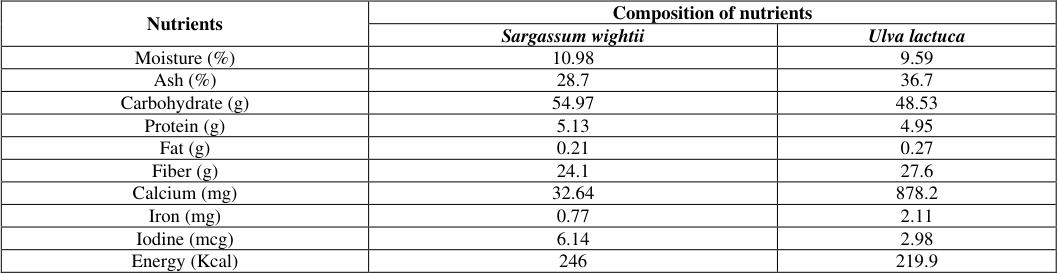 Table 3
 Table 4
 Table 5
Introduction
Seaweeds are floating, submerged macroalgae find their life in intertidal, shallow and deep waters of seas and estuaries [1] They are dense source of proteins, essential amino acids, essential fatty acids, vitamins, minerals also phytochemicals [2] , found to have anti-oxidant activity in seaweeds. Seaweeds exhibit remarkable biodiversity, encompassing a vast array of species that range from microscopic unicellular forms to large multicellular macroalgae. The seaweeds can be classified based on the presence of pigments, Phaeophyceae (red), Chlorophyceae (green), Rhodophyceae (brown). The colour of the seaweeds are due to the prominent pigment whereas phycoerythrin gives characteristic red colour to the Phaeophyceae family, presence of chlorophyll in Chlorophyceae provides green colour and Rhodophyceae has its xanthophyll pigment. The seaweed from the families Chlorophyceae and Rhodophyceae are selected for this study [3] . Chlorophyceae green seaweeds are widely used as food in many parts of the world, Ulva has the characteristic polysaccharide ulvan which has various potential biological activities such immune-stimulative, anti-depressant, anti-tumor, anti-anxiolytic activities also helps in improving anaemic condition [4] . Phloro tannins, laminarin, fucoidan are major bioactive substance of marine macro algae especially brown algae (Sargassum), which is proven to have anti adipogenicity, immunostimulatory, anti-hypertensive effects respectively [5][6][7] . The use of seaweeds were recorded first in Japan, 15,000 years ago. In 17 th century, they were used for the treatment of goitre where as in 19 th century isolation of its bioactive components such as alginic acid and carrageenan were done, also it was used as the medicine for constipation and obesity. Twentieth century had seen lot of improvement in seaweeds utilization including development of seaweeds based industries there by rises the demand for seaweeds [8] It also has anti thrombotic, anti carcinogenic and antimicrobial characteristics, all of which help to reduce obesity and fat deposition. These are pharmaceutical properties of several bioactive compounds found in seaweeds (agar, carrageenan, algin, fucoidans, mannitol, laminarin, carotenoids, fucoxanthin, phloro tannins), hence can be used in various dietary matrices [9] . Seaweeds are used in a variety of industries, including foods, pharmaceuticals, dairy, paper, and textiles. Agar and alginate are utilised as food, animal feed, fertilisers, bio filters, antibacterial agents, bio fuels, pigments and pharmaceuticals in India. Gracillaria edulis has been used as a raw material in the cottage industry for numerous decades [10] .
Being finding their lives un environment with high toxic minerals, their surface has the characteristic of absorbance of toxic minerals. Hence it is essential to analyse its toxicity. This study aims to investigates the toxicity, nutritional composition, and antioxidant potential of selected seaweeds (Sargassum wightii and Ulva lactuca), offering insights into their potential as nutrient-rich and health-promoting components for consumption. The current research addresses the link between oceanic biodiversity and the development of beneficial, sustainable dietary options.
Methodology Collection and processing of seaweeds
The seaweeds of family Rhodophyceae (Sargassum wightii) and family Chlorophyceae (Ulva lactuca) are selected for this study. The Seaweeds are collected from Mandapam coastal area of Rameswaram, Ramanathapuram district, Tamil Nadu, India in the month of December -January. The preliminary processing of washing, drying and powdering are done.
Analysis for toxicity level Primary toxicity analysis
Seaweeds can be key sources of increased exposure to persistent and potentially hazardous elements due to their high biosorption and accumulation capability (iAs) (Monteiro et al., 2019).The heavy metals such as cadmium (Cd), lead (Pb), mercury (Hg) and arsenic were analysed lactuca according to AOAC 21 st edition for both selected seaweeds Sargassum wightii and Ulva Lactuca.
Secondary toxicity analysis
For analyzing the cytotoxicity of the selected seaweeds, brine shrimp lethality assay was done. The brine shrimp lethality assay is simple, very rapid and non time consuming, inexpensive and requires small amounts of test materials. It is considered as the useful tool for preliminary assessment of toxicity and it is the general bio assay to investigate the pharmacological activities natural marine products. The samples were given at different volumes (100, 250, 500, 1000 and 1500 l) to 30 shrimps and it was monitored at the intervals of 2, 4, 6, 8, 24 hours, the mortality of shrimps was calculated after 24 hour and it was compared to control potassium dichromate (K 2 Cr 2 O 7 ) at volume of 1 mg/ ml (Sarah et al., 2017)
Analysis of nutritional composition
Analysing the nutritional composition of seaweeds is crucial for understanding their potential as a sustainable and nutrient-rich food source, contributing valuable insights to enhance dietary diversity and address global food security (FAO 2018). The dried seaweeds powder are chemically analysed for nutrients such as moisture, ash, energy, carbohydrate, protein and fat, fibre, calcium, iron and iodine (AOAC method, 2016).
Qualitative screening for phytochemicals Some plants include phytochemicals, which are physiologically active substances that are responsible for and demonstrate potency in biological activity. Their confirmations, identifications, and characterizations are critical and several standard approaches were used to detect these phytochemicals (Amir et al. 2020). The dry seaweeds samples Sargassum wightii and Ulva lactuca are qualitatively analysed to know the presence or absence of phytochemicals. The test for phytochemicals such as alkaloids, flavonoids, sterols, terpenoids, phenolic compounds, cardiac glycosides and carbohydrates.
Analysis of antioxidant potential
The 2,2-Diphenyl-1-picrylhydrazyl (DPPH) is a popular, quick, easy and affordable approach for the measurement of antioxidant properties that includes the use of the free radicals used for assessing the potential of substances to serve as hydrogen providers or free-radical scavengers (FRS). The technique of DPPH testing is associated with the elimination of DPPH, which would be a stabilized free radical (Baliyan et al., 2022). The antioxidant assay for the seaweed samples (Sargassum wightii and Ulva lactuca) was conducted using DPPH method where ascorbic acid was used as the standard at different concentrations.
Results and Discussion
Results and Discussion
Processing of seaweeds
The selected brown seaweeds Sargassum wightii of Rhodophyceae family and green seaweeds Ulva lactuca of Chlorophyceae family were handpicked and cleaned with seawater to remove foreign particles, grit particles and epiphytes, shadow dried for one to two days. The dried seaweed was then pulverised and stored at room temperature in zip lock bags and analysed for primary and secondary toxicity, nutritional composition, phytochemicals and antioxidant potential.
Analysis for Toxicity Primary toxicity analysis
The primary toxicity analysis of seaweeds involves the analysis of presence of heavy metals such as cadmium (Cd), lead (Pb), mercury (Hg) and arsenic in the processed seaweed powders. The findings shows that, all the heavy metals are below the limit of quantification (table I). This proves that both selected seaweeds does not accumulate harmful heavy metals on its surface, ensuring their safety for consumption and minimal environmental impact in compliance with safety standards. The findings suggest these seaweeds pose no immediate health risks based on the analysed heavy metal content.
Secondary toxicity analysis
The brine shrimp assay was used to determine the toxicity of selected seaweed samples (Sargassum wightii and Ulva lactuca) to determine their toxicity (Sargassum wightii and Ulva lactuca). By sonication for 60 minutes, the seaweed samples (Sargassum wightii and Ulva lactuca) were weighed and dissolved in water to make a 1 mg/ml stock solution. The samples (Sargassum wightii and Ulva lactuca) are added to each beaker containing saline solution in the following amounts: 100, 250, 500, 1000, 1500 µl. the seaweeds samples Sargassum wightii and Ulva lactuca are comparatively less toxic than potassium dichromate (K2Cr2O7) which shows maximum lethality of shrimps at higher concentration (1500 μg/ml). The shrimps in both the samples were found to be very less toxic in lower as well as higher concentration. Even after 24h, only 2-3 shrimps were found to be mortal at lowest (100 μg/ml) and highest concentration (1500 μg/ml). On comparison of brown and green seaweeds, Sargassum wightii and Ulva lactuca, Sargassum wightii was less toxic than Ulva lactuca. The table II provides the toxicity analysis of selected seaweeds. Sargassum wightii 100 0 0 0 0 0 0 0 250 0 0 0 0 0 1 3 500 0 0 0 0 0 1 3 1000 0 0 0 0 0 0 0 1500 0 0 0 0 0 3 10 Ulva lactuca 100 0 0 0 0 1 1 3 250 0 0 0 0 1 1 3 500 0 0 0 0 1 2 6 1000 0 0 0 0 2 2 6 1500 0 0 0 0 1 3 10 Control (K2Cr2O7) 1 (mg/ml) 30 -----100 Blank (Saline water) Saline water 0 0 0 0 0 0 0
Analysis of nutritional composition
The analysis of nutritional composition of both seaweeds resulted as given in the table III, the micronutrient content shows that the species Ulva lactuca was rich in calcium (878 mg) and iron content (2 mg) where iodine content was rich in brown seaweeds Sargassum wightii. Sargassum wightii generally exhibits higher ash content, carbohydrate, and fibre, while Ulva lactuca has higher moisture, protein, fat, calcium, iron, iodine, and energy levels. On comparing the macronutrients, the brown seaweeds Sargassum wightii has highest amount of carbohydrates (55 g), protein (5 g), fat (0.21 g). Energy content (246 kcal) was also high in brown seaweeds of Phaeophyceae family Sargassum wightii. The green seaweeds Ulva lactuca has high composition of fibre (27.6 g) on comparing to Sargassum wightii. These differences highlight the diverse nutritional profiles of the two seaweeds, The incorporation of these seaweeds into diverse diets not only broadens nutrient intake but also offers a balanced array of essential elements, addressing various dietary requirements and promoting overall health and well-being.
Qualitative Screening for Phytochemicals
Phytochemicals serve as natural defense mechanisms in plants, helping them cope with environmental challenges like salinity and temperature.
Analysis of antioxidant potential
From table V, it can be understood that when the concentration was 10 ml, the inhibition of Sargassum wightii was 53.91 percent and when the concentration was increased from 10 m to 50 ml, 150 ml, 250 ml, 350 ml and 750 ml the inhibition also increased as 54.74, 67.83, 68.70, 77.39 and 78.26 respectively. As the concentration increased, the inhibition also increased, hence it can be inferred that Sargassum wightii has remarkable antioxidant activity. The inhibition of Ulva lactuca at 10 ml was 60.00 percent and 54.78 percent at 50 percent. It can be seen from the table that as the concentration increases from 50 ml to 150 ml,250 ml, 350 ml and 750 ml there was an inverse in the inhibition of Ulva lactuca. Therefore, it can be deduced that Ulva lactuca had antioxidant activity and when compared with Sargassum wightii, the antioxidant activity of Sargassum wightii considerably greater than Ulva lactuca. These findings imply that both seaweeds possess antioxidant properties, with Sargassum wightii demonstrating a notably higher inhibition rate compared to Ulva lactuca.
Antioxidants play a crucial role in neutralizing oxidative stress, which is linked to various chronic diseases. Therefore, the observed antioxidant potential suggests that these seaweeds could contribute to promoting health and preventing oxidative damage when incorporated into dietary patterns.
Conclusion
The analysis confirms Sargassum wightii and Ulva lactuca seaweeds are non-toxic, free from heavy metals, and exhibit low toxicity levels in the brine shrimp assay. Both seaweeds showcase diverse nutritional profiles, with Sargassum wightii being rich in carbohydrates, protein, and fat, while Ulva lactuca excels in fibre, calcium, and iron. Phytochemical screening reveals unique bioactive compounds in each species. Sargassum wightii exhibits significant antioxidant activity, surpassing Ulva lactuca.
Overall, these findings emphasize the safety, nutritional richness, and potential health benefits of both seaweeds, positioning them as promising candidates for sustainable and nutritious dietary inclusion.
Figures and tables from the paper
| Seaweeds | Concentration (μg/ml) | Mortality of Brine shrimp (No. of shrimps dead) (hour) | — | — | — | — | — | — |
|---|---|---|---|---|---|---|---|---|
| 1 | 2 | 4 | 6 | 8 | 24 | Mortality percentage (24hour) | ||
| Sargassum wightii | 100 | 0 | 0 | 0 | 0 | 0 | 0 | 0 |
| 250 | 0 | 0 | 0 | 0 | 0 | 1 | 3 | |
| 500 | 0 | 0 | 0 | 0 | 0 | 1 | 3 | |
| 1000 | 0 | 0 | 0 | 0 | 0 | 0 | 0 | |
| 1500 | 0 | 0 | 0 | 0 | 0 | 3 | 10 | |
| Ulva lactuca | 100 | 0 | 0 | 0 | 0 | 1 | 1 | 3 |
| 250 | 0 | 0 | 0 | 0 | 1 | 1 | 3 | |
| 500 | 0 | 0 | 0 | 0 | 1 | 2 | 6 | |
| 1000 | 0 | 0 | 0 | 0 | 2 | 2 | 6 | |
| 1500 | 0 | 0 | 0 | 0 | 1 | 3 | 10 | |
| Control (K2Cr2O7) | 1 (mg/ml) | 30 | - | - | - | - | - | 100 |
| Blank (Saline water) | Saline water | 0 | 0 | 0 | 0 | 0 | 0 | 0 |
Table text extracted from the original PDF; superscript letters are shown inline. The original table image is below.
View original table image
| Nutrients | Composition of nutrients | — |
|---|---|---|
| Sargassum wightii | Ulva lactuca | |
| Moisture (%) | 10.98 | 9.59 |
| Ash (%) | 28.7 | 36.7 |
| Carbohydrate (g) | 54.97 | 48.53 |
| Protein (g) | 5.13 | 4.95 |
| Fat (g) | 0.21 | 0.27 |
| Fiber (g) | 24.1 | 27.6 |
| Calcium (mg) | 32.64 | 878.2 |
| Iron (mg) | 0.77 | 2.11 |
| Iodine (mcg) | 6.14 | 2.98 |
| Energy (Kcal) | 246 | 219.9 |
Table text extracted from the original PDF; superscript letters are shown inline. The original table image is below.
View original table image
| Phytochemicals | Test and observation | Sargassum wightii | Ulva lactuca |
|---|---|---|---|
| Flavonoids | +H2SO4 – Presence of reddish orange color | + | + |
| +lead acetate – presence of white precipitate | |||
| Alkaloids | +Dragendorff’s reagent – presence of reddish brown precipitate | + | + |
| Sterols | Libermann test +CHCl3 + Acetic anhydride + Conc H2SO4 – Presence of reddish brown ring | + | - |
| Cardiac glycosides | Keller-killani test – presence of brown ring | + | - |
| Carbohydrates | Molisch’s test – presence of violet ring | + | + |
Table text extracted from the original PDF; superscript letters are shown inline. The original table image is below.
View original table image
| Concentration (ml) | DPPH % inhibition of Sargassum wightii at concentration of 8.54 mg/ml H2O | DPPH % inhibition of Ulva lactuca at concentration of 8.1 mg/ml H2O |
|---|---|---|
| 10 | 53.91 | 60.00 |
| 50 | 54.74 | 54.78 |
| 150 | 67.83 | 51.30 |
| 250 | 68.70 | 49.57 |
| 350 | 77.39 | 49.57 |
| 750 | 78.26 | 47.83 |
Table text extracted from the original PDF; superscript letters are shown inline. The original table image is below.
View original table image
References
9 in the original paper- Kumar S, Sahoo D, Levine I. Assessment of nutritional value in a brown seaweed Sargassum wightii and their seasonal variations. Algal Research. 2015;9:117-125. https://doi.org/10.1016/j.algal.2015.02.024
- Peñalver R, Lorenzo JM, Ros G, Amarowicz R, Pateiro M, Nieto G. Seaweeds as a functional ingredient for a healthy diet. Marine Drugs. 2020;18(6). https://doi.org/10.3390/md18060301
- Banu TA, Mageswari US. Nutritional status and effect of seaweed chocolate on anemic adolescent girls. Food Science and Human Wellness. 2015;4(1):28-34. https://doi.org/10.1016/j.fshw.2015.03.001
- Jung HA, Jung HJ, Jeong HY, Kwon HJ, Ali MY, Choi JS. Phlorotannins isolated from the edible brown alga Ecklonia stolonifera exert anti-adipogenic activity on 3T3-L1 adipocytes by downregulating C/EBPα and PPARγ. Fitoterapia. 2014;92:260-269. https://doi.org/10.1016/j.fitote.2013.12.003
- Vijayan R, Chitra L, Penislusshiyan S, Palvannan T. Exploring bioactive fraction of Sargassum wightii: In vitro elucidation of angiotensin-I-converting enzyme inhibition and antioxidant potential. International Journal of Food Properties. 2018;21(1):674-684. https://doi.org/10.1080/10942912.2018.1454465
- Lee JY, Kim YJ, Kim HJ, Kim YS, Park W. Immunostimulatory effect of laminarin on RAW 264.7 mouse macrophages. Molecules. 2012;17(5):54045411. https://doi.org/10.3390/molecules17055404
- Kumar Y, Tarafdar A, Badgujar PC. Seaweed as a Source of Natural Antioxidants: Therapeutic Activity and Food Applications. Journal of Food Quality. 2021 Jun 25;2021:1-7. Article ID 5753391, 17 pages. https://doi.org/10.1155/2021/5753391
- Jayaprakash K, Sri Kumaran N. Seaweed research in india-a novel domain in marine biotechnology. International Journal of Pharmaceutical Sciences and Research. 2017;8(8):3231-3241. https://doi.org/10.13040/IJPSR.0975-8232.8(8).3231-41
- Quazi S, Fatema A, Mir M. Brine shrimp lethality assay. Bangladesh Journal of Pharmacology. 2017;12(2):186-189.
Cited by 1
From OpenAlex, OpenCitations and reference lists read by Scinovex
- Nutritional configuration, effect of dietary brown seaweed Sargassum wightii powder individually and in combination with red seaweed Gracilaria edulis meal on survival and growth performance of Litopenaeus vannamei (Boone, 1931)
P Shanthanna, P. Anand Prasad, A. Chandra Sekhara Rao, N. Madhavan, K. Madhavi · International Journal of Advanced Biochemistry Research · 2026
Experimental work was conducted in the uniform size glass aquarium tanks of 60 liters capacity for the period of 120 days to evaluate the influence of brown seaweed Sargassum wightii meal separately and with collaboration of red seaweed Gracilaria edulis meal on survival, growth and nutrient utilization parameters of pacific white leg shrimp Litopenaeus vannamei through addition of various levels in the experimental diets. A total of 252 shrimps were randomly allotted to 21 tanks with an average initial weight of 1.09±0.04 g (12 shrimps per tank) with 7 different treatment groups and 3 replica